
Build Three was by far the most intensive and important sprint of development, as it focused heavily on responding to the large amount of external feedback we had received from both university playtests and online players. This stage of production ultimately shaped the final version of User_Unknown, with a strong focus on polish, immersion, presentation quality, and narrative cohesion.
A large amount of the feedback praised the game’s atmosphere, art direction, and core minigame concepts, but also highlighted several areas that weakened immersion. Common critiques included awkward player movement, the transition from visual novel presentation into 3D gameplay, inconsistent dialogue pacing, lack of character expressiveness, and certain UI readability issues. Going into this sprint, our main objective was to address as many of these concerns as possible while pushing the game toward a more professional and polished final experience.
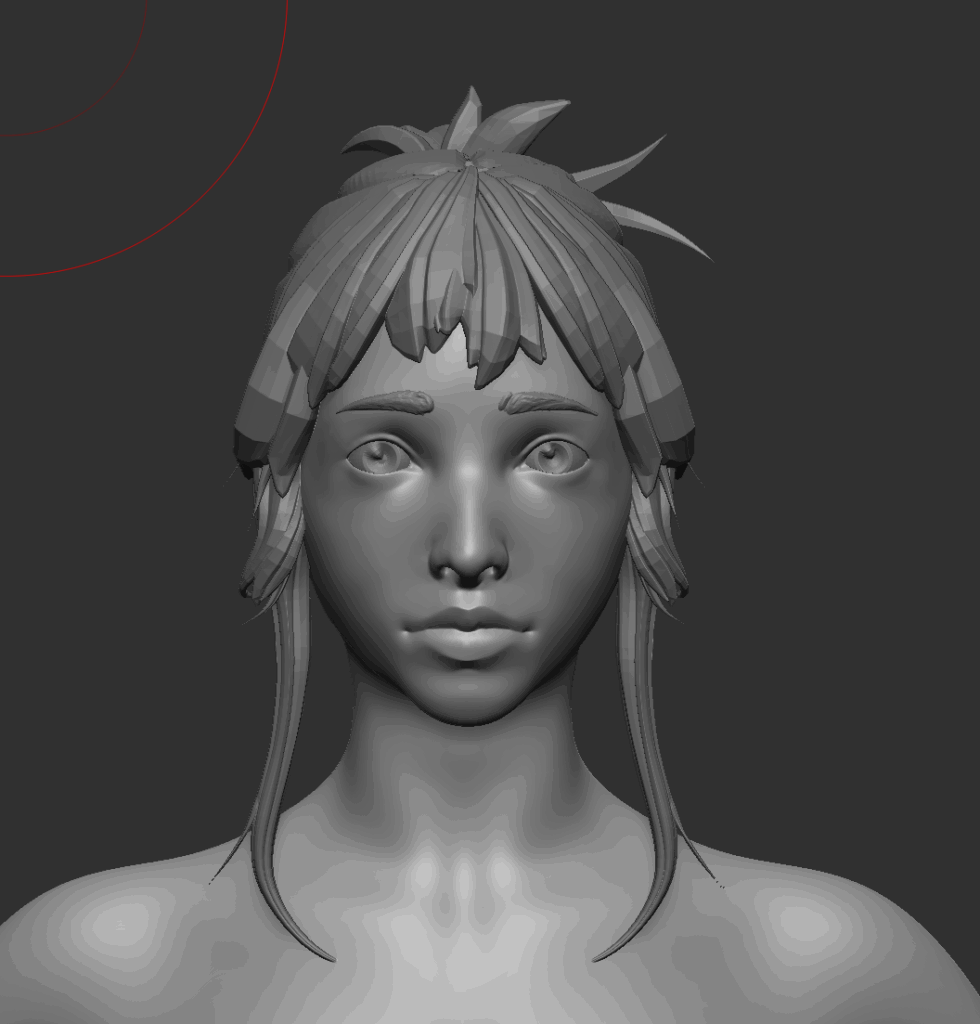
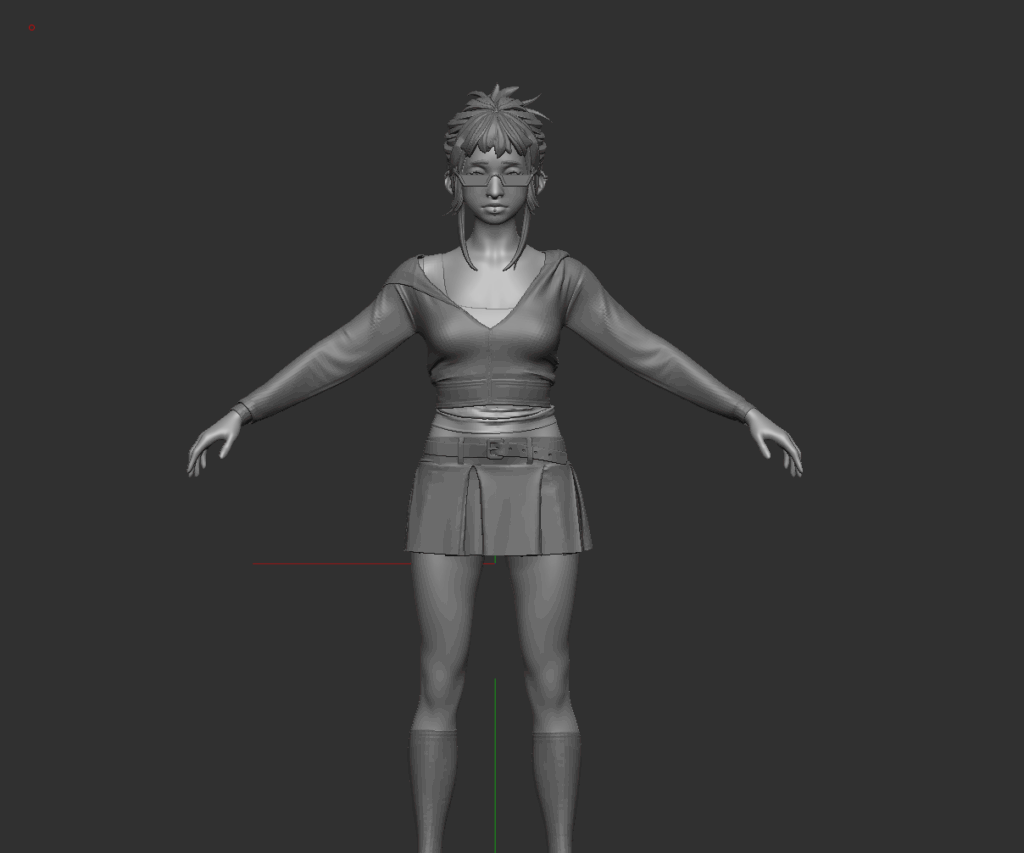
One of the largest tasks I undertook during this sprint was the full production of the main character, Zarah. I began sculpting her in ZBrush, spending a significant amount of time iterating on her facial features and hairstyle to achieve a design that matched both the visual style of the game and the emotional tone of the narrative. Creating her hair proved especially challenging, as I needed to balance visual quality with optimisation requirements. Since the character was intended to be fully animated in-engine, I had to ensure the hairstyle would still be practical to retopologise into a lower-poly game-ready model without losing too much detail or silhouette definition.


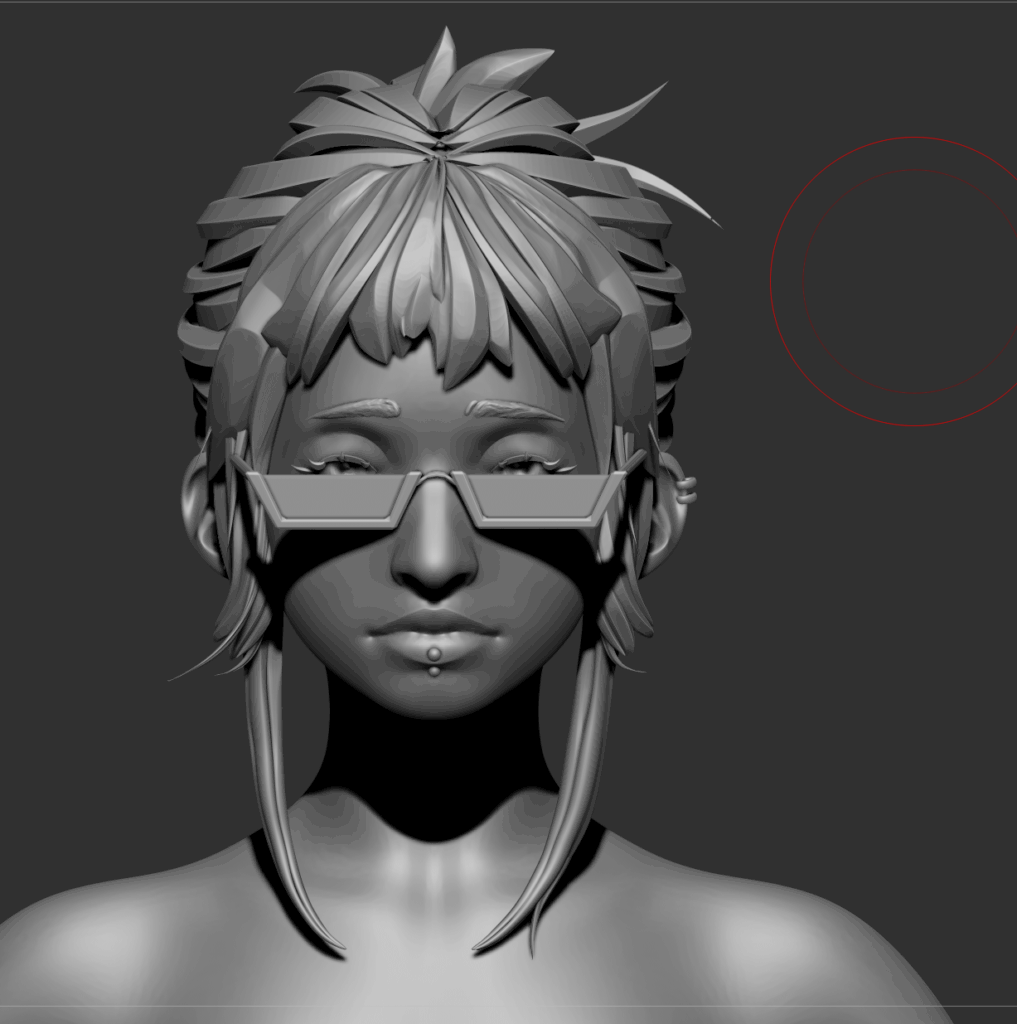
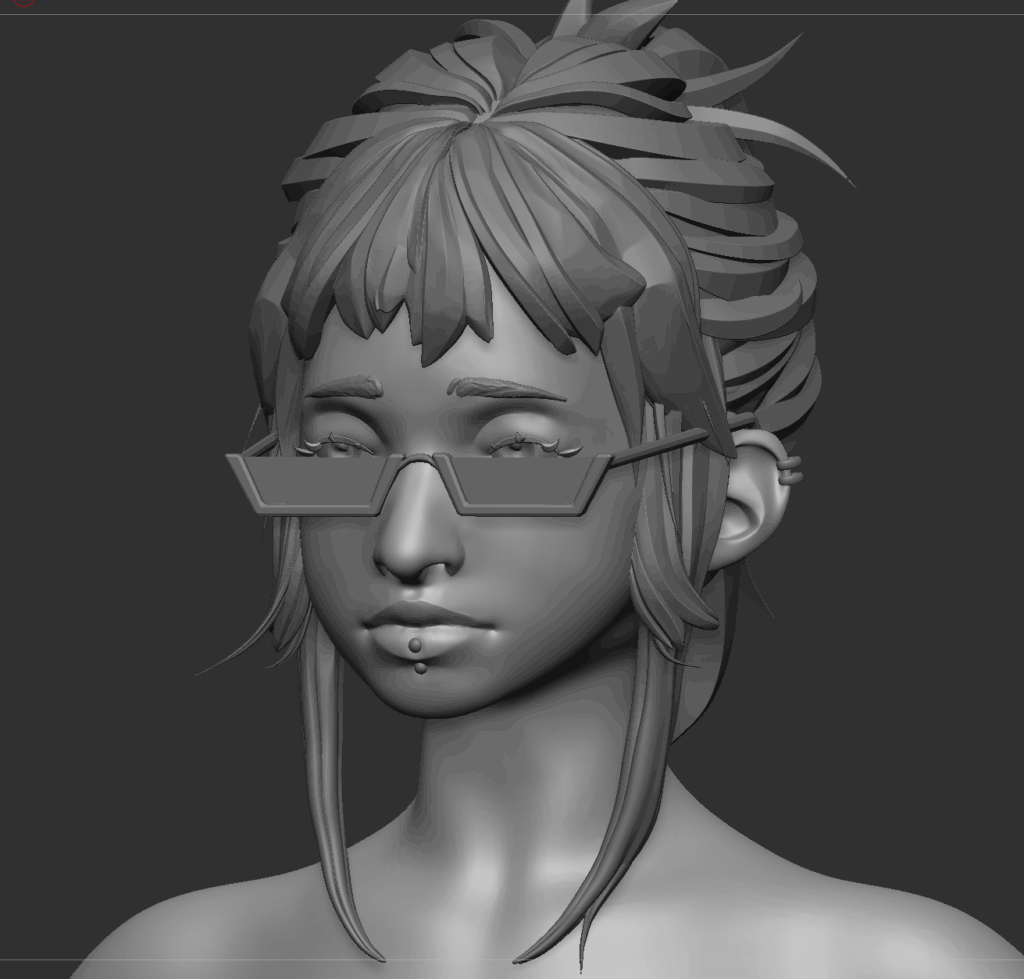
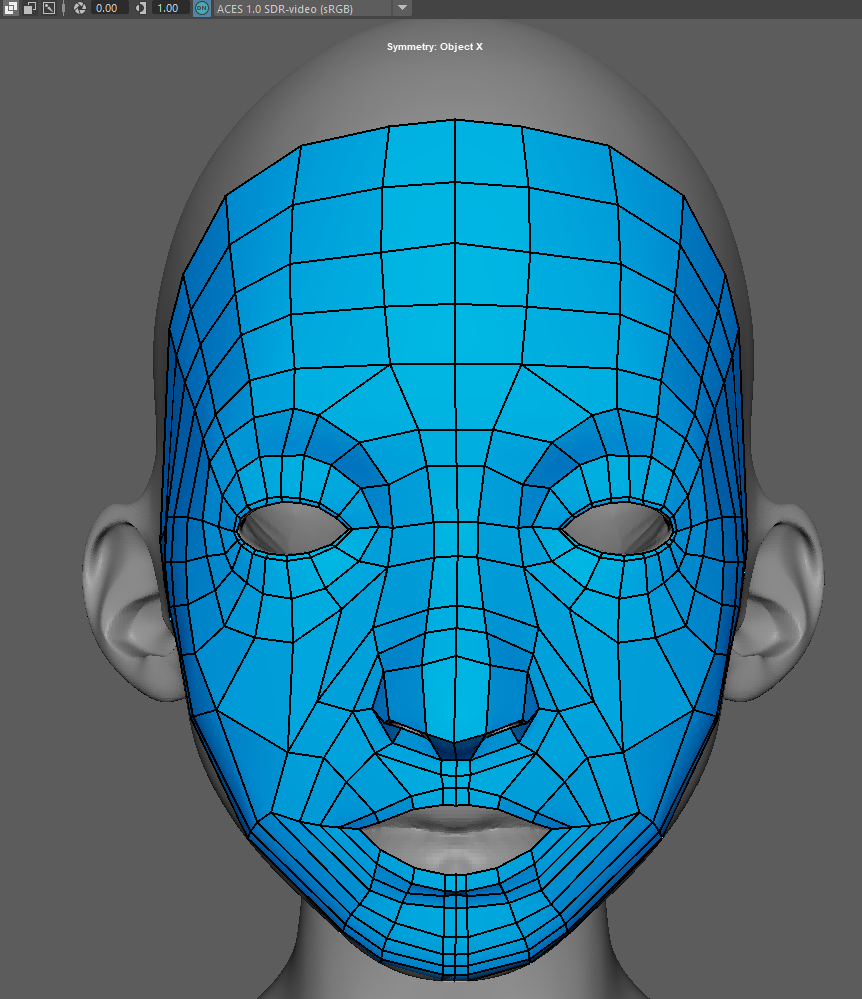
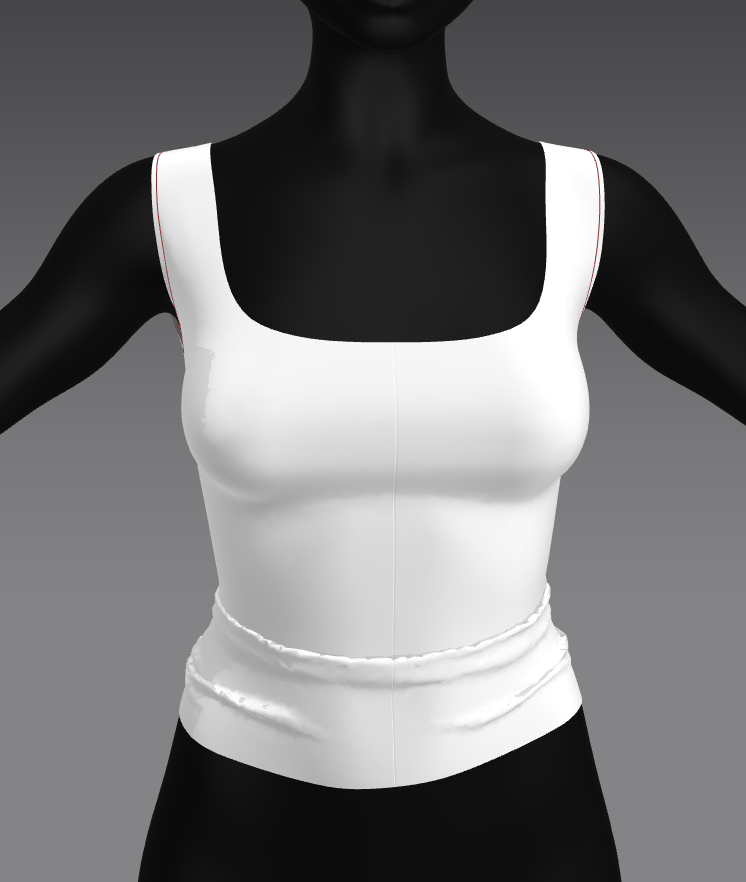
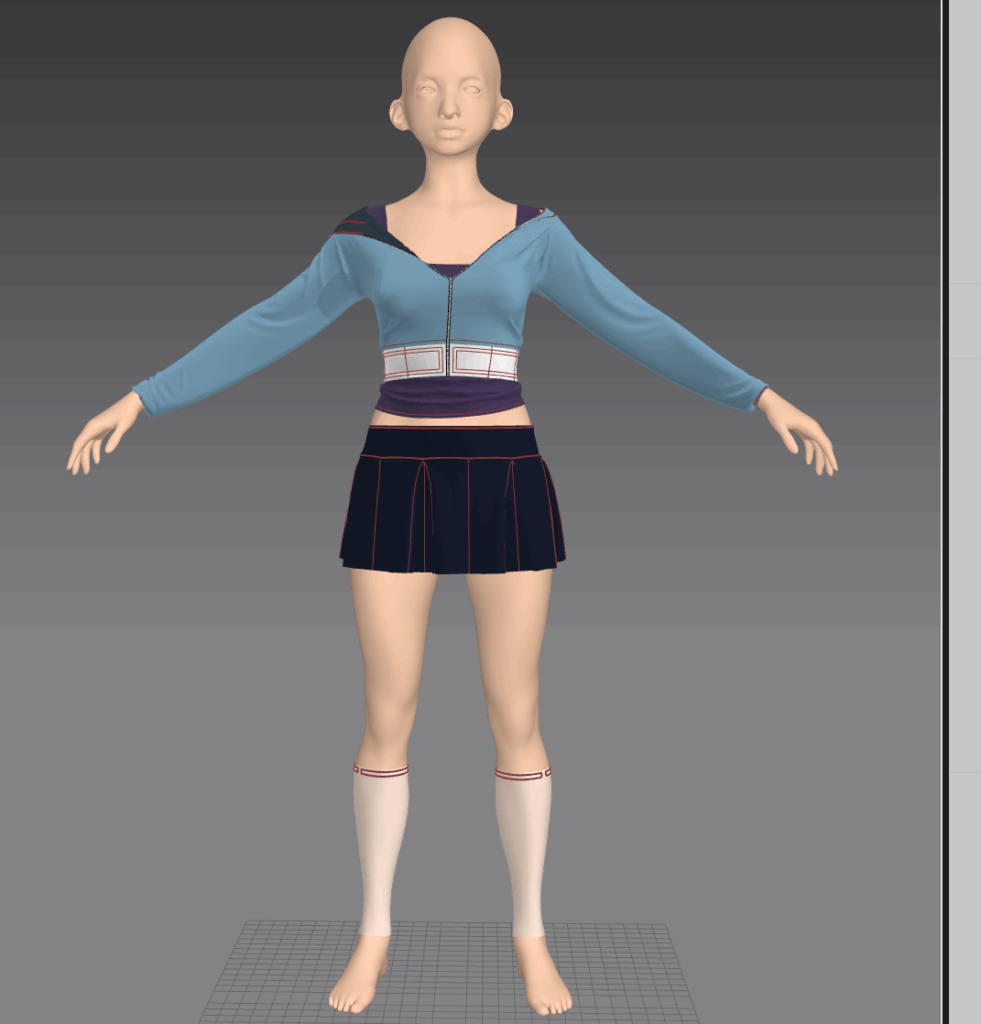
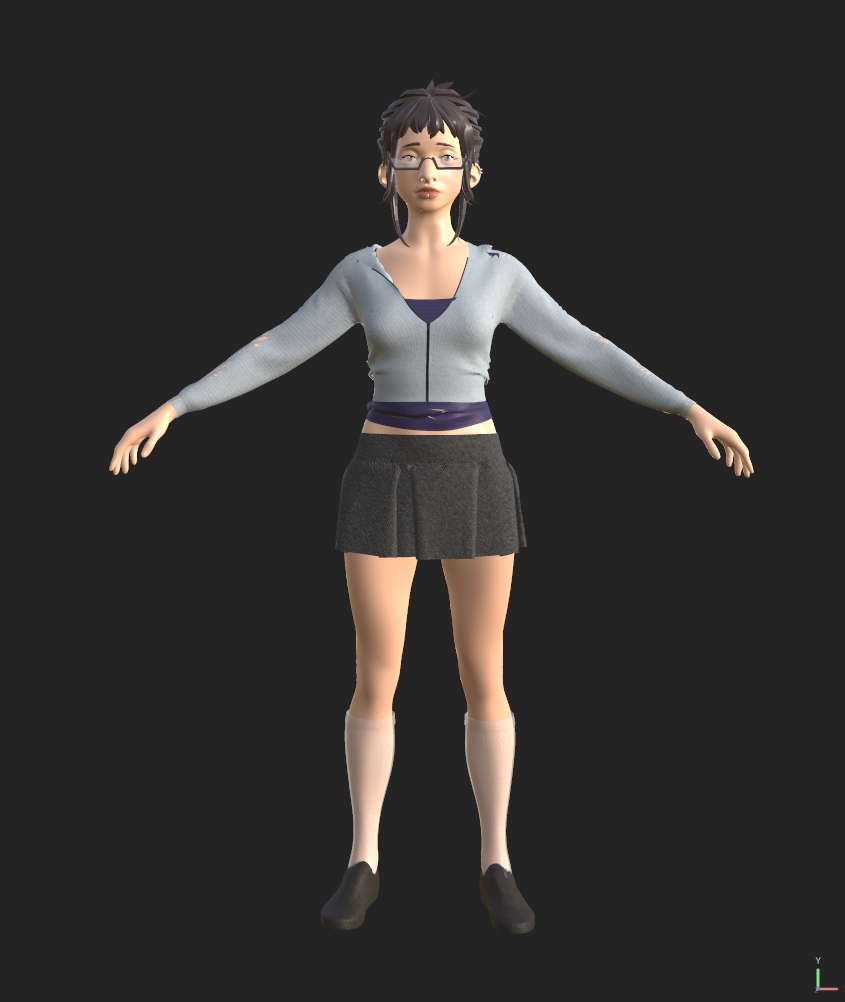
After finalising the high-poly sculpt, I moved into Maya to complete the retopology process using a high-to-low poly workflow. This involved rebuilding cleaner topology over the sculpted mesh to improve animation deformation, optimise performance, and resolve geometry issues before implementation into Unity. Once the base model was production-ready, I used Marvelous Designer to create and simulate Zarah’s clothing. The cloth simulation tools allowed me to achieve a much more natural and realistic appearance for the outfit, which helped further reinforce the grounded and immersive aesthetic we wanted for the game.
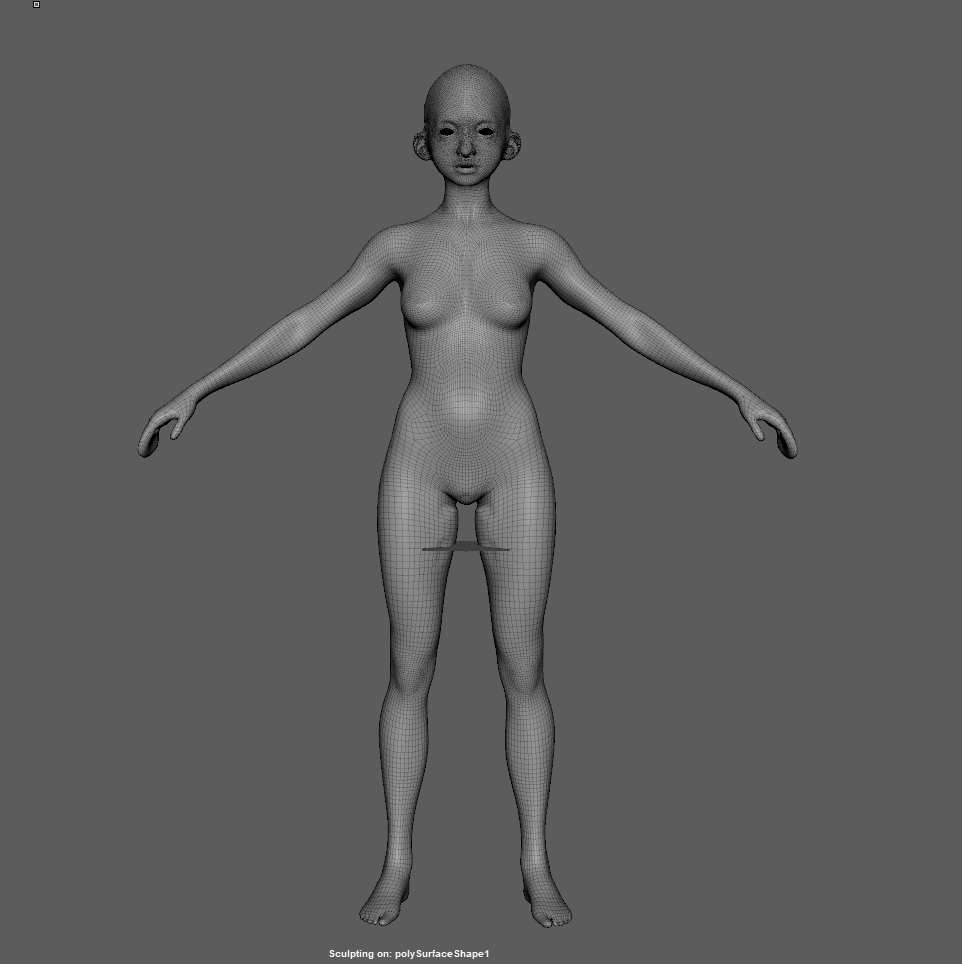
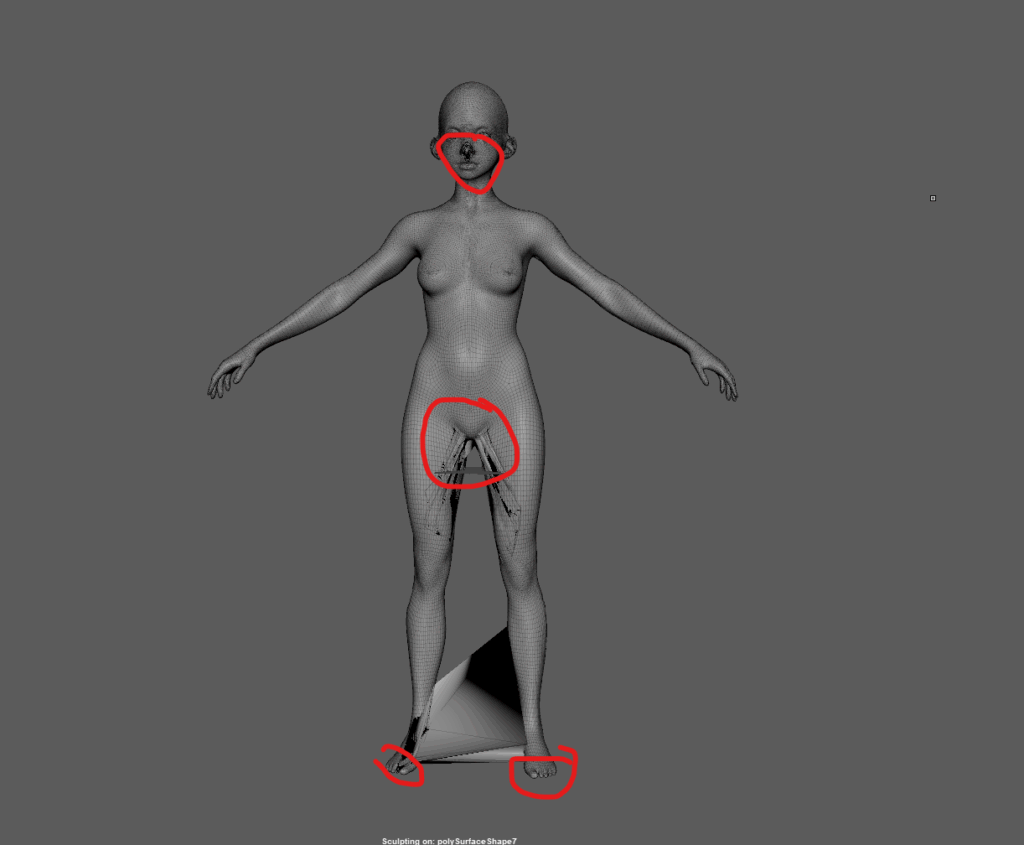

Rigging initially became a technical obstacle because the character was created using a modular workflow, which caused issues during the rigging process inside Maya. To overcome this efficiently within the limited timeframe of the sprint, I transitioned to Adobe Mixamo to generate the character rig and animation setup. This greatly streamlined the process and allowed me to quickly begin implementing animations into Unity without sacrificing too much production time.
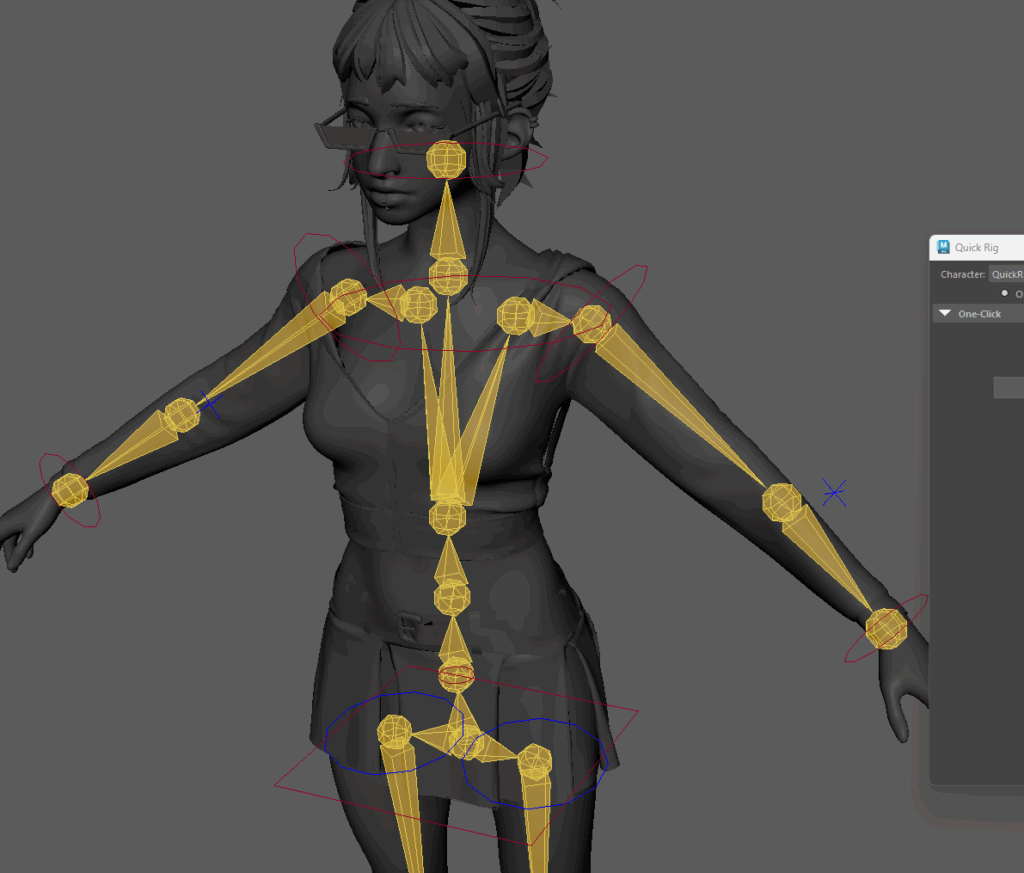
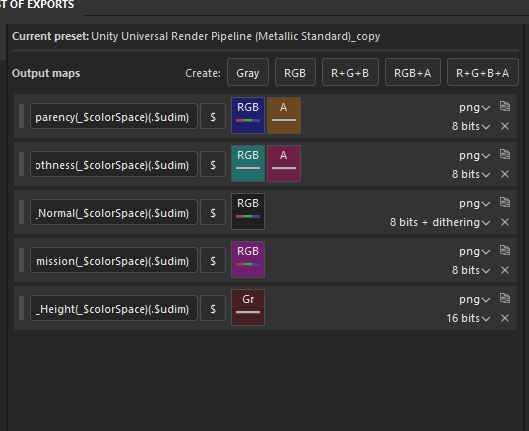
Following this, I textured each individual model component in Substance Painter, continuing to utilise the custom export workflow I had established during previous sprints. This allowed the textures and materials to transfer into Unity quickly and consistently, significantly improving implementation efficiency. Originally, I had the mesh set up with UDIMs, but I did not realise that Unity does not support this workflow. Therefore, after consulting a Reddit forum, I had to split up the model into separate objects and parent them to the body. Once imported, I linked the rig to the animation system and created an animation state machine to handle player movement and idle transitions.

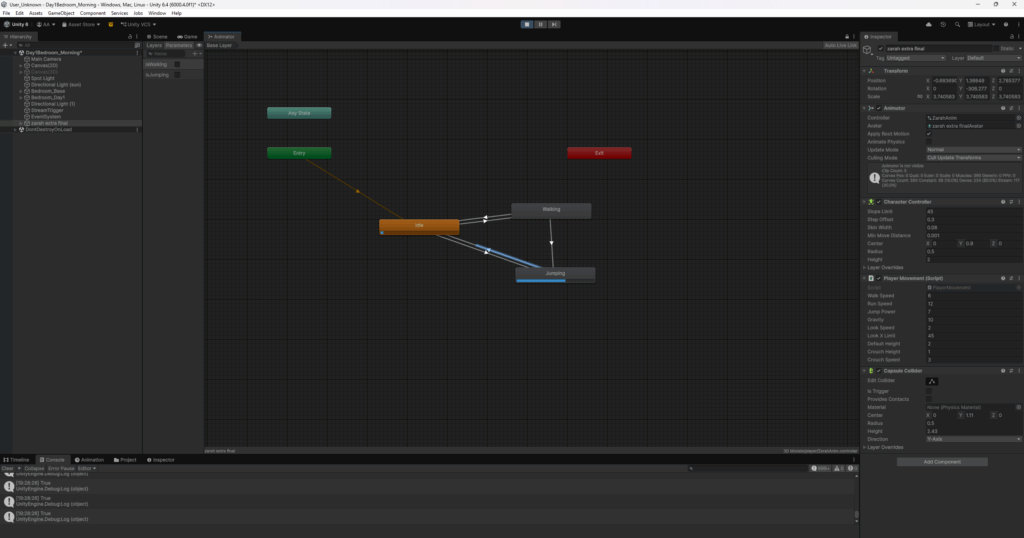

At this point, I also began addressing one of the most repeated critiques from playtesting: the awkwardness of the player movement and camera system. Multiple players felt that the original WASD movement and free camera setup disrupted the immersive visual novel feel of the game and made the controls feel disconnected from the player’s perspective. In response to this, I refined the movement logic and transitioned the camera into a more orthographic presentation style. This change made the gameplay feel far more cinematic and controlled, while also strengthening the connection between the 2D visual novel presentation and the explorable 3D environment.
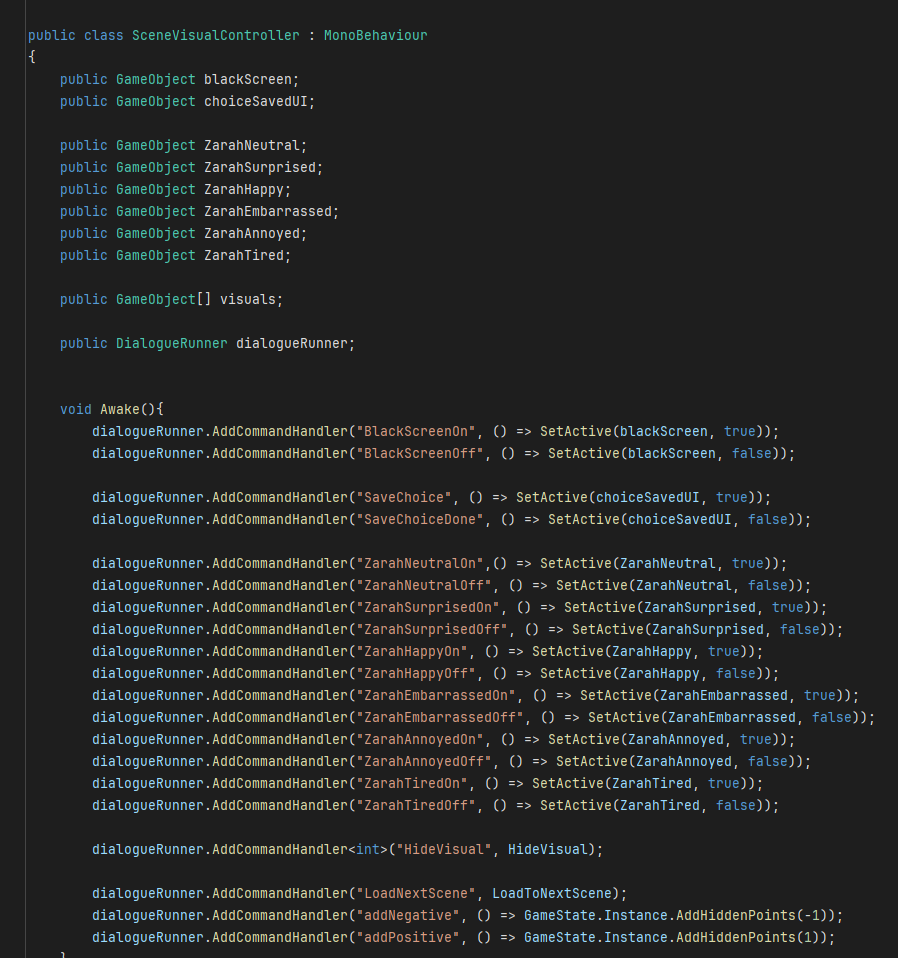
Alongside the movement improvements, I continued refining the overall visual presentation based on feedback. Several players noted that the game would benefit from more expressive character visuals and a stronger environmental atmosphere. In response, I expanded the use of facial expressions, visual scene changes, and dialogue presentation systems throughout the narrative sequences. I also improved UI readability and presentation by adjusting text layouts, pacing, and overall interface clarity.
While I focused heavily on character implementation and visual polish, I also collaborated externally to complete production of the game’s third minigame. I reached out to my friend Joseph “Tapuccino,” who is more experienced in C# programming, to assist with the technical development of the system. Through multiple online calls and collaborative debugging sessions, we were able to produce the final minigame far more efficiently than if I had tackled it alone. This collaboration was particularly valuable during a sprint with such a large workload, and it demonstrated the importance of teamwork and seeking support when necessary within game development pipelines.

Following the completion of the final gameplay systems, I then shifted focus toward fully integrating the game’s narrative structure. This involved implementing the remaining YarnSpinner dialogue, connecting scenes correctly, refining scene transitions, and ensuring the updated visuals and gameplay systems worked cohesively with the branching narrative. By this stage, the project had evolved significantly from the earlier builds, and much of the sprint involved polishing existing systems to make the experience feel more complete and immersive.
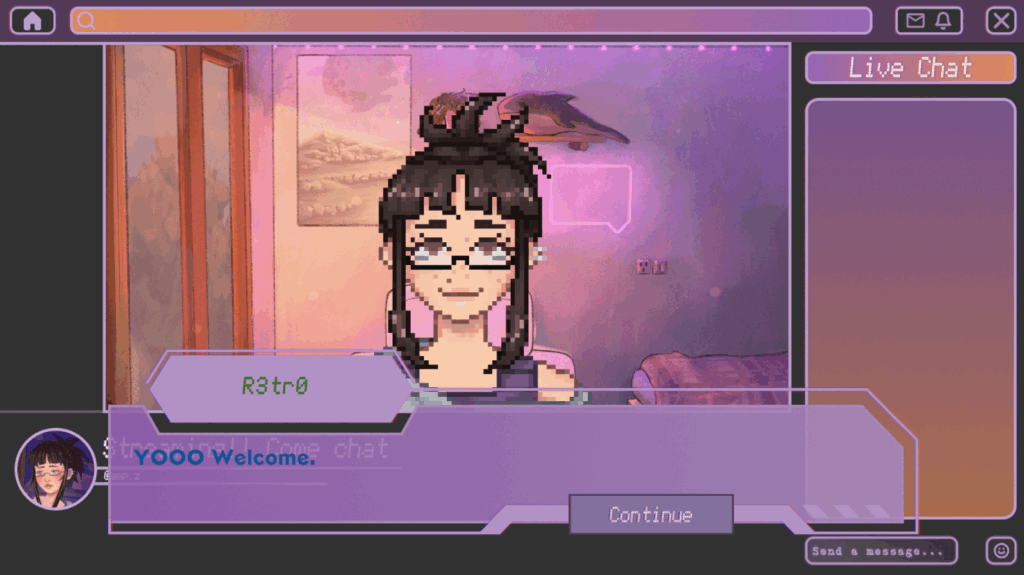


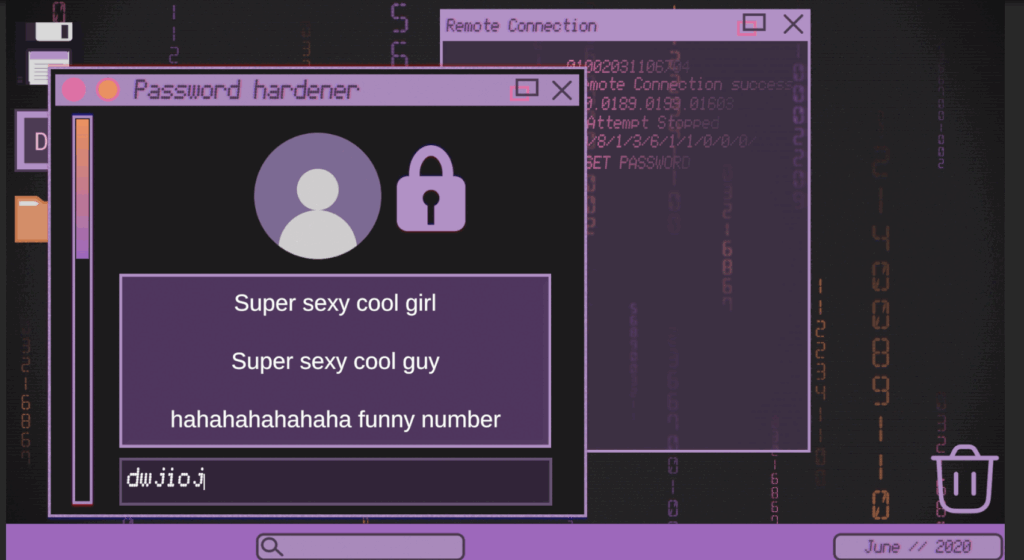


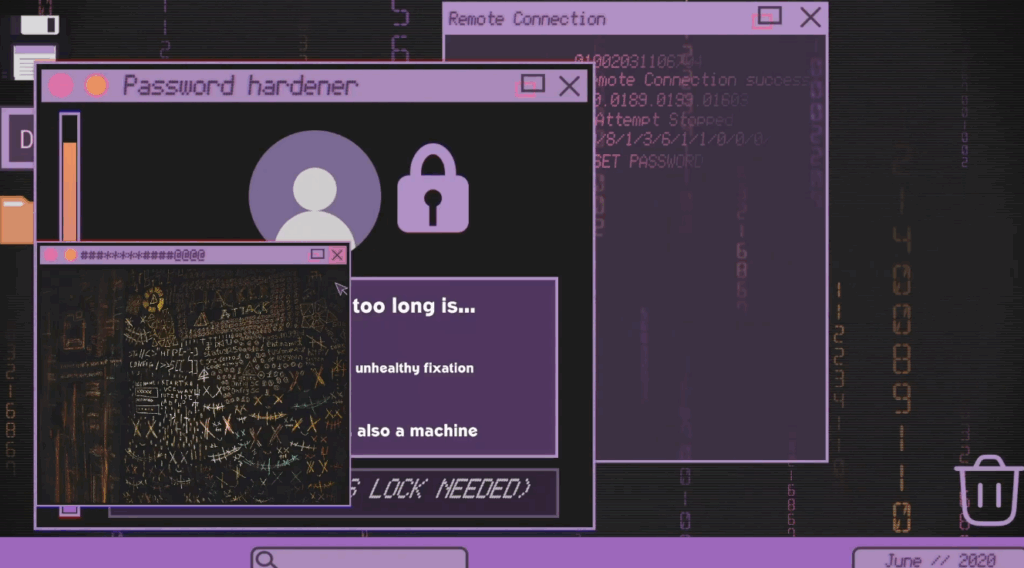
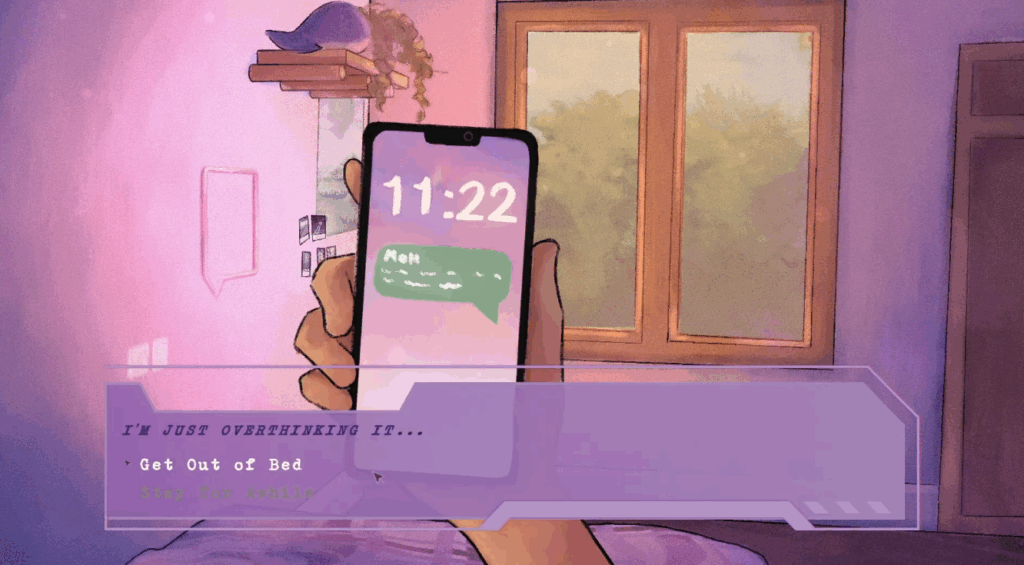
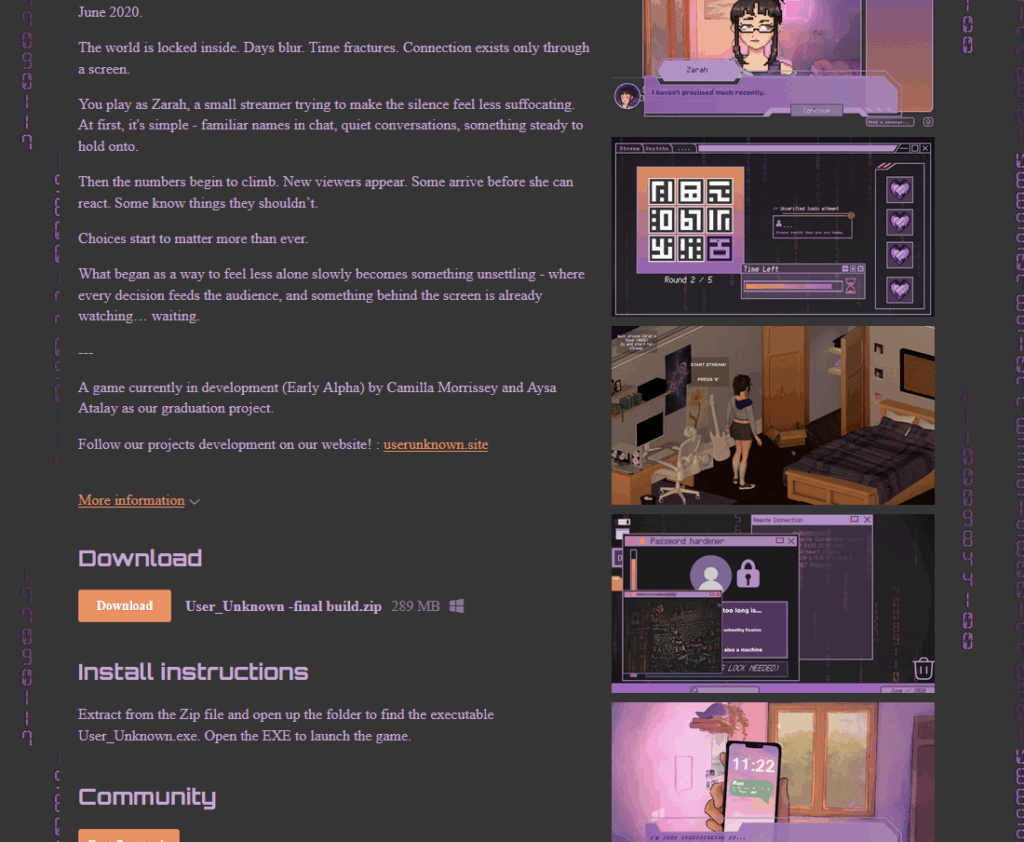
Finally, I updated the game’s itch.io page with the newest build and additional screenshots to better showcase the visual improvements and overall progression of the project. I also produced a playthrough for our game, which showcases all the narrative branches of User_Unknown. As our audience and feedback pool had continued growing throughout development, maintaining the public-facing presentation of the game became increasingly important both for visibility and for gathering useful external critique ahead of final submission.
Overall, Build Three represented the transition from a functional prototype into a far more refined and complete experience. The sprint focused heavily on responding directly to player and tutor feedback, improving immersion, refining gameplay feel, and strengthening the visual identity of User_Unknown. It was also one of the most technically demanding stages of development for me personally, as it required balancing character art production, programming, animation implementation, narrative integration, and external collaboration simultaneously.
Please take a look at my commits on the public GitHub repository for a closer, detailed view of the final scripts I produced!