
This part of my research focuses on how visual novels, RPGs, and narrative-driven games organise player dialogue choices. I wanted to understand how dialogue options can do more than show different lines of text. They can also record player decisions, unlock later responses, hide unavailable options, change relationship values, or even affect the direction of the story.
At the beginning of the project, I looked at the story structure in the GDD and noticed that the game already included multiple-choice dialogue. Because of this, I started researching how dialogue choices are structured in other games. I played several visual novels made with Ren’Py and also tested systems where NPC relationship values could be changed, similar to using a cheat or debug tool. This helped me observe whether dialogue content changed when NPC intimacy or relationship values were modified.
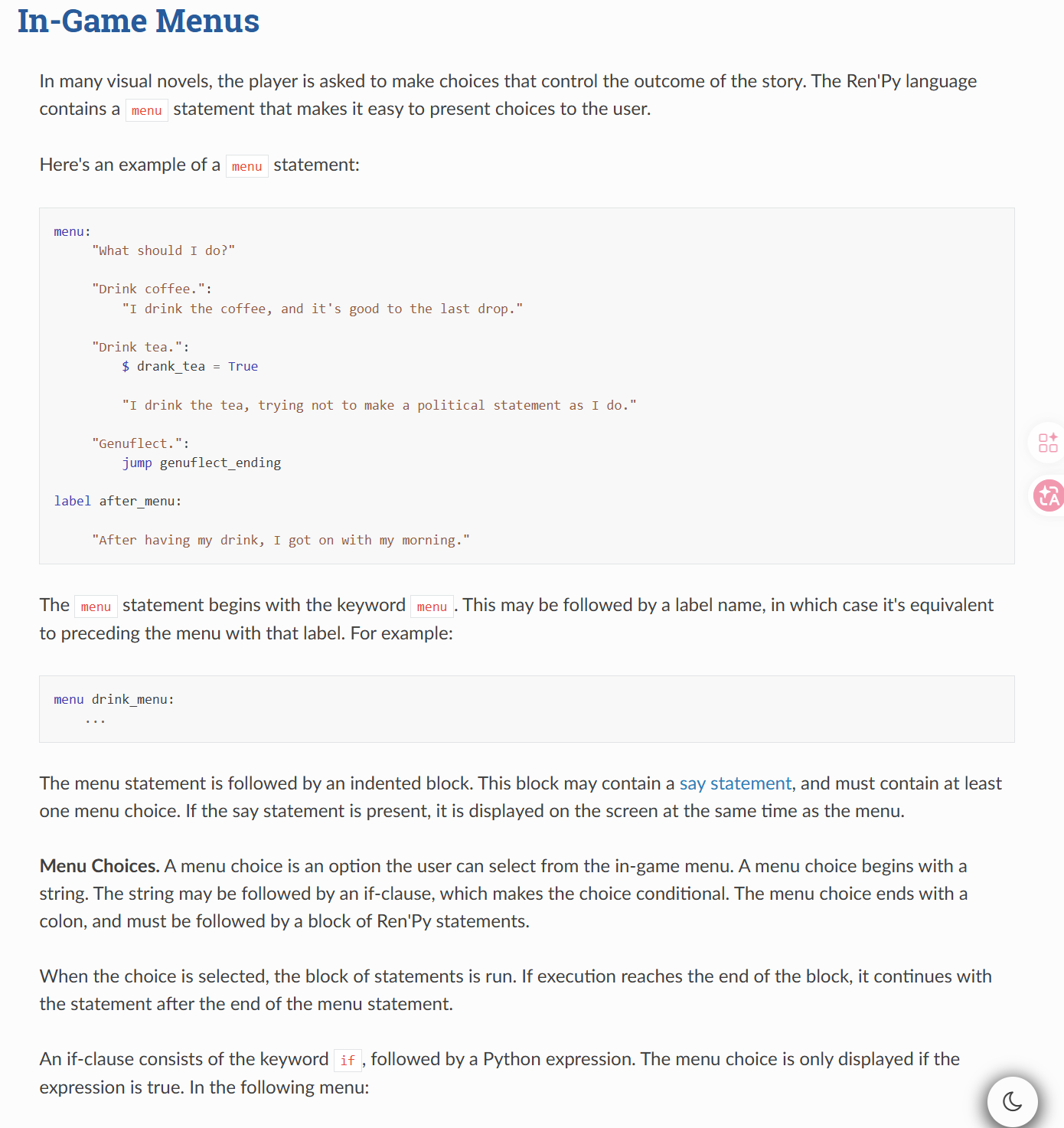
After that, I looked at the Ren’Py documentation to understand whether this kind of branching dialogue system was technically possible. Ren’Py uses menu statements to present choices to players, and those choices can control how the story continues. It also supports conditional logic, meaning choices and dialogue can change based on variables and previous player actions.
Dialogue Choice Types Observed During Research
1. All choices are available, but wrong choices have consequences
One common structure is that all choices are visible to the player, but different choices create different consequences. For example, the player may be free to choose any response, but a rude or unsuitable answer may reduce NPC intimacy, trust, or reputation.
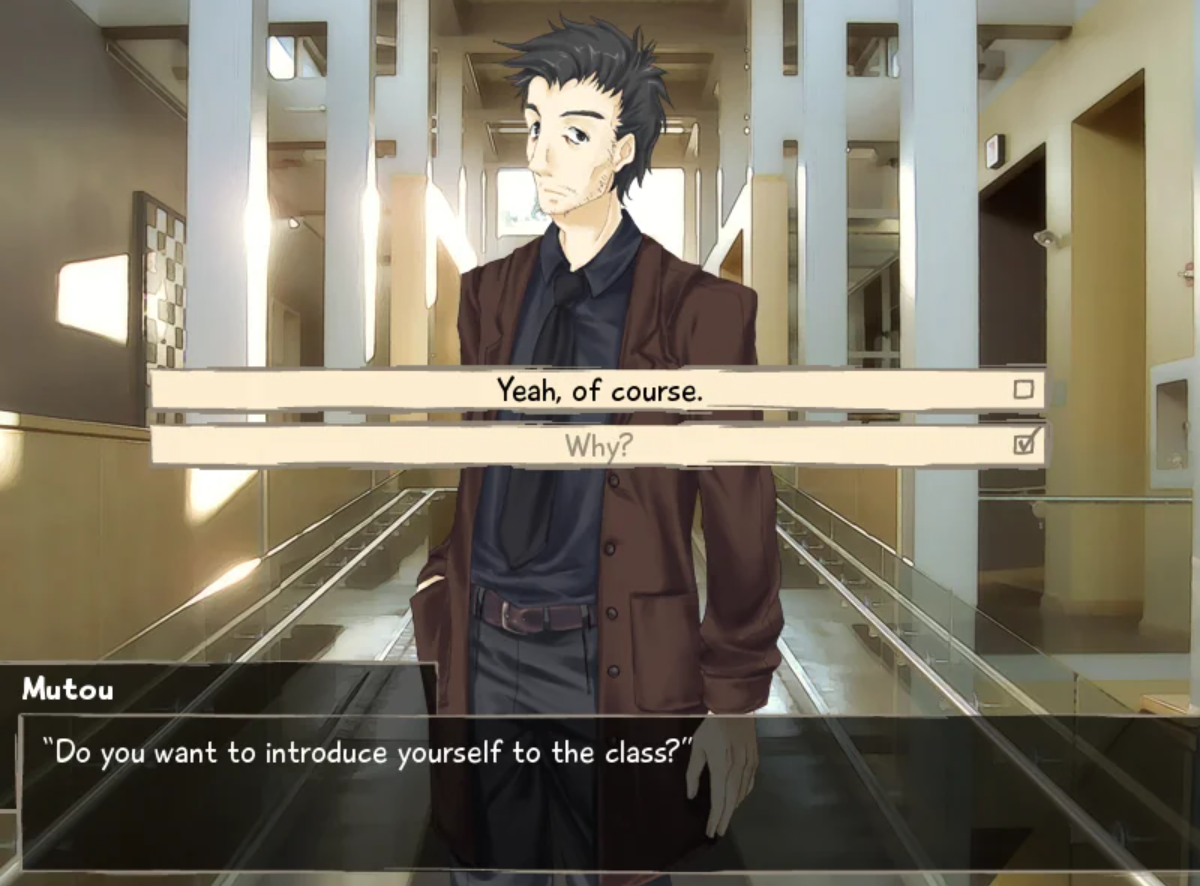
2. Some choices are locked until requirements are met
Another structure is that some dialogue options only appear after the player meets a requirement. This requirement could be enough intimacy, a certain relationship level, a completed task, or possession of a specific item.
3. Choices can create long-term branching stories
A more complex structure is long-term branching narrative. In this type of design, the player’s choices across the whole game can gradually affect later missions, relationships, and endings.
For example, Cyberpunk 2077 uses branching mission structures where player choices can lead to different outcomes, mission paths, character consequences, and endings. Some quests can be solved through different approaches, such as negotiation, combat, alliance choices, or betrayal. This shows how dialogue choices can connect with wider quest design rather than only affecting the current conversation.
Quest Items and Conditional Dialogue Research
Another part of my research focused on quest items and key item systems. Many adventure games and RPGs use item conditions to control whether the player can trigger certain interactions. The player often needs to obtain the correct item before unlocking a new dialogue, opening a new route, or progressing a task.
A simple example is quest-driven games such as Genshin Impact, where the player is often guided by a main quest to speak with an NPC, complete a task, collect or deliver an item, and then return to the NPC to trigger the next stage of dialogue. In this kind of structure, dialogue progression is connected to task completion and item delivery.
Game Developer’s article about quest lines also explains that quest design can organise conversation topics, NPC responses, and key moments that change the game state. This shows that task items and dialogue content can work together as one progression structure, rather than existing as separate systems.
From this research, I understood that item-based dialogue usually works through condition checking. If the player does not have the required item, they only see default dialogue. If the player has obtained the correct item, the game can unlock a new option, new response, or new task outcome.
Reflection and Application
Through this research, I began to understand dialogue as a system rather than only as written text. A strong dialogue system needs to check variables, read player progress, record previous choices, and respond to item ownership or relationship values.
For my own development thinking, I wanted to create a structure where the player would only trigger default dialogue if they had not collected any relevant item. Once the player obtained a new item, the dialogue system should be able to detect it and display a new option. This would make the player’s exploration and task progress feel connected to the NPC interaction.
One particularly interesting design idea came from Alex’s mushroom dialogue. The Mushroom was not planned as a simple collectible. The player could first bring the Mushroom to Marcus for identification. If Marcus had already identified it, then talking to Sierra afterwards could trigger another related dialogue.
This was a unique mechanism that I had not considered at the beginning. It showed me that an item does not only need to be checked as “owned” or “not owned”. The game can also record whether the item has already been processed by a specific NPC. This requires a story flag, not just an inventory check.
I was glad to help the team implement this feature in the game. It made me understand that item interaction, dialogue choices, relationship values, and story flags can work together to create a more responsive narrative system.