At the start of Week 2, we were introduced to the idea of the “game poem” through a talk by Jordan Magnuson. His games are minimalist, personal, and emotionally charged. Rather than aiming to entertain, they are built to evoke emotion and invite introspection—often without rules, UI, or even goals. Our design brief was to create a game poem using metaphor to express a specific emotion. I chose the feeling of loneliness as my central theme.
For development, I used Bitsy — a tiny 8×8 pixel game editor designed for creating narrative-driven, minimalist games.
Game Concept
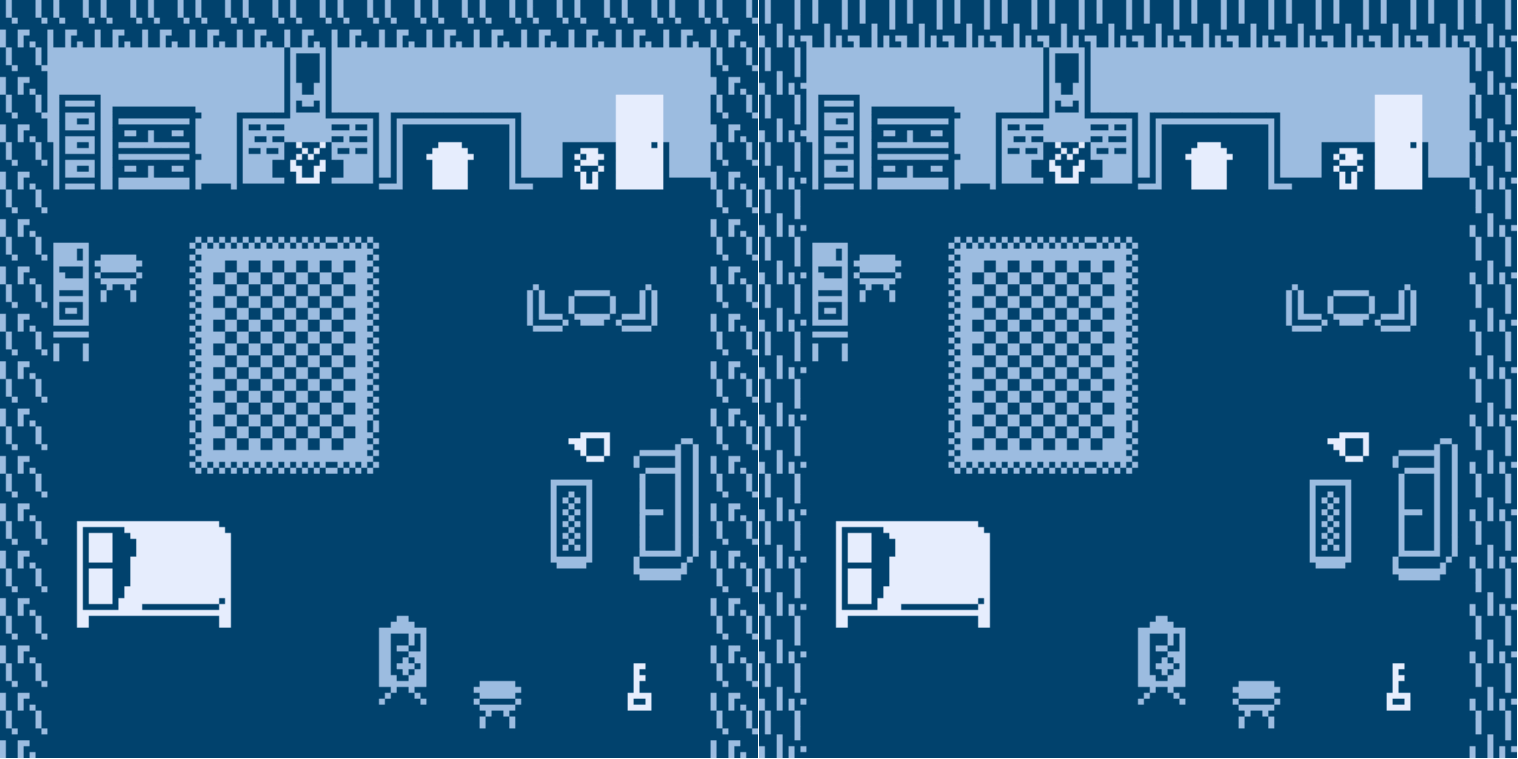
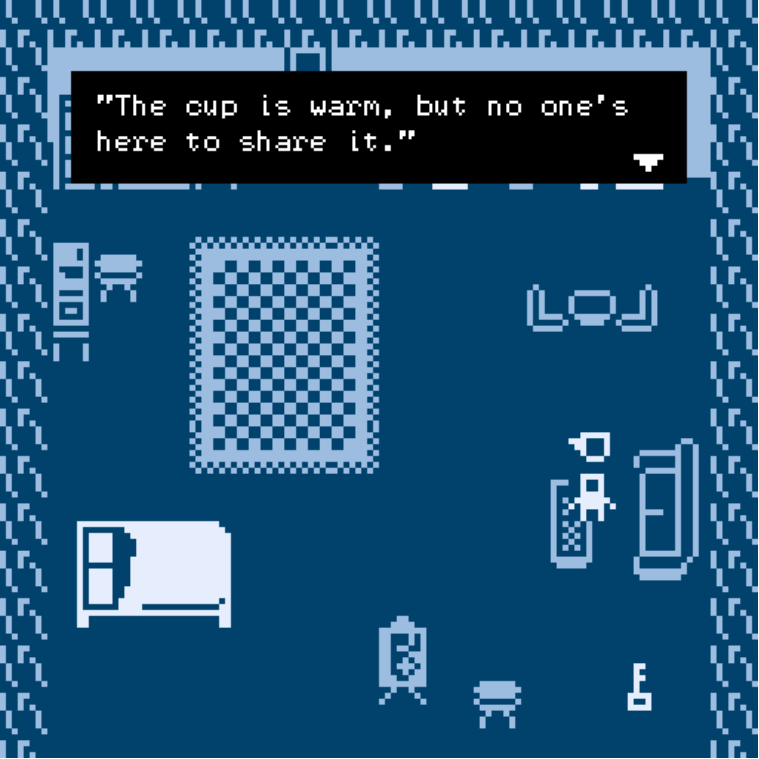
In my concept: On a rainy night, the player wakes up in bed, tossing and turning, unable to fall asleep. He walks slowly through the dimly lit room and notices some quiet and delicate everyday objects:
A teacup that is still warm
A fireplace that has not yet gone out
A coat with a familiar scent, left unworn for a long time
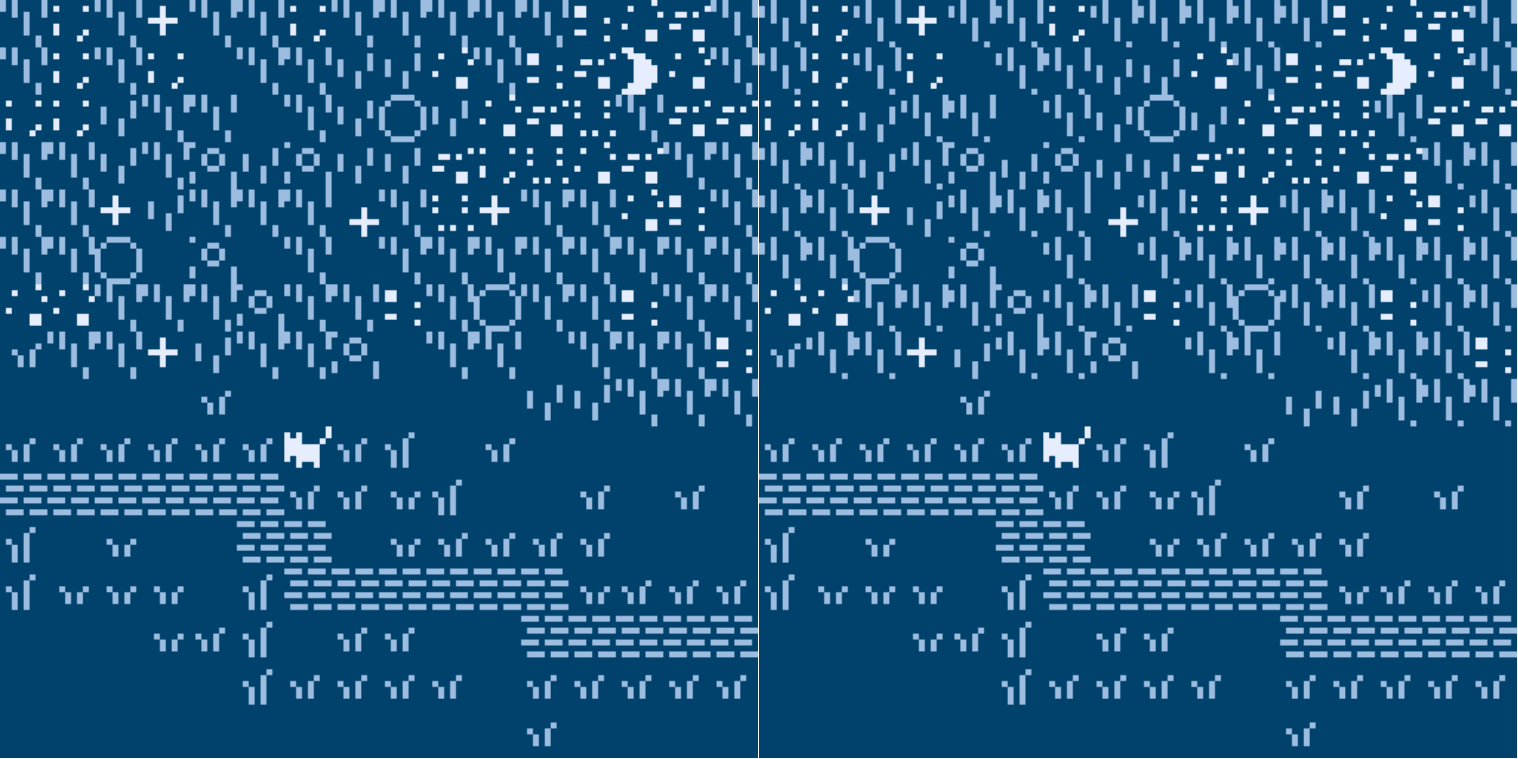
These seemingly familiar yet unresponsive objects silently amplify his sense of loneliness. He decides to leave the room and enters a rain-blurred forest. In the grass, he comes across a small cat, curled up and peacefully asleep.
The cat is also alone, but appears calm and at ease. At that moment, the player undergoes an emotional shift: from resisting loneliness to learning to accept it. He returns home. The space remains as quiet as before — but now, his perception has changed.
I hope that this small game will not include any traditional game mechanics: No win/lose conditions, no instructions — only through pacing, atmosphere, and simple object-based dialogue interactions, guiding the player to experience the emotion itself, rather than “completing a task.”
Room Structure
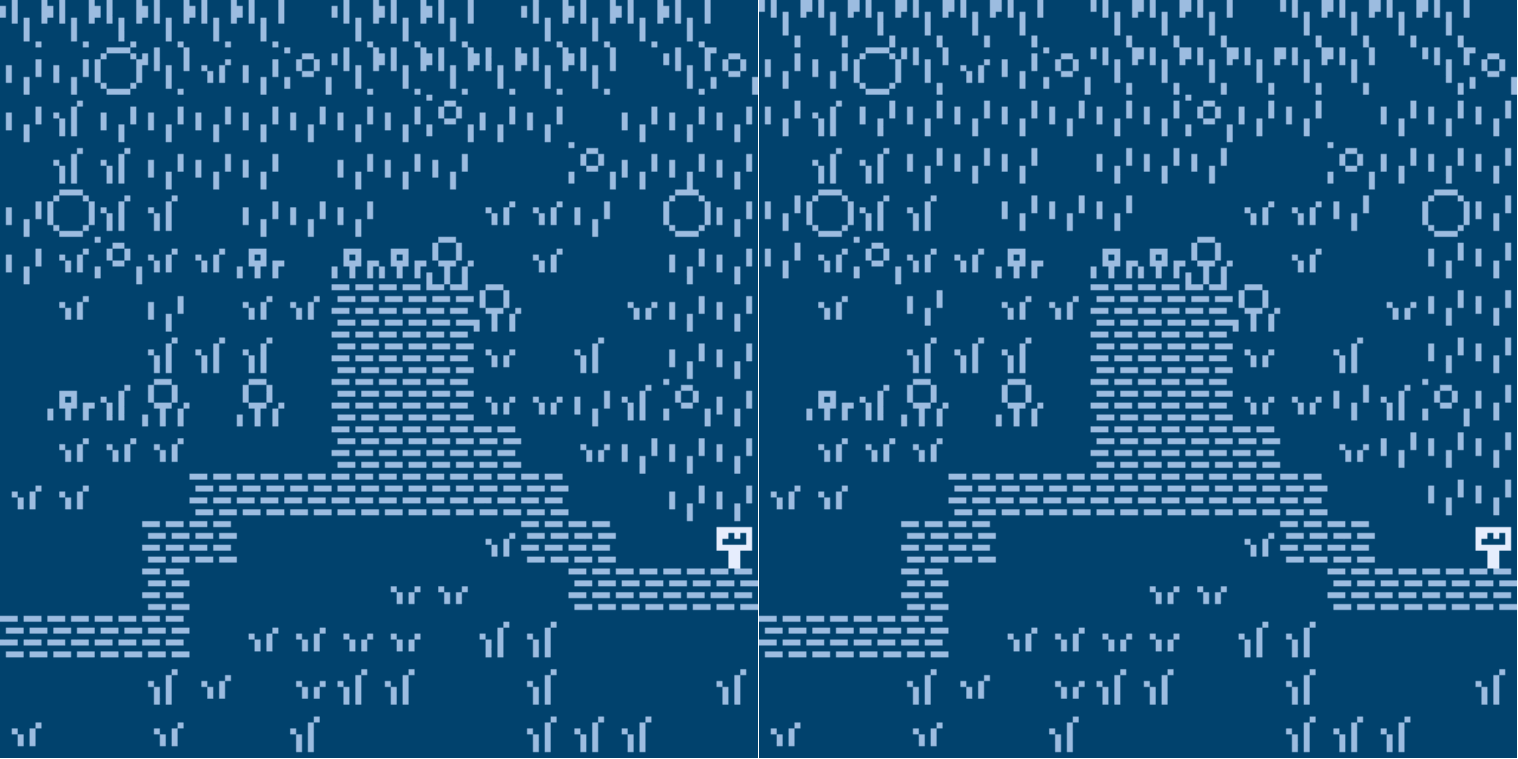
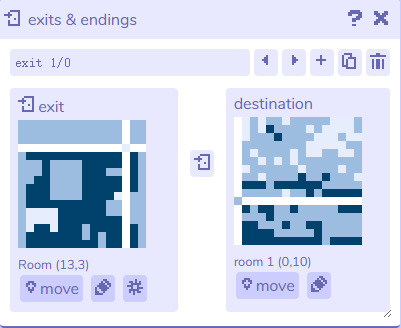
Each scene in Bitsy is built as a ROOM, and I designed three of them for this project. Inside each room, I added interactive objects (with dialogue triggered upon interaction), exits, and some animated tiles to enhance movement and pacing.
Interactive Objects
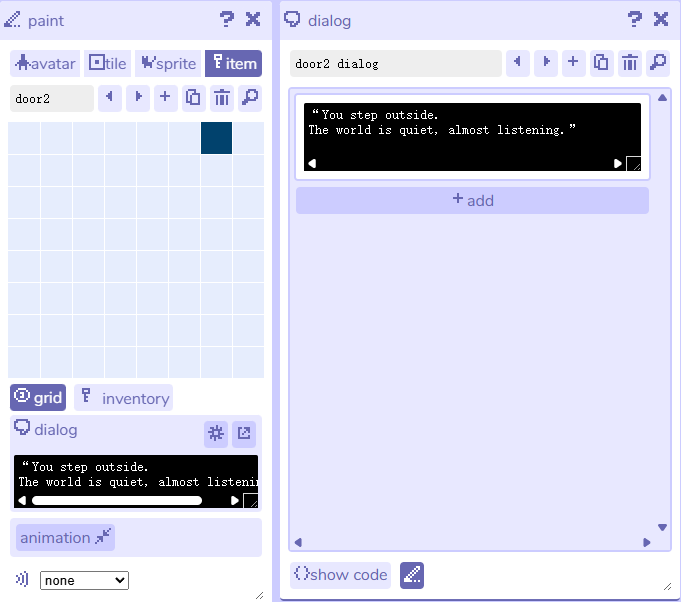
In Bitsy, I created interactable objects by first drawing an 8×8 pixel sprite. Then, I assigned a dialogue to it using Bitsy’s built-in system. When the player stands on or walks up to the object, a black dialogue box appears on screen, showing the text I wrote. This simple interaction adds subtle narrative depth without needing complex mechanics.
Exits
Bitsy’s built-in exit feature allows the player to move between different rooms. By placing exits on specific tiles, I can guide the player from one scene to another, creating spatial transitions and narrative flow.
Visual Style
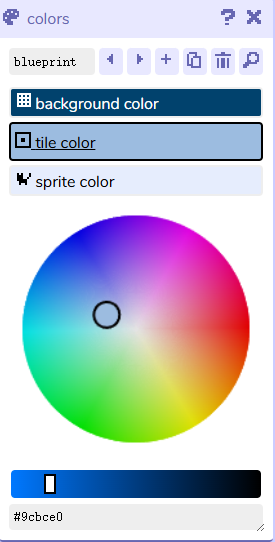
Bitsy only works with 8×8 pixel tiles, so there’s not a lot of room for detailed visuals. This built-in limitation just happens to fit the feeling I wanted—small, fragile, and a bit distant. The colour palette is mostly cold tones like blue and grey, which match the rainy night setting and the overall quiet, lonely mood.
Play Test
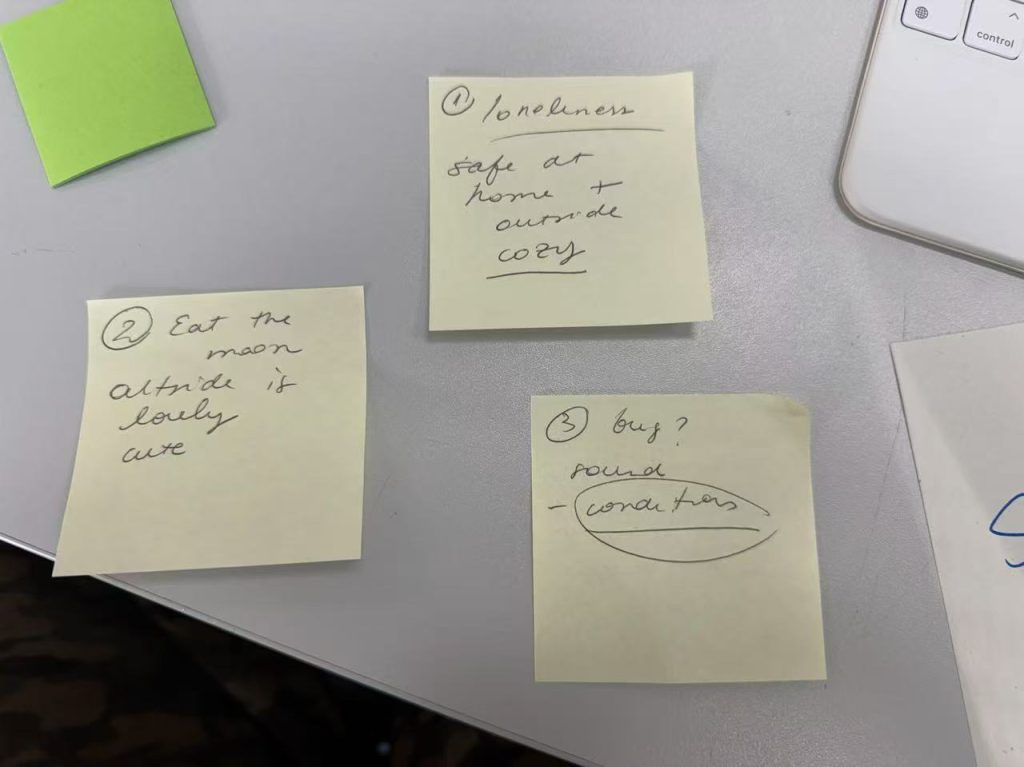
After presenting in Studio, I received some sticky-note feedback. One of them pointed out a small bug during the playtest, while others offered new perspectives that helped me think more openly about the theme of loneliness.