

What Makes a Monster?
Monsters are a staple of fiction and horror, but most importantly, folklore. They reflect a society’s beliefs, anxieties, cultural practices, and could serve as explanations to the then-unknown. The oldest monsters in oral history are fusions of two or more creatures, such as the Babylonian Tiamat or Egyptian Apep, but more modern, staple monsters of the Western world stem from Victorian gothic literature, such as Mary Shelley’s Frankenstein, or Bram Stoker’s Dracula, which featured creatures of the supernatural. And with the new age of the internet, fictional creatures can be made up, popularised, and enter public consciousness in record time, such as with myths of the “not-deer” or Slenderman.
But where did this tendency to invent horrifying creatures of the uncanny come from? Why do we love to scare ourselves with stories like this?
Etymological Clues
“Monster” derives from the Latin “monere”, which means to warn, remind, instruct, or foretell. From “monere” turned “monstrum”, meaning a portent or warning, which eventually turned into the English “monster”.
With the etymology, folklorologists can deduce this much: that monsters in stories have been used as tools to instruct, remind, warn, and foretell. They’re utilised in stories to advise and caution, and to veer away taboo behaviours, typically towards children, with threat. That monsters have always been based in myth, and require a cultural practice of storytelling to maintain. This also means that monsters are not necessarily always scary, just that they contain the teachings of the society they originate.
Monster Theory
Jeffery Jerome Cohen coined the term “monster theory” as an academic term that studies and investigates humanism around the world, incorporating disciplines such as literature, sociology, psychology, and even paleontology. In his 1996 essay, Seven Theses, he outlines seven different ways monsters show up in the cultural consciousness:
- The monster’s body is a cultural body
- The monster is a metaphor for its original culture as the embodiment of a time, feeling, and place, existing as a projection and a construct of desire, fear, anxiety, and fantasy. This gives them life, and an uncanny independence seperate from the society that believes in it.
- The monster always escapes
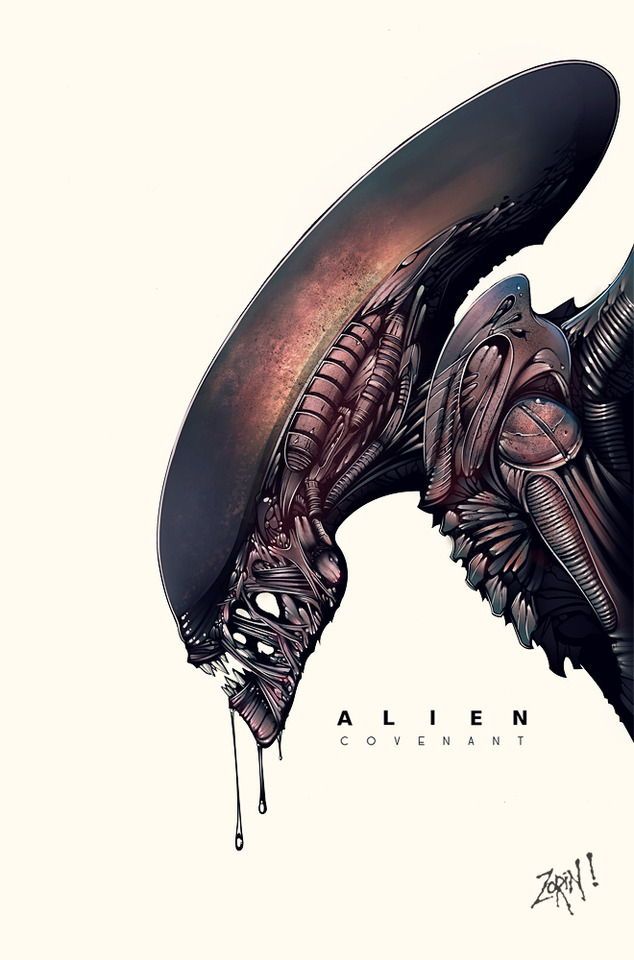
- The monster must never be caught, and will always get away, to persist in the fear that it is undefeatable and always closer than one might think. Traces of the monster may be found (footprints, bones, the havoac it wrecks), but the monster itself may not. Even though Ripley destroys the Alien that stalks her, the Alien returns for innumerable sequels.
- The monster is a harbinger of category crisis
- The monster appears in times of crisis, either as cause, consequence, or adjacent to the crisis.
- The monster dwells at the gates of difference
- The monster is often physically different, or else exaggerates a cultural, political, economic, or sexual difference into a montserous distortion. This teaching is often used to segregate an anterior or different society from the rest – aboriginals of Canaan being turned into giants to justify Hebrew colonisation in the Bible.
- The monster polices the borders of possibility
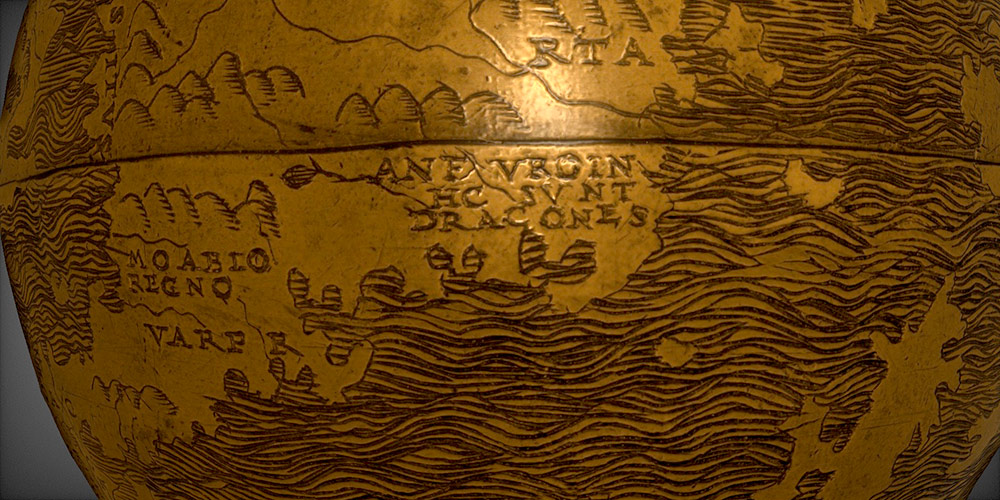
- The possibility of monsters police possible actions, limiting the society to its own previous, narrow rules. For example, medieaval merchants may have disseminated maps depicting sea serpents at the edge of their trade routes to discourage exploration and establish monopolies. Monsters would also typically enforce rules of partriarchal, homosocial, and white characteristics.
- Fear of the monster is a kind of desire
- The monster is linked to forbidden places and feelings, and yet it also inherently attracts; at times (when constrained by geographic, generic, or epistemic marginalisation), it can function as an alter-ego to let people play out fantasies of aggression, or the fleeting joy of being frightened to experience corporality.
- The monster stands at the threshold of becoming
- Monsters reflect how we percieve the world, and how we have misrepresented what we have seen. Monsters are always humanly constructed, and therefore the society itself will always embody a piece of the monster.
- Monsters reflect how we percieve the world, and how we have misrepresented what we have seen. Monsters are always humanly constructed, and therefore the society itself will always embody a piece of the monster.
Monsters evolve with time, culture, and personal beliefs – just as humans do. They’re a societal construct, reflective of the place, time, values, anxieties, and boundaries of its society. These seven outlines can show different fears, social rules, and values of the time and place in which belief of the monster is upheld. As time marches forwards and these monsters stay held in public consciousness, so too do their interpretations.
For example, werewolves were originally seen as sympathetic and virtuous. However over the period of the 12th century, sheep-farming became important to the European economy, therefore making wolf attacks to sheep disasterous – and so the werewolf became an enemy. The Christian Church painted them as demonic, and even used them in witch trials, accusing women of being in league with werewolves. Now, after a hundreds of years of cultural seperation from the Church, werewolves have become a metaphor for transformation and rage, tragic figures of isolation from the rest of society. The same monster, its story used for different purposes over the course of history.
The Self and the Other
The “abject” is something that prompts fear and disgust, but also curiosity, and helps us define who we are by what we are not, both on an individual and communal level. Monsters exist in this “abject” space, overlapping with the “uncanny”, and in the space between Freud called it the “unheimlich” – the unsettling feeling when we encounter something both familiar and eerie.
Monsters aren’t necessarily about not being human, but rather about not being accepted. Many monsters in mythology aren’t necessarily evil, but serve as reminders as to why a society doesn’t cross a religious, moral, or spiritual boundary. For example, centaurs serve as a reminder as to why beastiality is banned in most cultures; even the way they look, half-human, half-horse, serve this function, while also reminding us of our inherently animal nature.
This speaks to a deep psychological nature of humans – that, as social animals, we need to differentiate ourselves from our own society, and those we consider “other”. Monster narratives ask what we would do if we were a part of the story, to use as a moral testing ground. Monsters represent what it means to be human, and what happens when we stray too far from our own humanity.
Jerome Cohen, J. (1996). Monster Culture (Seven Theses). [pdf] pp.1–25. Available at: https://files.commons.gc.cuny.edu/wp-content/blogs.dir/20578/files/2022/05/FYW-Sample-Reading-B.pdf [Accessed 25 Oct. 2025].
History of Monsters
Legends of classical mythology contained hybrid creatures of two or more animal forms, frequently of great size and ferocious appearance – this is where beasts such as the manticore (a lion with a human head and scorion tail), dragon (half reptile, half bird), and echidna (half women, half serpent) derive. Monsters also feature exaggerated traits, such as the giants, who were like humans except much, much larger.
Many monsters, such as unicorns and hydras, were born of scientific misinterpretation. It’s long been theorised that dragons were inspired by prehistoric reptile bones, and that medieaval unicorn horns belong to narwhales. The elephant skull may have incited tales of the cyclops. In paganism, these creatures were ancient, moreso than the Gods themselves, and forces of chaos.
Monsters also served a significant cultural reason: the hero must have a monster to fight, otherwise what made them so heroic? If monsters symbolised a descent into crisis and the destruction of a society, it was the hero’s job to restore order. But as monotheism and Christianity started to spread, monsters became a big problem. Why would a benevolent God create such creatures? Many theories were postured by religious scholars at the time, such as creatures like the Behemoth and the Leviathon were created to reveal God’s true power, or they were outside God’s holy divination and descended from Cain who, at the Apocalypse, would join forces with the Antichrist to persecute humanity.
By the medieaval era, monsters were less important than other enemies of God; namely, witches and demons. To fight them, you didn’t need a hero, but piety, humility, and discipline. Monsters were internal, representing not an external force but a personal temptation. In this way, stories of monsters and stories of religion serve the same purposes; to keep a society in line and drive out the dangerous “other”.
Monsters in the Scientific Age
In the early 18th century, Carl Linnaeus caught wind of a ferociious monster being displayed in Hamburg: the hydra. Belonging to the burgomaster of Hamburg, and with the interest of the King of Denmark, he hoped to sell this famous creature for a profit. However, when Linnaeus arrived, he saw the hydra was nothing but the work of a skilled taxidermist. He proposed that it had been created by medieaval monks to demonstrate the truth of the Book of Revelations, and convince the faithful that the Apocalypse was soon.
His debunking of the hydra was an indication of the scientific period to come – the age of Enlightenment was around the corner, and with it the rise of science, rational thinking, and the industrial revolution. Victorian society began to shift away from religion.
Monsters were being debunked left and right. Linneaus went on to create the Linneaus system of classification – a way of categorising animals and plants into species and subtypes – so that a heirarchy was made of nature, and an order brought to “God’s creations”. This classification system would help Charles Darwin in 1830 bring about the theory of evolution, straying society even further away from religion.
One might think that society would shift away from monsters during this time. And yet, nineteenth-century monsters have become some of the most famous, reflecting not only the scientific advancemnets of the time, but Victorian society’s nature and morals. Monsters weren’t seen as real, but they remained cautionary tales.
For example, in 1818 Mary Shelley introduced Frankenstein’s monster to the world. In the novel, the monster can speak for himself, and justifies his hideous acts because he never recieved love from his parent, Frankenstein himself – implying that monsters are not born, but made, as represented by Victor Frankensteni literally making him. Later, in 1886, Stevenson would publish Dr. Jekyll and Mr. Hyde – Mr. Hyde being the monsterous reflection of Dr. Jekyll, released because of the intensely oppressive conditions of Victorian society. And in Bram Stoker’s “The Jewel of Seven Stars”, the Mummy was introduced from new disciplines in anthropology and archaology.
During the nineteenth century, “freak shows” and “monster spectacles” were also common, exploiting disabled people for money – particularly popularised by P.T. Barnum in his circus.
Leave a Reply