1.Professional Context Reflection
As a third-year Games Design & Art student I have naturally gravitated towards programming, interaction design, and rough design sketches rather than creating polished concept art or detailed narrative designs, which up until these talks I thought as a ‘Game Design’ student I should be able to do everything. These talks have shifted the way I view my skills–not as arbitrary or impulsive decisions, but as a central part of my professional identity rather than merely compromising for a role. Listening to different professionals talk about how all their roles blend design thinking, technical implementation, and problem solving has helped me recognize that my habits in quick and easy prototypes in unity, scribbling my games interaction loops, focusing on mechanics and feedback align strongly with established design practices in all tech hybrid roles.
This blog is a reflection on how their expertise has helped me reframe my ‘messy but functional’ prototypes, scribbled concept designs, and mechanic-focused C# scripts, as valid portfolio material rather than keeping this hidden and only highlighting the final polished products. Instead of this work being seen as rough or unfinished it actually demonstrates how I break down interaction problems, structure my code, and iterate based on testing and feedback. I will also explore where their advice has either aligned with or challenged my assumptions about the industry and how I should be preparing for roles that lie along the spectrum of design and tech. Whilst also focusing on the strong competition for junior roles and the skills employers are looking for such as strong programming, problem solving, and communication skills which gives me a chance to acknowledge both my strengths and gaps.
2.The Games Industry and Job Market
From Jamie talking about his redundancy, to Liv’s patchwork of jobs, to Rhys’s canceled projects, the industry did not sound like one where I would have a secure job with a clear progression. Instead, their stories required constant networking, continuous learning, the ability to juggle jobs that demand skills across the tech and design spectrum, working with small studios, having to have a freelance arrangement, or short-term contracts. This is the reality of the UKs game sector where no matter how much the industry grows, individuals’ careers are disrupted by layoffs, studio closures, and continually shifting business models.
This was the opposite of what I had originally believed, which was that success meant jumping into the ‘dream’ junior rolle at a AAA studio and climbing my way up to a senior role. Instead, the reality is that each of these speakers had to move between studios, have a balanced income stream, temporarily step into adjacent role, and this is all backed up by the UK sector data that suggests that short contracts, side jobs, and shifts between sectors and the norm rather than signs of failure, which has made me reconsider how I would judge my early steps into a career in the games industry.
Seeing this alongside the information on the UK games workforce has led me towards thinking more strategically about which skills give me more flexibility rather than locking me into a certain route. The current job market is currently seeing a demand for roles such as, programming, technical roles, and system design which require the ability to debug, have strong scripting knowledge, design readable interactions, and the ability to work in other tech adjacent fields. As a response to this, I am increasingly focusing on developing my C# knowledge and practicing how to communicate interaction logic in my work, this will leave me in a better place when it comes round to applying for jobs due to the need for those with confidence in the design and tech field.
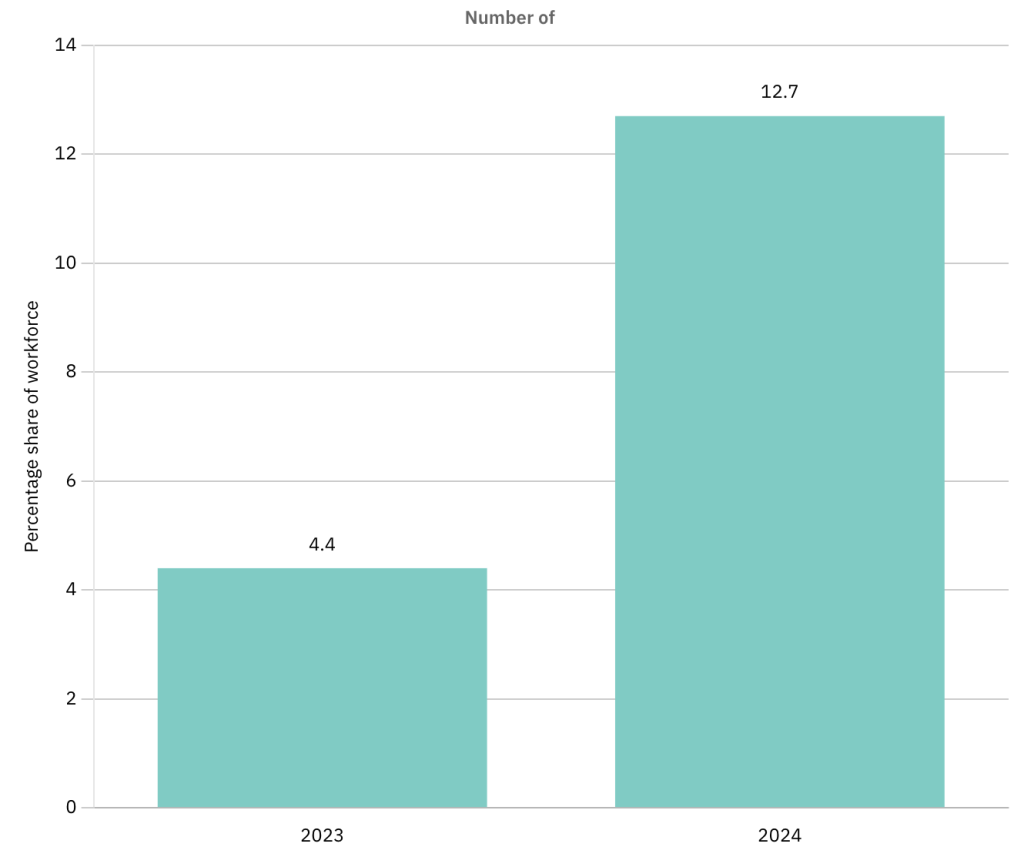
I created this graph to map out the dramatic rise in contractors / freelancers being employed in the UK games industry from 2023 – 2024. This paired with the continued rise of UK game industry layoffs from around 900 in 2023 up to 1000 in 2024 reinforces the idea that freelancing and contracting are becoming the norm in the industry.
3.Professional Identity and Practice
Liv and Rhys really got me thinking as to what I actually like doing day to day instead of thinking what a Games Design & Art student is supposed to enjoy and excel in. Liv’s “find a thing” advice about specialism got me thinking if I wanted to go down the conventional art niche such as showing off my paintings, sketches, and environment art but when I compared this against Rhy’s art to tech spectrum and my own project experiences, it became clear that my both strongest work and what I genuinely enjoy is wiring up systems, designing systems, solving logic problems over focusing on areas like 3D modeling or shading.
This duality created a divide in my mind between the visual expectations of the course and the invisible nature of my ‘best’ work. Our final major project showcases the polished visuals, which obviously make my grey boxed scenes and design sketches look ‘unfinished’ compared to the final rendered characters, environment and UI polish. These talks helped open my eyes to roles that suit my ‘best’ work such as gameplay programmer, technical designer, and tech artist that are a hybrid that sits in the middle of the tech and design spectrum and are by no stretch roles for failed artists or half-programmers
Following this advice, I have begun to plan how I will best present myself as a design-focused programmer rather than a generic game artist or game designer. I have started creating a folder called ‘Mechanic Prototypes’ where I have started to record and upload my mechanic-focused work that I’m developing. Instead of breaking down and explaining a final project, this section will collect work from not only my previous games i’ve worked on but current work on my climate based game idea and any further prototypes that I create that centre around gameplay mechanics that show my understanding of drag-and-drop systems, experimentals dialogue development, or even simple puzzle prototypes which demonstrate interactive goals, input handling, state management, and feedback design even if they don’t look visually finished. This way of showing my work clashes with my instinct of wanting to hide my unfinished work, however, this is a necessary step towards applying for the roles im targeting such as junior programmer or technical designer as its evidence of my problem solving skills which are essential in these roles.
4.Networking
Networking to me was something I associated with formal events or through posting on LinkedIn, which felt different to how it is now as a university student. The talks however, have offered a more practical picture of how this works in real life, Jamie’s role arrived through a previous colleague, Liv built her connections through and Limit Break, Rhys contacted TwoPoint Studios CEO directly. Together, they suggested that networking is less about performance and more about how consistent you can be in talking to people in the right places and being clear about what you do.
So far, the majority of my opportunities, including my up-coming internship, have come from existing contacts and everyday conversations rather than deliberately reaching out to people in the games industry. The speakers woke me up to the limitation of this through only relying on chance encounters and general networking instead of using specialised communities such as game james, Discord servers, and even studio events where people who are already in the industry and are interested about mechanics, tools, and other game design features interact. By highlighting this massive gap in myself this has helped me see multiple new ways of networking and changed the idea of it being a formal thing into a fun and direct way to speak to industry specialists.
To make this change, I plan to start small and first do some research and find a couple of game development communities on either reddit or discord and aim to try and engage with the community by either asking questions or posting my work and asking for feedback. This should hopefully start a discussion within this community and allow me to engage with numerous professionals in the industry.
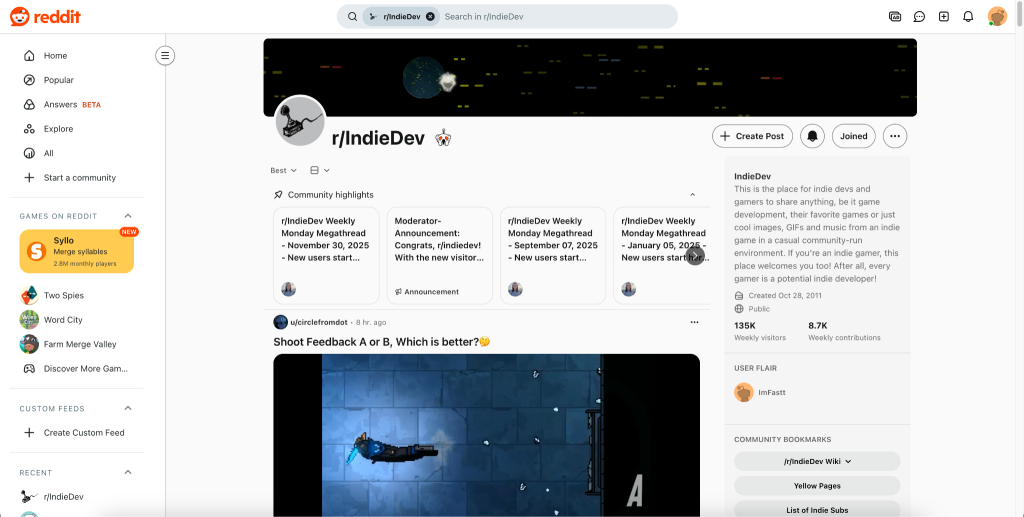
This screenshot shows an IndieDev community on reddit that I have joined where discussions talk about feedback, suggestions and questions indie developers may have.
5.Applying and Presenting Professionally
The advice was clear from Jamie, Rhys, and Bea that if I am serious about wanting a job in programming or interaction design, my applications need to show off skills instead of hiding them. Even up until recently the advice of “tailor your CV”, “Document your code”, and “Show your teamwork skills” have sounded like extra hassle when creating features and writing out my CV. Hearing a hiring manager describe how quickly they skim over CVs and portfolios looking for key skills, specific tools, clear explanations, and evidence of teamwork has opened my eyes to the necessity of gathering evidence whilst working.
After hearing Bea talk about how important our CVs are, I decided to rewrite it so it reads more like an application for a junior developer rather than a generic student job. Instead of highlighting my roles in retail, hospitality, and generic skills my new version features my technical and design skills such as, C#, Unity, Version Control, debugging, game design principles, documentation, and software like Fusion 360 and NVivo. By showing off these skills it helps fill the gap that Bea pointed out and in my future applications should help get me selected for interviews.
Additionally to my CV, I began planning my portfolio pages so they support the skills I mentioned in my CV. For my most recent project I’ve started a draft where I have created a brief section called “My role & Responsibilities” that breaks down my contributions to the project from design choices to creating the scripts. This will make it clear for the recruiter to distinguish between what I have done compared to the group’s outcomes, this should help the hiring team compare my skills to the specific job role requirements.
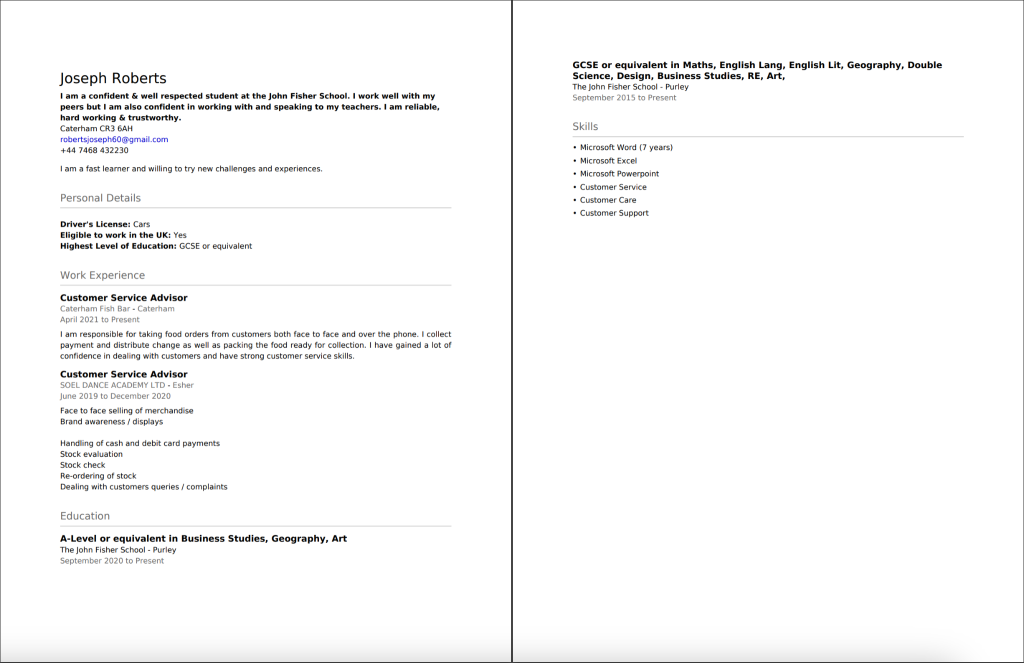
This was my CV before I had any advice from the speakers. It was 2 pages, it had not been updated in a while, no useful soft skills had been listed and my brief about me did not include anything about my aspirations.
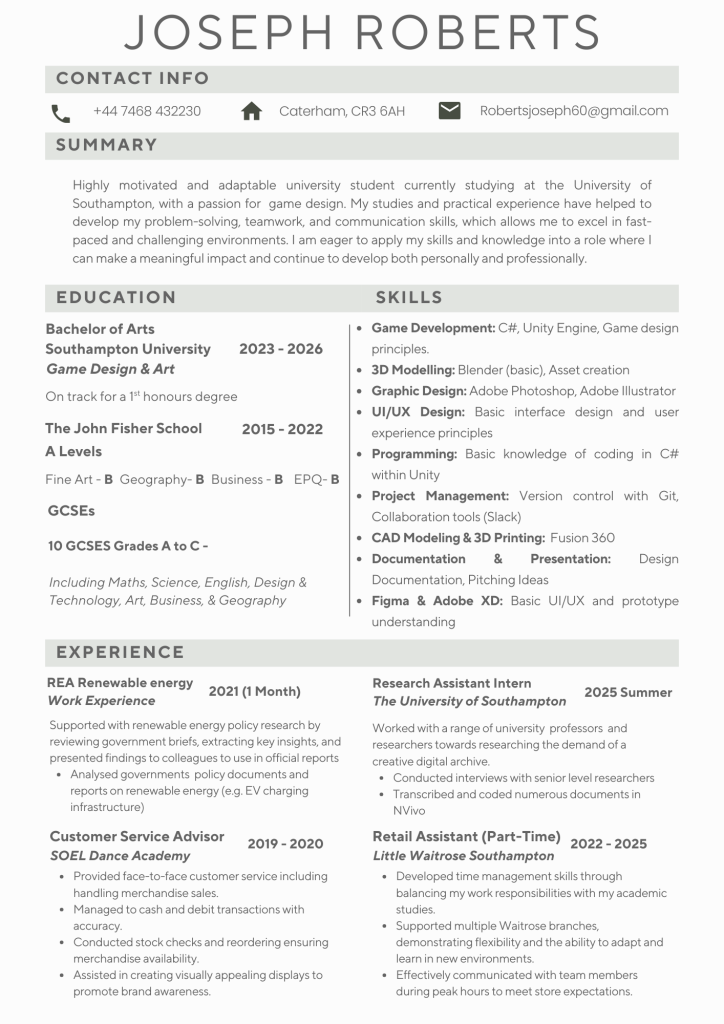
This is my updated CV which includes all the advice I had been given, making sure to keep it compact and highlight all of my skills and experience, whilst ensuring my summary explained my passion for design.
6.Digital Presence
Jamie’s talk stood out from the rest due to his speciality of being a games programmer, this meant his comments about how to structure a GitHub account pushed me to think about how I should be displaying my work. I currently hide or sometimes get rid of proof of debugging or early whitebox scenes on the assumption that recruiters only want to see the polished final project. Yet it seems that from all the speakers’ advice they have stressed the importance of showing process and decision making as this is how studios gauge how a candidate tackles problem solving.
Moving forward with this advice I am planning to present each major prototype in three layers: layer one will consist of a playable build, the second layer will showcase a clean repository, and layer three will be a short description of the prototype and decisions made. This allows for a number of things to occur such as, by having a playable build published to Itch.io it allows anyone to have quick access to interact with the project, the GitHub repo displays conventions, comments, commit history, and showcases project organisation, and the prototype brief brings together all the rough sketches and notes that shaped the prototype. This way of presenting reflects what is expected of junior designers & programmers in any studio.
To pilot this structure and determine if it would effectively communicate my prototype I tested it out with my previous project Those Left Behind. The first layer was already complete with the project already being published to Itch.io however, as all commits were made through Github Desktop they aren’t displayed on my GitHub account, but I can circumvent this issue by creating a document with a screenshots of the commit history in Github desktop, and finally I can finish this document off with brief captions and links to any references of early greyboxing / sketches. Here is some screenshots of this pilot:
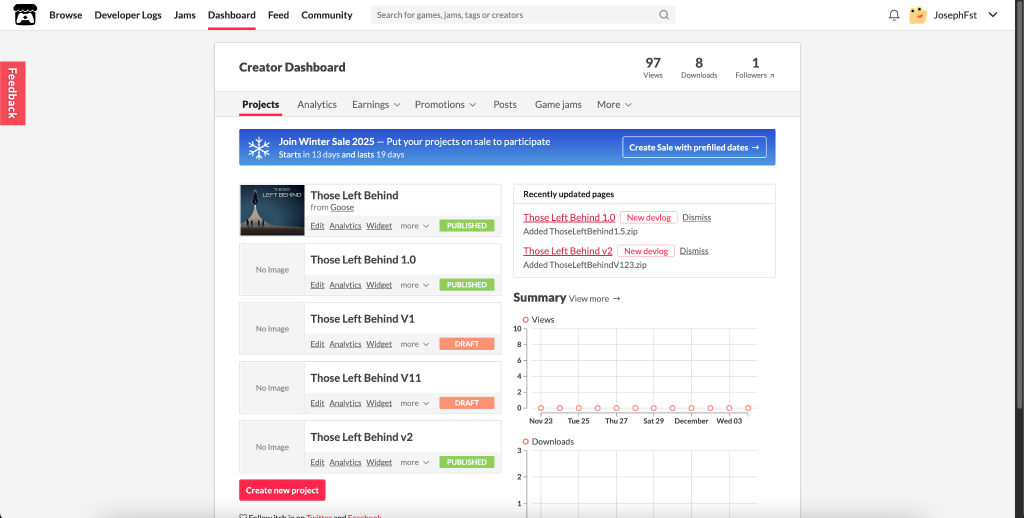
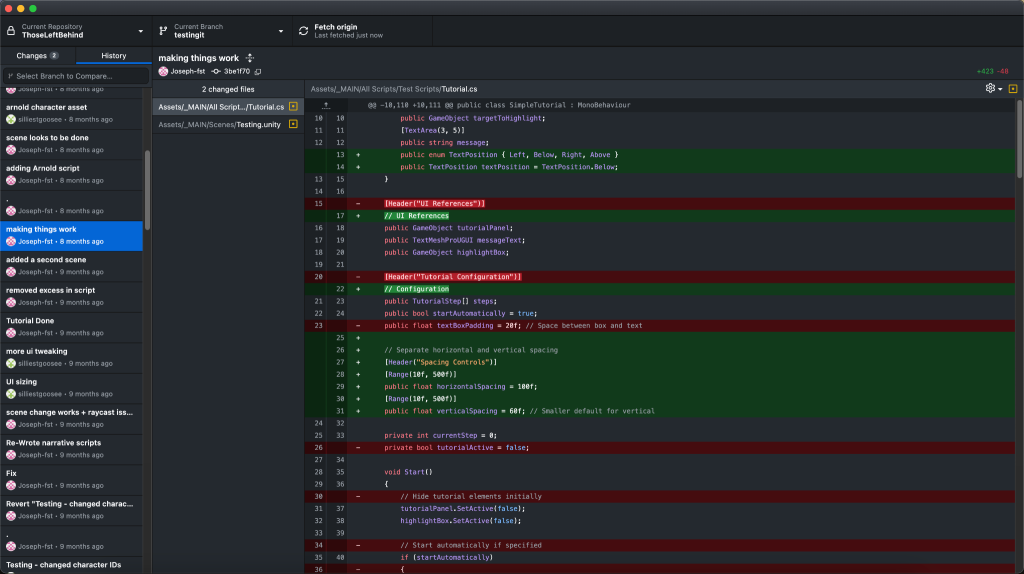
These screenshots show the uploaded prototypes and final project to Itch.io with devlog being uploaded alongside them. The second screenshot showcases an example of a github desktop change that I pushed which would be added to the document that showcases the iterations and fixes made throughout the project.
7.Time management and Professional Workflow
Rhys and Liv talked about the importance of learning between roles and balancing responsibilities which made me reflect on my current working patterns. As most university students do, I often cram all my documentation, refactoring, and sometimes my reflective writing in the final lead up to the deadline which in turn leads to long, unproductive stretches of work which do not reflect my true capability. In a sector where continuous learning, side projects, and constant portfolio updates are the norm, my way of ‘cramming’ everything into the last sprint is unsustainable and unprofessional.
As a response to this, I have experimented with splitting my work into smaller, labeled folders. Intro, Phase 1 & 2, Phase 3, Phase, and within these folders I have then further separated work based on if it is something to do with rough sketches, prototypes, design choices, reflection, and final outcomes. By creating these 5 categories I was able to create tasks that needed to be done in each and allowed me to plan out and schedule time to work on each task. This allows me to spread out my work instead of leaving it up until the last moment.
This change is still in progress as I have yet to hand in my portfolio work, however, already this set up aligns closer with how jobs expect junior developers to work by being organised, communicative, and able to manage their workloads and assign priorities, not just produce their feature by the deadline. By treating documentation, refactoring, and planning as an integral part of the process it makes all work material portfolio ready and a good example for good work practice in interviews.
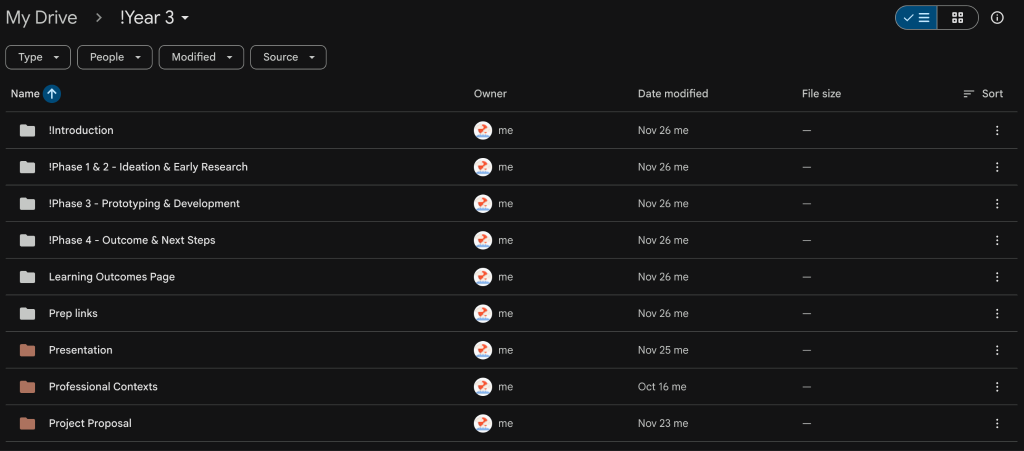
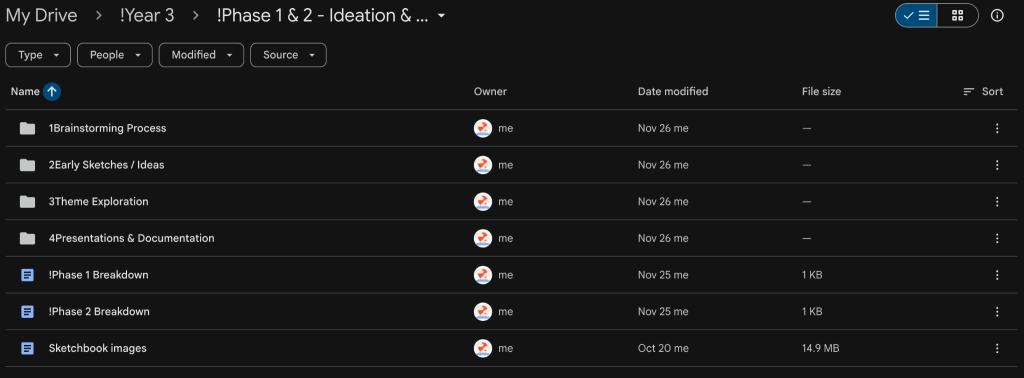
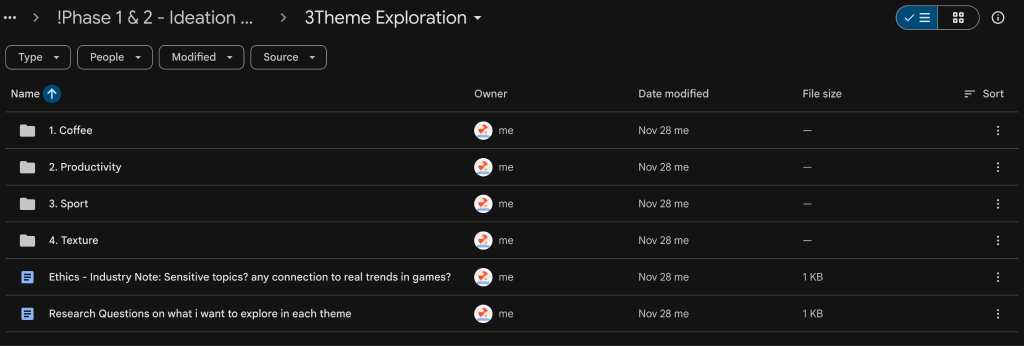
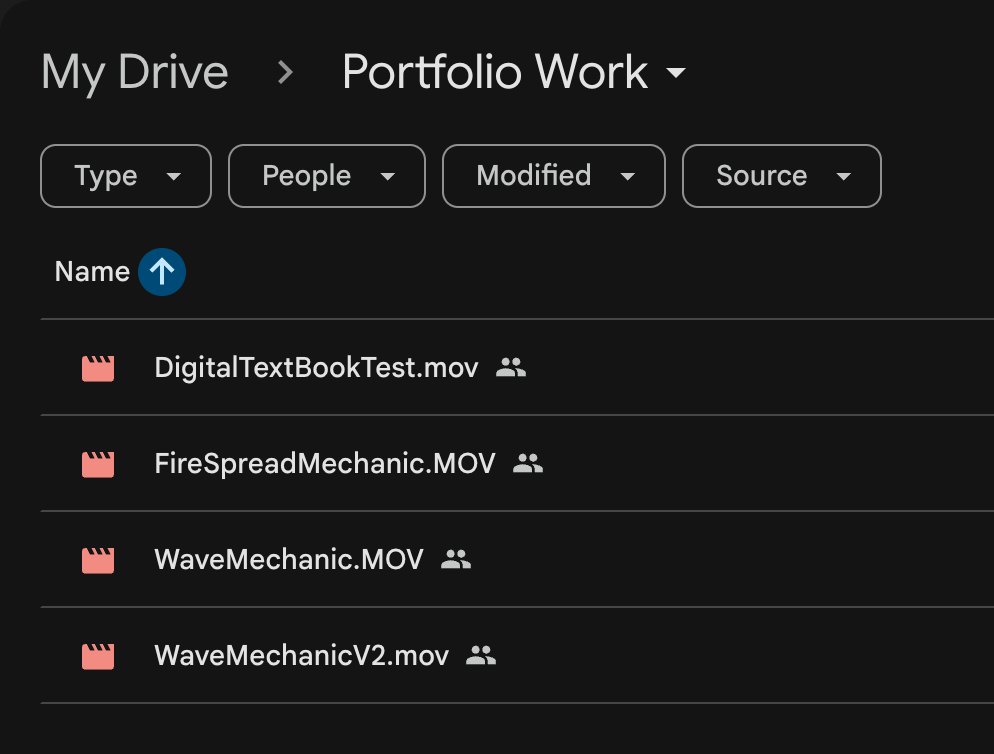
This is my current layout of my google drive that breaks down each section and clearly shows the total amount of work that needs to be completed whilst keeping everything organised and ready to be translated from the drive to the wordpress website.
8.Future Career Paths
Utilising the advice from all the speakers has helped me narrow down my future path towards a role that sits somewhere in between the design and technology spectrum. The roles that I am looking at now are things like, junior gameplay programmer, interaction designer, and potentially even transitioning to a tech artist due to its more logical, system oriented responsibilities. Graduate career resources recommend having a clear but flexible career direction as it makes it easier to choose project and portfolio pieces that match real job descriptions instead of trying to prepare for every role in the industry. I originally had planned to finish university and hoped there was a role for a ‘general game developer’ however, hearing these speakers’ stories showed me that staying a generalist is good but, leaning into a specific blend of skills can actually help create better opportunities.
To get to this point, in the short term I am going to produce two to three solid portfolio pieces that each demonstrates a complete mechanic or system, from showing the initial concept all the way through to the final product rather than just adding random incomplete prototypes to my portfolio. For each piece I want to show the paper sketches, design notes, iteration steps, and C# implementation, this mirrors the advice that studios want graduates who can take an idea from concept to feature with efficient documentation. One of the planned pieces is a click and drag mechanic which replicates the effects of a wildfire spreading. I have documented the original concept from brief sketches and have shown how I designed and implemented this into Unity and made an iteration to it based on feedback from outsiders.
Thinking now for the long term, I want to progressively move towards more hybrid roles, such a QA with scripting responsibilities, tools designer, or any roles with strong technical components. Whilst researching employability skills, I noticed that having experience in debugging, system design, and cross-disciplinary communication translates between the games industry and other software roles outside of the industry such as UI/UX designer or in the interactive media industry. Knowing this could be a career path does not remove the desire to work in the games industry but it is reassuring to know that I can still build a more ‘normal’ and stable career path.
9.Conclusion
After reflecting on these talks, the biggest takeaway for me has been accepting my strengths in programming, interaction design, and rough functional sketches and remembering that they are not second best to any other skill, these skills are the foundation of my professional trajectory. Whilst the industry is facing mass layoffs whilst simultaneously seeing a continued growth in development roles, my view on pursuing a hybrid role is both an honest reflection of my aspirations whilst also being strategically useful in the current market.
By redesigning my CV, planning clearer portfolio categories, and treating networking as a sharing thoughts rather than showing off perfection, I feel more prepared to enter the games sector as someone who can design, prototype, and communicate systems effectively rather than a graduate that is hoping to fit anywhere. These talks haven’t made the job market less intimidating, but it has given me a clearer understanding of it, making sure to focus on showing off my hybrid design and tech skills, making my process visible, and stay open to sideways movement that develop the skills I want to be known for.