Texture
Intro:
I looked into how texture is used digitally and physically to create sensation and emotion. I wanted to focus on how the feel & weight of a surface can differ on objects and how it is perceived digitally. My research looked at both visual and tactile aspects of texture showcasing how artists manipulate them to change the perception of an object / surface.
Research & References:
Source: National Gallery of Art – “The Elements of Art: Texture”
- Their definition of texture is the surface quality of a surface and they differentiate between textures that you can touch and that can only be seen.
- This then allows different types of textures used within art to be categorized such as, Physical, Implied, invented, and abstract.
Source: Fine Art Tutorials – “Texture in Art: Definition, examples and ideas”
- Building upon the idea of the different types of texture, this source describes each texture and shows techniques like layering, scraping and dry-brushing can create them.
- They explain that the common use of texture in art is to add depth and realism to a piece whilst adding direction to guide the viewer to important details.
Quick reflection:
- Although I have utilised texture in all my works during A-Level Fine Art, I have a deeper understanding of the concept of texture, from realising the different types to understanding the utility of texture in art work. I have only explored physical and implied texture in my work however, I’m interested in experimenting with as many types of texture as possible to determine what could work digitally. I’m especially interested in invented texture as artists such as Jean Dub have used it in their work to create artwork that challenged traditional beauty, and although I don’t want to challenge traditional beauty I want to challenge the games industry’s environmental design.
Visual Representation:
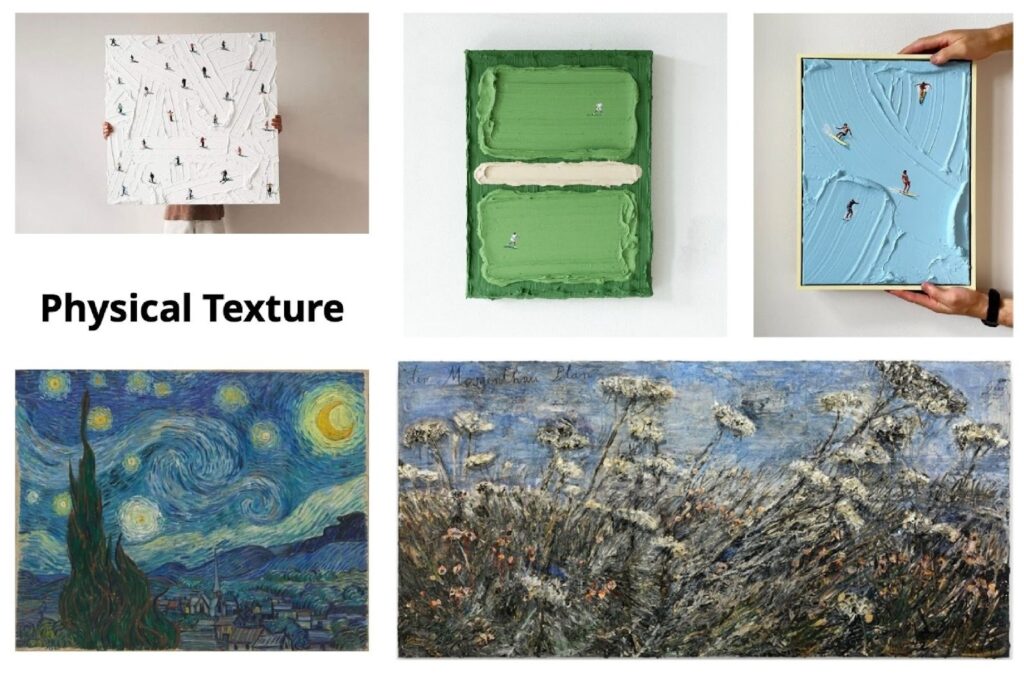
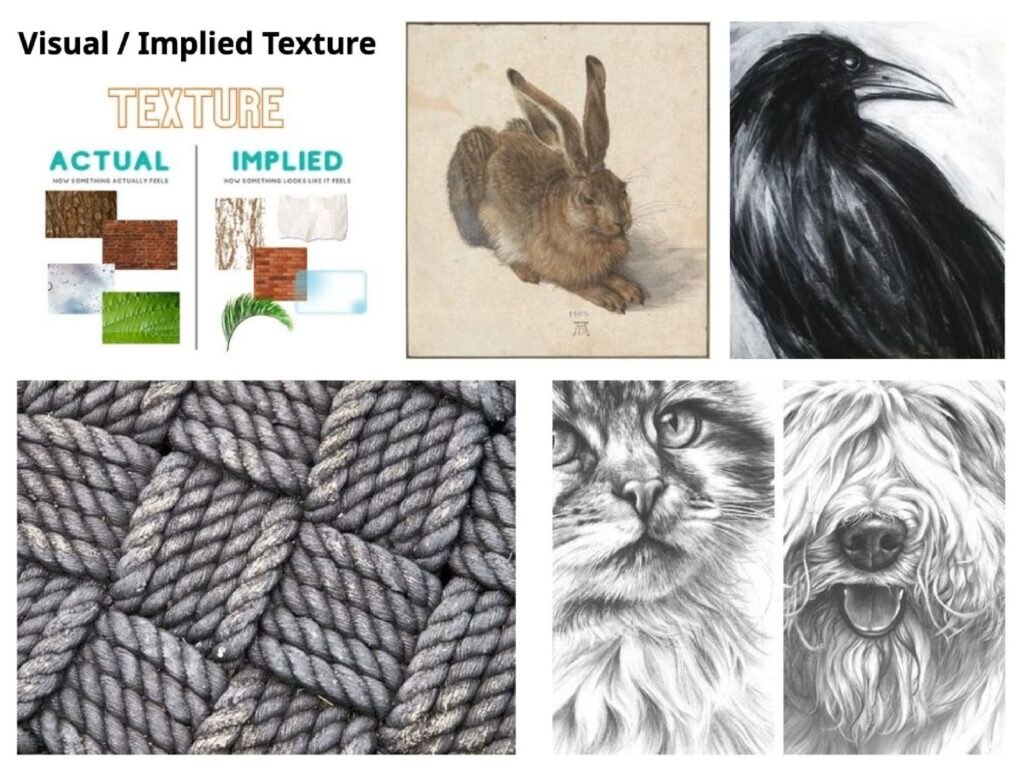
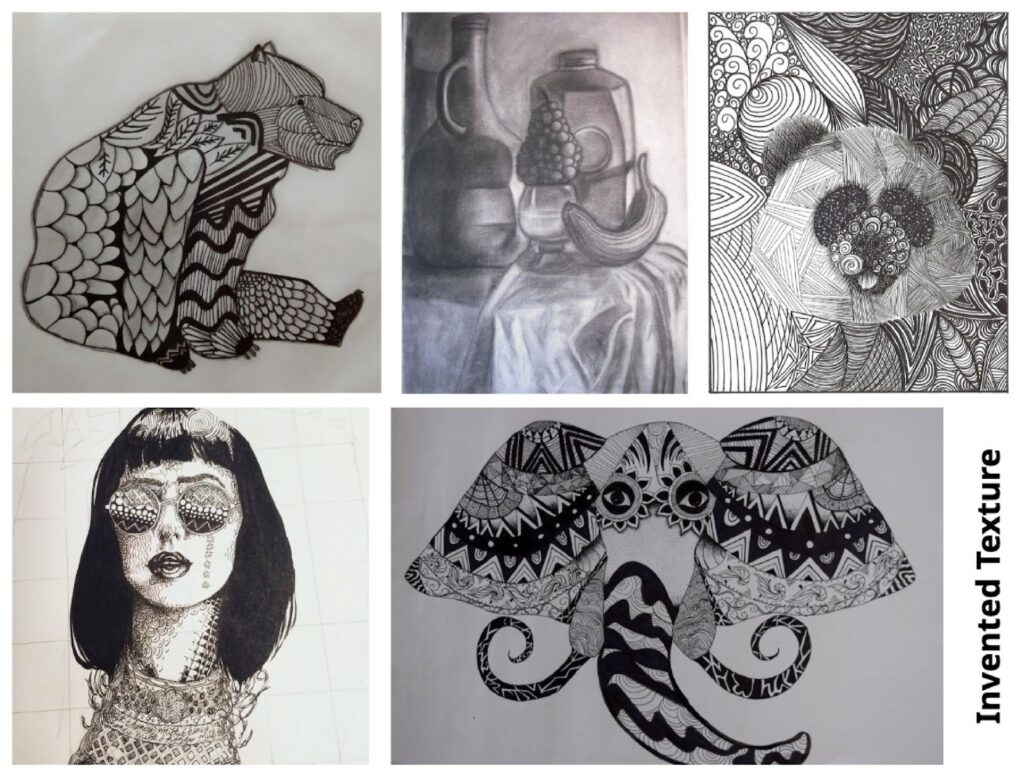
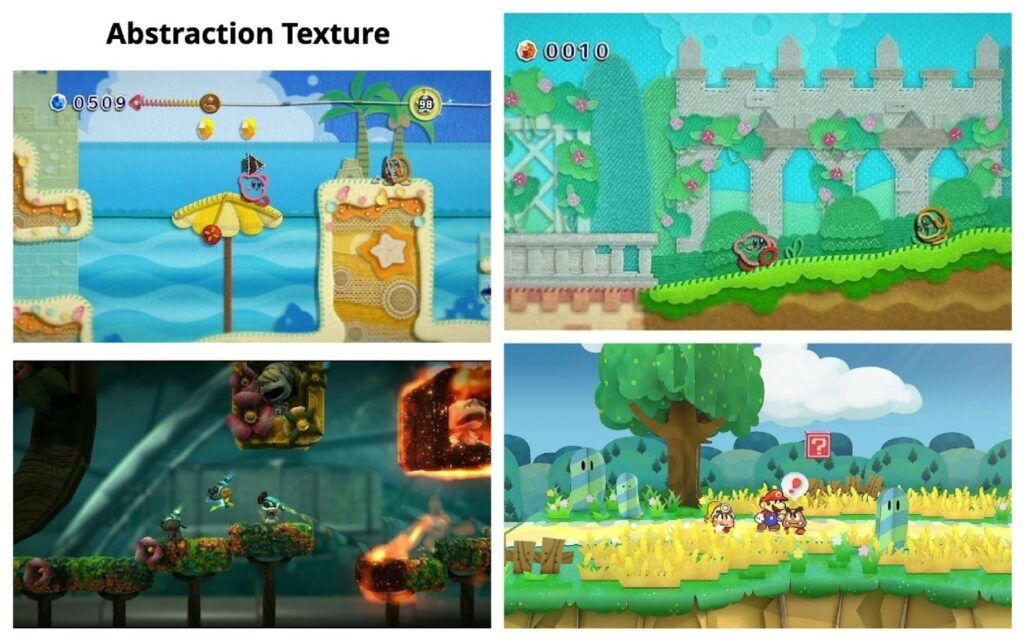
Connections & Questions:
- After researching, experimenting and reflecting on what ive learnt I have more questions than ever yet I have a stronger understanding of texture and how it relates to game design.
- The purpose of texture in art is more than just making something look realistic, it’s using it to help create tension, comfort, unease, and other emotions. These emotions are exactly what a game should be creating.
- This paired with the fact that humans respond emotionally to images before we can even cognitively engage with them solidifies the point that texture is an essential part of game design and it would be interesting to see how texture could be used as the starting pillar for a game idea.
- But then the question becomes, texture alone can’t create a game, so what in conjunction with this theme can successfully create a meaningful game.