
On Monday 3rd November, we had guest speaker Venezia Georgieva come in to give a talk on the topic of game systems: specifically, the three topics of game design pillars, game loops and meta game systems. Venezia is a friend of our senior lecturer in games Vanissa Wanick, and actively works alongside her in the research-driven independent games studio Nucleolus.
Venesia has a strong field of expertise in gameplay and systems design in particular meta game systems. She is UoS Games Design & Art alumni, and is currently working at Sumo Digital on an undisclosed AAA project – with a history in creating games for Snapchat as a junior designer at studio Mojiworks, as well as working in a management role on other AAA projects as part of SEGA’s Creative Assembly team.
–
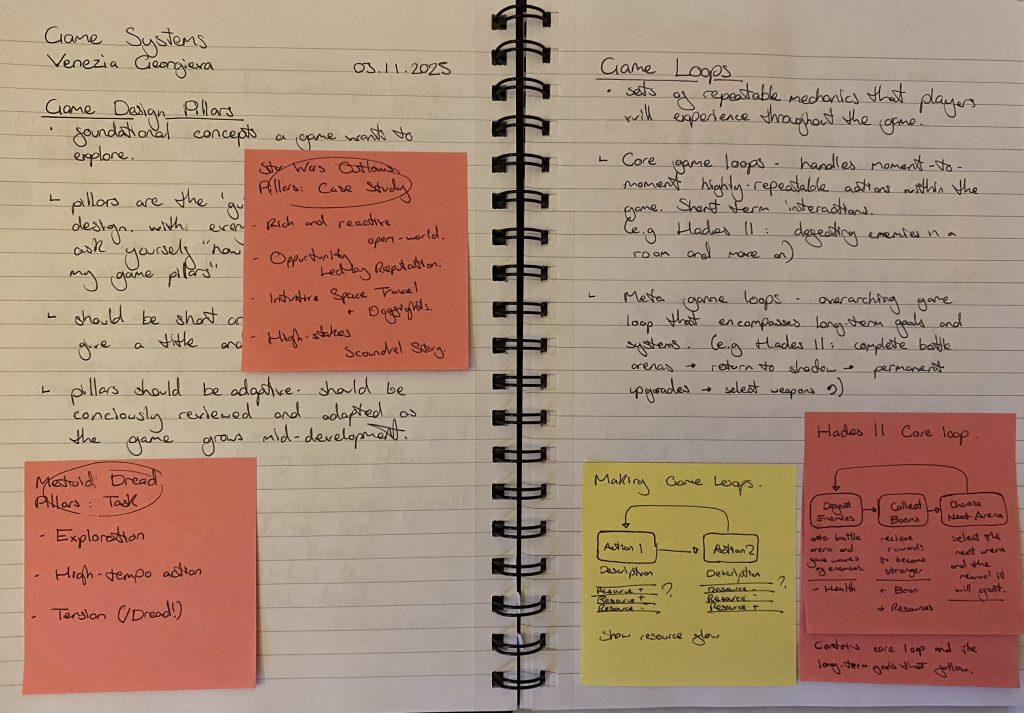
Firstly, Venesia talked us through the concepts around game pillars, described as “foundational concepts a game wants to explore”. In most cases of game development these will act as the foundations that guide designers throughout the entire dev process.
Key takeaways about game pillars:
- Should be short and concise, as well as specific – give each pillar a defined title and 1-2 specific sentences to further explain.
- Pillars need to be adaptive – should be consciously reviewed and adapted as the game grows mid-development.
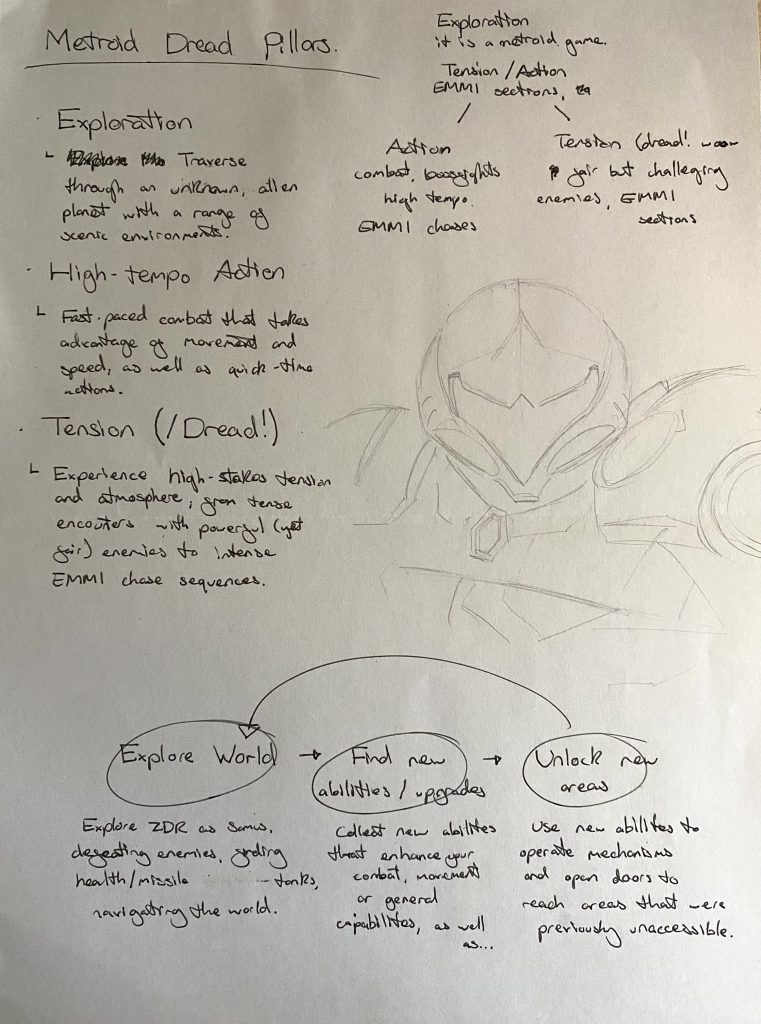
We then did a quick study task to identify the game pillars of some of our own favourite games to better understand the topic through application. My chosen game was Metroid Dread: a 2D side-scrolling Metroidvania game. The pillars I identified were:
- Exploration: A staple of the Metroid series; traverse through an unknown, alien planet with a variety of scenic environments.
- High-Tempo Action: Fast-paced combat that takes advantage of movement and speed, as well as quick-time actions.
- Tension (/Dread): Experience high-stakes tension and atmosphere, from tense encounters with challenging enemies to terrifying EMMI chase sequences.
–
Next we covered game loops – sets of repeatable mechanics that players will experience throughout the game. These are defined by two categories: core game loops, which handles moment-to-moment gameplay and short-term goals, and meta game loops, which are overarching game loops that encompass long-term goals and systems. We used the example of Hades II to showcase this (see notes below).
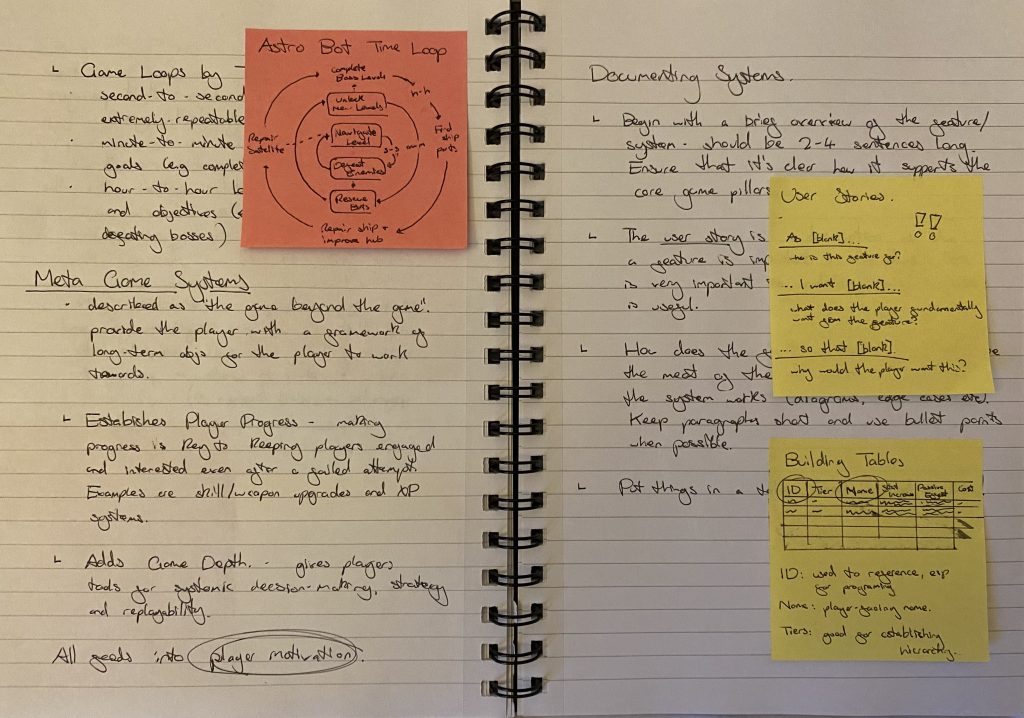
We also covered “time loops”: much more situational game loops that separates layers of loops by time – second-to-second, minute-to-minute, and hour-to-hour. We used Astro Bot as an example for this scenario (again, see notes).
–
Finally, we covered the topic of meta-game systems, Venesia’s personal area of expertise. These are best described as “the game beyond the game” and provide the player with a framework of long-term objectives to motivate them to keep playing.
Key takeaways about Meta Game Systems:
- Making progress is essential to keeping players engaged and interested – especially after they fail. Some examples might be skill/weapon upgrades and EXP systems.
- Adds game depth, giving players tools for systemic decision-making, strategy and replayability.
We also covered in-depth some key ways to document these game systems, including a well-used format:
- Begin with a concise overview of the system – this should be around 2-4 sentences long.
Ensure that it explains how the feature supports the core game pillars.
- The user story is an example of why a feature is important to players. This is vital to understanding the motive behind adding such a system.
- As [blank]… I want [blank]… so that [blank].
- Explain how the feature works. This should be the meat of the document – outline how the system works (use diagrams). Make sure to keep paragraphs concise and use bullet points where you can.
- Use a table to document systems where suitable.
–
After her lecture, me and some of my friends (Erik, Derry, Lettie, Adi) had the chance to ask Venesia some questions about her tenures and how she came about getting her placements. Her best advice was to simply apply to as many places as possible – she gave us a very useful resource in UKIE’s Games Map (https://ukie.org.uk/uk-games-map) as a means to search for nearby job offerings in the industry.
She also shared some stories about her time at those companies and her experiences with layoffs, which are a very big and worrying issue in games at current. Her talking to us was very useful, and in particular her stories about finding jobs made me feel more hopeful about my potential future in the games industry.
–
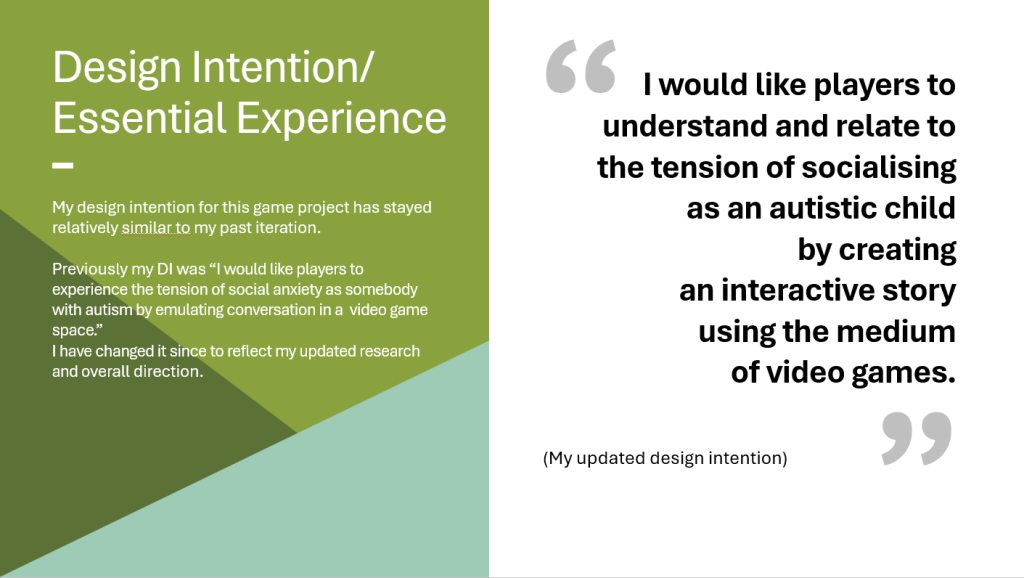
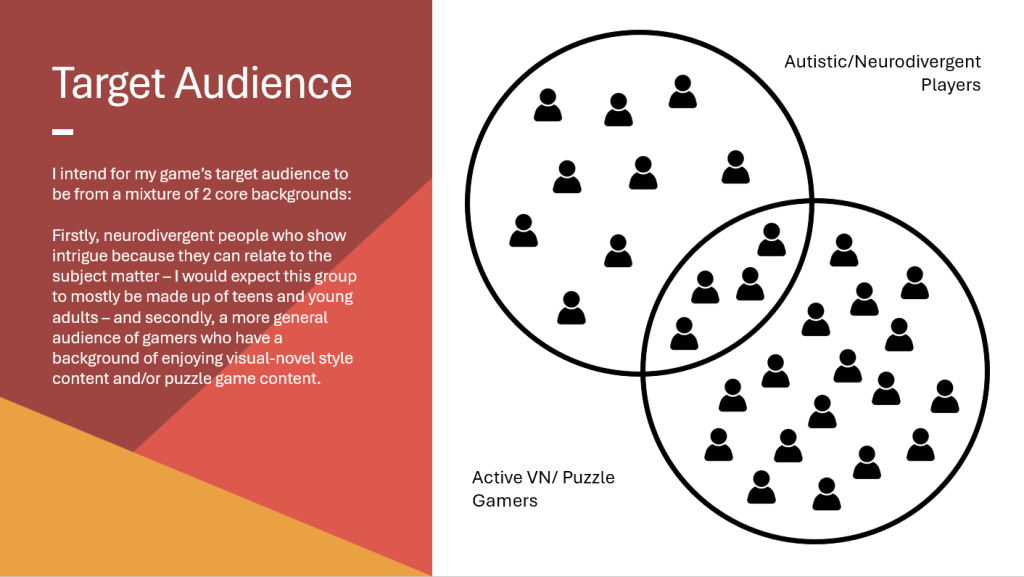
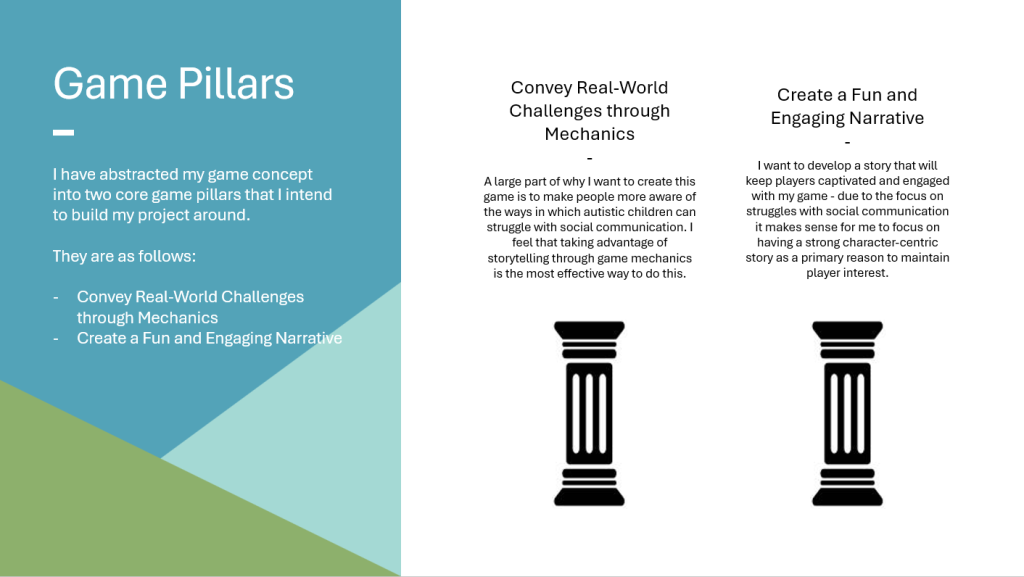
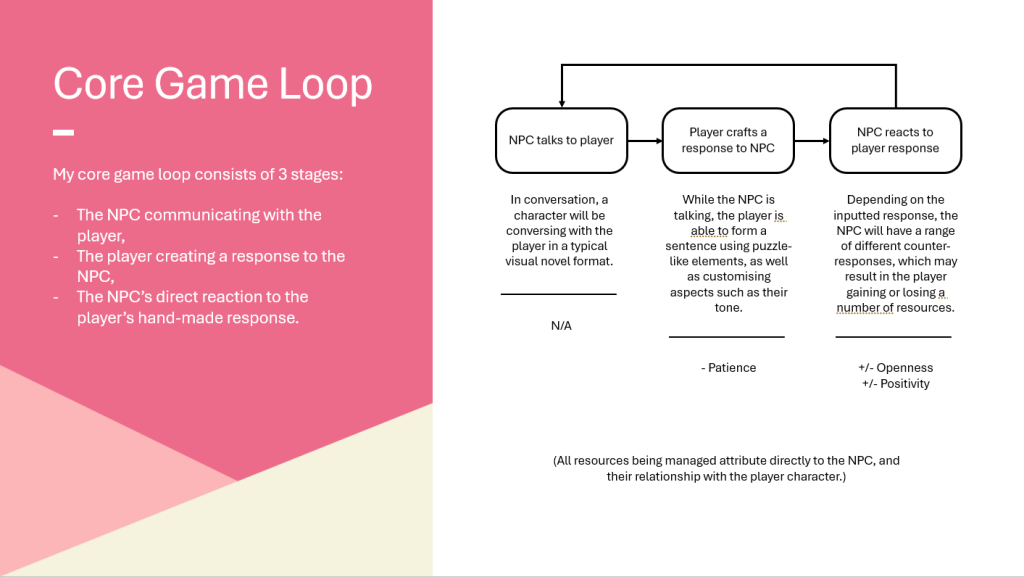
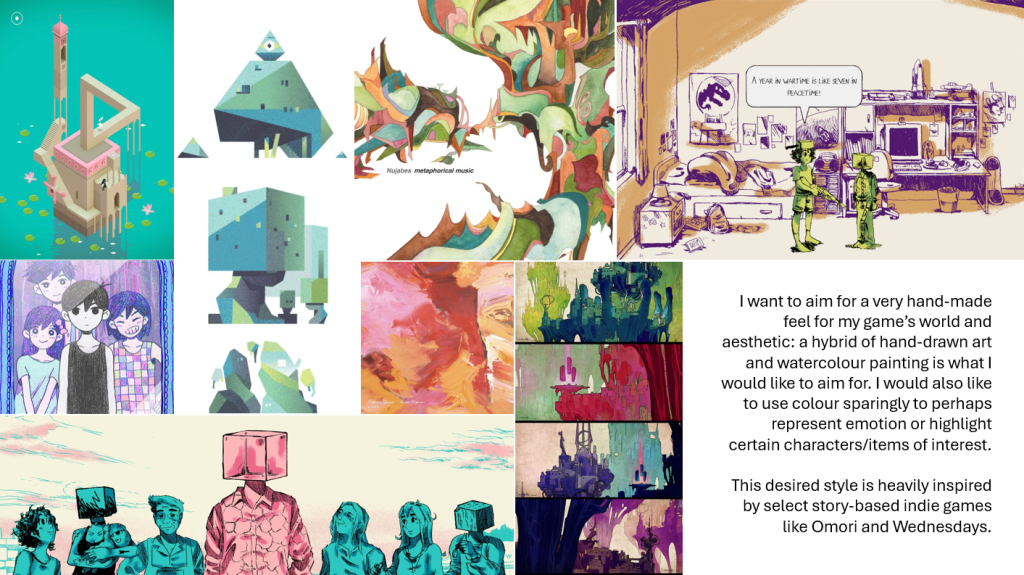
Later in the week, we had our second round of presentations. Despite a light barrage of technical issues at the beginning, the actual presentation went relatively well and my classmates seemed to enjoy both the presentation itself and my concepts. I was much happier in particular with the visual presentation of my slides, even though somewhat barebones I put a lot more effort into making them visually appealing and cohesive. Said slides are attached below:

Leave a Reply