Playtesting and feedback played an important role in the development of Backroom DoGoJo.
During the project, I presented my ideas and prototypes several times to receive feedback from tutors and other students. These sessions helped me identify problems with the game’s objectives, player guidance, core gameplay loop, and overall experience.
Week 5 became an important stage of development, as I focused on improving the prototype based on the problems discovered during testing.
7.1 Presentation Feedback
First Presentation — 25 September 2026
Initial Game Concepts
View Original Nodenoggin Feedback
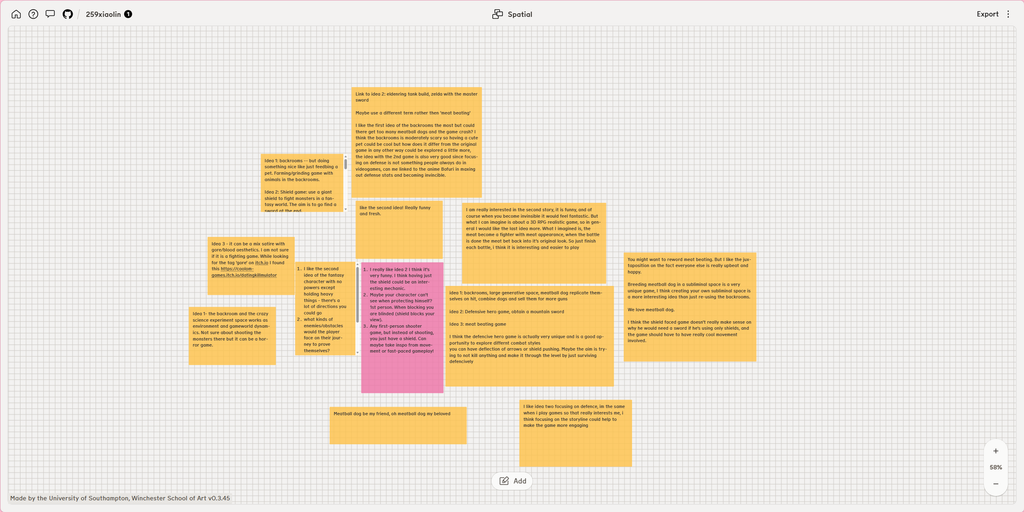
In my first presentation, I introduced three different game concepts: Backrooms creature farming, a shield-based action game, and a meat-beating game.
The feedback was generally interested in the unusual ideas. Several people liked the contrast between the frightening Backrooms environment and the cute MeatBallDog creatures.
Some feedback also suggested that the shield-based game had interesting potential. However, there were questions about how its combat would work and how the different ideas could become complete games.
For the Backrooms concept, one important suggestion was to make the farming mechanics and the game’s unique experience clearer.
This feedback helped me consider which concept was interesting, practical to develop, and suitable for further experimentation.
Second Presentation — 9 October 2026
First Playable Prototype
View Original Nodenoggin Feedback
By the second presentation, I had created an early playable prototype in Unreal Engine 5.
At this stage, the prototype mainly focused on demonstrating individual mechanics. Most interactive objects, including the shopping facilities and other equipment, were placed close together in the centre of the map.
This made it easier to demonstrate the functions, but it also meant that exploration was almost unnecessary.
The prototype also lacked an experimental data collection system for unlocking higher-level creatures, and there were no radio instructions to explain the player’s tasks.
As a result, the prototype was closer to a collection of working mechanics than a complete gameplay experience.
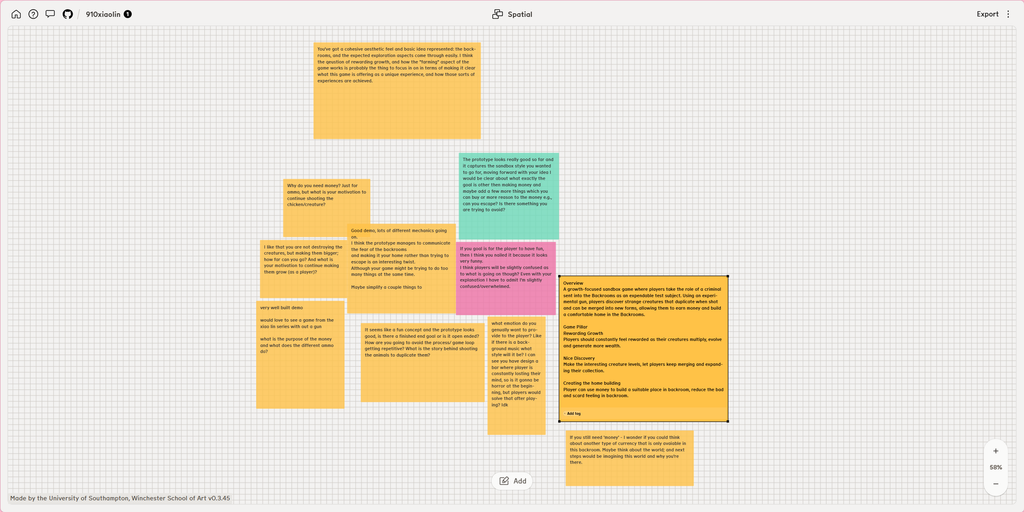
The feedback showed that the visual atmosphere and sandbox concept were interesting, but players were confused about several important questions:
- Why does the player need to earn money?
- Why should the player keep shooting and upgrading creatures?
- What is the player’s main objective?
- How do the different mechanics connect to each other?
Some feedback also suggested that I was trying to introduce too many mechanics at once without explaining their purpose clearly.
This made me realise that having several working systems did not automatically mean I had created an understandable game.
Third Presentation — 16 October 2026
Further Prototype Presentation
View Original Nodenoggin Feedback
The third presentation revealed many of the same problems.
During that week, I spent much of my time learning VFX techniques, so I made limited improvements to the gameplay prototype before the presentation.
Although the prototype demonstrated different interactions and visual effects, the overall game structure had not changed significantly.
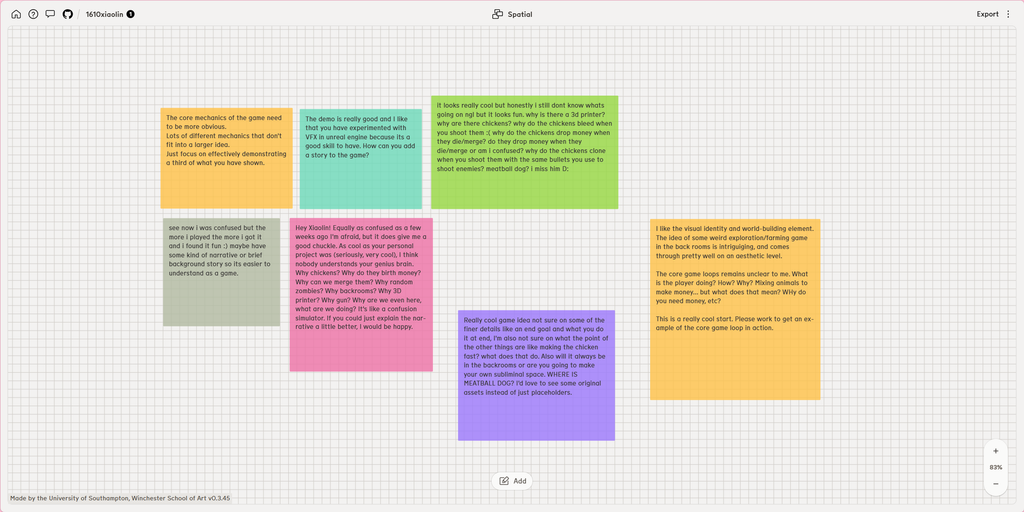
The feedback again showed that players did not fully understand the purpose of the game.
Some people questioned why the chickens produced money, why they duplicated when shot, what the 3D printer was used for, and why the player needed to perform these activities.
The use of chicken models as placeholders for MeatBallDog also made the creature concept less clear.
Several comments suggested adding clearer narrative context and focusing more strongly on demonstrating the core gameplay loop.
Looking back, I think this presentation showed that I had been focusing too much on making individual features work, without spending enough time explaining how players were supposed to use them together.
7.2 Problems Identified During Week 5 Playtesting
At the beginning of Week 5, I carried out further playtesting and discussed the prototype with my tutor.
One of the biggest problems was that players had very little reason to explore the map.
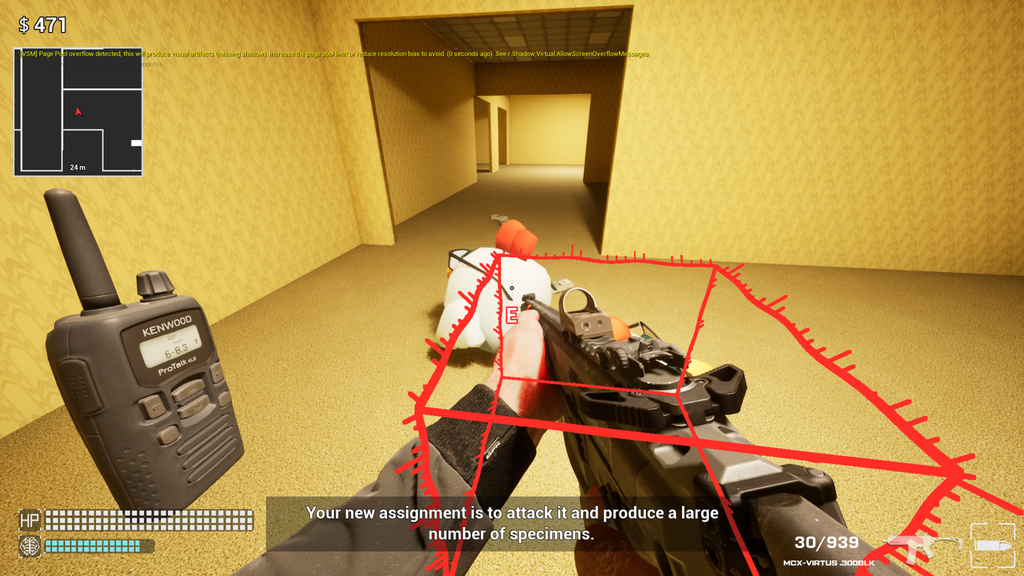
When my tutor encountered the first creature, he simply stayed in the same location and repeatedly shot it to produce more creatures and money.
Although this was technically part of the farming system, it was not the gameplay experience I wanted to create.
The player could keep earning money without needing to explore the Backrooms. This made the large environment feel less important and weakened the connection between farming, exploration, and progression.
Another problem was the lack of clear instructions. Some players picked up creatures immediately instead of shooting them to create duplicates. They did not understand the intended order of interactions.
The creature merging system also needed clearer visual and sound feedback. Players were not always aware when creatures could be merged or why upgrading them was rewarding.
These tests helped me identify three main areas for improvement: player guidance, meaningful exploration, and clearer rewards.


7.3 Changes and Improvements
Based on the feedback from tutors, students, and my own testing, I made a series of changes to the prototype during Week 5.
Exploration and Gameplay Progression
The most important change was connecting creature farming with exploration.
I introduced experimental data collection and blueprint requirements for unlocking higher-level creatures. This encourages players to leave their farming area, explore the map, and return with new progression opportunities.
I also added collectible objects throughout the larger environment, giving players more reasons to investigate different locations.
The starting sequence was changed so players visit several important locations before entering the larger area.
I added a task system to guide players towards shooting, duplicating, and merging creatures. The early instructions now encourage players to duplicate creatures before picking them up, helping them understand the intended farming mechanic.
These changes aim to make exploration a necessary and meaningful part of progression rather than an optional activity.
Money Collection and Creature Merging
I improved the feedback players receive when interacting with money and creatures.
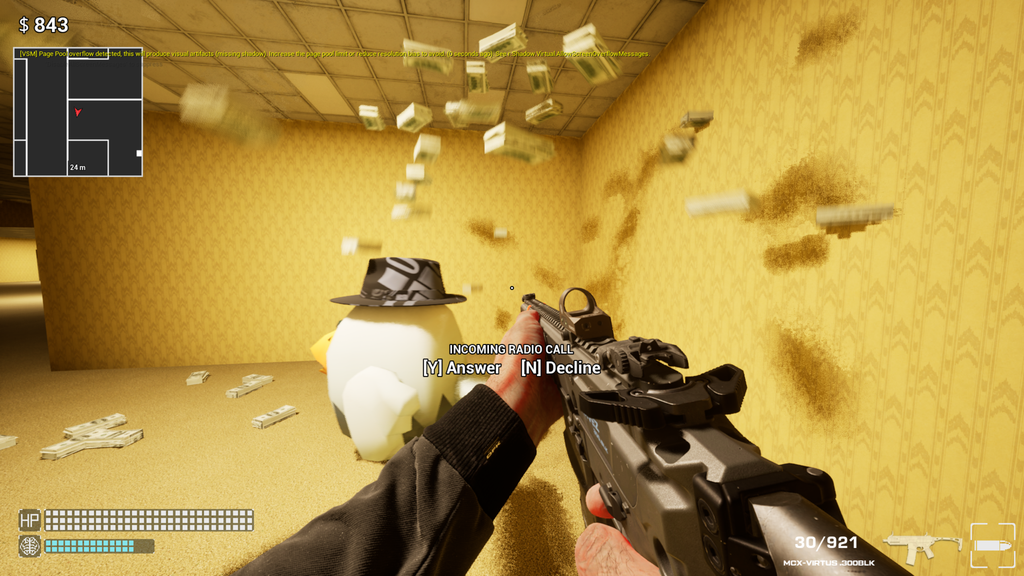
Money collection now includes sound effects and an attraction effect that pulls nearby money towards the player. This makes collecting large amounts of money faster and more satisfying.
I also added clearer visual or audio feedback when creatures are ready to merge.
Upgrading creatures now creates a burst of money, giving the action a more noticeable reward.
I also worked on making higher-level creatures more visually different. However, I think this area still needs improvement, because simply increasing the creature’s size is not enough to make every new level feel exciting.
Player Guidance and Interface
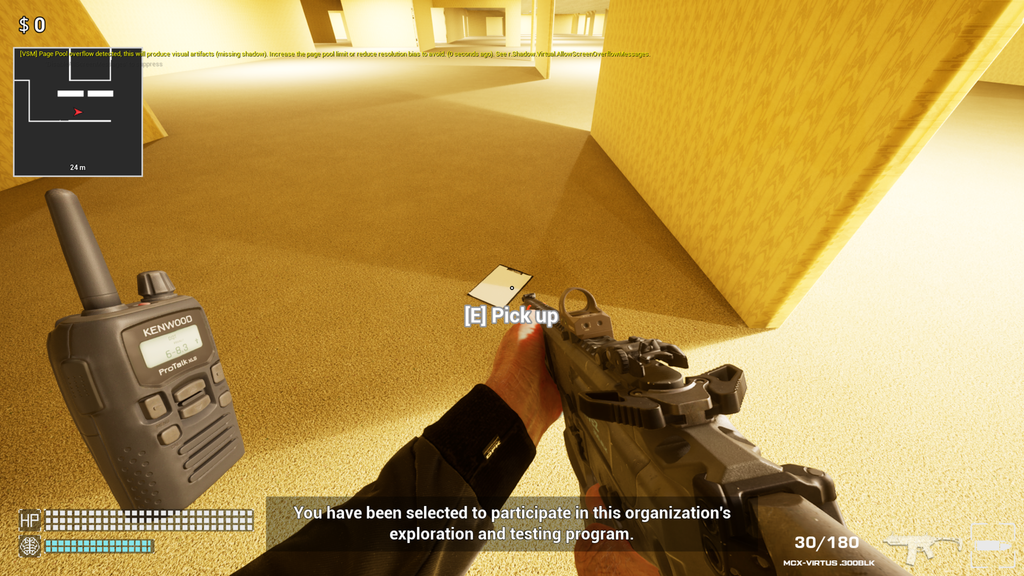
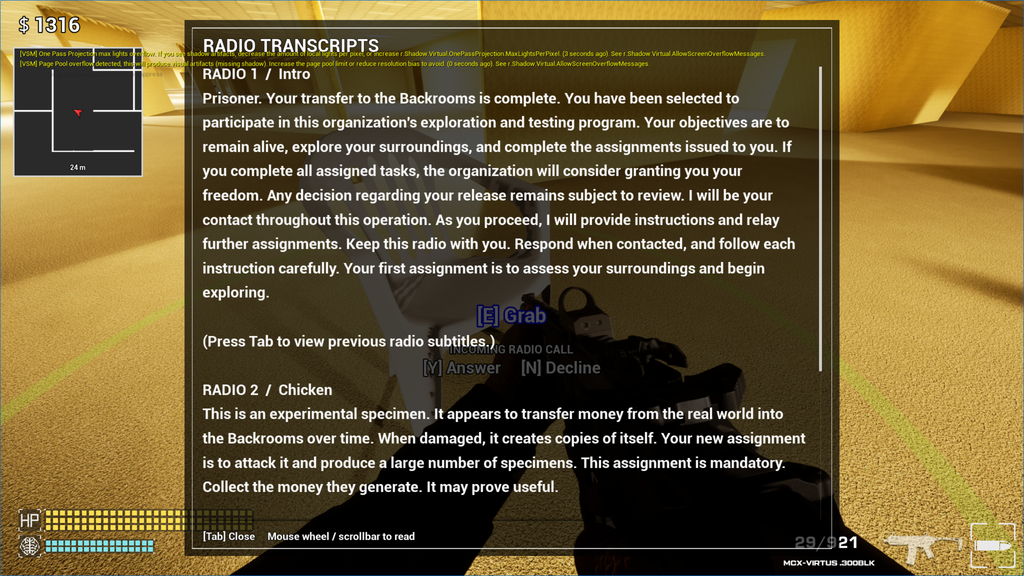
To reduce confusion, I added subtitles for radio dialogue and a separate input for replaying previous radio messages.
This allows players to understand their instructions without having to stop interacting with the game to listen carefully.
I also added:
- A crosshair for clearer aiming and interaction.
- A prompt explaining how to switch ammunition using Q.
- Information showing the two available weapon upgrade areas.
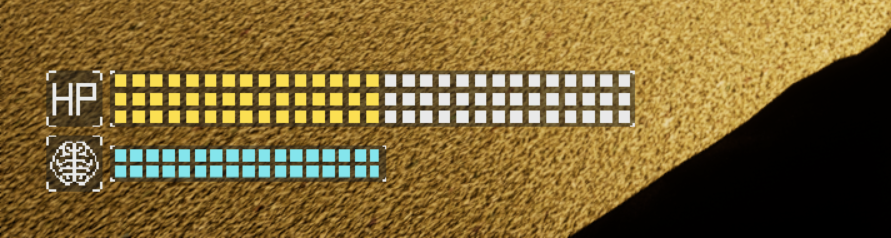
- Warnings when the player’s Sanity decreases.
- A settings menu for mouse sensitivity, music volume, and different E-key interaction preferences.
These changes make the game’s controls and objectives easier to understand.

Survival, Combat, and Building
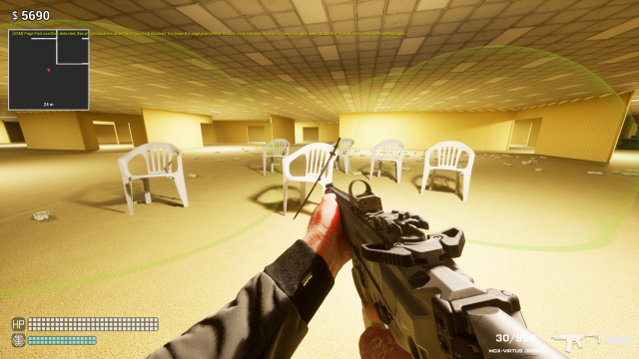
I expanded the survival and building systems to give players more reasons to develop their living space.
Furniture and constructed areas can now help restore Sanity, repel nearby threats, and provide additional armour.
I also added a special Virgil chair as another furniture feature.
Monster spawning and models were added, and enemies become stronger towards the edges of the map, reaching up to 300% of their normal health.
Weapon progression also remains an important part of the game, including damage upgrades and unlocking different ammunition types. These were already part of my original design, but the testing helped me understand how important it was to communicate their purpose clearly.
Together, these systems give players more reasons to improve their equipment and build safer living areas.
7.4 Ideas Reconsidered
Not every suggestion was included in the final iteration.
After reconsidering the design, I decided not to implement several ideas at this stage:
- A radiation system and related resistance upgrades.
- The proposed Angry Bird system.
- A progress bar showing the experimental data needed for the next creature level.
- A different food interaction system based on where the crosshair is pointing.
- An automatic money-collecting robot.
These ideas were considered during development, but I chose to focus on improvements that more directly supported the existing gameplay.
7.5 Reflection
The biggest lesson from this process was that working mechanics are not the same as a clear and enjoyable game.
My early prototype contained several interactive systems, but players often did not understand why they were using them or what they should do next.
The feedback also showed that allowing players to repeat a rewarding action was not enough to create a complete gameplay loop. If players could earn money by staying in one location, there was little reason to explore the environment.
The changes I made during Week 5 focused on giving players clearer goals, stronger feedback, and meaningful reasons to move between different areas.
I also learned the importance of testing the game without explaining everything to the player. When players misunderstood an interaction, it often revealed information that the game itself was failing to communicate.
Although the new changes still need to be evaluated through further testing, the feedback helped me move from demonstrating separate mechanics towards designing a more connected gameplay experience.
Leave a Reply