Level Development – Collaborative Iteration
Concept Prototype & Spatial Study
After completing the Art Bible and the Level Breakdown documentation, I created an early level prototype concept frame in Blender to validate the spatial composition of the first playable scene.
This prototype explored several key design elements:
gameplay camera framing
character-to-environment scale
player path direction
environmental asset placement
spatial layering of foreground and background elements
The purpose of this prototype was to ensure that the environment design remained readable from the gameplay camera before implementation in Unity.
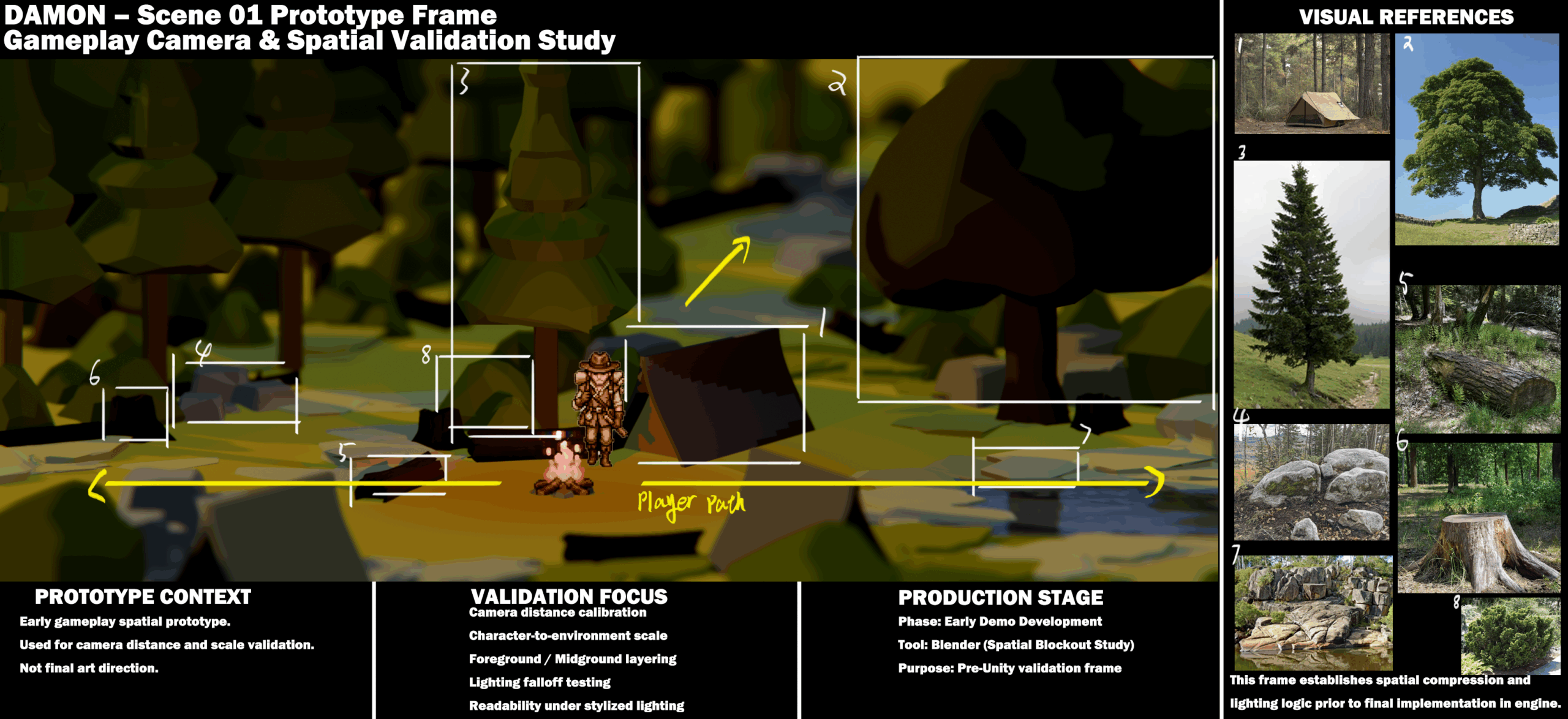
DAMON – Scene 01 Prototype Frame
Identifying the Level Layout Problem
During early gameplay testing, we discovered that the initial scene layout did not align well with the intended camera perspective.
The original map design contained relatively large open spaces and irregular paths, which created several issues:
trees frequently blocked the player’s view
the player path lacked clear visual guidance
large open areas weakened spatial composition
During this stage, we analysed the camera presentation and spatial layout used in Octopath Traveler as a reference case.
This analysis helped us identify key principles in player path structure and environmental composition, which highlighted the shortcomings in our initial level layout.
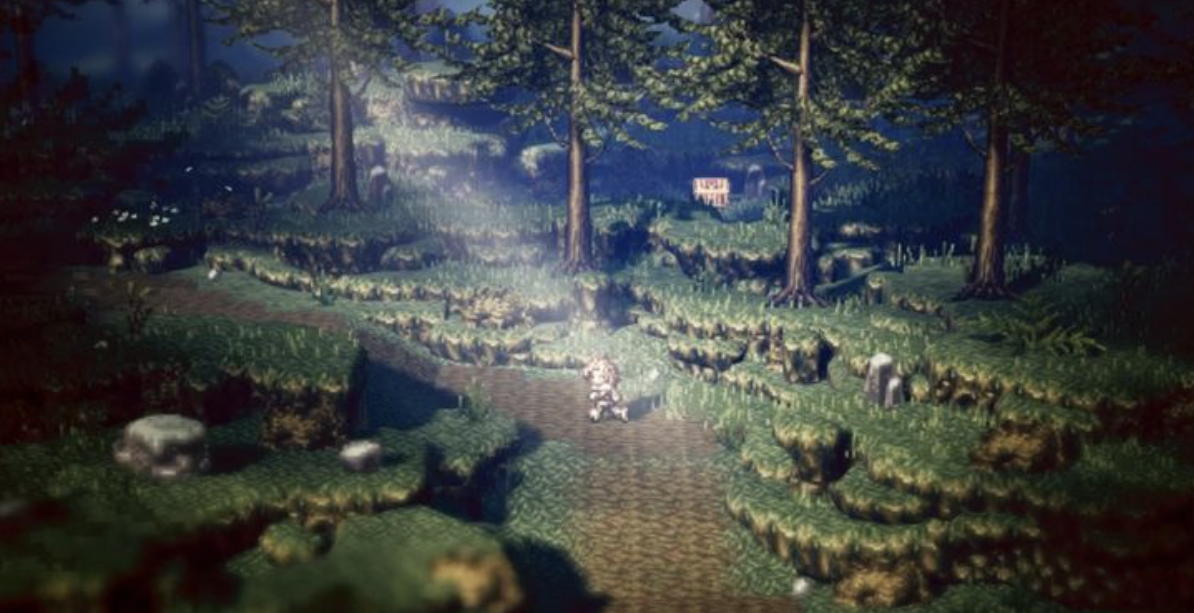
Reference Study
Spatial Design Analysis – Octopath Traveler
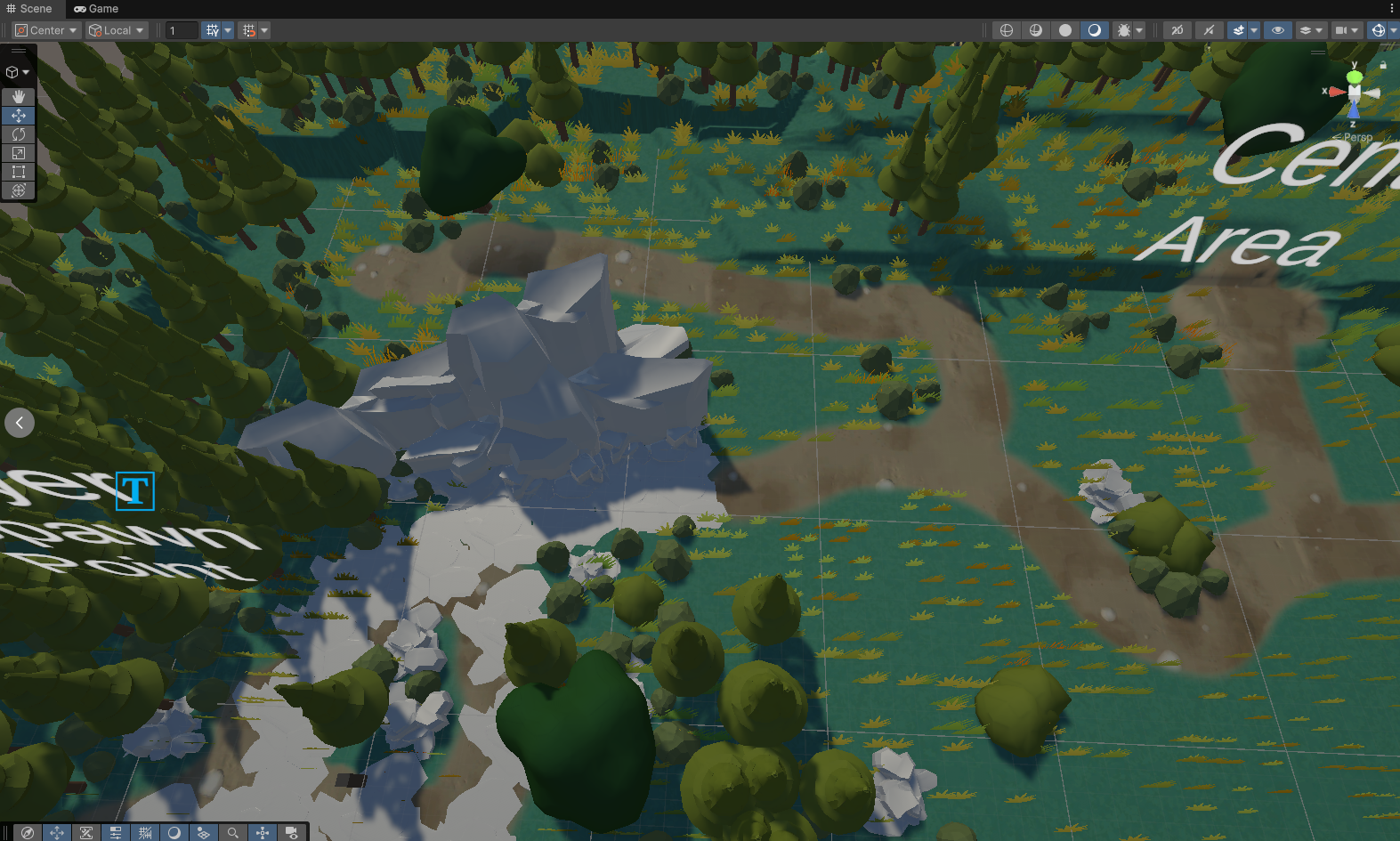
Camera Occlusion Study – Top-Down Layout View
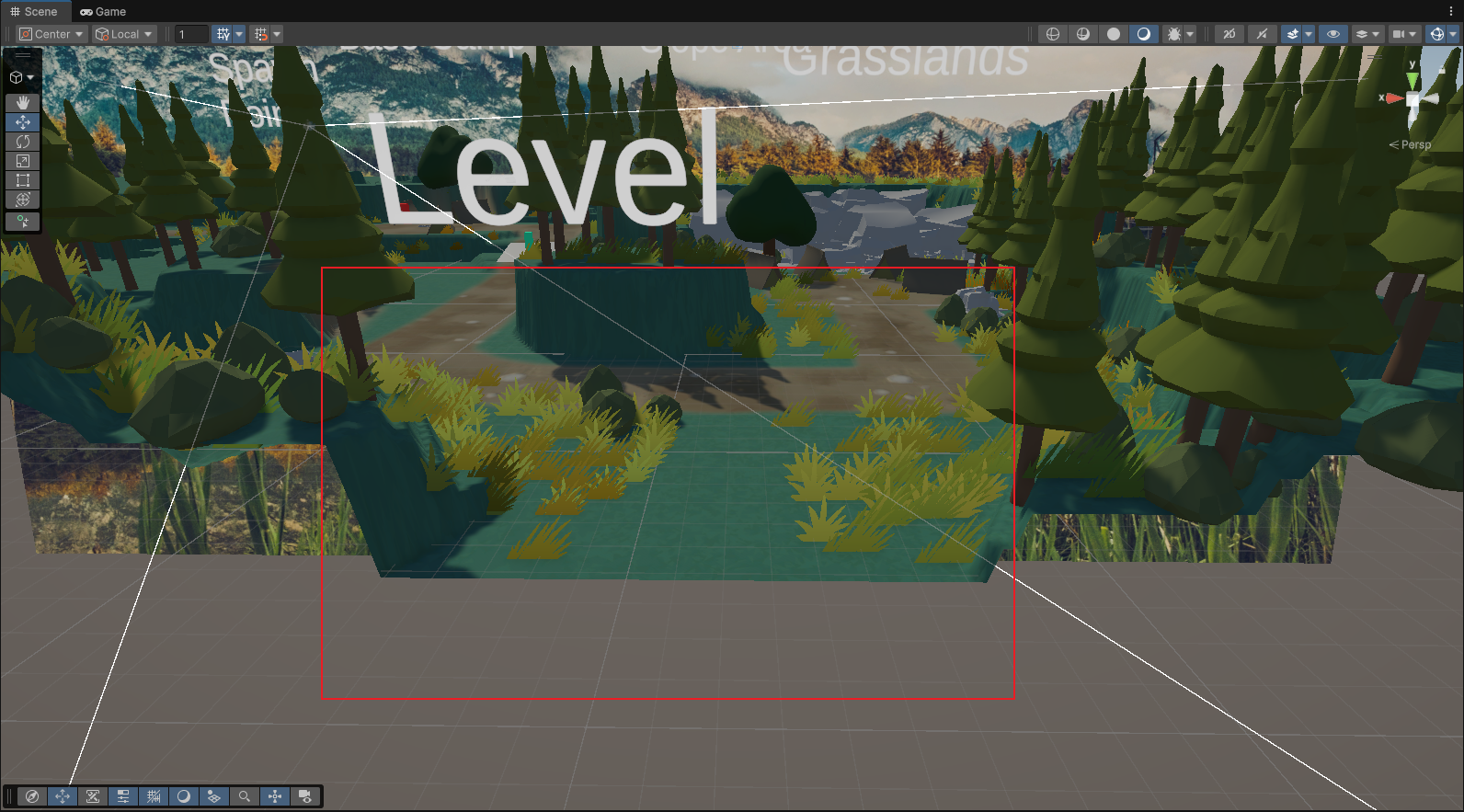
Gameplay Camera Perspective
Team Discussion & Level Redesign
After identifying these issues, Kevin first suggested that the map layout needed to be redesigned, as the original level structure did not align well with the intended gameplay camera perspective.
Following this observation, Kevin and I had a detailed discussion analysing the spatial design used in Octopath Traveler.
We noticed that player movement in Octopath Traveler typically follows clear horizontal or vertical paths with controlled width, which helps maintain visual readability and creates a stage-like spatial composition.
After this discussion:
Kevin proposed the need to restructure the map layout
I redesigned and modified the second version of the level based on our discussion
In the redesigned version, terrain and environmental elements on both sides of the path are used to guide the player’s view and highlight important areas of the scene.
This iteration significantly improved navigation clarity and overall visual composition.This iteration demonstrates how level layout, camera readability and environmental composition were refined through team collaboration.
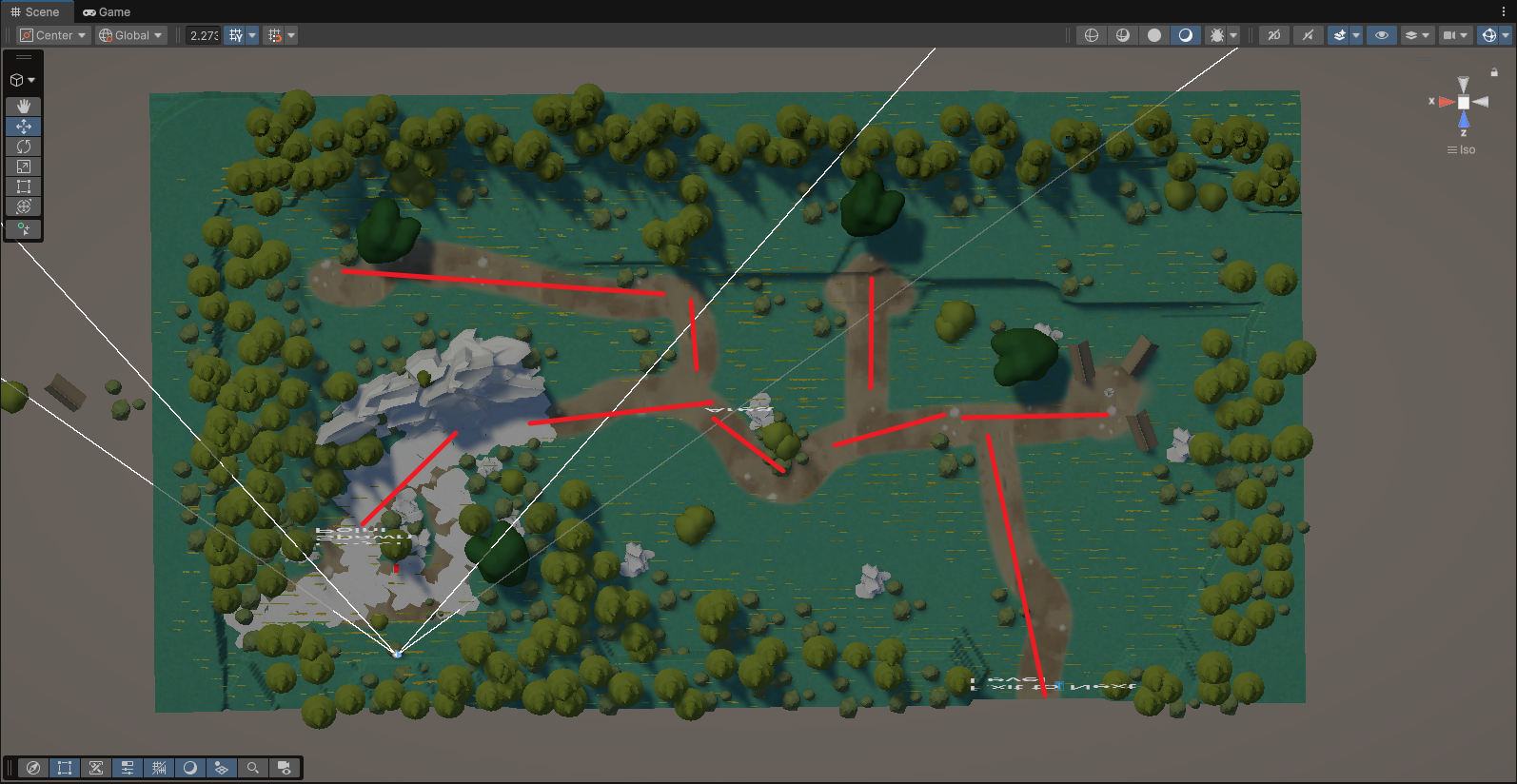
Level Layout – Version 1 (Initial Design)
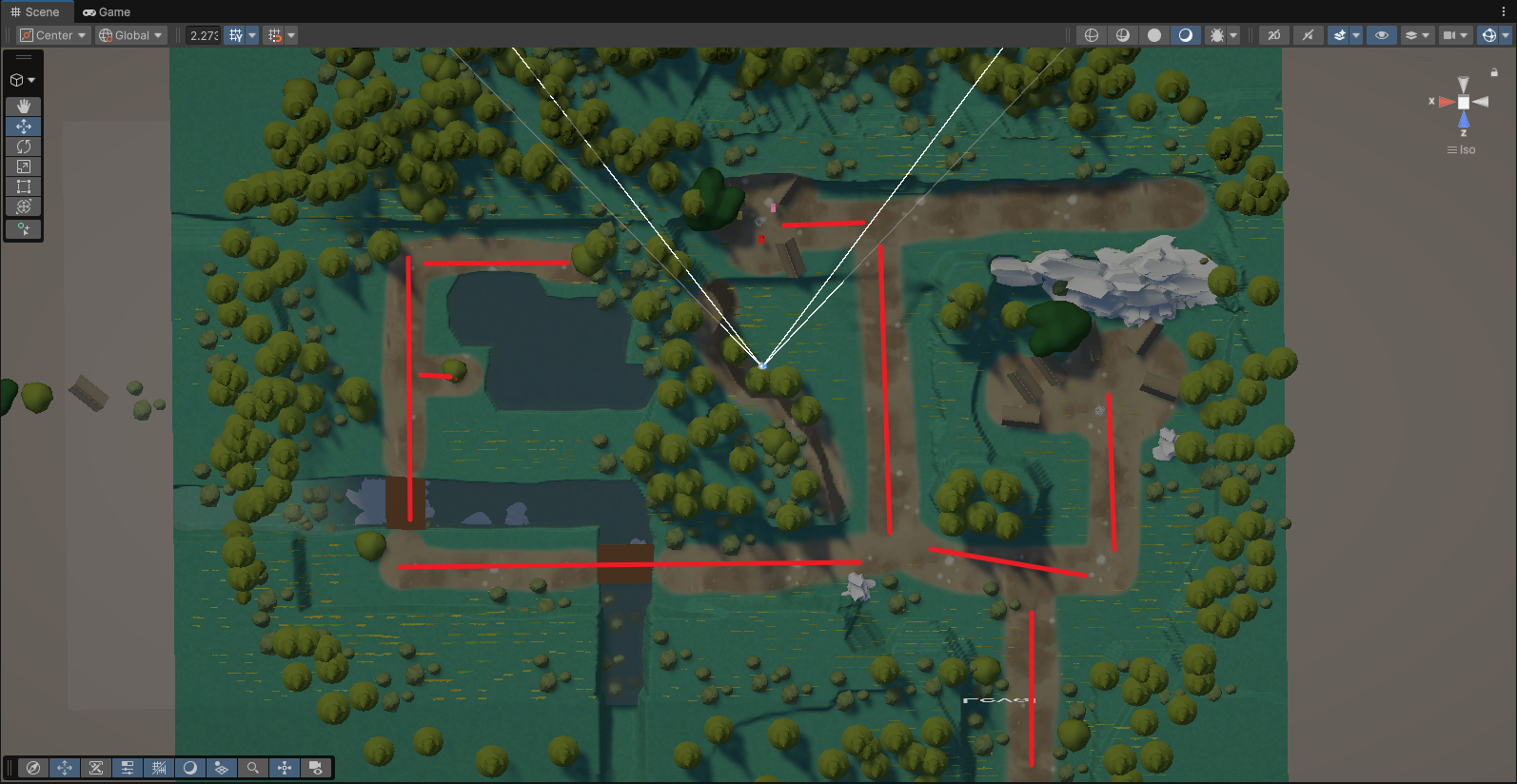
Level Layout – Version 2 (Redesigned Layout)
Outcome
Through this collaborative iteration process, the level design evolved from a simple open layout into a more structured environment with clear navigation paths and improved camera readability.This process demonstrates how concept art exploration, gameplay testing, and technical iteration worked together to refine the final level design.