WEEK 01 — Summer Project Review&Movement Workshop
Summer Project: Ghost of Tsushima — Presentation Summary
During the summer, I created a presentation based on Ghost of Tsushima, focusing mainly on the game’s worldbuilding, art direction, core gameplay, and the emotional experience it delivers to players.
Worldbuilding & Player Agency
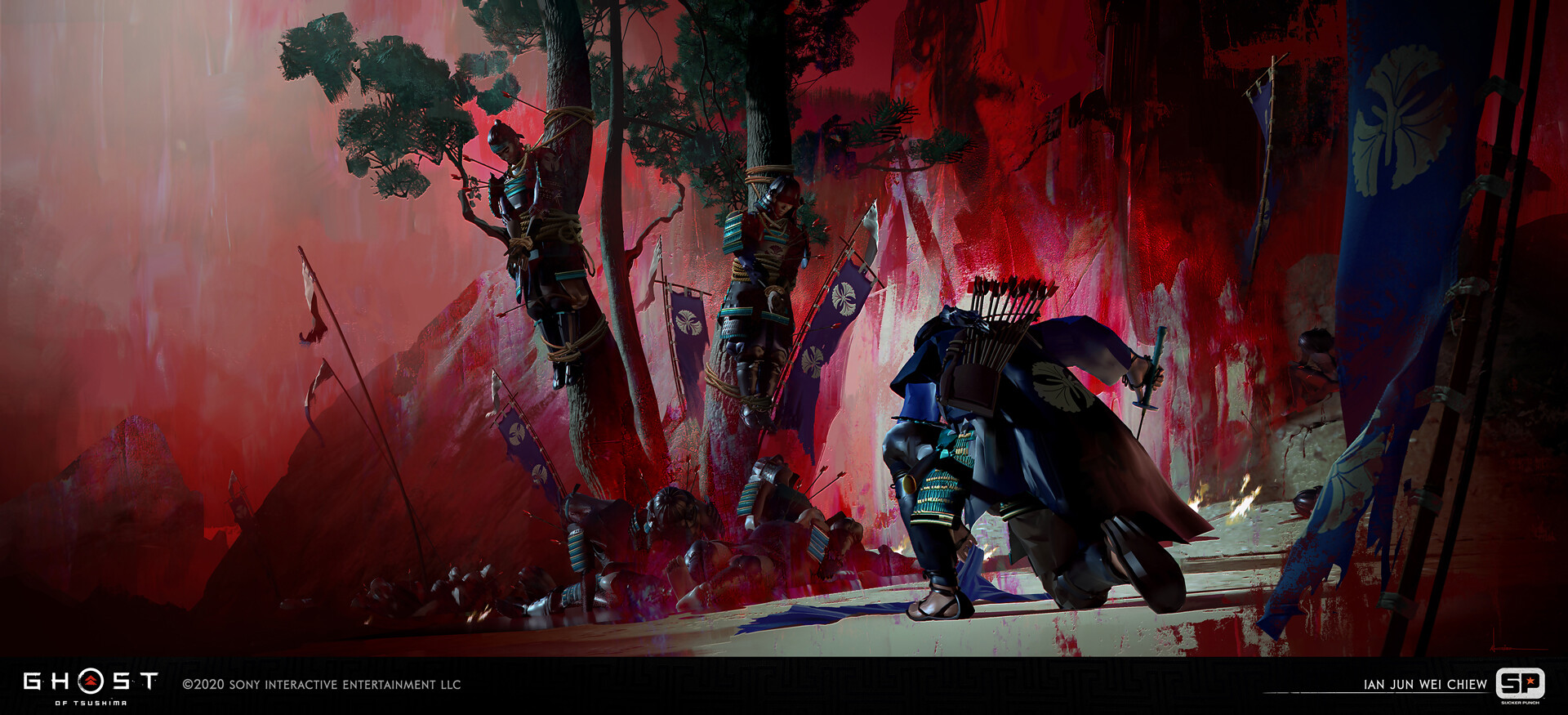
My presentation introduced the historical setting of 13th-century Tsushima, where the island is invaded by the Mongol army. I highlighted how the game uses landscapes, temples, forests, and seasonal colour palettes to construct a strong Japanese cultural atmosphere.
I also discussed the two different playstyles—Samurai or Ghost—and how these choices affect the player’s experience throughout the game.
Core Gameplay
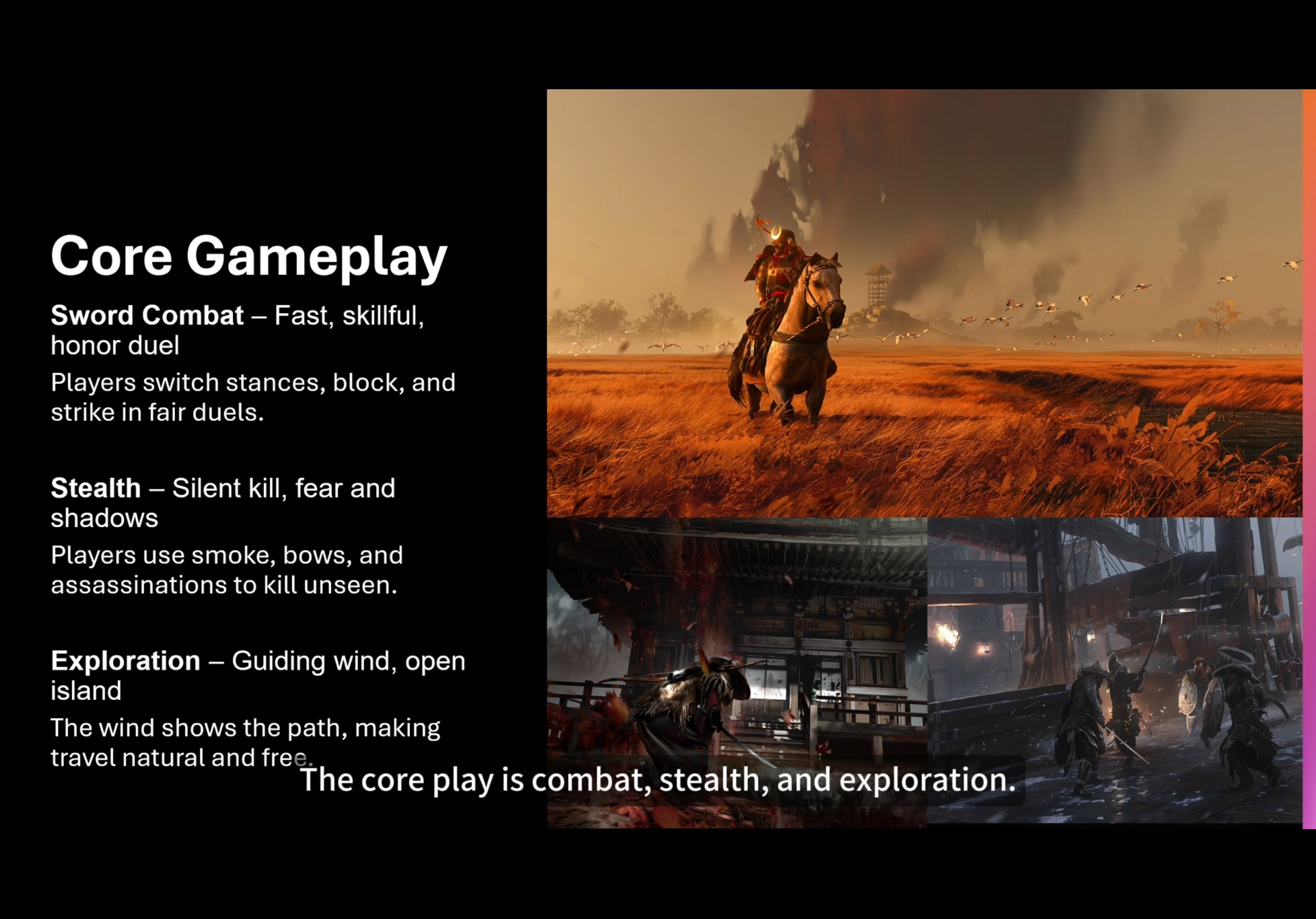
I broke down the gameplay into three major elements:
Sword Combat : Fast, skill-based duels with stance switching and precision timing.
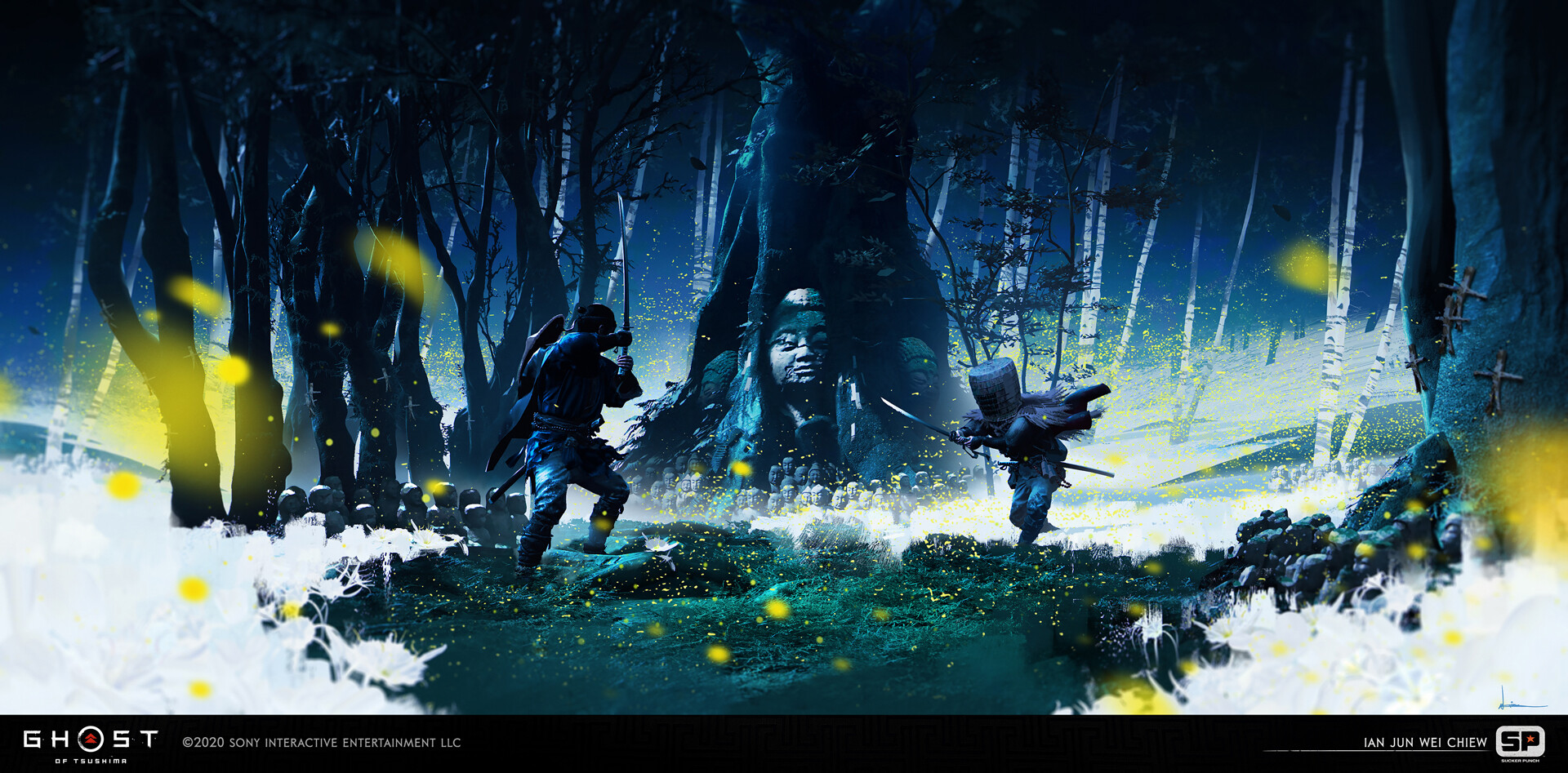
Stealth : Silent kills, fear tactics, smoke bombs, and assassination tools.
Exploration :The guiding wind replaces traditional UI markers and creates a natural navigation system.
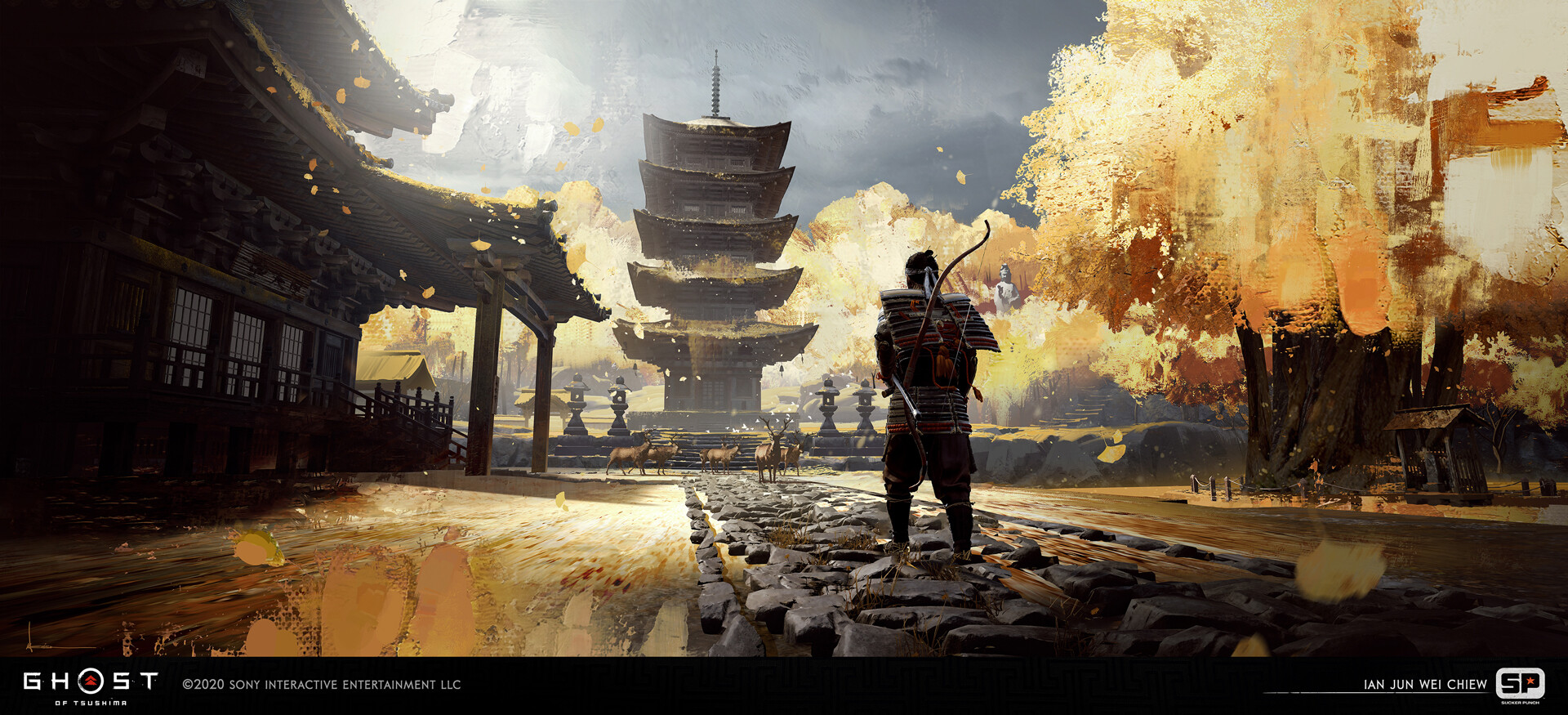
These gameplay elements helped me understand how the game builds tension, rhythm, and freedom.
Player Experience
In my video, I summarised the emotional message of the game:
“Players should feel both honor and fear, constantly shifting between being a samurai and a ghost.”
The contrast between these two identities shapes the tone of the entire game.
Hook + Bonus Ideas
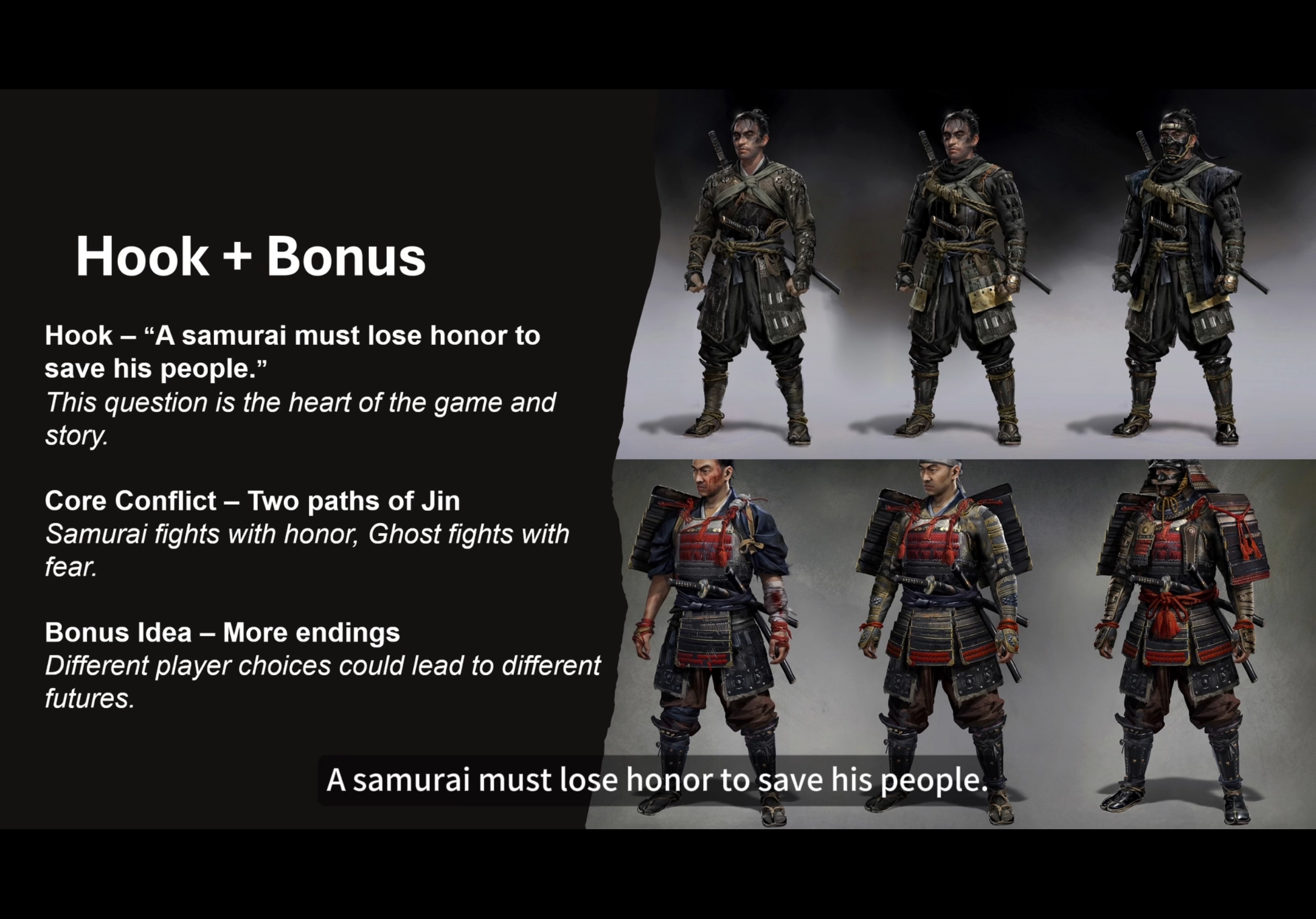
One important line I highlighted is the narrative hook:
“A samurai must lose honor to save his people.”
This idea captures the core conflict of the main character.I also added a bonus idea: multiple endings based on player decisions.
Reflection
This summer project helped me practise how to analyse a game’s visual style, worldbuilding, and emotional tone from a designer’s perspective.It also strengthened my understanding of how art direction and theme shape the overall atmosphere of a game.
PPT Video
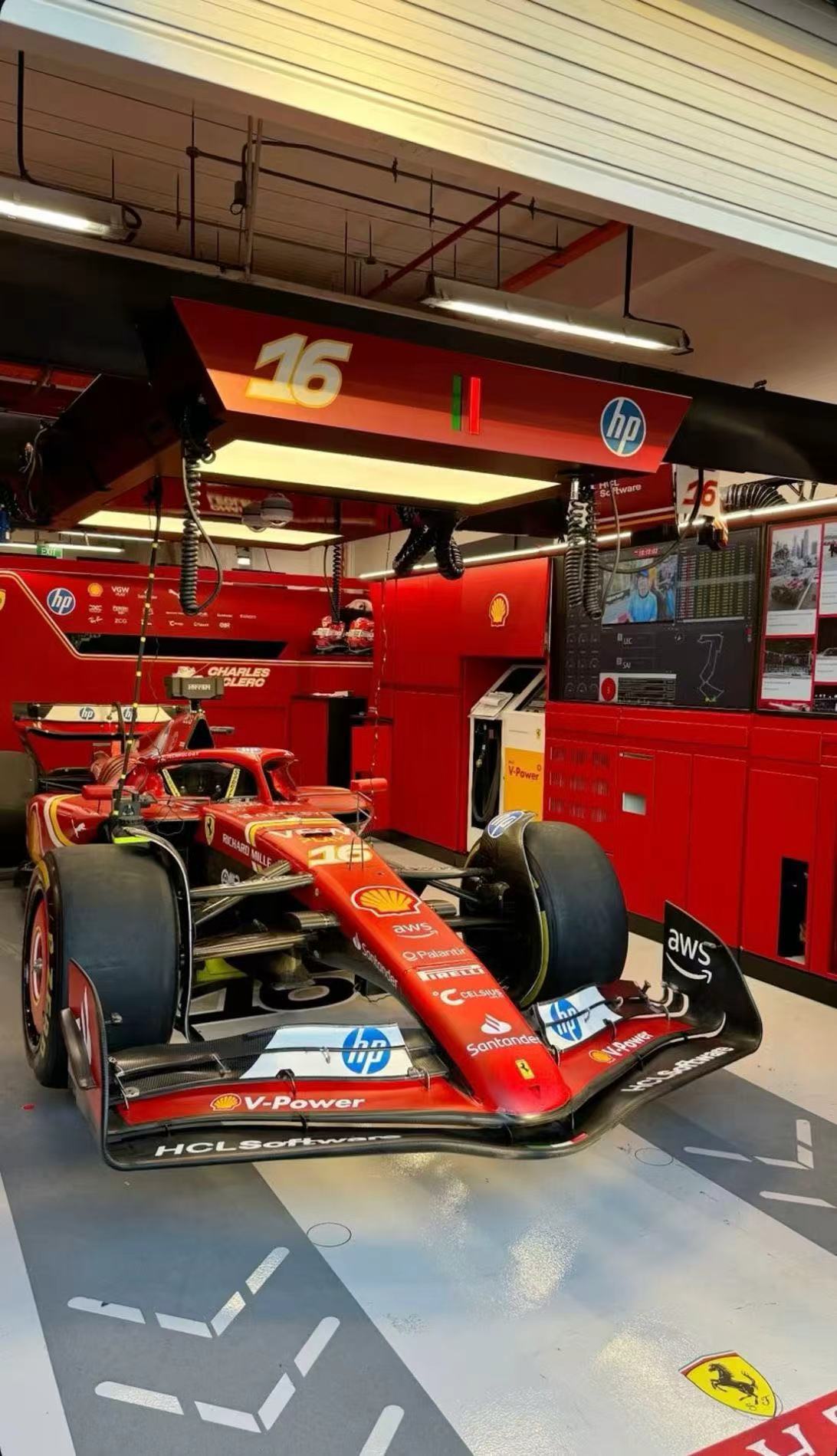
Visual Prompt: F1 Race Track
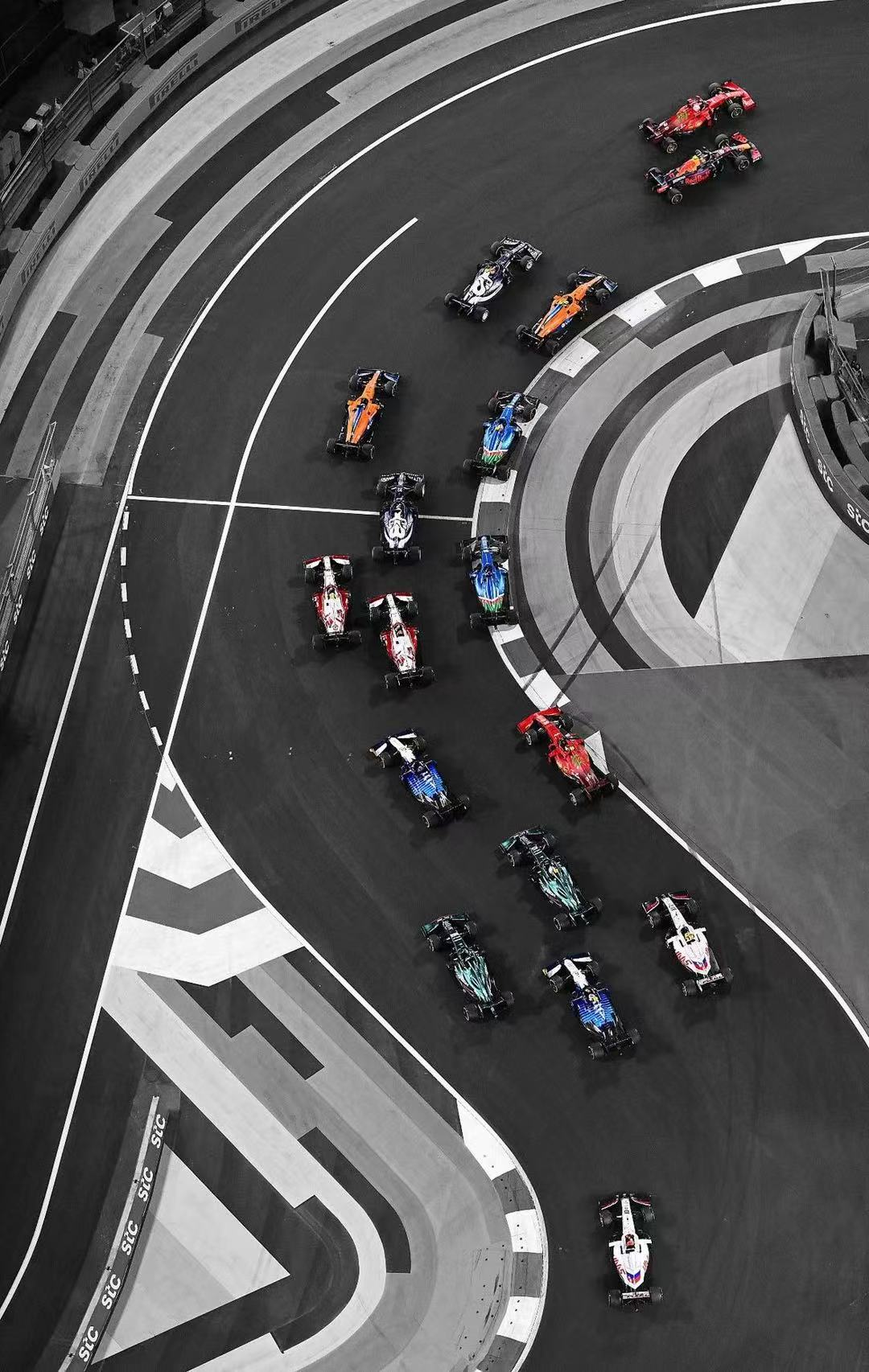
For the Movement workshop, I chose an image of an F1 race track as a visual cue. The image shows a wide, curvy track designed to serve extreme speed, precise control and rapid changes of direction.
The shpe of the track – a combination of long straights and sharp bends – immediately conveys a strong sense of movement and tension. Bold lines, clear track markings, and tense perspectives allow me to understand ‘sport’ as a state of high speed, control, and high risk.
These keywords helped me to expand the concept of motion beyond mere physical displacement, linking it to decision-making processes, risk management and momentum control, resulting in a deeper and more abstract understanding.
Based on the F1 racetrack image, I created several movement-based prompts:
High-speed pathfinding players choose racing lines to optimize movement
Risk-reward movement faster routes become more dangerous
Timing-based movement braking, accelerating, drifting
Environmental flow movement shaped by curves, slopes, and terrain
This helped me explore movement not only visually but mechanically.
Group Discussion Summary
In the group exercise, we compared how different images represented movement. My F1 racetrack image stood out because it suggested directional movement rather than movement inside a closed environment.