CORE GAMEPLAY
THRESHOLD: SIGNAL AT THE EDGE
Core Gameplay Overview
Core gameplay in THRESHOLD: SIGNAL AT THE EDGE is structured around stealth-oriented navigation, environmental reading, and risk-managed decision-making within hostile, decaying infrastructures. Rather than emphasizing combat efficiency or player empowerment, moment-to-moment play prioritizes observation, restraint, and spatial interpretation. Players progress by reading environmental signals, negotiating visibility and exposure, and selecting movement paths based on incomplete or unstable information. Gameplay tension emerges from constant trade-offs between safety, clarity, and risk rather than from direct confrontation.
1.Primary Gameplay Loop
PRIMARY GAMEPLAY LOOP
The core gameplay loop in THRESHOLD: SIGNAL AT THE EDGE is structured as a continuous cycle of observation, assessment, decision-making, and controlled action. Players begin by observing the environment, identifying patrol rhythms, signal intensity, siThe core gameplay loop of THRESHOLD: SIGNAL AT THE EDGE is structured as a continually functioning process: observation, assessment, decision-making and controlled action.
The player first needs to make a careful observation of the environment, identifying enemy patrol tempo, signal strength, line-of-sight coverage, and vertical relationships in space. Based on this, the player evaluates their exposure, the enemy’s state of alert, and the available routes of movement and penetration. Subsequently, the player needs to make judgements between movement speed, path selection and timing of actions, often prioritising stealth over efficiency.
The action phase is centred on careful execution, and the player must pay constant attention to feedback from the environment, such as the way sounds are transmitted, the level of visual exposure, and fluctuating changes in signals.Each action changes the overall state of the system, which prompts the player to reassess the current conditions and enter the cycle again. In this way, the gameplay creates a dynamic and constantly self-calibrating sneaking experience.In this process, the player first acquires information by observing the environment, including enemy patrol patterns, line-of-sight coverage, and vertical relationships in space.All actions unfold with restraint and feedback perception, keeping the sneak in a constant state of tension that can be broken and requires repeated judgement.
PLAYER EXPERIENCE LOOP
Meanwhile, the player experience loop further defines the psychological rhythm that the game hopes to create.Rather than aiming for constant action thrills, this game guides the player to stop, observe, anticipate potential risks, and make action decisions only when conditions are right.Moments of action introduce tension and uncertainty, which in turn forces the player to reassess the situation and return to a state of observation.This cycle of experiential dimensions establishes hesitation, vulnerability and cognitive load as core components of play, thus ensuring that the advancement of the game relies more on restraint and situational awareness than purely mechanical superiority or intensity of action.
Gameplay Design Intent
The main gameplay and player experience cycles in THRESHOLD: SIGNAL AT THE EDGE are designed to prioritise restraint, situational awareness, and psychological tension over speed or mechanistic pressure. Advancement does not come from constant action, but rather from the player’s ability to decipher incomplete information, anticipate risks, and choose ‘no action’ at critical moments.By basing the structure of play on repeated observation, reassessment, and controlled movement, the system reinforces vulnerability as a core play state. The result is a play experience characterised by hesitation, uncertainty and careful decision-making in an environment of hostile and decaying infrastructure.
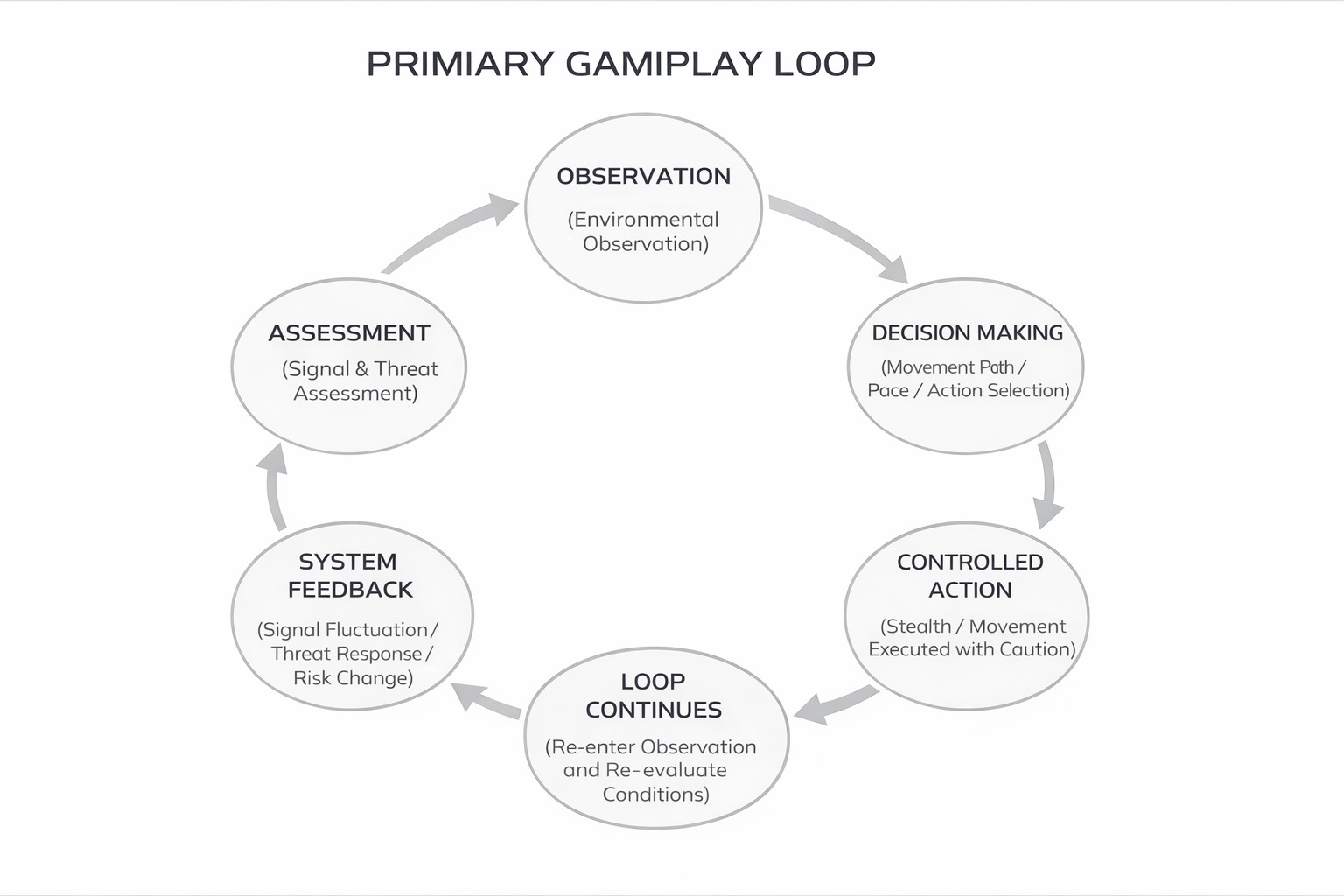
Figure 01. Primary Gameplay Loop — Environmental information is continuously translated into player decisions, forming a closed loop of observation, assessment, and controlled action.

Figure 02. Player Experience Loop — The psychological rhythm of play is shaped by cycles of hesitation, tension, and re-evaluation rather than constant action.
2.Player Actions & Decision Space
In THRESHOLD, the player’s actions are more about making decisions within constraints than about mechanical execution. Actions are constrained by choices between speed and safety, visibility and concealment, clarity and ambiguity. Vertical positioning, signal exposure and environmental density constantly reshape the options available to the player. The game does not offer the best solution, but rather a trade-off based on the situation, requiring the player to make imperfect decisions based on partial information. By improving their ability to read and anticipate the environment, rather than the dominance of the mechanics, players can become masters.
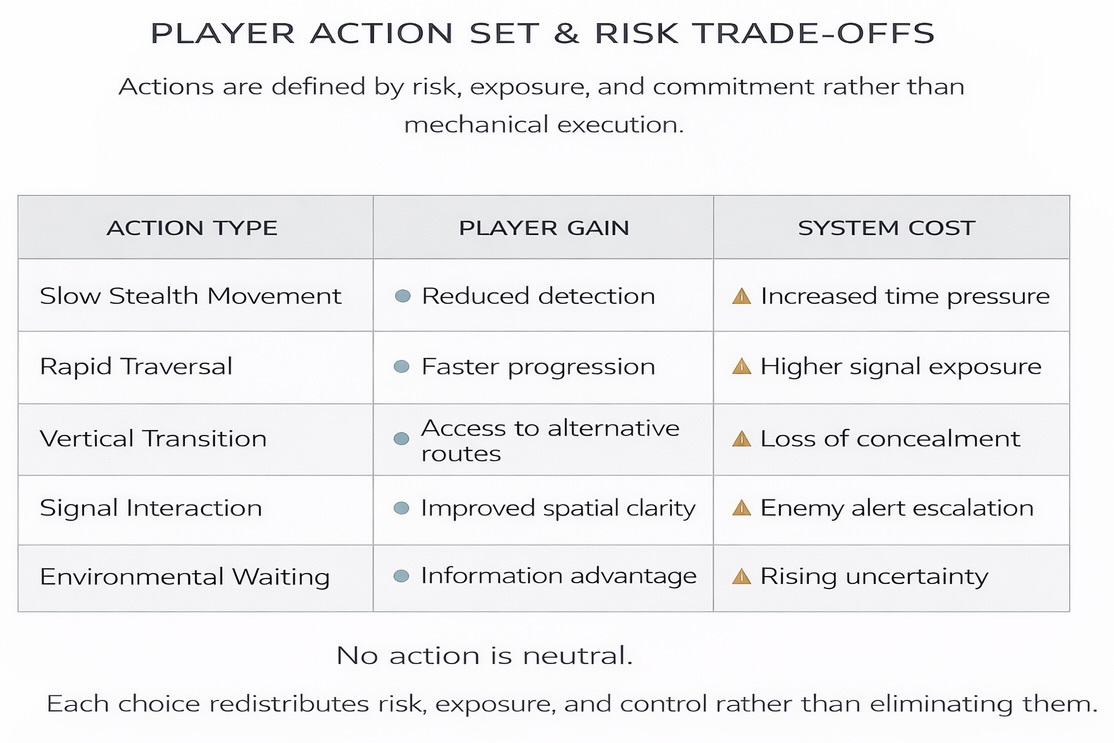
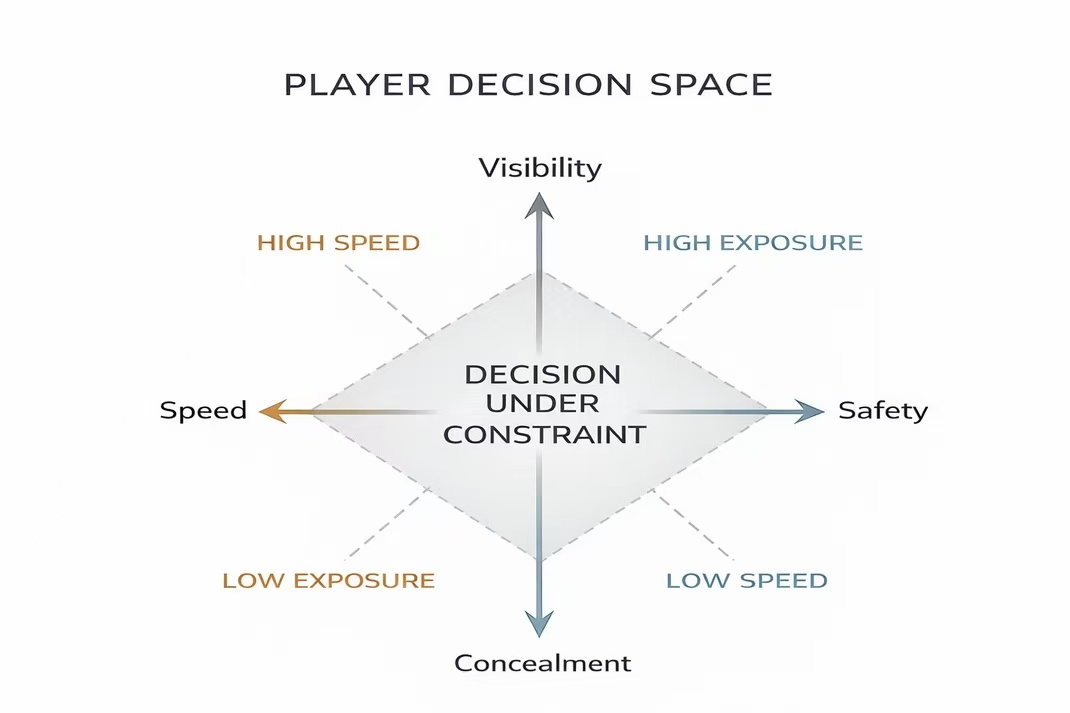
Figure 03Player Decision Space Diagram —
Player actions are shaped by competing trade-offs between speed, vibility, and safety, requiring commitment under incomplete information rather than optimal solutions.
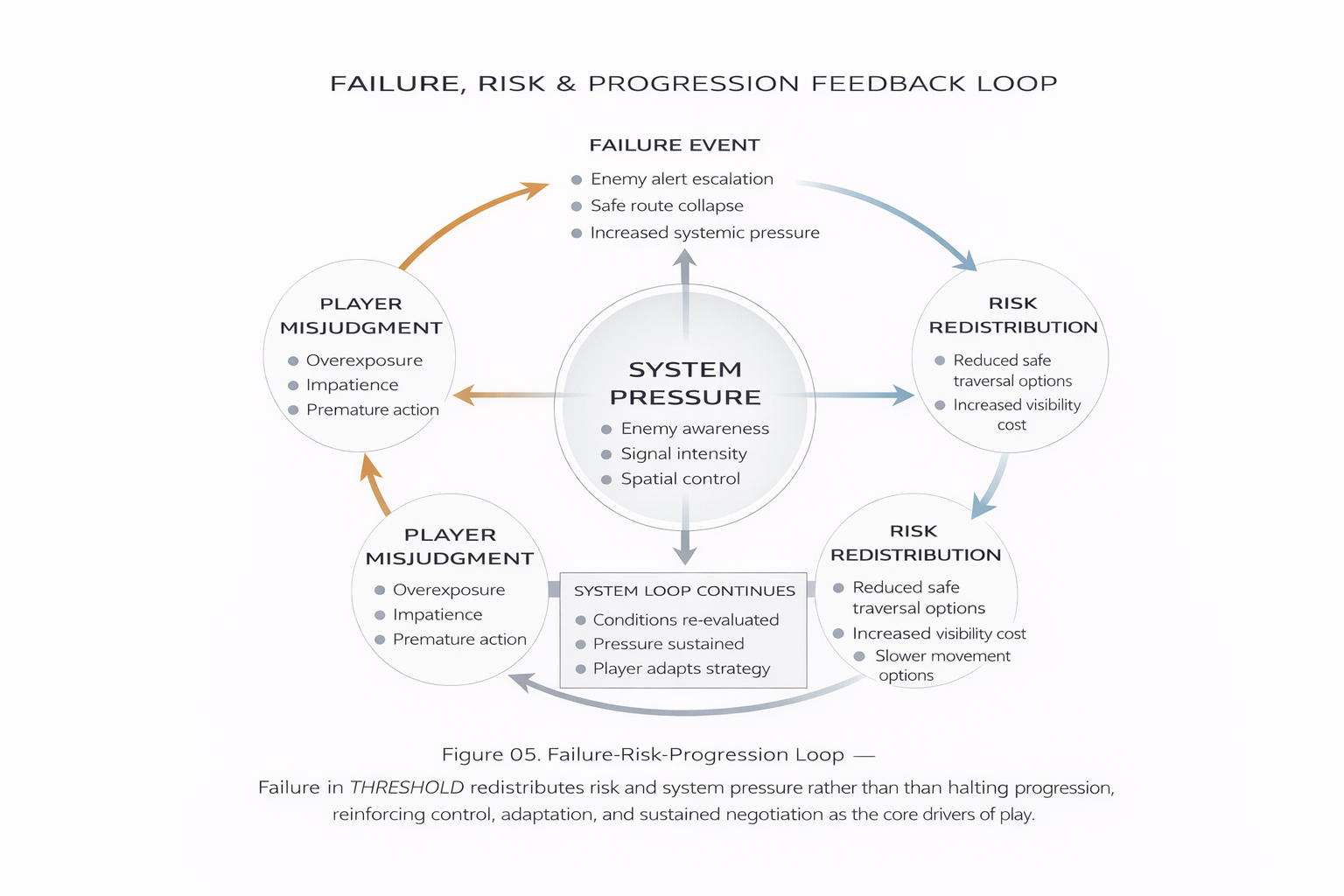
3.Failure Risk and Progression Logic
In THRESHOLD, failure is rarely the result of a lack of player action or skill, but more often the result of poor judgement, impulsive behaviour or overexposure.Overly aggressive or poorly timed actions can quickly raise the enemy’s alert level, disrupt otherwise safe movement paths, and significantly exacerbate stress at the system level.Thus, the advancement of the game does not depend on the elimination of threats, but on the continuous control of risks and information.As the player grows accustomed to the instability of the environment and the constant decay of the signal, the advancement process becomes more of an ongoing negotiation and game than a linear, one-way path forward.This structure further reinforces the game’s core themes of vulnerability, control, and systemic collapse.In this framework, failure is not an interruption of the process, but rather the result of a transformation and contraction of the decision space under higher system pressures.