ART STYLE &VISUAL DIRECTION
THRESHOLD: SIGNAL AT THE EDGE
Visual Direction Overview
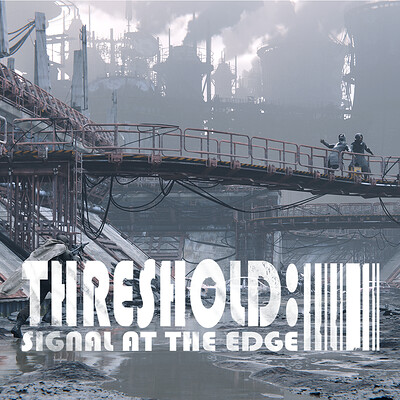
The visual direction of THRESHOLD: SIGNAL AT THE EDGE is constructed as a system in decline rather than a decorative aesthetic layer. Visual design does not function as surface presentation, but as an active narrative structure through which meaning, history, and emotional tension are communicated.
The world is designed to appear functional yet purposeless, monumental yet unstable—an environment shaped by systems that continue to operate after losing their original intent.
Rather than guiding players through explicit visual cues or cinematic framing, the art direction emphasizes ambiguity, restraint, and endurance. Architecture, infrastructure, and signal phenomena function as primary narrative carriers, positioning the environment itself as a fragmented historical record.
Visual interpretation becomes a core player activity, aligning art direction directly with narrative philosophy and gameplay experience.
1.Core Visual Pillars
1.1 Architecture as Authority
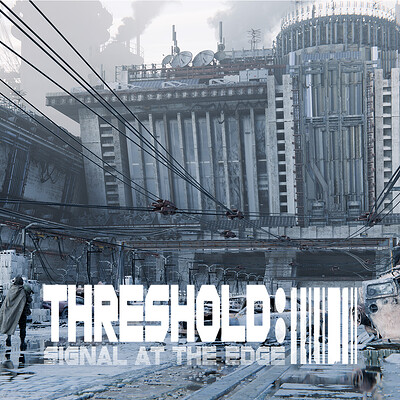
In THRESHOLD, the buildings do not represent the still-functioning forces of governance, but rather the material remains of authority. The structures take on a monumental, rigid and vertically oppressive character, conveying dominance through the space itself, but lacking any real presence of a ruler.
Fauvism and post-industrial forms are utilized not out of stylized nostalgia, but because of their ability to effectively embody systemic control, permanence, and a callous disregard for human scale.
Verticality plays a key role in shaping player perception.Tall towers, elevated corridors and cascading platforms continue to exert spatial pressure, reinforcing the player’s sense of vulnerability and insignificance.
The building doesn’t guide the player’s actions – it watches the player.The movement of players is confined within strict spatial hierarchies that suggest once-existing coordination mechanisms and surveillance systems, making the building itself a silent witness to authority.
1.2 Infrastructure Over Humanity
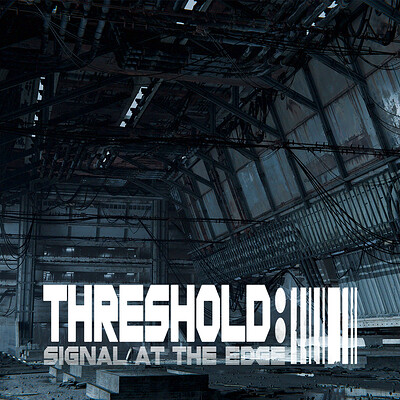
The visual world puts infrastructure above human existence. Cables, pipes, relay devices and maintenance structures dominate the environment, while the traces of human activities are secondary and fragmented.
This hierarchical relationship reflects a world in which a system persists beyond its creator – they continue to operate in the absence of intention and supervision.Compared with the durability of industrial structure, the elements of the human scale are fragile and short-lived. What the environment implies is not that civilisation collapses in destruction, but disintegration in abandonment – the system is still running, but the meaning is gradually dissipating.
1.3 Signal as Visual Motif
Signals exist as both narrative elements and visual anomalies in the game. Screens, indicators, light pulses and distortion transmission signals create awkward contrast moments in the overall restrained colour tone.
Signals do not convey clear and interpretable information, but imply an intention in the absence of clarity – they flicker, decline, or remain only in part of their functions.The use of colour is strictly controlled and strategic. Signal-related colours act as a source of interference at the information level: they attract the attention of players, but at the same time refuse to be fully understood.These visual interruptions further strengthen the perception that the communication system continues to exist without coherence, thus creating an atmosphere of uncertainty and cognitive tension.
1.4 Absence, Decay, and Temporal Weight
In THRESHOLD, decay is gradual, not catastrophic. Materials gradually weather, structures fatigue, and systems slowly degrade through time.
This sense of decay is further amplified by the absence of human activity, so that the weight of time is embedded in every surface and spatial choice.
Time is not presented directly through narrative description, but rather through material logic. Rust, erosion, and functional failure become visual indicators of the passage of time, shaping space as the cumulative result of unresolved processes rather than as static ruins.
2.Environmental Storytelling Through Visual Design
2.1Environmental storytelling In THRESHOLD, environmental narratives do not rely on explicit narrative markers or textual cues, but rather construct meaning through spatial relationships themselves. Space is viewed as a vehicle of historical record, whose past function is revealed through the structure of the layout, the traces of use and the behavior of the system, rather than being directly informed by written descriptions.
The contradiction between form and meaning is intentionally preserved. Spaces with a clear function lack context, while systems that are still in operation have long been disconnected from human purpose. This dislocation reinforces the sense of disorder and instability in the world.
Narrative understanding is not gained instantaneously, but rather is generated through contrast, repetition, and spatial correlation. It is only when the player repeatedly encounters similar, but not identical, spaces and systems in different places that meaning emerges through continued observation and association.
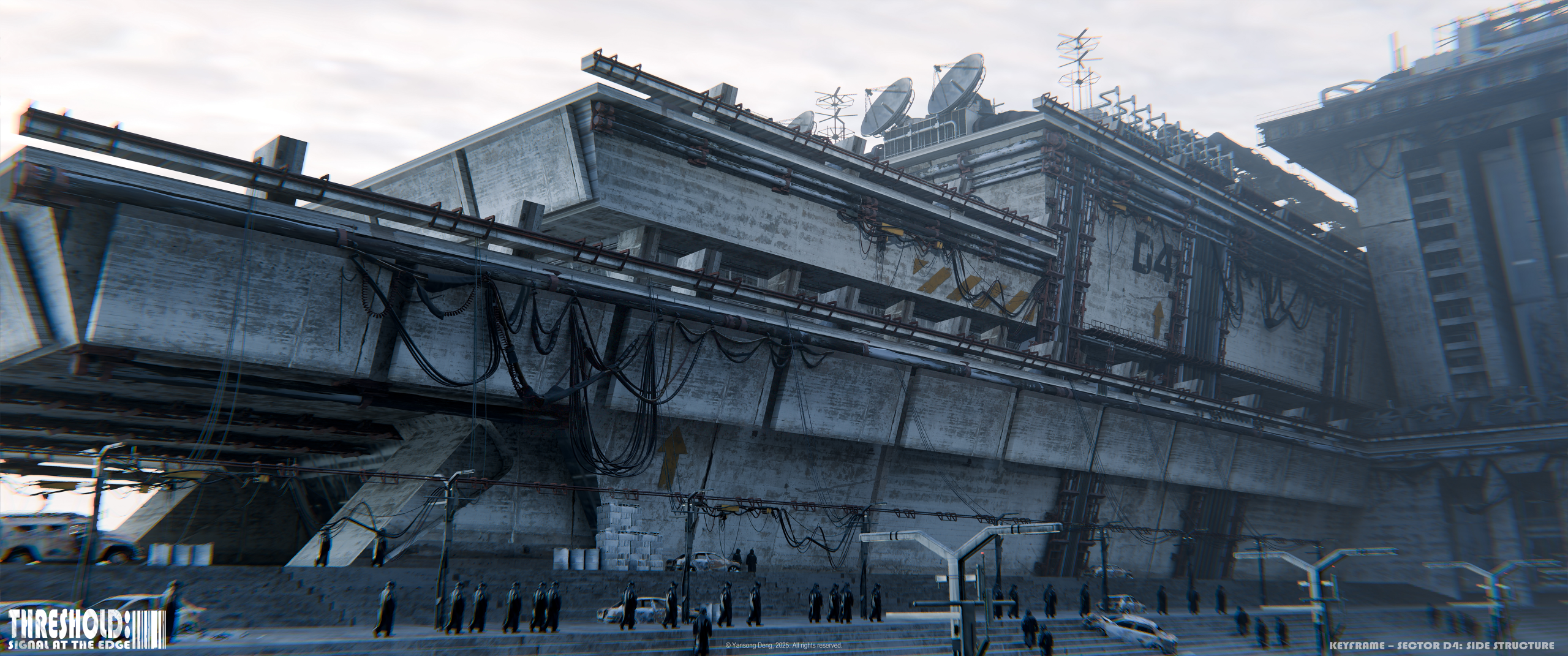
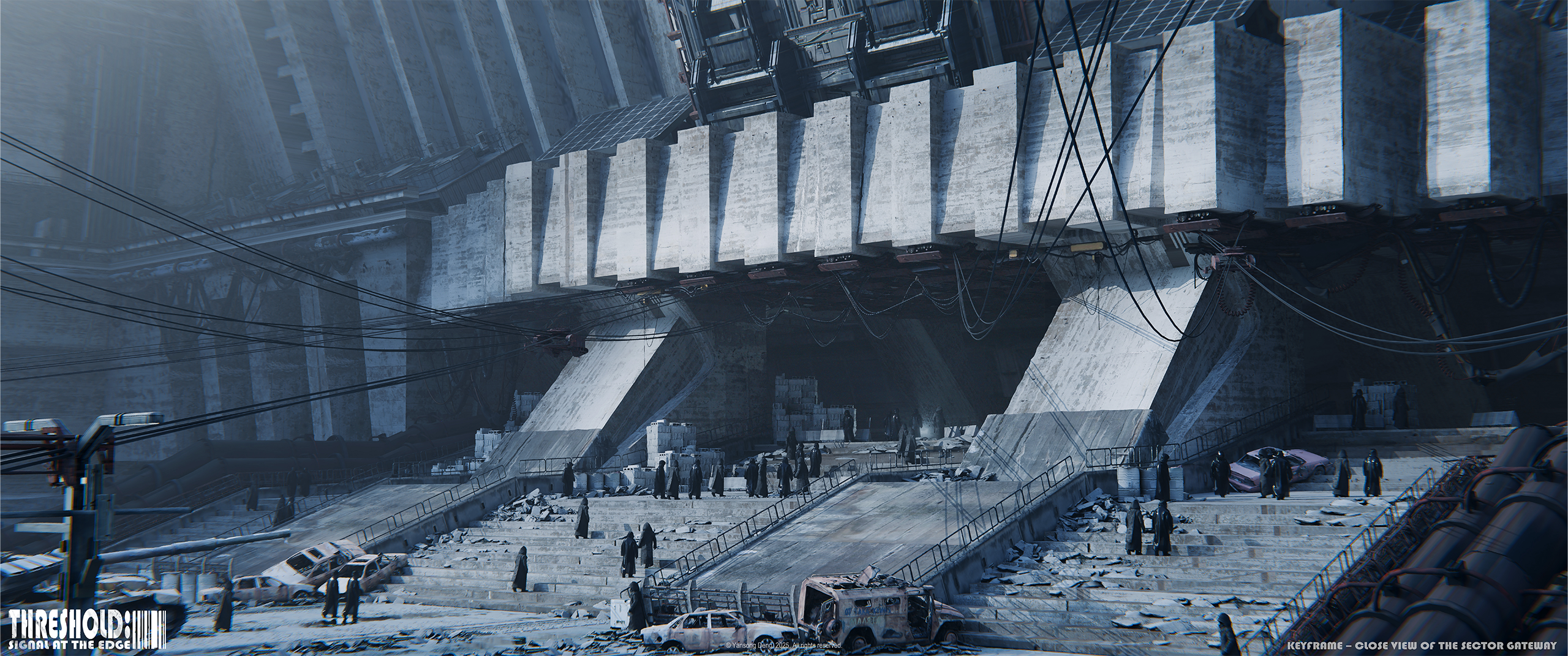
Environmental Storytelling
Narrative meaning emerges through spatial organization, infrastructural residue, and the misalignment between function and human purpose.
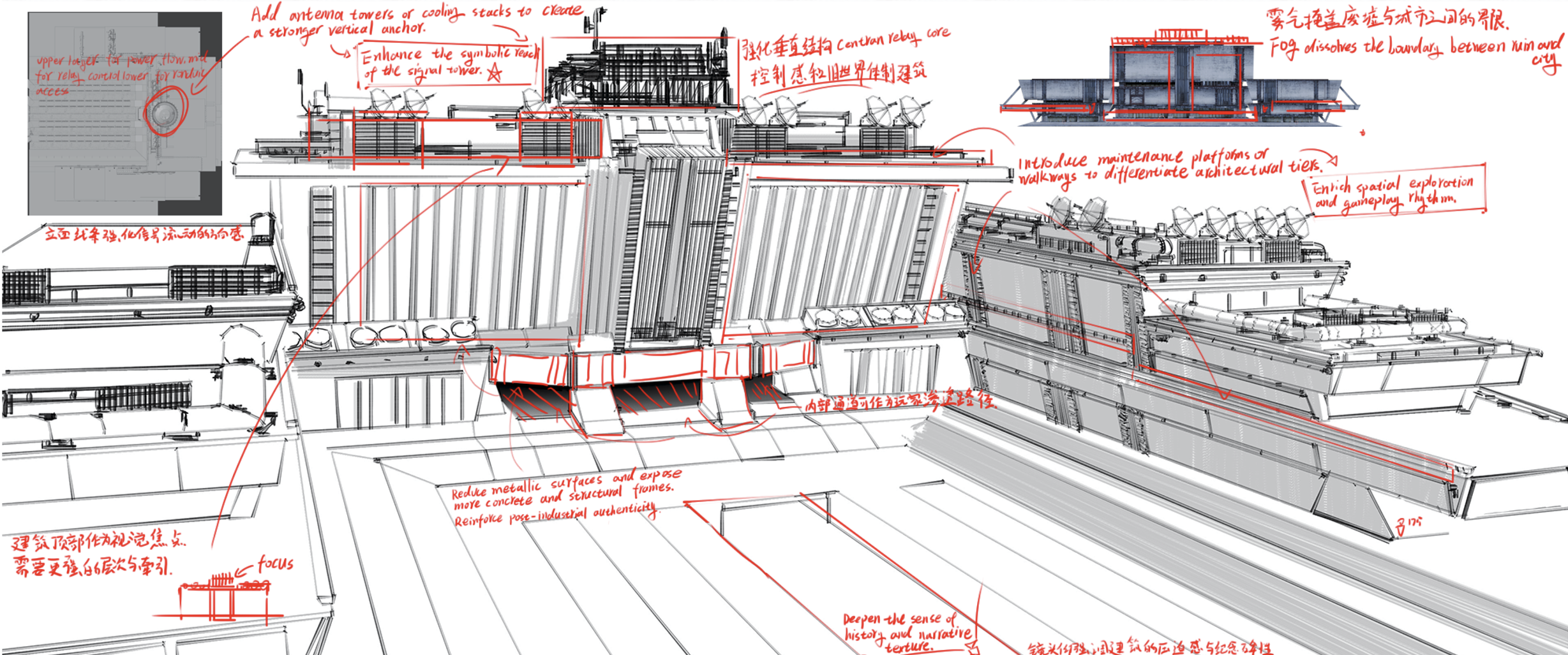
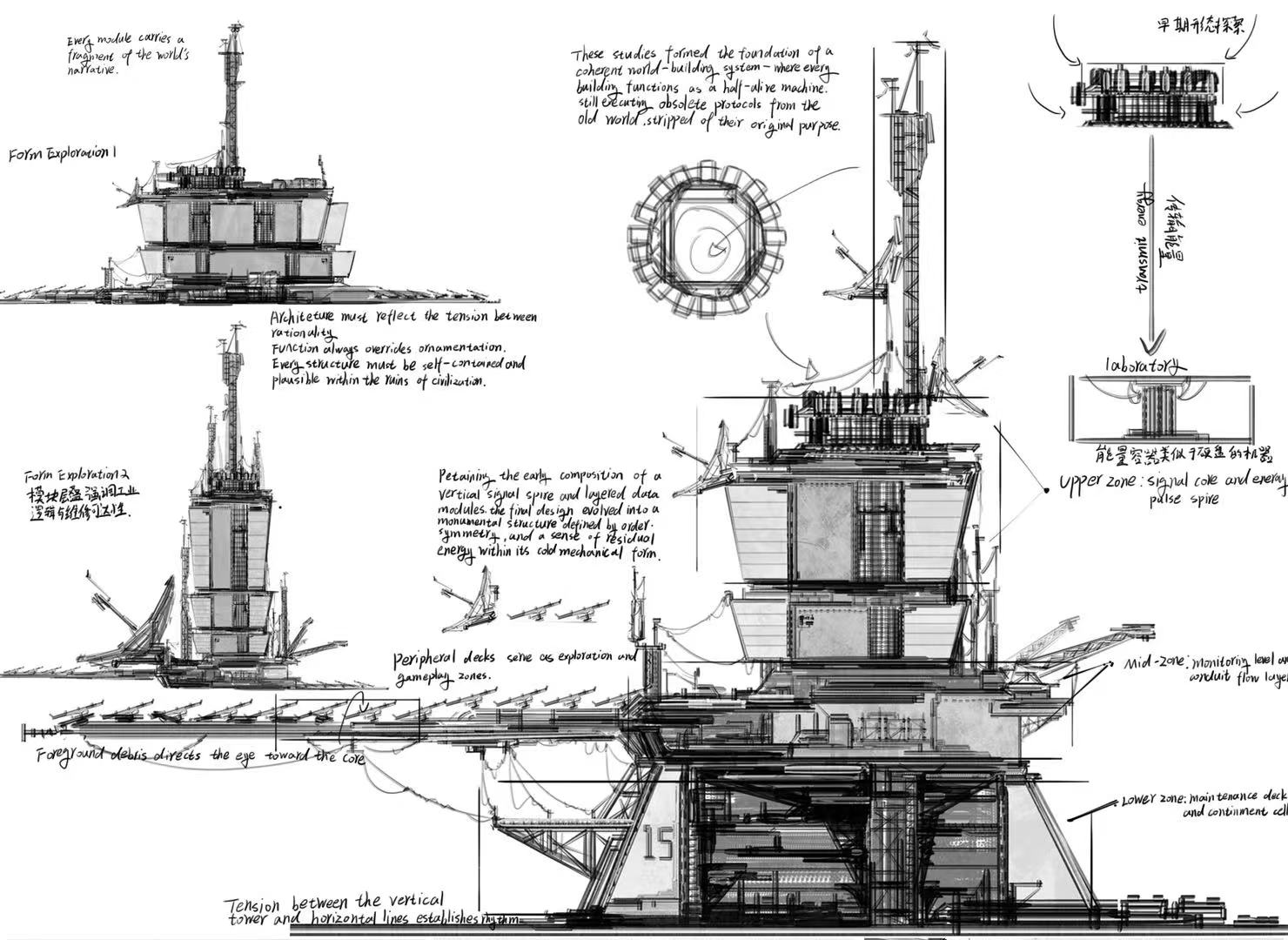
2.2Environmental storytelling is articulated through structural logic rather than explicit narrative cues.
This annotated structural study demonstrates how architectural decisions embed narrative meanings directly into the environment. The inclusion of elements such as antenna towers, cooling units, maintenance platforms, and exposed traffic circulation reinforces the space’s attributes as an operational signaling hub rather than a human-centered indoor place. Vertical volumes and cascading infrastructure establish a hierarchy of control, while notations of material cutbacks, exposed concrete, and surface abrasion emphasize long-term disrepair and the durability of the post-industrial structure.Rather than being used to present specific storytelling events, the diagram depicts how function, scale, and decay work together to convey a history-a history of a system that continues to function beyond its original purpose. Narrative meaning is not gained through an illustrative text, but is naturally generated through spatial interpretation and environmental logic.
3.Color, Light, and Material Language
The colour scheme is deliberately compressed and restrained to enhance the emotional convergence and environmental consistency. The neutral industrial tone dominates, so that the colours associated with the signal are no longer just decorations, but exist as interference and hints at the narrative level.
Lighting mainly uses diegetic light sources from industrial lamps, screens and residual system activities. Shadow, occlusion and directional lighting together shape uncertainty, which is used to control visibility rather than improve clarity.
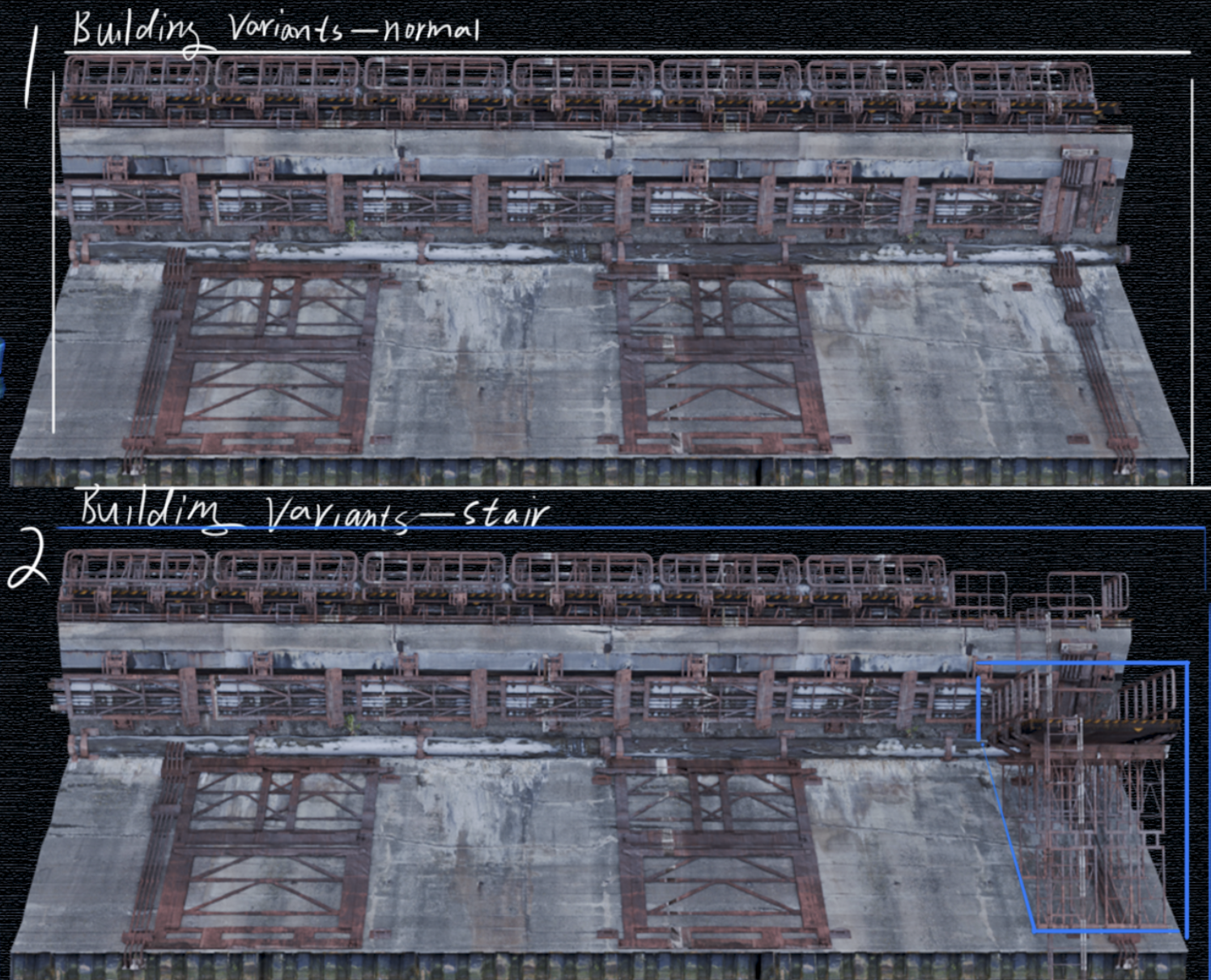
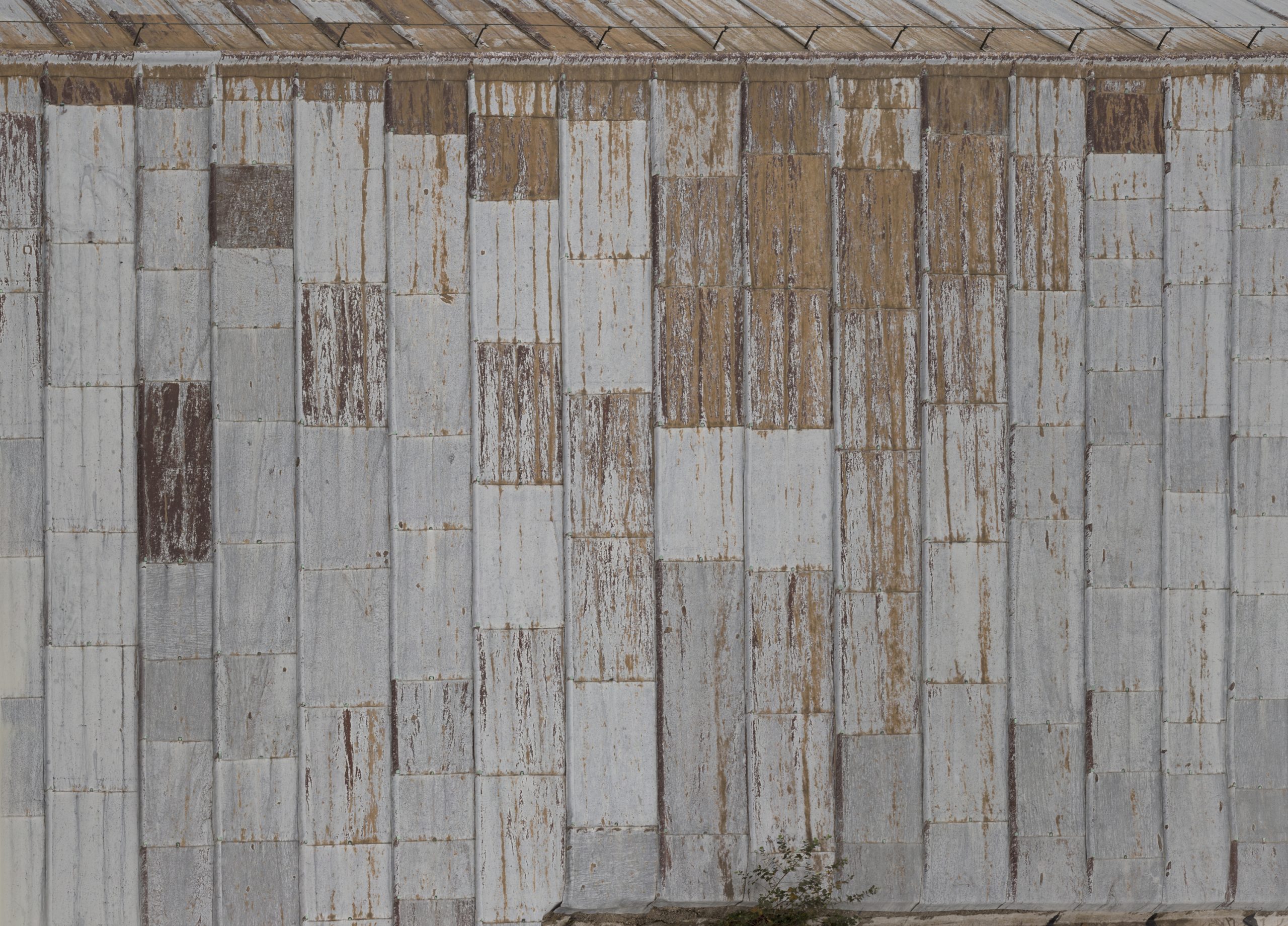
The principle of material selection is that functionality is prioritised over decorativeness. The surfaces of concrete, metal and plastic show a wear state consistent with long-term exposure and disrepair, thus further strengthening the inherent logic and credibility of the world.
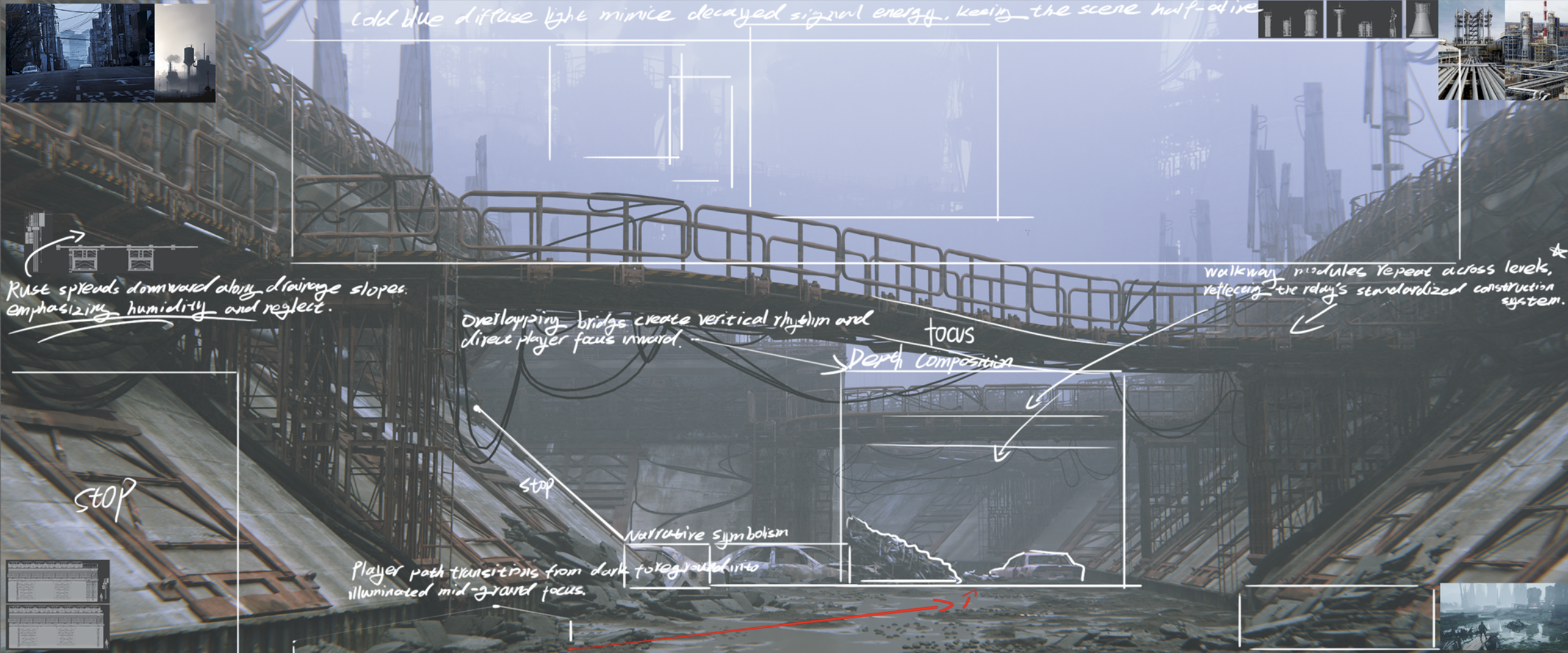
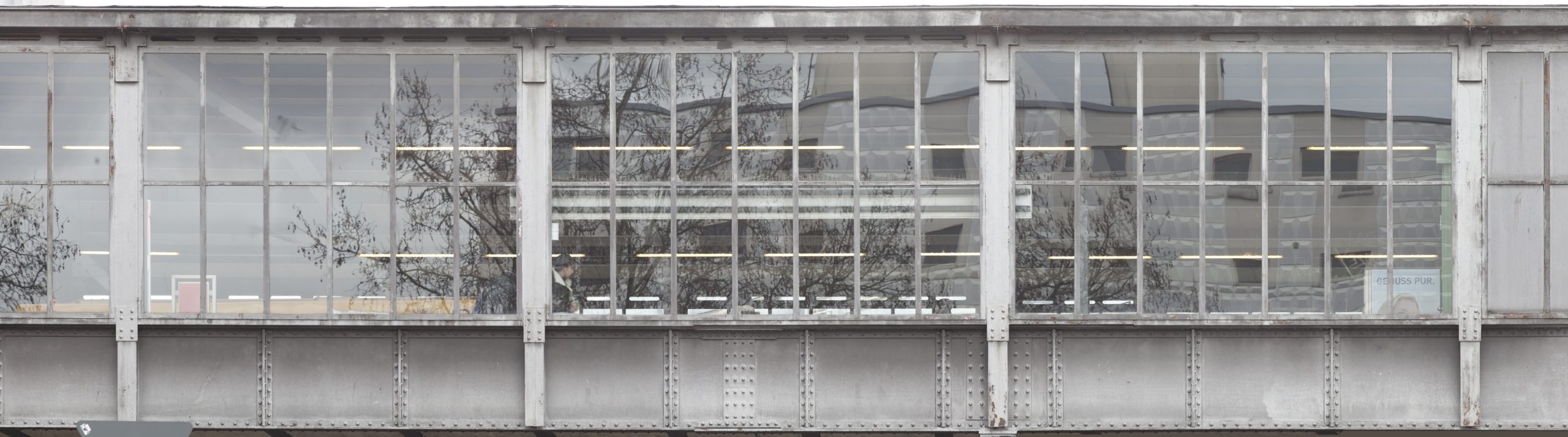
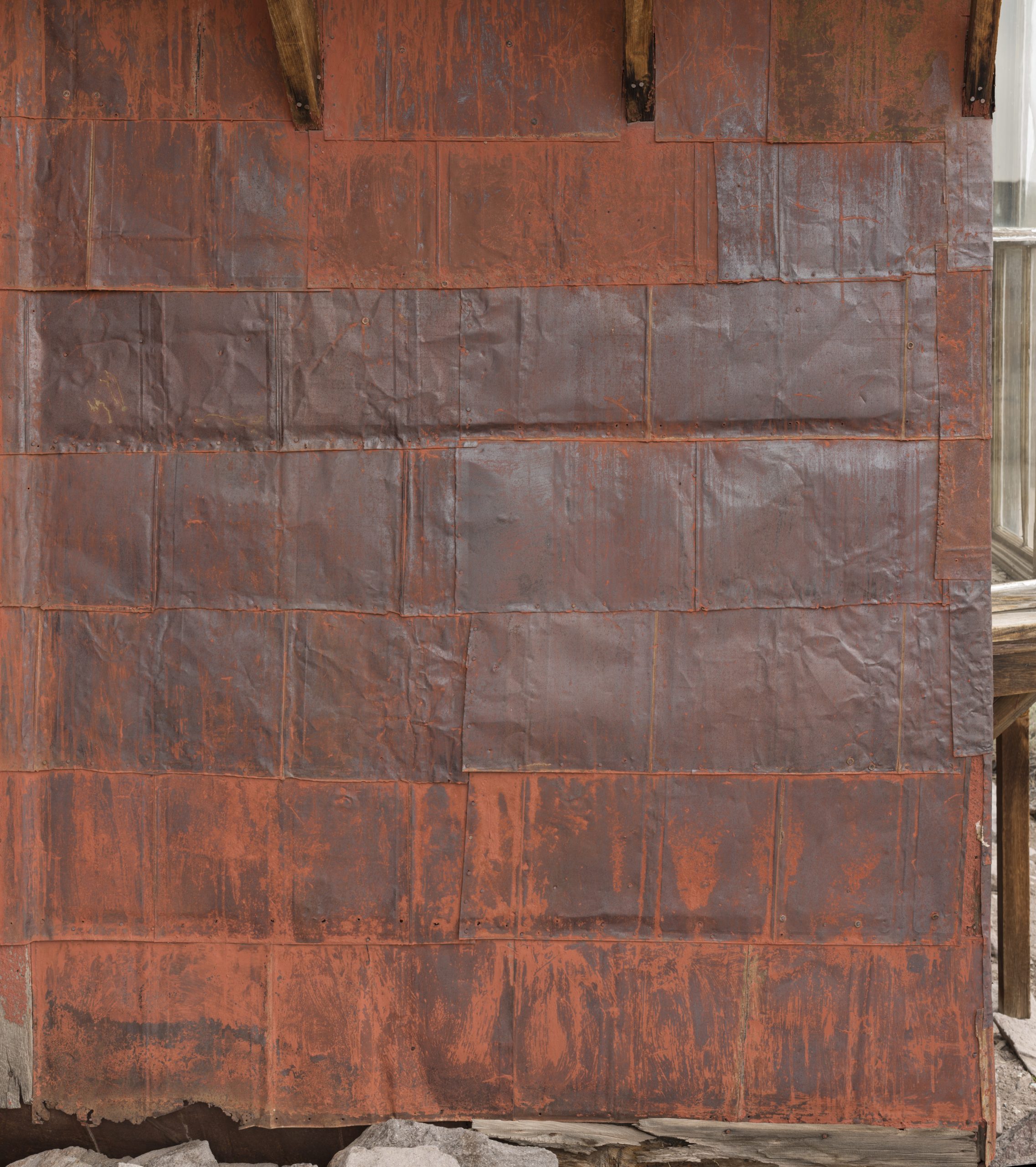
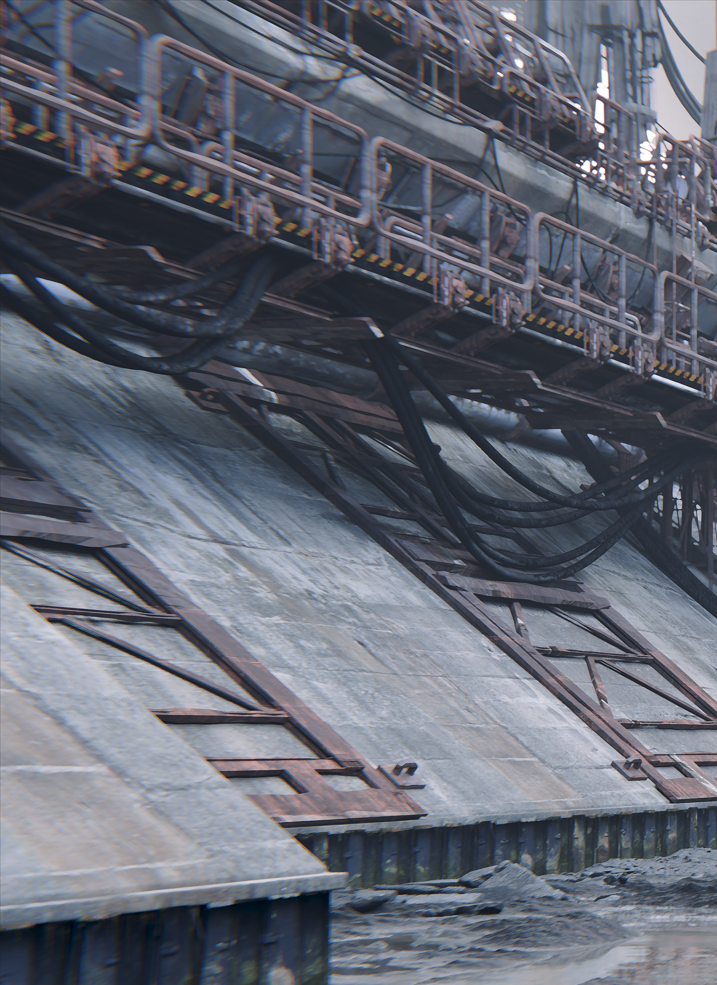
A focused study of restrained industrial color, diegetic lighting, and material decay, emphasizing atmospheric control and temporal weight.
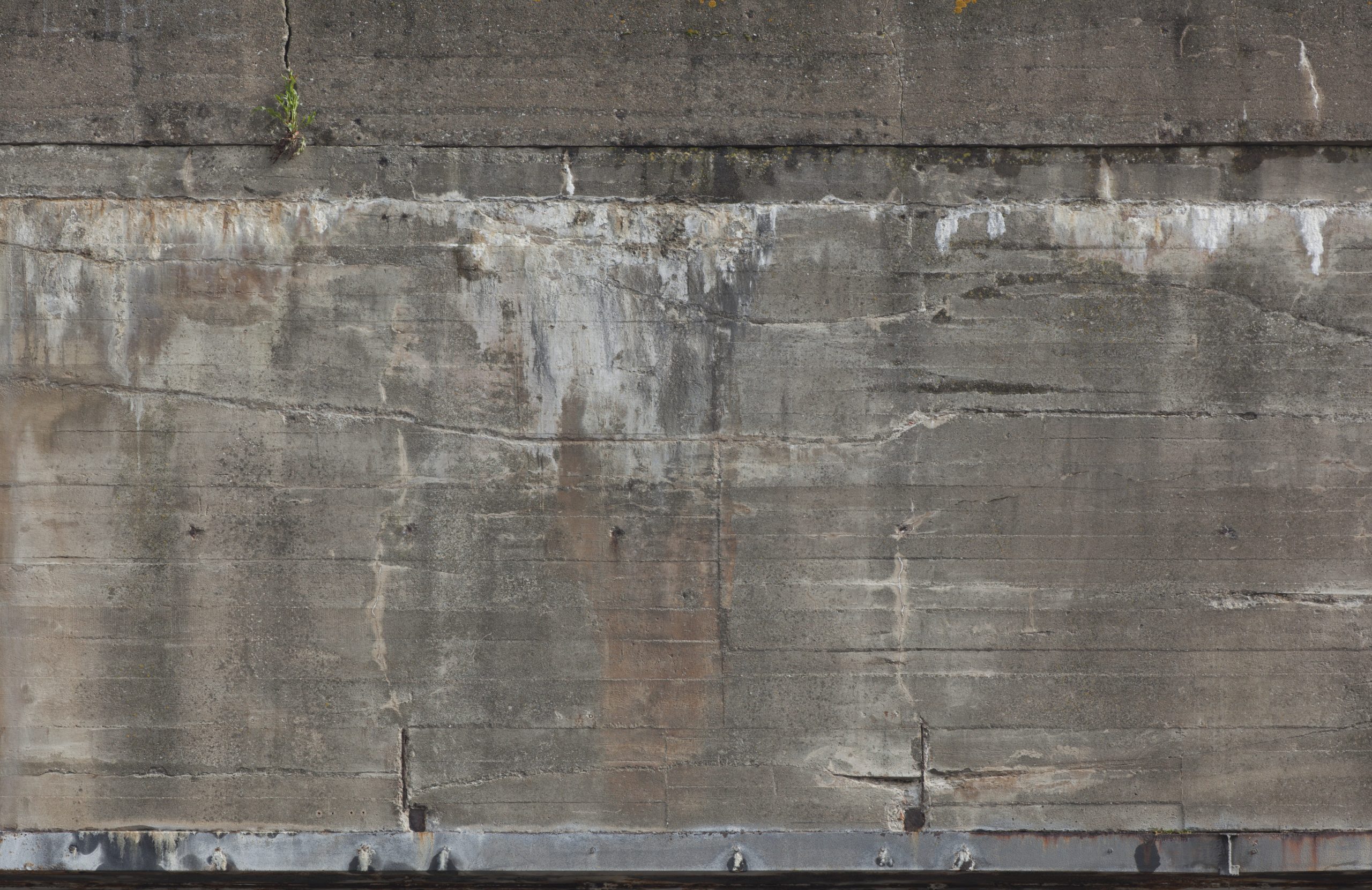

Concrete — Structural permanence marked by weathering, staining, and material fatigue.

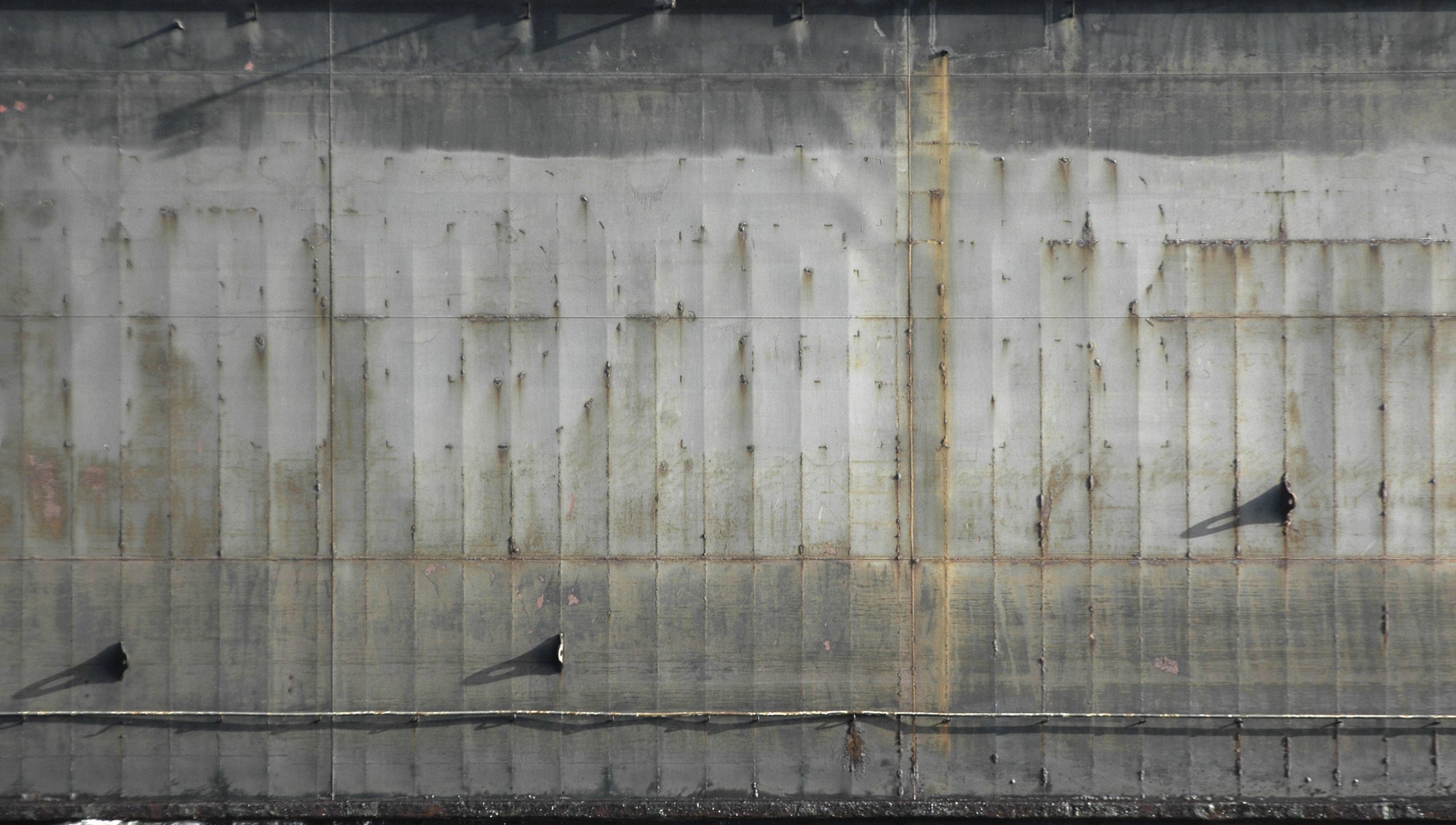
Corroded Metal — Oxidation and surface breakdown indicating long-term neglect and systemic decay.
3.1Material Language & Surface Logic
In THRESHOLD, the material is regarded as evidence of long-term exposure, not a surface layer for decoration. Concrete and metal continue to accumulate stains, erosion, and fatigue under the joint action of gravity, humidity, and structural stress, reflecting systems that persist in the absence of maintenance and supervision.
Weathering does not occur evenly, but is driven by spatial conditions—the edges are more easily corroded, surfaces retain streaks, and structural seams remain clearly visible—allowing time to be directly embedded in the environment. This restrained material logic avoids stylized “ruin aesthetics,” instead presenting decay as a slow and unresolved process, thereby reinforcing themes of abandonment, continuity, and systemic inertia.







4.Scale, Composition, and Player Presence
4.1 Key Visual Overview — Complete Environment Concept
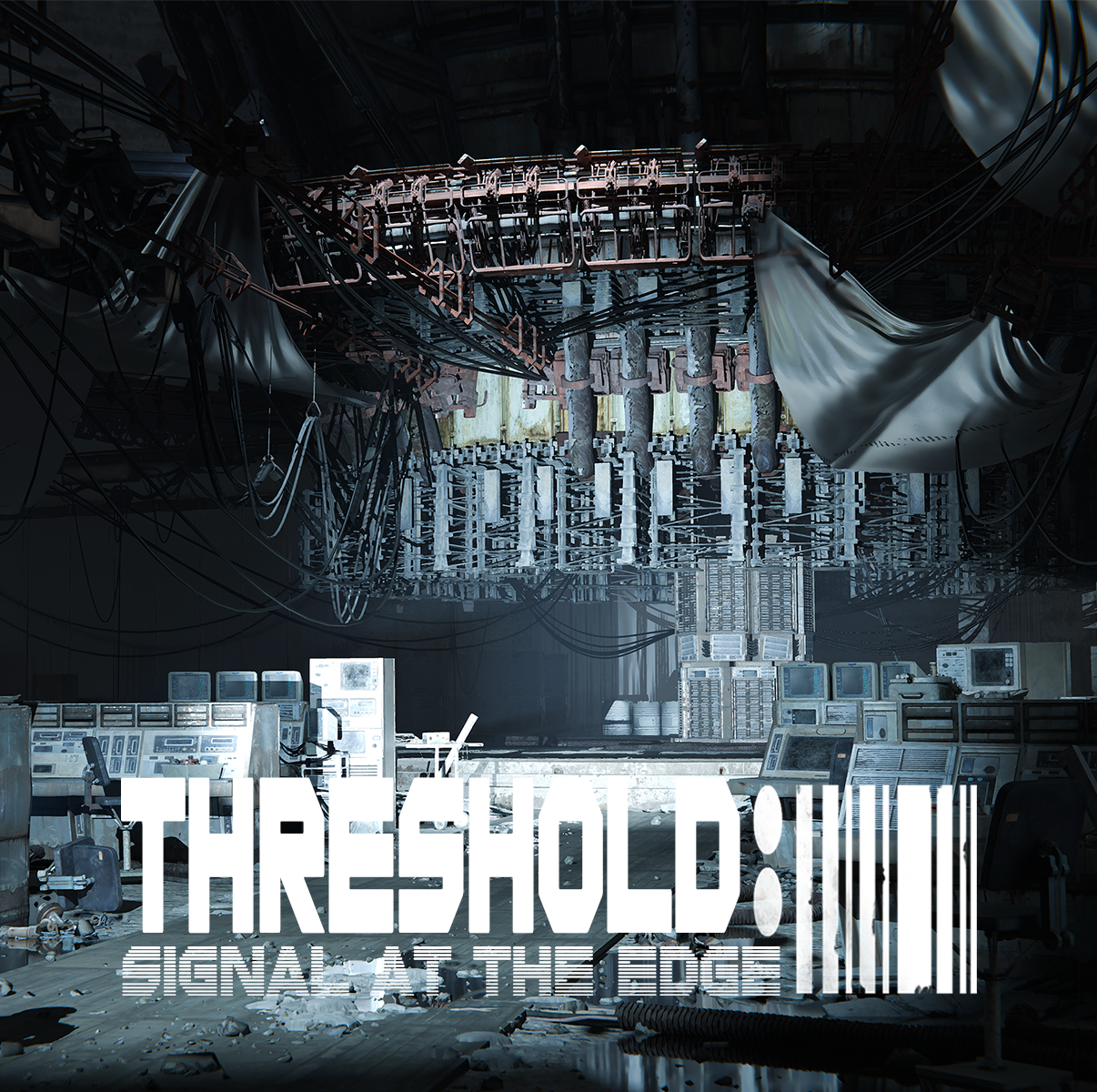
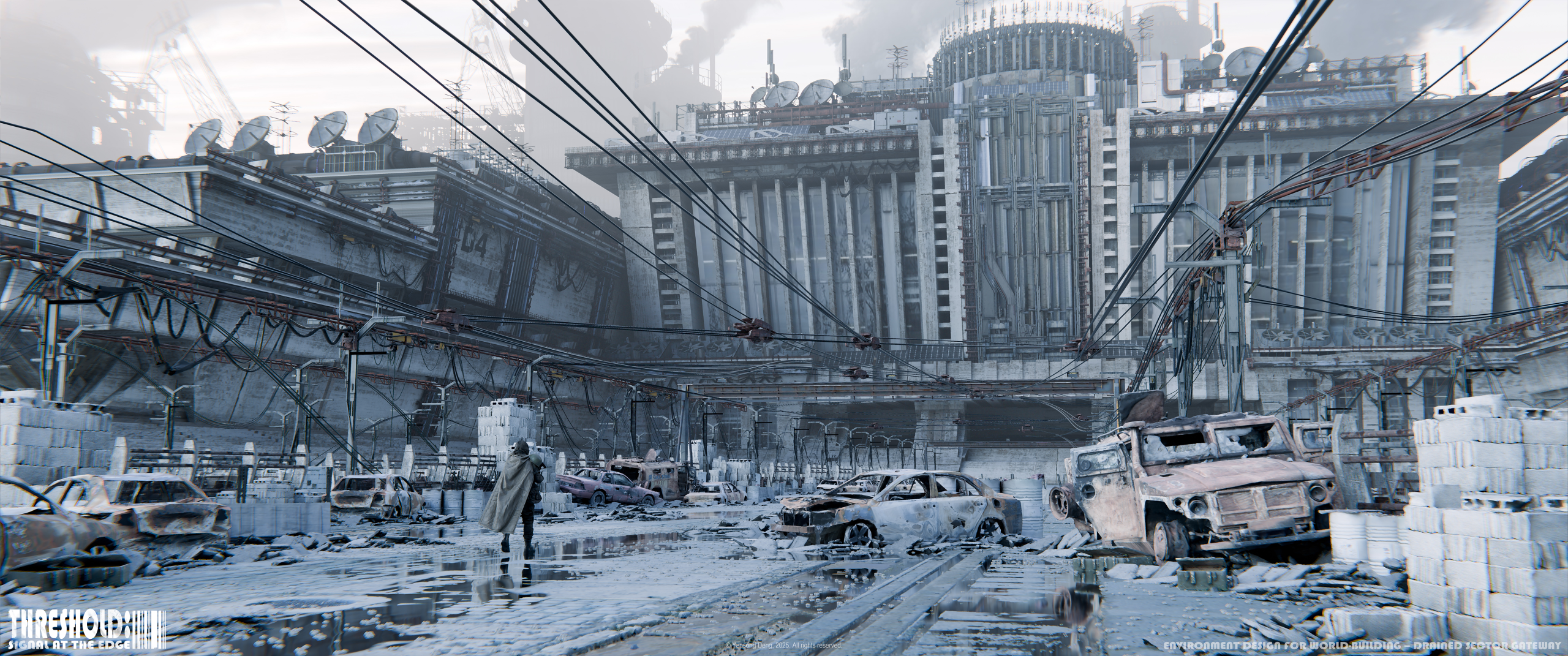
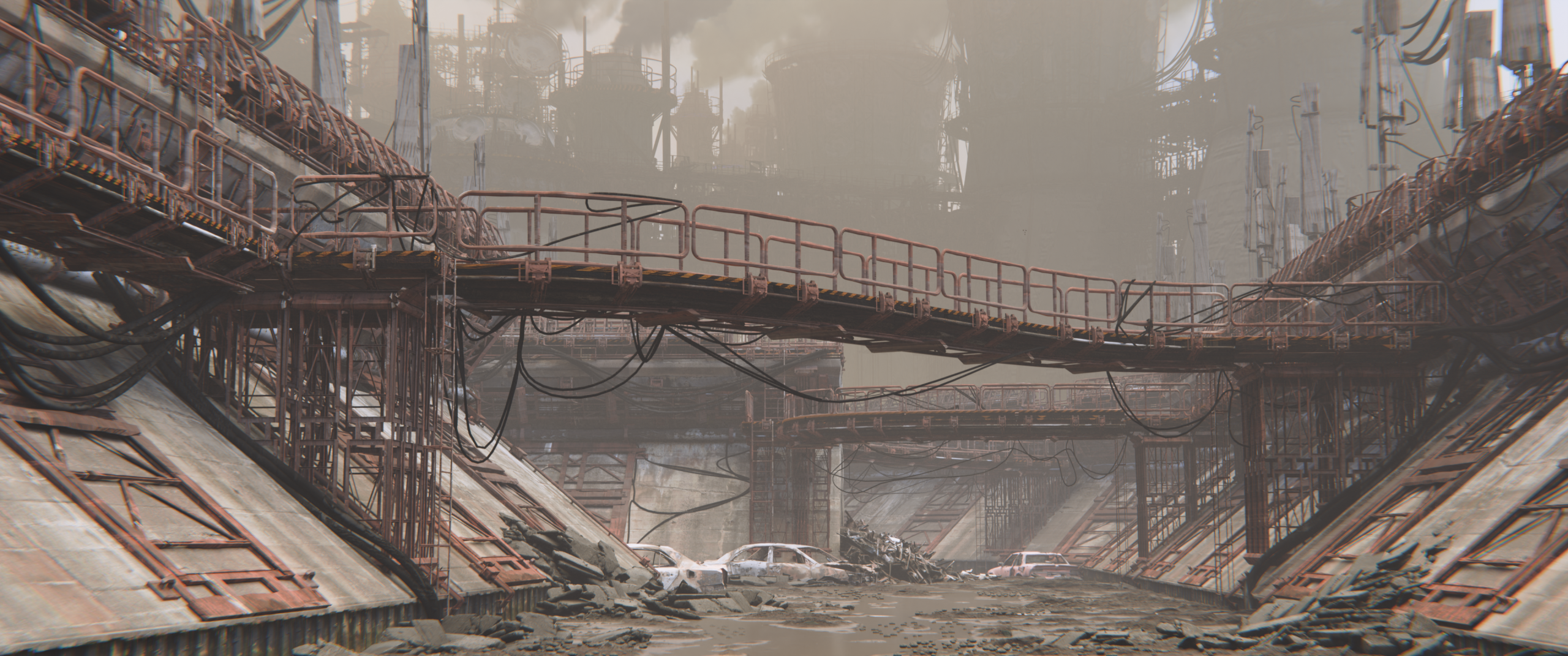
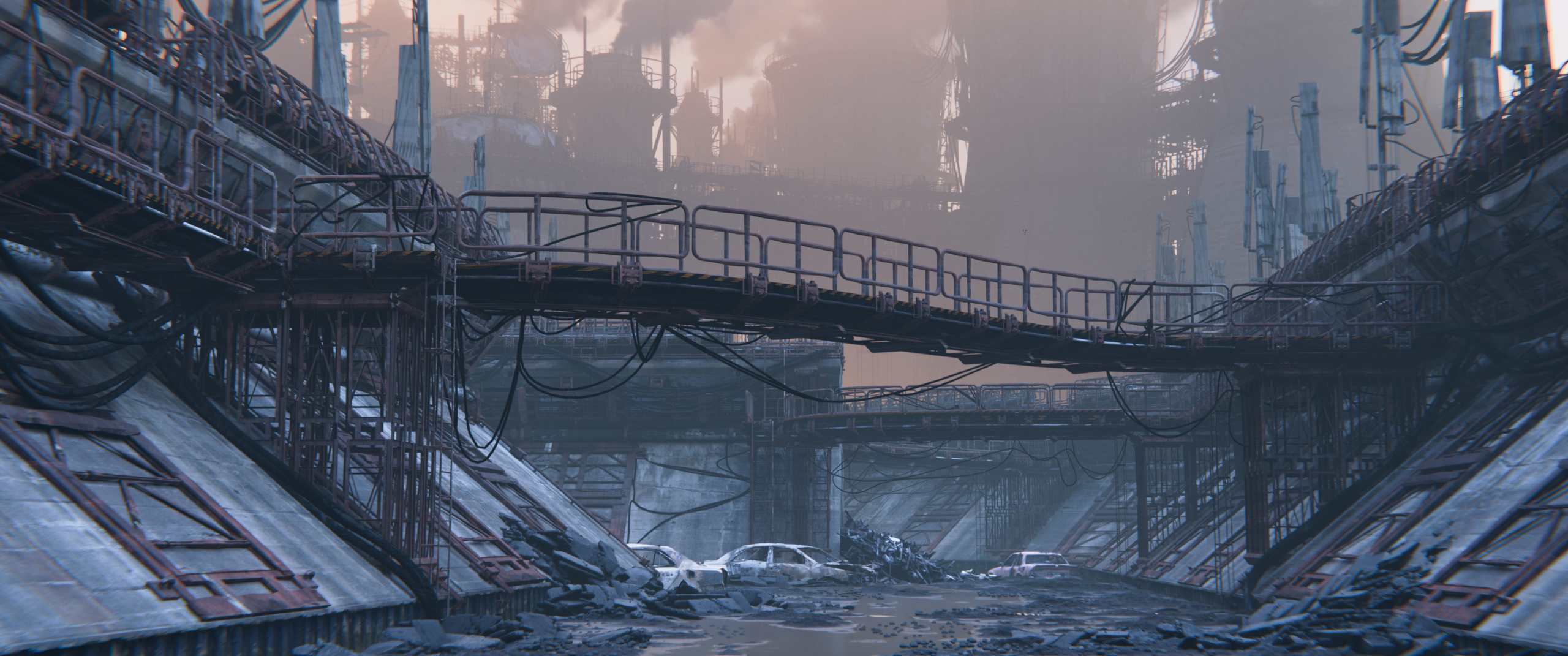
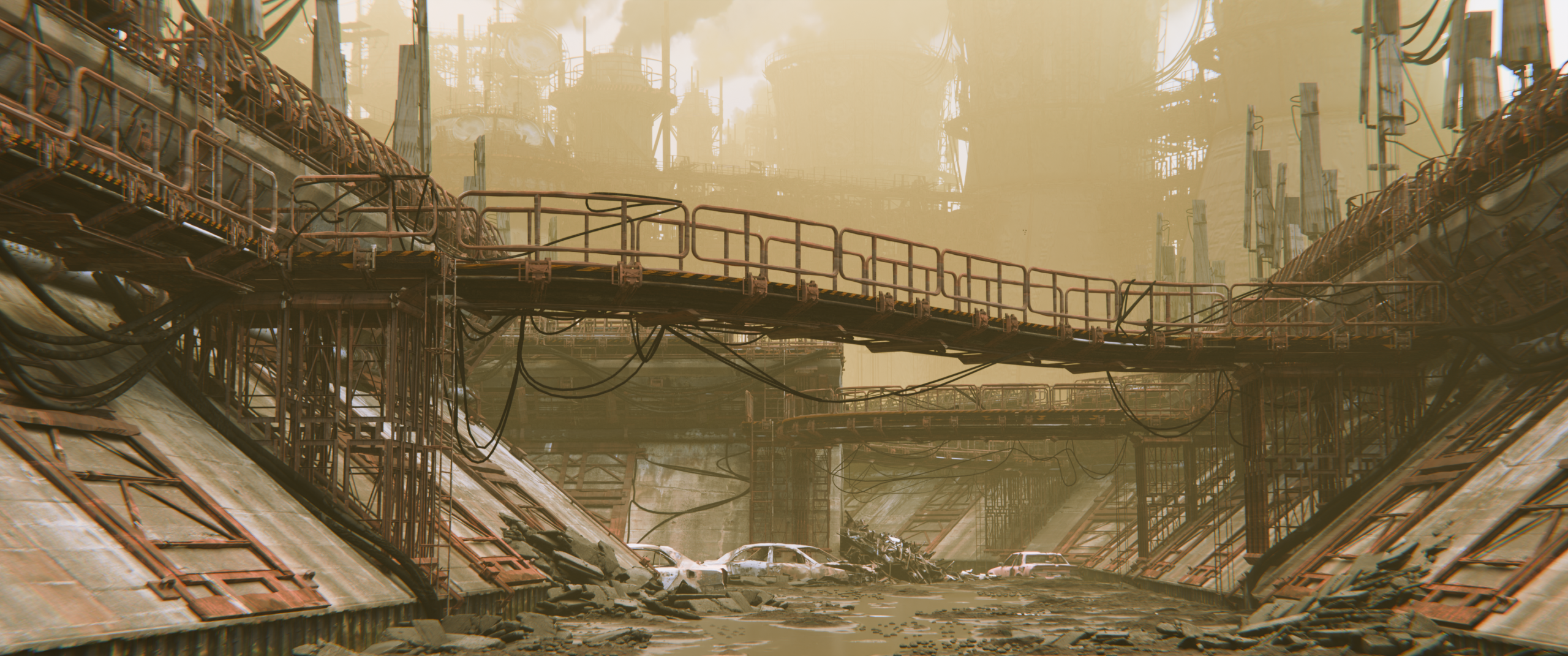
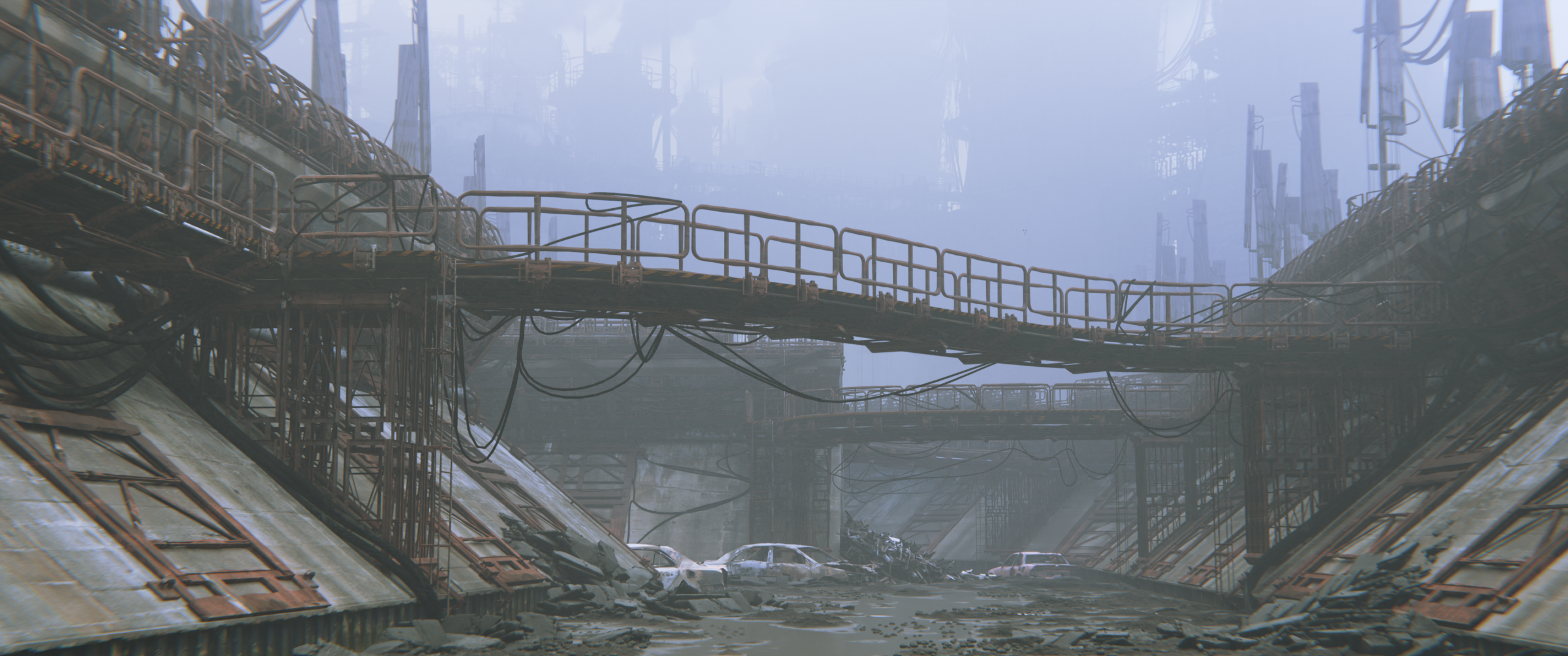
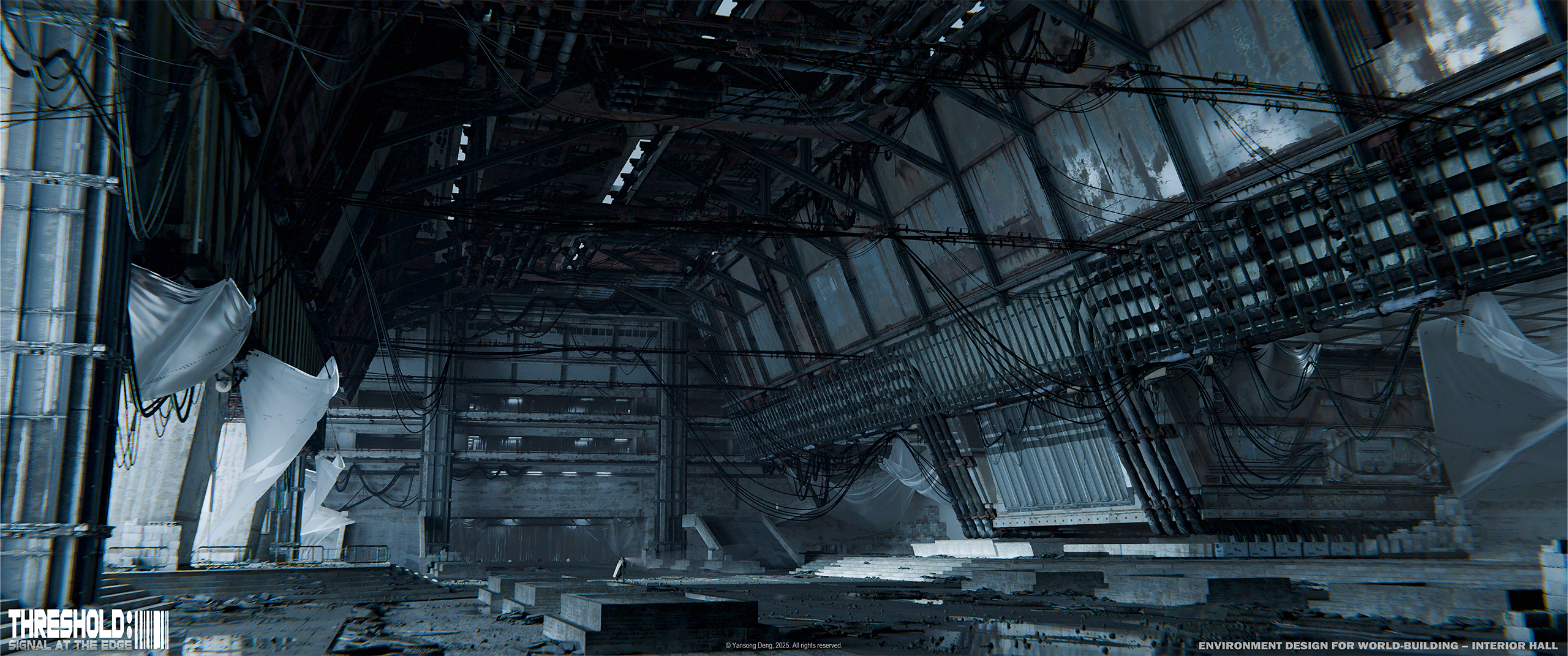
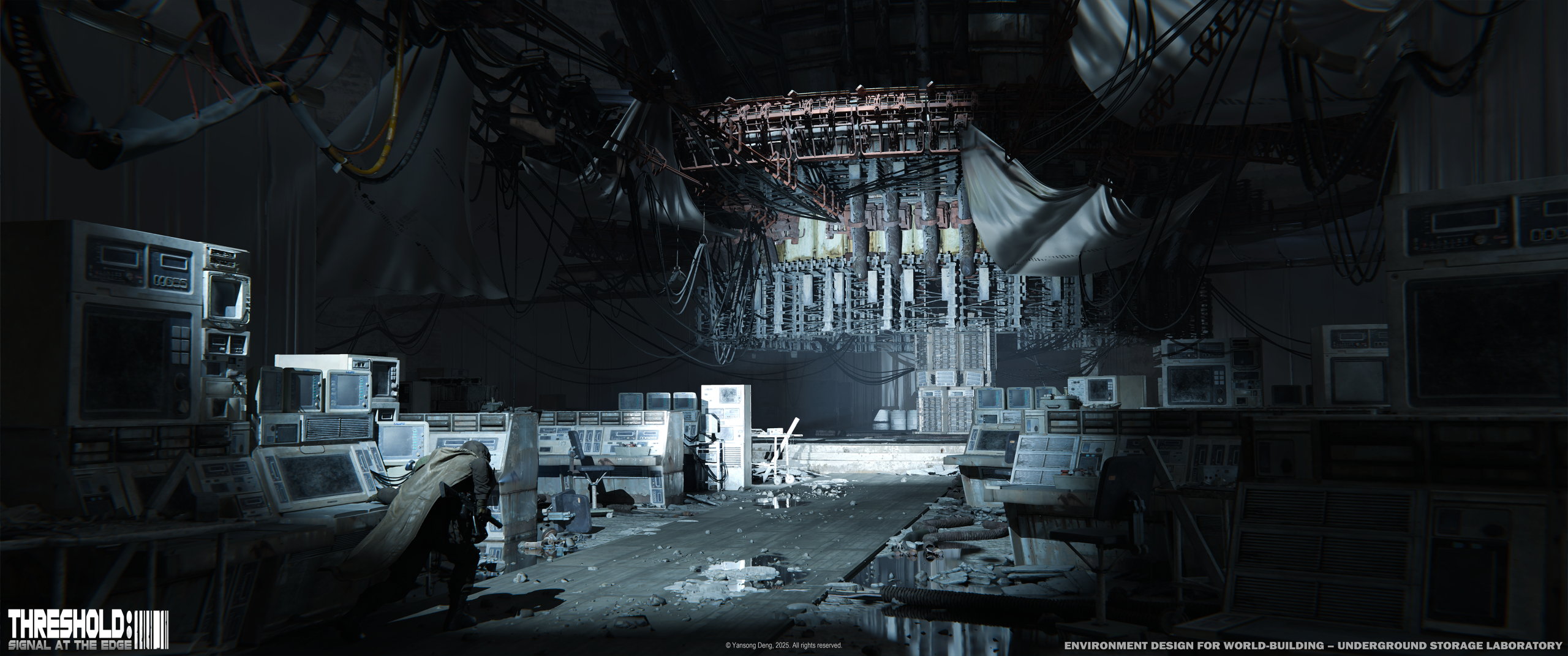
This key vision establishes the indoor hall as a space defined by an overwhelming structural volume, not a place dominated by human activities. The composition prioritises the weight of the building, the sense of vertical oppression and the density of infrastructure, so that the environment itself becomes the core subject of the picture.
Human existence is deliberately weakened and visually subordinated, appearing only as a scale reference, placed within a system that was never designed for individual agency.The image conveys the core visual intent of THRESHOLD: a world where authority persists through structure rather than occupation, where space is not controlled by active coercion, but rather dominated by its own permanence and immovability.
Lorem ipsum dolor sit amet, at mei dolore tritani repudiandae. In his nemore temporibus consequuntur, vim ad prima vivendum consetetur. Viderer feugiat at pro, mea aperiam
4.2 Spatial Layout & Environmental Scale Study
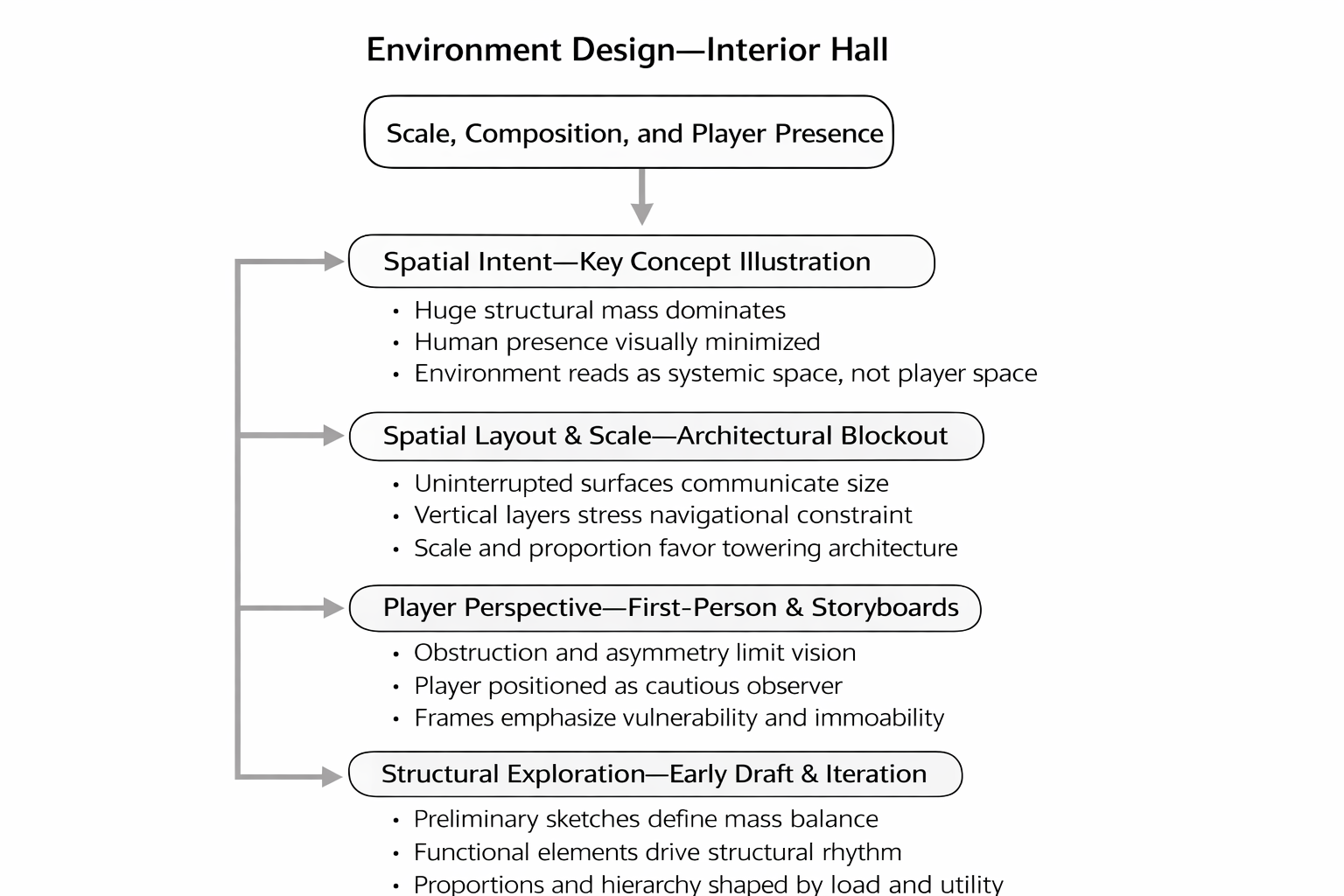
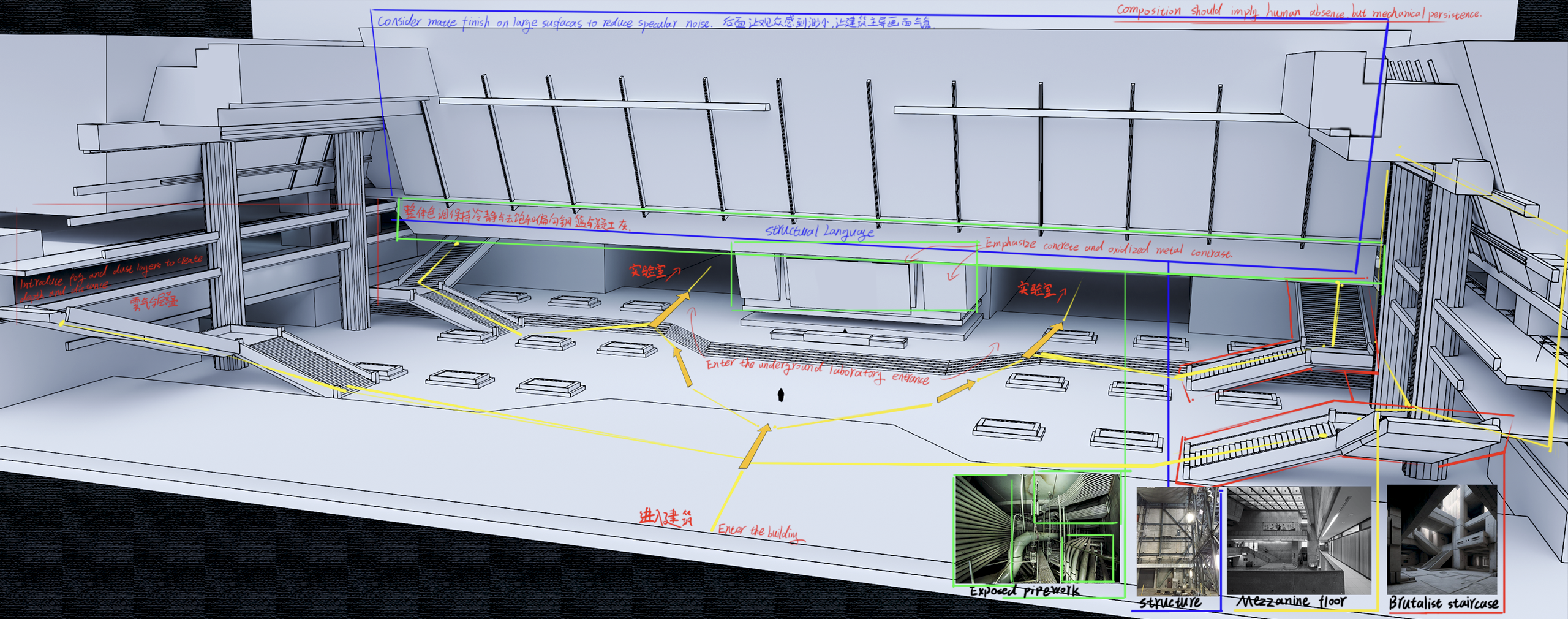
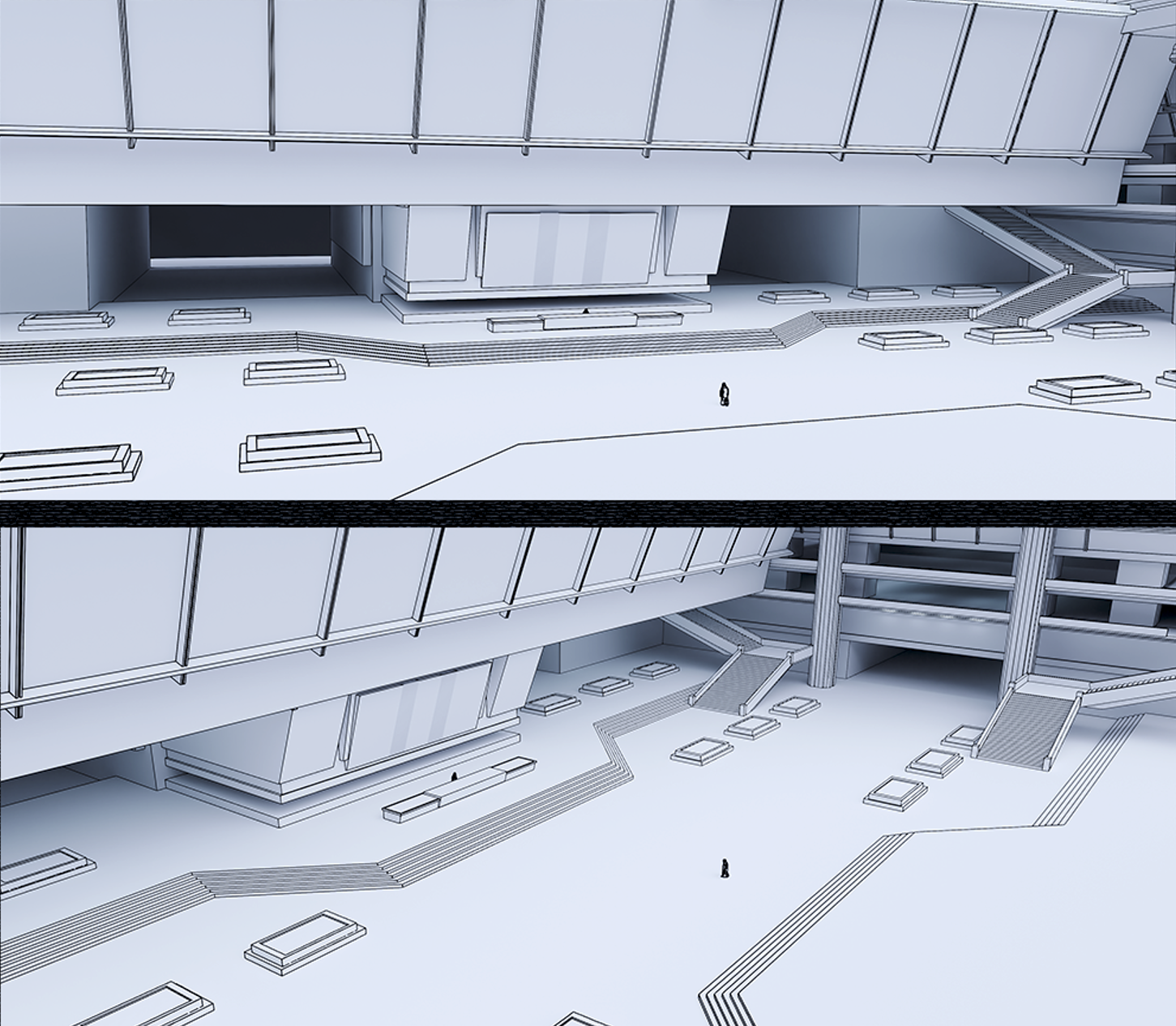
This set of spatial perspective drawings aims to explore the proportionality between the scale of the building and the scale of the players. Large continuous structural surfaces, raised platforms and cascading traffic movements combine to reinforce a sense of vertical dominance and spatial subordination.
By maintaining a consistent architectural rhythm across multiple viewpoints, the environment deliberately avoids a compositional approach centred on a single visual focal point or landmark, instead emphasising systematic repetition. This treatment allows the player to understand the space as a continuous infrastructural volume, rather than as a display fragment stitched together from a number of individual scenes, further reinforcing the experience of being embedded in a cold, grandiose system.
4.3 Player Perspective & Cinematic Framing Exploration
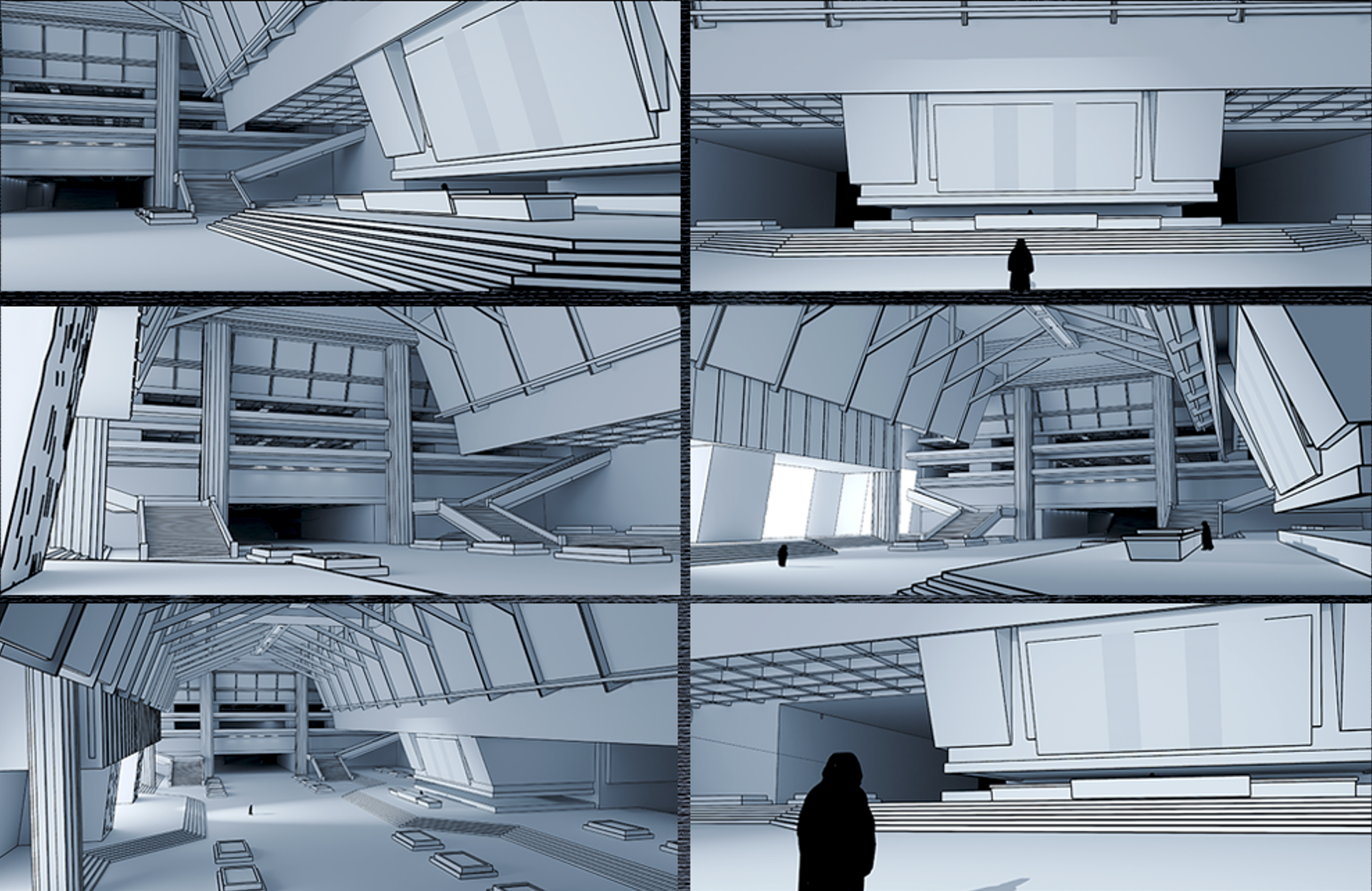
These first-person and cinematic framing studies aim to explore how occlusion, depth of field stratification and asymmetric composition shape the player’s perception. Structural elements frequently cut into the boundaries of the picture, partially blocking the line of sight, and guiding the player’s attention through spatial tension rather than clear guidance.
The camera layout tends to be low camera position and biased, putting the player in the position of an observer, so that he can move forward in an environment far beyond his own control. The composition enhances the sense of vulnerability through the limitation of scale contrast and visual clarity, so that the player experience is highly consistent with the sense of restraint and oppression emphasised in the narrative tone of THRESHOLD.
4.4 Early Structural Drafts & Design Iteration
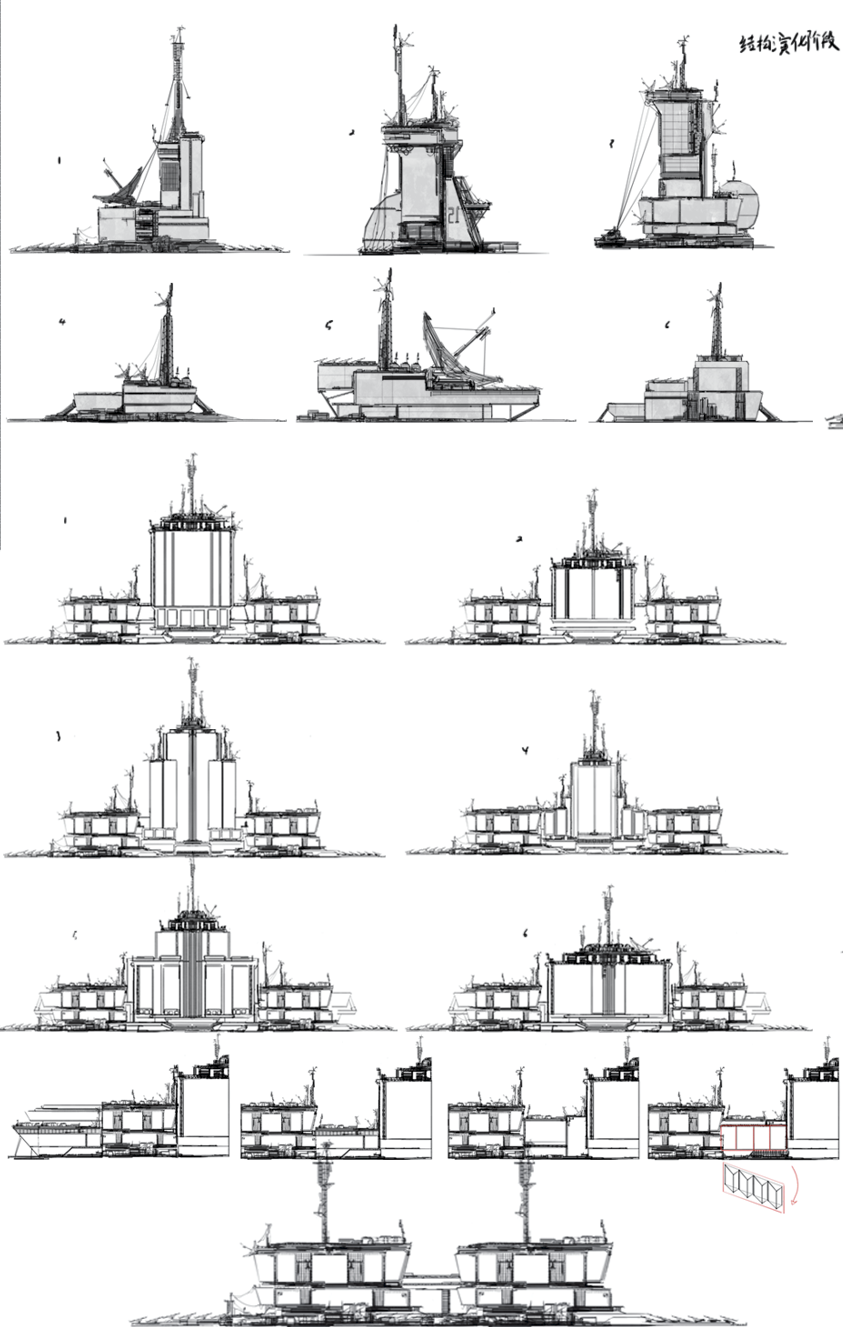
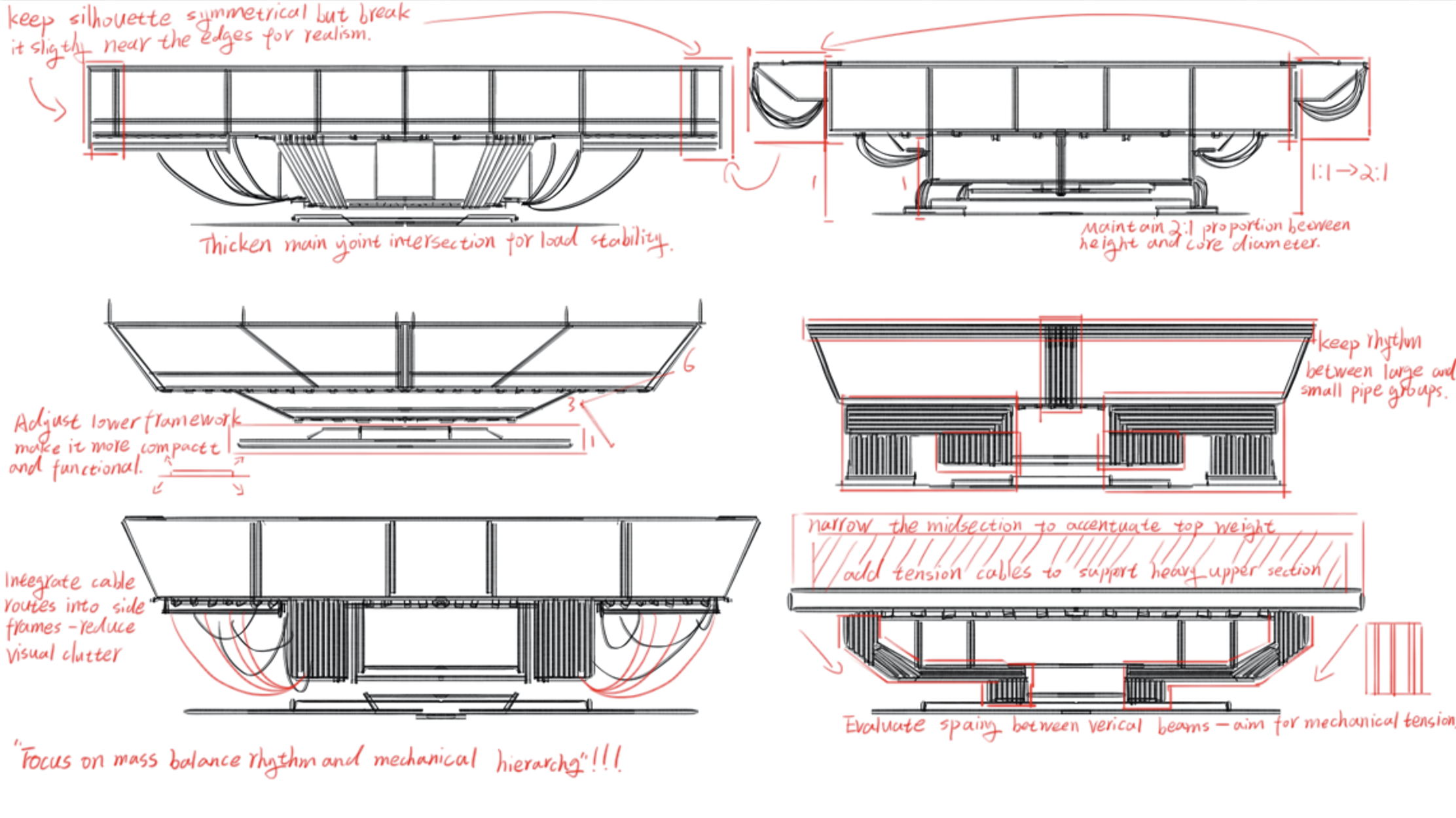
These early sketches and blockout studies mainly focus on establishing mechanism logic, volume balance and structural level before visual refinement. Design decision-making prioritises force distribution, streamlined clarity and the rationality of the infrastructure, rather than the complex expression of decoration.
Through repeated adjustments of the proportion, supporting components and module rhythm, it is ensured that the final environment can still convey clear functional intentions even if it is in a state of decay. This stage lays a credible construction logic foundation for visual language, so that the subsequent atmosphere creation and narrative level can grow naturally from a stable and coherent structural framework.
5.Visual Consistency & World Cohesion
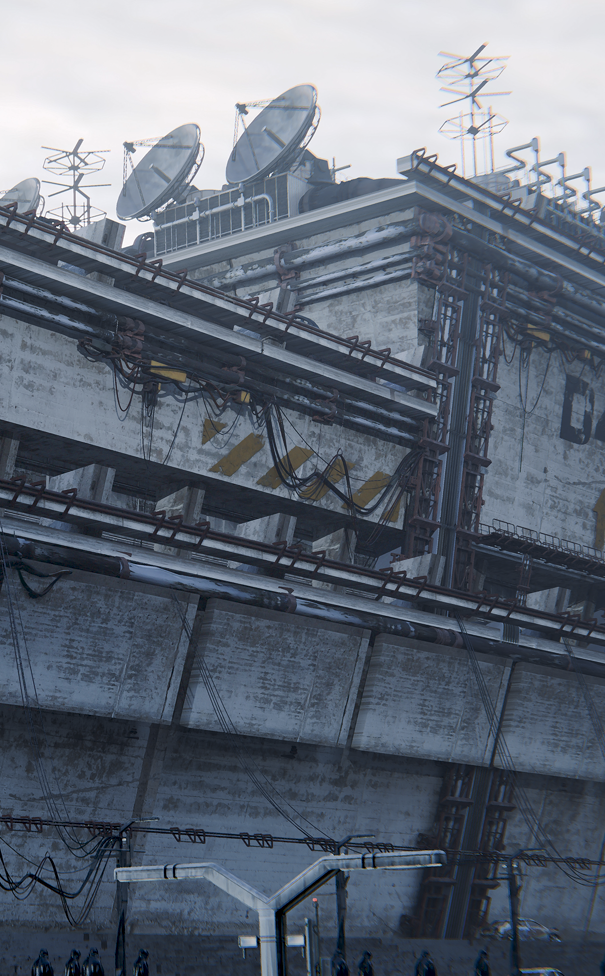
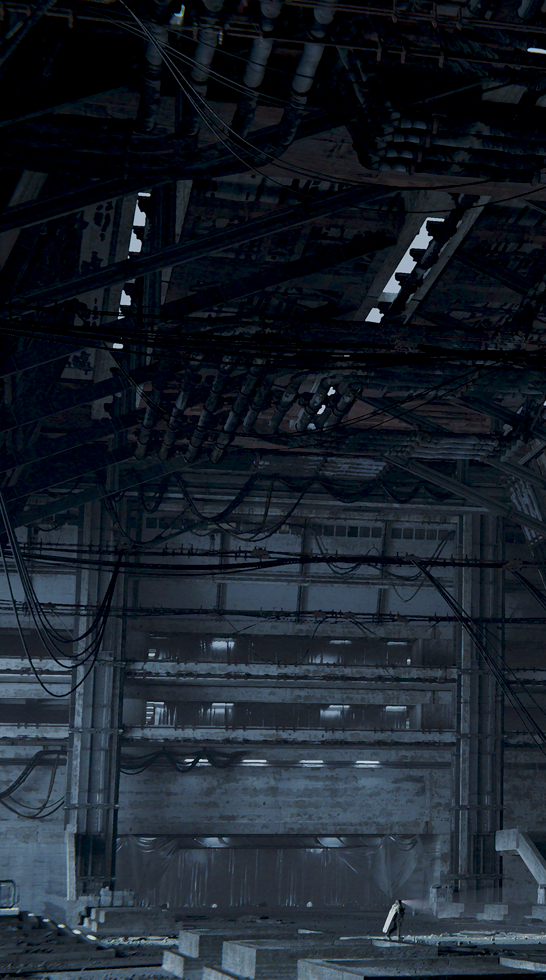
In THRESHOLD, visual coherence is achieved through the repetition of architectural forms, modular structures and a uniform material language. Concrete volumes, exposed pipework and industrial frames are repeated in different areas, establishing a highly unified visual logic.
Changes are not introduced by stylistic shifts, but rather by local levels of decay, light conditions and system behaviour. Differences in scale, degree of damage and environmental exposure suggest changes on a functional and temporal level, while maintaining overall coherence. This approach reinforces the world as an interconnected holistic system, allowing the environments to present clear and restrained differences while maintaining a common identity.
6.Reference as Directional Framework
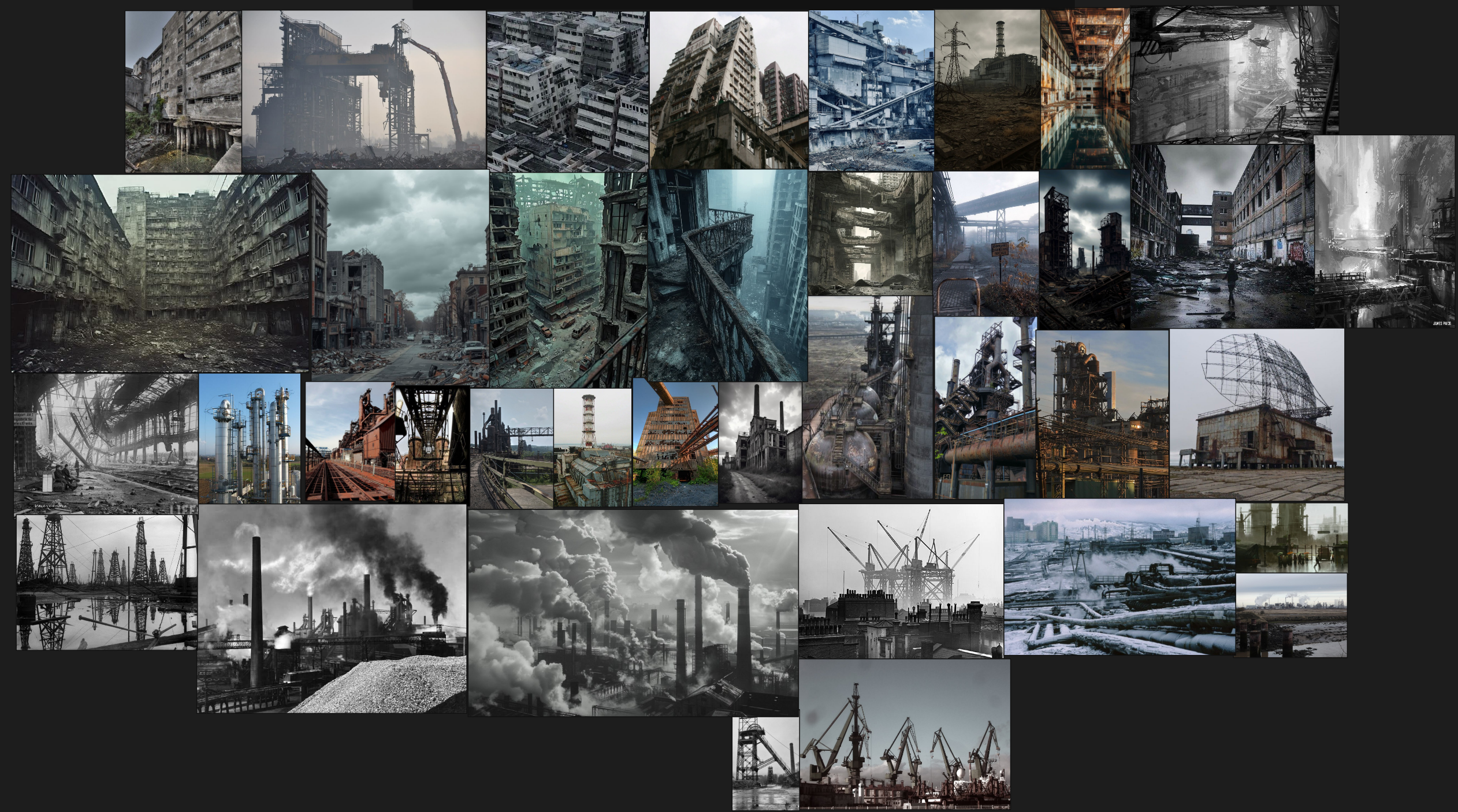
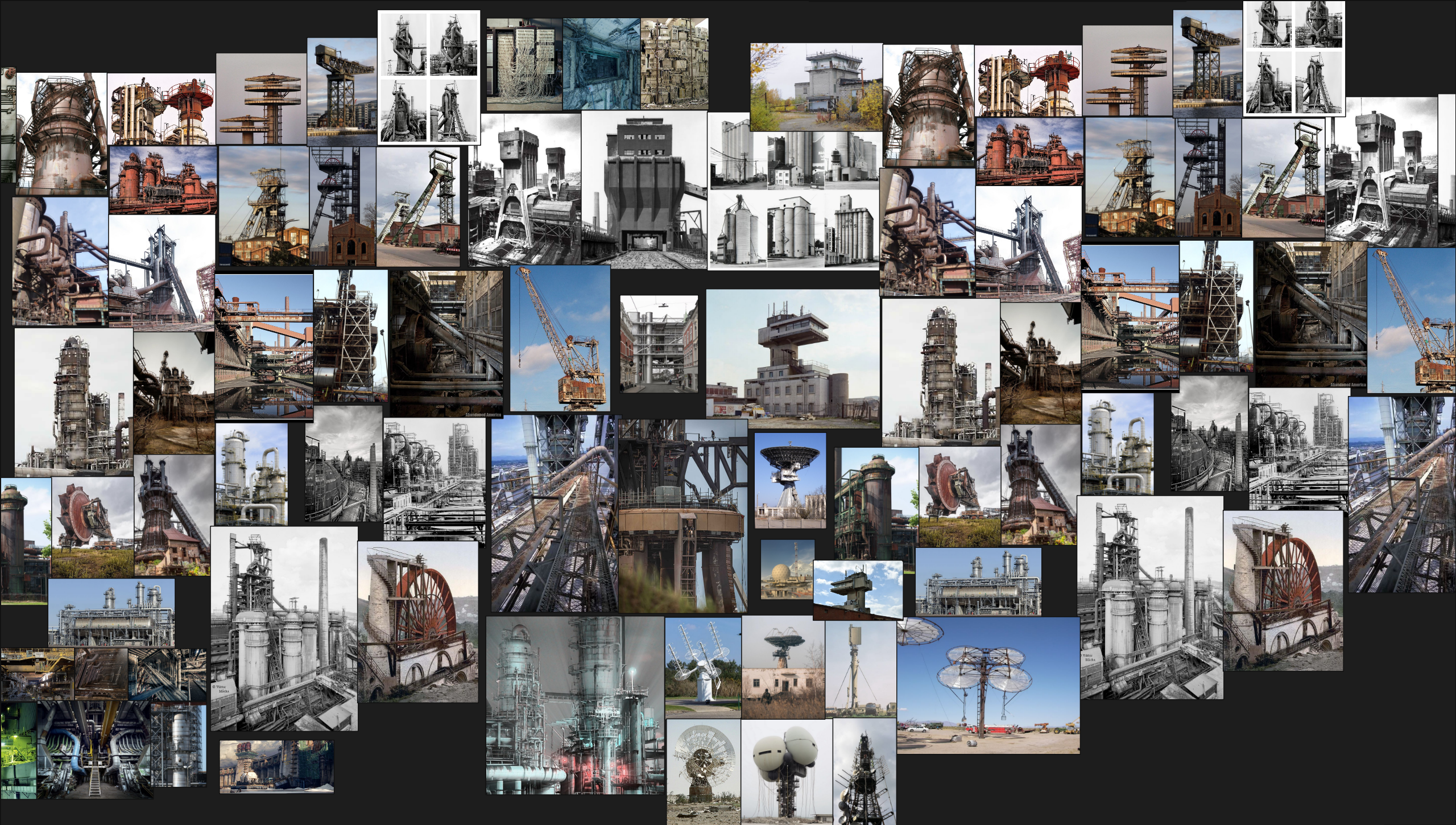
In THRESHOLD, reference material is used as a visual calibration tool, not as a style template.Architectural precedents, industrial infrastructures and cinematic compositions inform the control of scale, material logic and spatial hierarchy, but direct imitation is deliberately avoided.These references serve to establish internal consistency between different scenarios, ensuring that all visual decisions are rooted in a shared system of proportions, functional logic and decay mechanisms, so that worldviews remain self-consistent and unified in the face of change.
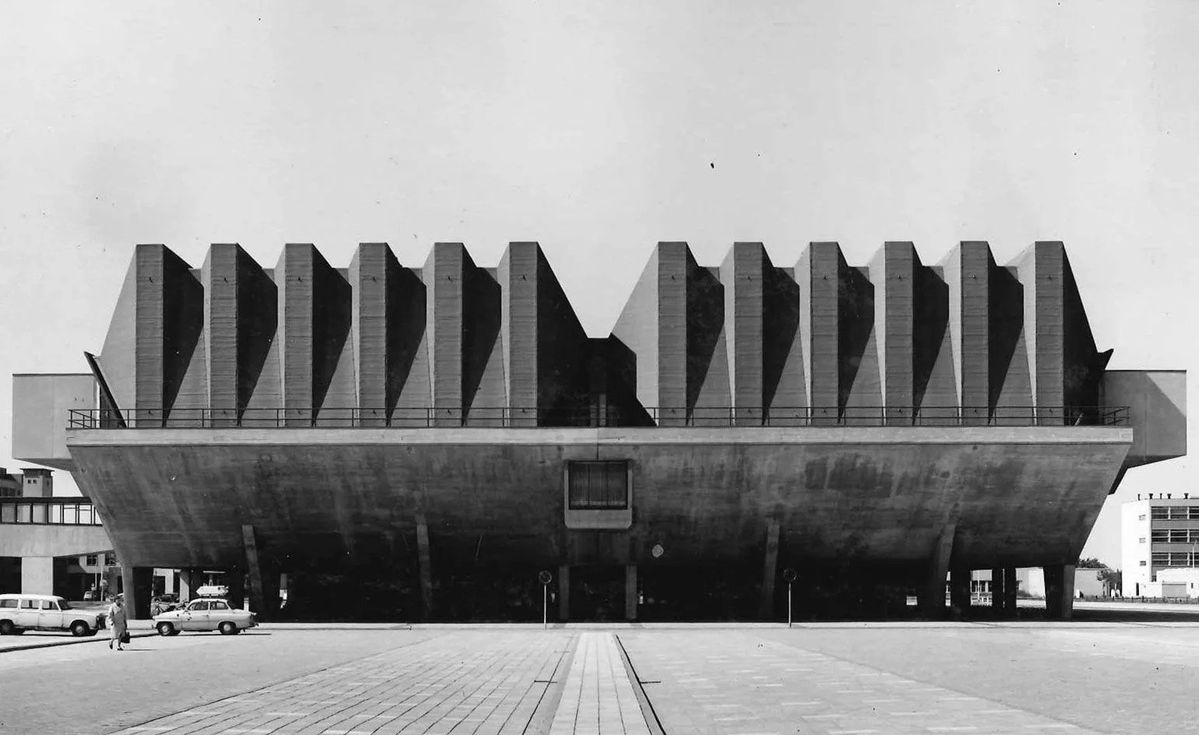
6.1Core Visual Direction
This category defines the overall visual identity of THRESHOLD. References here establish the project’s fundamental tone, scale hierarchy, and systemic presence.
They guide how architecture dominates the frame, how infrastructure replaces human-centered design, and how the world communicates authority through mass, repetition, and restraint rather than spectacle.
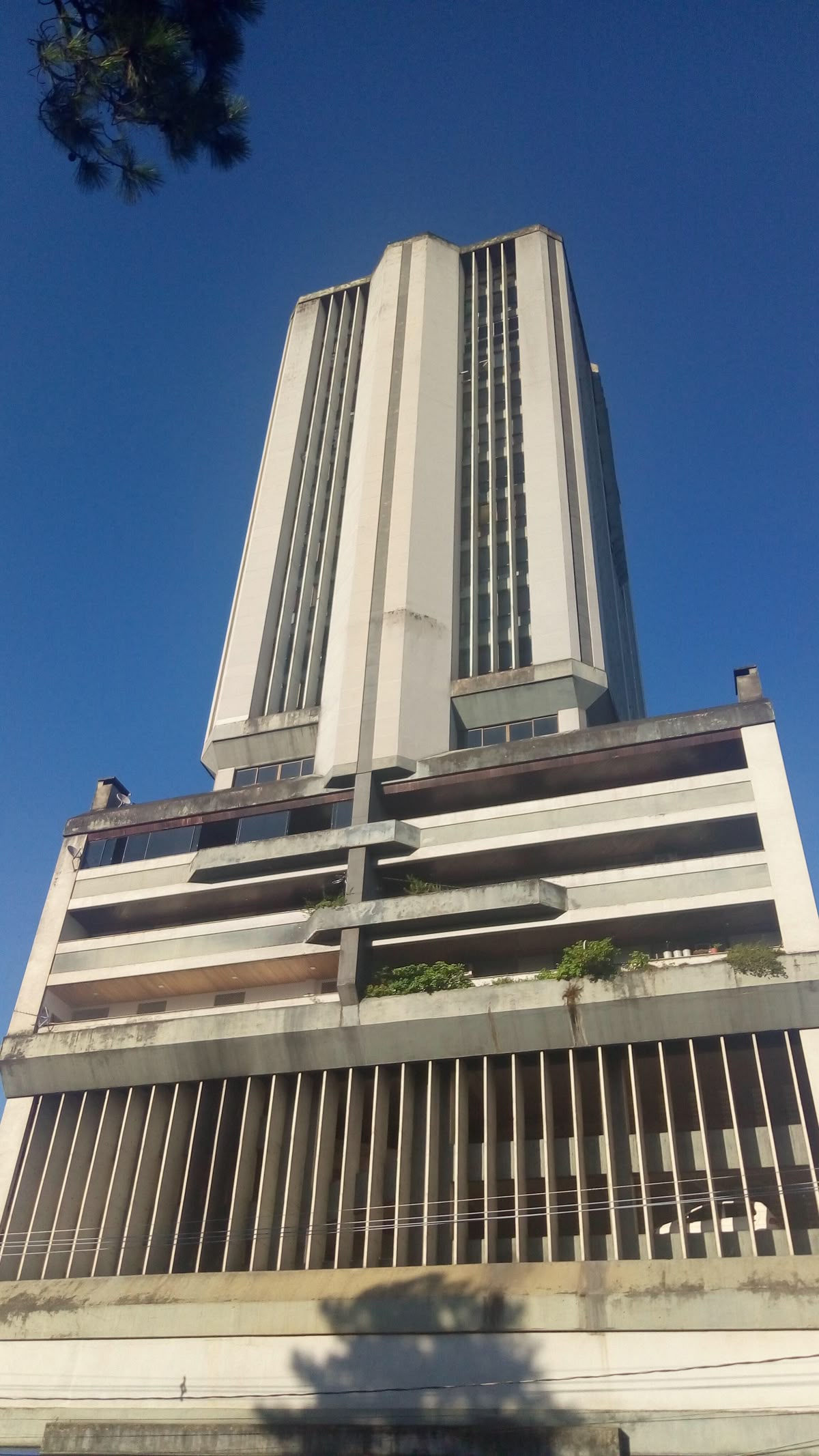
6.2Architectural & Material Language
Architectural and material references focus on structural logic, construction methods, and material behavior.
These references inform proportion, load-bearing expression, and the relationship between concrete, metal, and industrial components, ensuring that all spaces feel engineered, functional, and internally consistent rather than decorative.
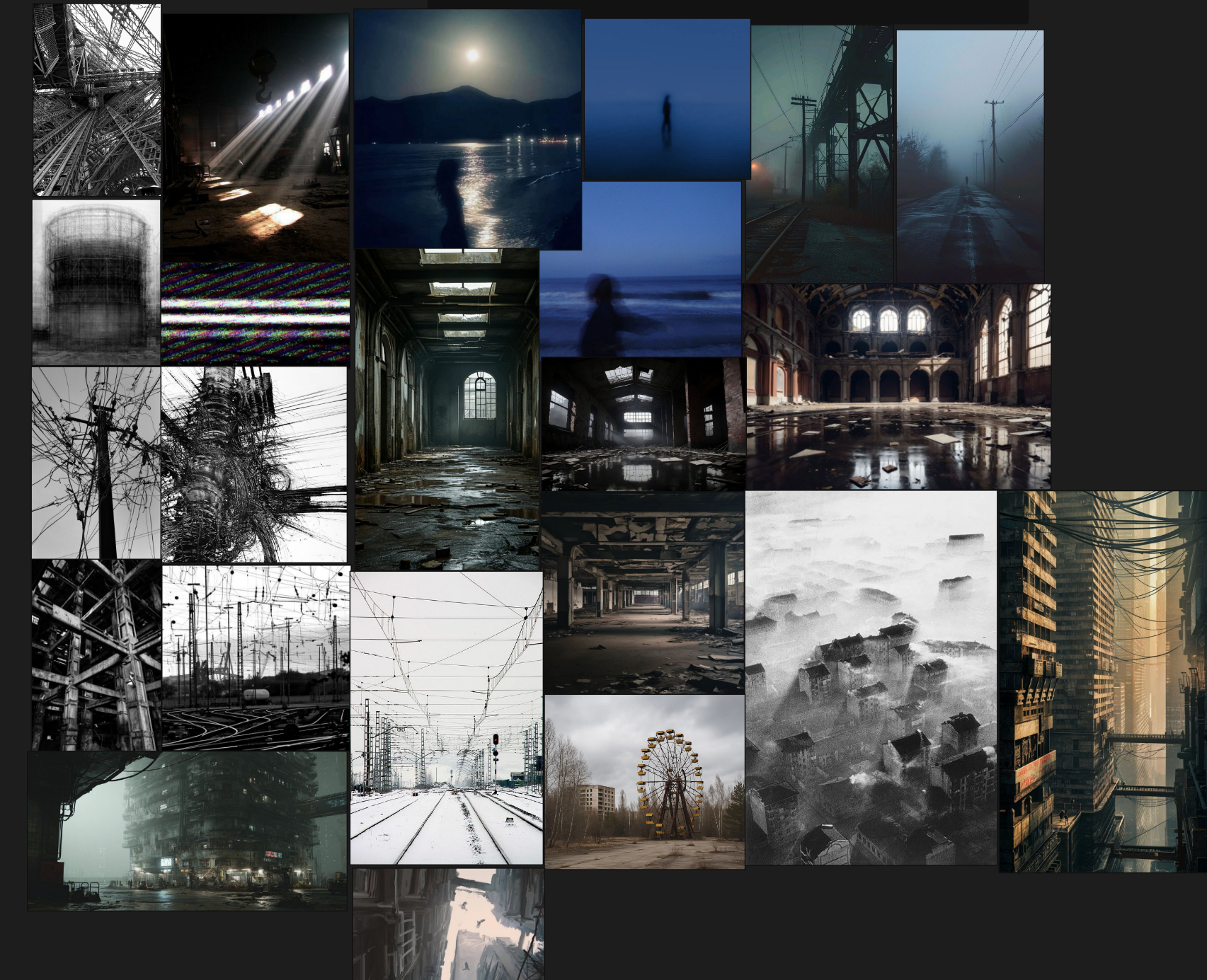
6.3Mood & Atmosphere Keywords
Mood and atmosphere references define the emotional register of the environment.They inform lighting contrast, spatial emptiness, visual weight, and the balance between exposure and obscurity, supporting a sense of abandonment, systemic endurance, and quiet tension throughout the world.
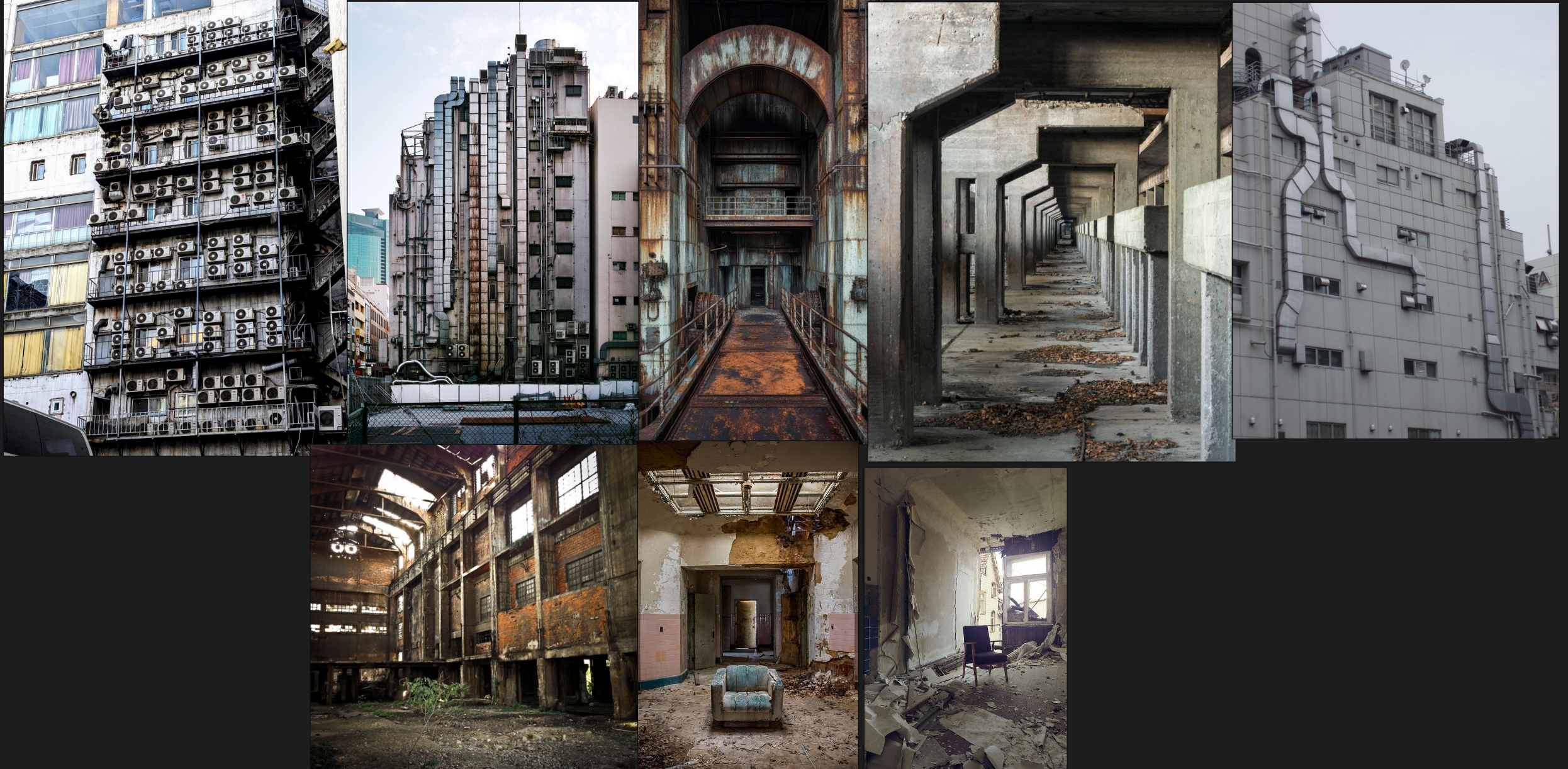
6.4Visual Texture Keywords
Visual texture references concentrate on surface detail and material aging.They guide the treatment of weathering, corrosion, staining, and wear, ensuring that textures communicate time, neglect, and prolonged system operation rather than dramatic destruction.
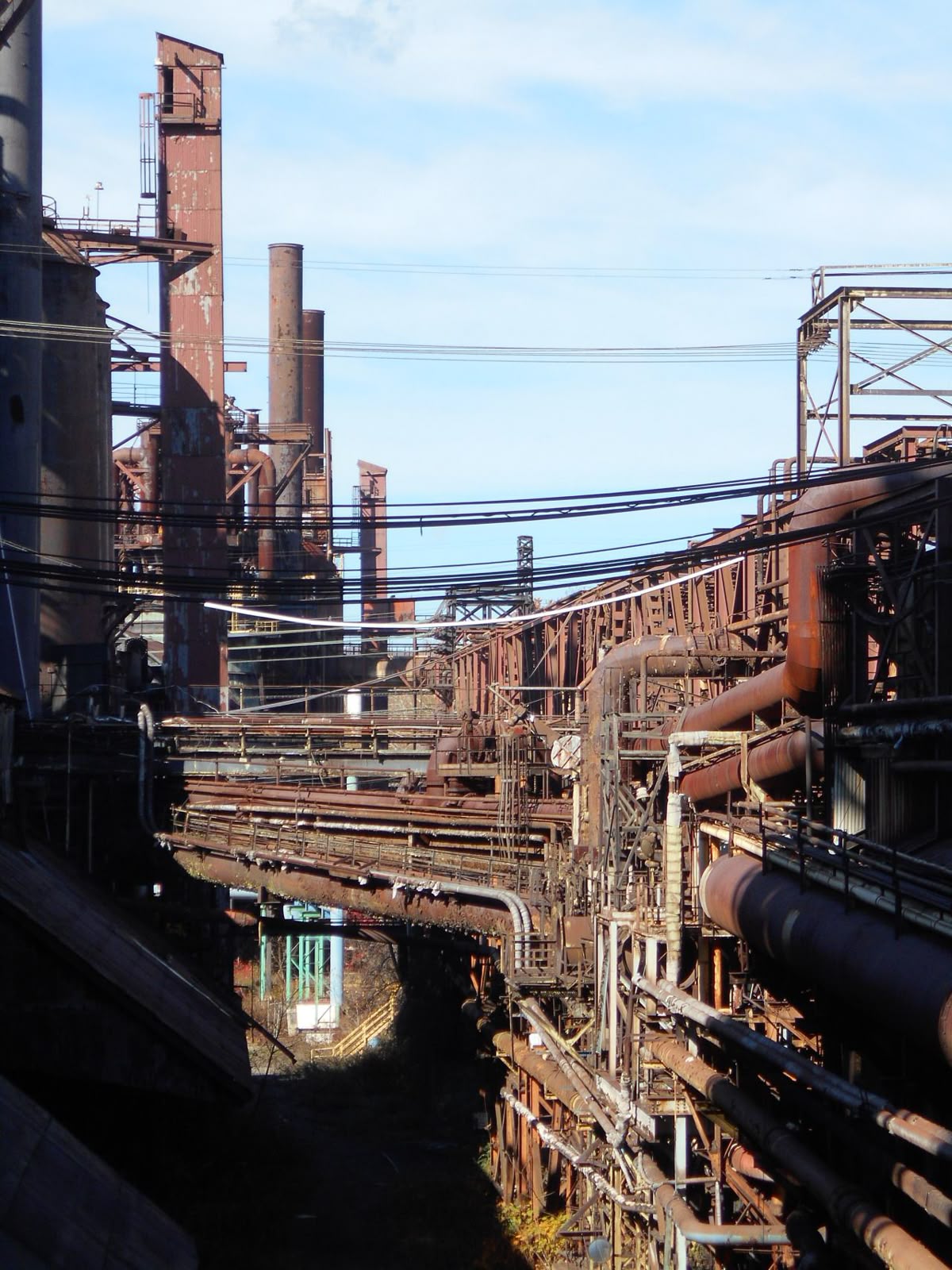
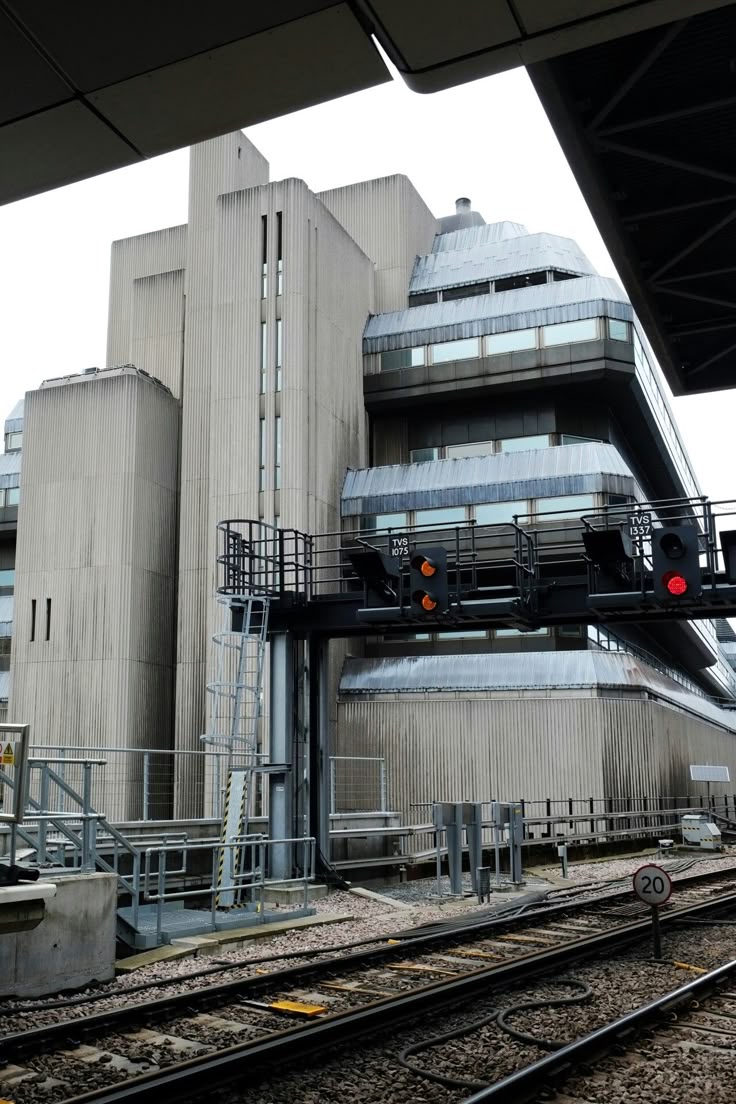
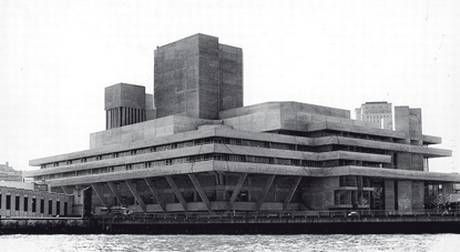
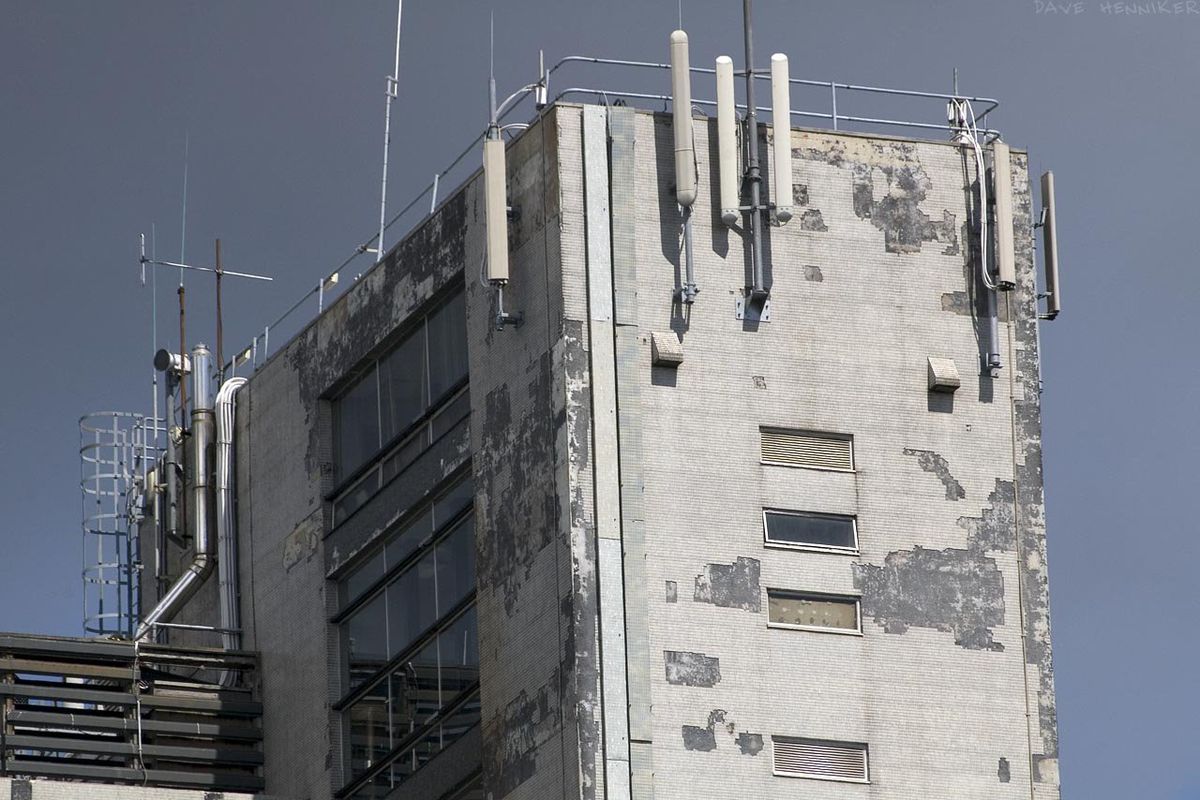
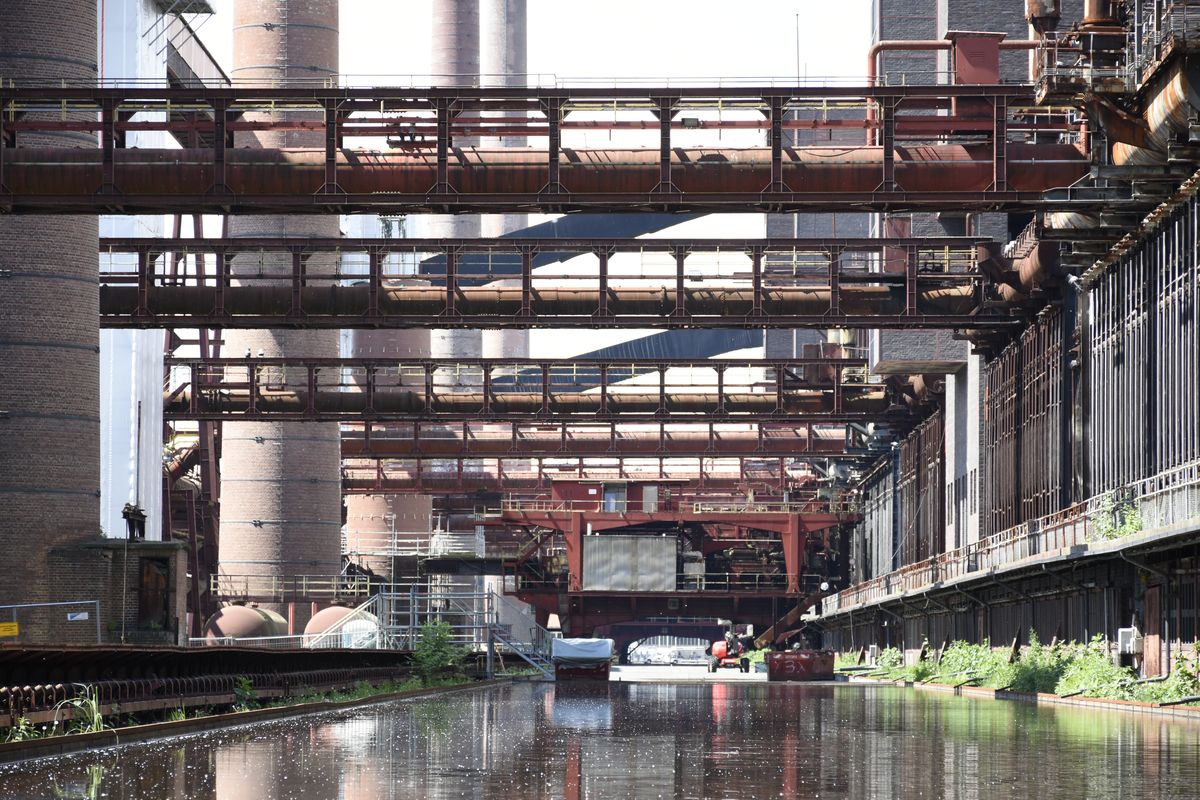
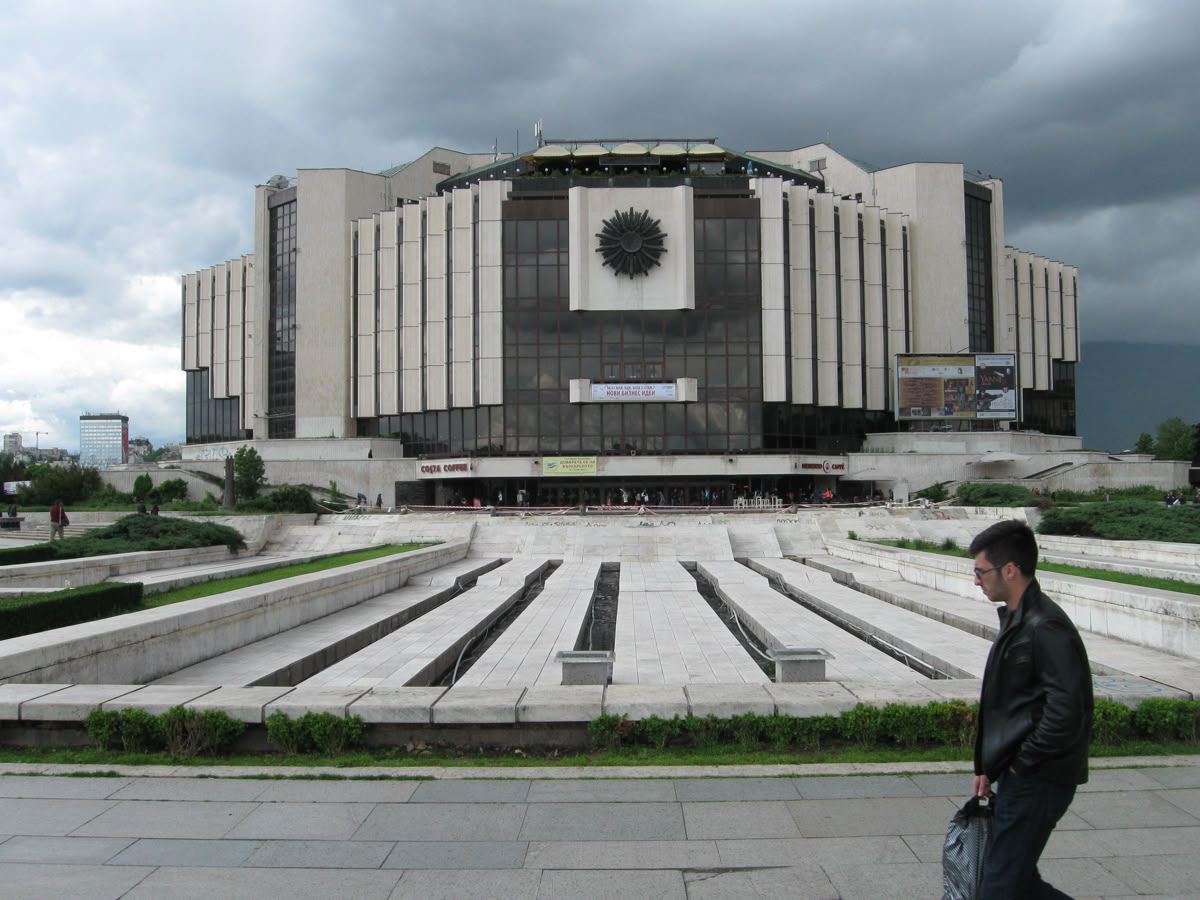
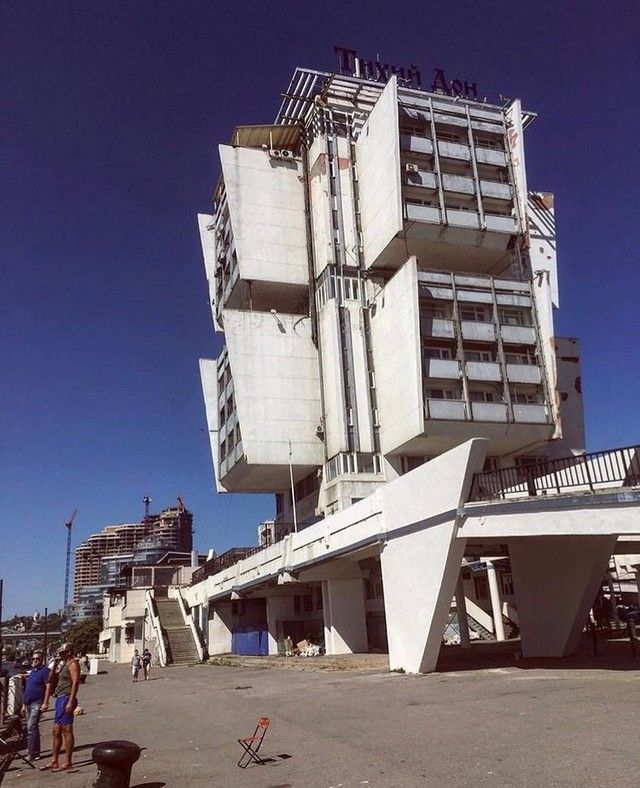
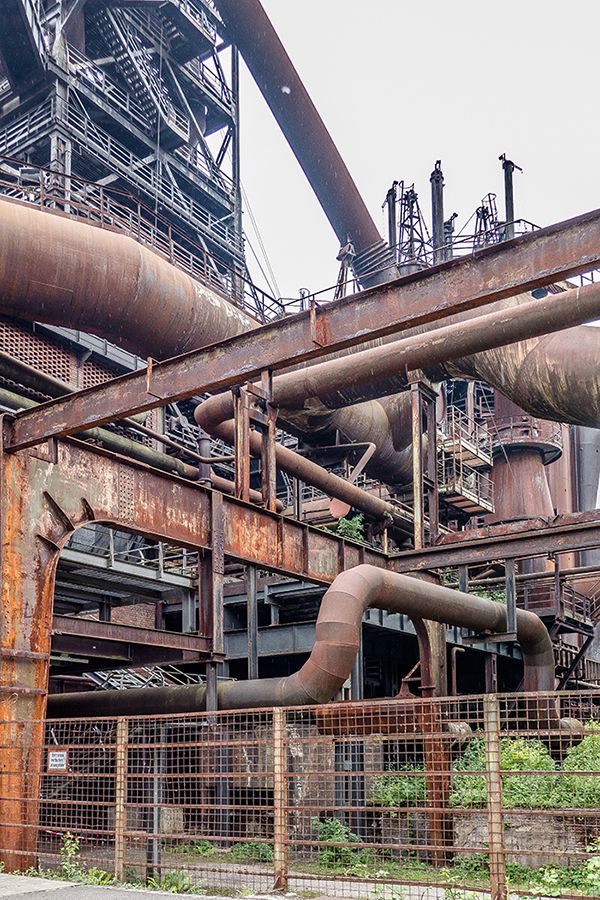
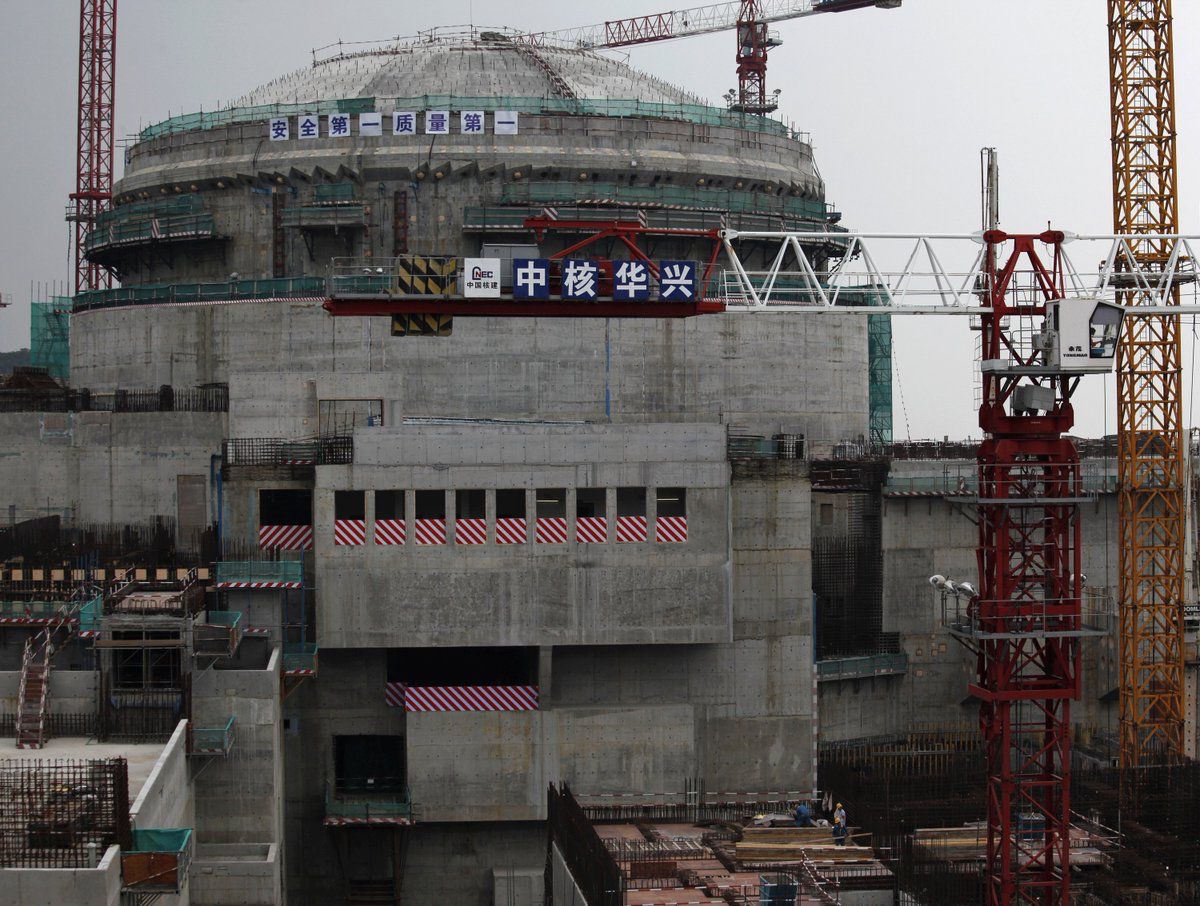
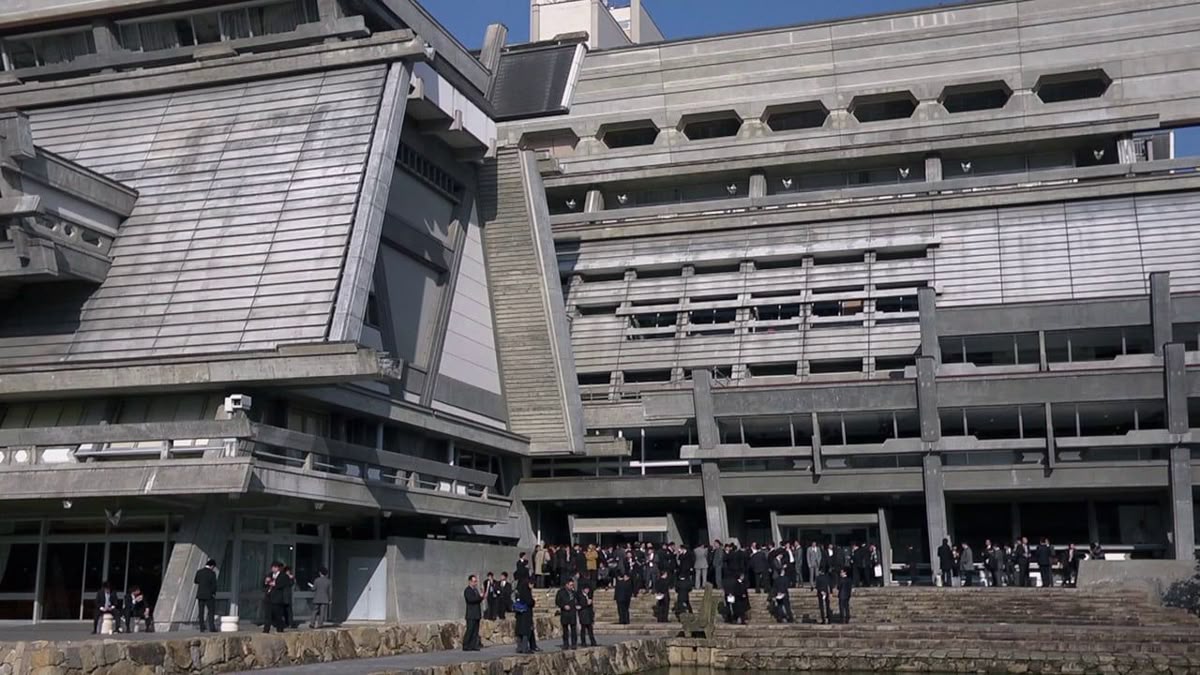
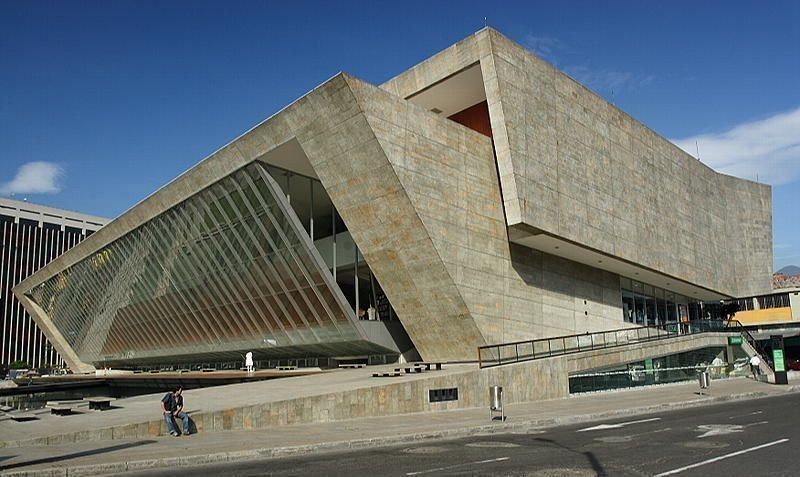
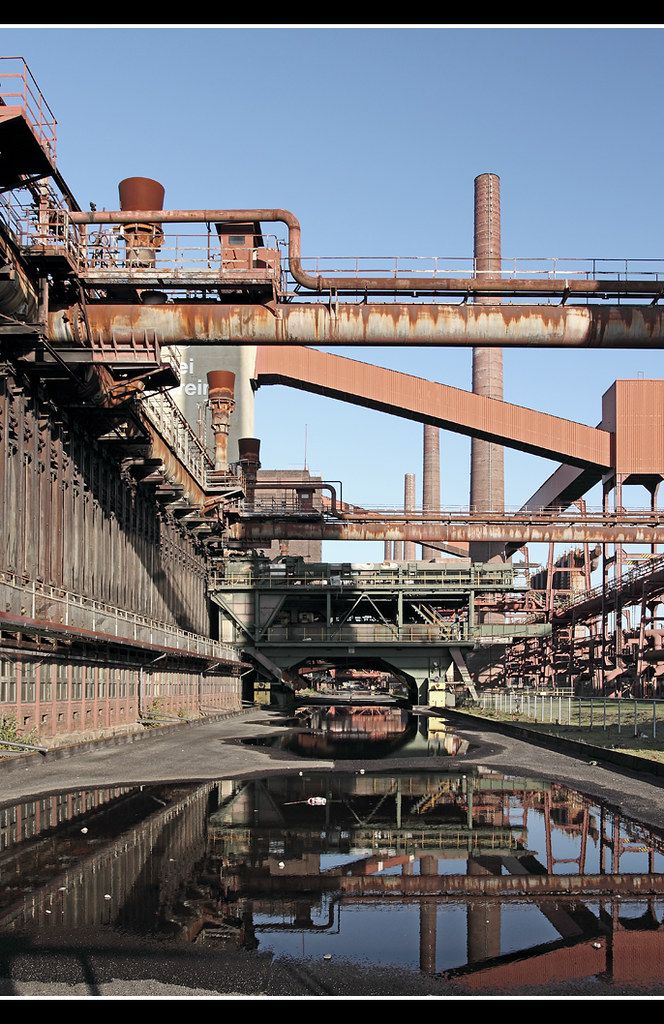
References in THRESHOLD are deliberately constrained. Visual inspiration is filtered through structural logic and systemic relevance; stylistic mimicry and surface aesthetics are intentionally avoided.
7.Art Direction as Player Experience Control
In THRESHOLD, art direction is viewed as a control mechanism for the player’s experience, rather than a system of visual instructions used to guide behaviour. Environments do not reward exploration through spectralised visuals or highly articulated presentations, nor do they rely on explicit visual cues to direct player action. Instead, the player’s perception is shaped by restraint, repetition, and systematic scaling, and understanding of space is gradually generated through continuous exposure and comparison.
By weakening human presence and suppressing decorative or emotional expression, the visual system places the player in the position of an ephemeral observer confronted with a long-lasting infrastructural system. Architectural mass, infrastructural density and material permanence dominate the image, keeping the player’s agency subordinate to the environment itself. This imbalance is intentional: the player is not portrayed as a hero acting in a ‘responsive world’, but as a passer-by through a system that predates and transcends individual behaviour.
Navigation is not accomplished through explicit instructions, but is indirectly shaped by spatial pressures. Large continuous surfaces, vertical compression, obstructed views, and cascading depths of field guide movement by limiting visibility and emphasising constraints. Environments are not labelled with paths or goals, but rather convey hierarchical relationships through scale, weight and repetition, prompting the player to engage in careful observation and spatial interpretation rather than confident and direct passage.
The emotional tone is similarly modulated by visual restraint.Controlled lighting, low-contrast colours and material decay work together to establish emotional distance, avoiding immediate catharsis or strong substitution.This distance reinforces uncertainty and cognitive tension, keeping narrative interpretation open.Meaning is not conveyed by pre-determined dramatic moments, but is gradually pieced together by the player through visual evidence embedded in the space.
Through this method, the art direction acts as a control layer at the experience level, shaping the player’s movement mode, emotional state and understanding path without relying on clear narrative or mechanism coercion. The environment itself becomes the main interactive interface, leading the perception, rhythm and interpretation process, ensuring that the player experience is always consistent with the core themes of the project such as endurance, systematic authority and unresolved decay.
8.Concept Art as Visual Development
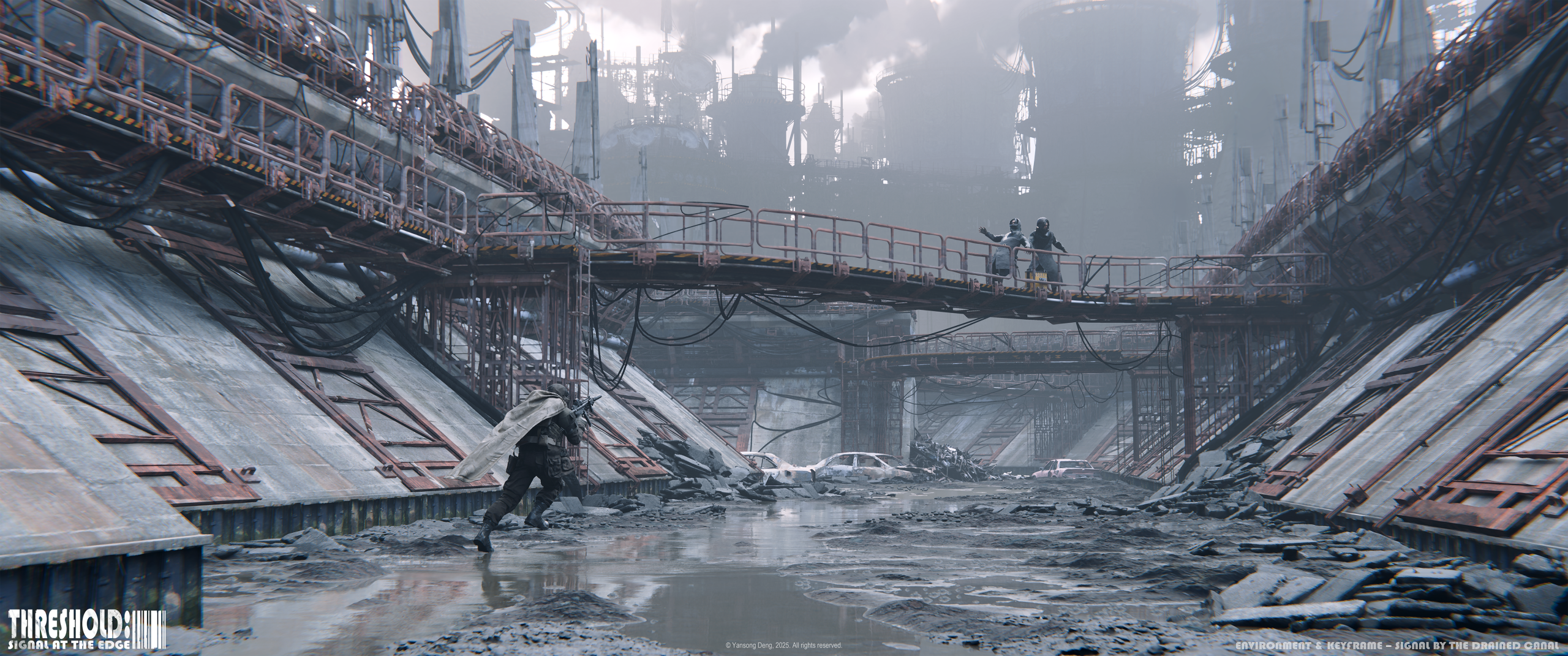
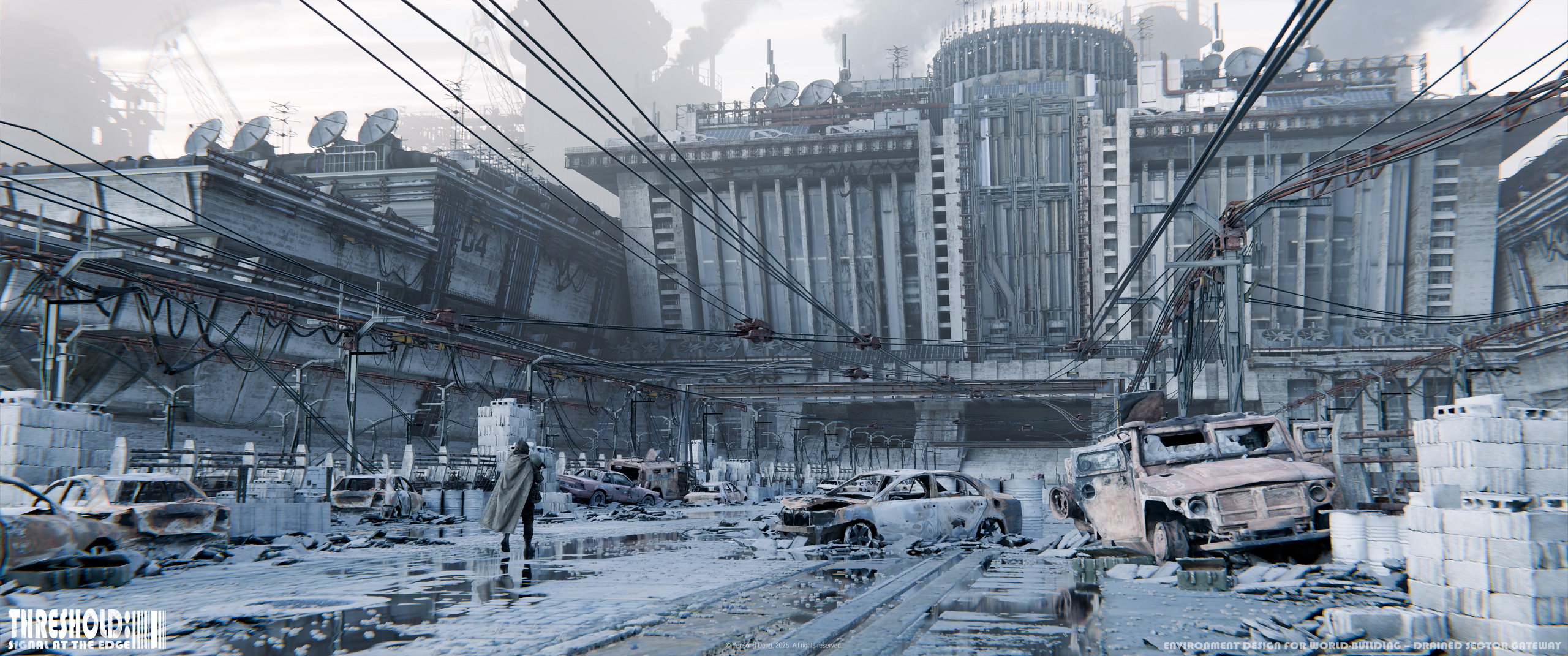
In THRESHOLD, conceptual design is viewed as a visual research tool rather than a finished illustration to present the final result. Each piece of work explores spatial logic, material behaviour and narrative meaning to support worldview building and design decisions.The visual development process prioritises exploration over completion, allowing uncertainty and iteration to shape the final direction, allowing the design to converge and form a coherent statement through trial and error.
Summary: Visual Direction as System
Art direction in THRESHOLD operates as an integrated system that supports narrative, gameplay, and emotional experience.Visual design reinforces themes of decay, restraint, and endurance, positioning the environment as both obstacle and storyteller.