Development Workflow Overview
My Role in the Team
In the team, my role focused on visual development and art implementation. My responsibilities included map visual design, UI asset design, map assets, 2D pixel character design, basic character animation, pixel art direction, and level design support. I also supported the Technical Artist role by testing whether the visual direction could realistically work inside Unity.
Engine Feasibility Discussion
At the beginning of the project, our team discussed the technical feasibility of the visual direction defined in the Game Design Document. We considered different engine options, including Unity and Unreal Engine. Although Unreal Engine could support stronger lighting and 3D presentation, Unity was more suitable for our project because of the small production scale, 2D asset workflow, pixel-style presentation, UI implementation, and the need to produce a focused playable prototype.
After comparing Unity and Unreal Engine, our team concluded that Unity was the more suitable engine for The Verdant Trail. Although Unreal Engine offered stronger lighting and 3D presentation, Unity better matched the project’s small production scale, 2D asset workflow, pixel-inspired visual style, UI implementation, and need for rapid iteration. As a result, Unity was selected as the most practical engine for developing the prototype.
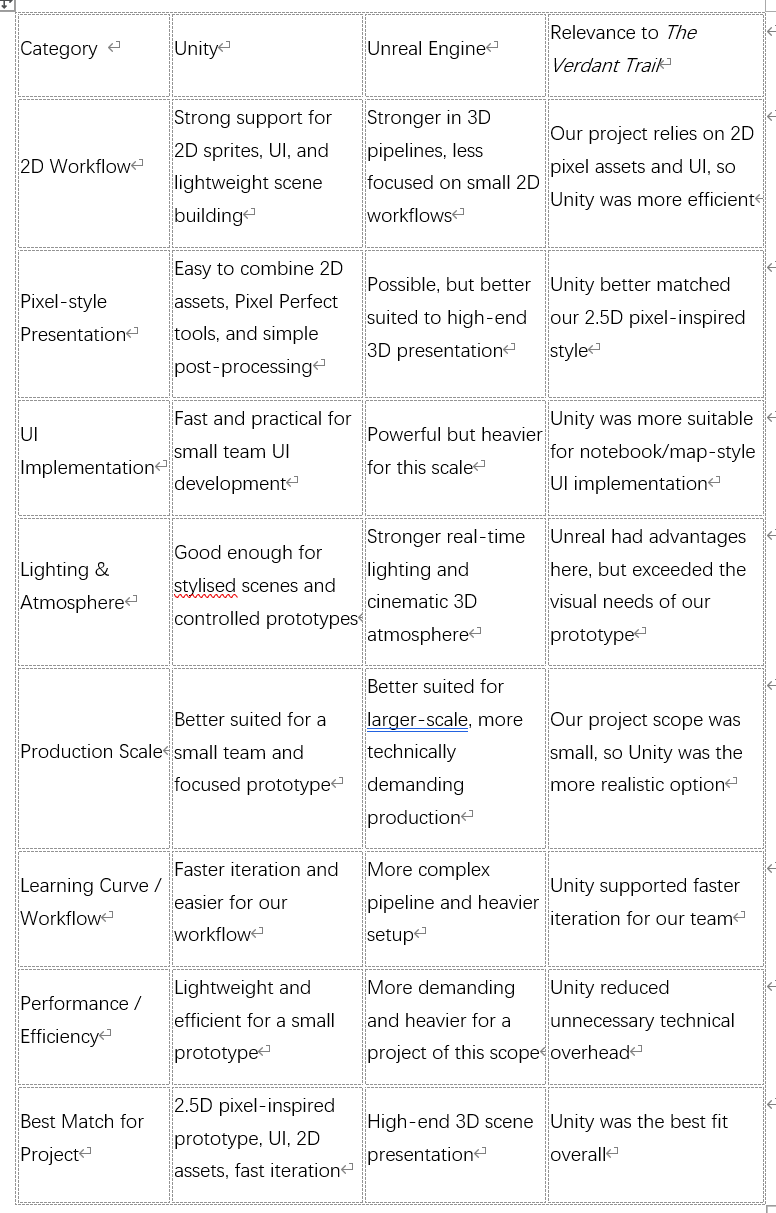
Figure 1. Engine Feasibility Comparison: Unity vs Unreal Engine
Visual Development Pipeline
After the engine direction was agreed, I translated the GDD into practical visual production tasks. This included defining the forest level’s visual tone, planning environmental assets, designing UI elements, creating 2D pixel character concepts, and producing simple character animation tests. I also created the Art Bible & Visual Direction document to define the project’s visual philosophy, pixel style, sprite import rules, render order, and Unity implementation standards.
Level Prototype and Implementation
During level development, I tested camera distance, character scale, path readability, asset density, and forest scene composition. These tests helped the team understand whether the forest level could feel atmospheric and enclosed while still remaining readable as a playable space. Overall, this workflow helped the project move from a written GDD concept into a more practical Unity prototype.