World as a System Not a Narrative Container
1.Traditional Narrative-Centric Game Worlds
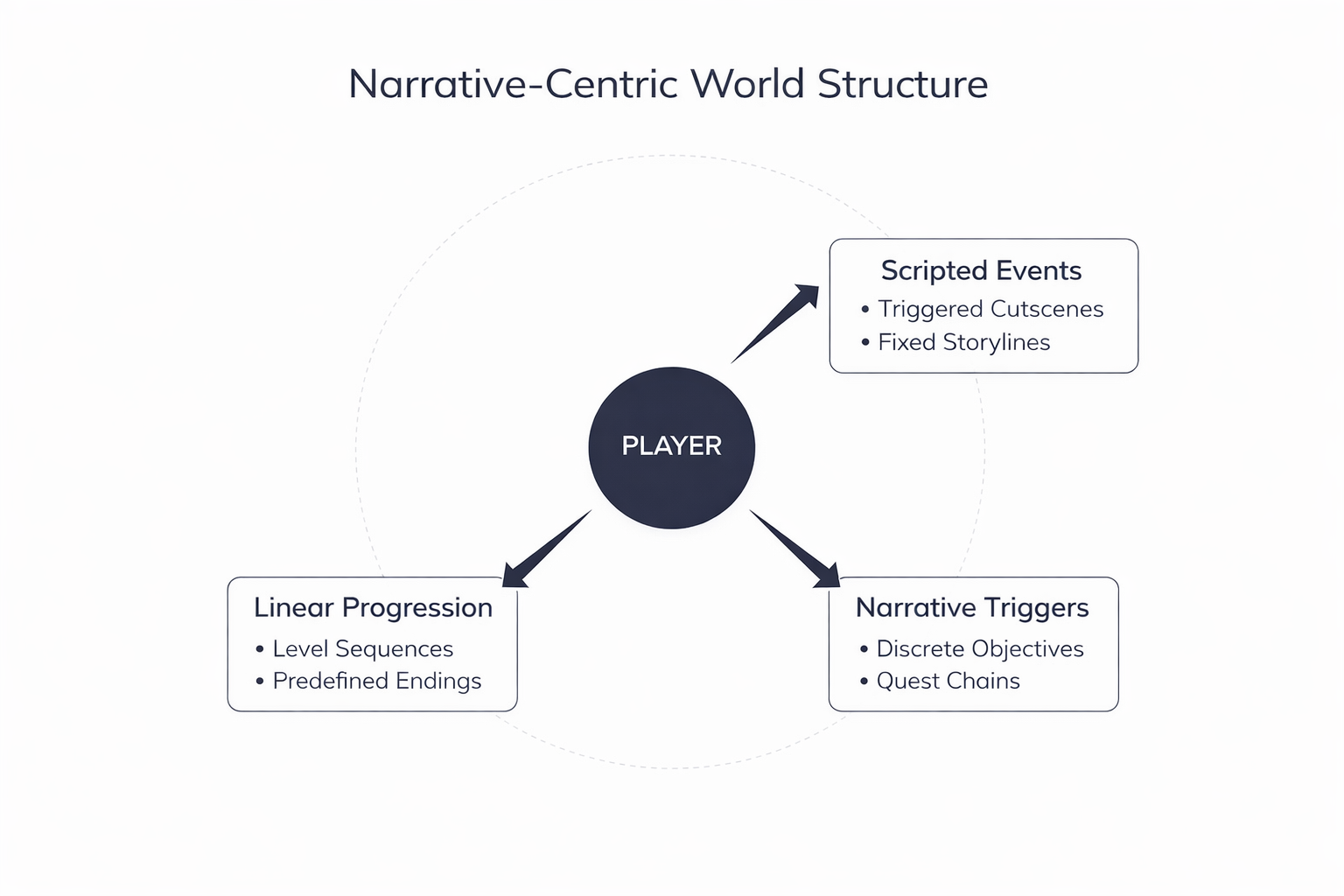
In many traditional game designs, the world exists primarily as a container for the events of the created narrative. Advancement relies on player-centred causality, and meaning is communicated directly through explicit narrative expression, scripted performance, and linear progression. In this model, the game world often exists to respond to player behaviour, and narrative coherence relies on the player’s continual advancement of predetermined content.
This type of structure places the player as the central driver of meaning and closure. The world rarely operates independently in the absence of the player, and its systems are usually subordinate to the need for narrative clarity, guidance and completion. As a result, understanding is often given rather than found; ambiguity is seen as a barrier to be removed rather than a design resource to be utilised.
2.Systemic Worlds and Interpretive Play
Systemic world design redefines the game world as an internally self-referential structure governed by ongoing rules, rather than a narrative sequence waiting to be triggered by the player. In this approach, meaning is not communicated directly through explicit narrative telling, but rather is generated through observation, inference, and repeated interaction with the environment and system behaviour.The player interacts with the world as an interpretive participant, constructing understanding by recognising patterns, constraints and inconsistencies in time and space. As a result, understanding is no longer given, but rather arises from an ongoing interpretation and experience of the system’s functioning.
2.1 Case Studies — Systemic World Design in AAA Games
Control
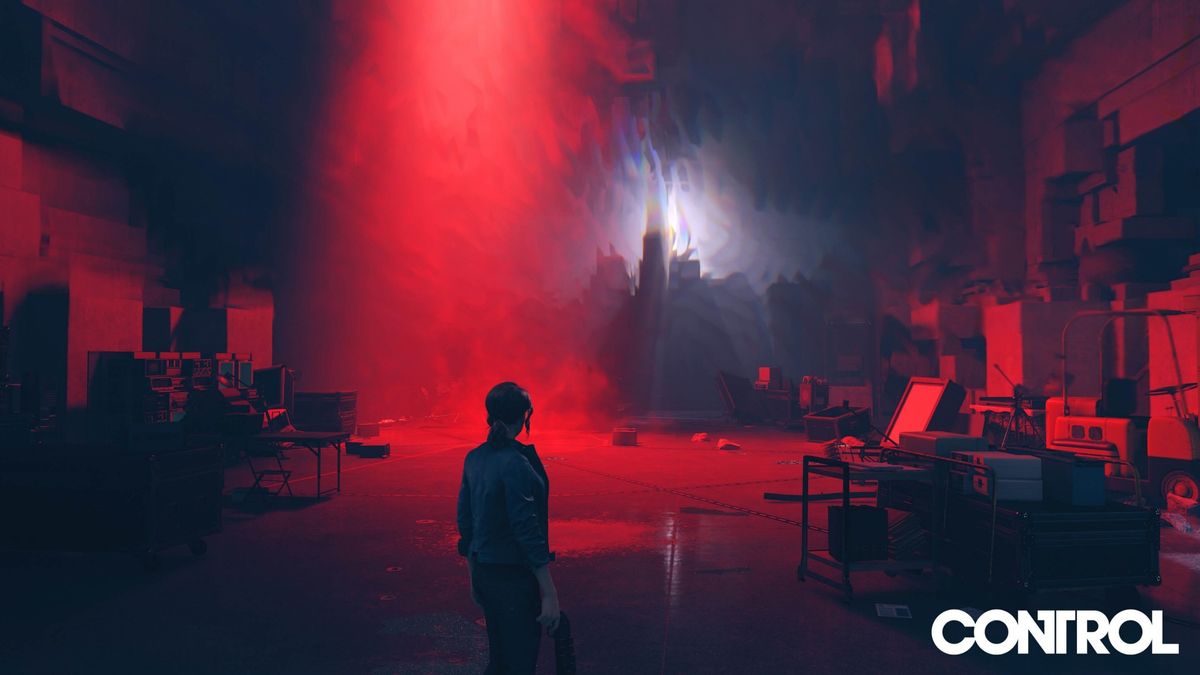
Control presents a world composed of variable systems, rather than relying on the structure of stable narrative. The Oldest House follows the ever-changing spatial rules, architectural repeatability and institutional logic, which require players to infer by themselves through exploration and experience.Narrative coherence is not developed through linear narrative, but embedded in environmental anomalies, spatial levels and systematic disorder. Players must interpret how power, control and instability manifest themselves through the environment itself, so as to build an understanding of the world in a non-linear experience.
Assassin’s Creed
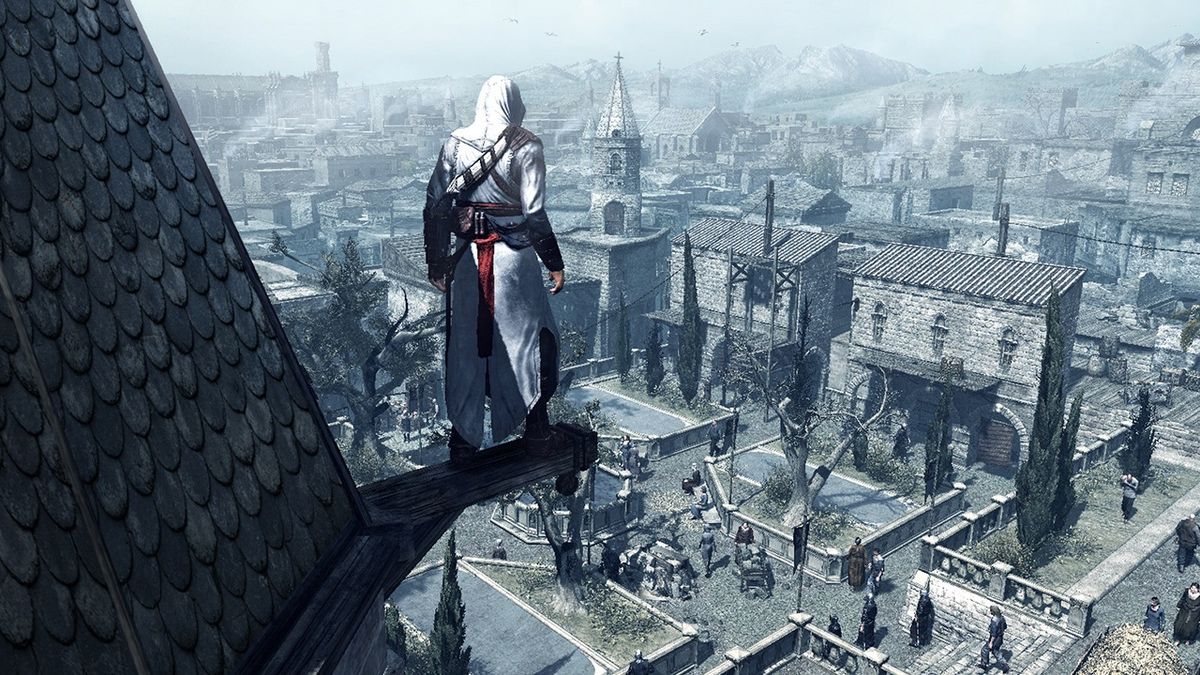
The Assassin’s Creed series demonstrates a large-scale systemic world design: historical spaces are constructed as multi-layered information environments. Cities exist as navigable systems whose characteristics are defined by a combination of social density, vertical mobility, and spatial availability.In contrast to relying solely on scripted narrative sequences, the series conveys ideological conflict and historical structure through repeated spatial interactions, surveillance mechanisms, and environmental routines embedded in the urban system. In this way, the world itself becomes the primary vehicle for narrative and meaning-making, rather than a mere backdrop for plot advancement.
Shadow of the Tomb Raider
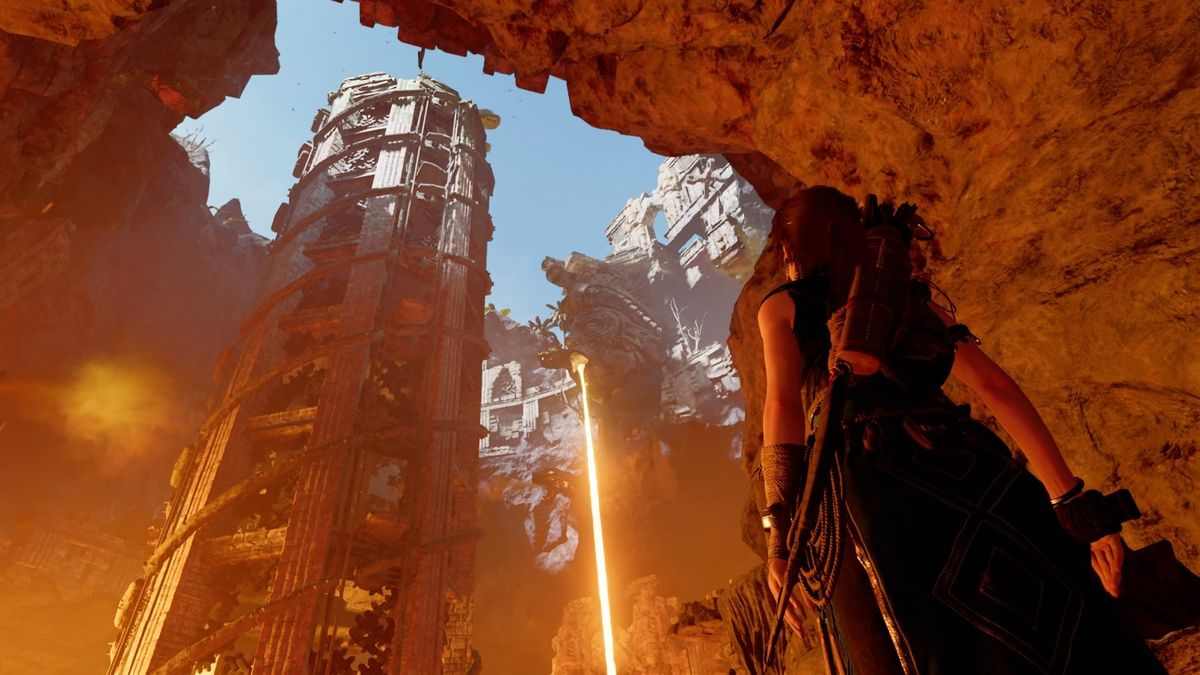
Shadow of the Tomb Raider situates narrative understanding within environmental context and spatial continuity. Tombs and natural spaces are designed to be systematically challenging places where architectural logic, environmental hazards, and movement mechanics work together to convey the historical and cultural significance of the world.Meaning is not given directly through explicit narrative instructions, but rather is generated through physical interaction with the space, requiring the player to interpret environmental cues and spatial organisation in order to construct an understanding of the world through exploration and manipulation.
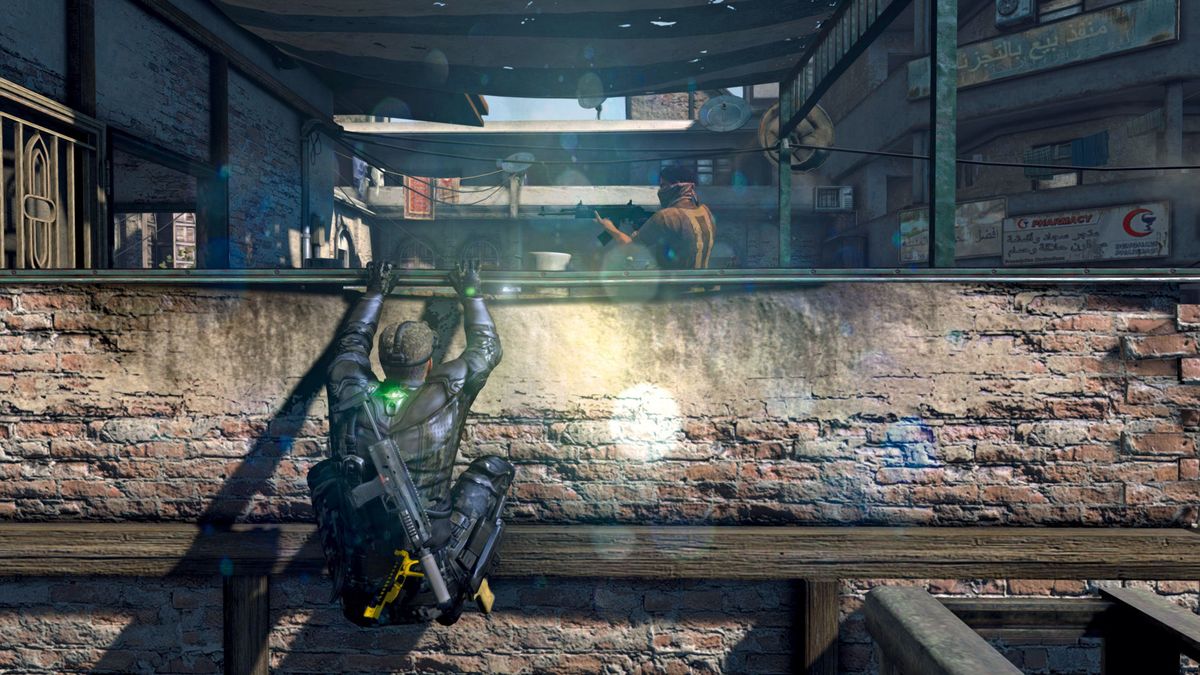
Splinter Cell
“Splinter Cell” embodies interpretive play through a systematic stealth environment dominated by visibility, sound and spatial control. The game world implicitly conveys its rules, requiring players to infer the state of the system through lighting conditions, enemy behaviour and environmental feedback.In this design, the narrative context is in a secondary position, and the understanding of the system is the core driving force of the experience. Players’ mastery of the spatial structure and detection mechanism becomes the key to promoting participation and tension, rather than relying on clear narrative explanations or guidelines.
3.World as an Epistemic Space
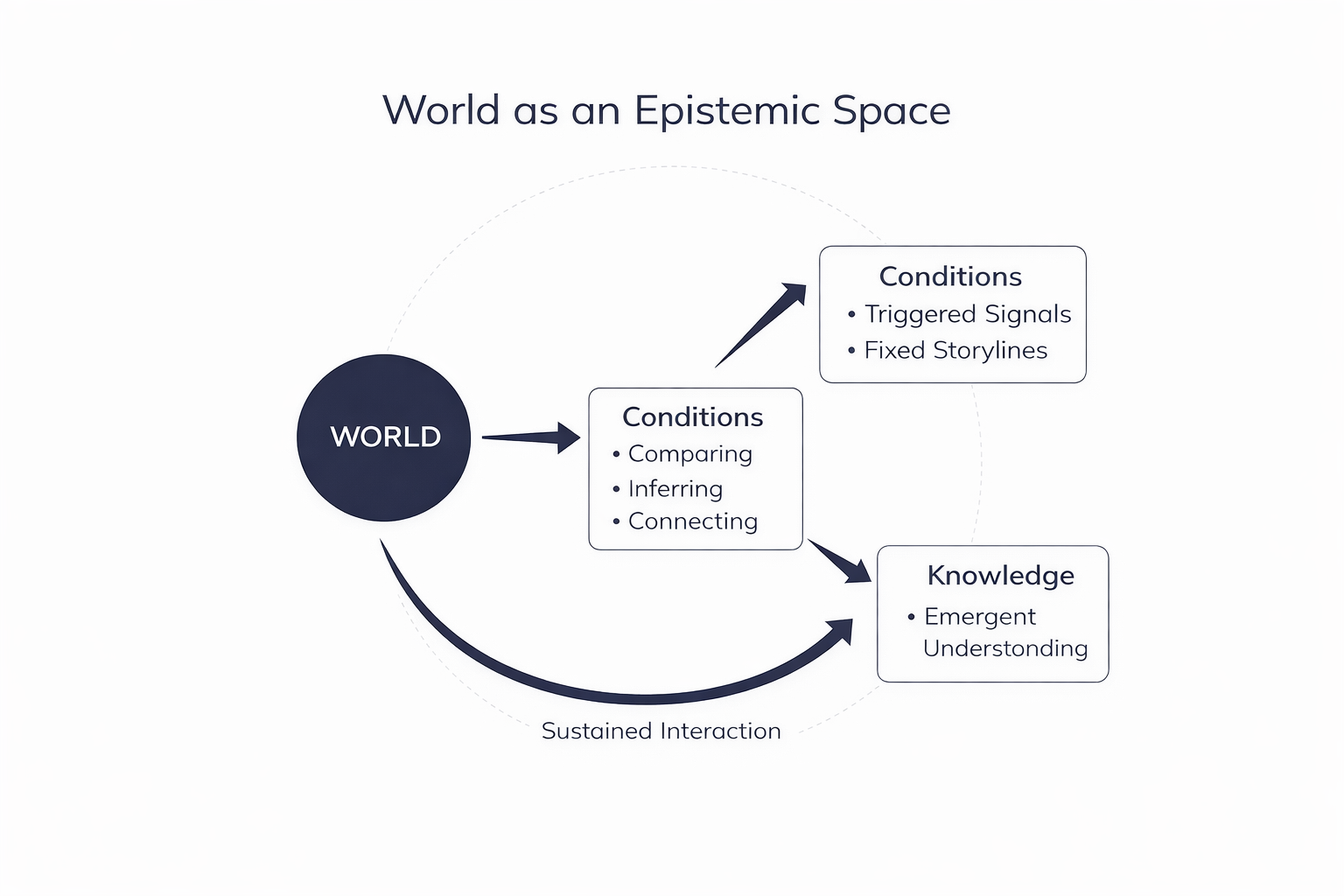
In Systematic World Design.The game world can be understood as a cognitive epistemic space a field of knowledge generation through interaction, comparison and reflection.Instead of providing a complete or authoritative narrative, the world presents fragmented signals, incomplete information, and meaningful absences.The player gradually constructs an understanding of the world by connecting these pieces together over multiple encounters.In this context, ambiguity is not a failure of communication, but a deliberately set condition to promote interpretation and interpretation. Meaning is not given directly, but assembled through continuous contact with the structure, constraints and inconsistency of the world. Therefore, the focus of design research has shifted from “what story is told” to “under what conditions can players form a coherent mental model for a world that does not explain itself”.
Sources
(187) The Rise of the Systemic Game – YouTub
Assassin’s Creed Franchise | Ubisoft (US)
Level design breakdown: Shadow of the Tomb Raider | by Ketul Majmudar | UX Collectiv
The Original Splinter Cell Is Still A Masterclass In Stealth Design – Game Auatice