Week 4 Level Design & Spatial Analysis
Understanding Level Design as Spatial Structure
During Week 4, the focus was on understanding level design as a system that structures player movement, pacing, and decision-making, rather than simply creating visually appealing environments. The lecture clarified the distinction between level design, environment art, and narrative design, highlighting level design’s role in shaping playable space and player experience through spatial logic.
Level Breakdown and Player Flow
In the practical exercise, our group analysed the first level of The Backrooms by creating an overview map to understand its overall spatial structure. We then divided the level into action bubbles, identifying player goals, key interactions, and transitions between spaces. This process revealed how tension and progression are constructed through layout, repetition, and limited visibility rather than explicit guidance.
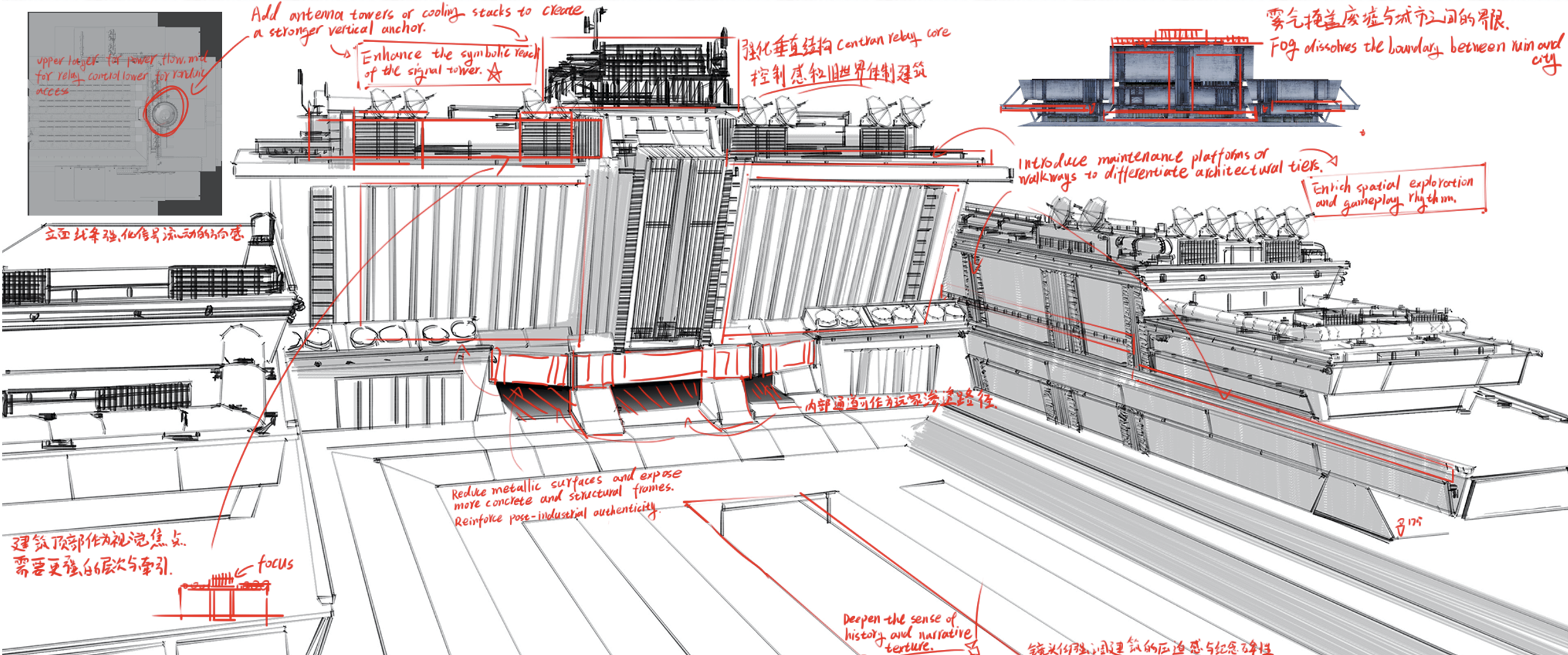
Reflection on Spatial Communication
This exercise reinforced the idea that level design communicates gameplay and emotion indirectly through space. By analysing affordances, flow, and sensory cues, I gained a clearer understanding of how player behaviour can be guided without relying on text or scripted events. This approach aligns closely with my interest in systemic and atmospheric game design, where meaning emerges through exploration and spatial interpretation.