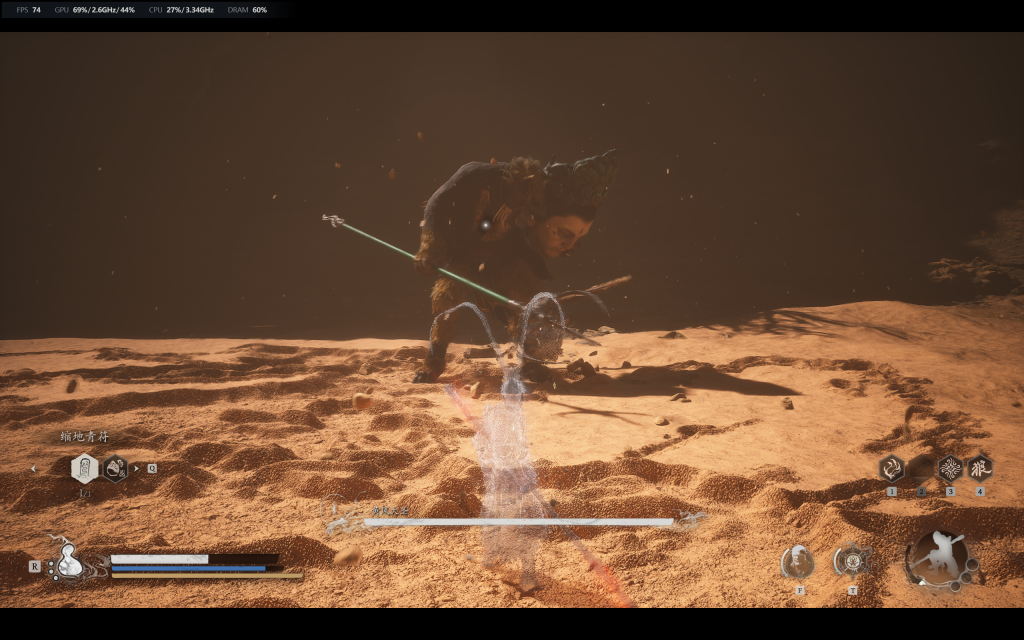
|Fighting Mechanics:
This section will explain the combat mechanics when players need to defeat enemies to obtain clues.
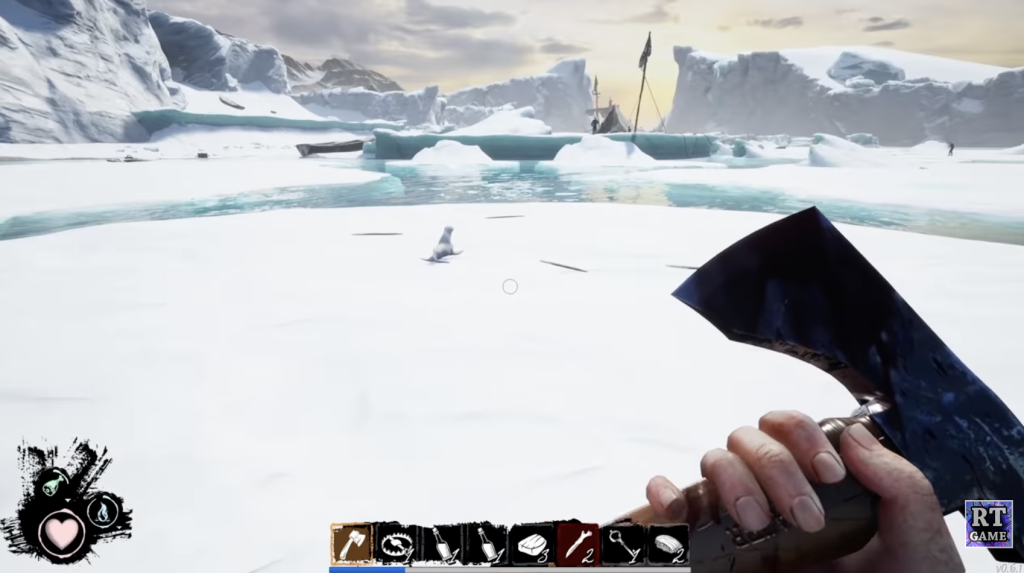
In levels where items are acquired through combat, the player’s inventory will be expanded with a fixed weapon slot, and they will receive an initial weapon, such as an axe or a longsword. Similar to the inventory slots and weapon placement in Dread Hunger, players can then use this weapon to attack.
Dodge:
Similar to dodging, it adds more room for maneuver in combat between players and enemies. When not in combat, players can also use dodging to increase exploration efficiency and shorten distances.
|Player data:
Health:
The player’s health will be recorded and displayed on the HUD interface. The player starts with 50 health points, which will be restored by using food or medical items. During the game, in addition to combat, health will also be deducted from the player’s health by falling, traps, and finally, by deducing the entire story incorrectly.
Stamina:
Rolling, attacking, and other actions will consume stamina. Stamina will regenerate automatically over time, and some food or medicine can accelerate stamina recovery.
|Game mechanics and objectives:
Skill Acquisition System:
At the end of each level, players need to deduce the story based on clues. After completing the level, the system allows players to choose from several emotions, and making a choice will grant the player corresponding abilities or upgrades.
Reasoning System:
Players collect clues throughout the current level and deduce the level’s backstory based on these clues before reaching the finish line. Correct deduction allows progression to the next level; incorrect deduction results in a deduction of health points and an error message. Some levels require players to deduce what happened in the current scene before exploring other areas.
Death System:
Because puzzle games have a certain level of difficulty, dying will grant the player character some buffs to reduce the difficulty of completing the game. For example, dying in battle while collecting clues from enemies will provide a damage bonus, or allow the player to revive and start from the last point. If the player dies due to too many failed deductions, some clues will be provided, such as a list of the order in which clues appear or guidance on finding missing clues. However, to prevent players from gaining buffs by repeatedly dying, there will be a cap on the buffs gained, and they will only be effective in the current level.
|Camera mechanism:
Default view:
To allow players to more easily observe the environment and notice clues, the game defaults to a third-person perspective. Players can manually switch to a first-person perspective to enhance the gaming experience.
Combat perspective:
During combat, players need to lock onto the enemy’s location in order to perform corresponding actions, so a camera-locking function will be added.