This week’s content focused more on explaining what constitutes a good GDD project. I chose to showcase two pages that were particularly insightful for me or helped clarify my thinking, to demonstrate and explain my ideas.
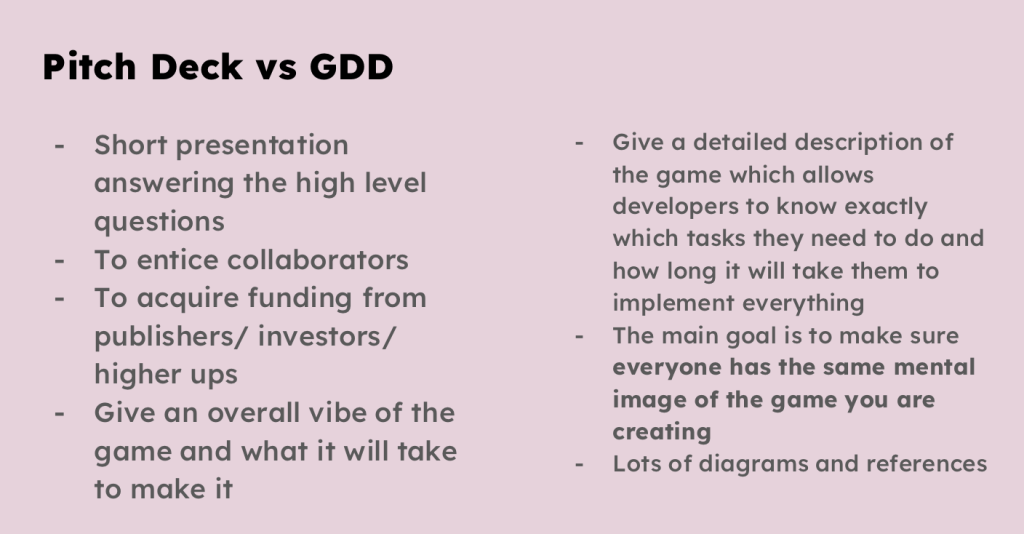
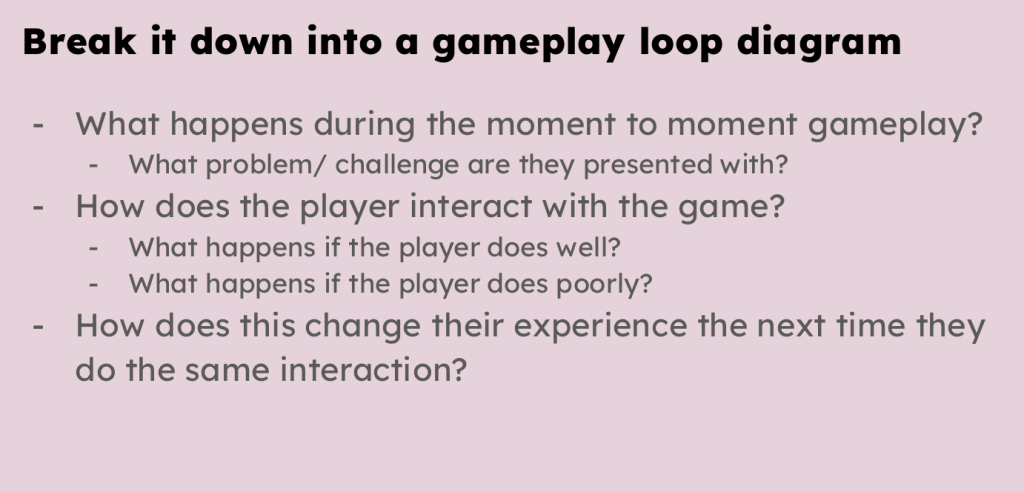
Starting with the slide on the left, the lectures made me realize that a Game Design Project (GDD) doesn’t need to be elaborate or involve a huge project. For a GDD, the important thing is to clearly explain the designer’s ideas so that others involved in the game’s development can understand what effect the designer wants to achieve.
So that people in different positions can clearly understand what they need to do and what functions they need to perform.
The image on the right provides guidance on details. It serves as an example, showing me the level of detail needed and how to refine the functionality so that others can clearly understand which systems need to be built.
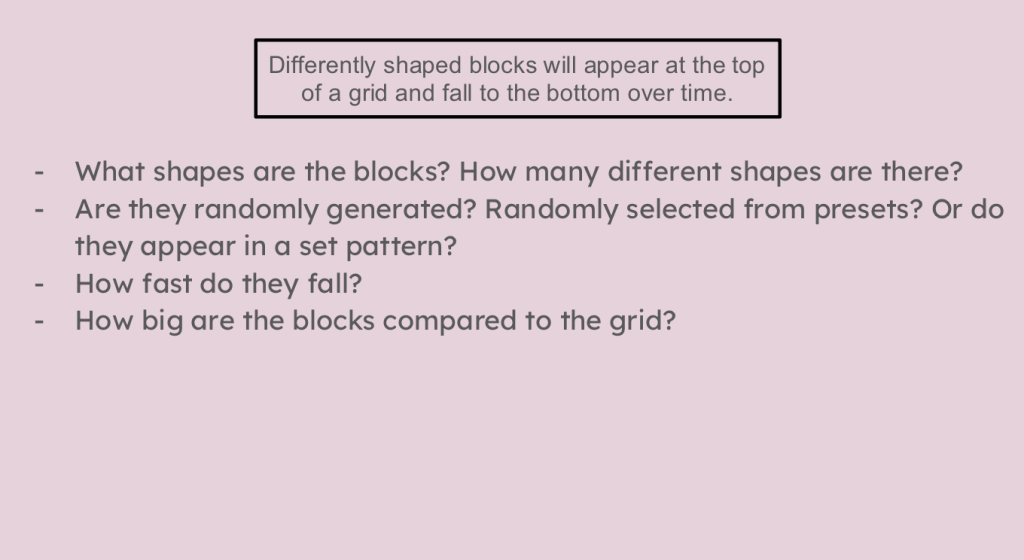
Many questions similar to those shown in the image above have continuously helped me expand the range of issues I need to consider, including the possible player behaviors I need to take into account.
All the problems point to one thing: to consider all possible scenarios as comprehensively as possible.
In this situation, testing becomes crucial because there will always be oversights. Testing often helps us uncover issues that we’ve overlooked or that our habitual thinking hasn’t considered.
Therefore, it is equally important to value every test and sharing session, as others may think of situations I haven’t considered while listening or trying out the game.
This week’s lessons basically explained in detail how to create each part of a GDD, and this detailed instruction helped me refine my GDD in the final stretch.