For this module, I have been taking notes from the various Alumni who have politely taken time out of their Thursdays to give industry advice. This essay will reflect on these talks and apply them to my own work and future in the industry. In my final year of Uni, it’s more important than ever for me to have a clear idea of what I want to achieve after graduation, and these talks have helped me figure it out along the way.
My 5 future career statements for the Games Industry and the wider creative Industries:
- I would like to become a Game Artist with a strength in concept art and 3D modelling for characters. This can be considered generalist.
- I am also interested in getting into music production in games, but only for indie opportunities and my own games, as I currently only do it as a hobby.
- I would like to create games with friends and also by myself, so these skills would all be valuable to me.
- I would ideally like to work in a small indie studio, but I am open to bigger ones. I recognise that generalists are better suited to indie studios, and that may limit my access to AAA opportunities, but I also recognise my weakness: I like learning and working within multiple disciplines.
- I’d like my skills to apply to other disciplines in the art industry, such as animation/film and traditional sculpting.
I learned a lot from each guest speaker*, so I will be breaking down the main themes of each talk. There will also be examples of my current work throughout this essay to show how I have applied the advice given during these talks.
*Rhys Shephard, Megan Matthews and Jade Carter are integrated into some of the other speakers’ paragraphs, as they mentioned similar things! Other speakers will also be occasionally mentioned in each other’s sections.
Jamie Blacknell
Jamie Blacknell’s talk touched on the Game Developer experience, but there were 2 key points he emphasised the most: Cross-disciplinary Communication and Portfolio.
Cross-disciplinary Communication: He first started by talking about how the University prepares us for the industry. As we are a Game Design and Art course, we cover all the aspects of game design, from the technicalities of Blender and Unity to the more artistic side of things. He stressed that this is an important practice to have early on in your career, as you can communicate effectively with other team members in different disciplines. I’ve already applied some of this philosophy to my previous and current game projects – I have been able to understand programmers more and the processes they go through while using GitHub to commit to repositories. In practice on the job, it is great to understand different disciplines so you can change the words around. A major issue he highlighted was communication between colleagues of different levels. For instance, to a direct senior, do not overexplain what you are doing, “translate” industry terminology into plain English and be concise; compared to a team lead, who would be the easiest to communicate with, as you share the same knowledge. Speak to them with terminology.
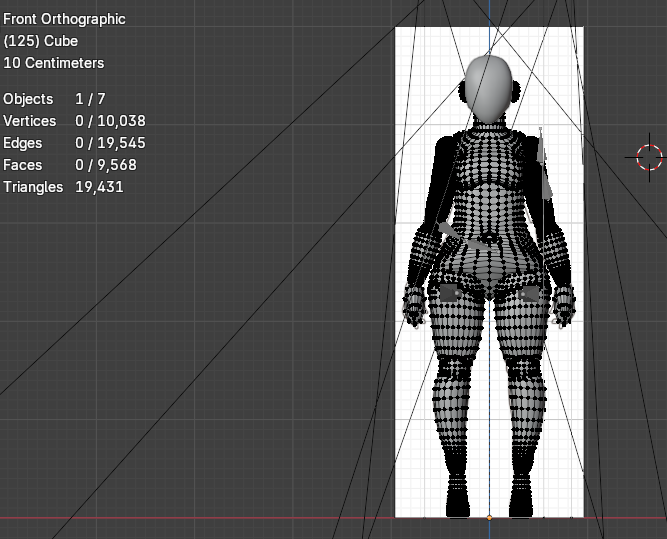
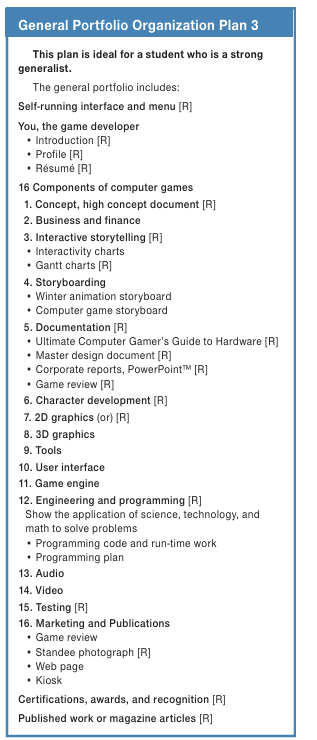
Portfolio: Jamie stressed this point the most – create things now. One thing I have been hearing from industry professionals, not just Jamie, is that your portfolio cannot be made up of things merely from your time at University. This does not showcase your strengths as a Games Designer. At a minimum, have a LinkedIn and a Portfolio website. Since last summer, I have been trying to showcase some of my University work, as well as projects outside of university. I have joined the team that was working on my Year 2 game idea, Oh, Rats!, as a concept artist and texturer. As we move closer to having a finished demo, I will promote this on LinkedIn and list it on my portfolio. As for a portfolio website, I was thinking of going the independent route: Neocities. I want to have more creative liberty over how I display my work, and I think coding my own site with HTML suits the way I work. For his 3D artist portfolio tips, he suggested that Instagram, ArtStation and Github are great platforms to use. On the downside, and especially with ArtStation, there is fierce competition between artists – many of them are already at an industry standard level. He suggested showing processes like sketches, moodboards and photobashing. Most importantly, take a concept and follow through with it entirely. This is something I frequently struggle with, but I have a personal project that is close to completion, which will be posted to LinkedIn. Having 4 – 6 strong projects in my starting portfolio, as Megan suggests, will also aid me.
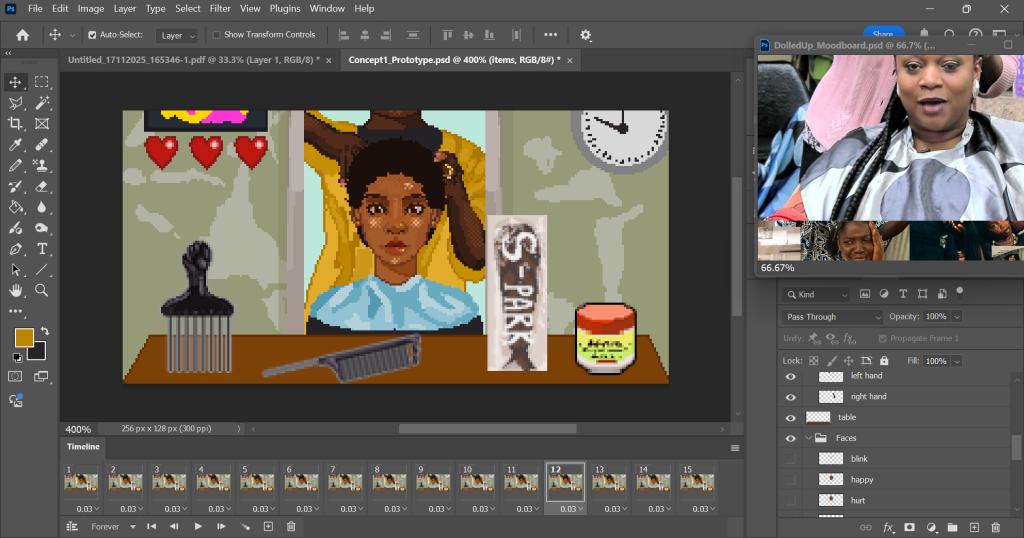
A few other elements that I thought were important for me to know: make your portfolio cohesive and “flow” through, showcase that you can work from a reference (this is where moodboards may come in), understand optimisation like LODs, show your wireframes, polycounts and texture sizes. A lot of this terminology I already understand, so I will continue to apply these to my 3D projects. Lastly, he recommended to learn one of these industry standard tools: Autodesk, Zbrush, Substance Painter and Photoshop. Rhys Shephard, a Tech Artist at Epic Games, also emphasised some of these programs. Some additions include: Visual Studio, Unreal, Houdini and MAYA. Jade Carter mentioned Jira, an industry-standard task tracker, which has been mentioned by some of the other speakers as well. I am happily confident working with Photoshop, as I have been for a few years, and I will continue using this tool on my current and future projects. Knowing this program gives me a leverage as it is versatile, and I will continue to apply it to aspects of Game Design such as drawing, moodboards, animation and spreadsheets.
Olivia Gregory
Olivia Gregory focused on a 2D Artist specialised in Concept Art perspective. Here are 2 key points she emphasised the most: Industry Specialisation and Networking.
Industry Specialisation: Olivia is not only a Concept Artist but a Visdev. Visdevs will have more 2D stylised design elements, such as backgrounds and prop work for animation. Concept Artists do the same pipeline, but for games. As I’ve stated in my introduction, I’d like skills that do not just apply to games, so Olivia had a unique insight into these disciplines. A really important message that I found useful was that she wasn’t that confident in her art during university and only grew into her specialisation as an artist after she graduated. This was relieving to hear – I feel that my art has definitely improved throughout my years here, but it has felt “stagnated” in a sense due to Art block. A few useful notes for Character Design that she emphasised: learn Anatomy, Turnarounds, poses/expressions, texture callouts of clothes and details like badges, design rendered pieces like how they would look in a finished composition. A big detail: Concept first, art comes after. I tend to start rendering before having a few concept drafts, so this is advice I need to internalise.
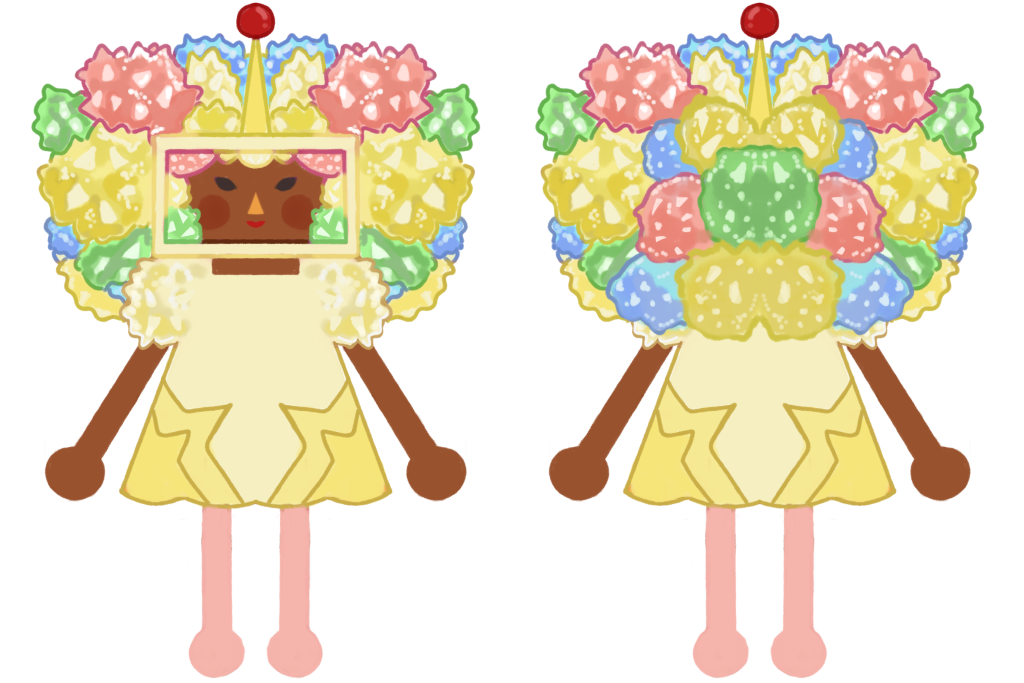
She then became a Mentee under an Industry Professional for 2 years, who helped elevate her art and find her niche, Disability Representation in Media. She noted how imperative it was to find your “thing”, as she called it, something that you’re passionate about and that can make you stand out. I thought back to the type of games I want to make and the media I feel inspired by. Looking at my Year 2 and 3 work, I am deeply passionate about quirky experiences, stylised characters, and cultural representation within Games. A lot of my inspirations have been drawn from my own experience in life, but also what I want to see in Games. In this sense, I feel like I have “found my thing” when I realised how I am inspired by Black culture as well as whimsicality in games. I would like to see more black characters in fantasy settings and games in general. I also want to see fantasy from rarely told points of view. Here are 2 examples of that: 1) unexplored folklore from Africa (including ones from my heritage) and general Black culture, and 2) fantasy within inanimate beings (like my 3rd game idea).
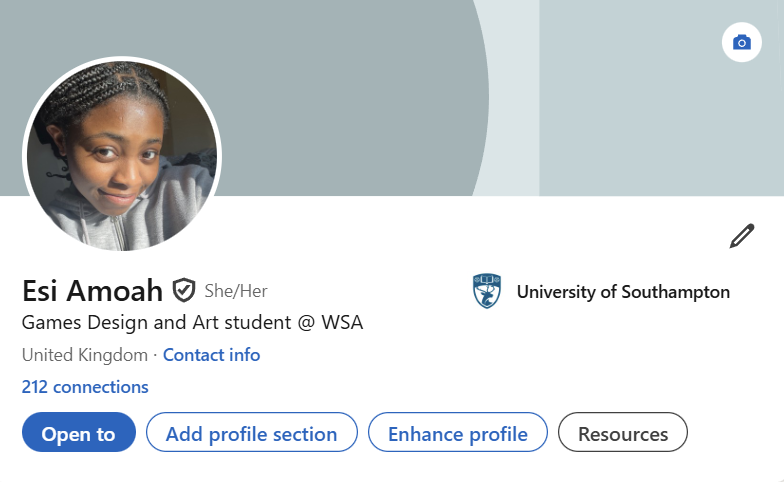
Networking: A big point that Olivia made was about how prominent networking is in the Games Industry. The UK Games industry is growing fast, but it is small enough that many people will know each other. The advice was to take advantage of this: be present at events and online, don’t be afraid to reach out to Industry professionals. Be respectful of time and resources, and LinkedIn is the best for Job listings. I’ve already been trying to connect with Industry professionals not only in the UK but globally, since the 2nd year. I’ve messaged some people in the Industry telling them about how I am inspired by their work, and studying how they engage with others on the platform. Meeting “prominent experts” and “forming enduring relationships” in the industry are even more possible due to these events (Faizan, 2025). To be specific, I’d like to meet more devs, both AAA and indie, through conventions and expos: AdventureX, Develop: Brighton, and EGX. These are events that have caught my eye, and ones my LinkedIn connections post about. I think it will aid me as an indie dev to go to at least one of these events next year. Professional relationships require loads of “patience and time” due to other commitments that can hinder these activities (Faizan, 2025), so I feel like it’s good that I start now. Another point given: “Don’t pigeonhole yourself into one niche, moving between different industries doesn’t make you less of a creative.” This was really useful for me to hear, as it links back to my philosophy of wanting to be in the creative industry in general and not limit myself to just games.
Some starting conversations to introduce yourself at industry events (from Megan Matthews):
- “I know you from Social Media.” (Perfectly fine to start a conversation with even if it sounds weird!)
- Say hi to someone who looks like they’re on their own.
- Take a friend or mentor with you.
- Try new games, talk to the devs about their games.
- Practice your verbal introduction before attending events
- Can ask recruiters what they are looking for in Game Designers
Bea Grove
Bea Grove’s talk was from a Senior Game Designer’s perspective. 2 points I took away from her talk were about getting into the industry and Interviews.
Getting into the industry: Bea discussed career paths in the indie industry. A lot of people expect to go into AAA games when they enter a course like this, but Bea highlighted that AAA is not always the way. The Games industry is very volatile, so Indies are a great way to showcase your creative process and ideas still while still being able to have a job. This is an important message for me to hear; Indie is the pathway I feel is right for me – I have a few game ideas I plan to make after graduation that I want total creative control over. She also mentioned a few niches within the indie scene – the mobile industry is thriving, web/browser games are in the spotlight, and Board games too. Bea talked about transferable skills and a cross-disciplinary workforce, as Indie devs will learn a wide range of skills for their games. This way, a lot of people start climbing the AAA ladder, going from QA to product to Analytics and eventually producer – this was Bea’s pipeline. A QA tester is someone who playtests the game, makes sure everything specified works, and tries to break the game. They report any bugs and suggest what the team could do to fix them if they are asked to. Jade Carter mentioned a similar pipeline. She started from a QA role in 2018 and then transferred studios, doing QA, finally asked to move into a production role after a few years. This was helpful to hear, as the industry is notorious for being tough to get into; many mention a glass ceiling at the entry level. Starting in QA and then transferring to your preferred role is an initial job for many. I think QA can be a great way to develop cross-disciplinary understanding (as I mentioned in Jamie’s section). A 3D artist like me knows some 3D terminology, but QA testing could help me understand programmers better and help me develop my coding skills in the meantime. I am most likely going to go into QA for my first job, too, until I can start applying for artist jobs with my polished portfolio.
Interviews: One thing none of the previous speakers talked about as much was job interviews. Bea mentioned showing a passion for games to see past the minds of players. This means: deconstruct a game in a similar genre: why was it easier or more difficult to play because of the colours? Interviewers like it when you know what you are actually talking about. This was great advice, as getting a Games job interview is hard in the first place. Knowing what to criticise and praise in a game will help me a lot. Lastly, she stated that she researched the company. Game companies (and companies in general!) want you to know about their practices and what games they are working on. This will be great for a future employee to know, as you will be engaging in these practices regardless. I plan to utilise this advice when I start applying for jobs after graduation.
Rhys Shephard also suggested some questions one might get from an interviewer:
- “What’s the most X aspect of designing a game?”
- “How could you do this differently?”
- Technical tasks: “finish the code, create some UI, fix this bug, etc.”
While these are from a Tech Artist’s POV, some of these questions might be used in a Art-based interview, so they are still valuable for me to think of answers to. I think knowing what you like and what frustrates you within games will give you a leverage.
Putting it into practice
✅ = have done | 🟠 = currently doing | 🔴 = haven’t started
Portfolio into practice
- I am scrapping my current portfolio to begin creating a new one. From these talks, my current one is not satisfactory enough; it isn’t as straight to the point as I previously thought it was.
- Create a new portfolio for Game Art 🔴
- 4 – 6 strong pieces. Some suggestions to myself: character concepts into 3D model 🟠 , prop work 🔴, 2D concept exploration 🟠
Networking into practice
- Connecting and occasionally chatting with industry professionals and fellow students on LinkedIn ✅
- Created a Bluesky and have started to follow some peers on there ✅
- Utilise Hashtags on Bluesky (#gamedev, #indiedev, #madewithunity and #indiegame are quite popular and active) 🔴
From these talks, I felt it was necessary to make a note of what my goals are and to make sure they are achievable immediately and in the long term, to not put too much pressure on myself.
Immediate goal: Make connections, befriend and have conversations with fellow Game Designers on LinkedIn and Bluesky. (I have connections, but I’d like to become friends with some of them.)
Short-term goal: Post at least 2 finished concept art or 3D sculpts on socials in 2026. (I struggle with posting my art online even when I feel it is good and completed. Limiting myself will not help me with my goals, and posting regularly could help me with my immediate goal.)
Long-term goal: Creating games by myself and/or with friends, or joining a small indie studio. (As Bea Groves mentioned, working in a studio gives you a great list of transferable skills, so I can use these in my own practice or in other creative disciplines.)
Conclusion
All in all, I learned a lot of different things about how to break into the games industry and about my future as a Game Artist. A lot of the guest speakers had similar suggestions. For example, they talked about knowing industry software (Jamie Blacknell, Rhys Shephard), Teamwork being key (Bea Grove, Jade Carter) and Networking (Megan Matthews, Olivia Gregory). I’ve been taking these talks into account with how I should approach my Final Major Project. It is a project and topic I am extremely enthusiastic about, so I think this will be a good portfolio piece to post online and help make lasting connections with others in the industry!
End
Word Count: 2939
References
Faizan, R. (2025). The Importance of Professional Networking: A Pathway to Career Success. Scientific Societal and Behavioral Research Center, 1(1), pp.59–65. doi:https://doi.org/10.63329/av3nz1236.
NIKIRK, M. (2008). Digital Portfolios. Tech Directions, 68(5), pp. 13-15. https://www.proquest.com/magazines/digital-portfolios/docview/218533864/se-2?accountid=13963