

On Monday, we had a speaker called Dan that delivered a presentation regarding assets within games. This was genuinely useful as the lesson was packed with a lot of useful information about optimisation, organisation and even unreal engine specific tips. When he spoke to me one on one he also gave me some pointers on developing particle effects in Unreal Engine as that’s something I want to start focusing on as we move onto Daydream’s production phase. He even mentioned the gyms zoos and museum video I had wrote about previously which made me feel like I was doing something right.
There was a lot of technical information, which I found quite helpful as our course lacks any if at all specific resources on that sort of thing and focuses more on theory. Dan discussed with me how to implement assets into Unreal, as well as information about trim sheets, channel packing and PO2 textures.
On Wednesday I began to start my research with the particle system in Unreal Engine. It’s called Niagara Particles. Daydream is a very atmospheric game and I believe this will be important to crafting the mood and tone that we’re aiming for with our project. I started watching Intro to Niagara Particles [UE4/UE5] as it seems fairly beginner friendly and extensive. However, the video is 4 years old so I need to keep in mind that some aspects of it may be updated and need further research.
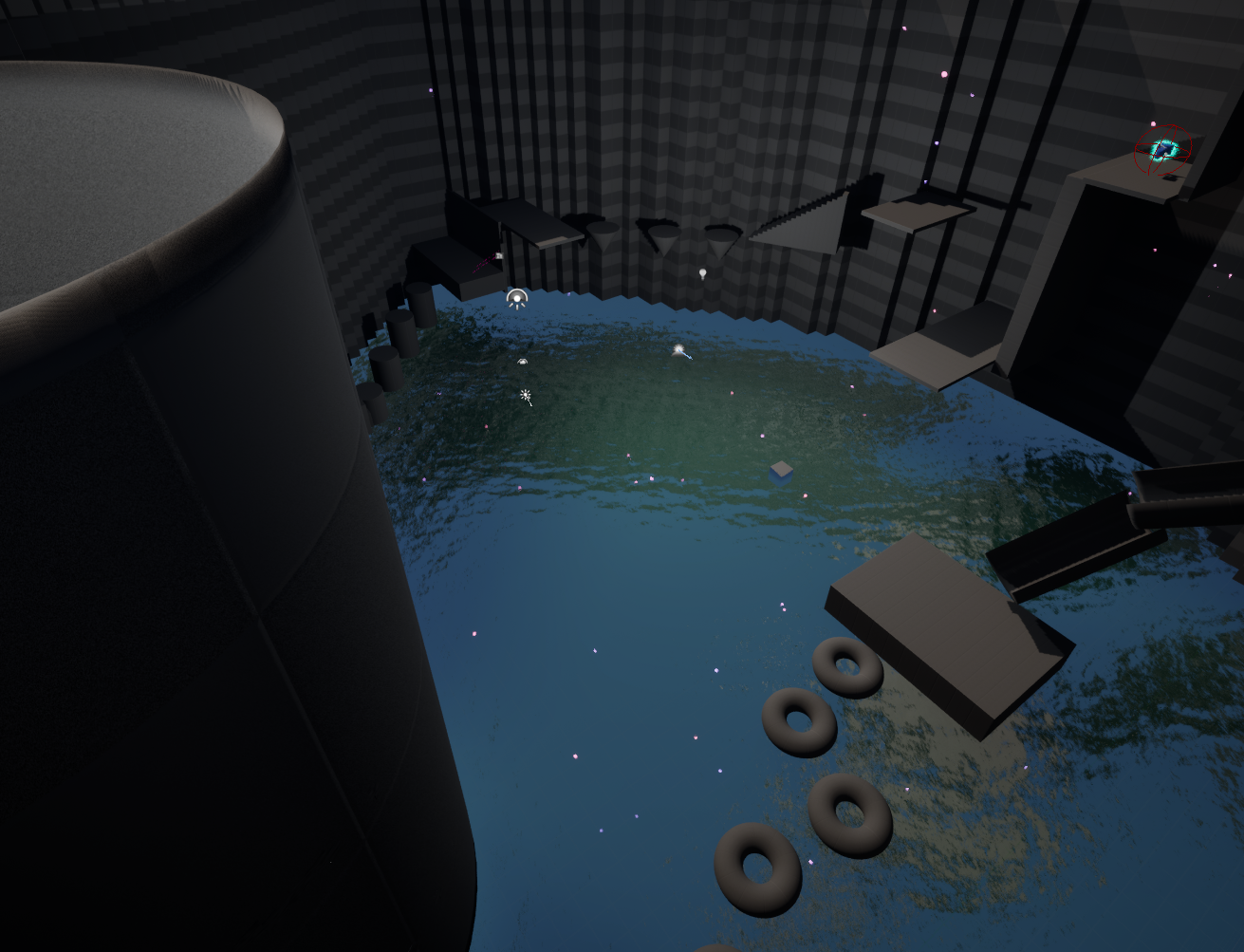
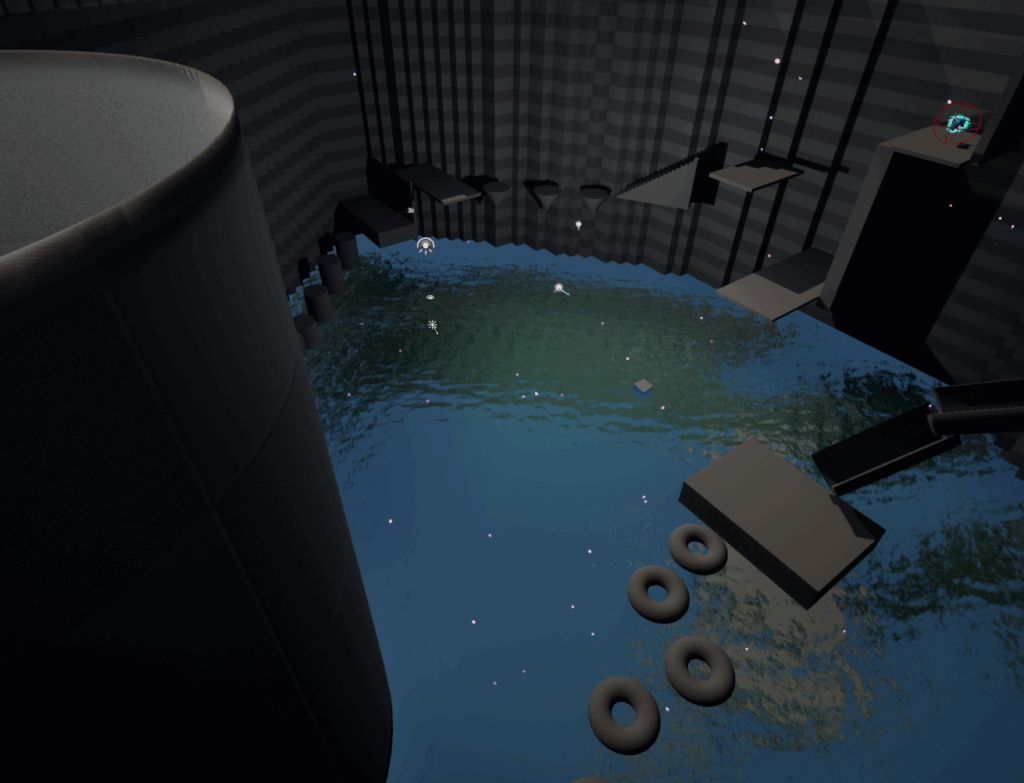
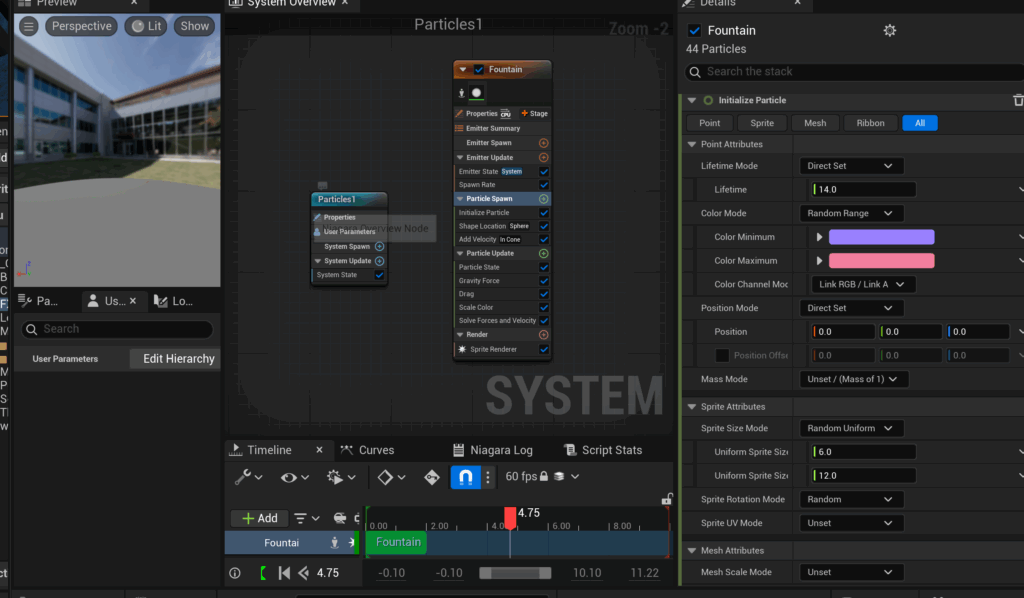
I needed to create a niagara emitter. The system is three parts, emitter that contains modules that spawn particles. I spent the better part of two hours tweaking the settings in the GUI to get the best ambient effect that I wanted. The most tedious thing was the gravity, it was very particular, either the particles looked like a water fountain or fell immediately to the ground. However, it’s fairly addicting to use, the effect is immediate and massively enhances the atmosphere of the game. Next, I’ll create a bubble png and use that for the particles in order to tie that to the sound effects I was making. The system is very modular and can be used for almost every use case of particles. You can see the many options in the screenshot of the editor, including the colours, gravity, density and many other things. For some reason the particles didn’t appear in the preview but I included a screenshot of how they appeared in-game.
SFX WORK CONT AND PLAYTEST
I created an ambient sound effect that would loop in the background. This was made by using royalty free sound effects and splicing them together in reaper and adding various VFX’s to elevate the atmosphere. I added a lot of echoing and reverb to convey the large, open building the player was traversing in. I also added bubble popping effects to tie it to the particle effects I made (which are intended to be bubbles)
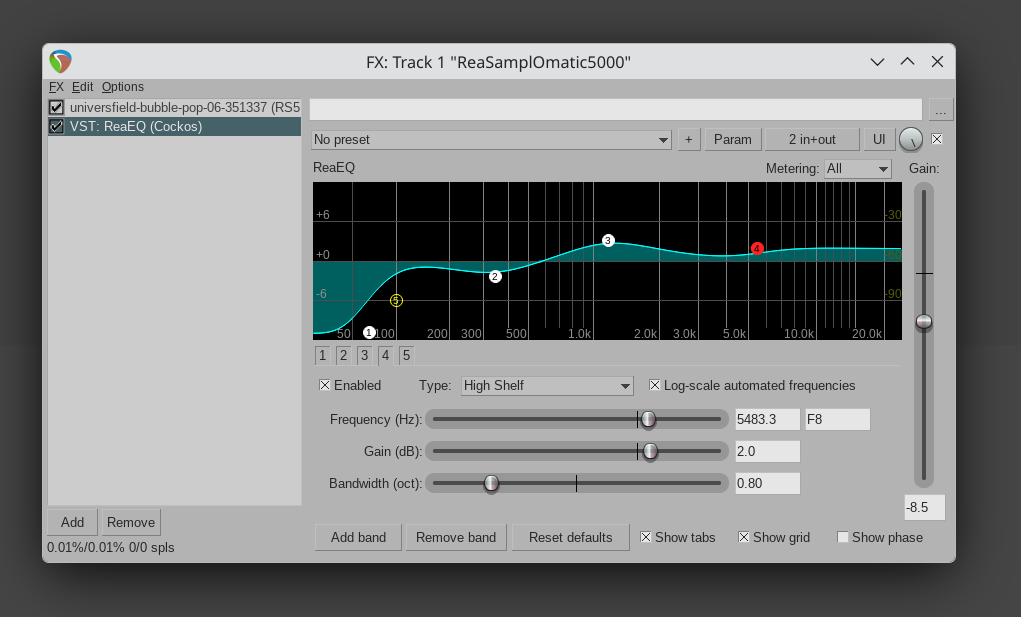
For example, I added a VST called ReaEQ. EQ is shorthand for equalisation, where you adjust the volume of different bands of frequency within a sample or a track. With the setup in the screenshot, by lowering the gain of the lowest frequency band i created a murky, muffled sound effect.
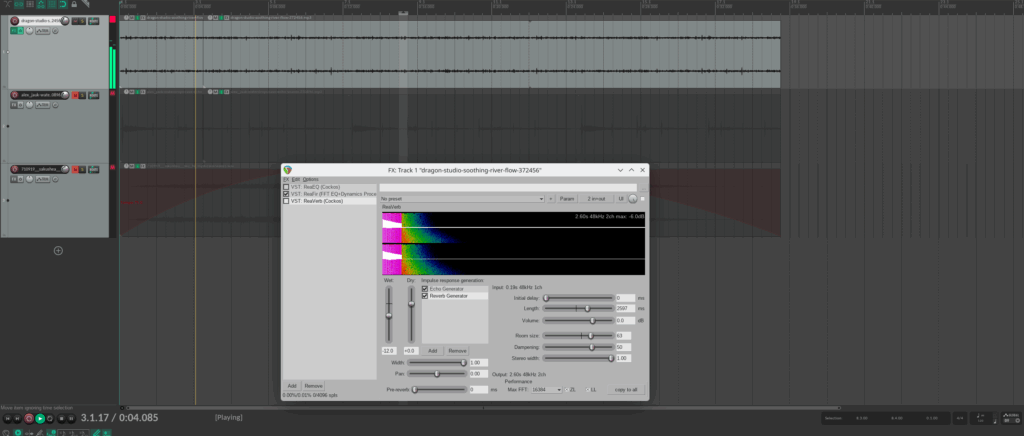
This screenshot shows the aforementioned reverb and echoing effect which contextualises the sounds within the large swimming pool.
A lot of the work in the ambience was constant tiny adjustments until I had something I was satisfied with. However, the workflow of sound design usually happens after the visual references have been completed in order to create the most cohesive audio. Due to constraints, this isn’t possible, or quite difficult, so I’m unable to create something that’ll sound exactly right.
Onto the playtest. After I had implemented the sound and particle effects, the day of the playtest rolled around on the Thursday. We had a lot more people around this time and the room was very crowded. We recieved plenty of feedback which we asked the players to write down themselves. While we tried to not give any input to the player, sometimes it was necessary due to the lack of context within the game. The feedback is here.
After reviewing the feedback, what we needed to tweak the most was the glitches with the perspective and movement as well as adding the story and context within the artwork. A lot of people failed to read the instructions properly so we should implement them in a more apparent way.
I believe this is good news though, all we need to do from here is a lot of tweaking. There is nothing major to create, no new systems or levels so we’ve already surpassed a minimum viable product.
Leave a Reply