
This week we presented our game ideas and concepts at John Hansard Gallery, furthermore, we were told that music students would show up and might want to work on our game. So it was vital we made a good first impression if we wanted an OST to be mande.
Here, we introduced ourselves to the attendees and spoke about our roles. Essentially who would be working on certain aspects of the game.

Here, we wanted to explain the overall gist of the game without boring the music students, we kept it short and concise – even adding images of games that inspired us to keep the viewers attentive. We understood that these were also students going out of their way to watch us present and we wanted our presentation to be somewhat interesting.
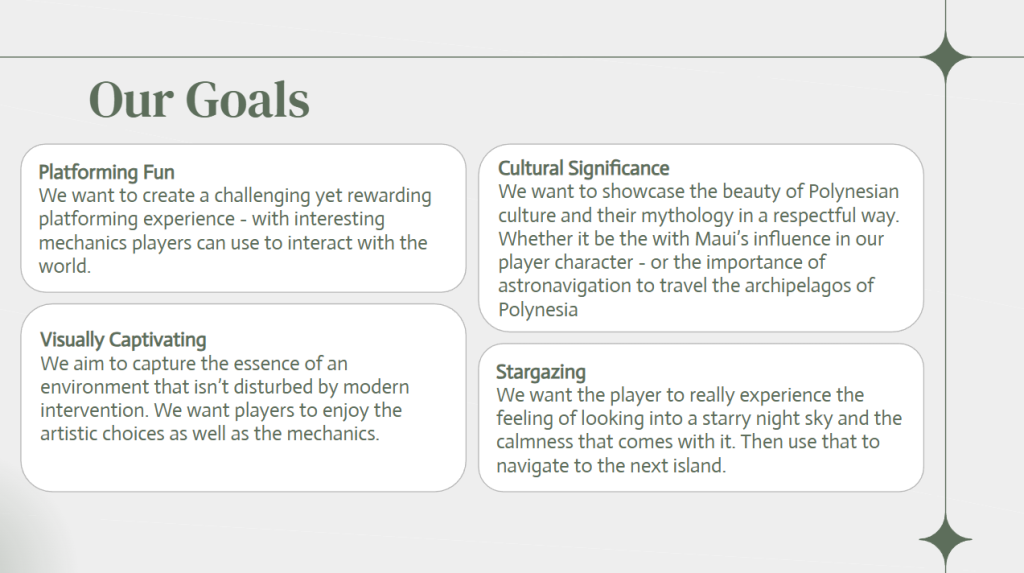
Here, we explained what mattered most to us during the development of the game. What aspects of the game we felt deserved the most time and effort, and the direction that the game would be going in if they decided to work with us.
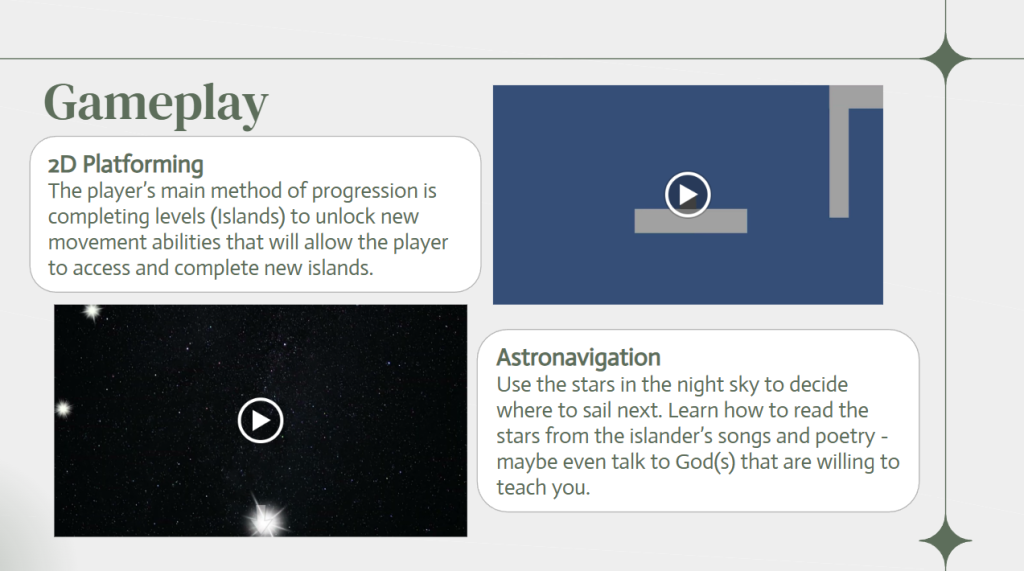
Here, I showed them the prototypes of the games I had made – sadly the videos didn’t work as we were presenting on Powerpoint, but we made the presentation on Google slides. Thankfully, I can show you those prototypes here:
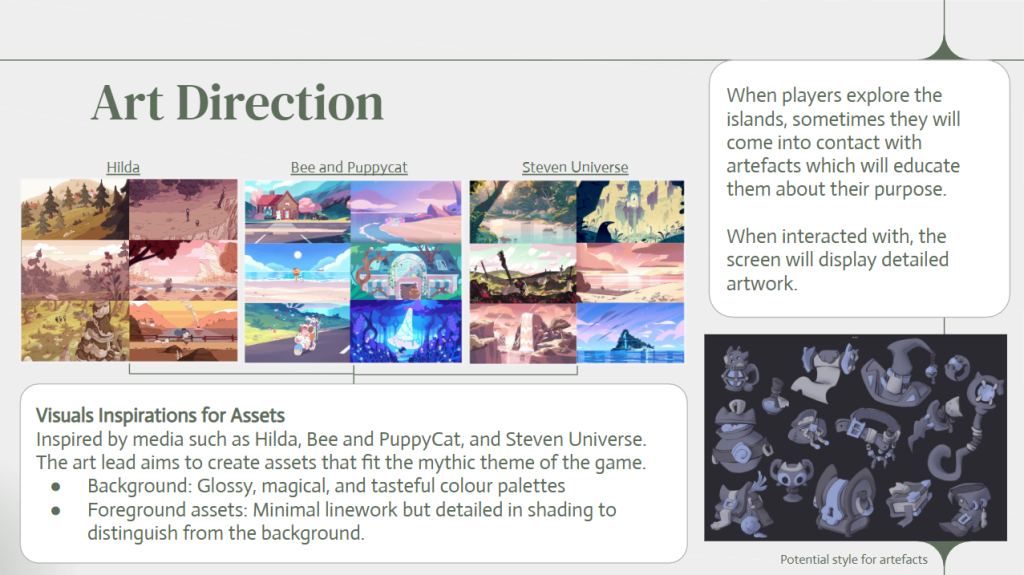
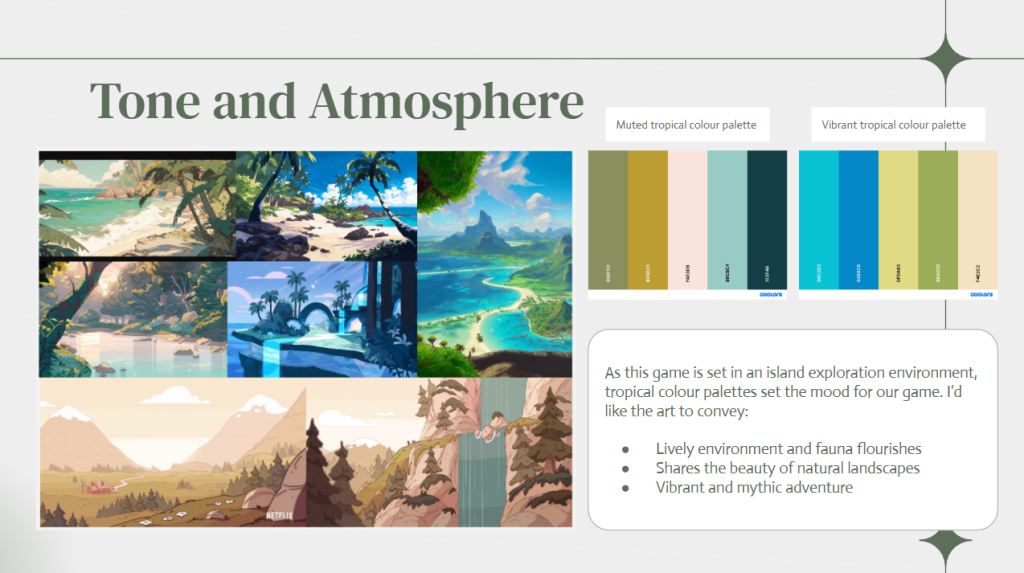

These slides were what Paula – the game’s artist – presented, as they were to do with the art and visuals of the game. So I won’t go over them or explain them in this post.

Lastly, as we knew we would be presenting to some music students, we decided to write a whole slide to do with audio and music. Along with a QR code-type scannable Spotify code, which is linked to a playlist Paula and I made with music we felt would work as a good inspiration for a potential OST:
Link to Inspo Playlist
Feedback
After presenting, Adam gave feedback to anyone that presented and put it up on Slack:
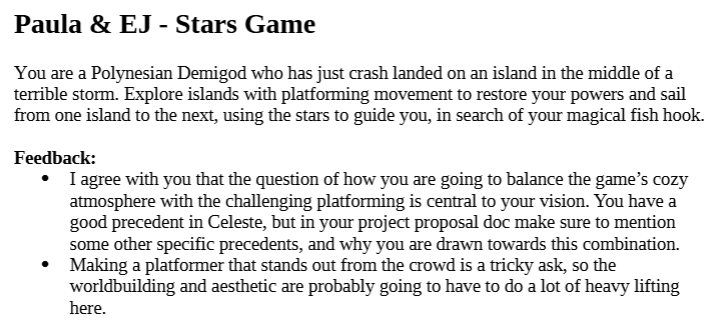
- The addition of challenging platforming sections along with a cosy atmosphere adds a contrast to the game – similar to that of Celeste (However, our game won’t have the same constant difficulties as Celeste). Where the player is given time to reflect on the difficulties they overcame, but how does this translate to our game?
It highlights:- The beauty and aesthetics of the Polynesian-inspired world
- The importance of astronavigation in the game, as a puzzle and as a means of progression
- Other examples of precedents are:
- Don’t Starve -> Combines a distinct hand-drawn art-style with tough management
- Graveyard Keeper -> A charming farming sim with spread sheet levels of difficulties
- To make the our game stand out, as a platformer, I want to reward the player for beating levels as fast as possible:
- Combining the player’s different movement abilities and using them in unison as efficiently as possible
- Adding per-level mechanics or routes the player can choose to use to make the level harder but faster
Leave a Reply