
Games, like any other form of art or media, have the responsibility of understanding the world around them. In this post, I will look at relatively recent games – more specifically indie games as they will be more relevant to this project – and understand how they approach situations or topics that could be seen as issues etc.

Confronting Mental Health
A large part of Celeste, is the storyline of the main character (Madeline) coming to the magical mountain Celeste as a ‘get-away’. But throughout her ascent to the top, she is confronted with a physical manifestation of her anxiety, self-doubt and depression. At first, it acts against Madeline and her climb to Celeste’s peak – but by the end of the game, the other ‘Part of Her’ becomes a crucial ally required to reach the top.
This theme is not only a part of the story, but also embedded mechanically in the game, ‘Part of Her’ chases Madeline in certain levels, either as herself or an after-image forcing the player to play quickly. However, failure isn’t a punishment that blocks the player from reaching the win state – but a roadblock that they can overcome.
Bureaucracy, Morality and State power
Paper, Please takes place in a fictional dictatorial state where the player acts as border control personnel whose sole responsibility is accepting or denying people into their country. There are clear themes of propaganda, war and racism throughout the game – themes often avoided because of the negative connotations they may carry. But should definitely be highlighted as issues in the current day, as media is more accessible than ever that also means there are more people who are willing to try and cover up atrocities that need to be changed.
When playing, the player is constantly forced through situations that require ethical compromise – giving up money to support their family to go against the war to make change to a truly corrupt system. Whether it be uniting families, helping asylum seekers or even helping a secret organization overthrow the corrupt government. Although it is just a game, it highlights real world issues and the struggles of many people across the world.
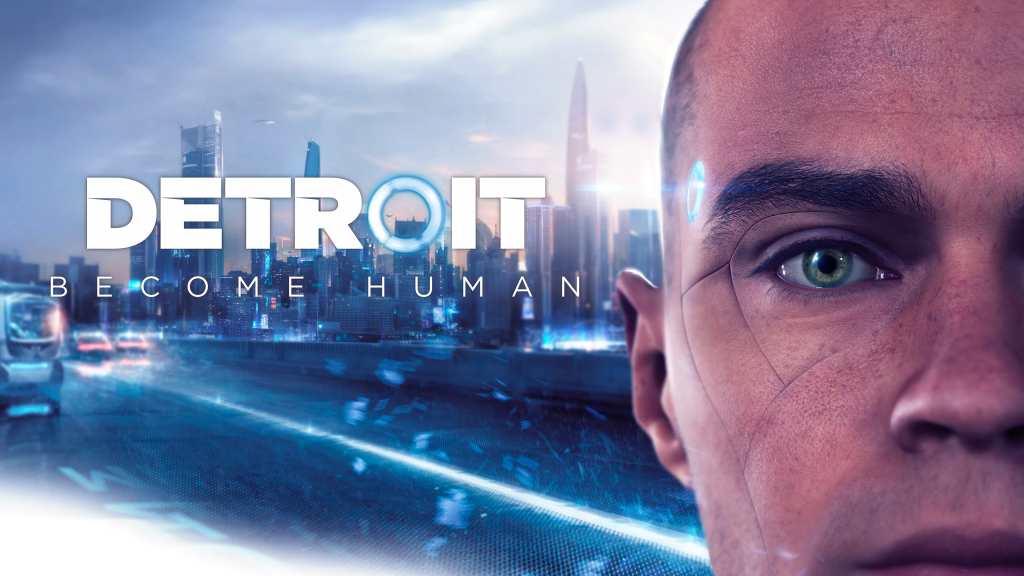
In Detroit Become Human, you play as an android – essentially a humanoid-robot – that gains consciousness and grapples what it truly means to be human. Ultimately, through the player’s decisions, the player determines whether androids gain freedom or face extermination.
The use of android in the game is widely accepted as an allegory for racial and social oppression in the modern world, mirroring real-world racism, slavery and civil rights struggles throughout the game’s story. Examples of which being segregated transportation – clearly heavily inspired by historical discrimination.
However, whether or not the game’s execution was effective or heavy handed is highly debated. Many believe that using androids as an allegory for real-world oppressed and marginalised groups was not an effective approach. Additionally, simplifying such complex issues into such decisive good or bad choices lacks exploring the morality of the reality. As game designers, such things should really be taken into account when designing games and their narratives.
How will this effect my game?
My game, inspired by Polynesian culture, needs to be fully researched, things like: The mythology, traditions and everyday life that could infer my game. However I choose to use this research, it needs to be portrayed in way that is neither inaccurate or unfavourable.
As Paula has a Tongan childhood friend, we will be working closely with him to do our primary research throughout the entirety of the project.
Leave a Reply