
We invited guest lecturer Venezia Georgieva to give a talk on Game Systems, focusing on Game Design Pillars, Game Loops, and Meta Game Systems. The lecture explored how system design shapes player experience and supports both moment-to-moment gameplay and long-term engagement.
Game Design Pillars
Game Design Pillars represent the core values and design intentions of a game.
Game design pillars are typically limited to three to six key concepts, each defined by a concise title and supported by one to two sentences of explanation.
They are intended as internal development goals rather than player-facing statements, allowing the pillars to be flexibly refined and adjusted as the project evolves through iteration.
Game Loops
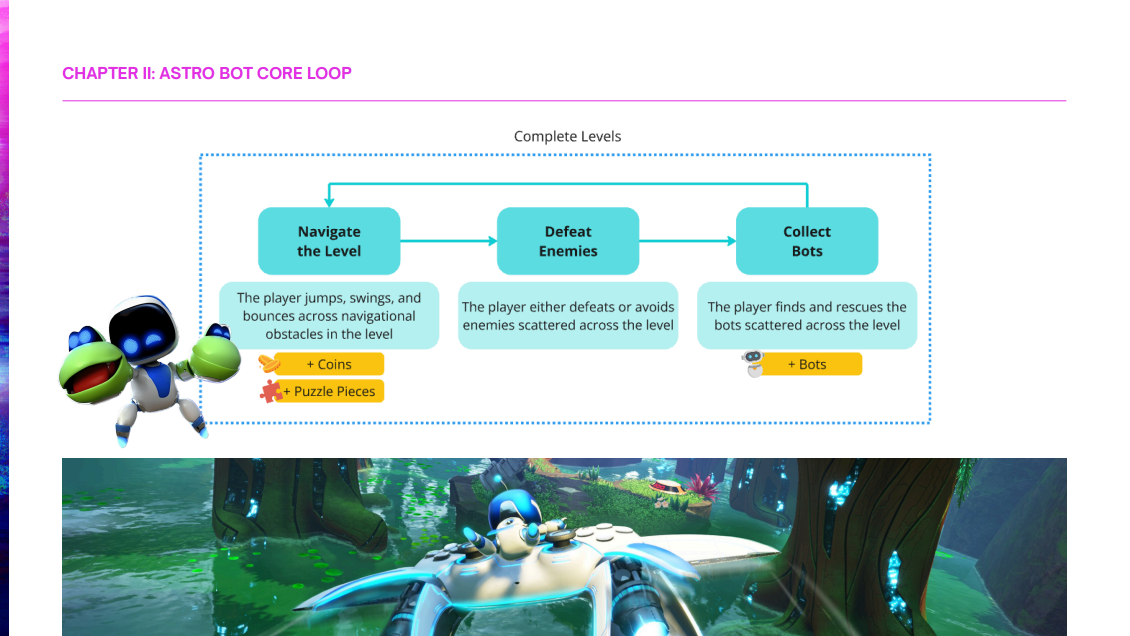
Core Game Loop
The core game loop focuses on repetitive actions during the active gameplay process, such as player movement, combat, and attack. These cycles form the basis of the game’s real-time experience and interaction.
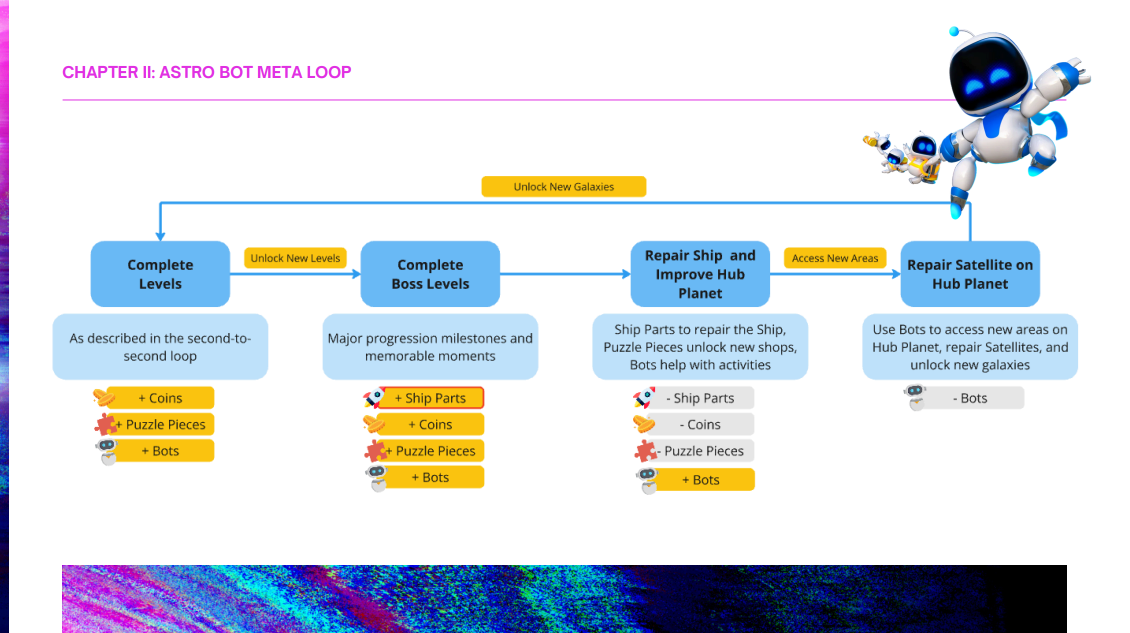
- Meta Game Loop
The operation cycle of the meta-game loop is longer. It includes long-term goals such as progress systems, upgrades, and unlocking mechanisms. This cycle helps players maintain their long-term enthusiasm for the game by rewarding continuous gaming, learning, and improvement.
Loop Duration
- Second-to-Second loops
focus on constant player input and immediate feedback, such as movement and combat actions. - Minute-to-Minute loops
relate to short-term goals and incremental progress within a session. - Hour-to-Hour loops
support long-term objectives, including major unlocks, narrative progression, and system expansion.
Meta Game Systems
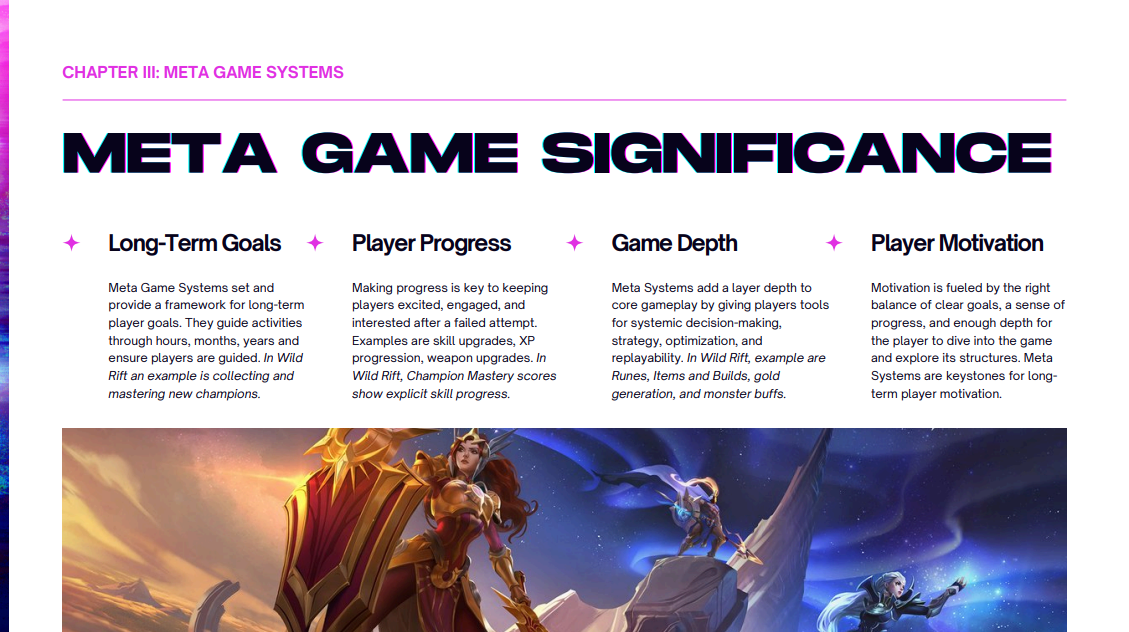
Meta game systems address the question of why players continue to play a game over time. They are designed to:
- Provide players with clear long-term goals
- Offer consistent progress feedback
- Maintain long-term motivation
Using Wild Rift as an example, the lecture highlighted how systems such as champion unlocks, rune systems, and itemisation enhance strategic depth and long-term progression without changing the core gameplay mechanics.
Group Task
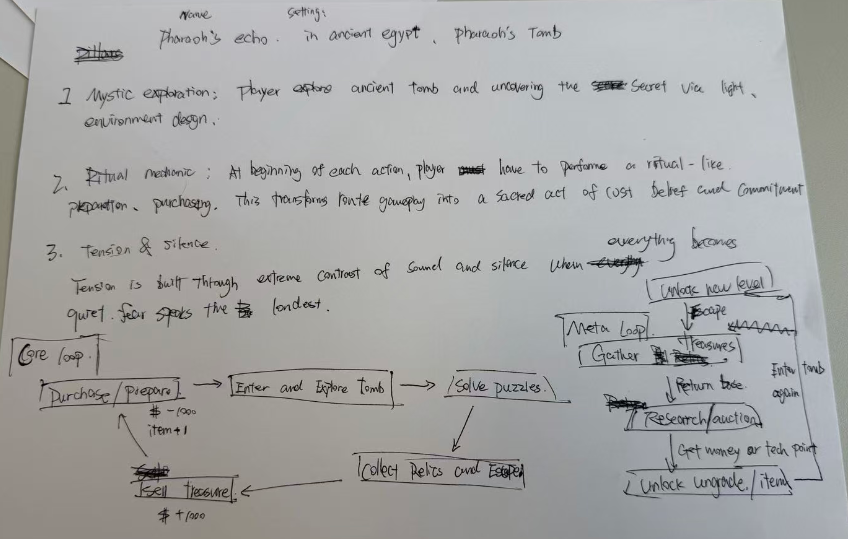
As a group, we decided to use my game concept as the basis for developing the game design pillars and mapping out the core game loop.
This allowed us to ground the discussion in a concrete project rather than an abstract example. In addition, I began considering how a potential meta game loop could support longer-term progression and player motivation within my game.