
This week’s sessions focused on Art Bible development, concept art, and character design, with an emphasis on visual consistency and communication.
Art Design ≠ Technical Skill
Effective art design is not only about technical skill, but about understanding and using visual language to communicate meaning.
Semiotics as a Visual Foundation
Visual design works through signs.
Signifier refers to visible elements such as colour and shape, while Signified refers to the meaning understood by the player.
Purpose of an Art Bible
The Art Bible helps align team understanding and maintain visual consistency across the project.
Visual Pillars
Visual pillars work alongside game design pillars and help guide major visual decisions.
Moodboard vs Reference Board
Moodboards communicate general mood and tone, while Reference Boards define specific and more practical visual rules.
3 Core Elements of Character Design
In character design, color, shape and narrative must complement each other. If any of these elements is missing, the character will appear vague or incomplete.
Colour
The application usually follows the three-color rule, that is, using one main color, one auxiliary color and one accent color.
Character
The image should comply with the contour test and be recognizable even when presented in a simple three-dimensional shape.
Narrative
It is presented through visual details such as clothing, carried items, scars and tattoos, which reflect the background and experiences of the characters.
Group Task
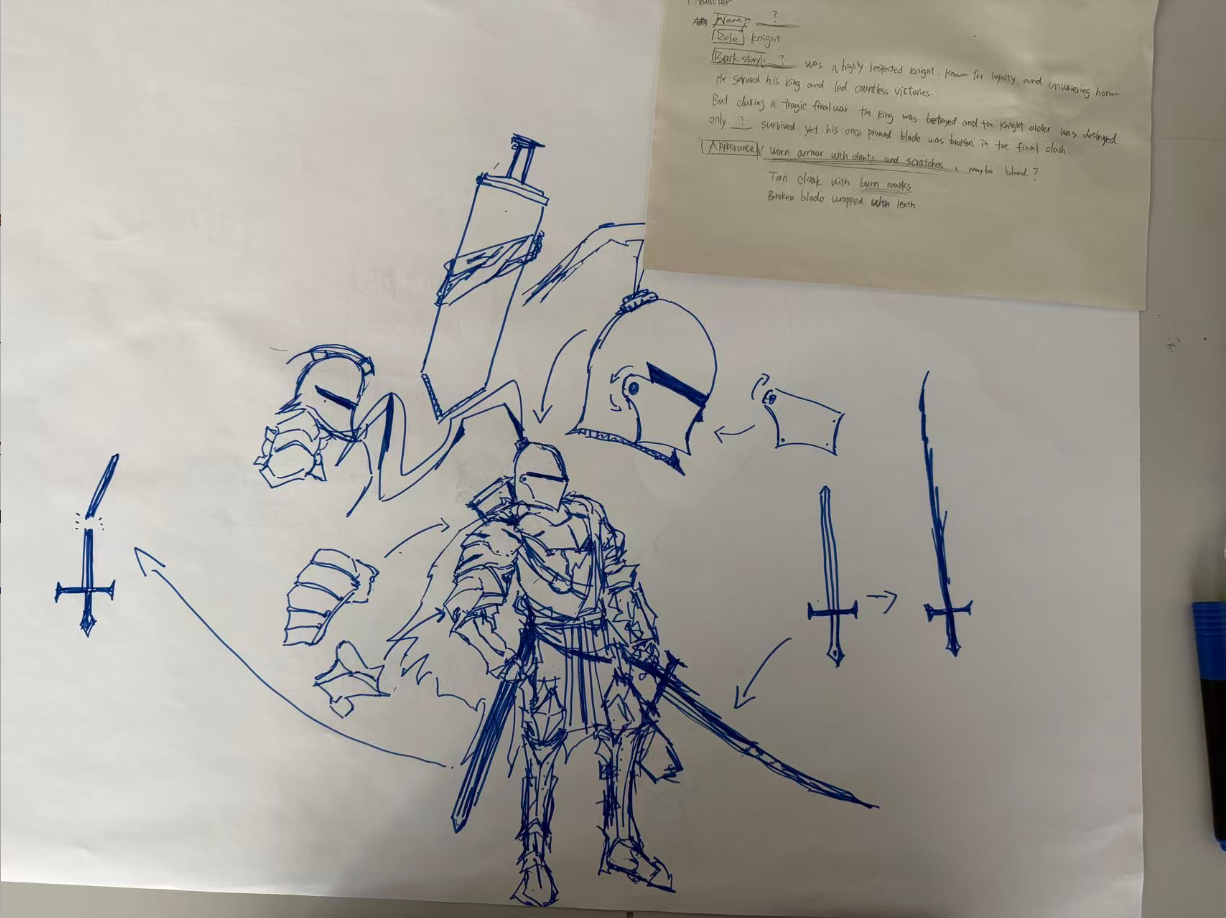
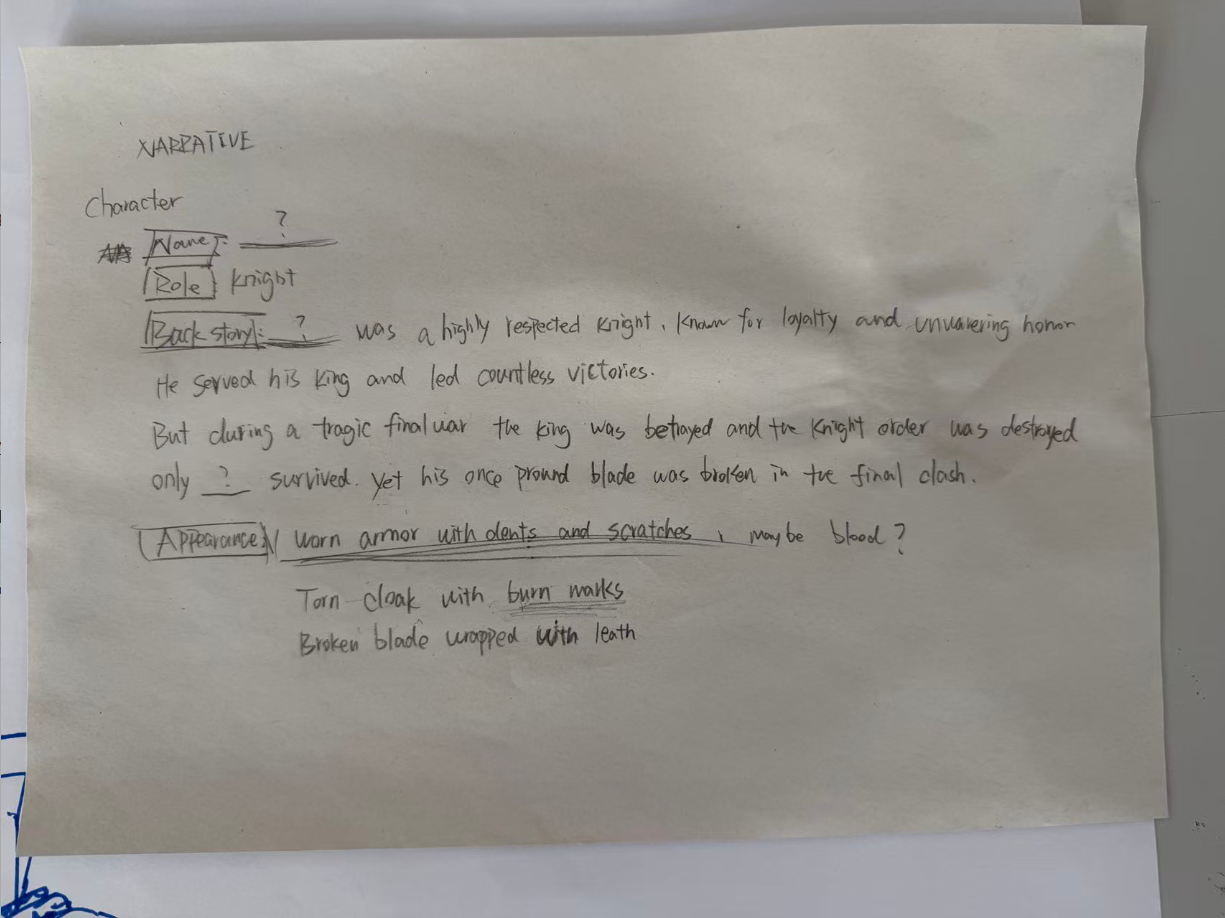
During the group task, we designed a character based on the principles discussed in the session. The character is a knight whose visual design reflects his narrative background. His worn armour, torn cloak, and broken blade suggest past battles, loss, and survival, helping to communicate his history and identity through visual details rather than exposition.