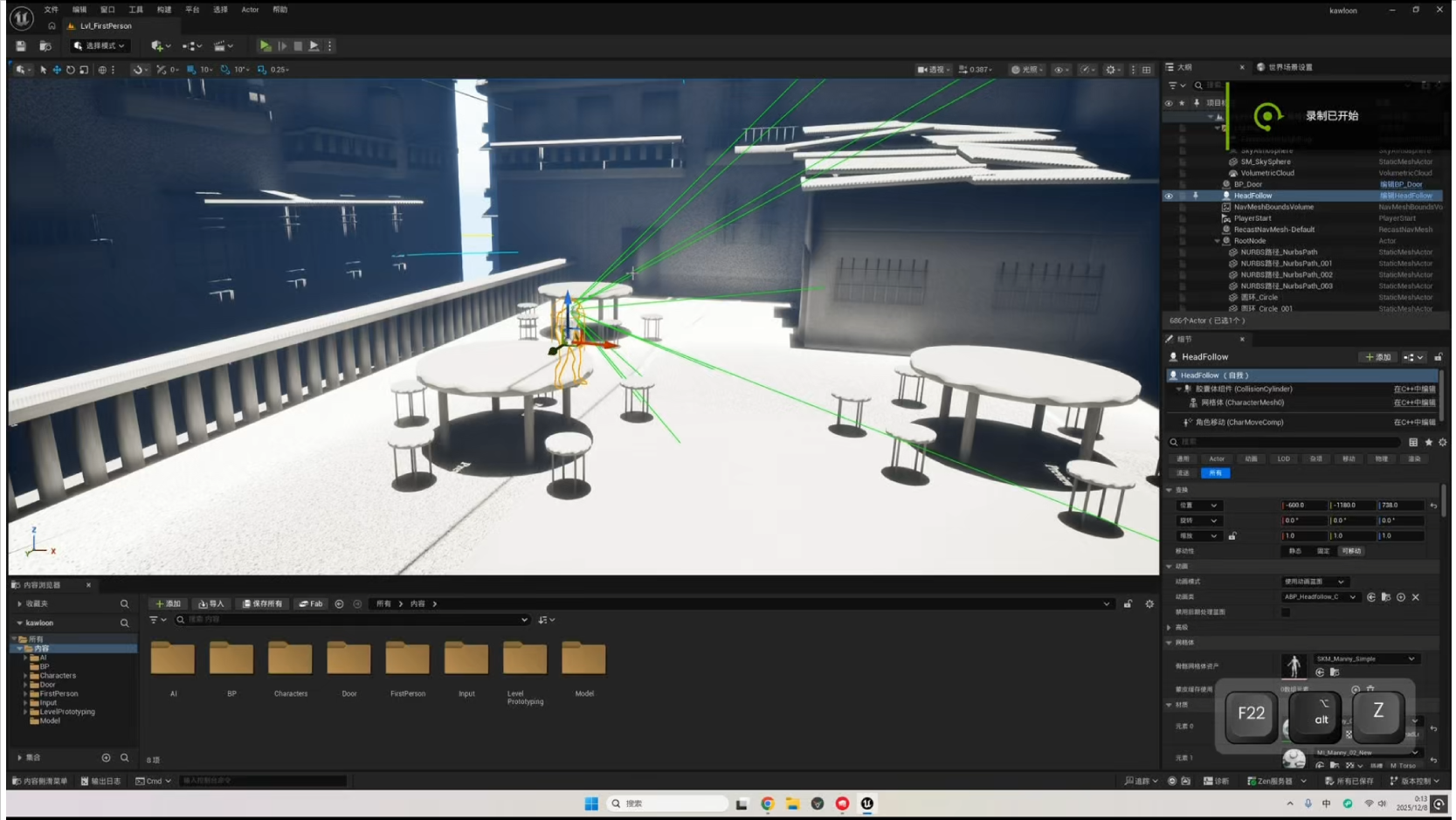
On Monday, the session focused on market research and audience profiling for game projects.
Who Might Play Your Game
The lecture emphasised designing for a specific audience rather than a broad player base. This involves considering factors such as age, platform, and player background, as well as understanding what this group values most in a game experience.
Making a Target Player Profile
Creating a clear target player profile was presented as an essential step in development. Data-driven platforms such as SteamDB can be used as references to analyse factors including playtime, pricing, platform, play habits, and preferred styles, helping ground design decisions in real player behaviour.
Identifying a Market Gap
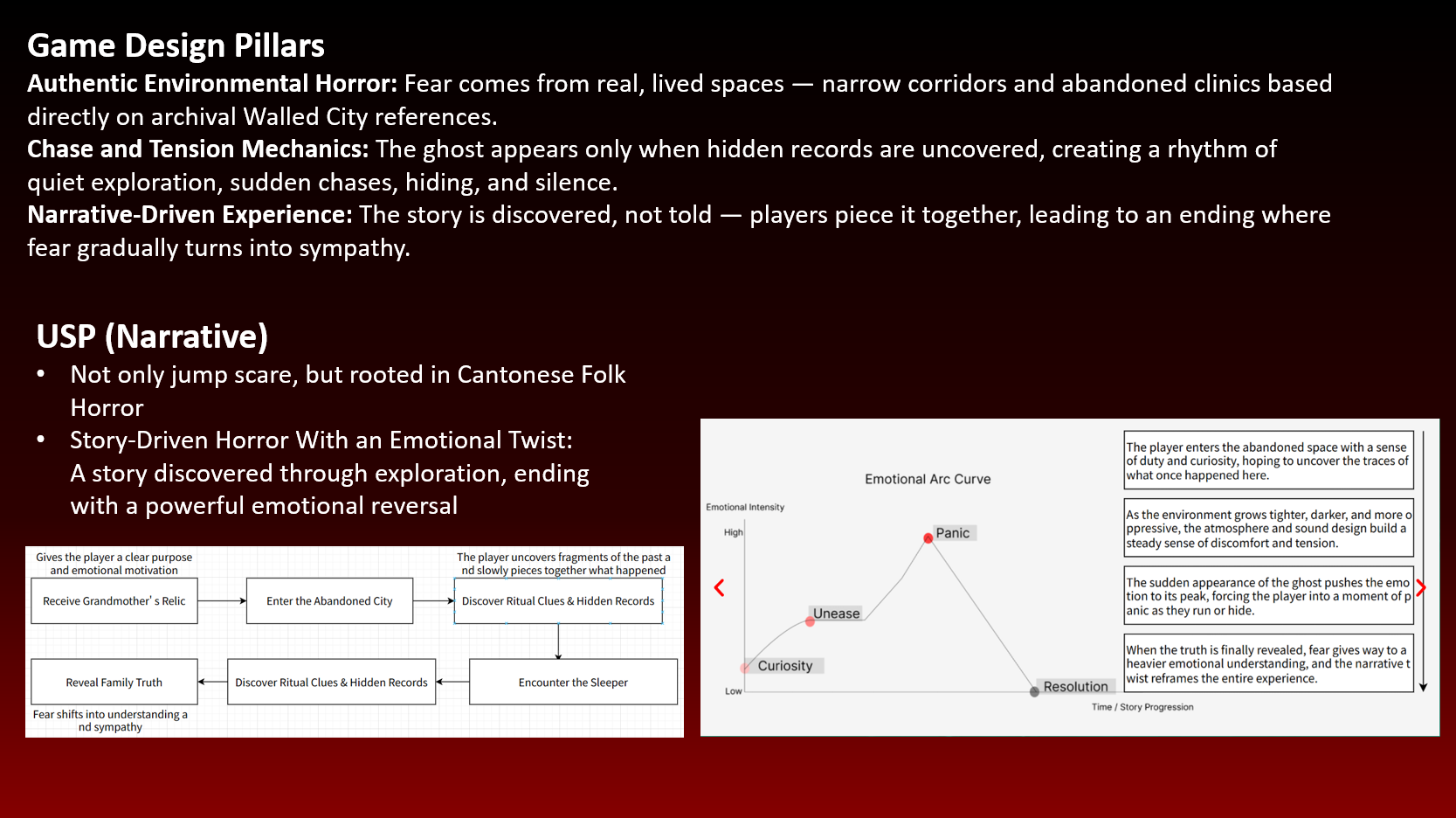
Designers were encouraged to clearly define their game’s unique selling point (USP) by analysing how it differs meaningfully from existing products. This includes identifying clear contrasts in experience, audience, or design approach compared to similar titles on the market.
Poster Design
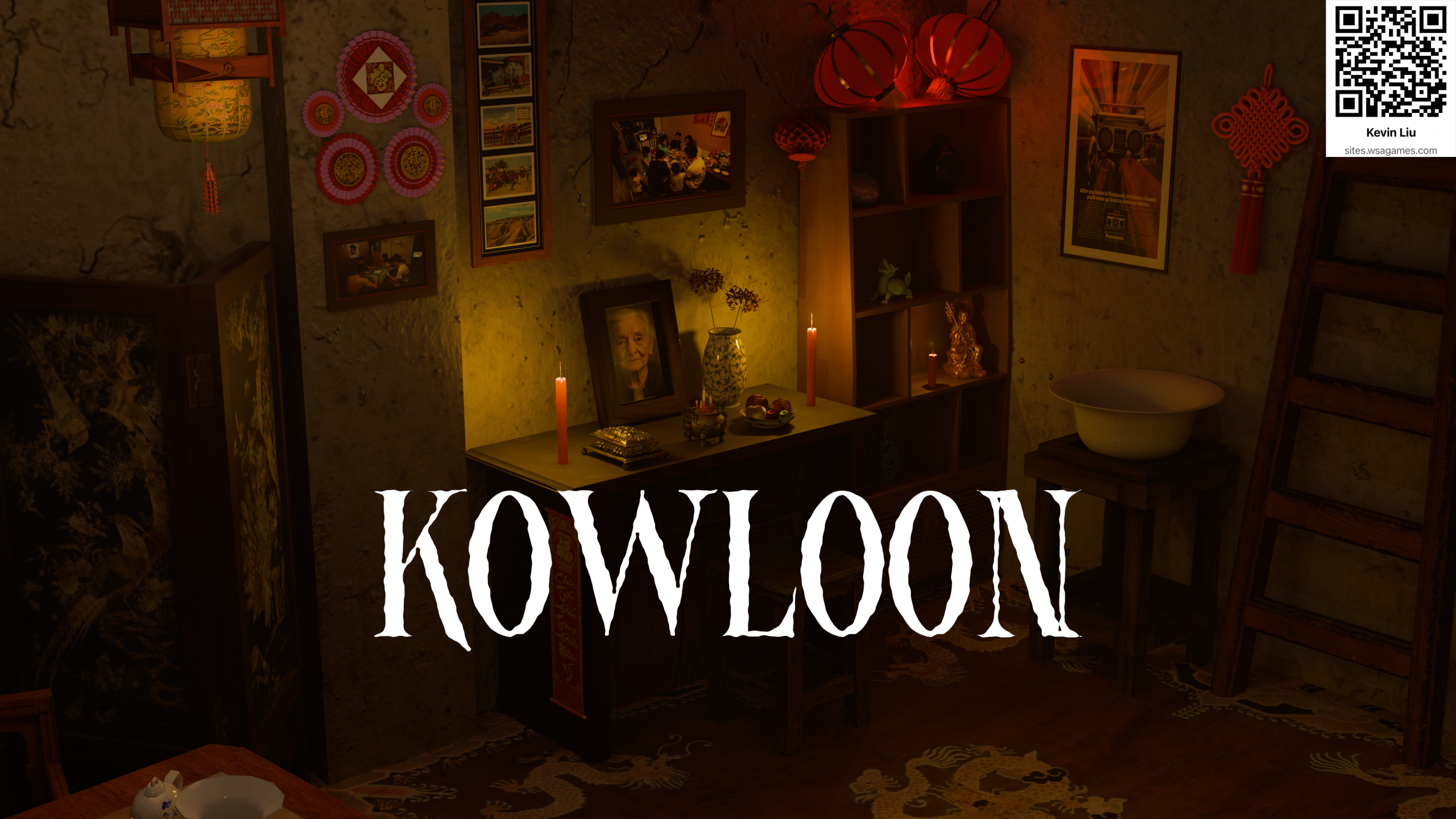
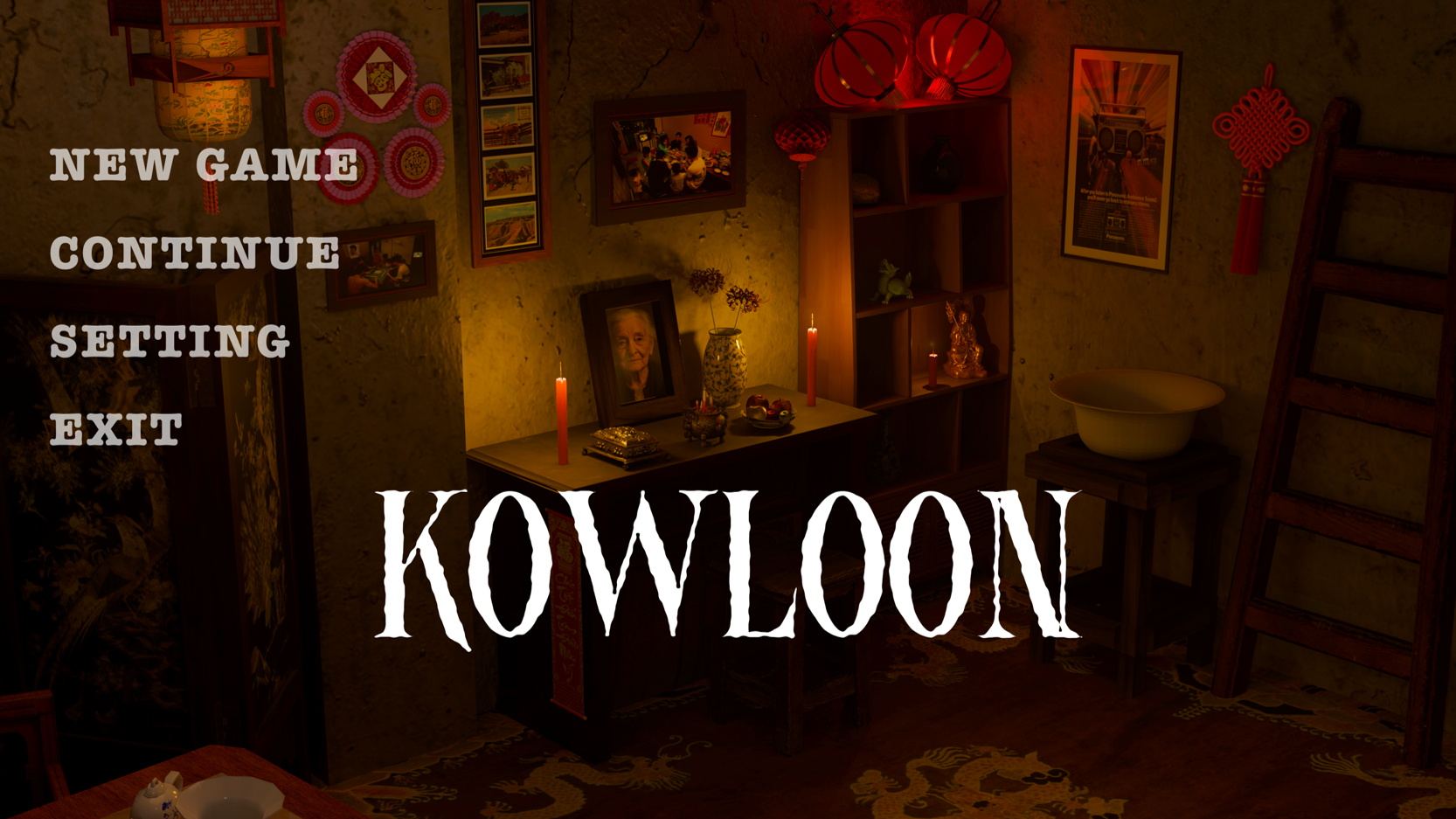
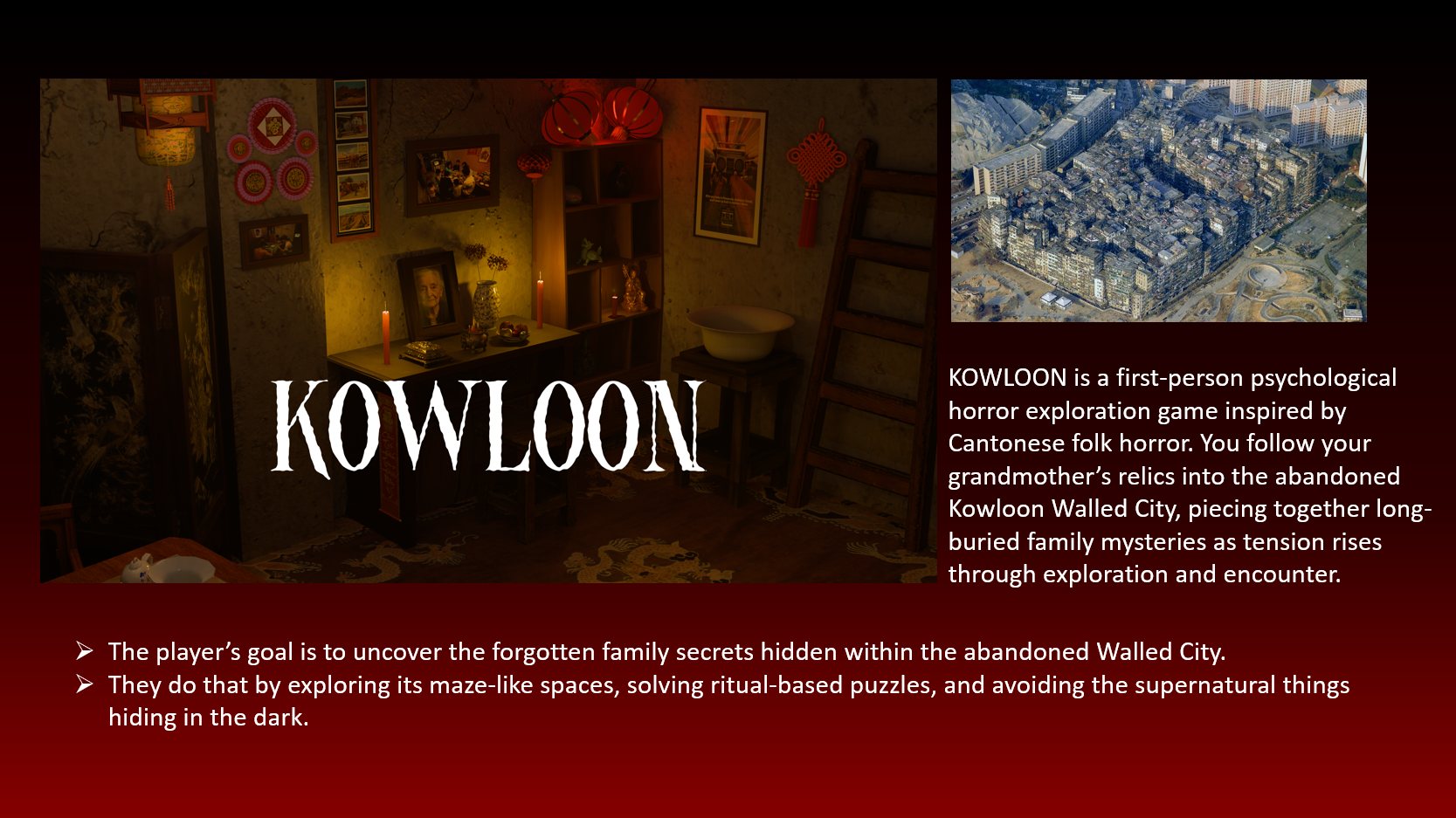
For the final presentation, I designed a poster to communicate and promote the core idea of my GDD. Rather than creating a purely symbolic or abstract image, I chose to base the poster directly on the first level of my game, The Funeral.
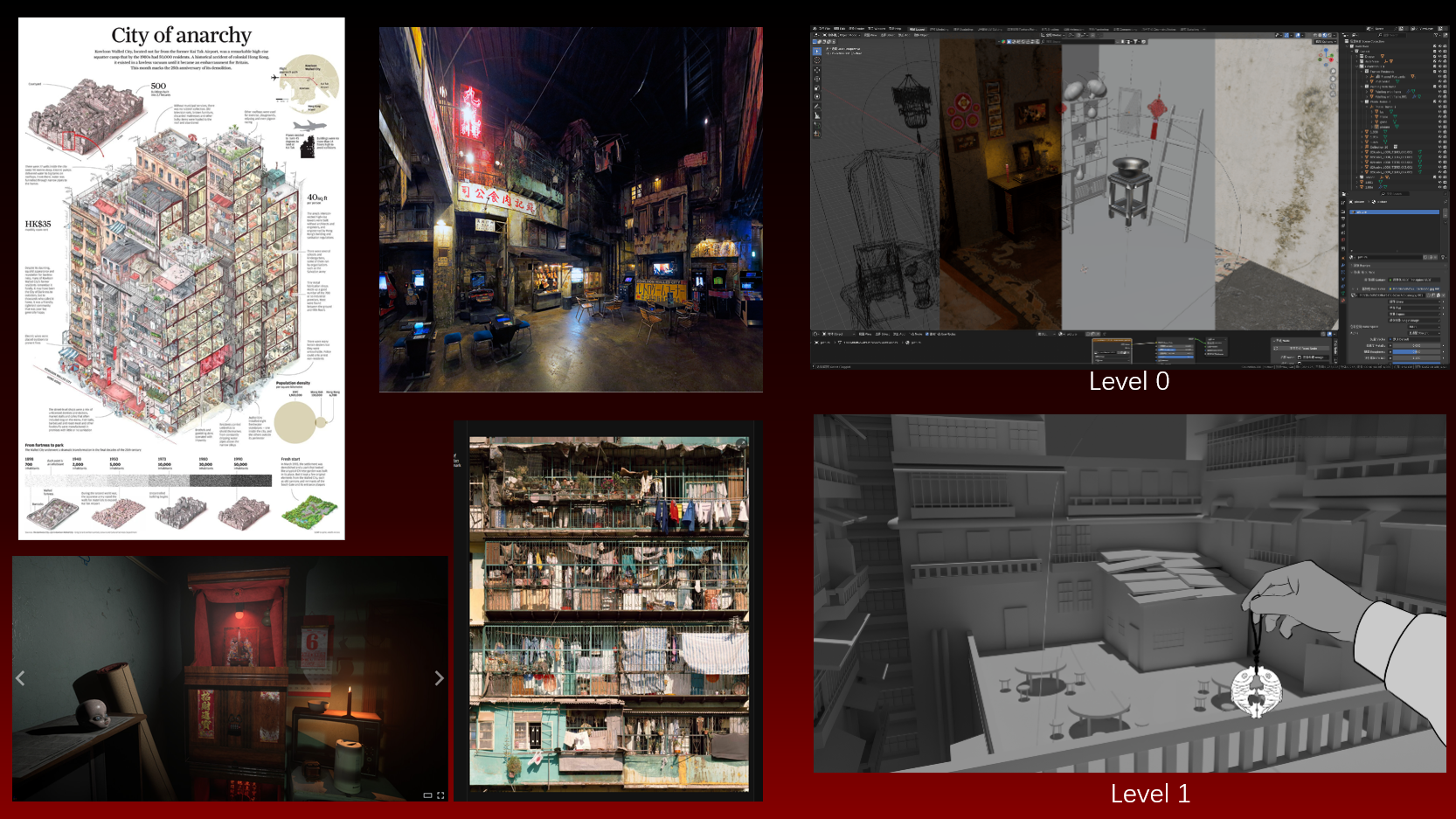
The scene shown in the poster is not only a visual hook, but a playable space within the game. It represents the player’s first point of entry into the world and establishes the tone, cultural context, and emotional atmosphere of the experience. Elements such as lighting, spatial composition, and environmental props were carefully arranged to reflect themes of memory, domestic intimacy, and quiet tension, which are central to the game’s narrative direction.
Further details of the poster development, including visual iterations and design decisions, can be found in the POSTER DESIGN section.
Final Presentation