

History
Panem et Circensus
The circus originated in Ancient Rome – in fact even the word “circus” is Latin. It referred to a big outdoor stadium in which chariot races, staged battles, gladiator battles against both people and animals, and equestrian shows took place to entertain the masses.
Aediles, a government magistrate in the Roman Republic, were in charge of organising games, along with other responsibilities that maintained the upkeep of their city. Several games were hosted each year: the Ludi Romani, the Ludi Plebi, and the Megalesian, Floralian, and Cerealean Games. Many festivals and games were held year-round to give the common people something to look forward to. This likely stems from the founder of Rome and its first Emperor, Augustus, who, during his reign had 65 days of shows per year – almost 2 per week!
So the Roman people demanded entertainment, and the Republic of Rome was all too happy to give it to them. They were key in order to win the electoralate’s approval, and aediles competed to see who could put on the biggest spectacle to gain higher office. As a political weapon, a grand feast and a good show were unbeatable to garner public approval. Costs for these games were high, and many an aedile went bankrupt trying to fund a good game – but if they managed to gain office, it would all be worth it.
This is where the famous phrase “Panem et Circensus” is coined from. Juvenal, as he writes in his famous Satires (specifically Satire X), criticises this practice, implying these services are only a pallative and a distraction from real government issues; and criticises more specifically the common people who care only for their bread and games over any wider concerns. Whatever criticism may be levied of society in this time, “Panem et Circensus” were a political tool for popularity to get public votes, and helped lighten the mood of the Roman Republic.
Jasiński, J. (n.d.). Entertainment in ancient Rome «IMPERIUM ROMANUM. [online] Imperium Romanum. Available at: https://imperiumromanum.pl/en/roman-society/entertaiment-in-ancient-rome/.
The Circuses of Ancient Rome:
Circus Maximus
Circus Maximus was the first circus built – so ancient it pre-dated the founding of the Roman Empire – by the Etruscan King of Rome, Lucius Tarquinius Priscus in 6th century BCE. Made for primarily chariot races, the track is long, large, and rectangular rather than the circular of which a traditional circus conjures to mind.
Julius Caesar later expanded Circus Maximus in 50BC, so it became the largest circus in the Roman Empire, able to host 250,000 spectators – more than 4x the Colosseum. It was used to host the Ludi Romani, a 15-day festival held in honour of Jupiter, God of Sky and Thunder (equivilent of the Greek God, Zeus), as well as a variety of other festivals.
When it wasn’t being used for games, Circus Maximus hosted a vibrant marketplace around its stadium so that it became central to an enormous commercial complex providing spaces for butchers, bakers, bars, betting shops, souvenir shops, laundrettes, and prostitution. This bustling atmosphere caused The Great Fire of 64AD which destroyed not only Circus Maximus, but two thirds of the Imperial Capital too, as it raged for nine days.
Circus Maximus was almost entirely reconstructed, but very little of it remains now due to lack of proper maintainance, and proximity to the Tiber river, which infrequently floods. But it’s still used for mass gatherings and concerts as an enormous open-air space!
Roman Circuses: Arenas for Chariot Racing (1986) by John H. Humphrey
Meddings, A. (2020). Circus Maximus: Your Essential Guide – Carpe Diem Tours. [online] Carpe Diem Tours. Available at: https://carpediemtours.com/blog/circus-maximus.
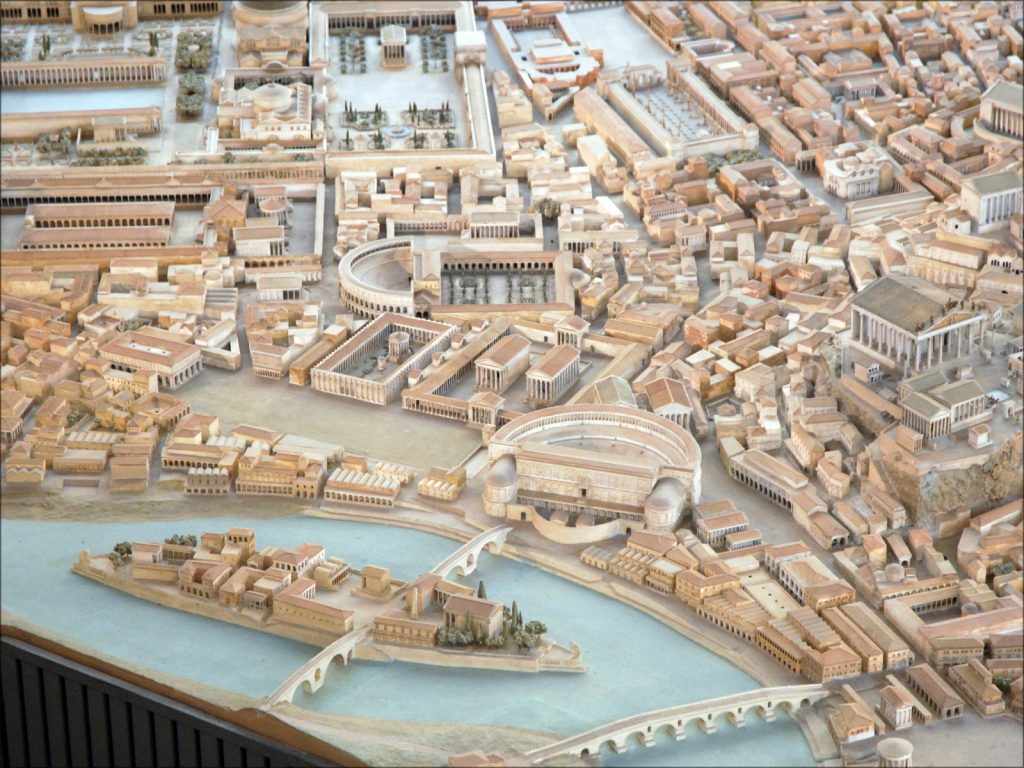
Circus Neronis
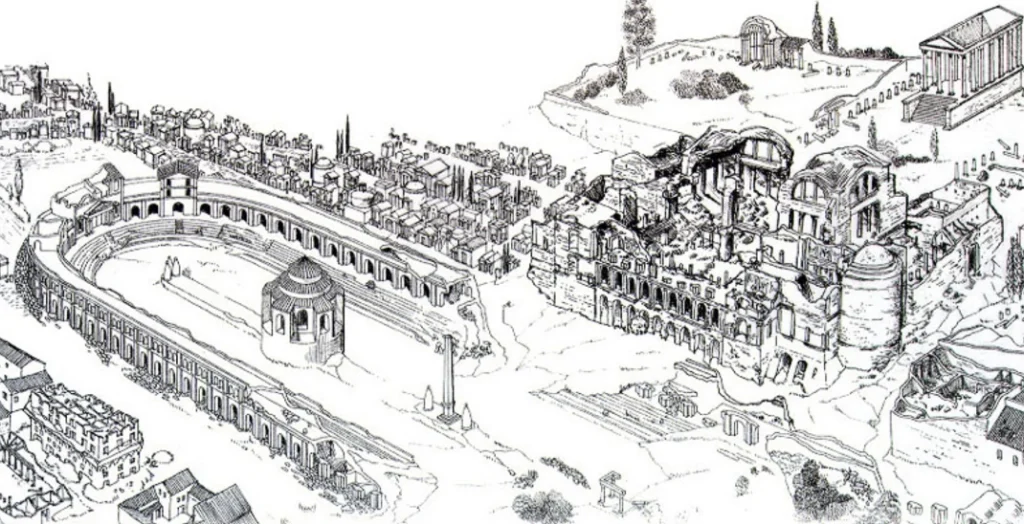
Circus Neronis, or the Circus of Caligula, was a circus built under Caligula and Claudius near Vatican City, used for chariot racing and, most famously, for the public persecution of Christians as written by Tacitus. Saint Peter was said to have been executed there, along with hundreds of other Christians, who were burned alive for their beliefs.
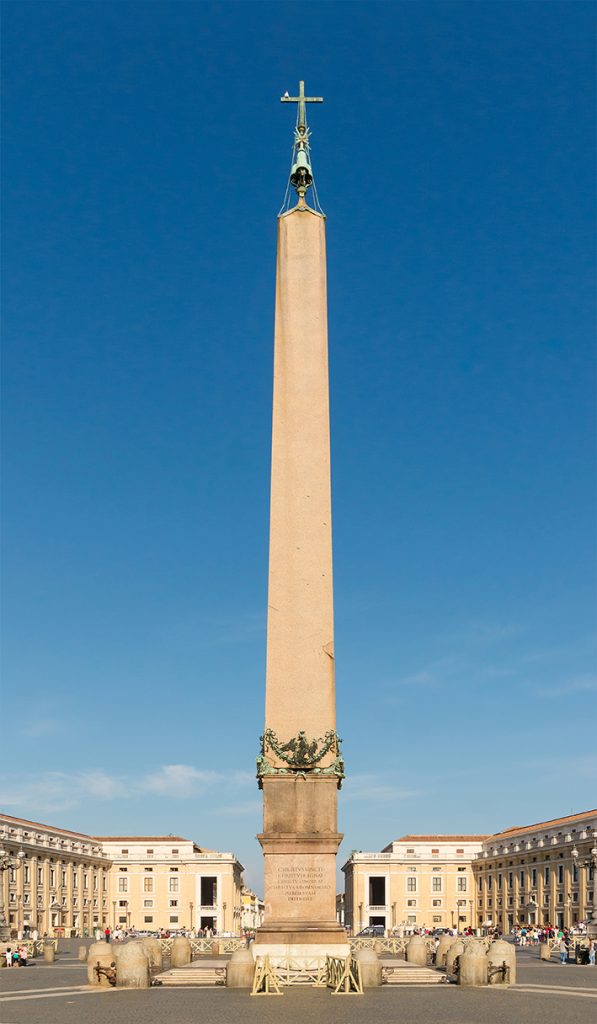
It was decorated with ornate obelisks, statues, and columns, most impressive of which was a red granite obelisk brought from Egypt in 37AD, which was 84 foot tall, one of the largest to be taken from Egypt. This was placed in the centre of the spina, or the long wall in the middle that divided the racetrack.
By the middle of the 2nd century, Circus Neronis had been abandoned, likely due to the atrocities committed there. It remained this way until 326AD when Emperor Constantine built the first basilica to St. Peter on this site, as the Roman Empire had converted to Christianity in the few hundred years since.
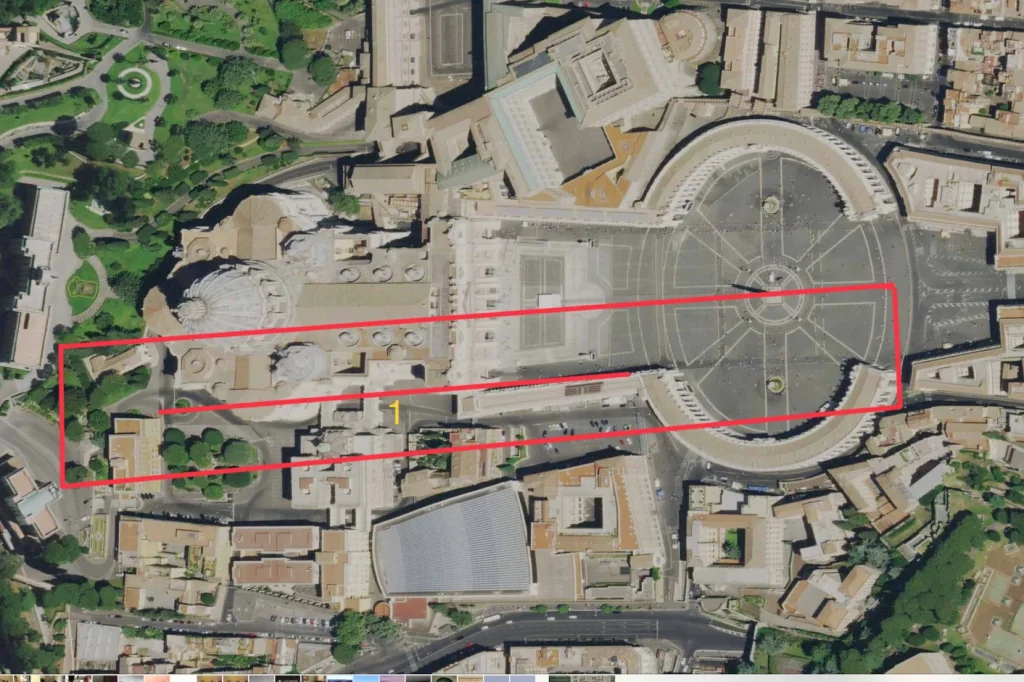
The Circus of Nero is now long buried, occupied now by St. Peter’s basilica, the Piazza San Pietro, and buildings of the Vatican.
Current, R. (2023). The Circus of Roman Emperor Nero: Where Saint Peter was martyred. [online] Still Current. Available at: https://stillcurrent.blog/2023/11/09/the-circus-of-roman-emperor-nero-where-st-peter-was-martyred/.
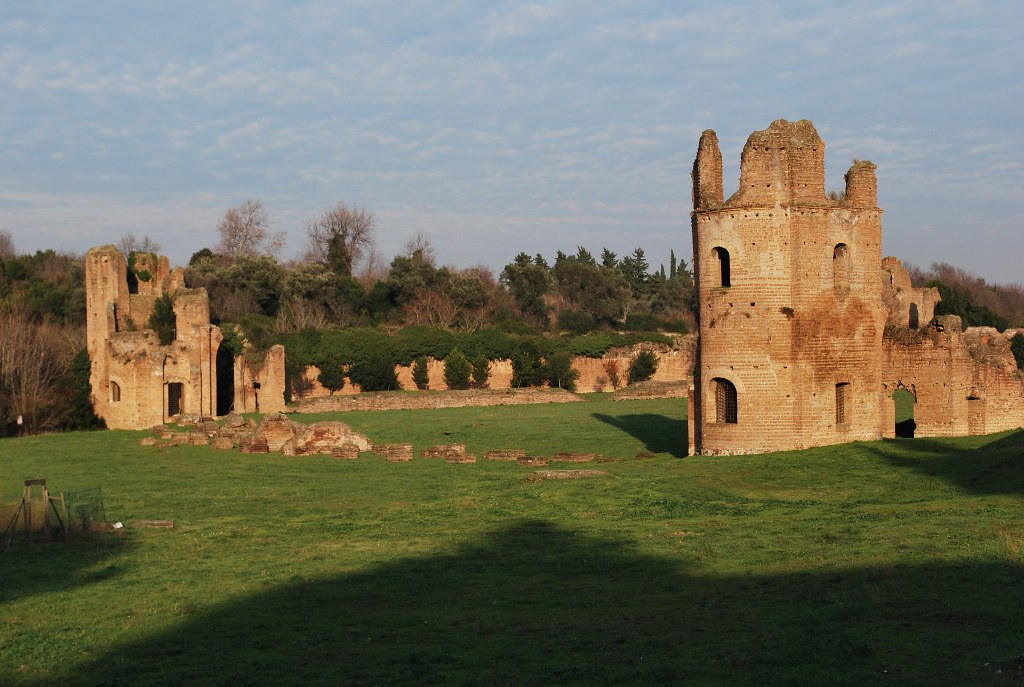
Circus Agonis
Circus Agonis, or the Stadium of Domitian, was built in 86AD as Rome’s first permanent venue for competitive athletics (Domitian’s Capitoline Games). Its name stems from the Latin, “in agones”, meaning the site of competitions.
While primarily for games taken from the style of the Greek Olympics, for a few years following fire damage to the Colloseum in 217AD, it was used for gladiator shows, and, according to Historia Augusta’s account of Emperor Elagablus, its arcades used as brothels.
The stadium fell out of use due to various economic crisises of the later Imperial and post-Imperial eras. Additionally, despite abandonment, significant portions of the circus survived until the Renaissance, upon which it was looted and mined for new building materials.
History Hit. (n.d.). Circus of Maxentius. [online] Available at: https://www.historyhit.com/locations/circus-of-maxentius/.
Domiziano, A.A.S. di, Sanguigna, V. di T., Sanguigna, 3 V. di T., N, 3 41° 54’ 1 0764 and E, 12° 28’ 21 0648 (2017). The Stadium of Domitian Archaeological Area. [online] Turismo Roma. Available at: https://www.turismoroma.it/en/places/stadium-domitian-archaeological-area.
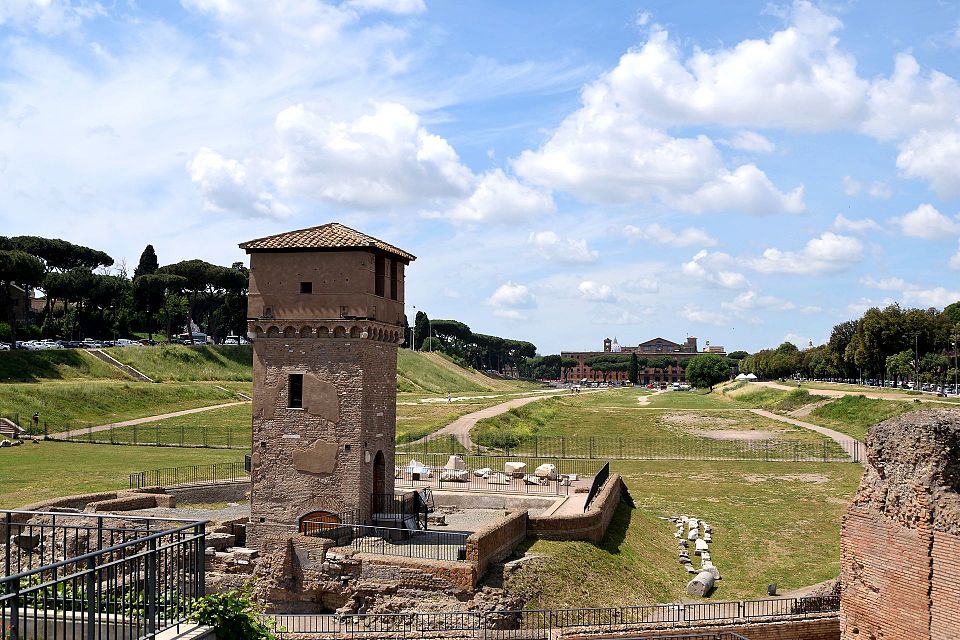
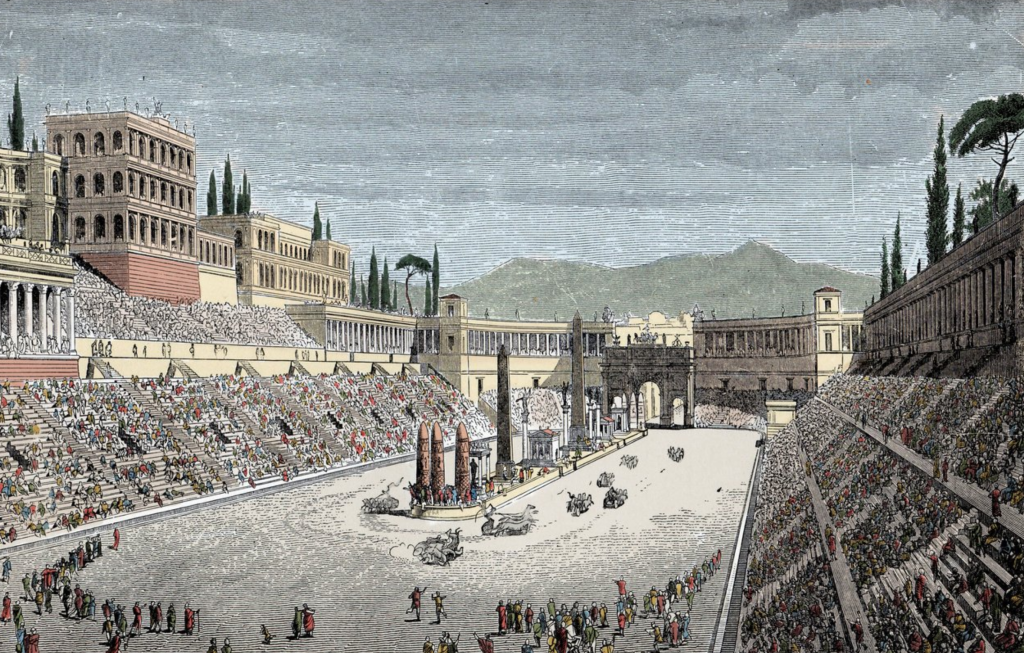
Circus Flaminius
Second of importance was Circus Flaminius, made in 221AD by Gaius Flaminius across the Flaminian Fields, which was already a popular site for games by the time of the official circus “construction”.
Circus Flaminius was less of a permenantly constructed building as it was a big open space where stands would be put up and taken down as needed. This space was slowly encroached on throughout the 2nd Century, and by the early 3rd, the Circus had shrank to a small piazza in the centre, surrounded by grand monuments and temples to Gods. This piazza was probably paved by Augustus during his reign.
The only games hosted in Circus Flaminius were the Taurian Games (a festival for underworld Gods), and possibly the Ludi Plebeii. It also held ceremonies of Roman triumph, in which Roman generals would publicly celebrate success granted by the Senate. Other than that, Circus Flaminius was used mainly for marketplaces.
Digitalaugustanrome.org. (2014). Circus Flaminius. [online] Available at: https://www.digitalaugustanrome.org/records/circus-flaminius/.
Circus Maxentius
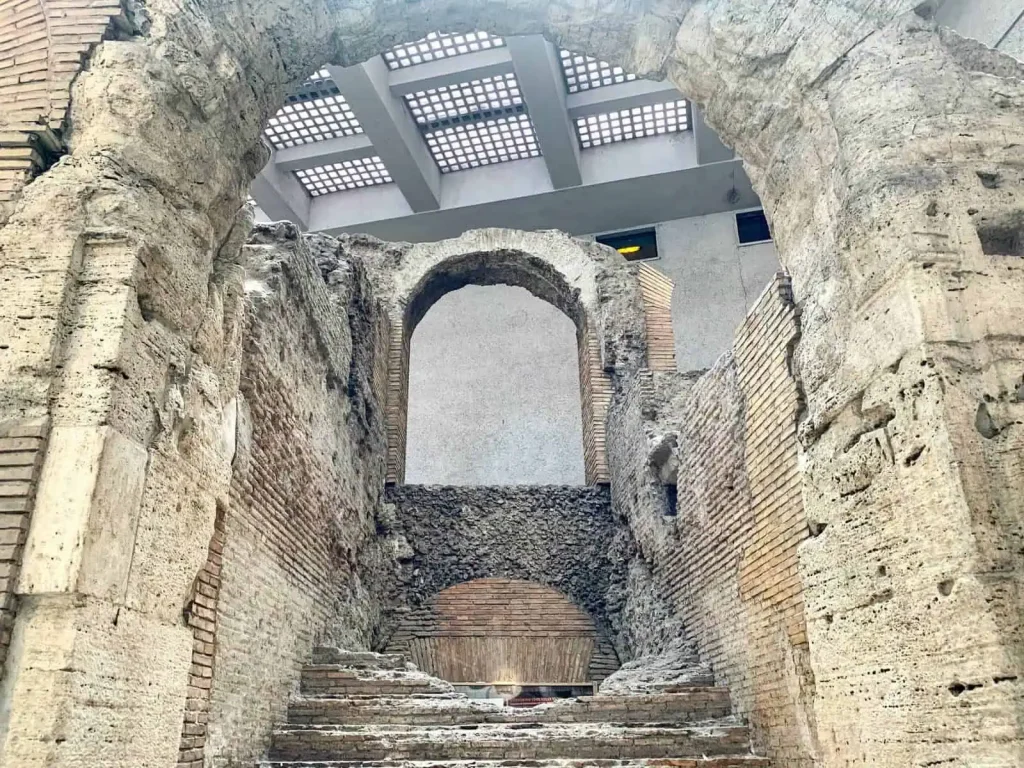
Circus Maxentius is the best preserved circus in Italy, and the basis for all imaginings of the other circuses, alongside old texts, archaology, and geographical clues. Erected by Emperor Maxentius between 306 and 3012 AD, its preservation has largely been due to the fact that Circus Maxentius was hardly used as a circus at all.
Its main useage was a mausoleum for Maxentius’ son, Romulus, who died very young in 309AD. The only games recorded at the site were funeral games for Romulus. The circus, which wasn’t very large with max capacity at 10,000, was a tombstone.
The circus was overtaken by Constantine the Great after his battle against Maxentius at the Battle of Milvian Bridge three years later. Having killed Maxentius in this battle, the Circus would have transferred ownership to Constatine, and likely abandoned.
History Hit. (n.d.). Circus of Maxentius. [online] Available at: https://www.historyhit.com/locations/circus-of-maxentius/.
Modernisation of the Circus
Victorians & Circuses
Circuses would spread and develop over the next hundred years, throughout the 19th century – including an aquatic circus where the arena was flooded with water (not dissimilar to Romans flooding their own areanas for re-created naval battles!). This is when the reputation of the “travelling circus” came to fruition. Circuses travelled across Europe and the USA, despite the difficult conditions, bringing the show to even small towns and villages.
One such circus was Sand’s American Circus, owned by Richard Sands, who was credited with bringing the modern circus tent design to England when his circus first toured there in 1842, and was enthusiastically adopted. This is where we get the red-and-white striped tent from!
https://www.vam.ac.uk/articles/the-story-of-circus#slideshow=58613815&slide=0
Digitalaugustanrome.org. (2014). Circus Flaminius. [online] Available at: https://www.digitalaugustanrome.org/records/circus-flaminius/.
Astley’s Ampitheatre
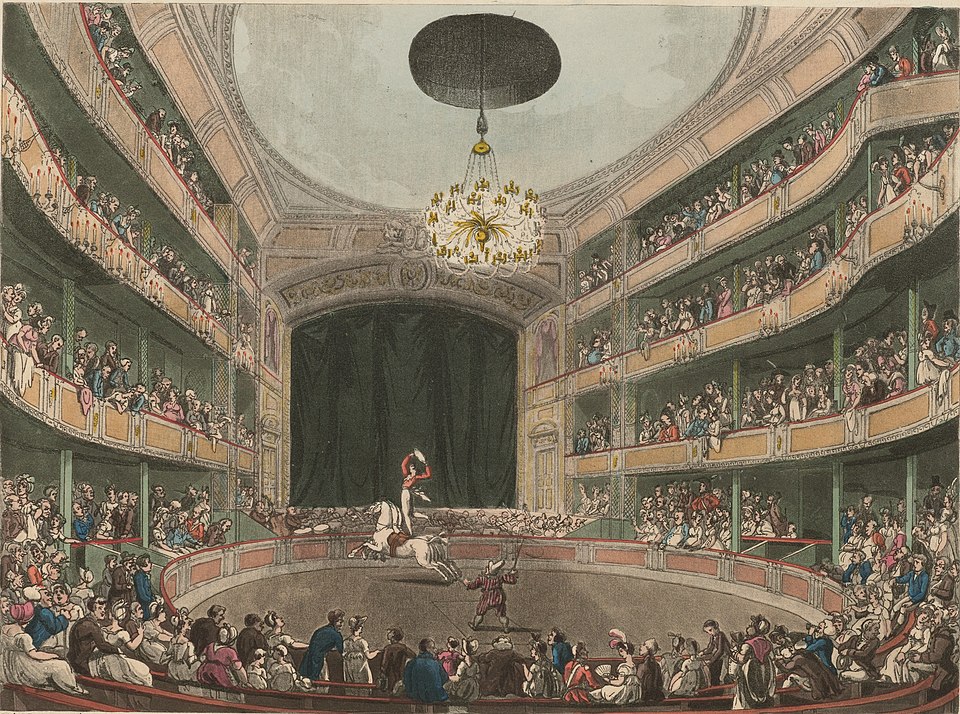
Philip Astley was an equine enthusiast that had a gift for horse-riding. In 1768 he performed in Waterloo London his trick-riding skills, and used a clown to amuse the crowds between his equestrian sequences – in 1769 he opened his riding school, teaching in the mornings and performing in the afternoon. His repotoire of tricks soon expanded, and so too did his wealth and reputation. Soon he had a host of talented equestrian riders, as well as clowns, jugglers, tumblers, tightrope walkers, and dancing dogs. This was the premise for the modern-day circus!
A lot of features of Astley’s Ampitheatre would become staples of the traditional circus through its popularity. For example, performing in a circuler “ring”. While performing in a “ring” did not originate in Astley’s Ampitheatre, it was easier for the audience to keep everything in sight, as well as helping riders use centrifugal force to keep them on the backs of their horses during displays.
For these reasons, Philip Astley is considered the “Father of the Modern Circus”.
Clowns
Clowns are an absolute staple of the circus. They developed from the fool character in the Italian commedia dell’arte, an early form of professional theatre in the 16th-18th century (and those characters were further derived from Greek and Roman fool characters…). Unlike jesters, clowns do not and never served a political purpose, but reflect culture and social customs. “Clown” as a category of someone who dresses up to make others laugh by acting foolish has been a staple in the majority of countries reaching as far back as Ancient Egypt and China.
Gags, Bits, and Business
- Business
- The individual motions the clown uses, often used to express the clown’s character.
- Gag
- Very short piece of clown comedy that, when repeated within a bit or routine, may become a running gag. Gags are, loosely, the jokes clowns play on each other. A gag may have a beginning, a middle, and an end – or may not. Gags can also refer to the prop stunts/tricks or the stunts that clowns use, such as a squirting flower.
- Bit
- The clown’s sketch or routine, made up of one or more gags either worked out and timed before going on stage, or impromptu bits composed of familiar improvisational material
Interludes
Clown Stops or interludes are the brief appearances of clowns in a circus while the props and rigging are changed. These are typically made up of a few gags or several bits. Clown stops will always have a beginning, a middle, and an end to them, invariably culminating in a blow-off. These are also called reprises or run-ins by many, and in today’s circus they are an art form in themselves. Originally they were bits of business usually parodying the preceding act. If for instance there had been a tightrope walker the reprise would involve two chairs with a piece of rope between and the clown trying to imitate the artiste by trying to walk between them, with the resulting falls and cascades bringing laughter from the audience. Today, interludes are far more complex, and in many modern shows the clowning is a thread that links the whole show together.
Menu
- Entrée — clowning acts lasting 5–10 minutes. Typically made up of various gags and bits, usually within a clowning framework. Entrées almost always end with a blow-off — the comedic ending of a show segment, bit, gag, stunt, or routine.
- Side dish — shorter feature act. Side dishes are essentially shorter versions of the entrée, typically lasting 1–3 minutes. Typically made up of various gags and bits, side dishes are usually within a clowning framework. Side dishes almost always end with a blow-off.
Types of Clowns
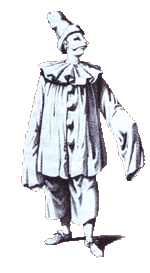
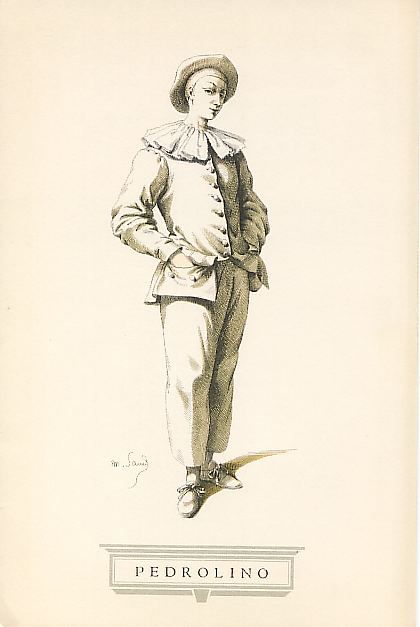
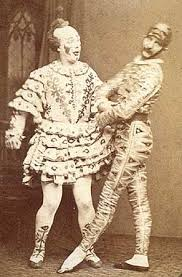
Pedrolino
ROLE:
A comic servant of the commedia dell’arte that possesses a social wit. As a wily slave, their job is to keep the play moving. Takes delight in practical jokes and pranks, and often has to use their wit to get out of punishments others have in store for them.
DESCRIPTION:
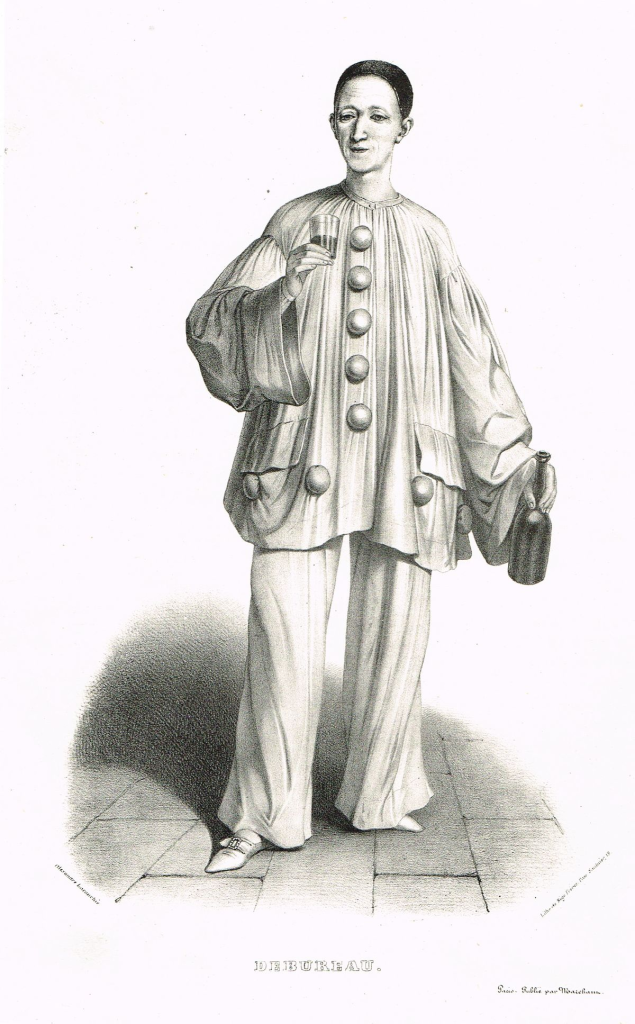
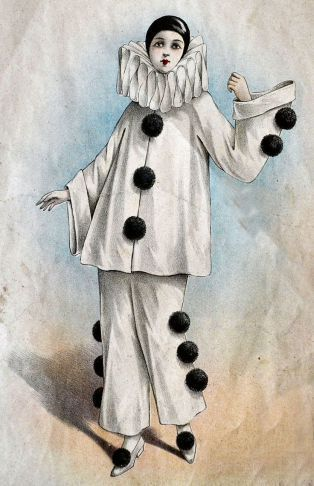
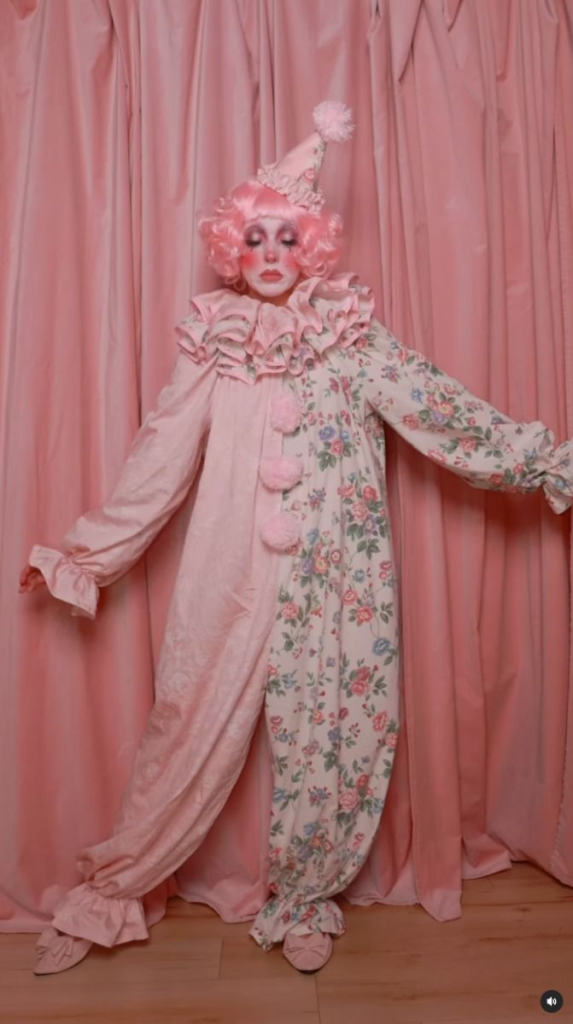
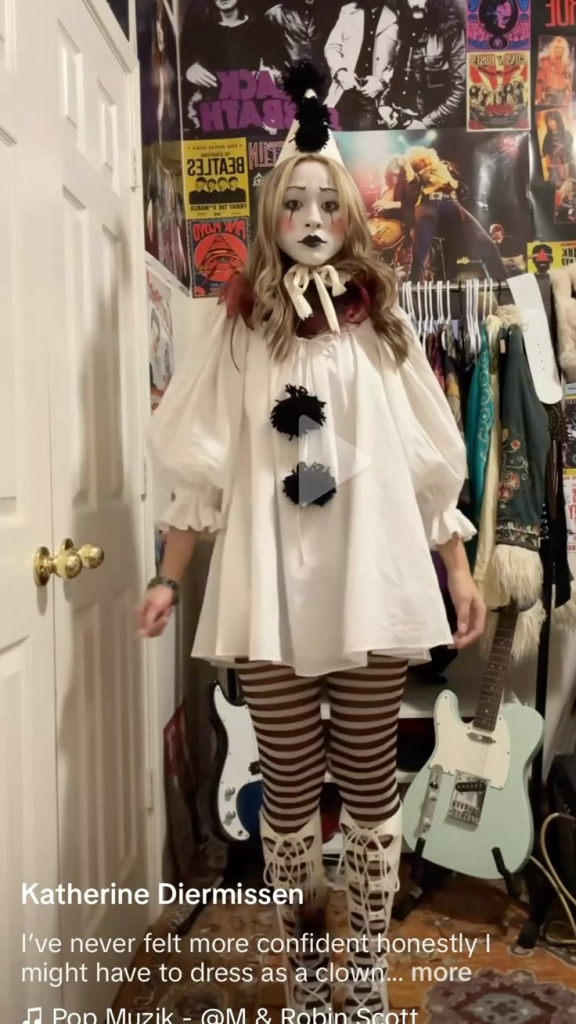
All-white wardrobe, wears exaggeratedly over-sized and loose-fitting clothes, typically including a white jacket with large buttons and comically long sleeves, a large neck ruff, and a large, floppy hat. No mask, but white face paint is used. Very similar, possibly a precursor to the Pierrot, but no definite link is known.
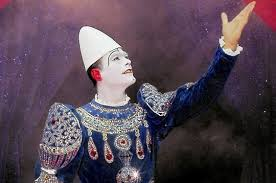
Pierrot (Sad Clown)
ROLE:
A comic servant of the commedia dell’arte that possesses a social wit. As a wily slave, their job is to keep the play moving. Takes delight in practical jokes and pranks, and often has to use their wit to get out of punishments others have in store for them.
DESCRIPTION:
All-white wardrobe, wears exaggeratedly over-sized and loose-fitting clothes, typically including a white jacket with large buttons and comically long sleeves, a large neck ruff, and a large, floppy hat. No mask, but white face paint is used. Very similar, possibly a precursor to the Pierrot, but no definite link is known.
Harlequin / Arlecchino
ROLE:
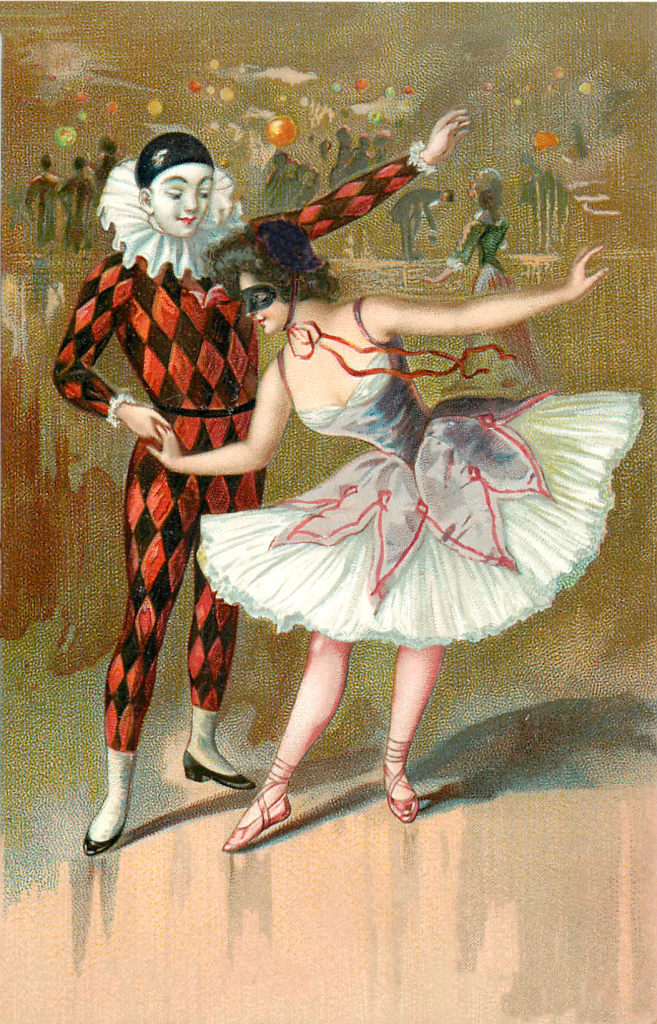
Lighthearted and nimble, their role is that of a servant who thwarts their master’s plans to win the love of Columbine. They have trickster, agile qualities, and later interpretations have them act as romantic heroes. Their wit and resourcefulness contrast the Pierrot.
Harlequins also have several variants:
Trivelino/Trivlin: identical costume, but the triangular patches were replaced with moons, stars, circles, and triangles.
Guazzetto: wears a fox’s brush, a large three-tiered collarette, wide breeches, and a loose jacket tied tightly by a belt, + a neckerchief dropped over the shoulders like a small cape. Guazzetto’s mask is characterised with a hooked nose and a mustache. His bat is shaped like a scimitar-esque sword.
DESCRIPTION:
They wear a costume of irregular patches, a hat with a rabbit or fox tail, and a black mask. They can also wield a sword or a fool’s scepter.
Whiteface Clown (Clown Blanc)
ROLE:
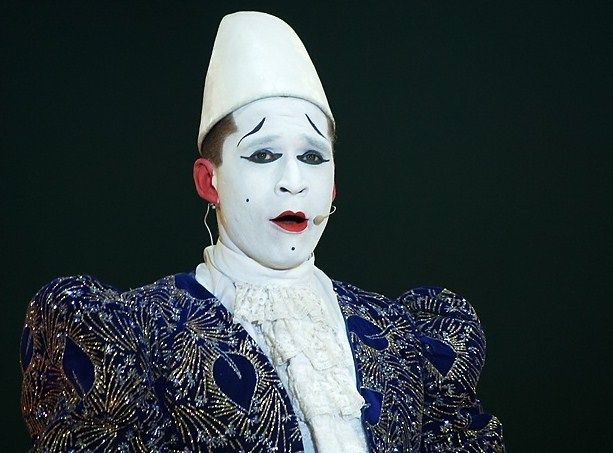
The White Clown is a more serious, sophisticated character, who instructs the Auguste to do their bidding. They are the straight man that sets up the situation that their partner, the Auguste, turns comical.
White Clowns can be further categorised into:
Classic Whitefaces: sometimes known as European Whitefaces, they are elegant, majestic, and beautiful – similar to Pierrots and Harlequins
Straight Whiteface: similar to Classic, but more colourful and cheerful
Grotesque Whiteface: similar to Straight, but with even more colour, zanier antics, and more exaggerated features
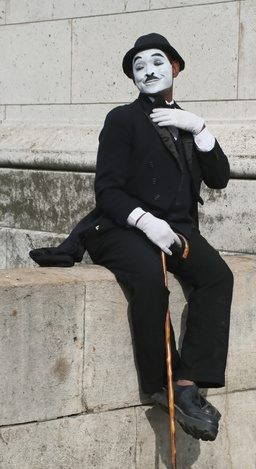
Mime: known not for speaking, but communicating through body language and expressions
DESCRIPTION:
White base with no exposed skin, with facial features emphasized delicately in black.
Character Clown
ROLE:
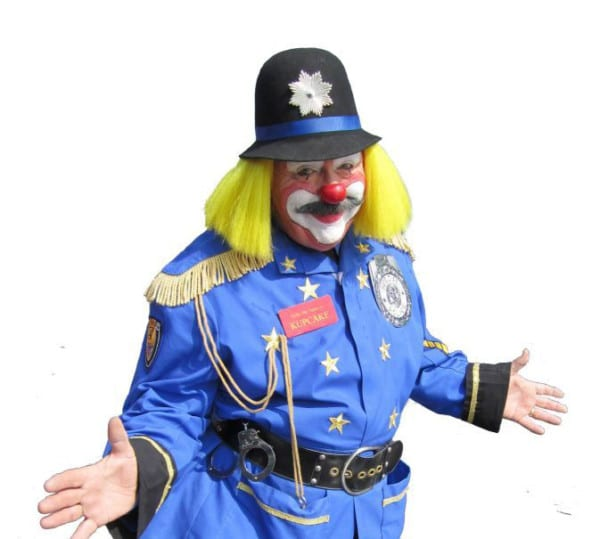
Character clowns were based on eccentric everyday characters, such as butchers and bakers, policemen and housewives. The most famous American character is the “tramp” or “hobo” clown.
DESCRIPTION:
Comical slant on a regular face. Flesh base, with accessories like fake comic glasses, ears, moustaches, noses, freckles, warts, and haircuts.
Jesters & Fools
ROLE:
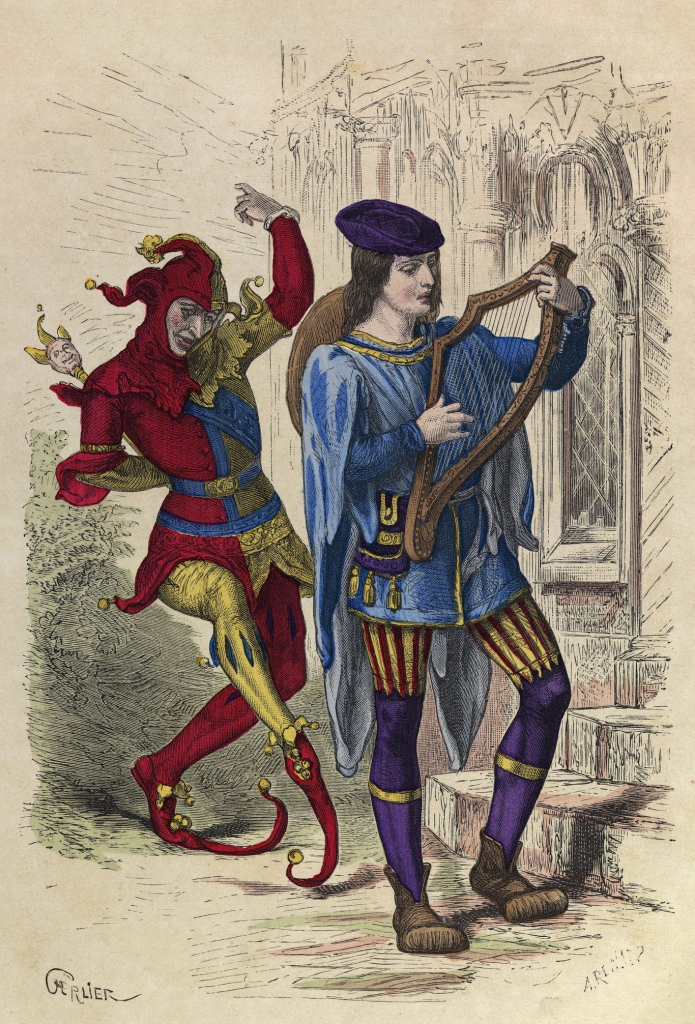
Jesters could either be a member of a noble/royal household to entertain guests, or travelling performers that entertained the common folk at fairs and festivals.
They were used as political tools as well as entertainers. “Jester’s priviledge” was the ability to speak freely, and was used for mocking high public figures and delivering bad news that no one else could, without being punished. To reflect this role, their headpiece and sceptor mimicked the Royal crown and sceptor. Additionally, they were used to psyche out their rivals, with jesters riding in front of troops, making fun of the enemy, and serving as messengers.
DESCRIPTION:
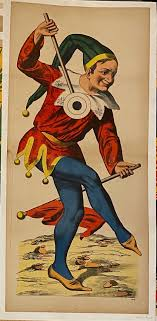
To reflect their role, jesters’ headpieces (cap’n’bells) were shaped to look like a crown with bells on the end, and their sceptor mimicked the royal sceptor.
Their outfit typically consisted of a motley coat, tight breeches, and a monk’s cowl over a shaved head.

Leave a Reply