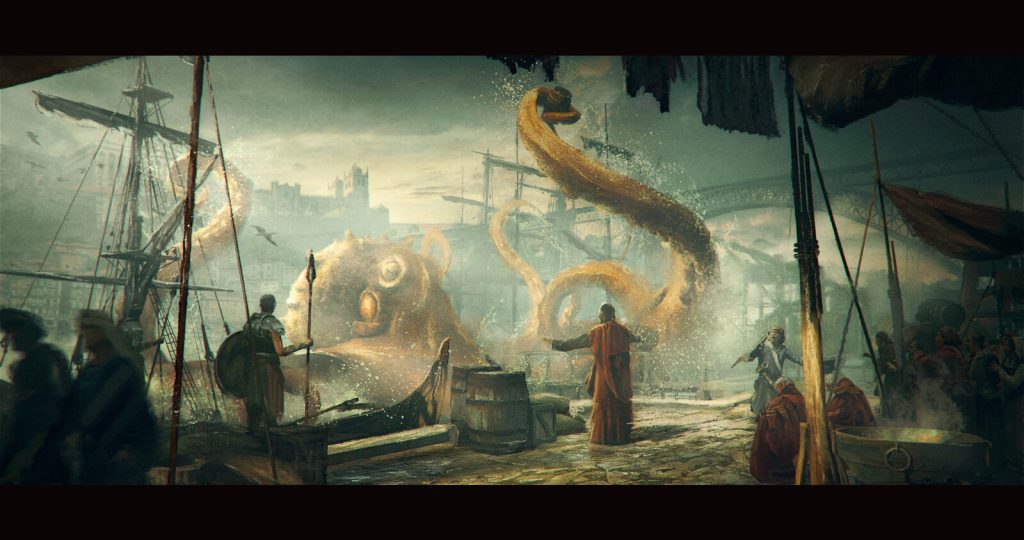
The ocean stirs. From its depths, colossal creatures rise with fury unmatched and purpose unknown.
As cities fall and coastlines crumble, you are among the few standing between humanity and the tide. Build your defences, rally your allies, and confront the monsters that should never have surfaced.
Every battle brings you closer to uncovering the truth that lies beneath the waves.
They rose from the depths. We called them monsters.
We built weapons, walls, and armies to push them back.
But when we followed them into the sea… we found the truth.
They weren’t here to destroy us. They were trying to survive us.
Overview
High Concept
Deepfront is a 1–3 player cooperative action game about defending coastal cities from colossal sea monsters rising from the ocean’s depths. Players deploy to threatened cities, construct defences, and face off against titanic creatures in cinematic battles. But as the campaign pushes out to sea, the team uncovers that the war they’re fighting may not be what it seems.
Game Pillars
- Dynamic Defence: Combine strategy and action by fortifying cities before each attack.
- This is a timed event that occurs before the monster strikes, meaning players have only a limited amount of time to plan and prepare for each attack.
- Cinematic Encounters: Every monster is a handcrafted battle blending scale, emotion, and chaos.
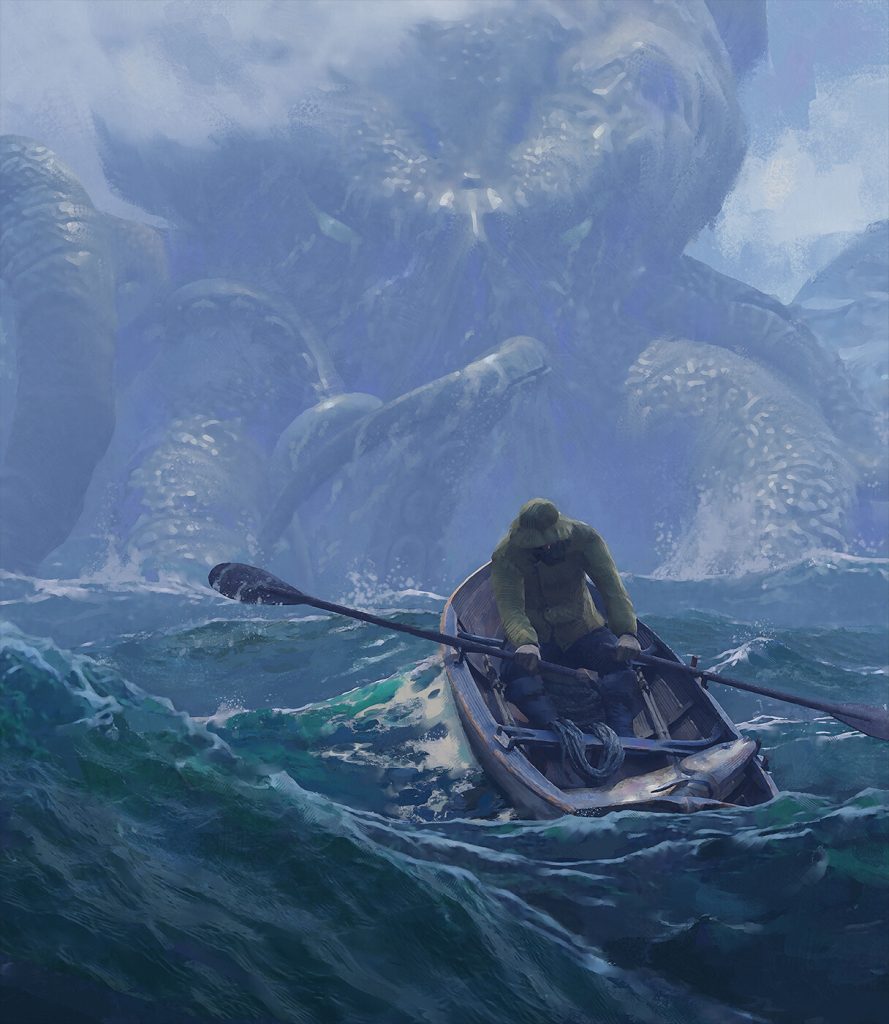
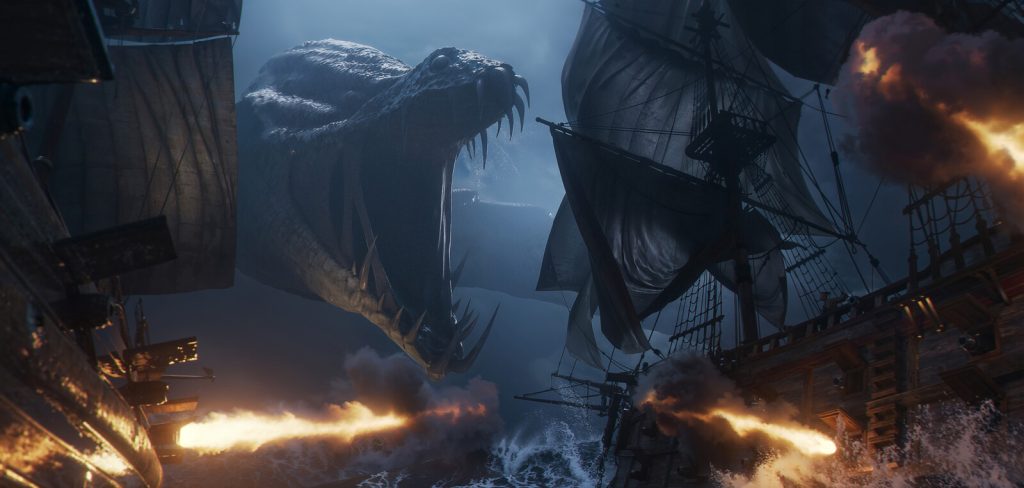
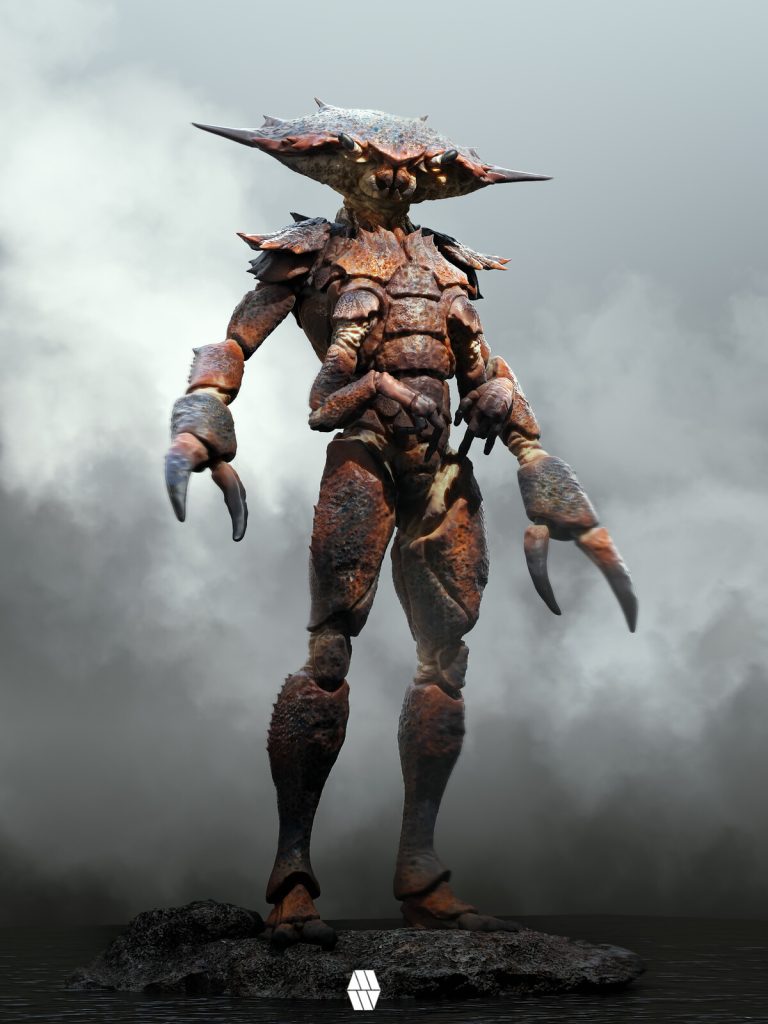
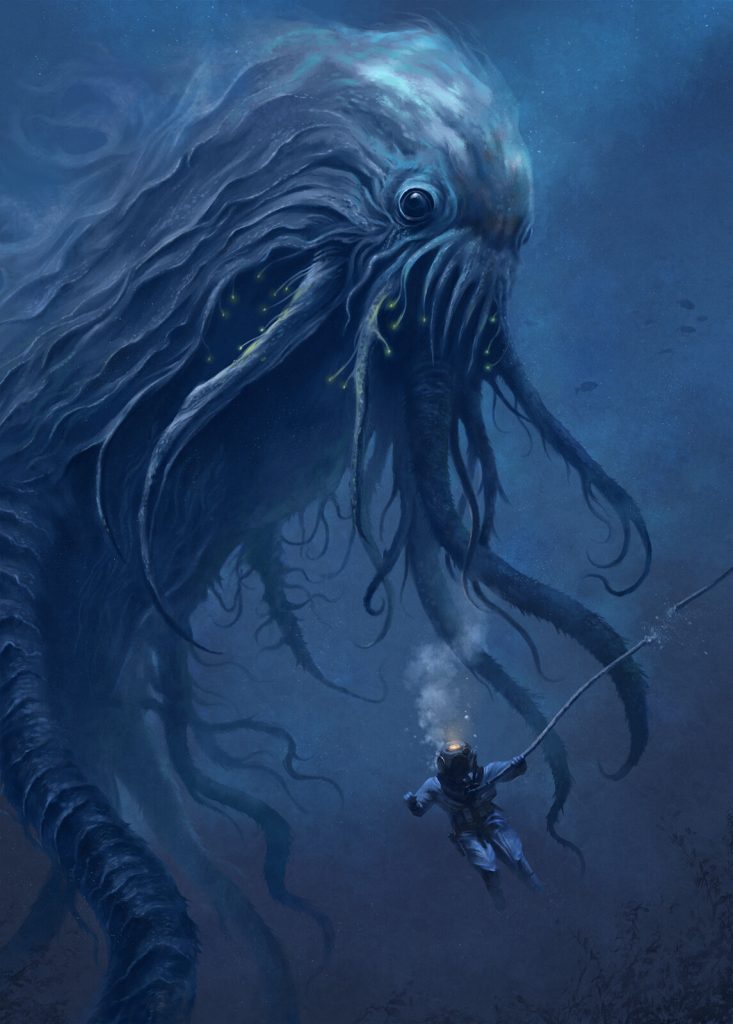
- Each monster will be a unique behemoth based on real-life sea monsters from around the world.
- less accurate to real-life location, more focus on the destruction of the environment
- Team Synergy: Class-based co-op that rewards coordination and adaptability.
- Single-player mode should also be available, allowing players to try out various classes with ‘easier’ levels to compensate.
- Evolving Mystery: The deeper players go, the more they uncover about the ocean’s awakening and their own role in it.
Setting & Tone
World
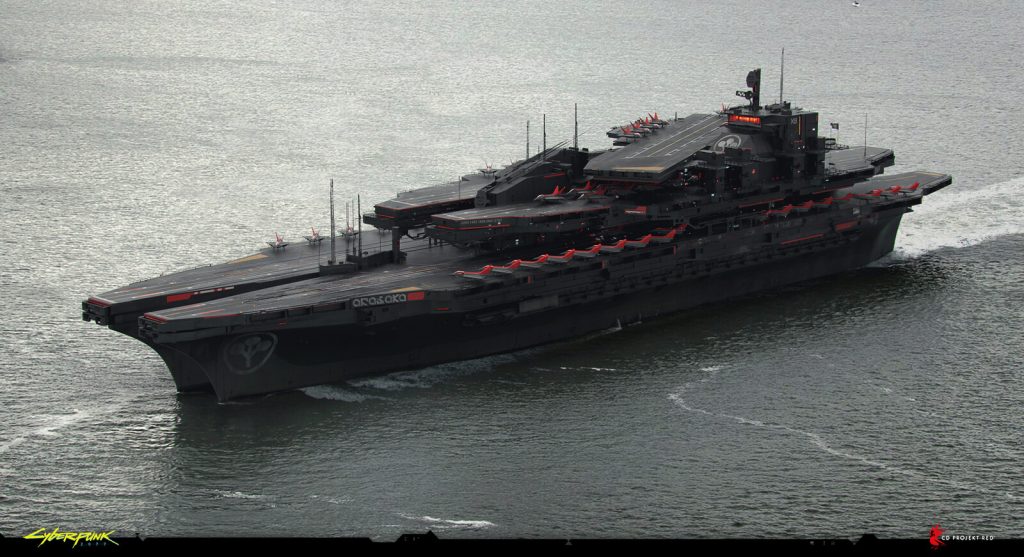
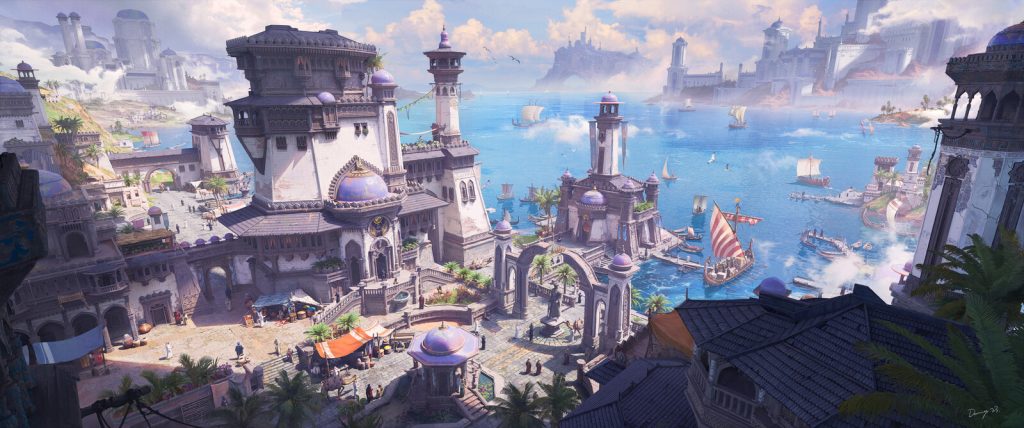
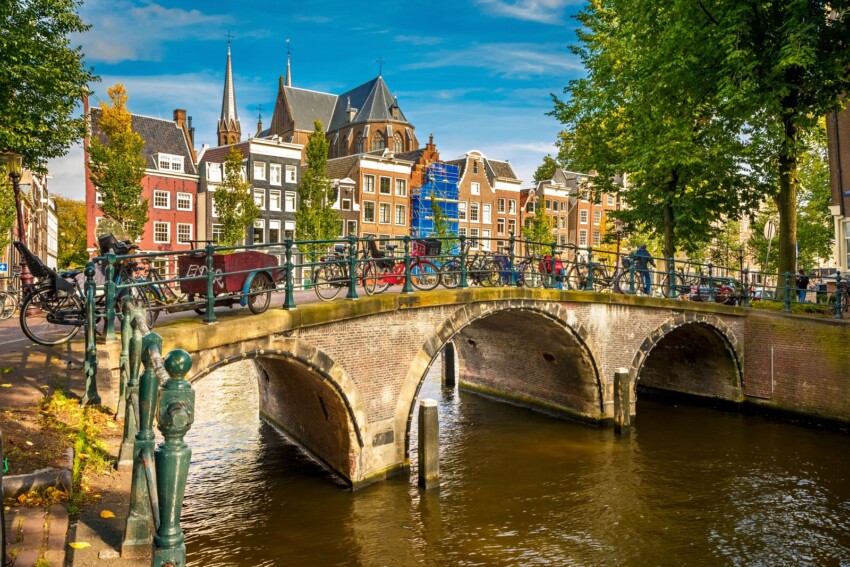
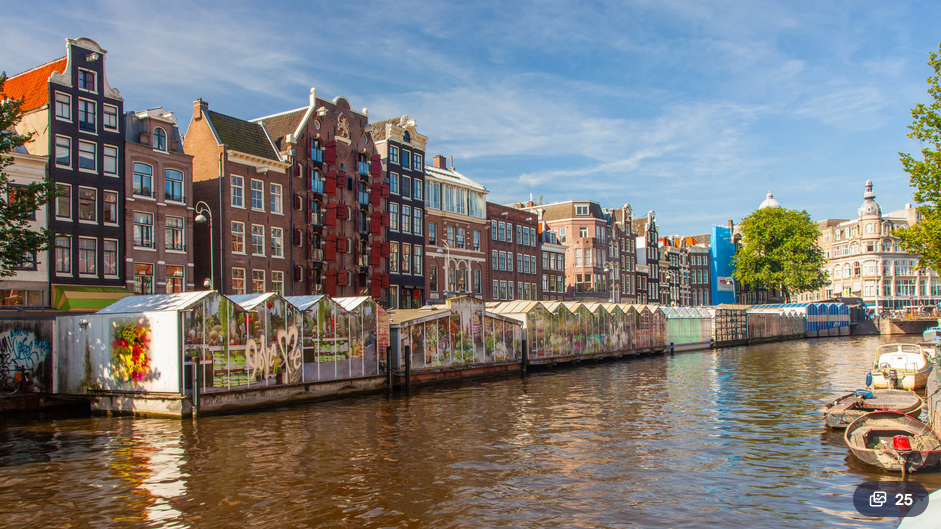
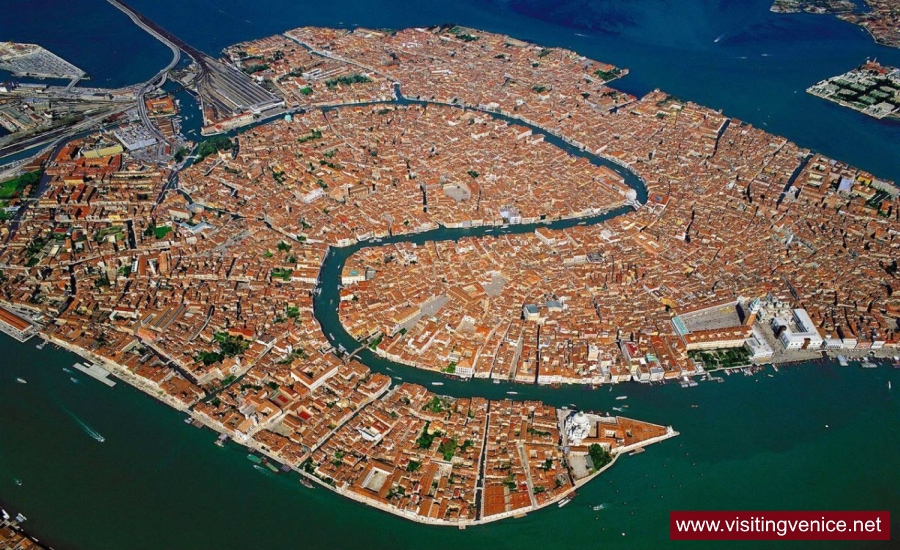
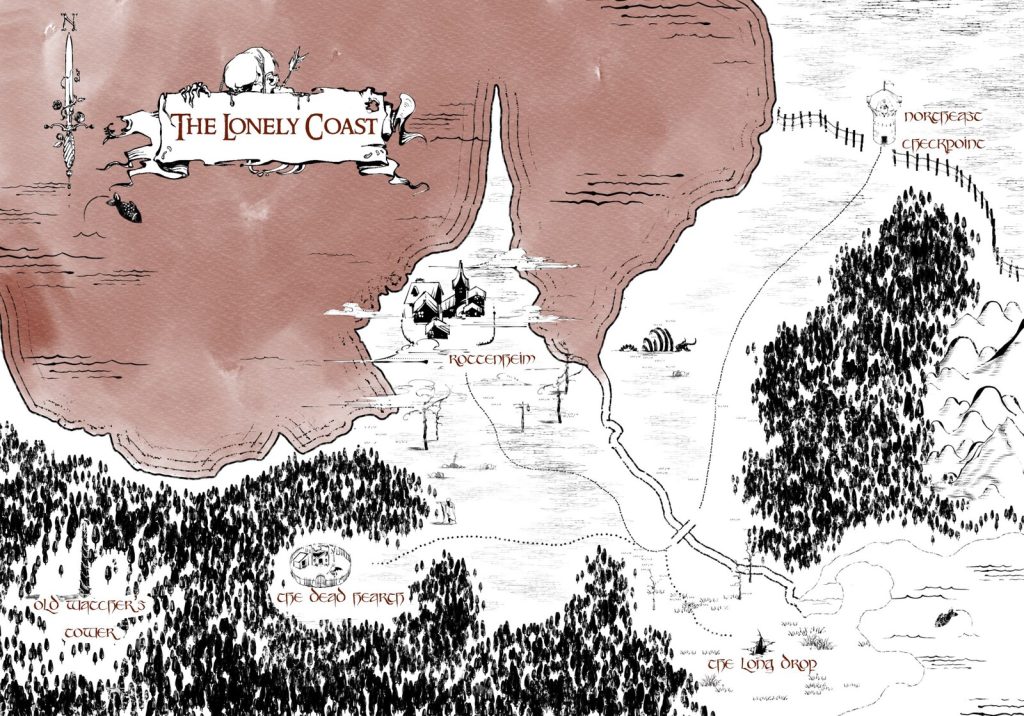
The near future. Humanity has built its civilisation against the sea, massive port cities, energy rigs, and floating industrial platforms. When the monsters came, humanity met them with weaponised harbours and fleets of mechanised defenders.
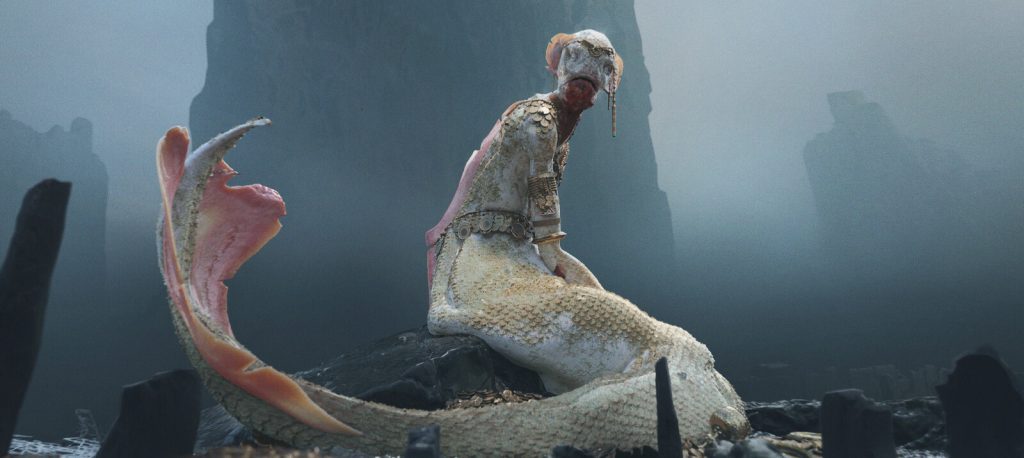
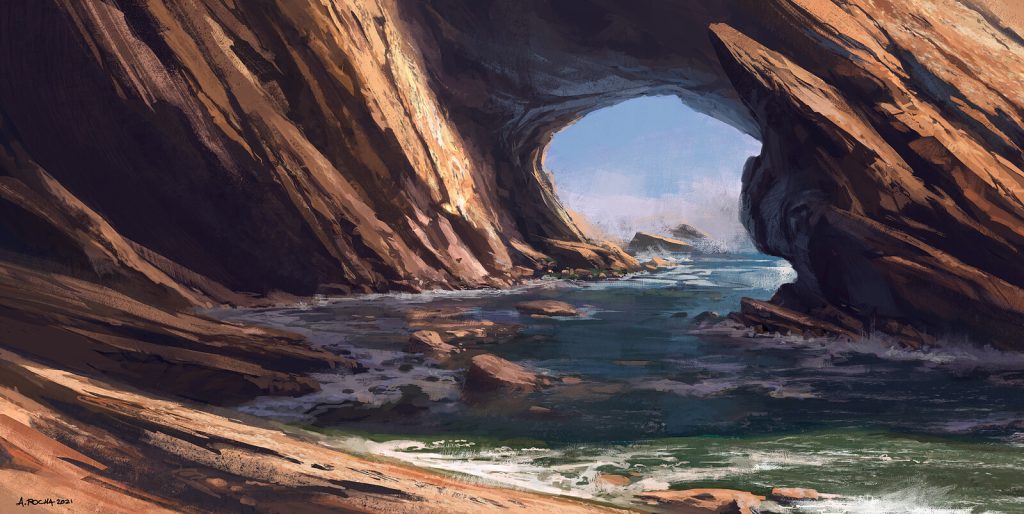
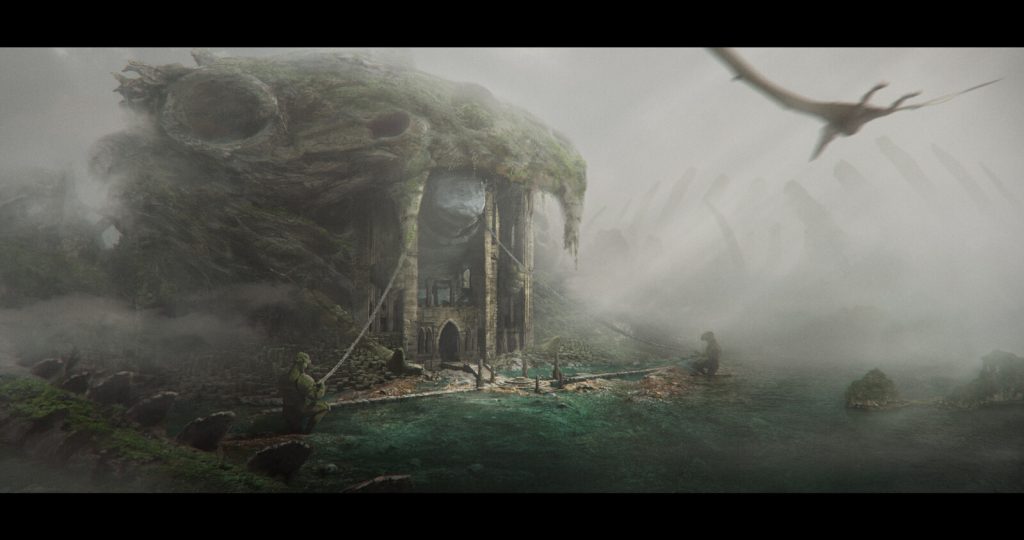
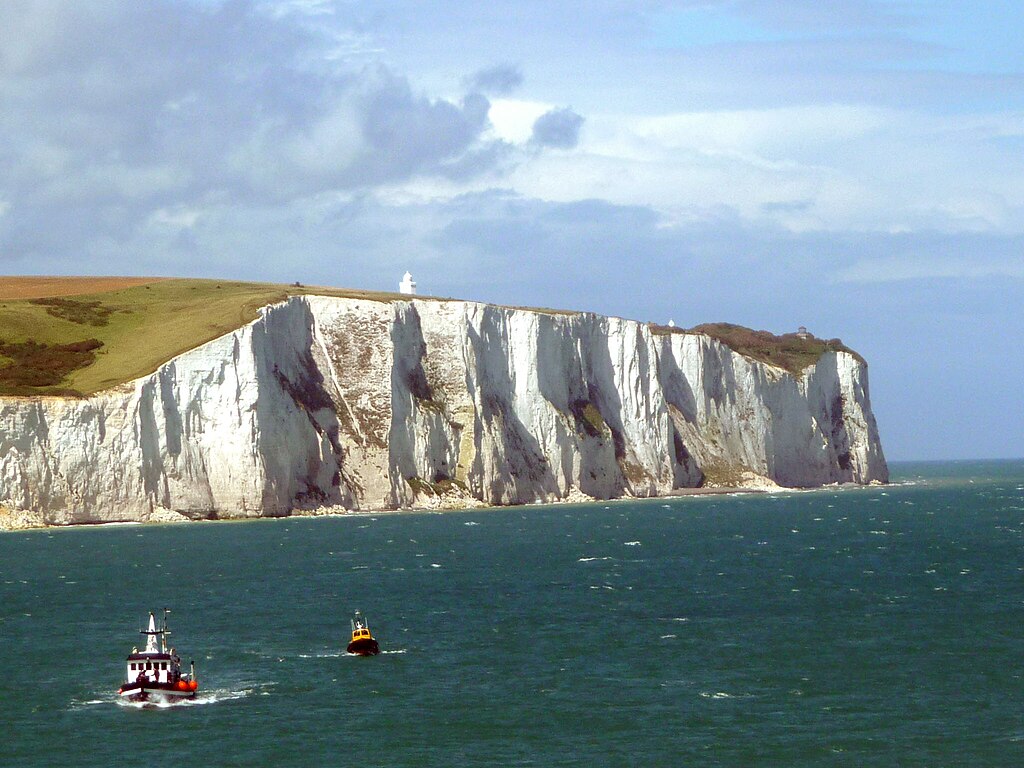
But the ocean is vast, ancient, and full of secrets. Beyond the shorelines lie ruins, ship graveyards, and ecosystems twisted by human progress. The line between civilisation and nature has blurred, and something deep beneath is stirring.
Tone & Themes
- Heroic yet Tragic: Players are defenders, but also part of the problem.
- Mystery Beneath the Surface: Every battle hints at something more. The ocean has a story to tell.
- Monster designs will convey various pollutants and scars that show humanity’s impact on them.
- Humanity vs. Nature: Industrial ambition clashes with natural balance.
- Pollution
- Overfishing
- Waste
- Hope & Responsibility: Redemption lies not just in victory, but in understanding.
- Strong emphasis on struggling animals that don’t get the support they should
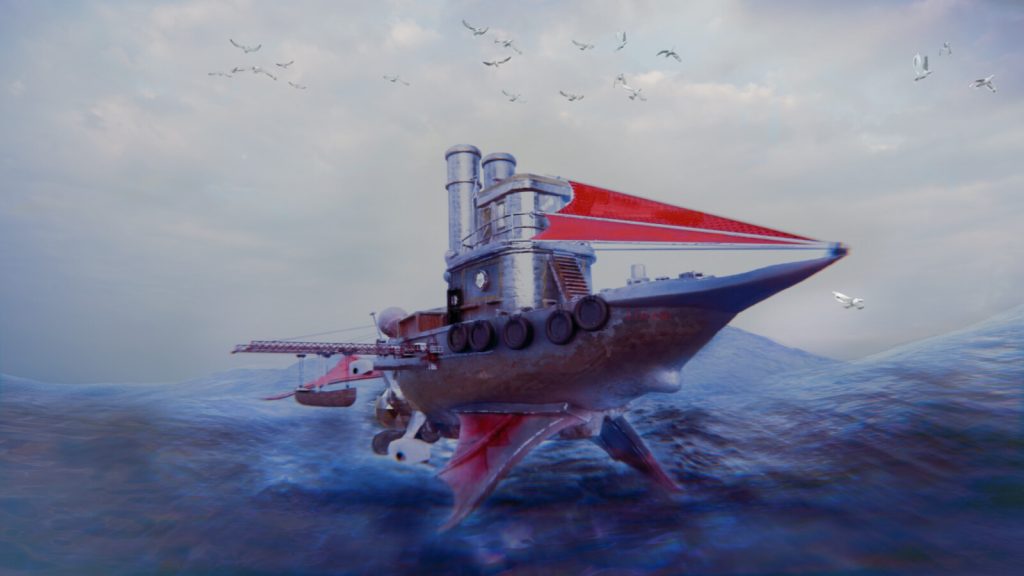
The visual tone blends modern sci-fi militarism with organic oceanic imagery, pitting steel fortresses against bioluminescent waves.
3. Gameplay Overview
Loop: “Deploy → Defend → Hunt → Discover”
- Deploy: Players receive intel on an incoming monster threat. They choose their class, gear, and city sector to defend.
- Defend: Build and activate defensive turrets, barriers, and sonar buoys, and repel the creature’s assault in real-time.
- Hunt: Once the creature retreats, players take the fight offshore in high-intensity chases across the open sea.
- Discover: Post-mission analysis reveals environmental clues and story fragments, drawing the team closer to the truth.
The loop strikes a balance between strategic preparation, cinematic combat, and narrative progression.
4. Gameplay Systems
Player Roles / Classes
Each player class fulfils a distinct purpose in both defence and combat:
- Engineer – Builds defences and maintains structures. Specialises in traps and repairs.
- Ranger – Agile combatant who uses darts, explosives, and tracking tools.
- Diver – Excels in underwater mobility; can sabotage monsters or rescue civilians.
- Commander – Provides tactical support with scanning drones, area buffs, and long-range weaponry.
Each class features a dual specialisation system for adapting between city defence and open-sea missions.
Specific classes will still excel in various phases, but this doesn’t mean missions will be impossible without them.
Defensive Phase
Players collaboratively construct defensive networks using limited resources:
- Place barriers, turrets, and sonar grids.
- Fortify vulnerable structures (bridges, reactors, evacuation zones).
- Decide between defending infrastructure or engaging early; every choice shapes the outcome of the battle.
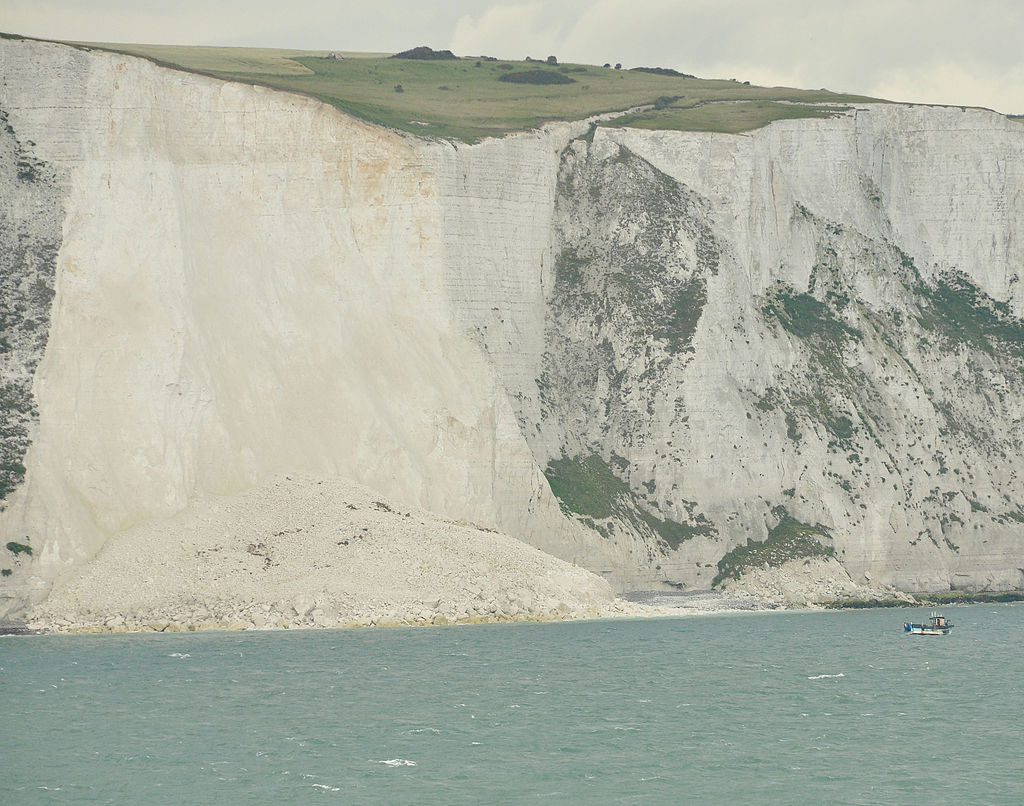
Environmental factors, such as tides, storms, and flooding, alter the terrain during battle.
Monster Encounters
Each monster is a unique encounter designed around scale, spectacle, and adaptation.
Examples:
- The Siren Maw – Lures players with sonic pulses that disable electronics.
- The Coral Titan – Regenerates armour using coral growth from nearby reefs.
- The Abyssal Wyrm – Creates whirlpools and water spouts, forcing constant repositioning.
Monsters are designed to specific game plans and strategies, drawing inspiration from real-world animal behaviours.
Exploration & Progression
- Between missions, players return to a mobile sea base (a converted defence platform).
- Players upgrade their classes, research new technologies, and uncover data from previous encounters.
- Over time, the base evolves, reflecting the team’s growing purpose and the discoveries they make.
5. Narrative Structure
Act 1: The Rising Tide
- Humanity under siege. The team is tasked with defending key coastal cities.
- Missions emphasise survival, coordination, and spectacle.
- Slight hints suggest that something else is affecting the ocean.
Act 2: Into the Deep
- The war moves offshore. Players pursue the monsters into their territory.
- Environmental storytelling reveals abandoned rigs, polluted reefs, and damaged ecosystems.
- Tension grows within the squad as they uncover fragments of truth.
Act 3: Deepfront
- The name gains meaning: humanity and nature are bound together.
- The final mission forces moral choices: protect the cities at all costs, or seek a different path.
- Endings vary based on player decisions, emphasising restoration, understanding, or destruction.
6. Multiplayer Design
- 1–3 player online co-op.
- Dynamic scaling ensures encounters stay challenging and cinematic.
- Cooperative mechanics encourage synergy:
- Shared defence systems and combo attacks.
- Player revives are tied to resource management.
- Communication tools for coordinating strategy.
mood board


Leave a Reply