Sound Design Intention
In this project, sound serves not to fill space or create stimulation, but as a companion, quietly accompanying the player.
I wish for sound to affirm each subtle action of the player during exploration, rather than guiding or urging them forward.
At numerous junctures, background music is deliberately minimised or entirely absent.
During these moments, players distinctly perceive the character’s breathing and heartbeat, intensifying their awareness that:
they are an independent entity, walking and experiencing.
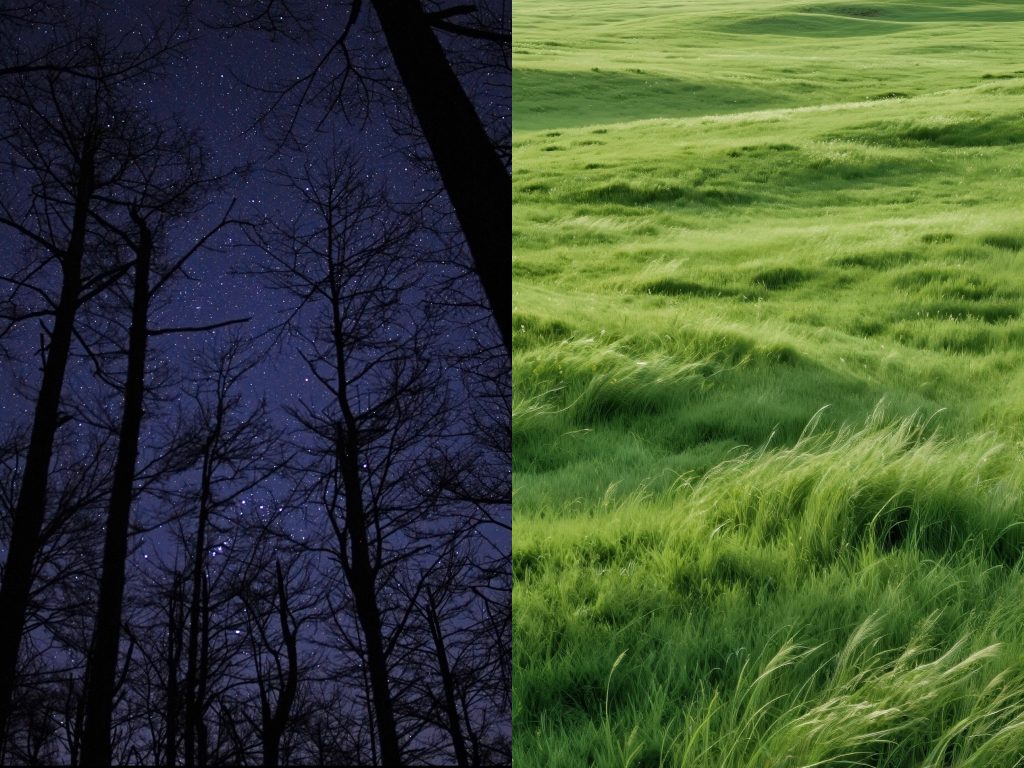

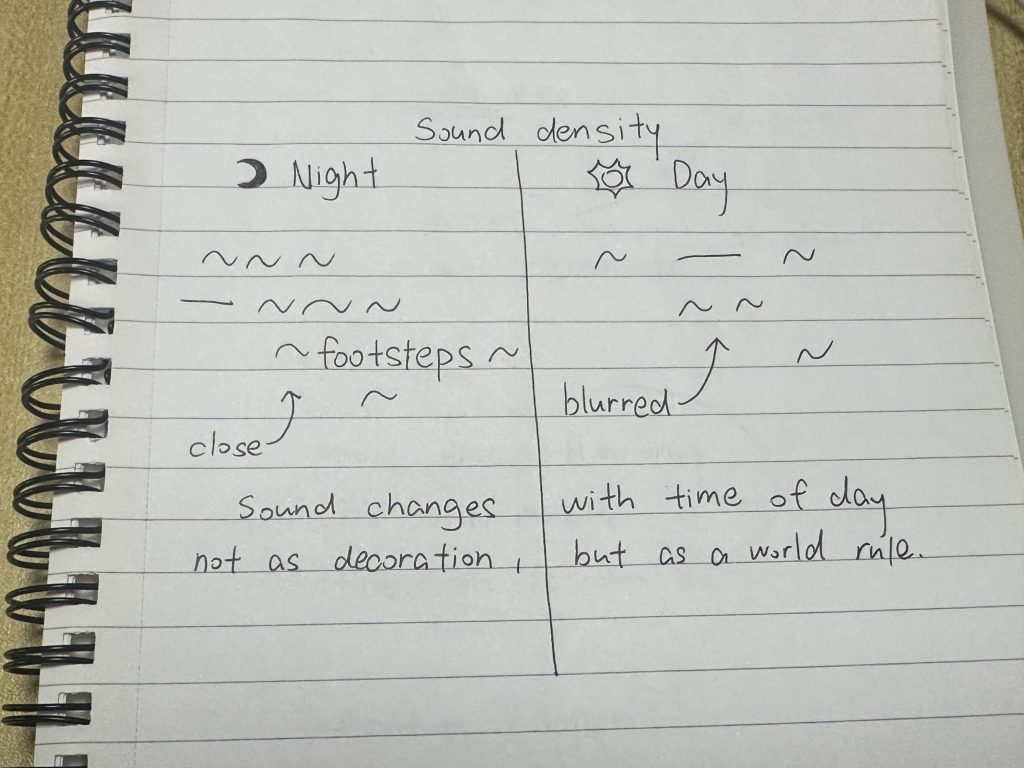
Sound in this project is not a decorative element, but one of the systems intrinsically linked to the world’s rules.
Night and day differ not only visually and mechanically, but also form a distinct contrast on the auditory level.
• Night: Sounds are clearer, more intimate, closer to the player
• Day: Sounds are more muffled, duller, more distant
Through this distinction, sound becomes one of the player’s primary means of perceiving the state of the world.
Sound & Music References
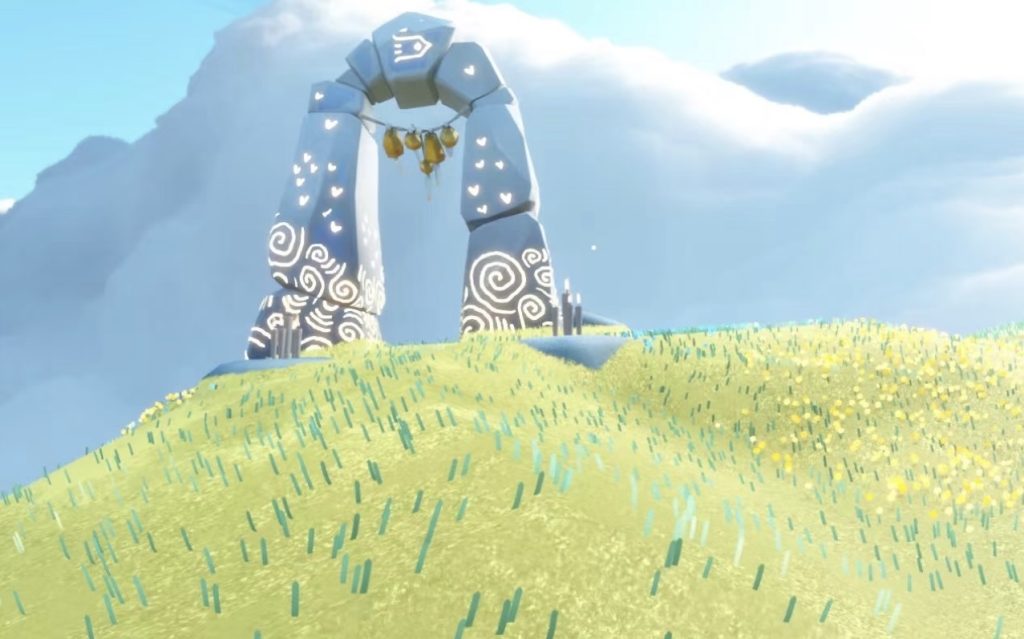
Game Reference – Sky: Children of the Light
Sky’s sound design has inspired me most profoundly in this regard:
Sounds seem to respond to the player’s actions rather than dictate what they should do next.
Reference image showing ambient spaces that inspire sound design thinking.
This video is included for analysis purposes only. It demonstrates how sound can create responsive ambience and spatial presence without explicit directional cues.
Real-world Sound Reference
The faint sounds of reality—
such as footsteps on grass, or breathing in the night—
are my most vital reference points for sound.
These sounds themselves are not dramatic, yet they convey a genuine and enduring sense of presence.
Music Direction
The overall musical direction leans towards ambient, minimal, and piano-based compositions.
Melodies are not prominent, serving more as an atmospheric backdrop to support spatial and emotional contexts rather than dominate the experience.
In most instances, the music yields to ambient sounds and the player’s own vocalisations.
This gentle, non-intrusive approach to auditory feedback aligns perfectly with the slow-paced exploration experience I wish to cultivate.
Practical Sound Experiment
For this project, I personally recorded two categories of sound:
1. Player Footsteps
• Footfall sounds on grass/soil surfaces
• Designed to support slow-paced exploration and spatial awareness
• Footsteps exhibit subtle variations based on environment and state, rather than emphasising rhythm
2. Heartbeat
• Serves as an auditory cue of the player’s own presence
• Particularly pronounced in environments without music or with sparse ambient sounds
• Reinforces the bodily sensation of “I am here, in this moment”
I selected these two sound categories because they both originate directly from the player themselves,
most directly amplifying the perception of “existing as an independent entity” rather than external pressures exerted upon the player.
Sound & World Rule Integration
During polar night conditions, the world remains ‘open’ to sound:
Players can hear footsteps, breathing, and environmental echoes with greater clarity.
During the fleeting daylight hours, sounds become muffled, compressed, and even slightly delayed.
This alteration is not a penalty, but a reminder that the world operates under different rules.
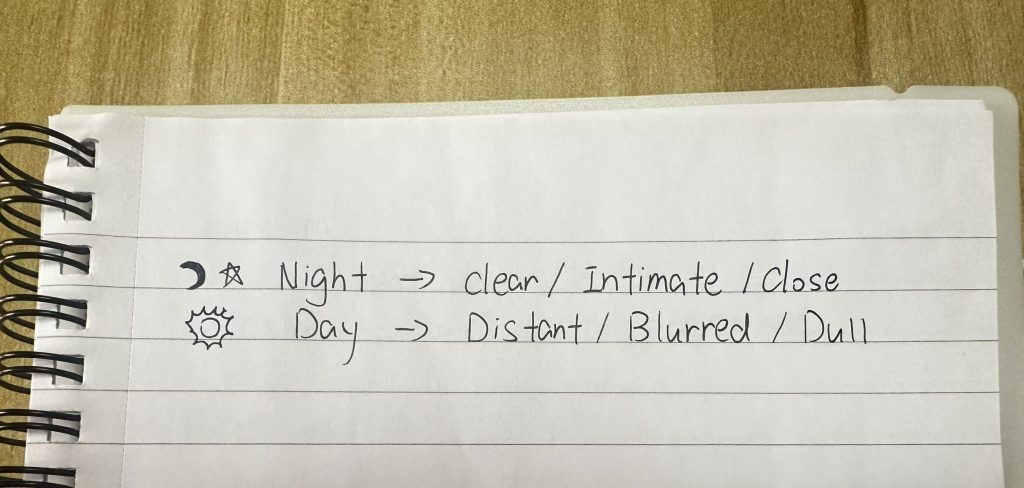
Through this approach,
sound becomes integral to understanding the world’s rules, rather than a separate layer of presentation detached from the system.