Key Learning
This week’s course shifted focus from ‘game development itself’ to how games can succeed in the real market.
We studied industry-standard market research methods, including player personas, comparator games, and how to clearly articulate a project’s USP (Unique Selling Point).
This prompted me to shift from a ‘designer’s perspective’ to a ‘player’s perspective’ and an ‘industry perspective’, re-evaluating my own project.
Understanding My Target Player
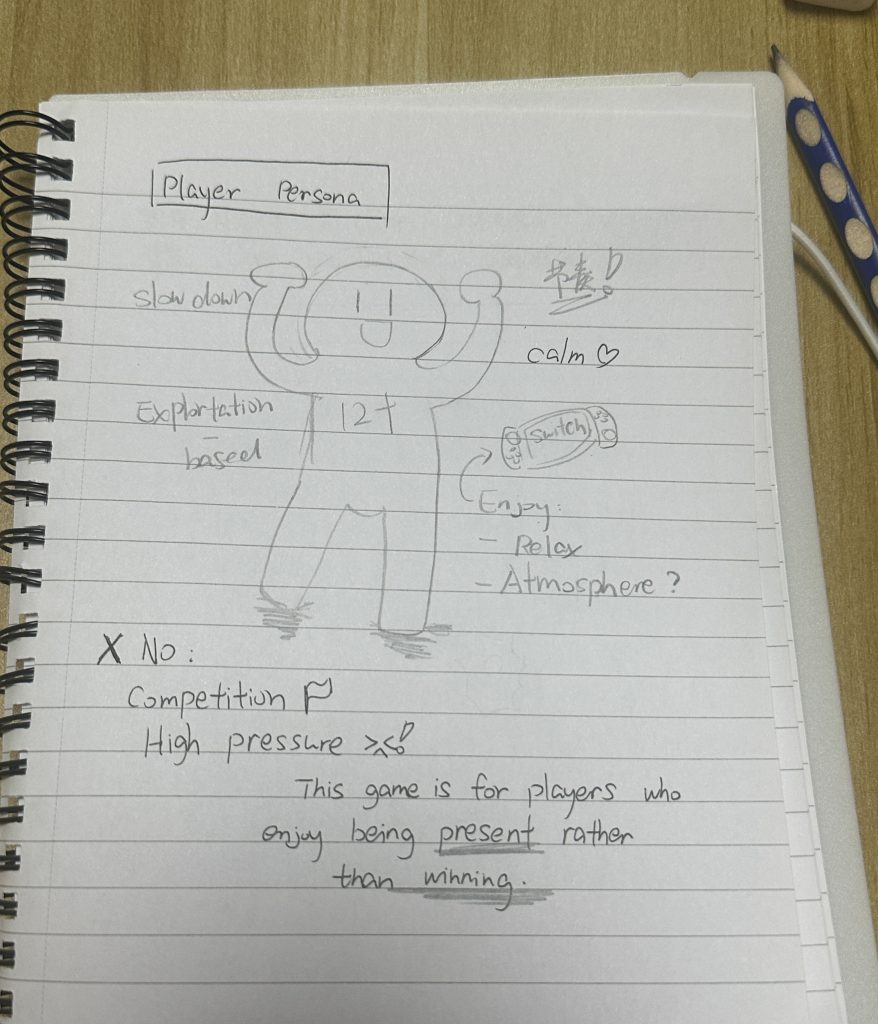
Through the methods provided in class, I have reaffirmed the core player demographic for my game:
• Aged 12+
• Preferring cosy / narrative-driven / slow exploration experiences
• Playing games not for competition, but for emotional grounding, immersion and companionship
This aligns closely with the direction I had previously pursued in my design, confirming that:
This project is not a ‘niche whim’, but has a clearly defined audience.
Comparator Games & Community Insight
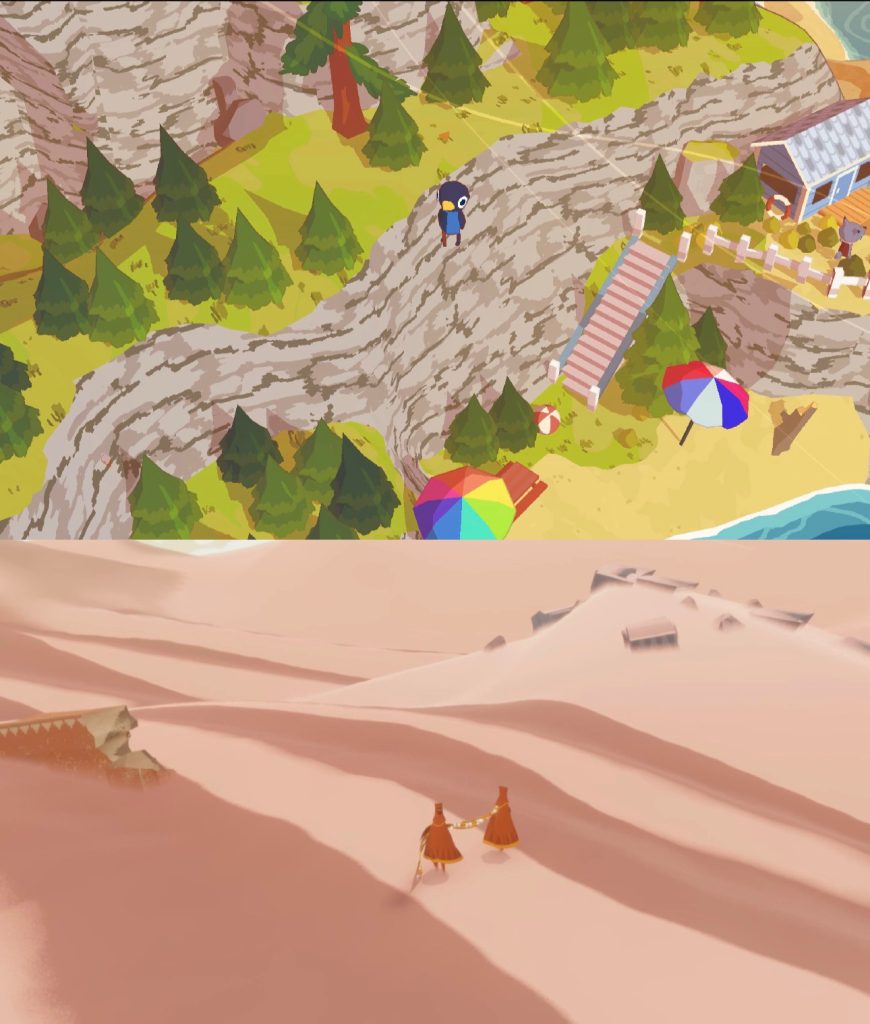
By analyzing player reviews and community sentiment for similar games (such as Journey, Sky, A Short Hike, etc.), I noticed a recurring set of keywords:
Comforting / Calm / Emotional / Wholesome
This made me realise that what players truly value isn’t “mechanical complexity”,
but whether a game respects their emotional state and pace of play.
This further supports the design choices in my project: non-competitive, slow-paced, and permitting pauses.
Market Gap & Project Positioning
After comparing the market, I believe this project seeks to bridge an Experience Gap:
• It does not emphasise target pressure
• It is not driven by competition or efficiency
• Instead, it centres on the core experience of “ordinary walking, memory, and companionship”
It does not aim to deliver intense stimulation, but rather to provide an emotional space
to which one can return repeatedly.