The aim of this research phase was not to find a ‘replicable gameplay template’ for urban-based games.
The goal is not to discover the experience I wished to create.
During my investigations, I found myself constantly drawn towards three games.
Journey, Sky, and A Short Hike.
These games seem to escape challenge and to play down success or failure; they immerse the player in a world where one can slow down, take in the space and feel the ambience.
Journey
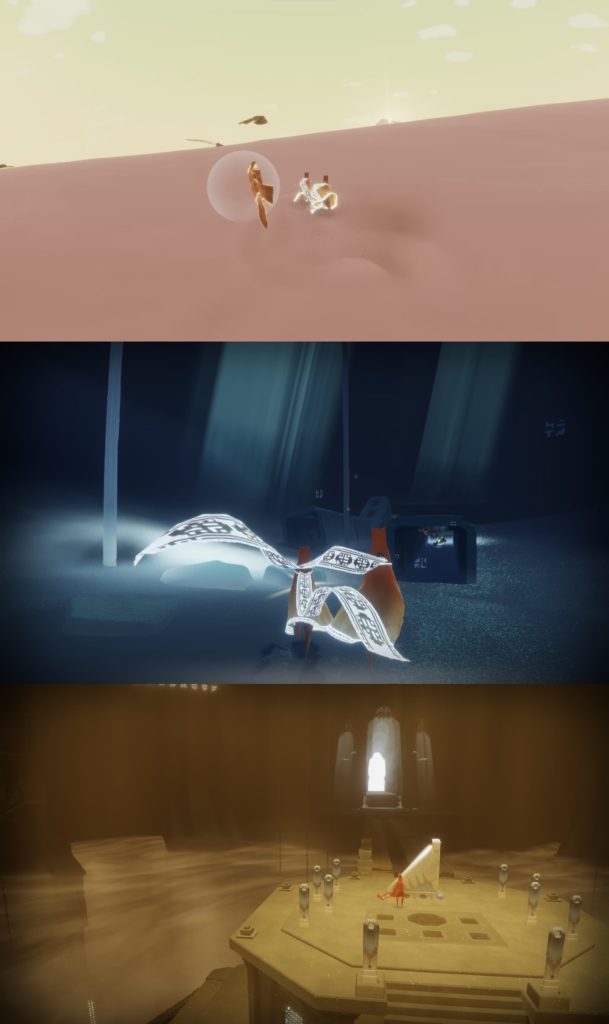
For me, Journey is not a ‘narrative game’,
but rather an emotional journey realized through space.
The game demonstrates how emotion can emerge through movement, scale, and atmosphere rather than dialogue or explicit narrative.
I am particularly struck by how it uses the rhythm of the environment and the repetition of walking to gradually draw players into a state of introspection.
Players are not told “who you are” or “what you must do”, yet meaning naturally unfolds through the act of continuous progression.
This confirmed my conviction:
My projects likewise require neither explicit objectives nor linear narratives,
but instead seek to foster players’ gradual connection with the world through the act of exploration itself.
In my games, this approach manifests as:
• A paramount emphasis on spatial rhythm
• Emotion prioritised over system feedback
• Walking and pausing becoming integral components of the experience
Sky: Children of the Light
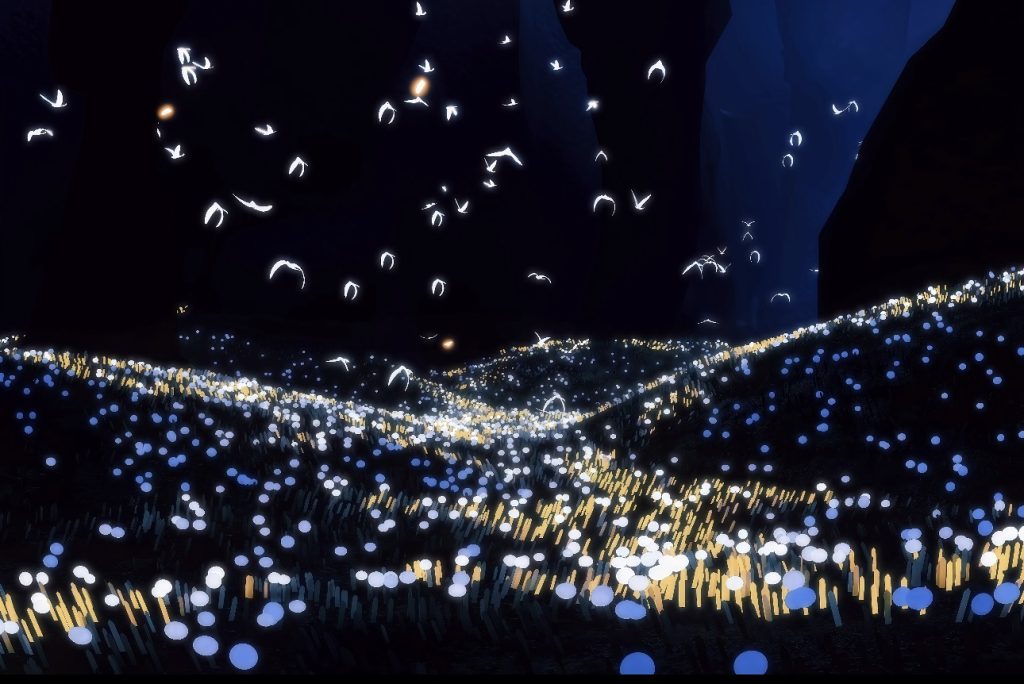
Sky’s greatest inspiration for me lies in its sound design.
In Sky, sound does not command the player — it responds to them.
I’ve observed that Sky’s sound design maintains a consistent restraint:
Music seldom “drives” the player forward, instead functioning as a companion, gently awakening only when the player moves, approaches, or pauses.
This aligns profoundly with the experience I aspire to create.
I wish for sound in my games to offer companionship and affirmation, rather than prompts or direction.
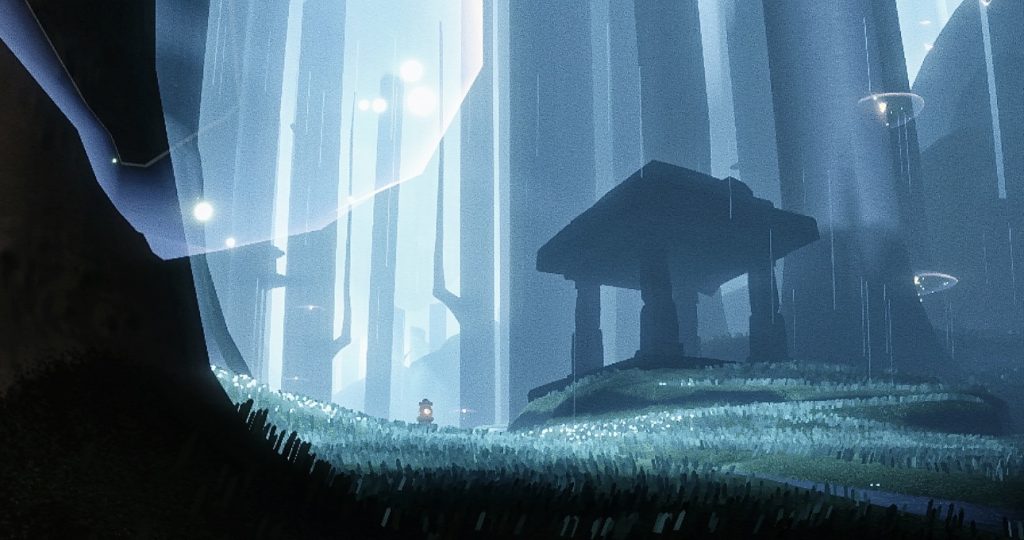
Sky also made me realise
that sound can function as a systemic language, directly tied to world rules rather than merely atmospheric decoration.
In my project, this directly influenced:
• Differences in sound density between night and day
• The binding of sound to the player’s presence
• Prioritising sound effects over music in the design sequence
A Short Hike
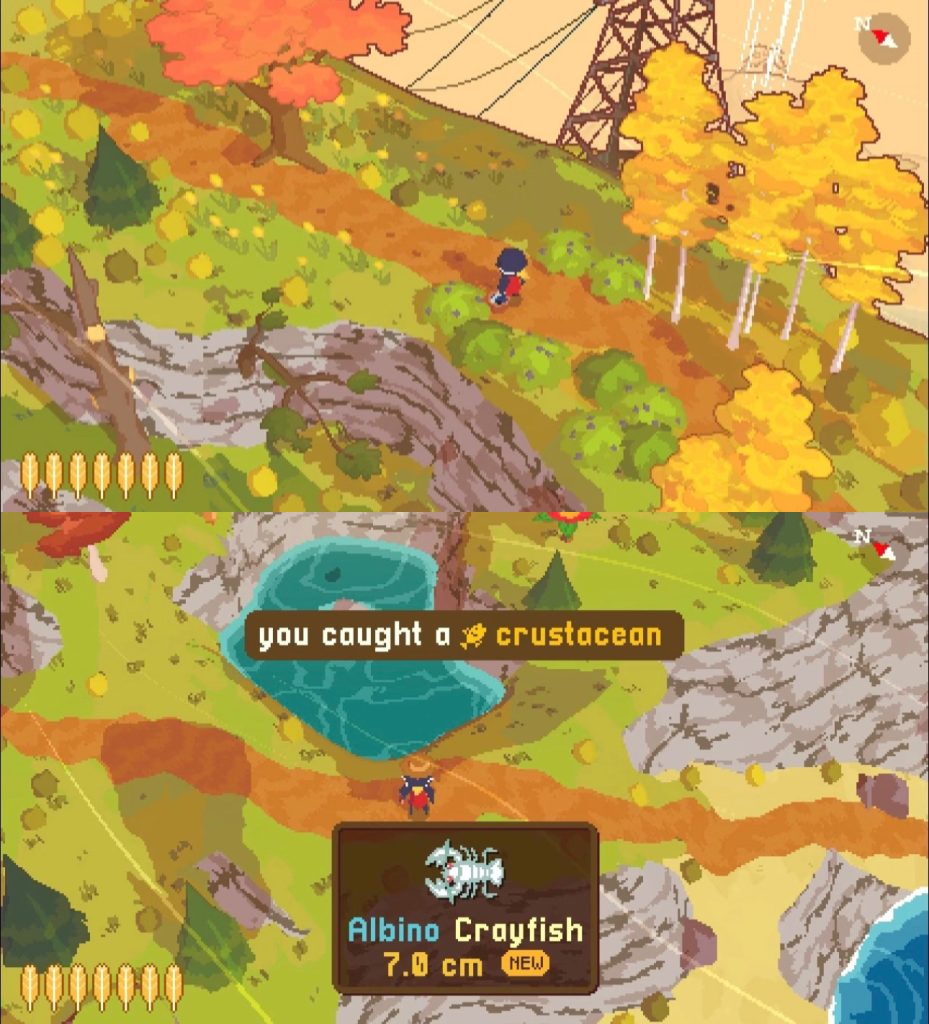
A Short Hike has made me reconsider the value of ‘ordinary’ within games.
The game finds meaning in small moments, casual exploration, and unremarkable interactions.
It doesn’t rush players towards an endpoint,
instead allowing them to get lost, pause, or take detours.
This ‘inefficiency-free’ approach to exploration feels profoundly important to me.
My project similarly strives to create a space
where players can simply exist, without needing to complete tasks.
The difference lies in my choice
of a more dreamlike, nocturnal atmosphere,
toning down humour while amplifying introspection and stillness.
This approach manifests in:
• A non-linear exploration structure
• Minimalist interaction design
• Prioritising emotional resonance over gameplay complexity
Summary
Through researching these games, I clarified that my project is not about challenge, mastery, or progression.
It is more akin to a gentle, companionable journey,
enabling players to reconnect with their relationship to the world through walking, pausing, and listening.
These references helped me confirm:
quietness is not emptiness, nor is a slow pace a lack of substance.
Provided the design is sufficiently clear, even the smallest experiences can carry emotion and meaning.