We played many mini-games in class this week. These games are small, the process is short, and the mechanics are not interesting, but they express the author’s ideas very well. Based on this course, we were asked to make a bitsy mini-game, and the process was controlled within 2 minutes as much as possible.
That was my initial idea. I envisioned a completely blank scene, perhaps a pure white background, with only constant tinnitus.
The player’s goal is to “stop” that unexplained tinnitus.
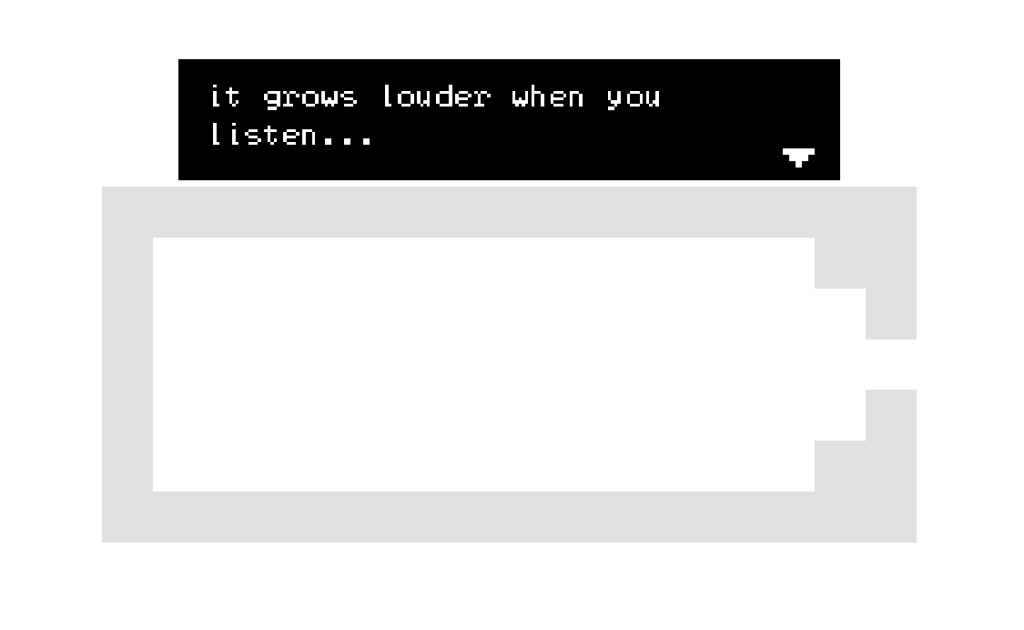
The closer they got to the source of the sound, the more they could hear the beating and wriggling of their internal organs; The bigger the tinnitus, the blurred the vision.
Eventually, players will slowly realize that the sound is actually coming from themselves. That is, they are chasing not something external, but their own body, psyche, and even the system itself.
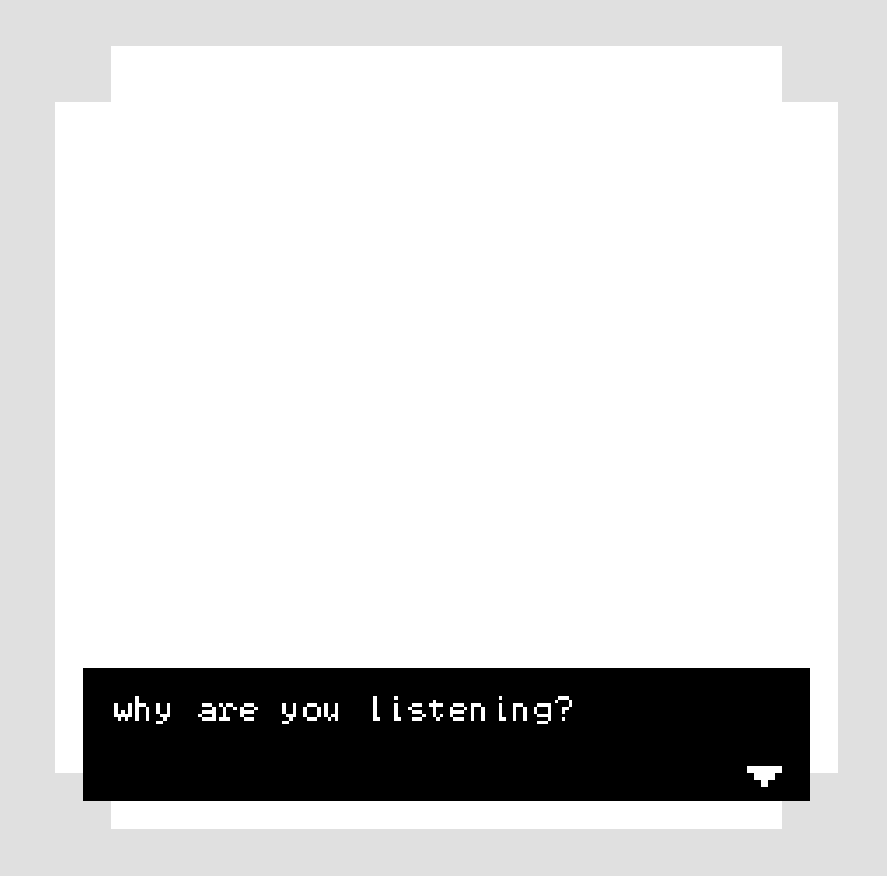
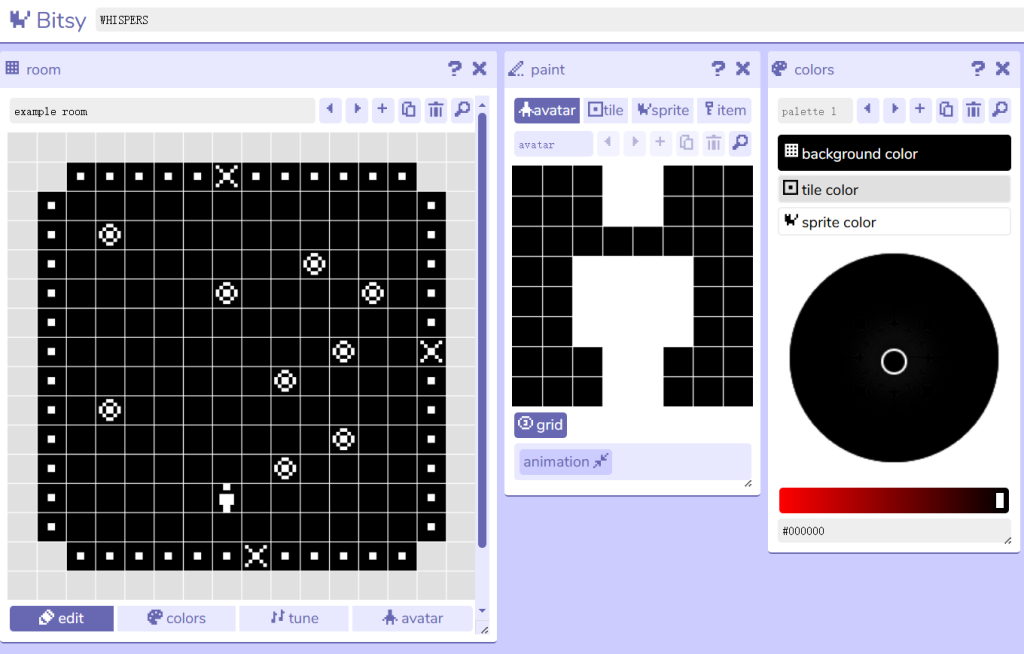
But because the assignment called for Bitsy, I quickly realized that it simply couldn’t support the sound feedback I wanted. I tried to do some simulations in Bitsy, but the effect was too limited, so I ended up changing to a pure white invisible maze.
Surprisingly, although it was different from what I had originally thought, this limitation strengthened the emotions I originally wanted to express. The feeling of “seeing nothing but vaguely knowing what is wrong” is more in line with the theme of “collapsing calm” than I initially imagined the “tinnitus game”. The player fumbles in white space, knowing no direction and hearing no feedback.
This “blankness” brings another feeling of anxiety – not because of hearing anything, but because there is nothing.
I think this may be a kind of “overlap between system and emotion”: when expression is restricted, when control becomes blurred, anxiety arises naturally.
Bitsy’s limitations forced me to convey that feeling of oppression with “blank” and “lost” rather than with complex sounds and pictures. The powerlessness of the system has also become part of the expression of the game.
Leave a Reply