In game design, a game loop refers to a set of core behaviors and feedback structures that players experience repeatedly in a game.
Yushan and I were placed in a group during the class activity, and we needed to write a game loop for Snake. Players are constantly respawning, eating, and causing physical changes, and the outcome of the cycle is not stable. Game over is not the end, but part of the loop, bringing players back to where they started while moving on to the next round with an understanding of the system’s behavior.
We started with Game Loop, but we overlooked one problem: we didn’t consider what would happen if the player survived.
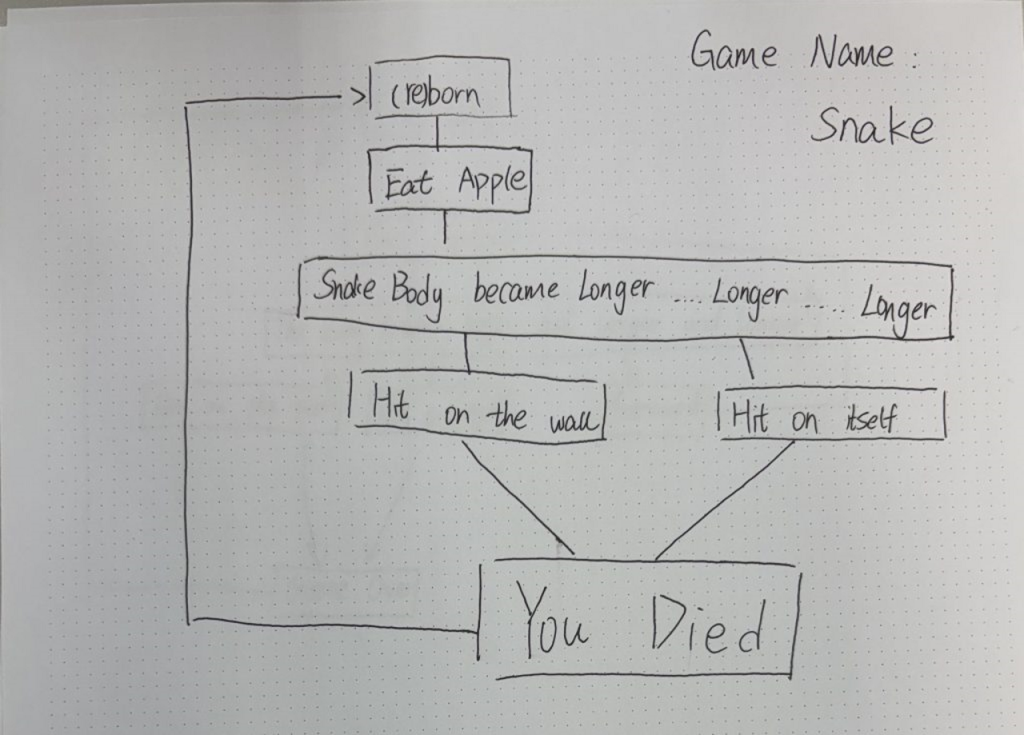
So we added a branch if the player survives, and the final version is as follows:
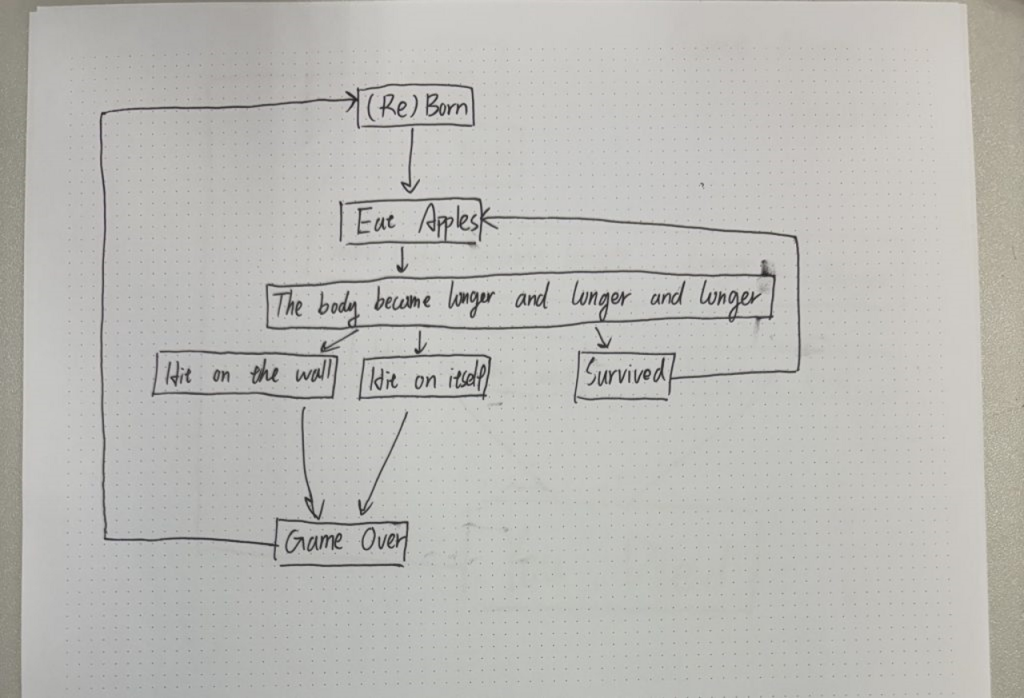
Regardless of the size or type of game, most gaming experiences can be broken down into one or more loops. When a player takes action, the system gives feedback, which affects the player’s next behavior choices. By repeating this process continuously, players gradually understand the rules of the game, the attitude towards the world, and the possible outcomes.
It’s important to note that Game Loop does not necessarily aim for “success” or “failure.” It can also be used to build experiences, moods, or narrative states. Some loops don’t make players stronger, but rather make players gradually aware of how the system responds to their constant engagement.
Leave a Reply