In Red Dead Redemption 2, Story Mode and Online Mode are clearly separated into two different modes. Although they share the same worldbuilding, basic controls, and some system language, players have completely different expectations when entering each mode.
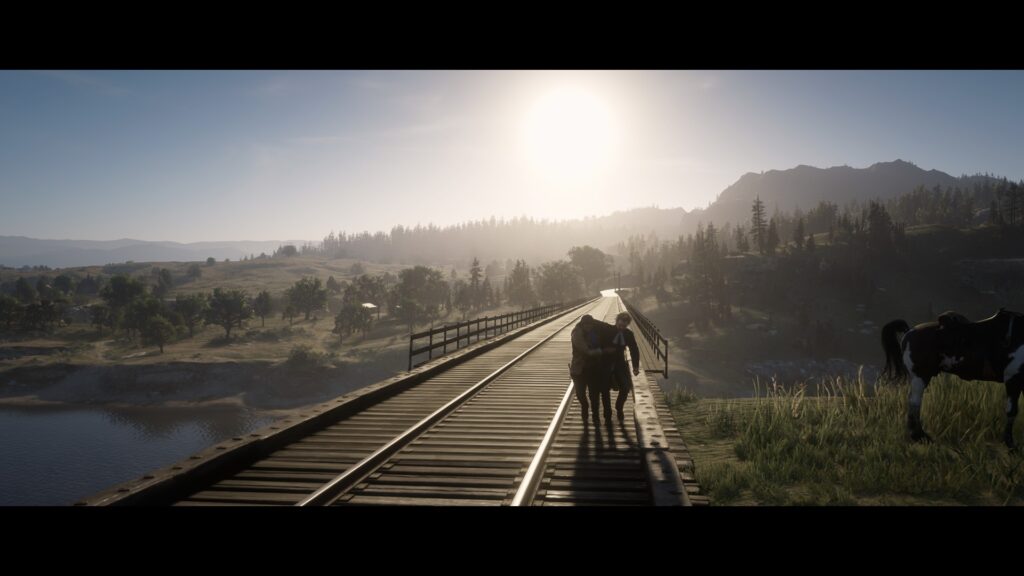
When players enter Story Mode, they usually expect a single-player narrative experience. They focus on Arthur Morgan’s character arc, the relationships between gang members, main missions, the atmosphere of the world, and immersion. Open-world exploration in this mode also serves the narrative pacing: riding horses, hunting, camping, and encountering strangers all strengthen the feeling of “I am entering this world”. Therefore, in Story Mode, players are more likely to understand the environment, characters, missions, and emotional experience as one unified whole.
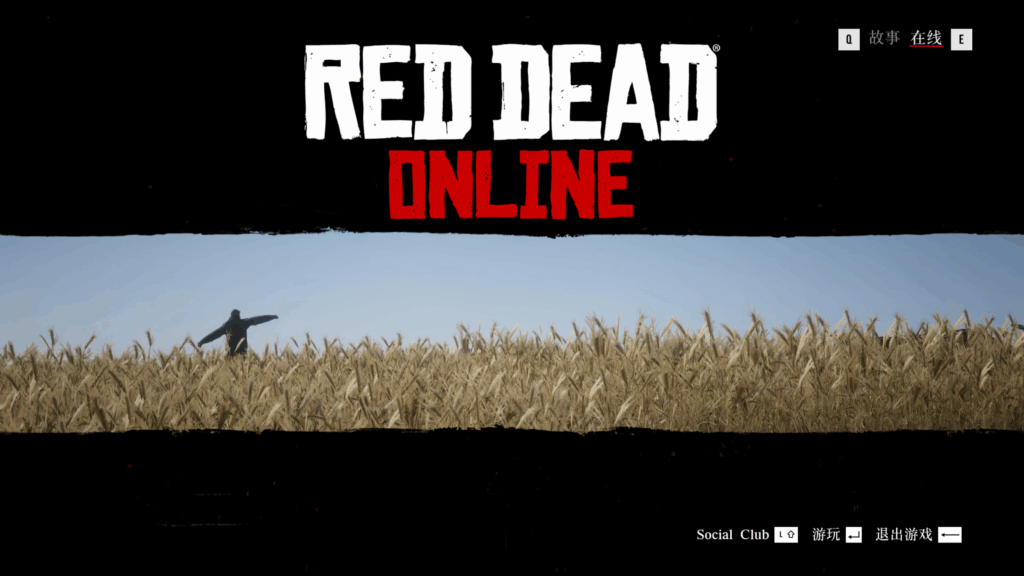
When players enter Online Mode, however, their expectations change. Even though they are still in a similar Western world, they will more naturally expect multiplayer interaction, activities, character progression, resource acquisition, and long-term play goals. Their attention shifts more towards “what can I do with other players”, “how can I improve my character”, and “how can I complete activities or receive rewards”. In other words, Online Mode makes players understand the world in a more systematic, social, and live-service-oriented way.
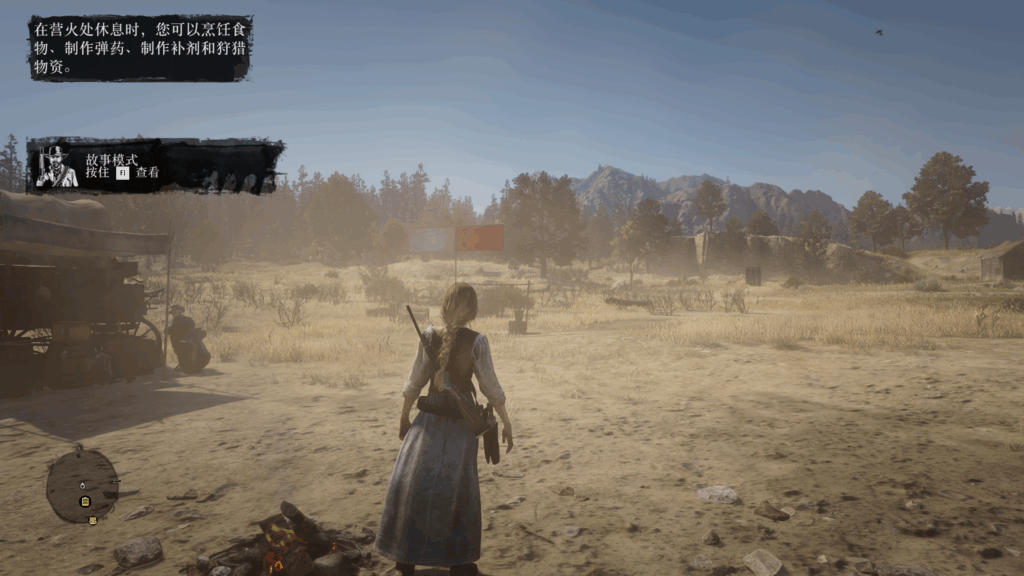
This separation of modes works in Red Dead Redemption 2 because Story Mode and Online Mode are originally two different product structures. They serve different play needs, and they allow players to enter the game with different mindsets. Players do not expect Online Mode to have the same narrative density as Story Mode, and they do not expect Story Mode to be centred on multiplayer activities and long-term loops like Online Mode. The clearer the boundary between modes is, the clearer the player’s expectations for each mode become.
When reading the GDD, I felt that the original description of the project contained a potential separation of modes: one part emphasised the player walking through the natural environment, observing, and experiencing the atmosphere, which is close to a walking simulator experience; another part emphasised narrative progression, character relationships, reputation, and multiple endings. This made me question whether, if these two parts were treated as separate “landscape mode” and “story mode”, players might feel that they are only looking at scenery at one moment, and only entering the real narrative or system gameplay at another.
I do not think this kind of separation is suitable for The Verdant Trail. This is because the core of our game is not to let players appreciate the landscape first and then enter the narrative or mechanics. Instead, it is to let players understand the narrative, judge danger, and make choices while moving through, observing, and exploring the environment. Meadow, Forest, and Salmon Run should not only be background spaces between story sections. They should continuously communicate information to the player through environmental clues, sound, enemy traces, collectible items, and route structure.
Therefore, my comparison with Red Dead Redemption 2 is not about saying that “we should imitate its mode structure”. Instead, it is to argue that once an experience is divided into different modes, players will treat them in different ways. For our project, I want to avoid this sense of separation. The atmosphere of a walking simulator should not be decoration outside gameplay. Instead, it should be combined with exploration, narrative, risk judgement, and system feedback.
For our project, a more ideal situation would be that players are reading information while looking at the scenery. For example, when players see an abandoned camp, they realise that someone once stayed there; when they hear wolves howling in the distance, they judge that there may be danger deep in the forest; when they notice the sound of the river becoming stronger, they realise that they are approaching Salmon Run; when they find an unreachable item, they start to think about whether they need a tool or another route. In this way, environmental observation, route judgement, danger perception, and information discovery all become part of the gameplay.
Resources:
Rockstar Games (2018) Red Dead Redemption 2. [Video game]. Rockstar Games.
Rockstar Games (2019) Red Dead Online. [Video game]. Rockstar Games.
Leave a Reply