In this lesson, our tutor opened a blank board in Miro. We worked through a questionnaire full of guiding questions to organise our ideas about our own games.


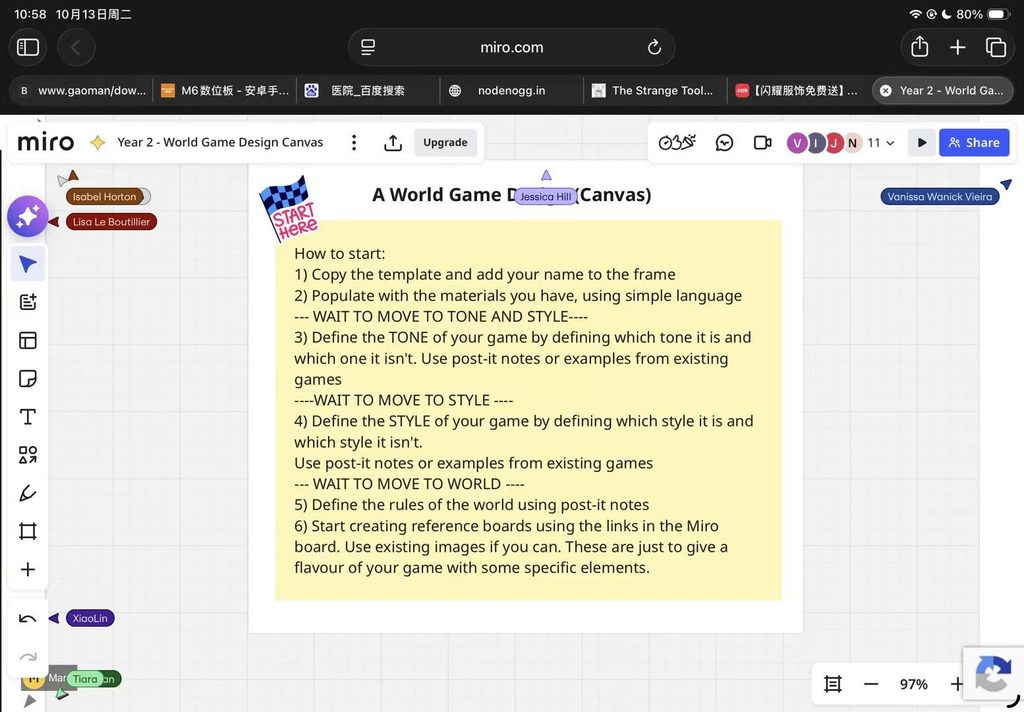
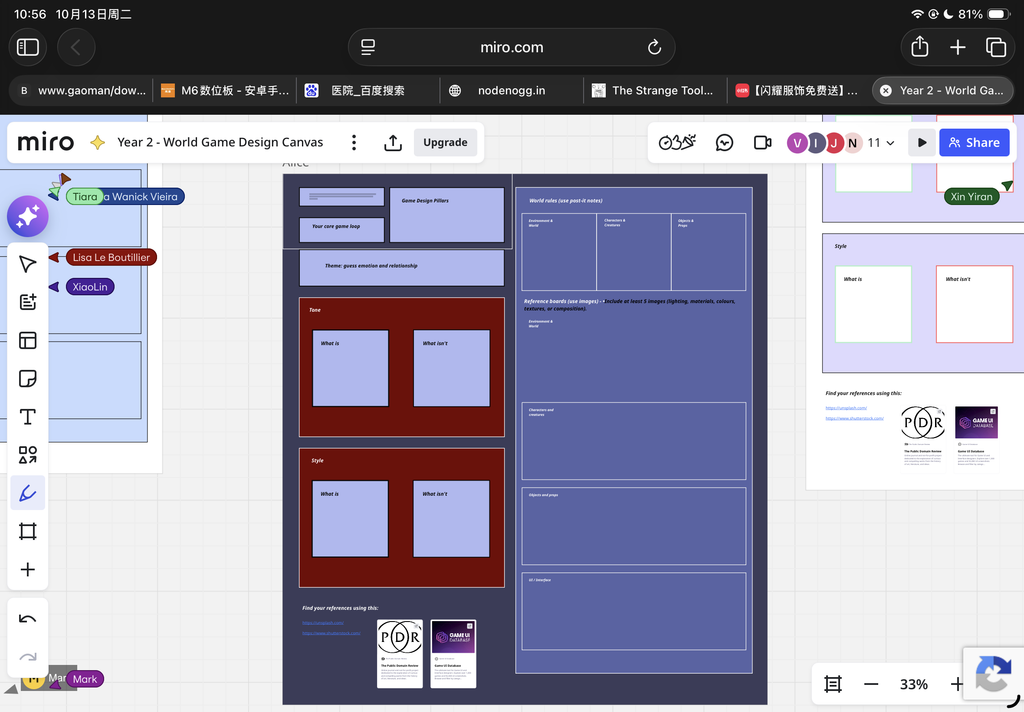
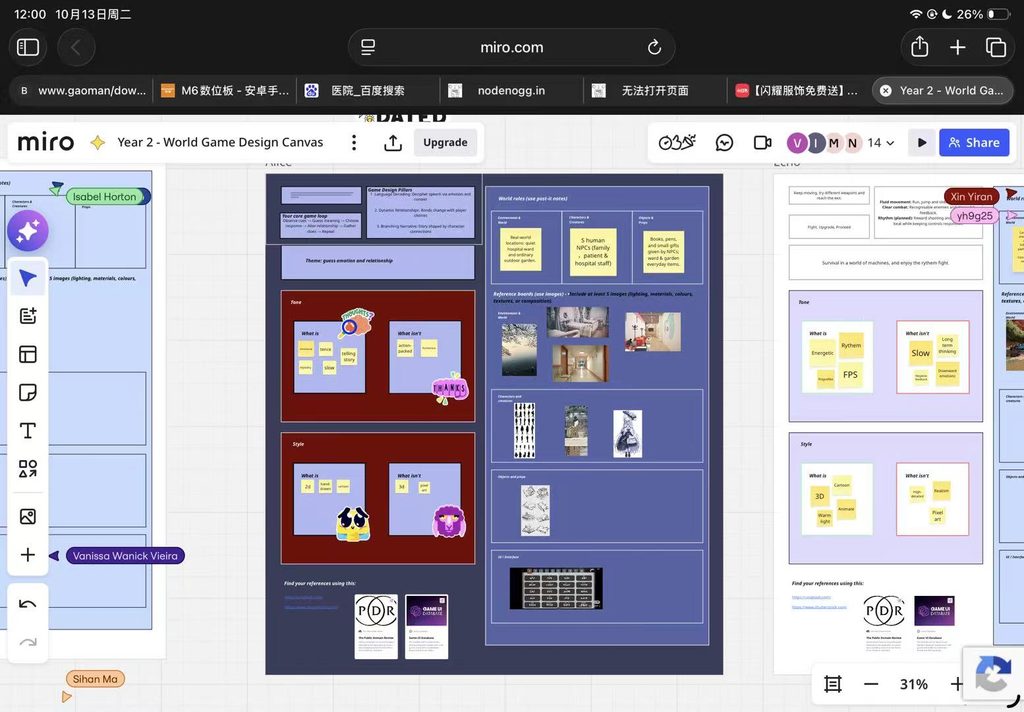
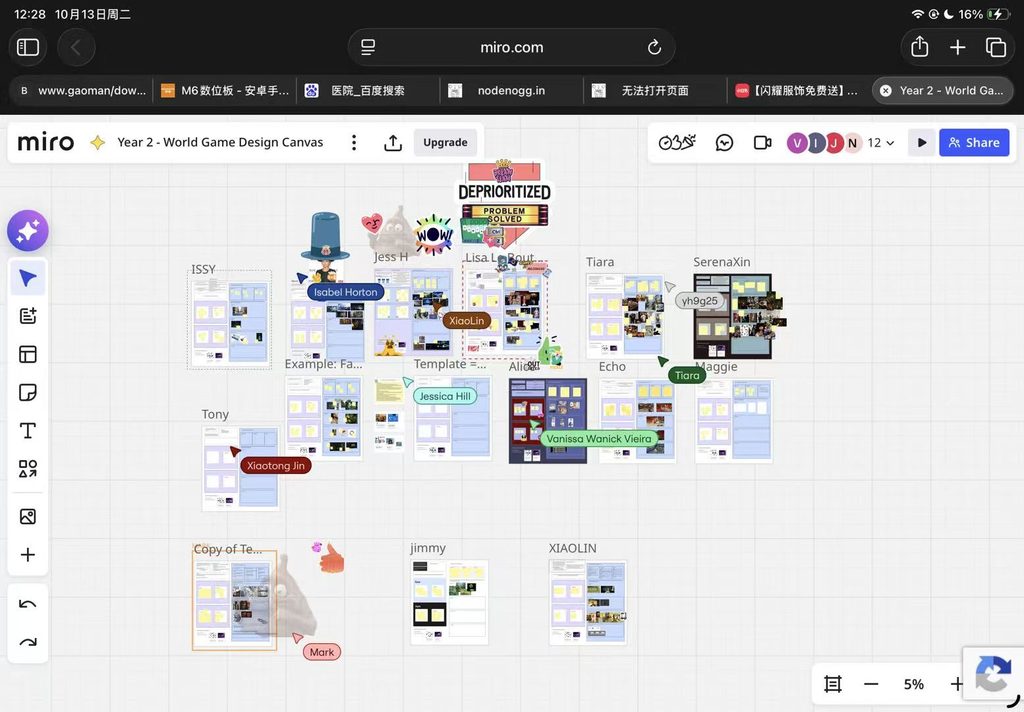
Alongside this worksheet, he also gave us step-by-step instructions on how to start, helping us fill it out with clearer ideas.
Game design lecture
Today we learned about GDDs and pitch presentations.
- GDD (Game Design Document): Internal document for the development team. It records full game details, defining gameplay, art, levels and work division for team members.
- Pitch / Pitch Deck: External presentation slides. Concise, made for tutors or investors, only showcasing the core highlights of the project.
Project Planning
- Break the project down into small tasks, estimate time and create a development schedule.
- Risk preparation: If time runs short, cut secondary features and preserve the game’s core fun experience.
Example: One game originally planned stealth mechanics. During development, the team found direct confrontation worked better, so stealth was removed, leading to a successful final product. Core gameplay always comes first; secondary features can be sacrificed.
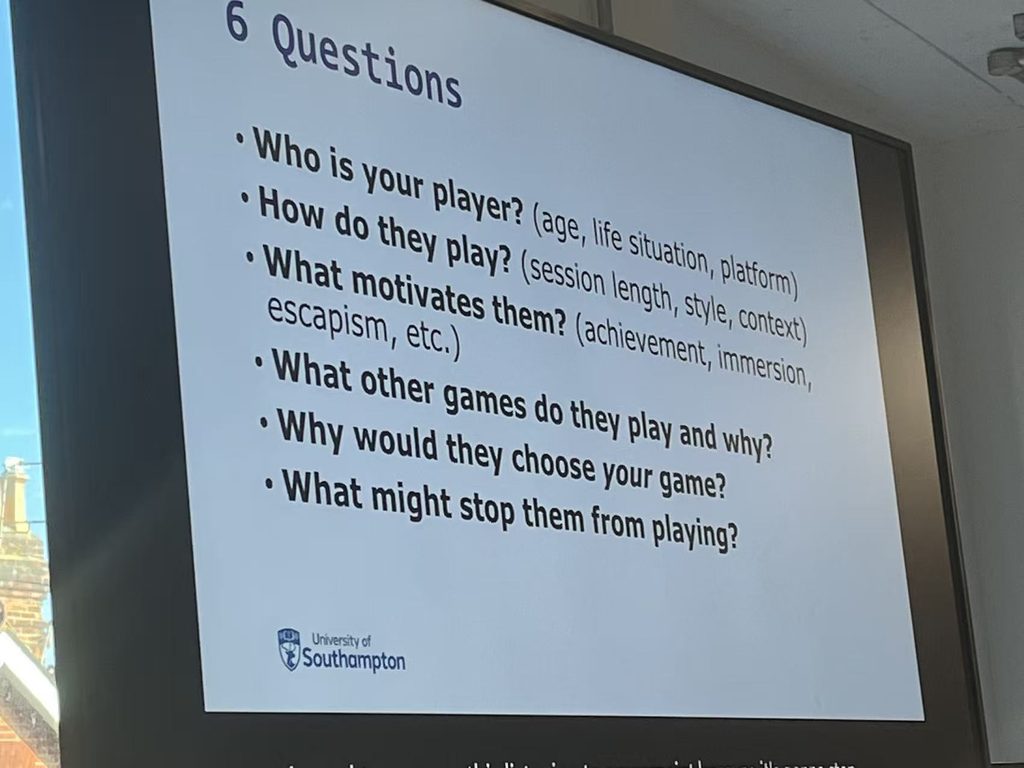
After taking all of this on board, we also need to consider the six questions below.
After absorbing most of the knowledge, we took a break. We used a guessing game activity to understand what core game mechanics really are. We split into groups of three, and each group was assigned a game. We had to write down its core logic for the rest of the class to guess which game it was.

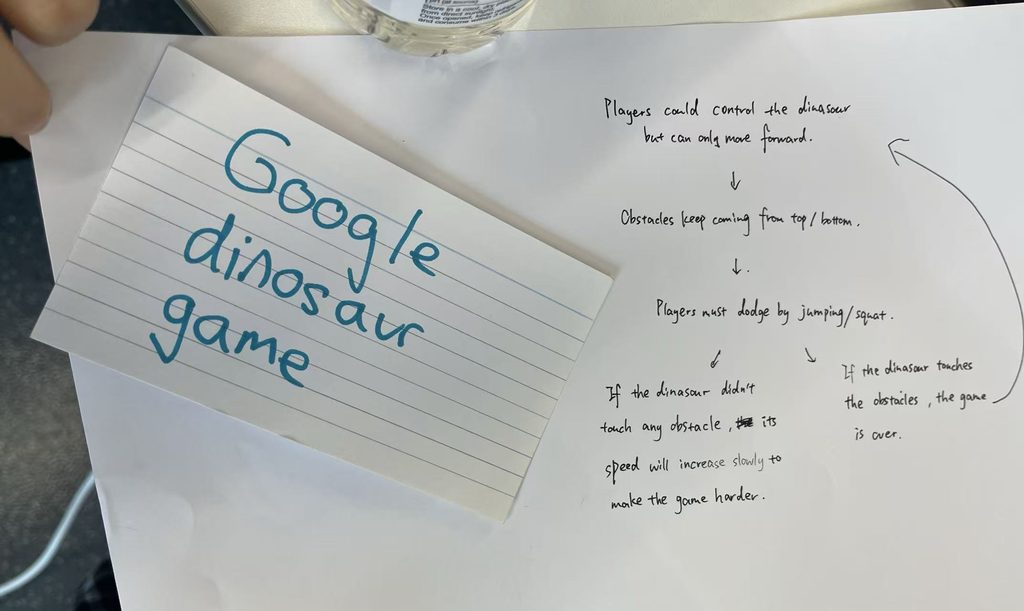
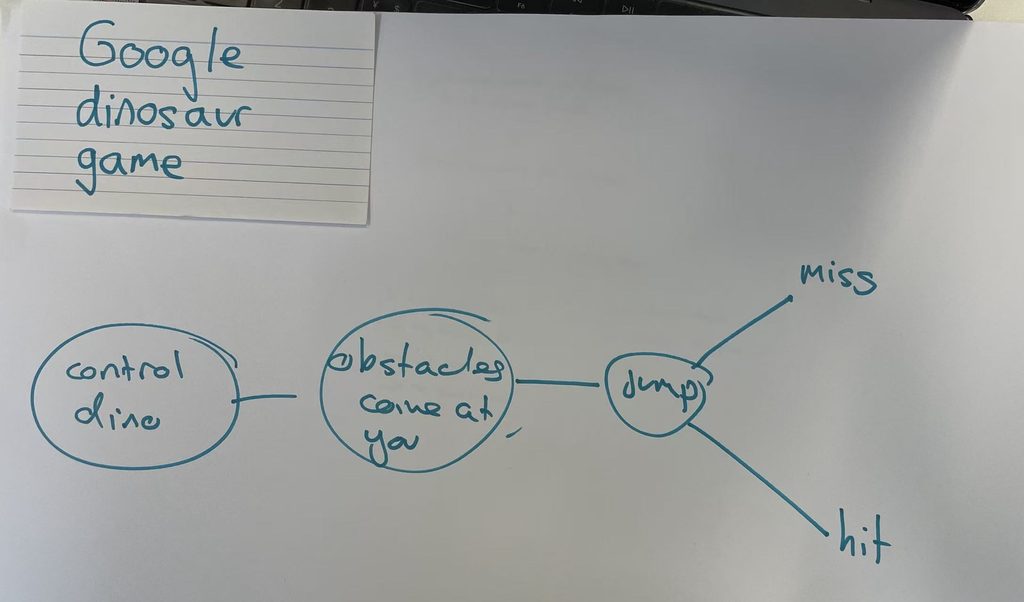
It was obvious our group member tried hard to keep other teams from guessing our game. Their exact words were: if we mention the main character directly, everyone will instantly know what game it is, and the guessing game will lose its fun.
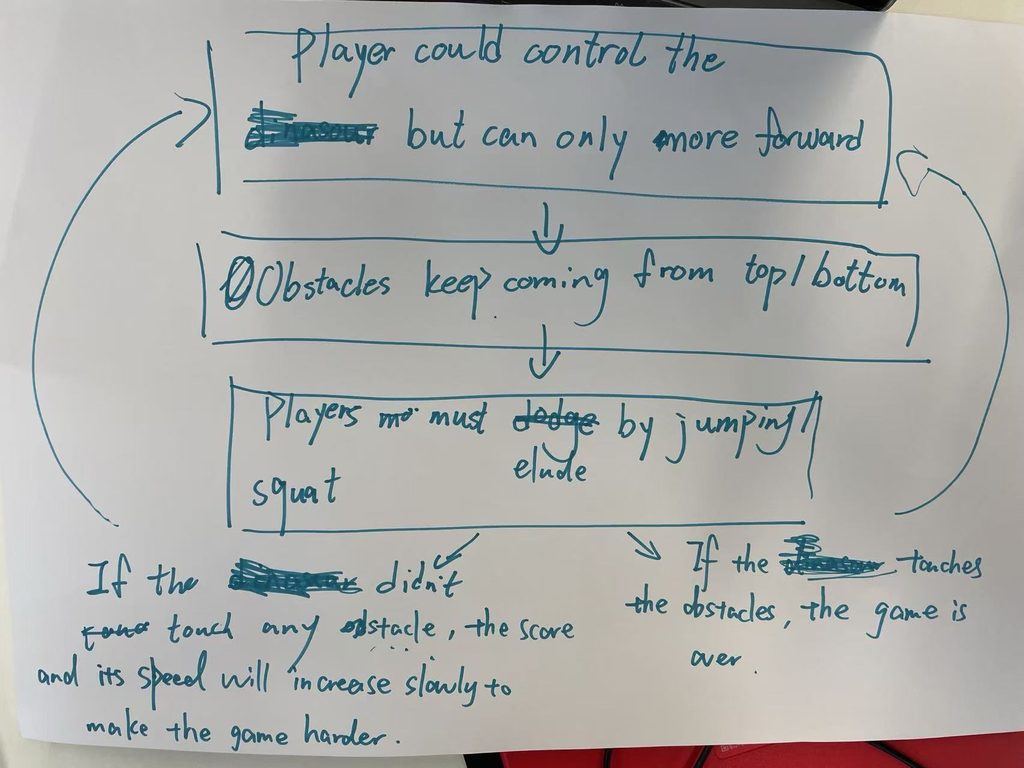
Just as my classmate predicted, nobody guessed our game correctly. I learned that if the core premise and rules of a game are not described clearly enough, its core mechanics can easily be mixed up or misunderstood.
My Work — part of work
View this work in About my game
After finishing most of the artwork, I assembled the separate images to create a mockup. I use it to compare differences between the mockup and my actual game, making revisions easier.
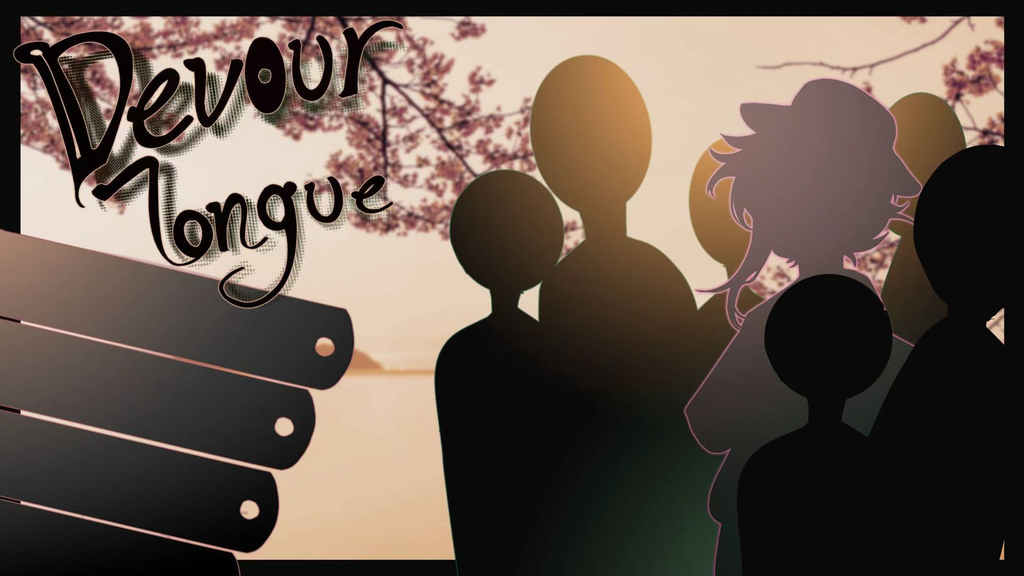
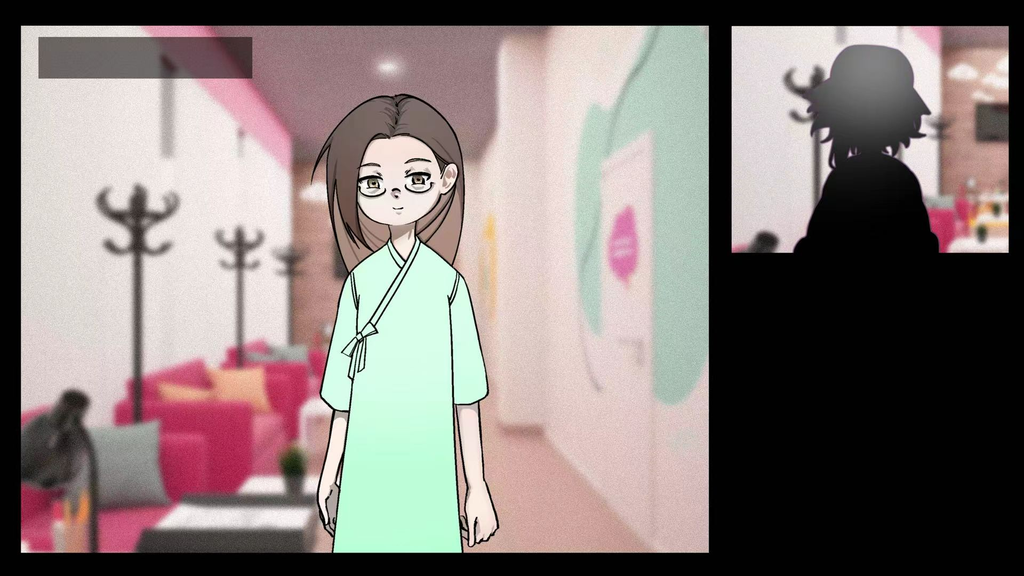
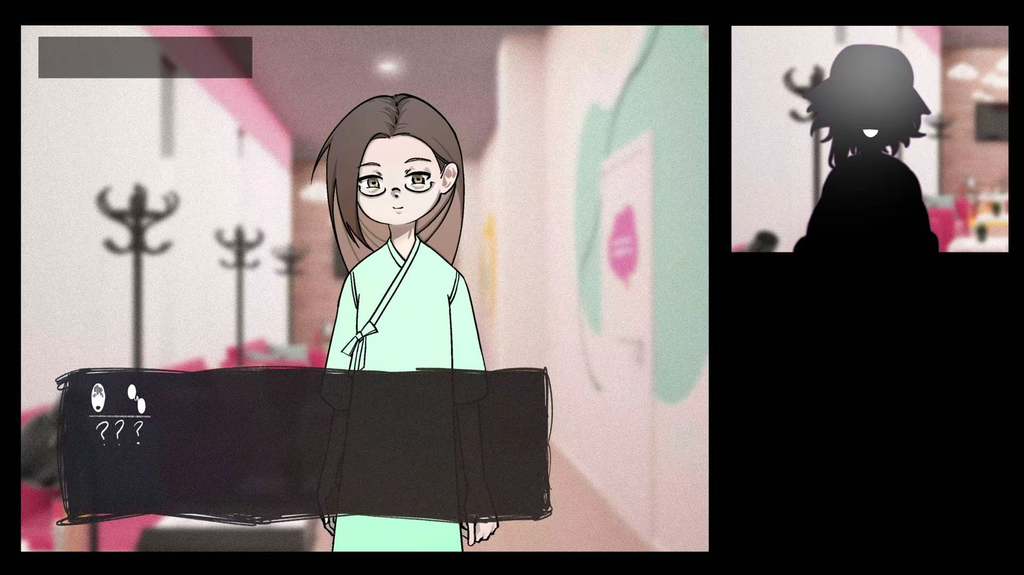
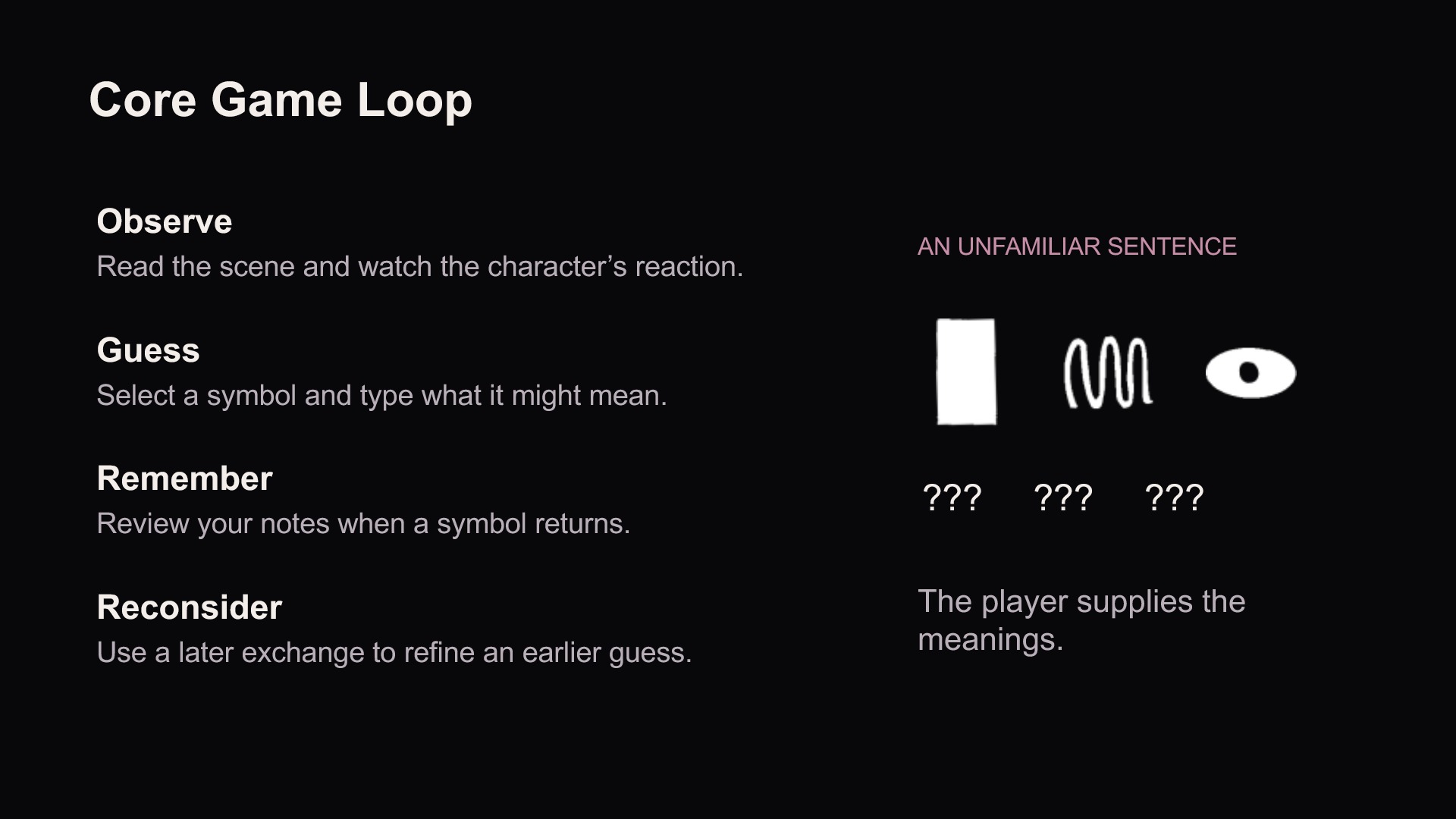
With the tutor’s guidance, I successfully clarified and documented my game’s core gameplay loop.