The difference between game art and concept art
I had received feedback from E-Jay where he would make a point on how the thumbnail concept art, wouldn’t translate to a game environment. This point was also supported when we had a team talk with Jade Carter. She said something along the lines of when making background work, it’s important to make sure that interactable assets aren’t blended into the background, unless it’s a design intention. After this talk, I had a one on one with my team mate asking for help with resources, and he commented that I should focus on making “game art” rather than “concept art” when we get past the stage of conceptualisation.
I will be looking at professional artists in their respective careers and research the difference between concept and game art to help me translate what is the “draft” to a “finalised” asset.
Concept art: Art which represents an idea before it is developed further into a final product. This art provides a visual blueprint, allowing teams to unify their visions and move forward with a direction. (DeGuzman, 2024)
Game art: Art referring to all the images, animations, and the video sequences the player sees on screen. (Ecevit, 2023)
Examples of concept art
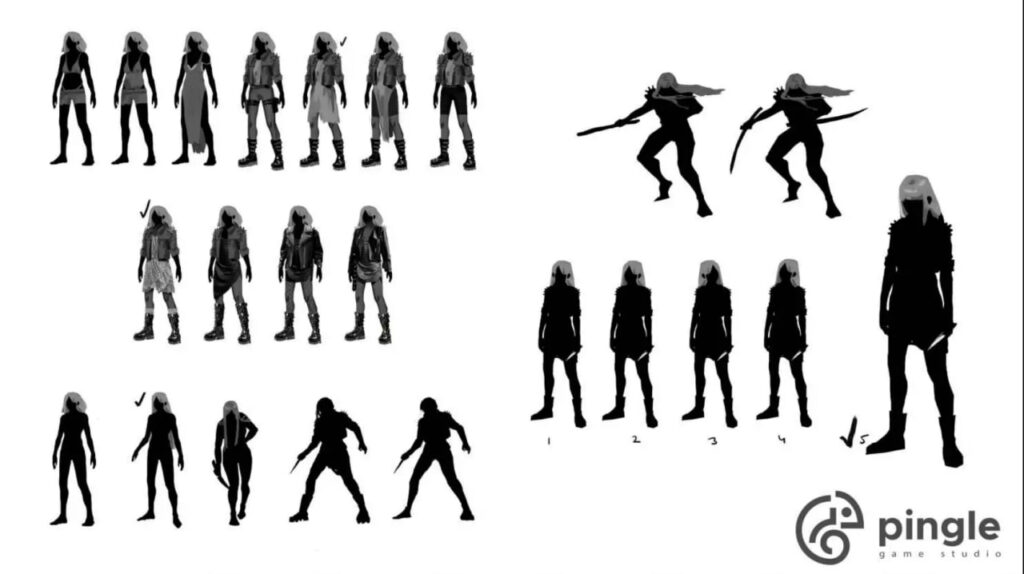
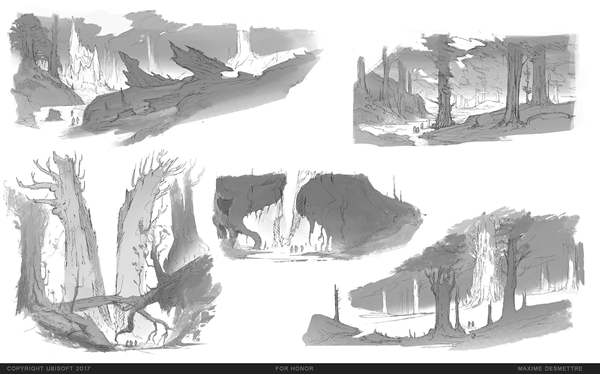
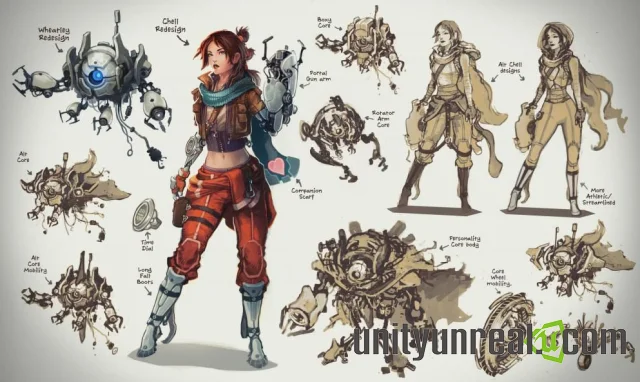
The images above show that concept art is a far more iterative process and a lot of back and forth occurs with either peers or a directive. During this stage, it is imperative to figure out what assets or concepts would look best in the game, hence why there is a lot of peer review and opinions involved. Different types of concept art methods include:
- Silhouette sketching
- Thumbnails
- Photobashing
- 3D block outs
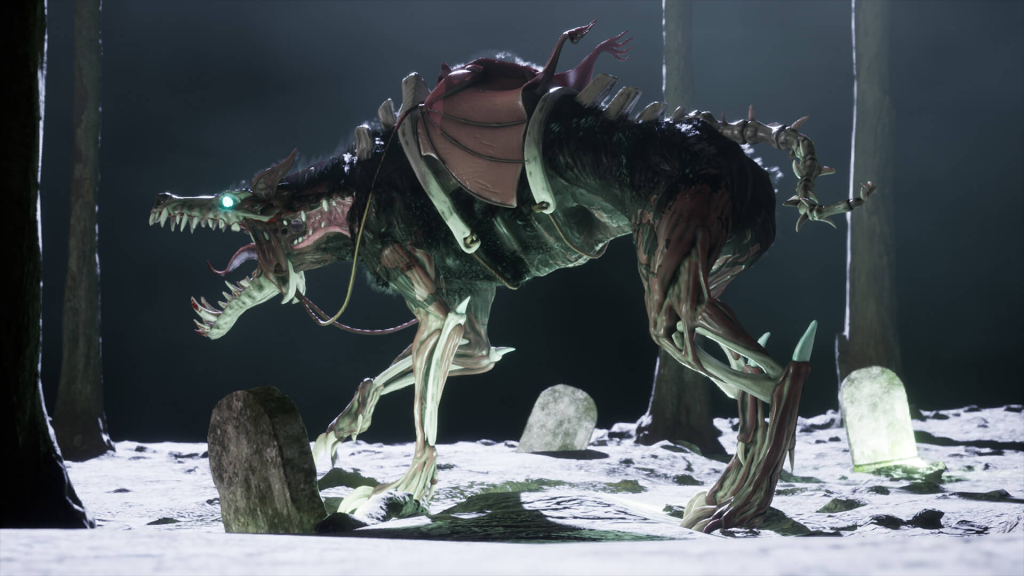
Examples of game art
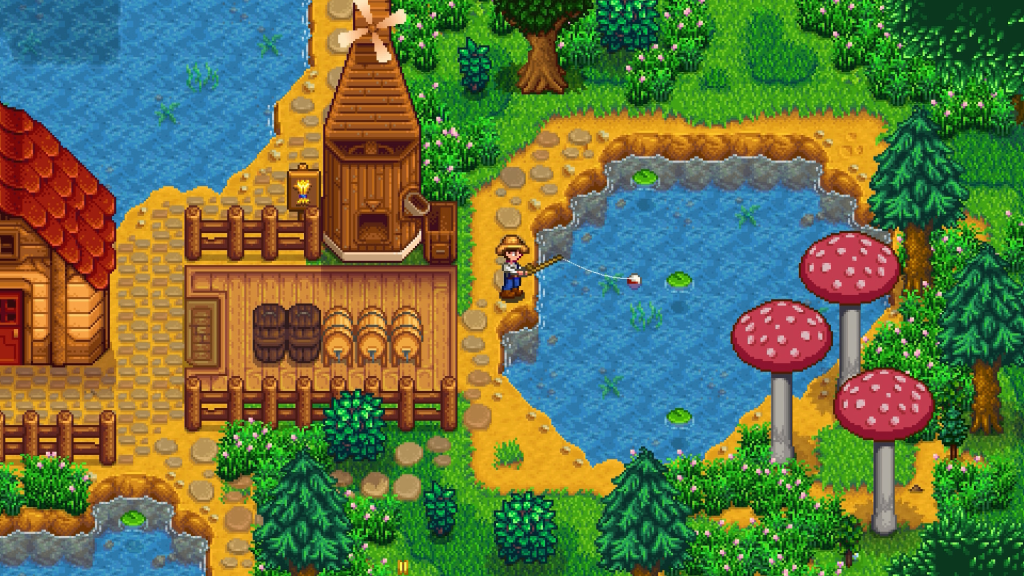
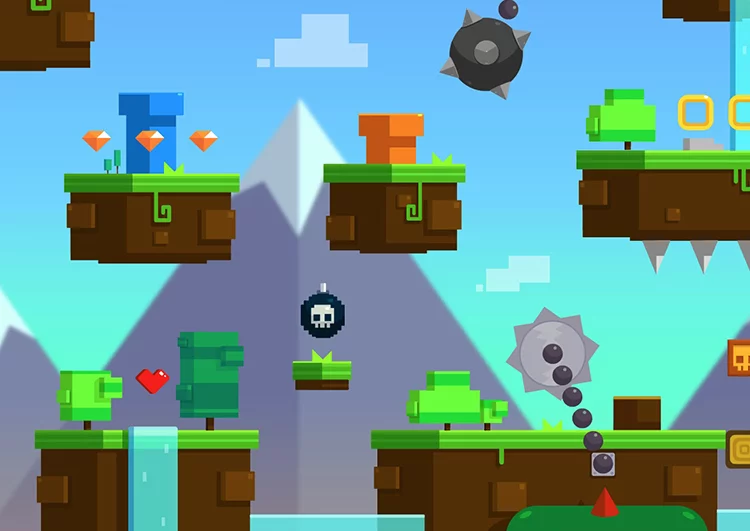
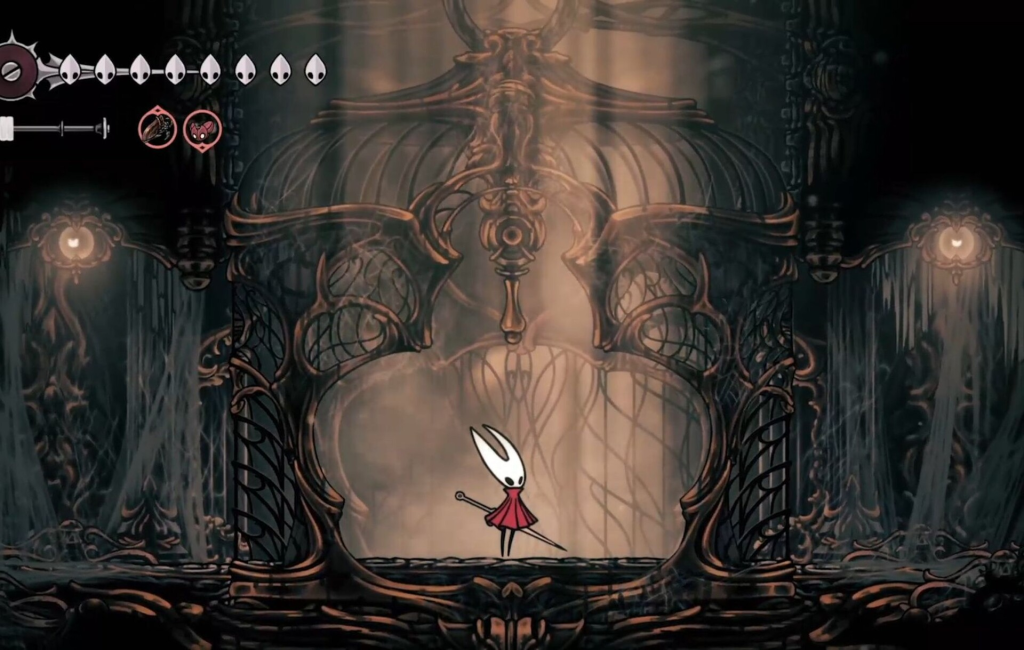
By looking over at the images above, everything that is seen is game art. Game art in comparison to concept art is far more precise, finalised, and shows more intent. However, it is important to note that without concept art, these finalised assets would be harder to make look harmonious, and / or would take longer without the steps taken beforehand.
Knight Zhang – character concept artist
Knight Zhang has worked as a freelance artist since 2012 and works in multiple fields within concept art such as visual novel, indie game development, graphic design, motion graphics animation, and commercial illustration. Currently, she is a senior character concept artist at Riot Games on their fighting game 2XKO. (Zhang, n.d.)
Wrath of Dogs concept art
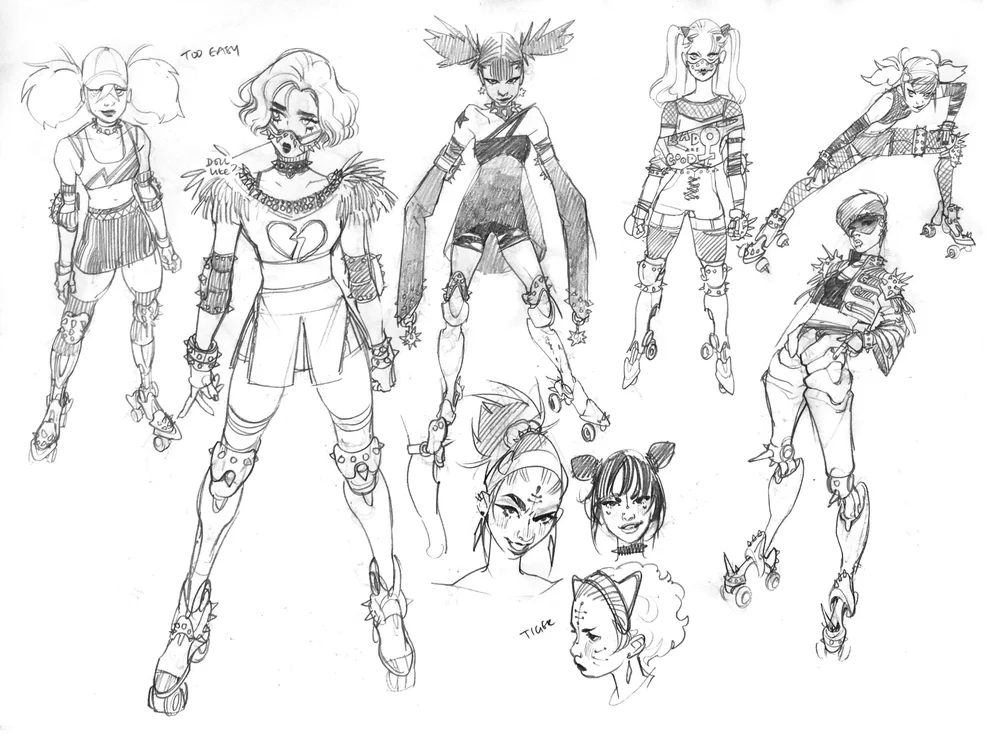
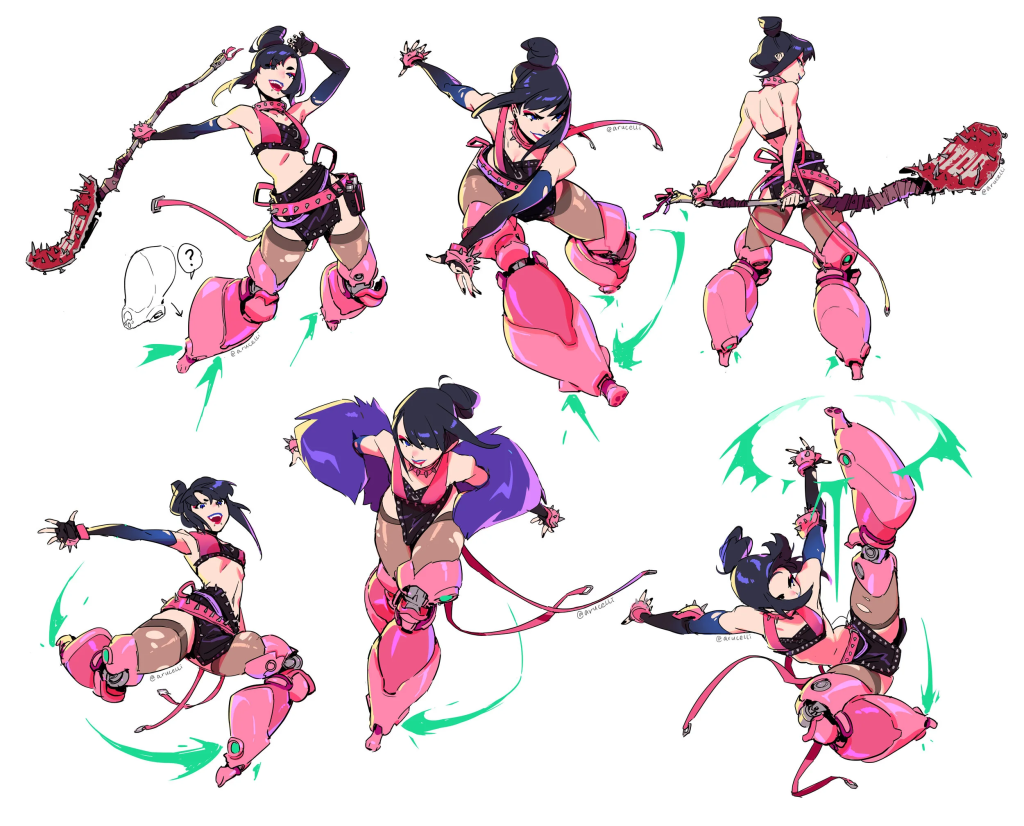
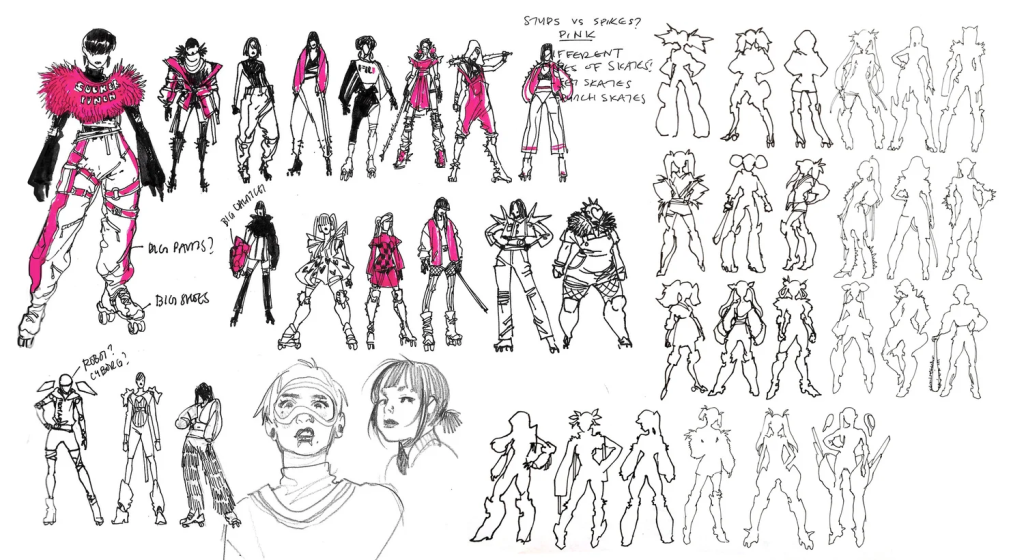
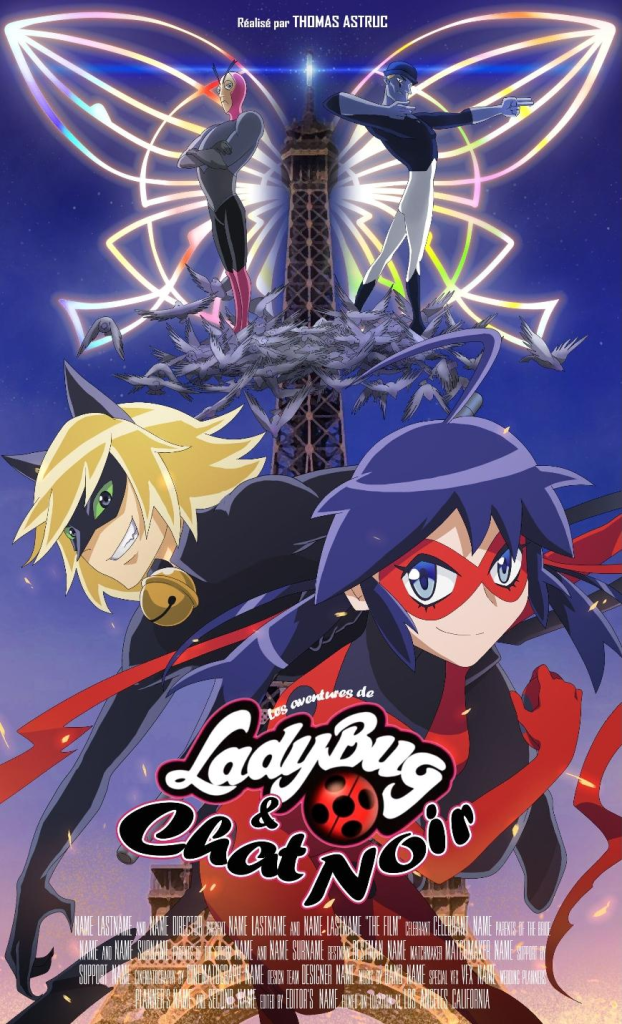
Looking at Knight’s work, it’s clear to me that her earlier stages of concepting use silhouette sketching to see what works and what doesn’t. This artist uses a variety of brushes, mainly a brush that looks like a pencil, and the other one that has no pressure sensitivity. I also notice that during her concept stage, most of the detail focuses entirely on outfit design, rather than the face. As someone who plays games frequently, clothes and accessories are used as a tool to distinguish characters. However, it’s also important to take into account that clothes and accessories can also be a disadvantage when it comes to 2D animation. When it comes to 3D animation, an artist can be as creative as they want because their concept will be a 3D model that will be used over and over again.
Miraculous Ladybug PV was set to be a 2D animated series but the studio that was animating it, found drawing the spots was too difficult and time consuming. This ultimately lead to the decision that it should be a 3D animated series.
Ari Gibson – game artist
Ari is the co-director of Team Cherry and previously ran the animation studio Mechanical Apple. Since then, he has worked on several projects across film, games, and music videos. Team Cherry is an indie games developer in Adelaide, Australia. (Team Cherry, 2021)
Hollow Knight concept art
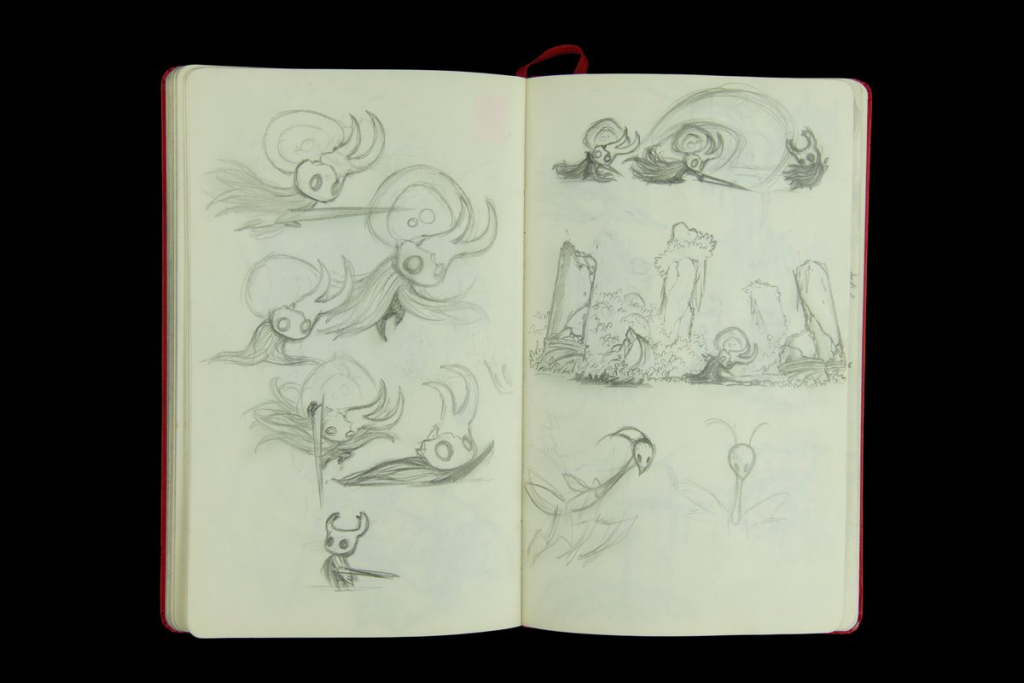
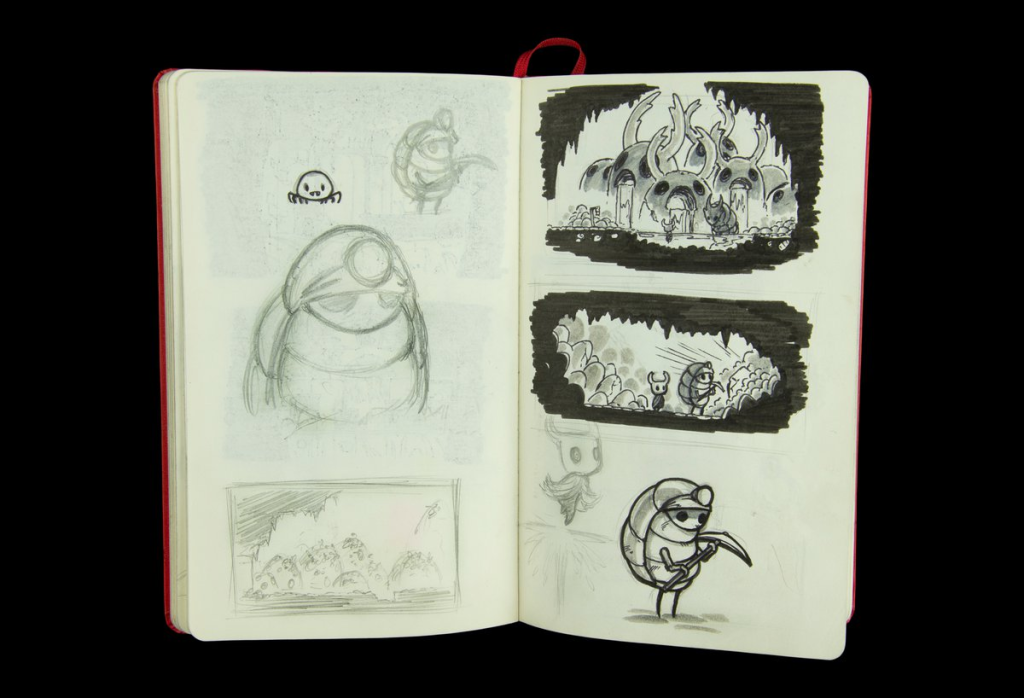
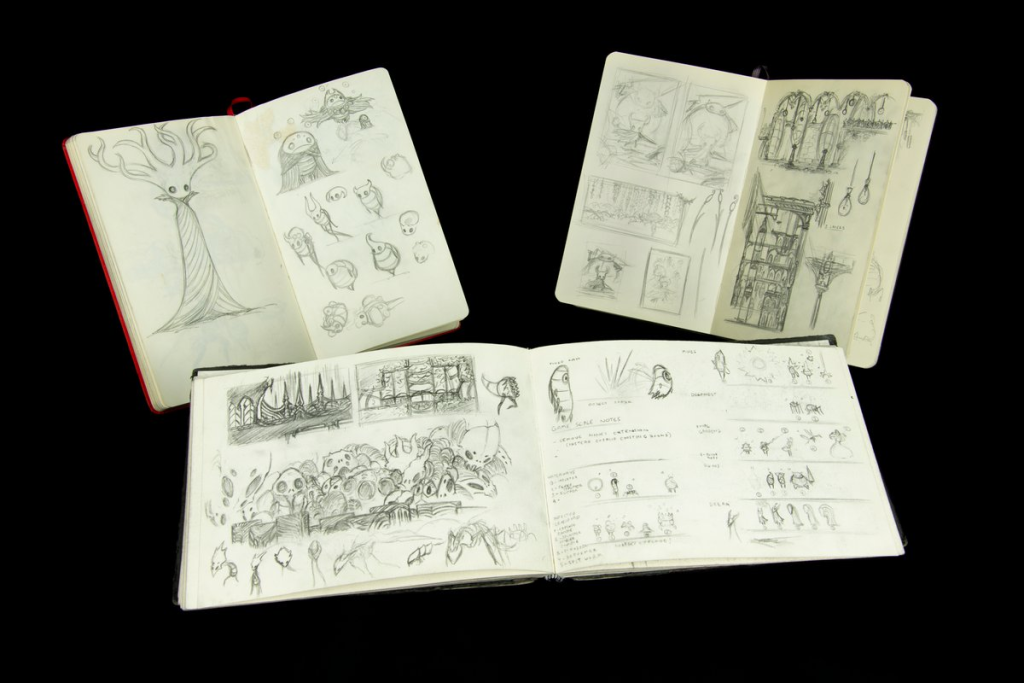
The images above show the development of Hollow Knight through sketchbooks. In some of these pages, we can see the player character in movement and some environment drafts. Without these sketches, it would take a lot longer to figure out the overall look of the game. These sketches also (I imagine) have been used to communicate with his peers and convey his thoughts about the game’s overall art direction.
Screenshot of the game
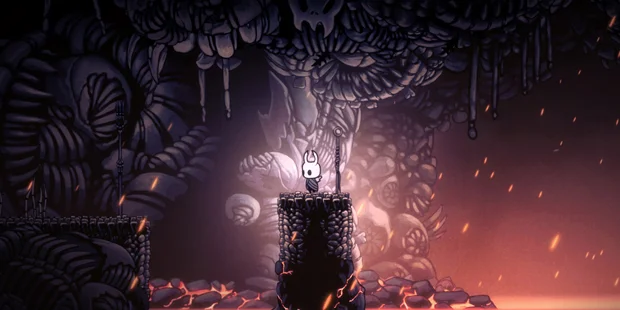
The art in the screenshot is a lot more finalised, there are more SFX and lights to really tie in the vision. One thing I have noticed when playing the game, is that there seems to be a light vignette around the screen and a glow around the player. This brings the player out more and centres focus on them.
Differences between concept art and illustration
Different perspectives
Concept art tends to give a more broad picture of game characters and assets, essentially giving a guide for everyone on the team to make sure that they’re on the same page. On the other hand, illustrators don’t need to think much out of their illustration. For example, an illustrator may draw a female character in a large frilly dress, holding a parasol and wouldn’t need to think about the logistics of the back. A concept artist has to draw the character in every angle and different emotions. (SM, 2023)
Different budgets
The financial spectrum varies from project to project, the but the creation of illustrations and 3D ones, tend to be the most expensive in the pipeline. However, it’s completely wrong when people assume that concept art isn’t expensive at all. Concept artists require strong artistic skills and creativity to even begin to come up with concepts. To cut expenses, game developers outsource both concept art and illustration. (SM, 2023)
Different levels of detail
Illustrative work demands a great level of detail and artistry and complexity. On the other hand, concept work doesn’t need a lot of high level detail. As long as the basic fundamentals are understood, a concept artist doesn’t need to have a good “style”. (SM, 2023)
Different processes
A concept artist has the ability to take an initial idea for an element of the game and produce the vision for it. In order to make a high level design, an artist needs to research and brainstorm ideas that meet the requirements of the client. Afterward, the illustrator works with the finalised concepts and creates an illustration. The illustrator has the ability to create an illustration that looks cinematic by setting the mood, tone, and expressing the visual story. (SM, 2023)
Different skill sets
Concept art creation requires a person to imagine the bigger picture and think about the great level of imagination. Details are usually not that important than the overall vision. A concept artist need to take into account the final product and follow the director’s vision. Given that an illustration is used for the final product, it demands attention to detail and the ability to create realistic, stylised visuals. (SM, 2023)
Different levels of creativity
Numerous concept artists are dreamers who come up with several ideas and concepts. To begin to conceptualise a character, they need to have powerful creation and visualisation skills. On the other hand, an illustrator tends to be more technical than creative. (SM, 2023)
Thoughts and takeaways:
- Keep concept art simple; just convey the idea, don’t get too involved with detail
- Try to produce a lot of concepts so there is a variety of choices
References
DeGuzman, K. (2024). Concept Art in Film — Definition, Types & Iconic Examples. [online] StudioBinder. Available at: https://www.studiobinder.com/blog/what-is-concept-art-definition/.
Ecevit, E. (2023). Video Game Art. [online] gamedesignskills. Available at: https://gamedesignskills.com/game-art/.
SM, N.R. (2023). Difference Between Concept Art and Illustration in Games. [online] RetroStyle Games. Available at: https://retrostylegames.com/blog/difference-between-concept-art-and-illustration-in-games/.
Team Cherry (2021). About. [online] Team Cherry. Available at: https://www.teamcherry.com.au/about.
Zhang, K. (n.d.). About Me. [online] Knight Zhang. Available at: https://www.knightzhang.net/about-me.
Leave a Reply