Overview
Game Title:
Coven
Genre:
Point-and-click, psychological, adventure game
Logline:
Nothing interesting ever happens in your sleepy Midwest town, not until the disappearance of a classmate shakes the community. After discovering your great-grandmother’s tarot cards and fortune-telling equipment in your family’s attic, you begin tapping into a force that may unexpectedly help you uncover the truth.
Story Overview/Gameplay:
Point-and-click game focused on exploration, dialogue, and solving tarot-based puzzles (e.g. pulling and reading card spreads and navigating/changing fate). You play as a college student, having found some of your great-grandmother’s things in the family’s attic while packing to leave for this new stage of life. Living in a small town meant everyone knew everyone else’s business, and you chose to stay close to home. However, the disappearance of a former classmate has rumours flying, but all leading to dead ends. It is soon forgotten, but you and your friends begin uncovering the dark truth and dynamics in your community.
Inspiration:
- Sally Face
- Oxen Free
- Life is Strange
Why this idea:
Although nearly all the inspiration for this game idea came from my own interests and just tropes/themes that I like, themes like these are seemingly on the uptick (Autumn trends on TikTok). Games that revolve around a (arguably cliché) small town mystery always seem to do quite well (e.g. Life is Strange, Night in the Woods, etc), but of course, it is not just down to the genre that makes these games popular. The nostalgic and gothic elements target a specific, small but stable audience interested in the media that I used as inspiration.
Moodboards
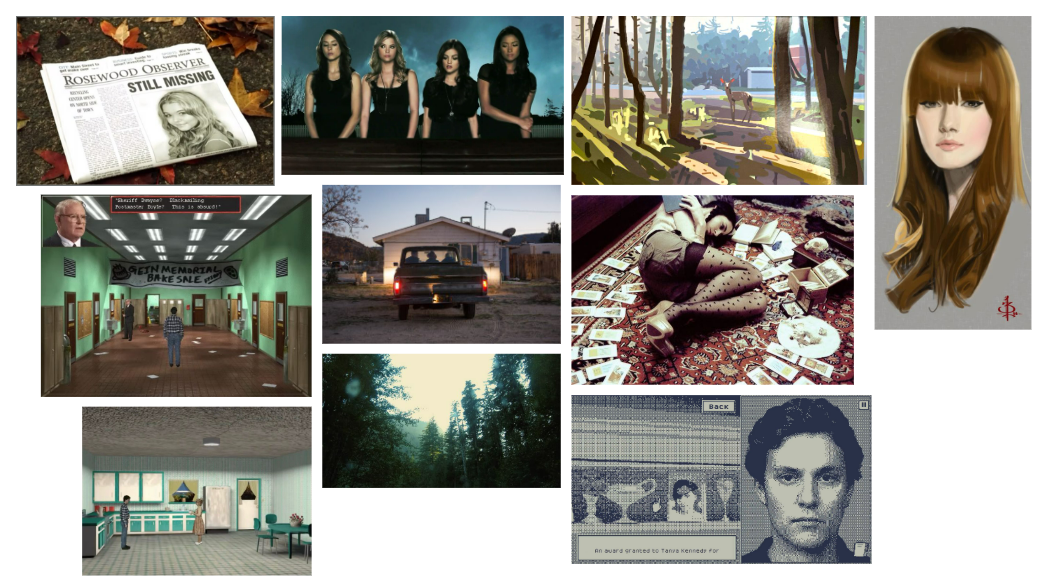
I was heavily inspired by young adult TV shows, books, and games for the look and feel of the game: Pretty Little Liars, The Searcher by Tanya French, as well as Ethel Cain’s Preacher’s Daughter and Willoughby Tucker, I’ll Always Love You studio albums. A classmate recommended the game Who’s Lila (bottom right image) – a point-and-click adventure game where you control the character’s facial expressions, rather than dialogue. The game used tarot cards to represent each of the multiple endings. It mixed surrealist landscapes and ordinary architecture within a ditherpunk art style. Although the art style was pixelated, not all details were lost from the characters’ faces.
- 2D and 2.5D (Harvester game inspo)
- Autumn
- Moody
- Gothic
- Supernatural
Concept Art
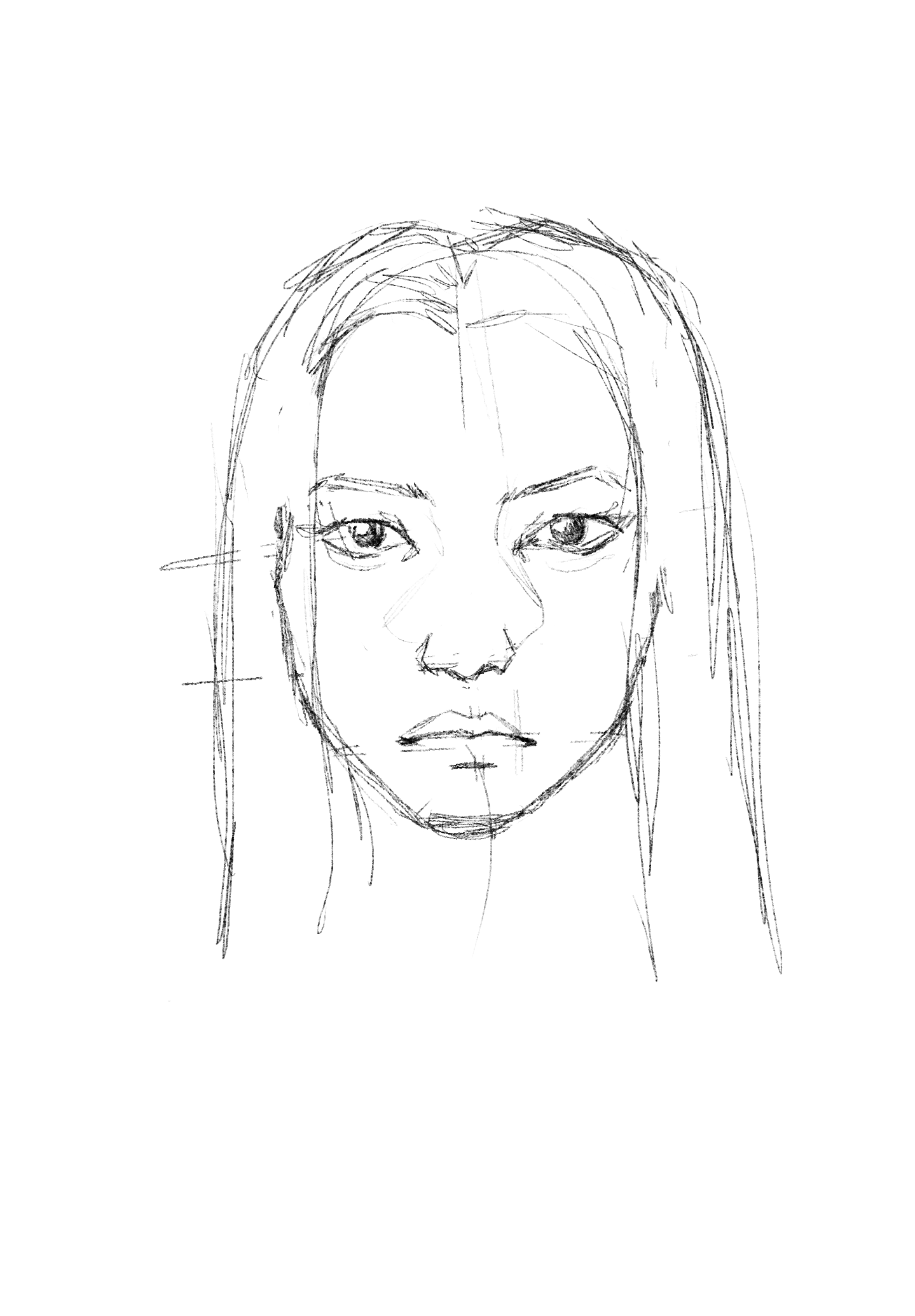
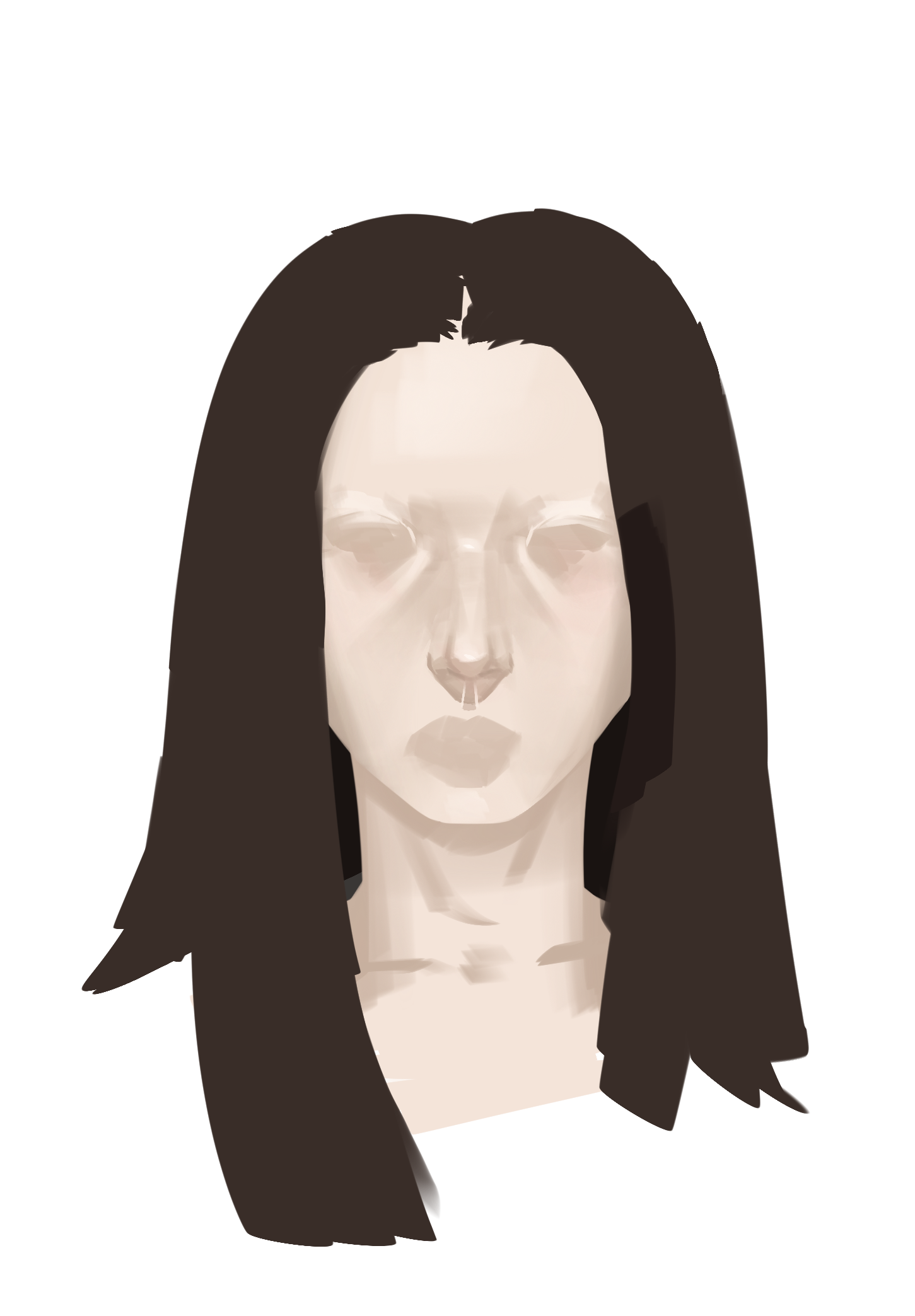
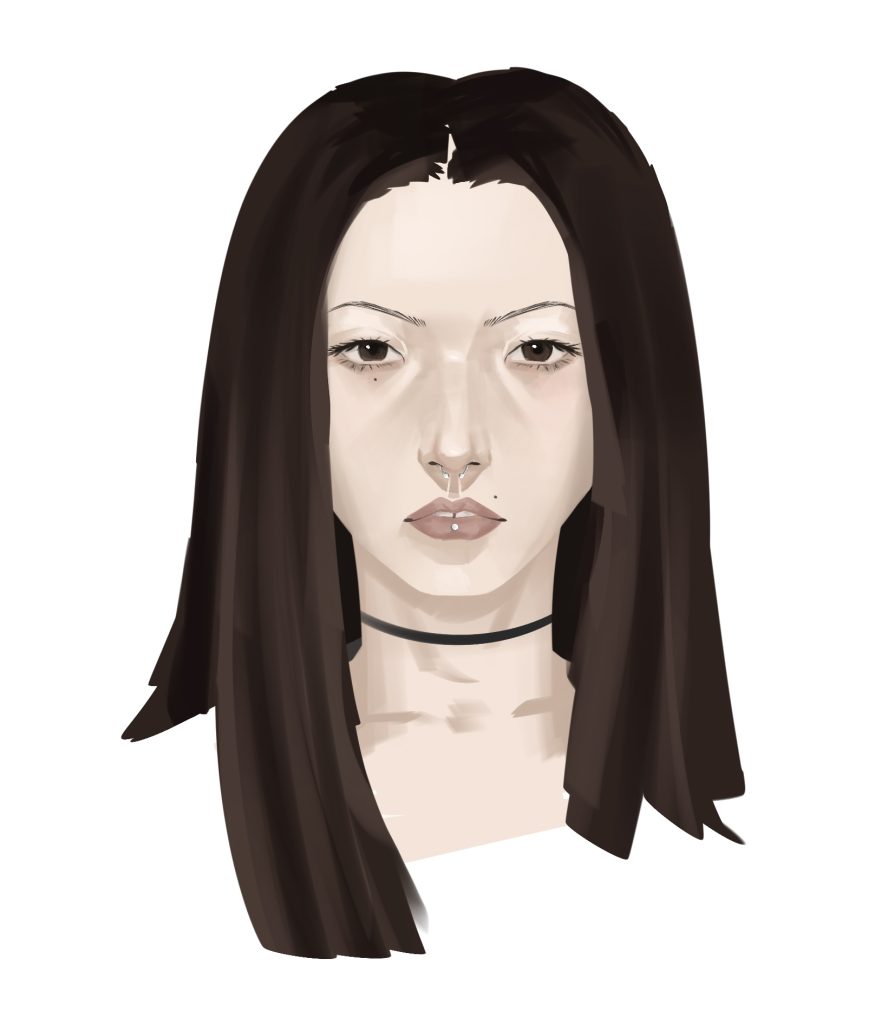
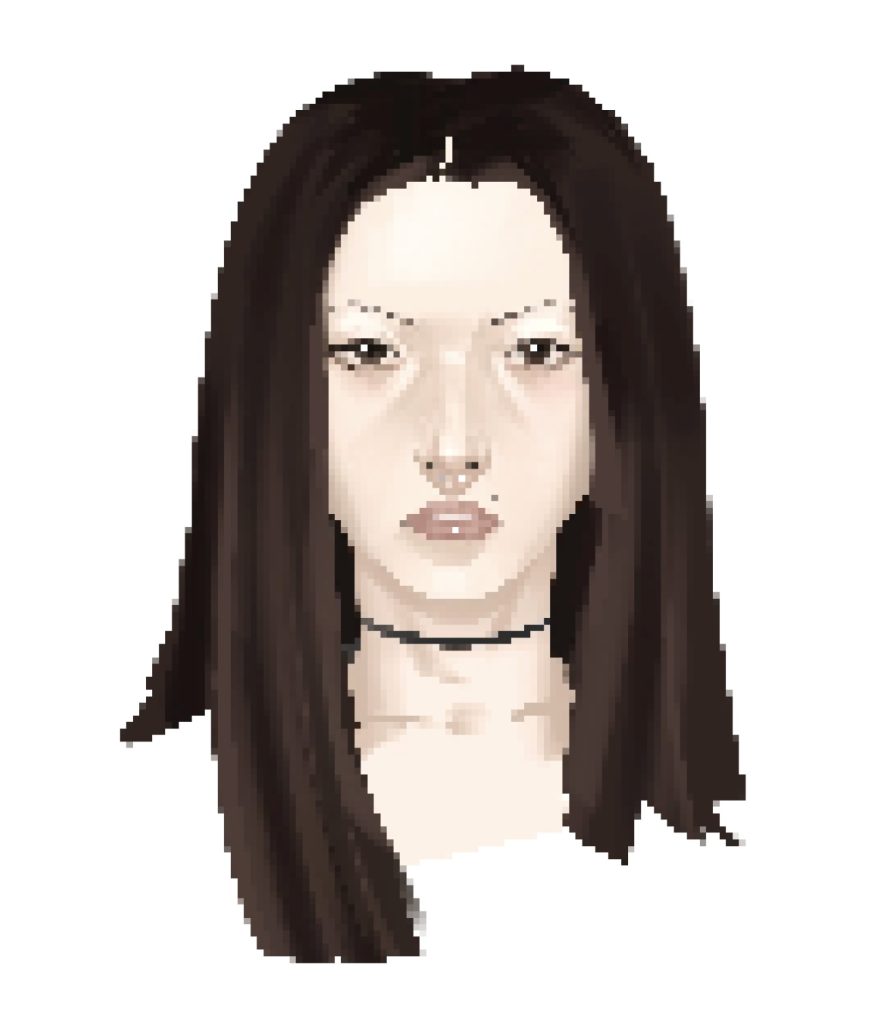
I drew a rough concept sketch for the potential design of the protagonist. I took inspiration from concept artist Bryan Lee (image in the top right corner of the moodboard) as well as Life is Strange concept art. I experimented with the artstyle on an app that turned images into pixel art, but doing this lost some of the detail.
Reply