
Our first session for year two simply introduced us to the course and set our expectations regarding the structure of the course.
Our assessment is in the form of a Game Design Document (GDD). This is a comprehensive document outlining a game’s vision, it focuses on explaining things like core gameplay loops, the players experience and the visuals it is often accompanied with as very rough prototype of gameplay.
We also presented our summer projects in small groups. The summer project allowed me to understand what a GDD is as I searched for GDD material from Subnautica, the game my presentation was about. This let me see what the rough prototype version of a highly polished game actually looked like.
The last thing we did in the first session was to begin thinking about our major and minor focuses for the year. My major focuses were art and narrative as those are the things I am most comfortable creating. The minor focuses were 3D work and creating puzzles similar to the point and click genre long winded puzzles. They are a keen passion of mine and my favourite types of games to play. To get better at 3D I will devote time to attampting to recreate mechanics in 3D games.
Later in the week we had a group idea generation session based off images we had found after being given the word “movement” as a jumping off point.
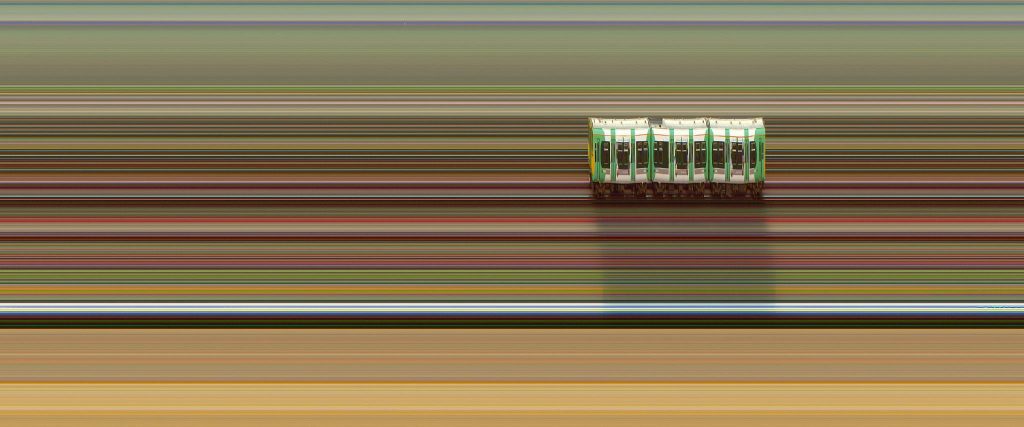
I worked in a pair with someone and we found this image by Jay Mark Johnson, an experimental photographer who plays around with timeline photography. Somehow both capturing a moment in time and also allowing the viewer to see the movement of the scene.
We were assigned groups and created a joint mind map for the word movement. We then shared the images we had found, explaining what they were and how we found them. We then collated all of the images toegtehr into one giant board and began using post it notes to label them with words we saw. Once we had enough words that were similar we grouped them into themes, then we were instructed to add verbs, nouns and adjectives to those themes. These are building blocks for game ideas.
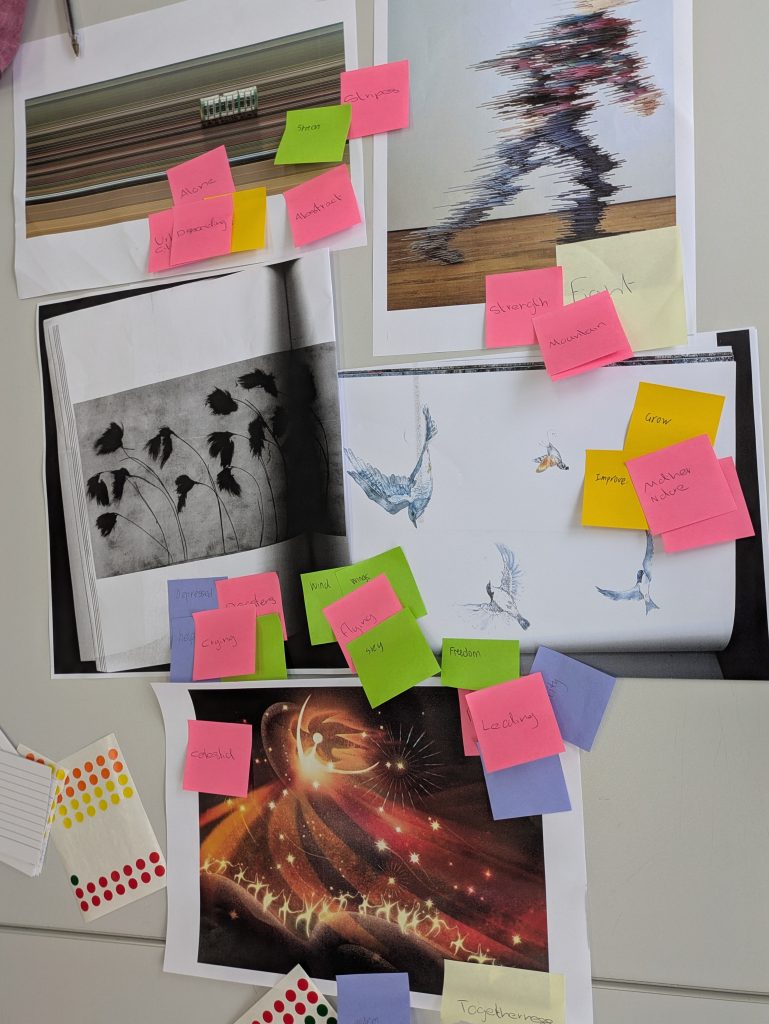
We then began stringing these words together to form game ideasby thinking what players can do with things with certain qualities. The ideas we had were:
- Stretching through an urban city alone
- Release emotions through dance
- Grow nature
- Fast forward whilst moving through urban cities
The next step was to add structure to these ideas by assigning a goal:
- Finding companionship by contorting through modernity
- win over the entire audience
- Improve nature
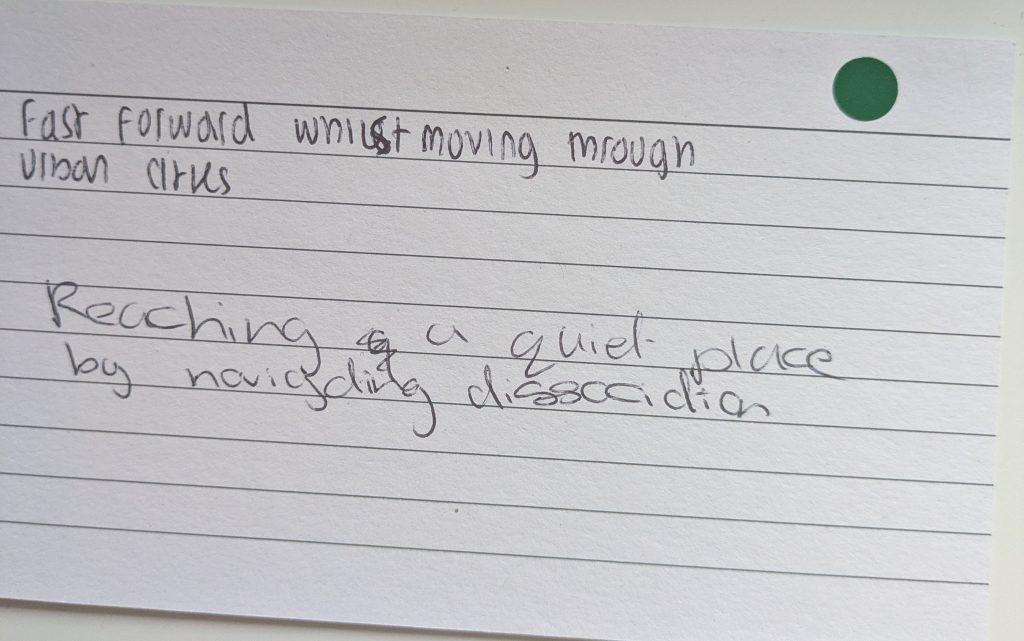
- reaching a quiet place by navigating dissociation
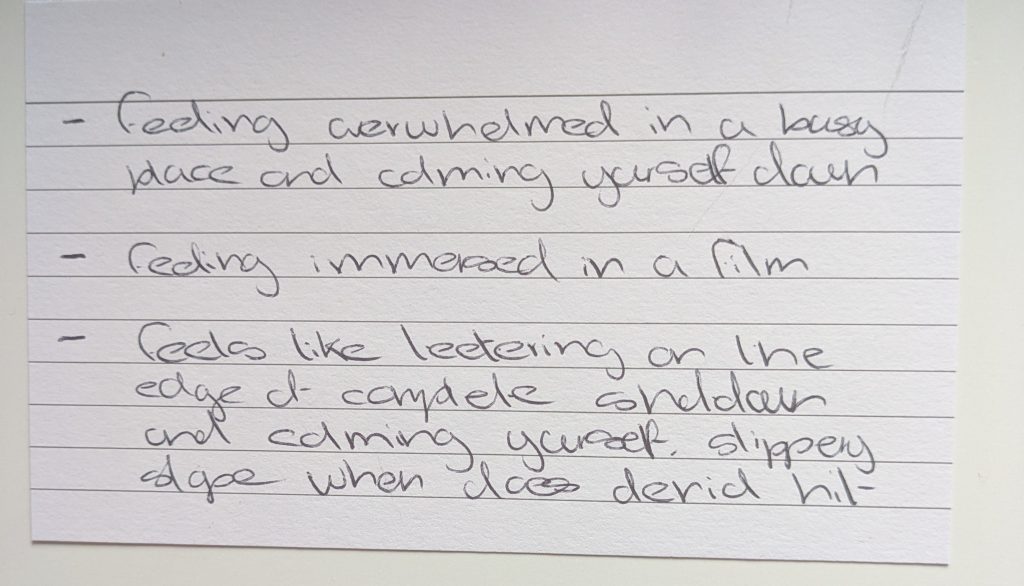
We then each chose our favourite ideas and began workshopping what we wanted the player to feel under three categories. I chose the 4th idea and put it through the lens of an autobiographical game, an experience I have had and real world issues.
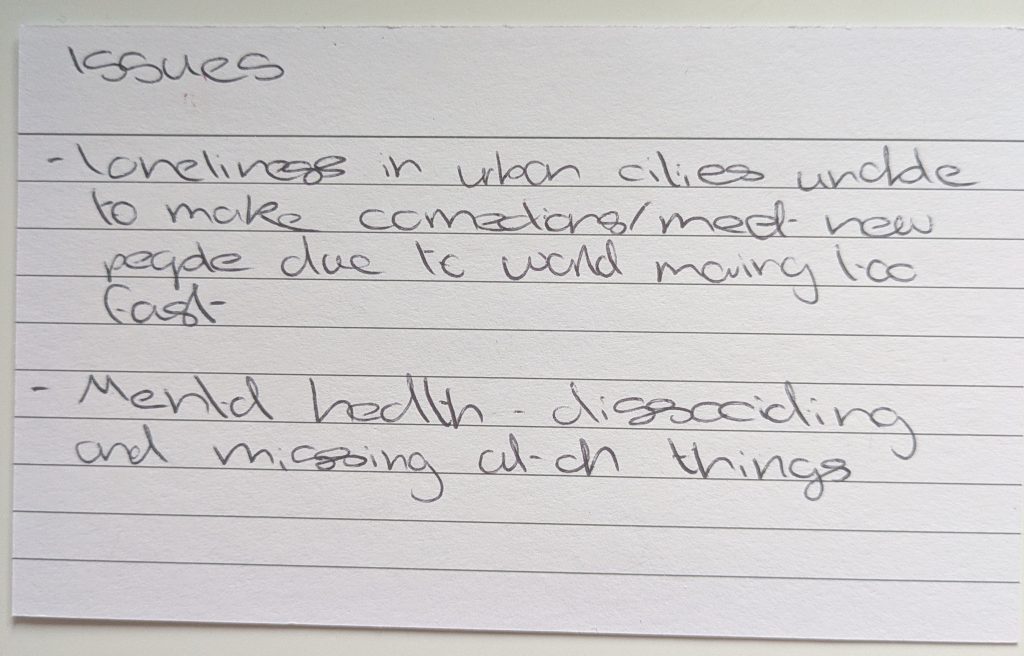
1 2 3
Image 1 is the idea I chose, in image 2 I was exploring experiences I have had, and image 3 I wrote down real life expereinces that many people have felt before. Whilst doing this excerdie a common theme of anxiety and panic attacks came up this has helped me see a possible core theme I could incorporate into the game for the GDD.
For the last activity of the session we voted on our favourite idea which was the dancing to win over an entire crowd from someone else in our group. She had tied it to someone dancing to calm down an angry crowd. We workshopped a game where you had to pick the correct moves so the audience would turn peaceful, if they chose the wrong moves the crowd would turn red and shout things at the player. This was helpful as it got me back into a designing games mindset, constantly thinking how to engage the player and create meaningful gameplay.
Next Steps –
After this week and choosing my major and minor focuses I will make a plan to ensure I work on them appropriately.
Leave a Reply