What is a video game producer?
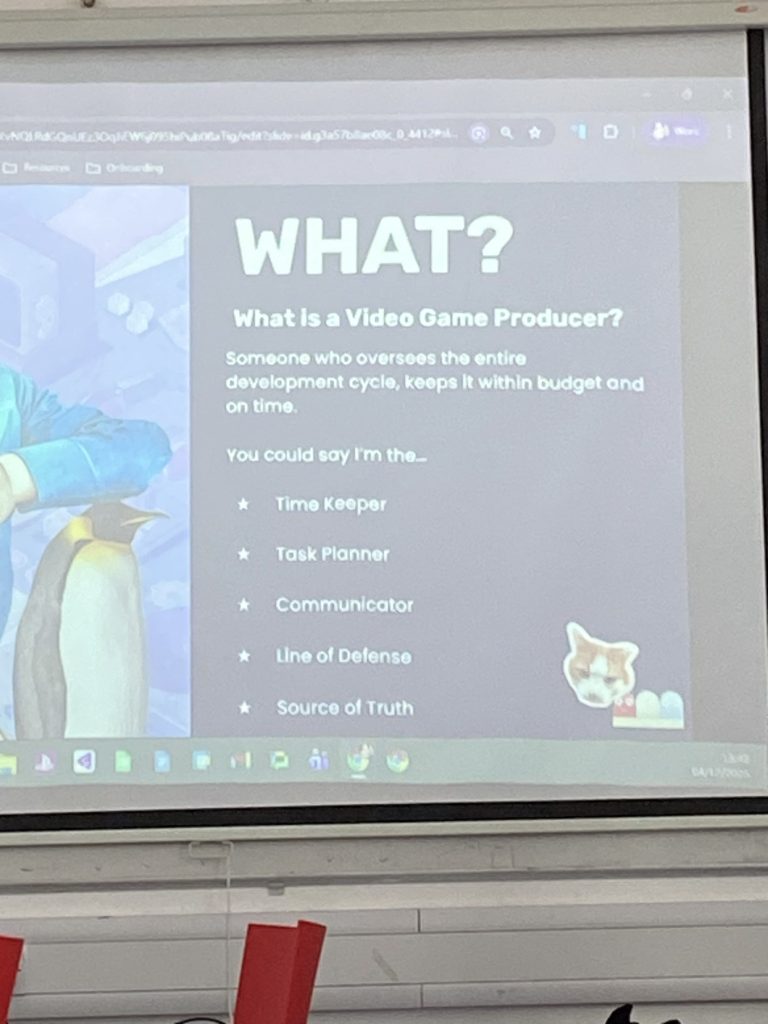
A video game producer is a core management role responsible for overseeing the entire development cycle to ensure the project is completed within budget and time. They can be understood as multiple key roles within the team:
· Timekeeper: Ensuring the project progresses as planned.
· Task Planner: Organizing and allocating development tasks.
· Communicator: Acting as the hub for internal and external communication.
· Defender: Anticipating and resolving issues that may impede the project.
· Source of Truth: Ensuring project information is clear, accurate, and consistent, serving as the authoritative information center for the team.
Industry Realities and Positive Mindset: Teachers do not shy away from discussing the competitiveness of the industry, project pressure, layoff cycles, and the challenges brought by AI.
But they also convey a strong positive message: originality, human collaboration, and continuous learning cannot be replaced; the industry dynamically adjusts during cycles; and there are abundant opportunities in areas such as indie games and mobile platforms. Maintaining enthusiasm, building networks, and proactively planning are key.
How does university education empower me?
University education (here referring to the experience at Aston University) lays a solid foundation for being a producer, mainly through the cultivation of the following key abilities:
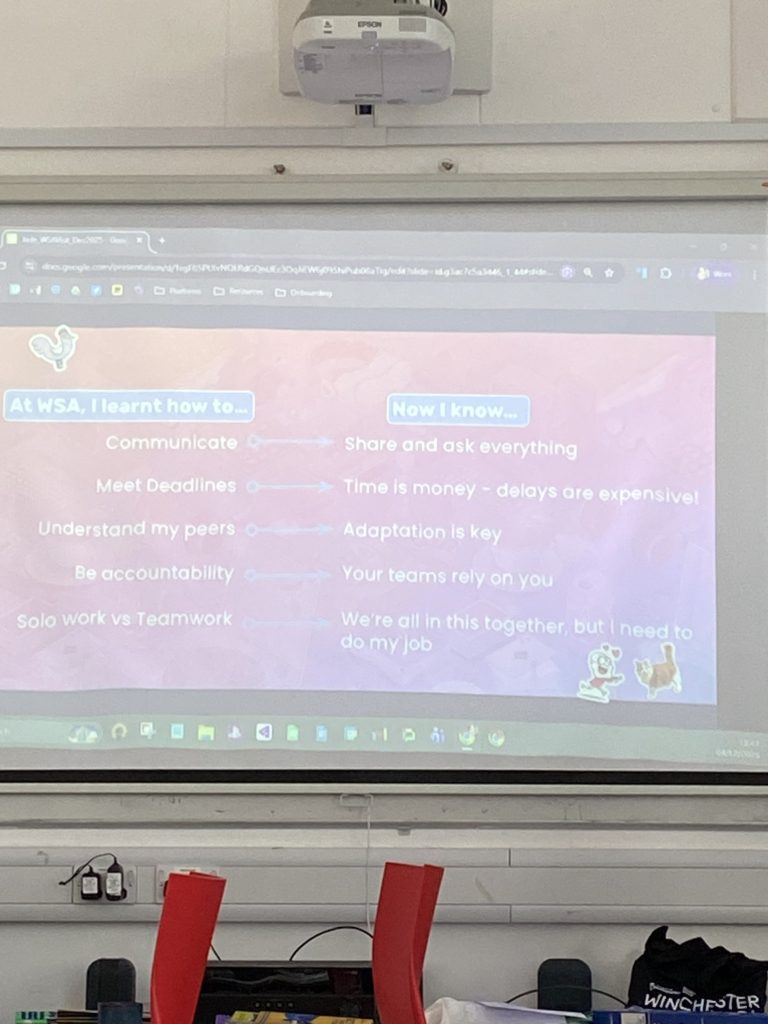
· Learn to Communicate: I have learned the importance of sharing and asking about everything. Open communication is the cornerstone of team collaboration.
· Learn to Be Timely: I understand that time is money, and the cost of delay is huge. This has cultivated my high regard for deadlines.
· Learn to Understand Colleagues: I realize that adaptability is key. Understanding the working methods and needs of colleagues in different roles is the prerequisite for effective collaboration.
· Learn to Take Responsibility: I know that the team relies on me. As the core coordinator, personal responsibility is crucial.
· Balance Personal and Team Work: I have experienced “We are in this together, but I must do my job well.” This has clarified the boundaries and importance of individual responsibilities under the collective goal.
· Strengthen documentation and communication practices: Treat every project document (GDD), presentation, and team meeting seriously. This is not just for completing the assignment, but also a crucial training to simulate the role of a designer or coordinator in the future, clearly communicating ideas to the team.
· Define roles and contributions in team projects: In future team projects, in addition to completing assigned tasks, I will also actively consider process optimization, cross-functional communication (such as clarifying art resource specifications with programmers), and other “bridging” work, and record these contributions as evidence of soft skills.
This sharing clearly delineates the multiple identities of a video game producer as the “overall manager” and “glue” of the project, and emphasizes that personal communication, management, adaptability, and responsibility are the core soft skills required to excel in this position.
At the same time, it also reflects the practical value of the relevant education at the University of Southampton in cultivating these key professional capabilities.
This series of sharing was, for me, a valuable “industry preview”. It alleviated my anxiety about the “single correct path”, and significantly enhanced my clarity on what exactly “to do” and “how to do it” one should do for career preparation.
Leave a Reply