Design my portfolio like a “level design”
A portfolio is not merely a collection of works; it is a “user journey” designed for hiring managers. When designing it, one should think like creating game levels, guiding the viewer to have a smooth and efficient experience. Key considerations include:
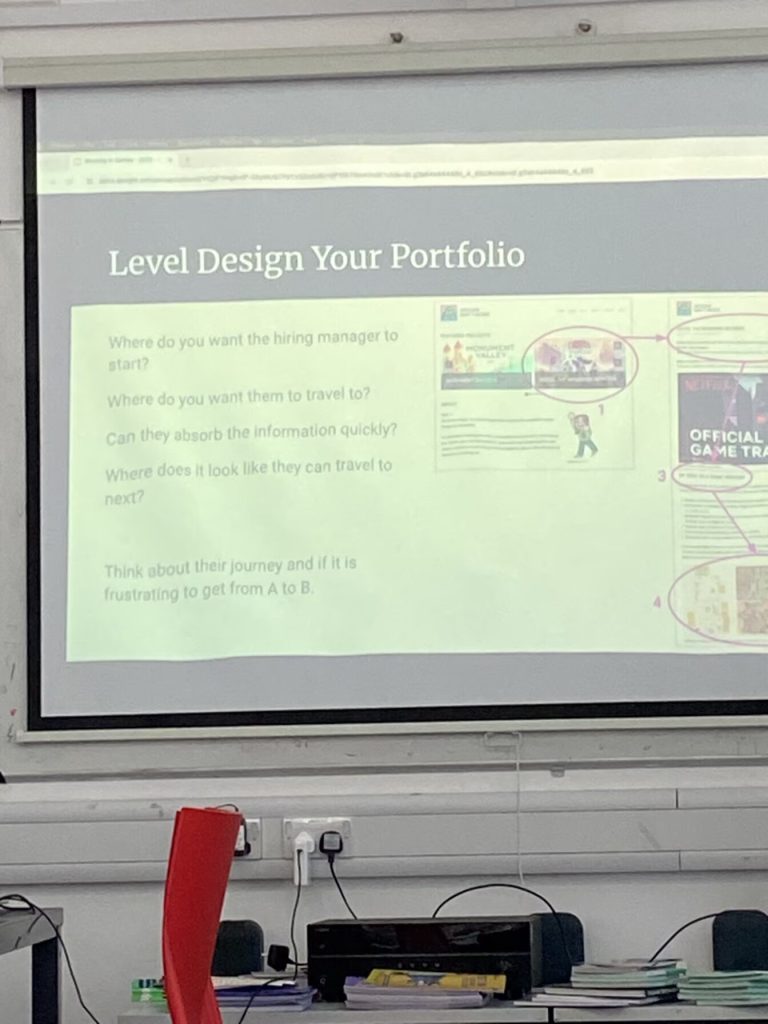
· Starting point positioning: Where do you want the recruitment manager to start browsing?
· Path planning: How do you want them to understand you along what path or sequence?
· Information absorption efficiency: Can they quickly grasp the core information?
· Clarity of path guidance: Does the next step to look at seem clear?
· Journey smoothness: Is the process from point A to point B confusing or frustrating to think about?
View the recruitment manager’s browsing process as a carefully guided “official game journey”, ensuring a smooth experience and efficient discovery of my highlights.
The portfolio is a dynamic “product” rather than a static “archive”: it requires meticulous “curation”, showcasing the process, clarifying responsibilities, and targeting the desired position. More importantly, it should be regarded as a “product” that requires continuous iteration and optimization of the user experience.
The teacher presented the standard project development process adopted by the renowned game studio ustwo games, which is divided into five main stages:
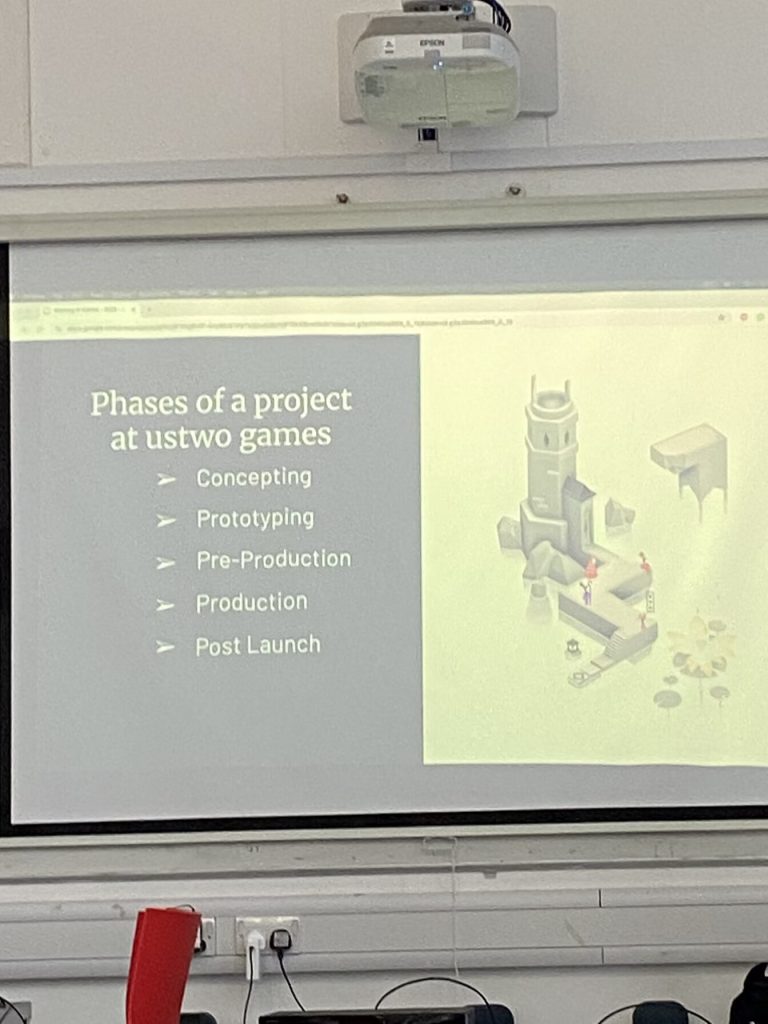
1. Concept Design: The initial creative stage of the project, where the core concept, gameplay mechanics, and artistic direction of the game are determined.
2. Prototype Development: Rapidly creating playable models or prototypes to verify the feasibility and fun of the core gameplay.
3. Pre-production: Detailed planning before full-scale development, including formulating technical solutions, finalizing the art style, resource planning, and developing a detailed production plan.
4. Production: The core stage of full-scale project development, where all content (art, programming, design, etc.) is created and integrated on a large scale.
5. Post-release Maintenance: The stage after the game’s launch, including content updates, bug fixes, community operation, and continuous optimization.
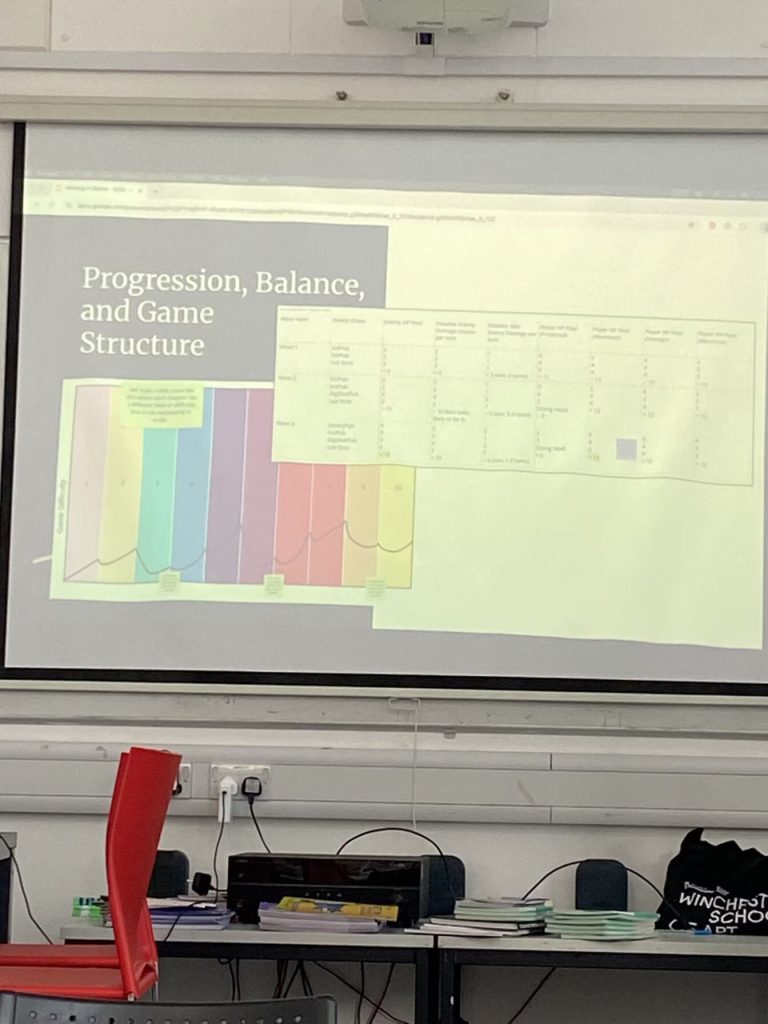
Hard skills are the entry ticket: Whether it’s programming, art, design, or technical art, one needs to continuously delve into professional techniques and build a high-quality, accessible, and clearly-structured portfolio.
Soft skills are the accelerators: Communication, collaboration, problem-solving, adaptability, and responsibility are repeatedly mentioned. Especially in team collaboration, how to effectively communicate with colleagues from different backgrounds (art, programming, management) is even more important than a single technical ability.
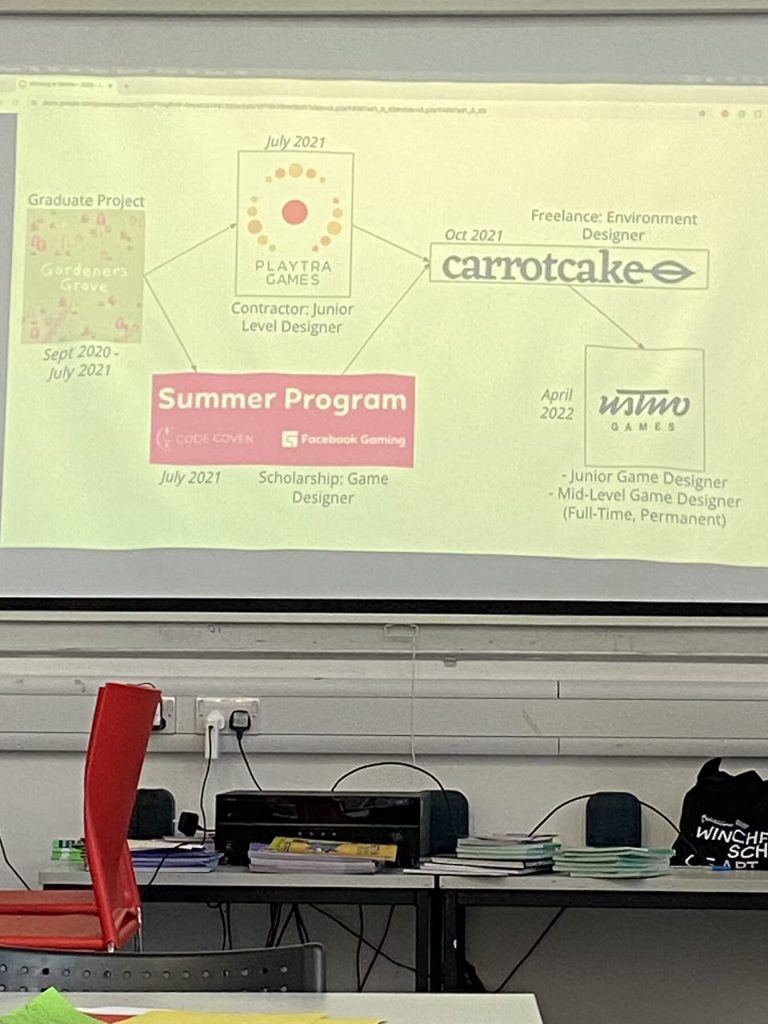
The teacher provided industry insights from two dimensions: the micro-level personal presentation strategies and the macro-level project management processes. First, it emphasized the importance of designing personal brand materials with user experience at the center, which is a crucial professional marketing mindset. Second, it clearly outlined the complete project life cycle of a professional game studio from conception to operation, providing a framework for us to understand the real workflow in the industry.
Leave a Reply