
Presentation
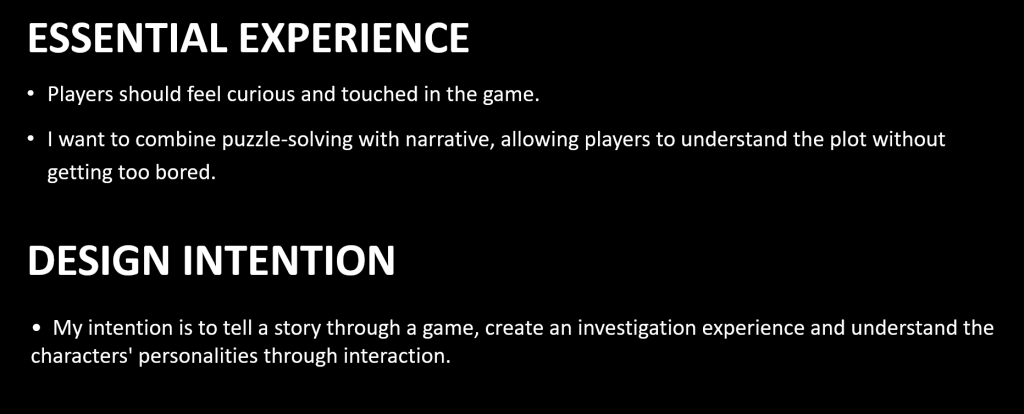
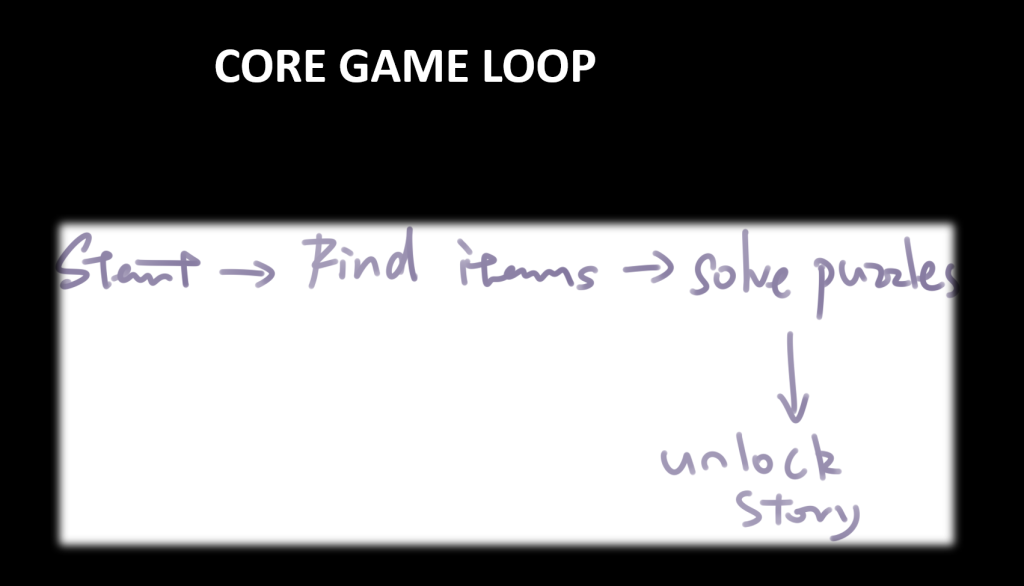
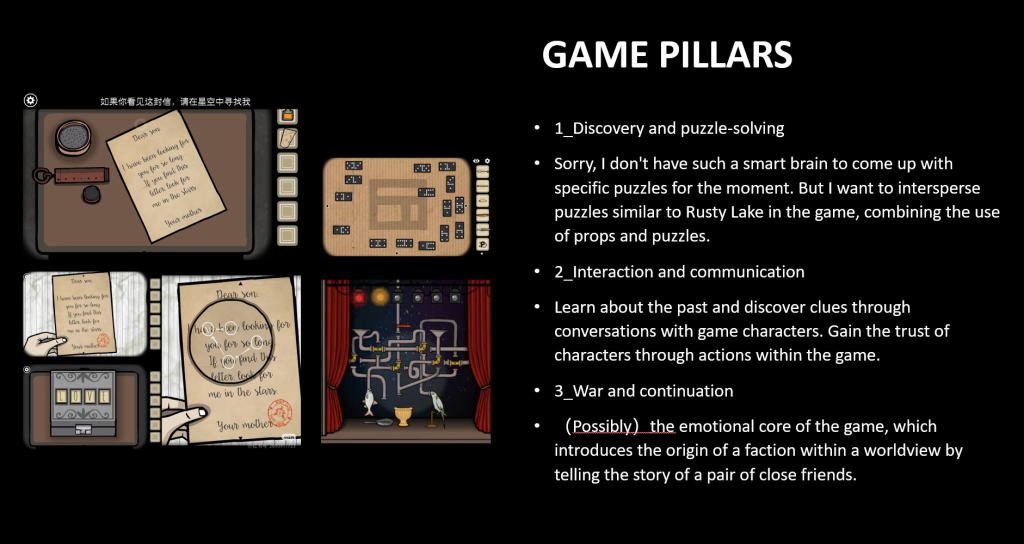
The gameplay I envision centres primarily on escape rooms, where players must solve puzzles within the confines of a locked chamber. Upon unravelling the mysteries, they uncover the secrets of the room’s owner. Before and after entering the chamber, players interact with NPCs, learning their backstories. The game is set within a campus that functions as a sanctuary permitting students to engage in mutual slaughter, with the owner’s narrative intertwined with the institution’s internal “war”.
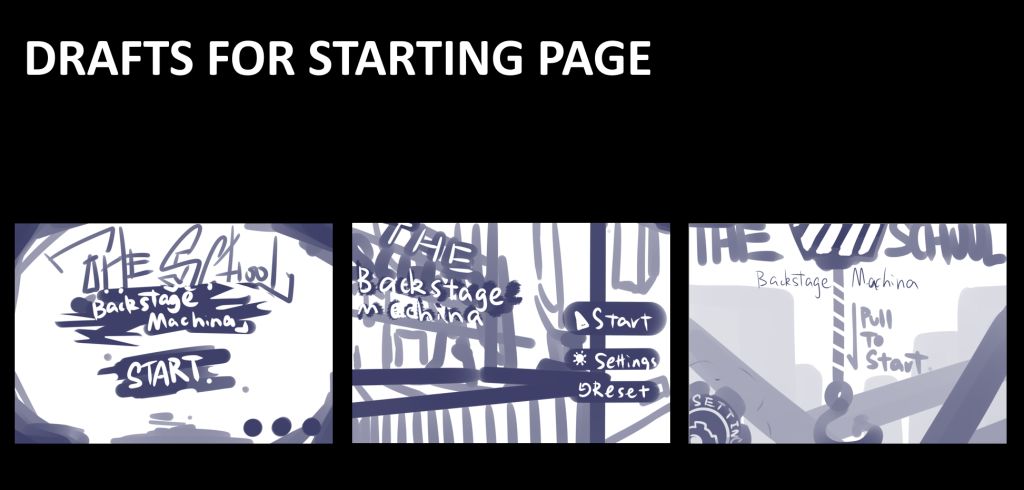
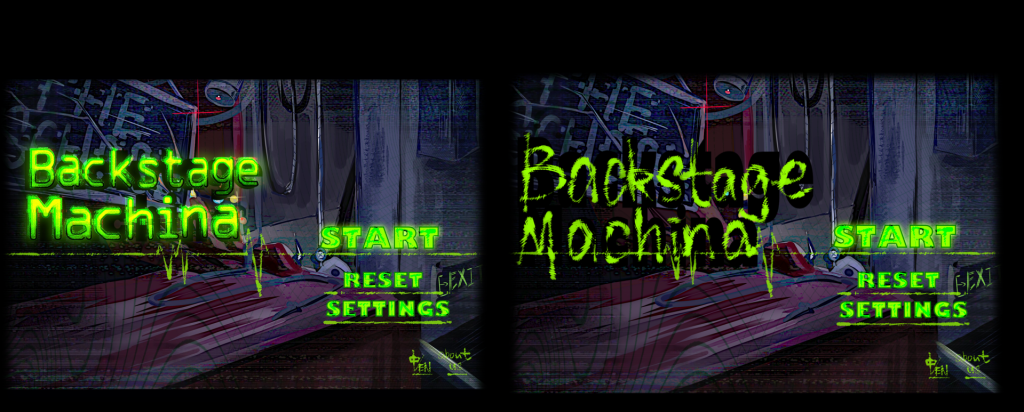
I designed three draft versions and asked my friends which one they preferred as players (the chat messages were in Chinese, so they weren’t shown). My friends unanimously agreed that the middle one felt most like a game, so I ultimately selected that version.
The left version centres the start button; though the most minimalist, it felt rather sparse visually. The right version offered the strongest sense of interactivity and was the most innovative iteration, but I felt it clashed slightly with the game’s style – too lively, perhaps better suited to a younger demographic.
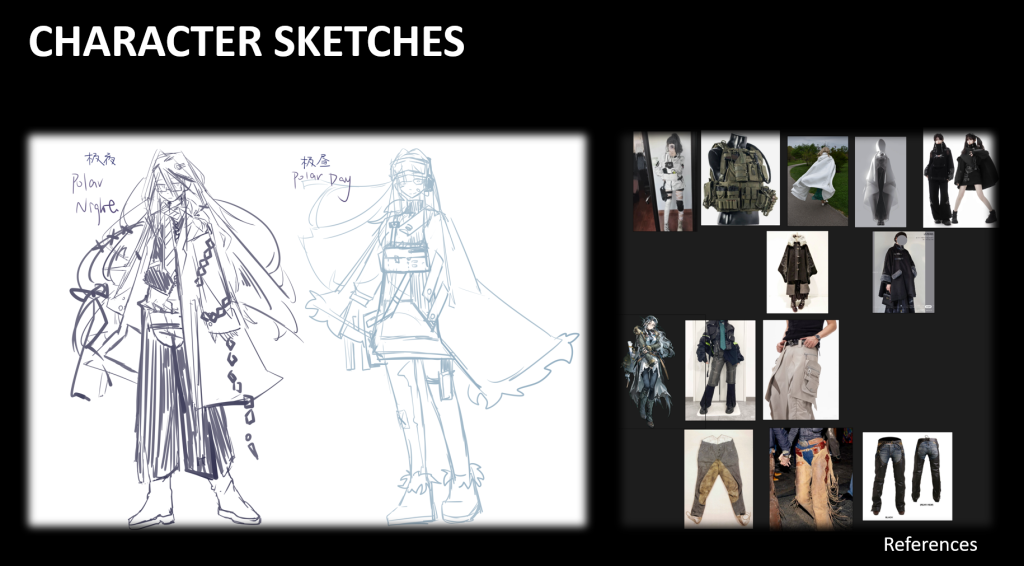
Backstage Machina’s overall design aesthetic leans towards utilitarian workwear.
Polar Night: Given her reclusive nature and preference for backstage tasks like mechanical repairs and weapon fabrication, cool and sombre hues form the colour palette. Prolonged indoor labour necessitates heavier attire. The chains adorning her arms symbolise her attachment to companions, which later becomes a shackle.
Polar Day: Her flamboyant nature shines through in her choice of the most eye-catching white, even as the combat-focused member of the duo. Her inner layer consists of form-fitting combat gear, enhancing her agility during battles.
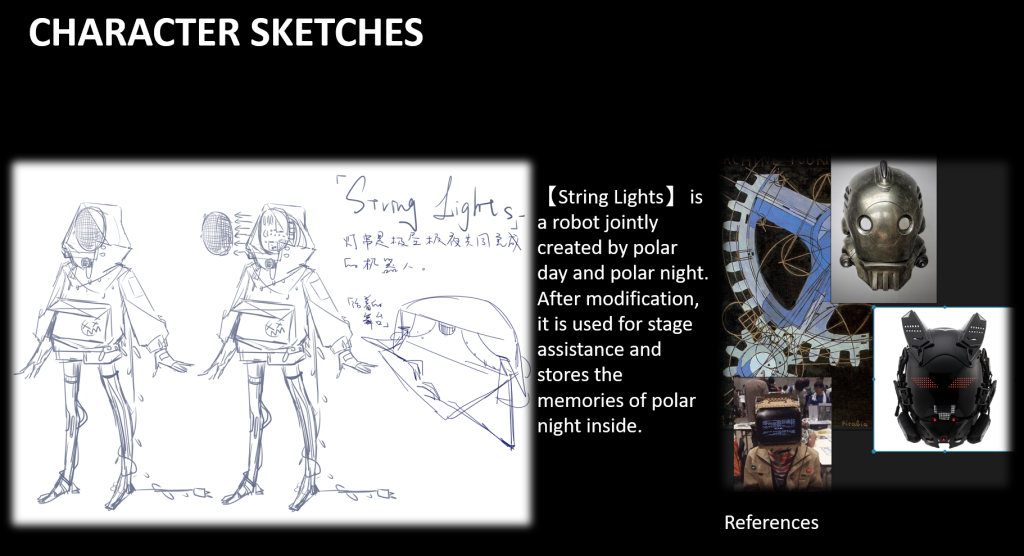
String Lights: Created by Polar Night and Polar Day, its function leaned more towards companionship than utility, hence its human-like appearance. After Polar Day’s demise, Polar Night modified its emotional module to emulate Polar Day’s AI and transform it into a war machine seeking vengeance, while retaining its original form. Ultimately, after Polar Night abandoned vengeance and the replication of his partner, String Light was dismantled and fused with the auditorium stage. It became the ‘Living Stage’—a structure serving as both a performance aid in peacetime and a defensive weapon in wartime. However, the ‘head’ remains suspended at the stage’s centre, housing a dormant chip containing its memories.
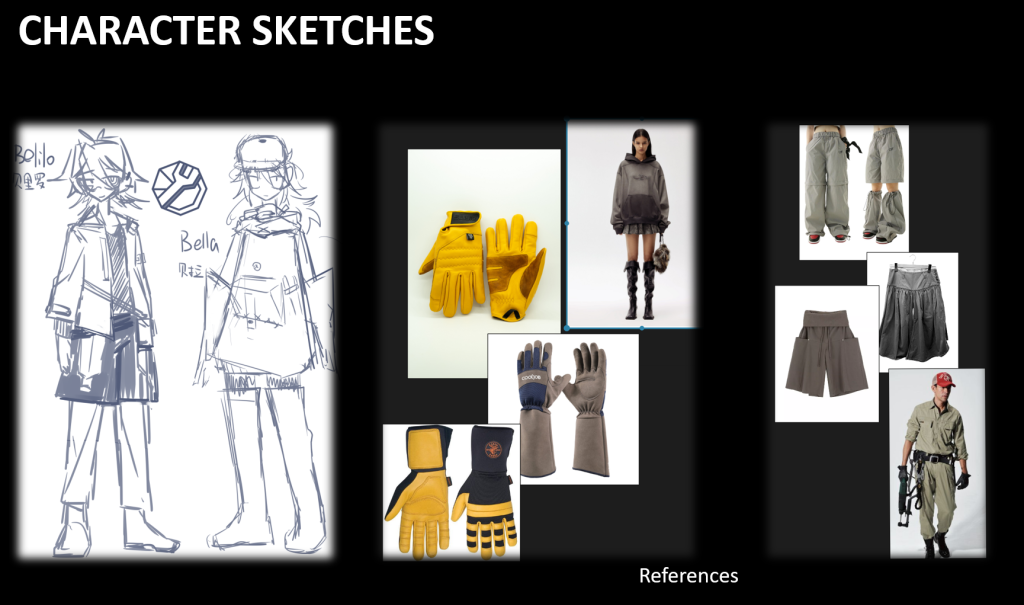
Belilo & Bella: The current custodians of Backstage Machina, stationed within the auditorium to handle student commissions and repair various machinery, hence their design draws inspiration from electrician’s attire.
Feedback
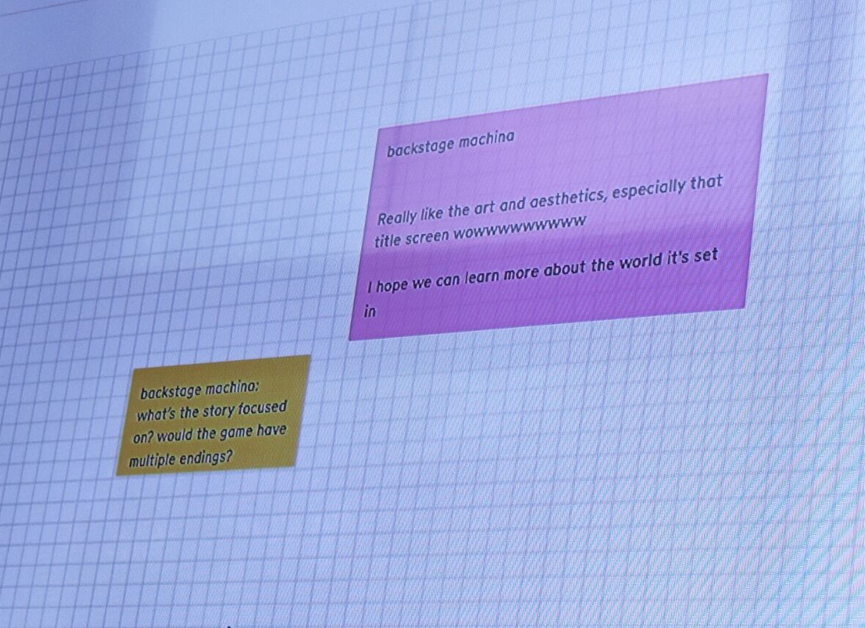
The story primarily follows the protagonist’s accidental entry into Backstage Machina and their subsequent discovery of its past. As the protagonist primarily serves a narrative function, there are no multiple endings.
Leave a Reply