GDD-Based Asset Planning
Introduction
After establishing the project’s visual pipeline and Art Bible, the next step was to translate the game design document (GDD) into a practical asset production plan.Rather than creating assets in isolation, environment assets were planned according to the level structure, gameplay progression, and narrative pacing defined in the GDD.This ensured that asset production directly supported gameplay systems and spatial storytelling.
Level Structure Analysis
The GDD defines the game world as a phase-based narrative progression system, where different areas of the map are unlocked as the player’s reputation with the characters increases.
Each area represents a different emotional stage in the story and introduces new gameplay elements.
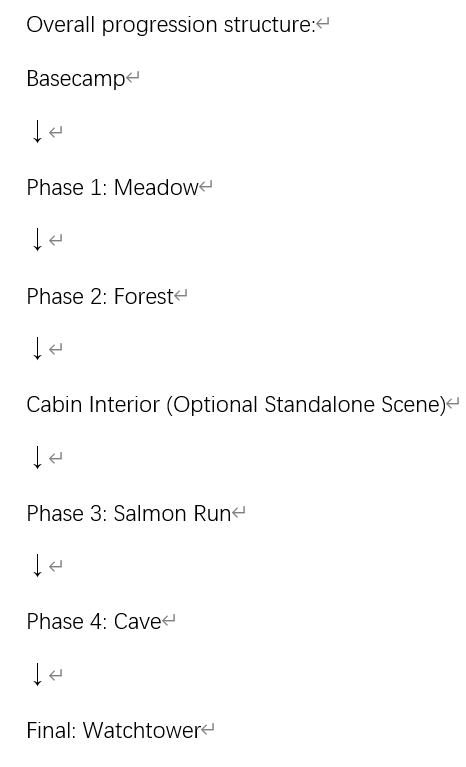
Source: Yansong — Level Breakdown & Art Execution Documentation
Asset Categorisation
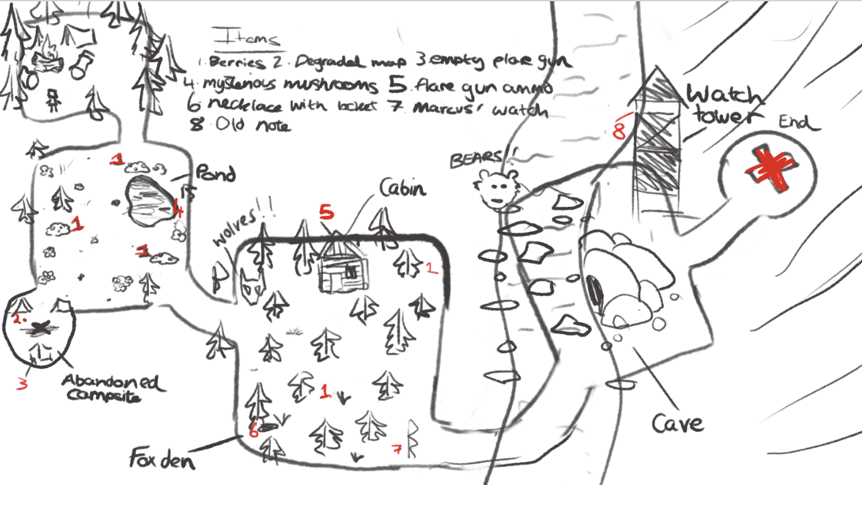
GDD-Art
Based on the level structure defined in the GDD, environment assets were organised into several production categories.This categorisation allowed the team to control asset scope while ensuring visual consistency across different environments.
Primary asset categories include:
Environment Modules
terrain tiles
rocks and cliffs
vegetation elements
Landmark Structures
abandoned campsite
cabin
cave system
watchtower
Interactive Props
collectible items
narrative objects
environmental storytelling elements
Character Assets
player character sprite
NPC sprites
dialogue portrait busts
This classification helped define production priorities and asset dependencies during development.
Production Prioritisation
Due to the limited scope of the project, asset production followed a minimum viable production (MVP) strategy.
Instead of building the entire game world simultaneously, development focused first on creating a complete playable slice of the environment.
This approach allowed the team to test gameplay flow, environmental composition, and technical implementation before expanding the full map.
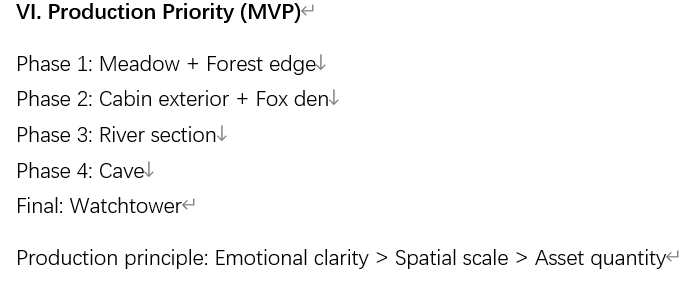
Source: Yansong — Level Breakdown & Art Execution Documentation
Outcome
By translating the GDD into a structured asset planning system, the team was able to align visual production with gameplay progression and narrative design.This planning stage ensured that environment creation, asset production, and level design remained consistent throughout the development process.