

Outline
Title: Dog Eat Dog
Genre: Horror, Puzzle
Hook: Survival isn’t about you.
Anchor:
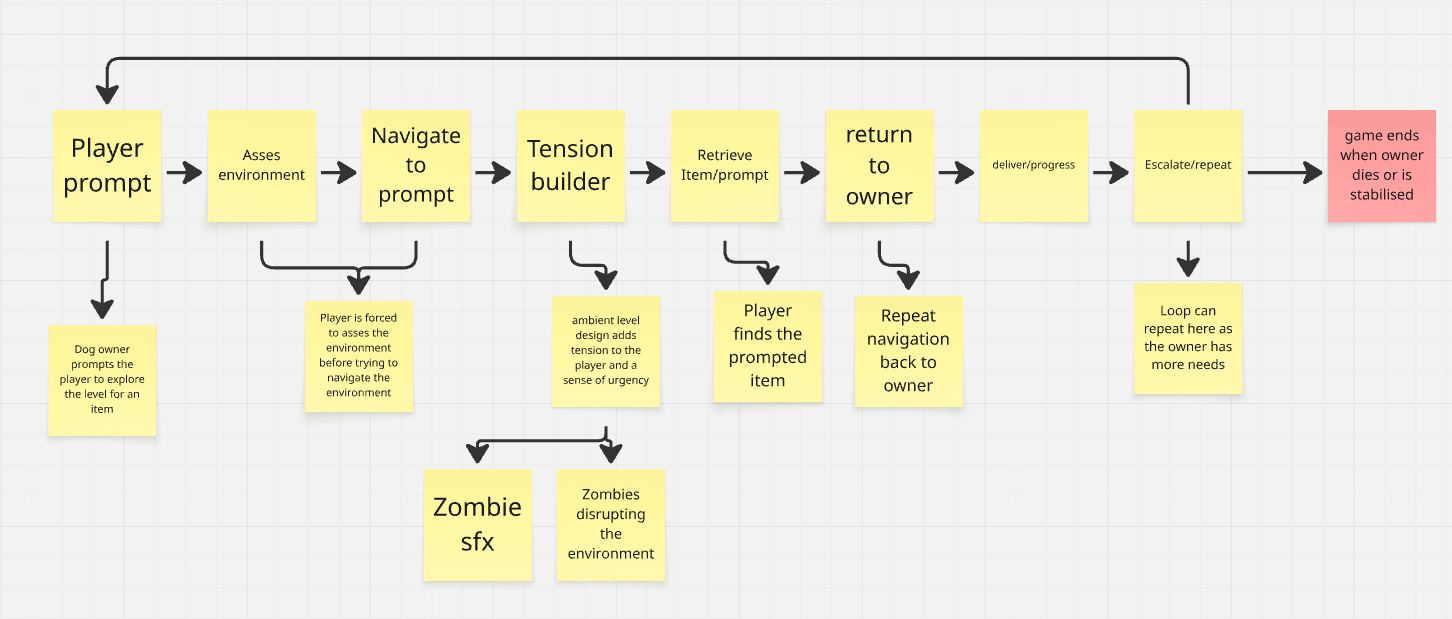
The player’s only motivation is to fetch items for their injured owner, who is slowly dying:
- The horror comes from the realisation, not the jump scares.
- Zombies will ignore you; you are not their food.
- Items produce fewer and fewer reactions.
- The owner slowly starts to decay.
- Fetch quests are framed as “helping”, but slowly become more futile.
- Bandages are taken, painkillers are taken.
- A weapon is weakly held.
- Food and water are refused.
Game Overview
(Josh)
In Dog Eat Dog, you play as a West Highland Terrier navigating the aftermath of an apocalypse. Instead of combat or confrontation, the core gameplay centres on survival, problem-solving, and the bond between the dog and its owner. The story unfolds in an abandoned house that slowly reveals the disaster outside.
Your main goal is to help your owner by finding and delivering important items: food, medicine, tools, and personal belongings found throughout the house. Every task is shaped by the dog’s abilities and challenges, turning ordinary objects into puzzles when viewed from a dog’s perspective. Opening doors, climbing on furniture, or carrying things all require a unique perspective.
The game’s camera sticks to the dog’s perspective, keeping everything low to the ground and drawing you into the dog’s world. This view creates tension as the house changes from a safe spot to a place of uncertainty. The setting is built through sound design, shadows, and hidden corners, with a focus on unease rather than violence.
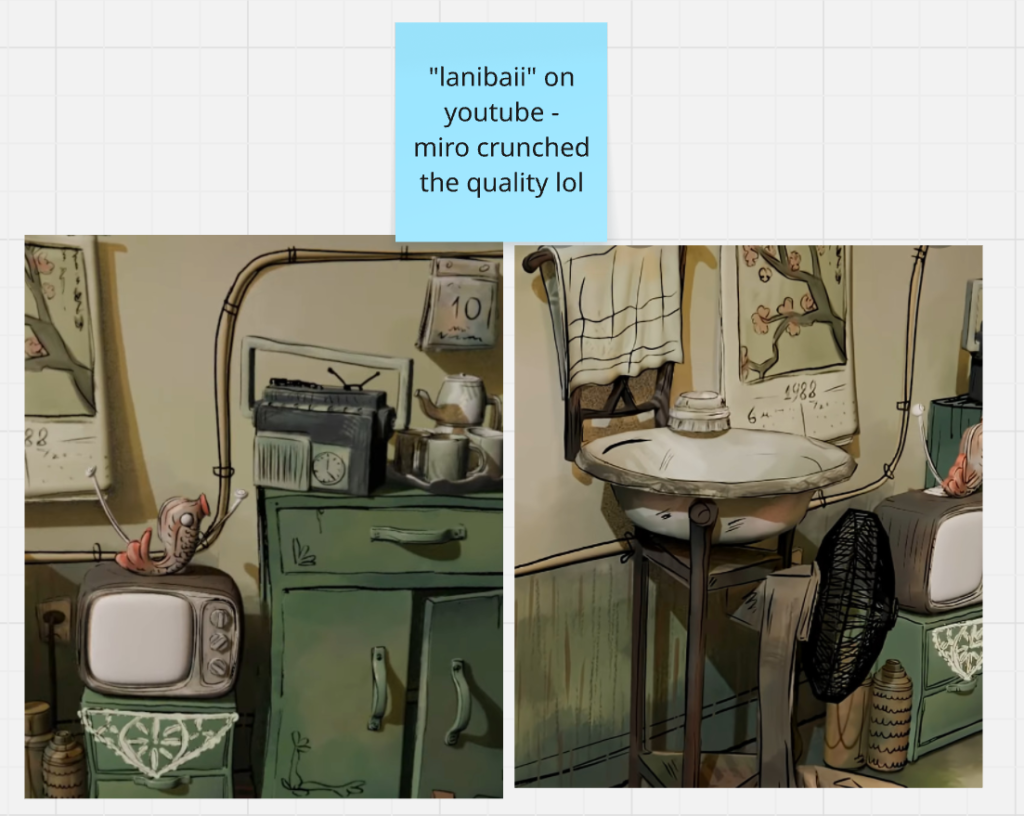
The visuals use a painted art style to bring life and personality to the world, in contrast to the game’s darker themes. Environmental storytelling, like damaged rooms or forgotten belongings, gives players a sense of time and loss without relying on direct dialogue.
Dog Eat Dog stands out by letting you experience a story from a non-human standpoint. It blends environmental puzzles, controls centred around a dog’s abilities, and an emotionally driven narrative to explore loyalty, dependence, and survival from a fresh perspective.
Core Gameplay Loop
The Team
Indiana
My primary goal will be as project manager: programming the core gameplay loop, providing art and narrative direction, overseeing Josh’s work on puzzle and level design, and providing input where needed.
I will be working on the following:
- Programming
- 3D Character Creation
- Secondary 3D Environment Creation
“Why make this game?”
I wanted to create a game inspired by some of my own favourites (such as Stray, Inside, and Little Nightmares) that have fun, exploration and physics-based puzzles set in a dark, apocalyptic world. This project would also allow me to indulge in a 3D oriented design, as well as expand my technical and programming skills. This will be a very tech-focused game, so I’m happy I get to work on it!
Josh
I really enjoyed Indiana’s original game concept, and I thought I could expand on the project’s puzzle and level design by drawing on my own understanding and further study of these topics to create a more interesting game.
- Puzzle/Level Designing
- Character Rigger
- 3D Environment Creation
Why Dog Eat Dog?
For me (Josh), Dog Eat Dog, originally called Dog vs World, stood out as a game with real potential. Indiana’s early Unity prototype demonstrated both technical skill and creativity, providing the grounds for an engaging puzzle game. I saw an opportunity to contribute my own abilities and build on a strong foundation. While I enjoyed developing my own ideas, they ultimately felt too far-fetched for this project’s timeline, and I knew I wouldn’t be able to complete them on my own.
Technical Specifications
(By Indiana)
Game Engine:
Unity
The Mechanics:
Game mechanics for the player character should stay relatively simple, with walk, run, bite, drag, and bark mechanics for movement and manipulating the world around them. The camera movement switches based on button input, allowing players to become more thoughtful of the room they’re in and how to solve the puzzle from multiple angles.
Platform and Controls:
Platform:
PC
Controls:
Mouse and keyboard
| Input | Action |
| W / A / S / D | Player movement |
| E | Bite / Let Go |
| X / C | Rotate Camera Left / Right |
| Spacebar | Jump |
| B | Bark |
Core Gameplay Systems:
Win/fail state:
Win State: Retrieving all 3 items and getting them to your owner.
Fail State: Being unable to retrieve the 3 items, or give them to your owner.
Narrative
(By Indiana)
Overview:
Dog Eat Dog follows a straightforward story: as you complete fetch quests, the narrative slowly unfolds into a bittersweet horror. The owner transforms into a zombie, but the loyal dog remains faithfully by their side, never realising what has happened.
Progression:
Opening cutscene:
The player character and their owner stumble into the house, where the owner collapses onto the couch. The owner asks the player character to fetch some bandages. Gameplay opens up.
Mission 1: Fetch bandages
Upon completion, the owner puts the bandages on and takes the pills, which immediately become bloody. Their appearance visibly worsens, as if they’re becoming sick. They ask if you can bring them some water, and maybe something to eat.
Mission 2: Fetch food
Upon completion, the owner only takes a few bites and discards the rest. Their appearance worsens further, and now their skin is starting to decay. Now they ask for a weapon to defend themselves.
Mission 3: Fetch a weapon.
Upon completion, the owner has fully turned into a zombie. When they take the last item, the end cutscene begins: they take the weapon and get to their feet, and begin to walk out the door to join the rest of the hoard. The dog, none the wiser, trots after.
Art Direction
(By Josh)
Environment Concepts
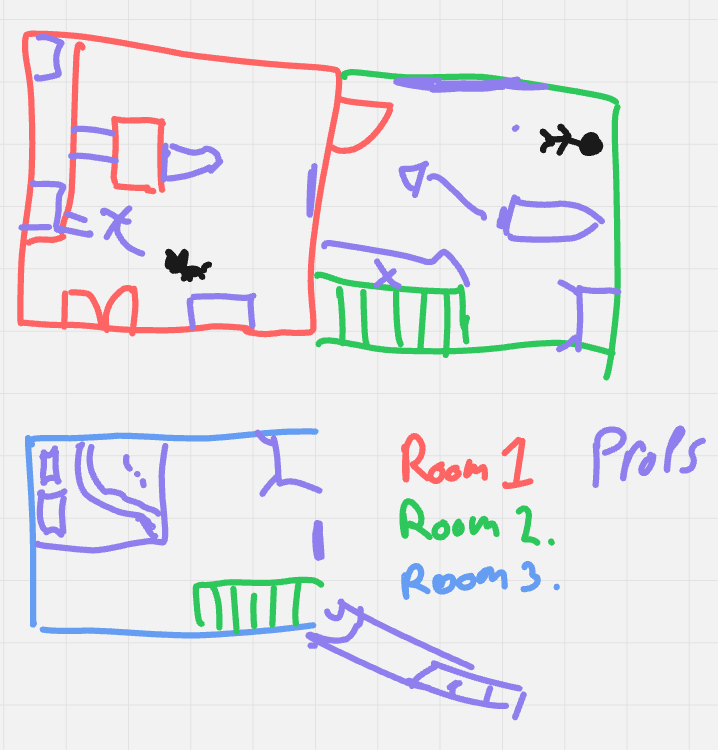
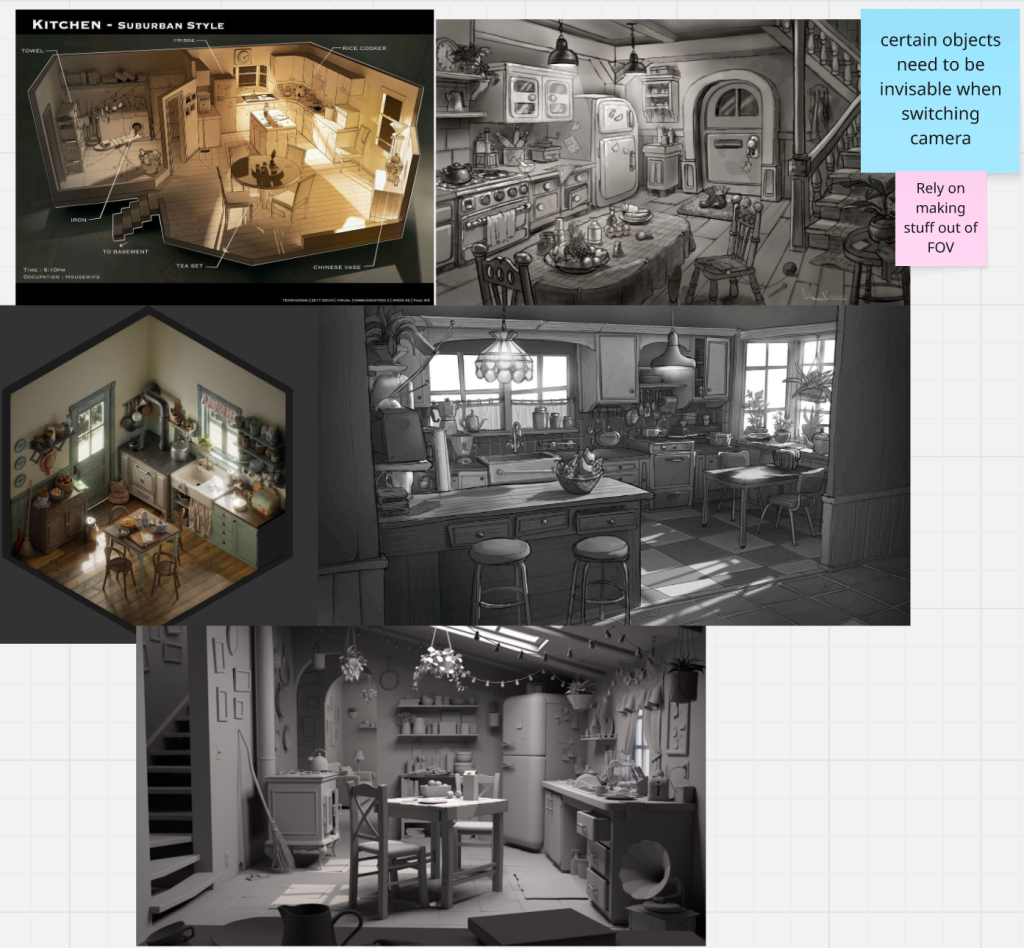
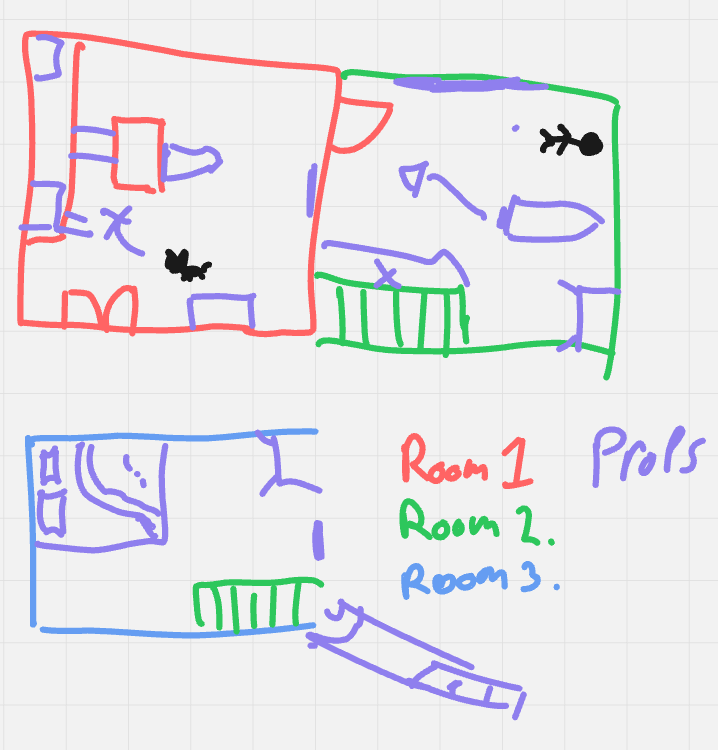
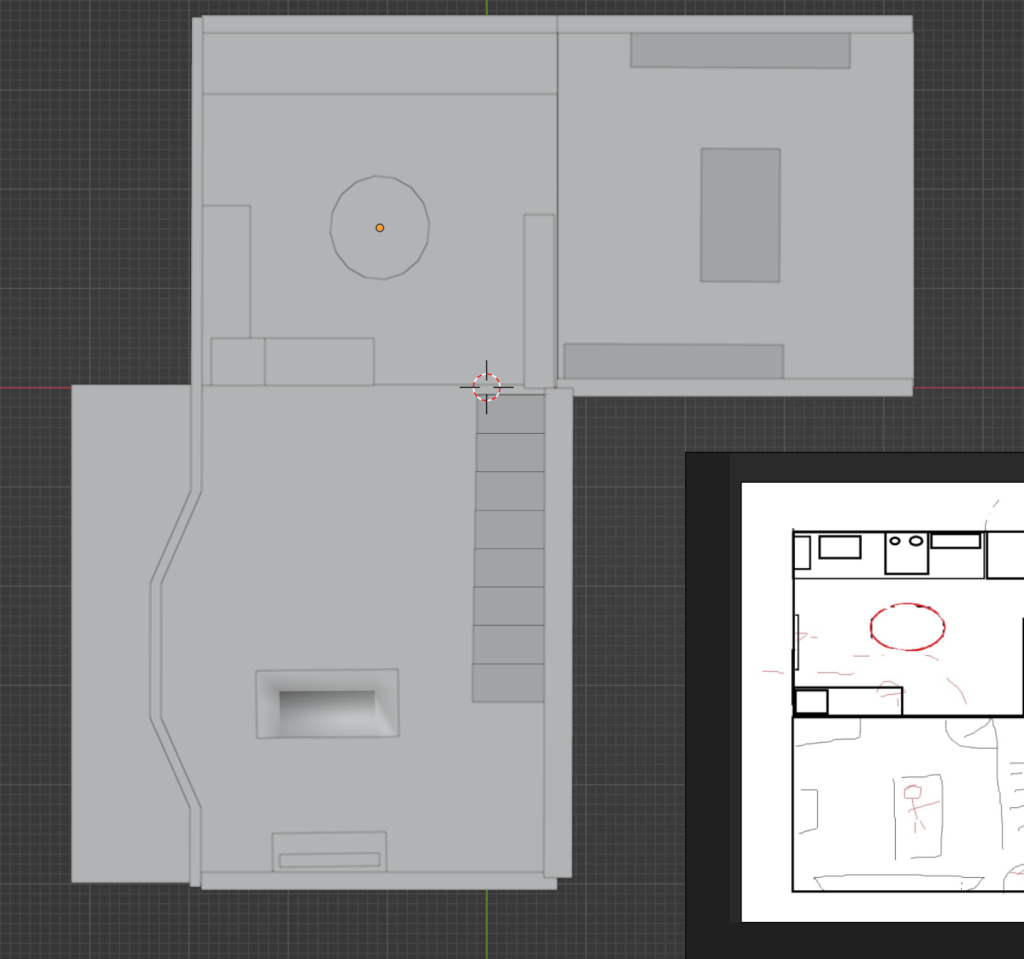
The environments in Dog Eat Dog are entirely contained within a single house, grounding the level design in familiar spaces. This approach allows us to draw inspiration from real homes with kitchens, living rooms, hallways, and bedrooms, and then reinterpret them through the game’s themes and mechanics. Designing levels based on real-world spaces also helps ensure that puzzles feel intuitive, as players already understand how these environments are normally used, even if they must interact with them as a dog.
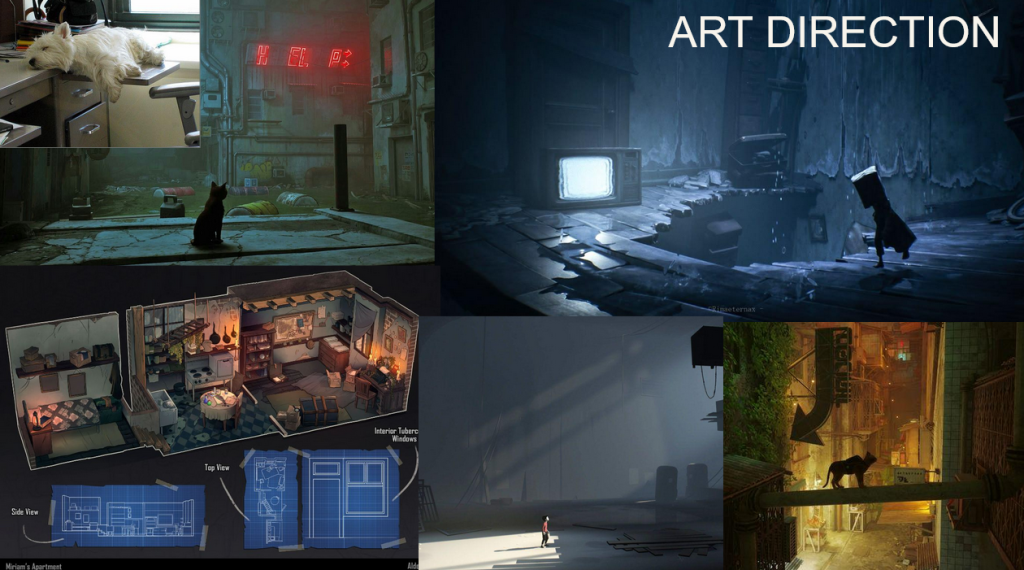
To support the apocalyptic setting, these spaces will be stripped of signs of life. Furniture may be damaged or overturned, rooms may feel abandoned or neglected, and personal items will be left behind without context. The goal is to make the house feel empty and unsettling, while still recognisably human. This contrast helps reinforce the sense of isolation and allows the environment to tell part of the story without relying on exposition.
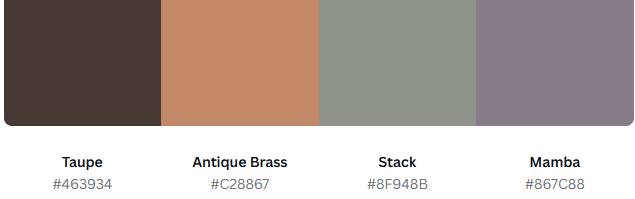
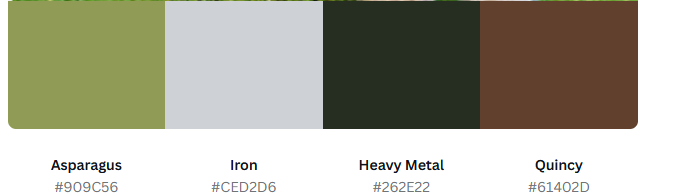
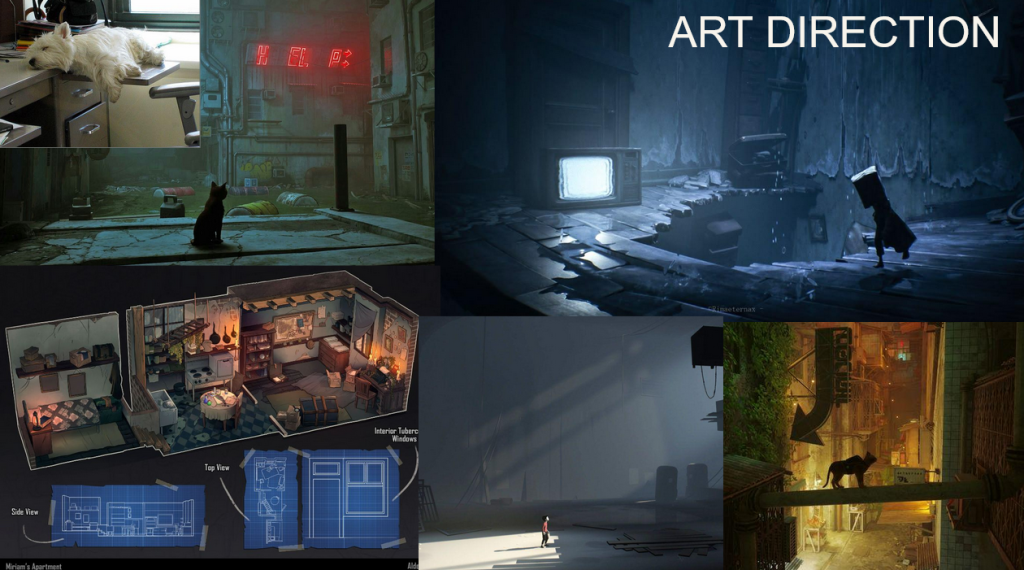
Visually, the game will use a stylised, painted art style to balance warmth and discomfort. Colour and lighting play an important role in defining the atmosphere, with muted tones, soft lighting, and areas of shadow used to create tension and guide player movement. Games such as Stray are a key influence on colour palette and environment design, particularly in how stylisation is used to create emotional spaces rather than realistic ones.
At the same time, Little Nightmares serves as a strong reference for the more unsettling aspects of the environment design. The use of exaggerated proportions, heavy shadows, and distorted spaces helps transform familiar household locations into places that feel unsafe or unfamiliar. By combining these influences, Dog Eat Dog aims to create environments that feel grounded and believable, while still supporting the game’s horror elements and emotional tone.
Character Concepts
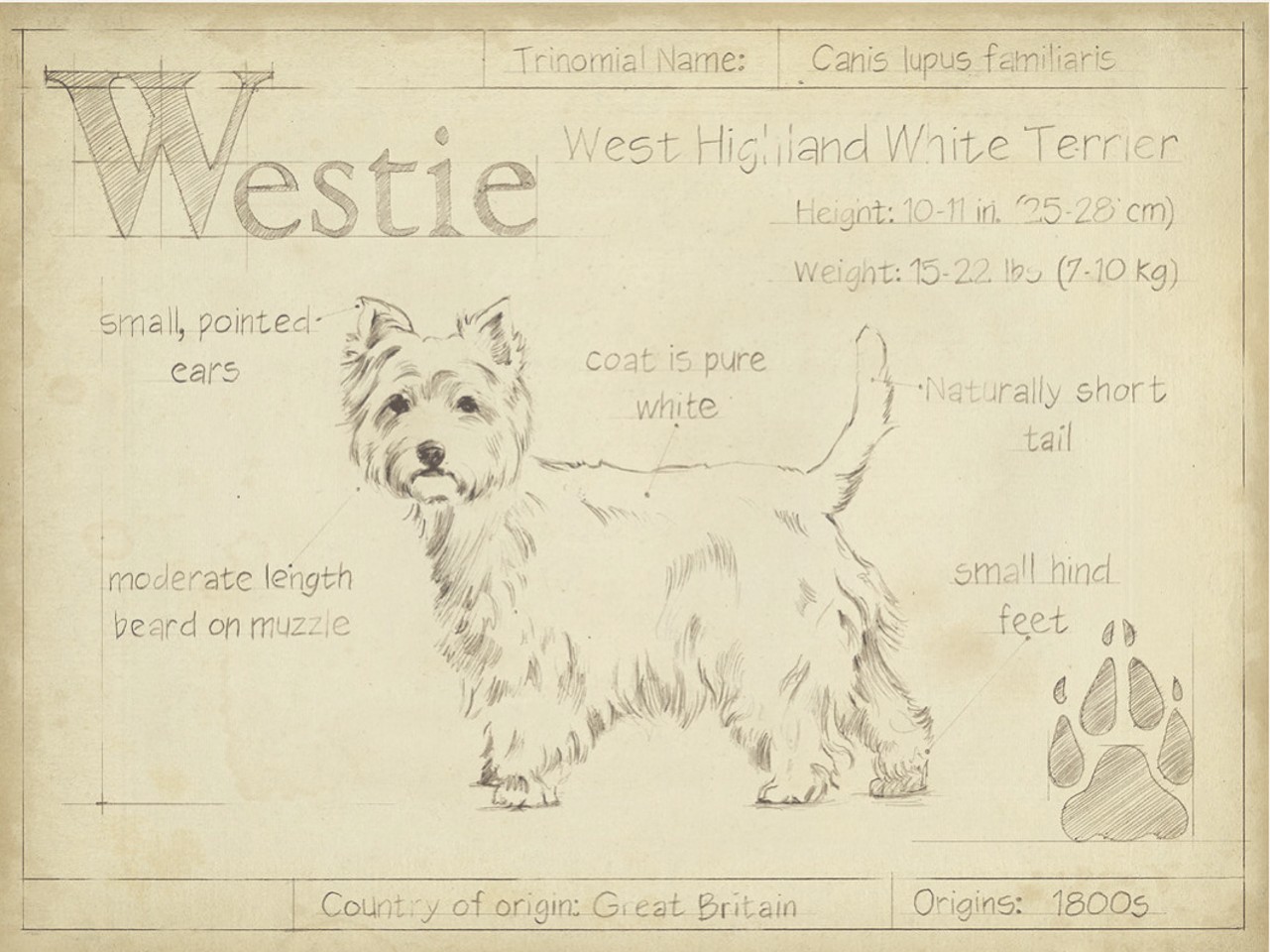
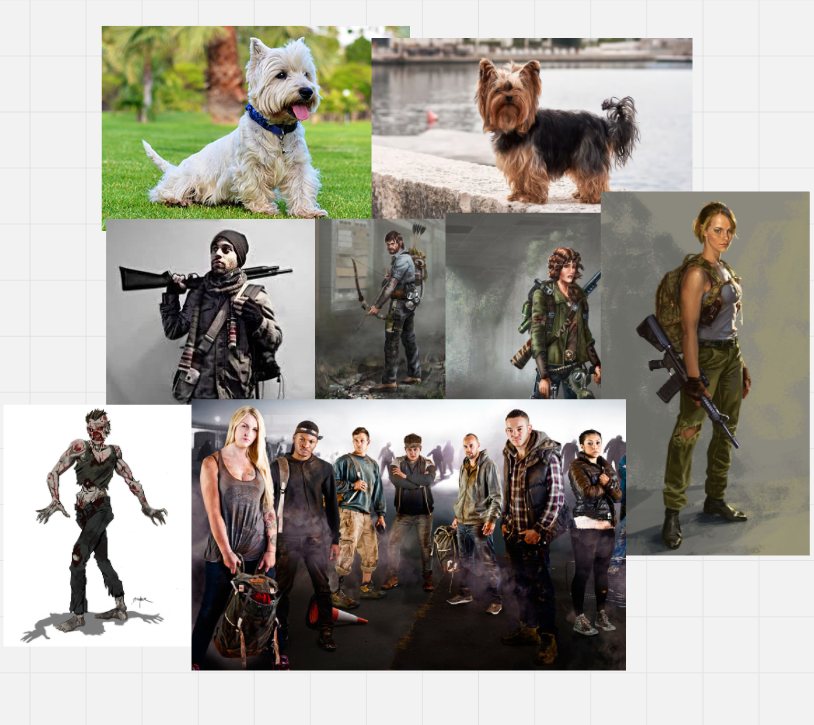
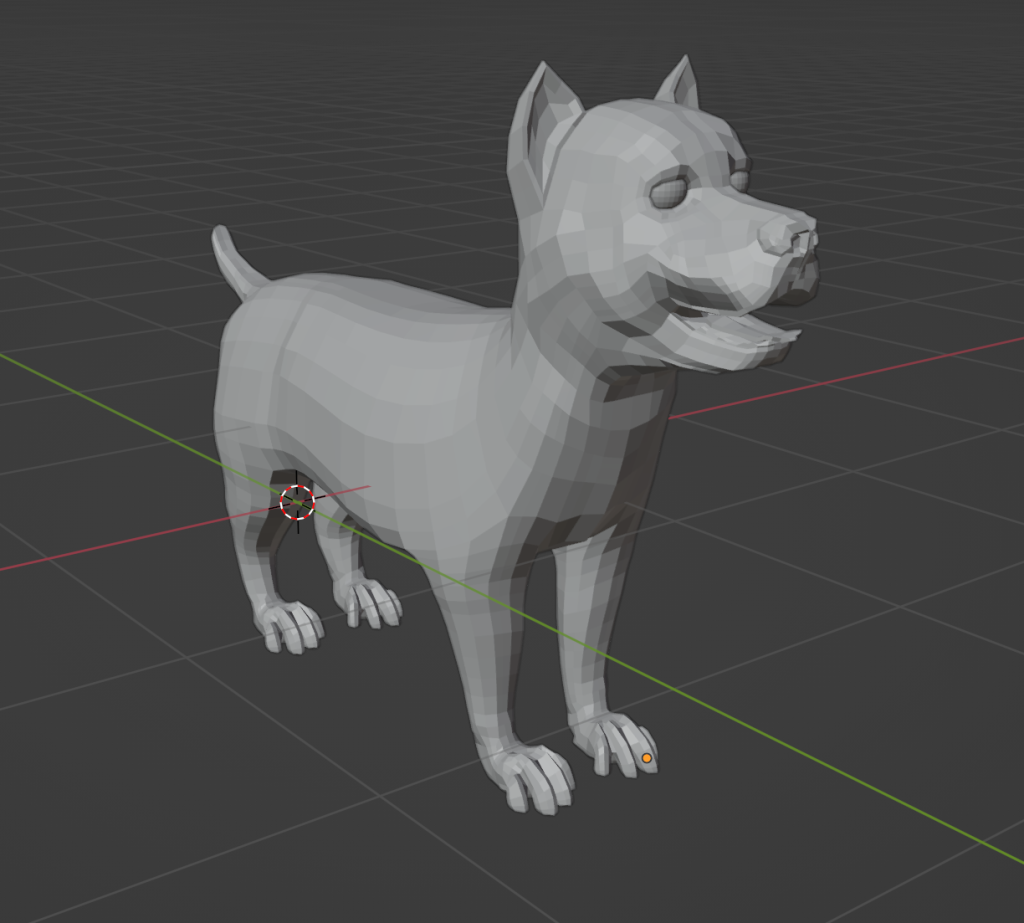
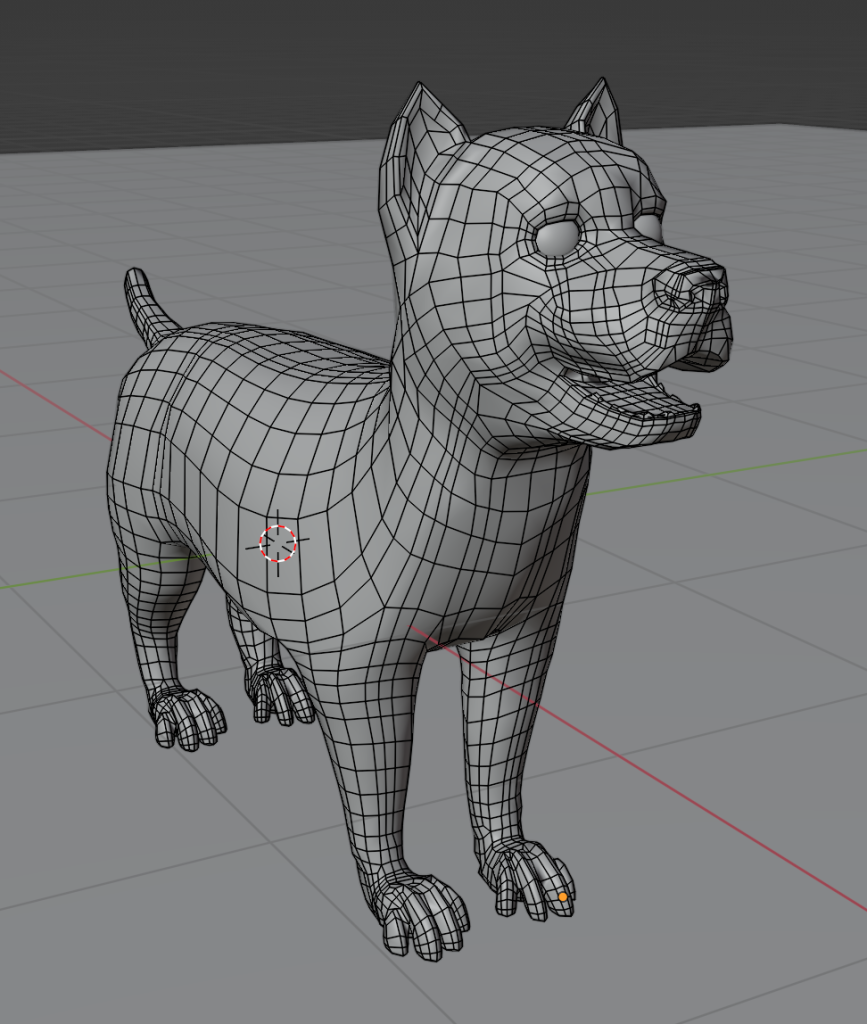
The dog, a Westie, is designed to feel sturdy, loyal, and expressive. Its proportions are slightly stylised to emphasise its strength and resilience, while still allowing for clear body language and readable movement during gameplay. Subtle details such as posture, ear position, and tail movement convey emotion, helping the player understand the dog’s state without relying on dialogue.
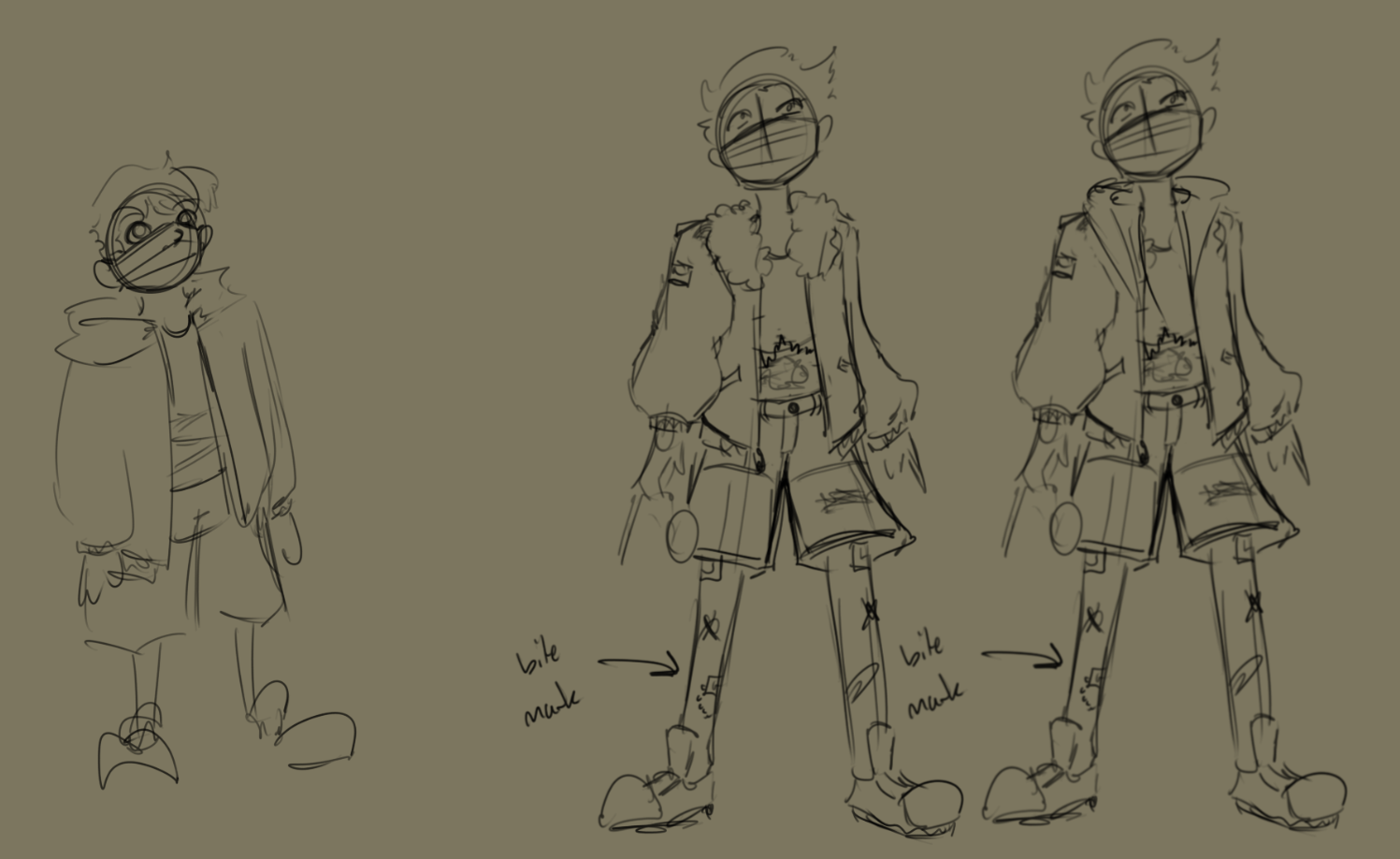
The human character is designed to appear physically and emotionally worn down. Their clothing is practical, damaged, and layered, suggesting long-term struggle rather than preparedness. Injuries and tired body language reinforce their dependence on the dog, visually supporting the gameplay loop where the player takes on a supportive role.
Together, the two designs are intended to communicate their bond and shared vulnerability, reinforcing the game’s emotional core while remaining visually simple and readable within the painted art style.
UI
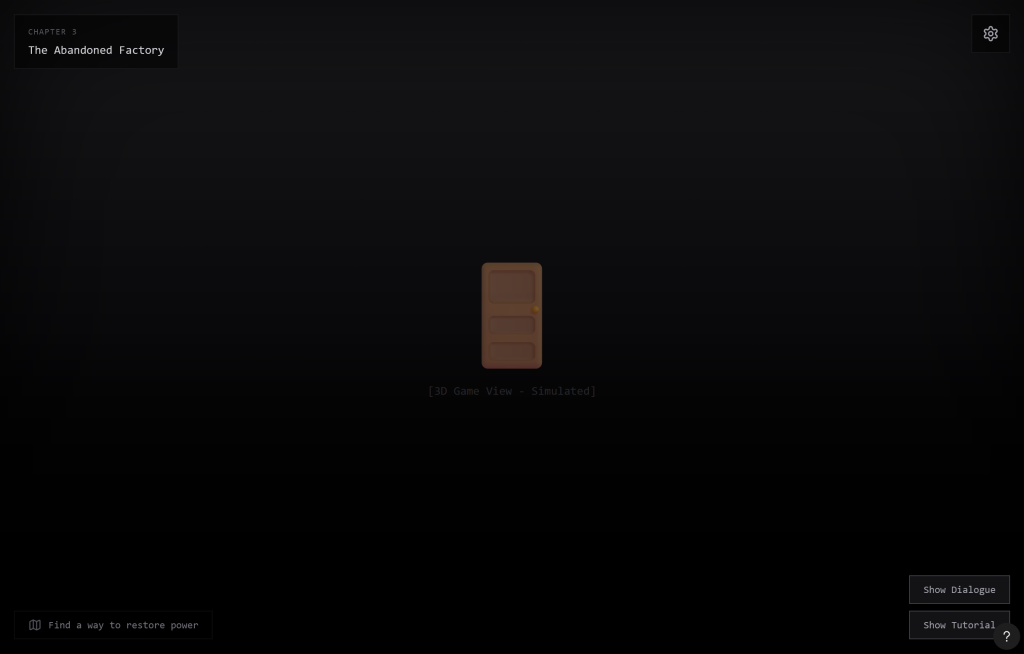
Fonts are crucial in UI design because they shape how players interact with the game world. The right font not only ensures readability but also reinforces the game’s tone, atmosphere, and identity.
A clean, modern typeface can make puzzle mechanics feel intuitive and logical, while a whimsical or stylised font can enhance a sense of fun and creativity.
Consistent typography helps guide players through menus, instructions, and feedback without distraction, keeping them immersed in the experience. Ultimately, a well-chosen font becomes part of the storytelling, subtly supporting gameplay, emotion, and overall player engagement.
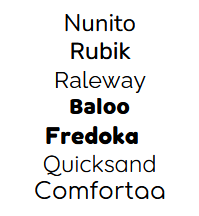
Each of these fonts offers a distinct personality that can shape the tone of a puzzle game’s interface. Nunito provides a smooth, rounded look that feels friendly and approachable, ideal for casual or family-oriented games.
Rubik balances geometric precision with warmth, making it versatile for modern, clean UI layouts.
Raleway adds a touch of sophistication with its elegant lines, suitable for more refined or minimalist designs.
Baloo and Fredoka both bring playful energy through their bold, rounded forms, perfect for colourful or lighthearted puzzle experiences.
Quicksand offers a soft, contemporary feel that maintains clarity across different screen sizes, while Comfortaa combines geometric structure with a welcoming tone, bridging the gap between fun and professionalism.
Buttons

The generic Unreal Engine coconut buttons are a good place to look for how the UI might look in-game. simple design with a unique font, most likely slightly translucent but visible enough so players can still see and understand how to interact with the UI.Sound and Music Direction
Game music and sound effects play a critical role in shaping how a video game feels and how its story is experienced by the player. Unlike visuals or mechanics, sound works on a deeper level, dictating emotions, creating tension, and giving meaning to a player’s actions. Music can signal danger, safety, sadness, or hope, while sound effects ground the player in the world by making it feel alive and reactive. Together, they help change a game from a set of interactive systems into an emotive experience, reinforcing narrative themes.
In our zombie-themed game, quiet, eerie sounds are especially effective at creating a creepy, unsettling atmosphere. Instead of relying on constant music, silence and minimal audio heighten the player’s awareness of their surroundings. Subtle ambient sounds, such as distant groans, wind through abandoned spaces, or the faint scrape of movement, keep players on edge, suggesting threats that may or may not be there. This uncertainty mirrors the fear and paranoia central to zombie narratives, where danger often comes unexpectedly, and survival depends on caution.
These sound choices also help tell the story of a world that has fallen apart. The lack of a strong musical presence can make environments feel empty and lifeless, reinforcing themes of isolation and decay. When music or louder sound cues do appear, they become more impactful, marking moments of danger or emotional significance. By using quiet, eerie audio design, your game lets players feel the horror rather than just see it, making the zombie-infested world feel more immersive and emotionally resonant.
Sound and Music Direction
Game music and sound effects play a critical role in shaping how a video game feels and how its story is experienced by the player. Unlike visuals or mechanics, sound works on a deeper level, dictating emotions, creating tension, and giving meaning to a player’s actions. Music can signal danger, safety, sadness, or hope, while sound effects ground the player in the world by making it feel alive and reactive. Together, they help change a game from a set of interactive systems into an emotive experience, reinforcing narrative themes.
In our zombie-themed game, quiet, eerie sounds are especially effective at creating a creepy, unsettling atmosphere. Instead of relying on constant music, silence and minimal audio heighten the player’s awareness of their surroundings. Subtle ambient sounds, such as distant groans, wind through abandoned spaces, or the faint scrape of movement, keep players on edge, suggesting threats that may or may not be there. This uncertainty mirrors the fear and paranoia central to zombie narratives, where danger often comes unexpectedly, and survival depends on caution.
These sound choices also help tell the story of a world that has fallen apart. The lack of a strong musical presence can make environments feel empty and lifeless, reinforcing themes of isolation and decay. When music or louder sound cues do appear, they become more impactful, marking moments of danger or emotional significance. By using quiet, eerie audio design, your game lets players feel the horror rather than just see it, making the zombie-infested world feel more immersive and emotionally resonant.
Target Audience/Competition
(By Josh)
Target Audience
Dog Eat Dog is aimed at players who enjoy narratively-driven games that focus on atmosphere, emotional storytelling, and environmental puzzles. The game is particularly suited to players who prefer slower, more thoughtful gameplay that encourages exploration and puzzle-solving.
The primary audience includes fans of indie horror and puzzle games, especially those who favour psychological or atmospheric horror over graphic or action-heavy experiences. Players interested in unique perspectives and unconventional characters may also be drawn to the experience, as playing from a dog’s perspective offers a fresh way to interact with familiar environments.
Overall, Dog Eat Dog is designed for a teen-to-adult audience (approximately 16+) who enjoy experimental indie titles that combine tension, emotion, and innovative mechanics within the puzzle-horror genre.
Competition

Silt
Genre & Tone:
Silt is a surreal underwater puzzle-adventure that leans into atmospheric horror, with a monochrome aesthetic and eerie world design. Players explore deep ocean environments by possessing sea creatures to solve puzzles and advance through the game’s strange depths.
Gameplay Focus:
The core mechanics revolve around puzzle-solving through creature possession and environmental exploration, with minimal UI and handholding. Its horror elements emerge from tone and visual design rather than jump scares.
Comparison to Dog Eat Dog:
Both Silt and Dog Eat Dog sit within narrative-driven puzzle genres with atmospheric elements. Dog Eat Dog shares the emphasis on environmental interaction and exploration, but it shifts the perspective to a land-based setting and introduces a distinct protagonist role as a dog, which influences movement and problem-solving in ways Silt does not. Dog Eat Dog also blends horror with emotional storytelling grounded in the relationship between the dog and its owner, whereas Silt focuses on mystery and mood in a more abstract sense.
Market Position:
Silt appeals to players who enjoy puzzle exploration with psychological or surreal tones, often comparing favorably to minimalist titles like Limbo and Inside. Dog Eat Dog, while atmospheric, pairs this with a stronger narrative hook and more relatable emotional motivation.
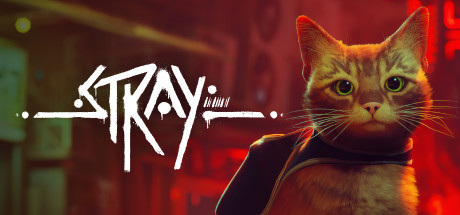
Stray
Genre & Tone:
Stray is a third-person adventure game where players control a stray cat navigating a ruined city inhabited by robots and hostile creatures. The narrative centres on survival and discovery as the cat seeks a way back to the surface.
Gameplay Focus:
Exploration, environmental interaction, light stealth, and occasional evasion of enemies define Stray’s gameplay. There’s a stronger emphasis on worldbuilding and narrative progression through interactions with the environment and supporting characters.
Comparison to Dog Eat Dog:
Both games share non-human protagonists and emphasise exploration from an animal’s perspective. However, Stray leans more toward traditional adventure mechanics, featuring light combat and evasion gameplay in a heavily narrativised city/world. Dog Eat Dog focuses on puzzle mechanics tied to the dog’s physical limitations, and its horror elements derive from the confined, deteriorating house and the vulnerable relationship with the injured owner.
This situates Dog Eat Dog closer to Stray in terms of emotional engagement, but with a different focus on puzzle-based progression rather than stealth or combat avoidance.
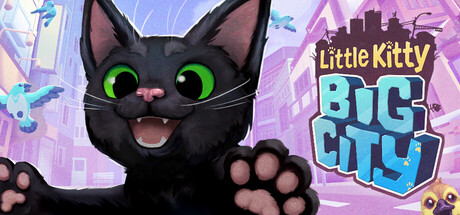
Little Kitty, Big City
Genre & Tone:
Little Kitty, Big City is a lighthearted adventure in which players control a lost city cat as it seeks its way home, engaging in quests and interactions in a vibrant urban world. Its tone is playful and warm rather than tense or dramatic.
Gameplay Focus:
Exploration, item collection, interaction with other animals and humans, and completion of small side quests. Unlike Stray, Little Kitty is generally danger-free, focusing on freedom and discovery rather than survival.
Comparison to Dog Eat Dog:
Little Kitty, Big City attracts players who enjoy casual, fun animal-centric gameplay with freedom and charm. Dog Eat Dog contrasts strongly here: it combines emotional stakes and tension with puzzle challenges and atmospheric horror. While both feature non-human characters and exploration, Dog Eat Dog targets an audience seeking deeper narrative engagement and environmental challenge rather than carefree exploration and mischief.
Our Audience
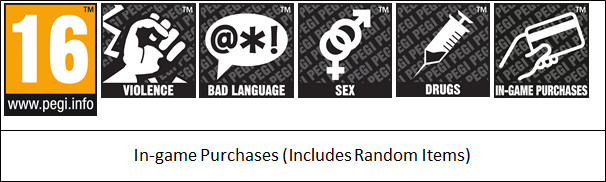
PEGI 16, ESRB – Teen:
Dog Eat Dog may feature realistic, sustained violence against human characters, including depictions of blood and injury. Some sequences contain intense horror or strong, unsettling imagery that reflects the game’s mature themes.
Short Experience
The game is designed to last between 15 and 30 minutes, depending on how quickly you solve the puzzles.
Unique Perspective
What truly sets Dog Eat Dog apart is the opportunity to experience the world from a dog’s point of view. The innovative camera system puts you at ground level, offering a fresh perspective that shapes both exploration and puzzle-solving, making the experience feel genuinely unique among puzzle and horror games.
| Age | 18-30 |
| Sex | Any |
| Education level | Bachelors degree |
| Income | £25,000-£30,000 |
| Favourite games | Stray, Little Nightmares, Inside |
| Hobbies / Interests | Pets, |
| Personality | Curious, empathetic, determind |
| Game values | Appreciates horror through atmosphere and narrative rather than jumpscares and shock value. |
| Platform | PC |
Project Structure
Schedule
(By Indiana)
PHASE 1: THE FOUNDATION
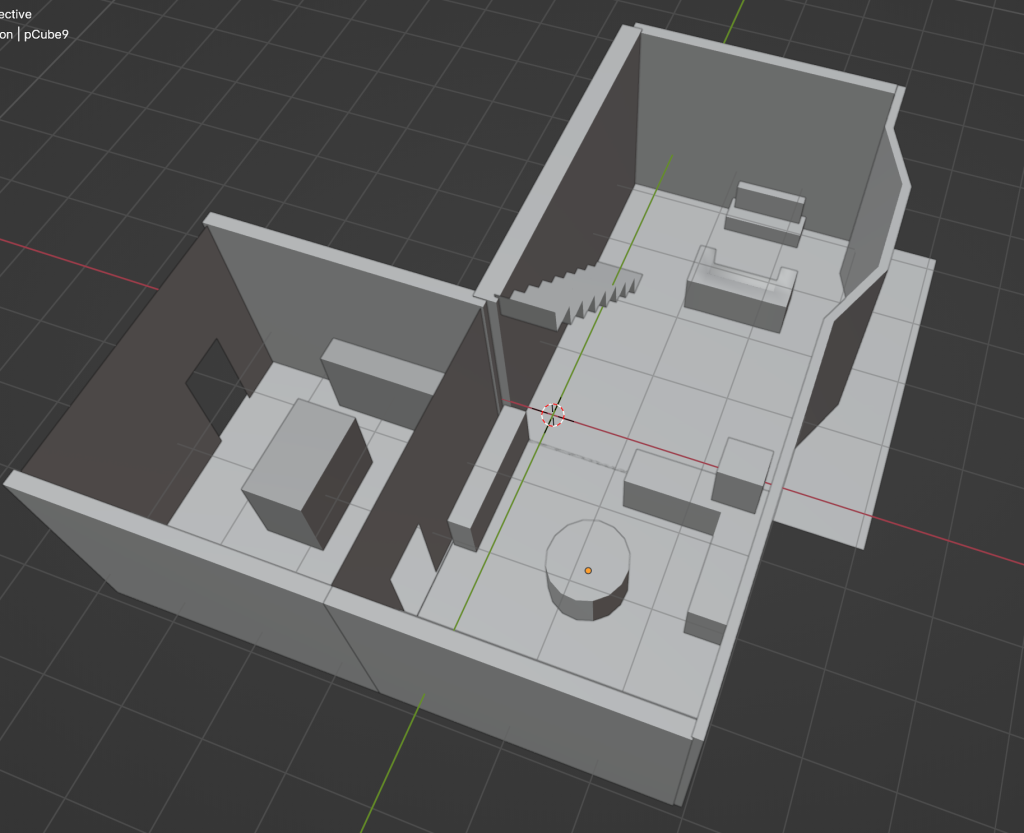
The goal of this phase is to establish the project’s foundation and mechanics. It may not be the highest quality, but creates a good baseline for in case we run out of time iterating on any specific part. Deliverables for this phase should be: mechanics for the dog walking, running, and grabbing, and a basic untextured 3D modelled layout of the house.
WEEK 1
- Indiana:
- Create, UV cut, and texture the human model
- Josh:
- Rig the dog model
WEEK 2
- Indiana:
- Create a walk and run animation for the dog, and implement into Unity
- Josh:
- Rig the human model
WEEK 3
- Indiana:
- Create a bite and drag mechanic for the dog, and implement it into Unity.
- Iron out all fetch quest tasks
- Josh:
- Finish iterating on the greybox and iron out all fetch quest tasks
- Start creating the 3D models for the house, focused on the kitchen/living room
WEEK 4
- Indiana:
- Finish up any animations that have run over schedule
- Help 3D model out the house, focused on kitchen/living room assets
- Josh:
- Continue 3D modelling for the house, focused on kitchen/living room assets
PHASE 2: THE GAME LOOP
The goal of this phase is to create the fetch quests based on the foundation of the first phase. This should create the rest of the game, if not to a perfect standard, then at least to have something to show. Deliverables of this phase should be: completion of 3 fetch quests, and the bulk of the 3D modelling/texturing done, with the exception of additional props. However, so long as we have just one fetch quest, the game will have a complete game loop and work.
WEEK 5
- Indiana:
- Program in the medical aide fetch quest.
- Josh:
- Finish modelling /begin texturing
WEEK 6
- Indiana:
- Program the find food/water fetch quest
- Josh:
- Continue texturing
WEEK 7
- Indiana:
- Program the find food/water fetch quest
- Josh:
- Continue texturing
WEEK 8
- Indiana:
- Program + animate the opening cutscene.
- Josh:
- Continue texturing
PHASE 3: THE DETAILS
This phase is to build upon what should hopefully, at this point, be a functioning game, if not a perfect one. Much of this will be determined based on what we are able to accomplish in the previous weeks. Deliverables should be: UI, sound design, props, and bug fixes.
WEEK 9
- Indiana:
- Texture the zombified human mode
- Program the ending cutscene
- Josh:
- Sort out UI design, how we get information to players.
WEEK 10
- Indiana:
- Implement the zombified human models.
- Use Inkie or Yarnspinner to make the popups.
- Josh:
- Sound design
WEEK 11
- Indiana:
- Implement sound design, bug fixes
- Josh:
- Extra props, UI, or sound
WEEK 12
- Indiana:
- Bug fixes
- Josh:
- Extra props, UI, or sound
Methodologies
(By Josh)
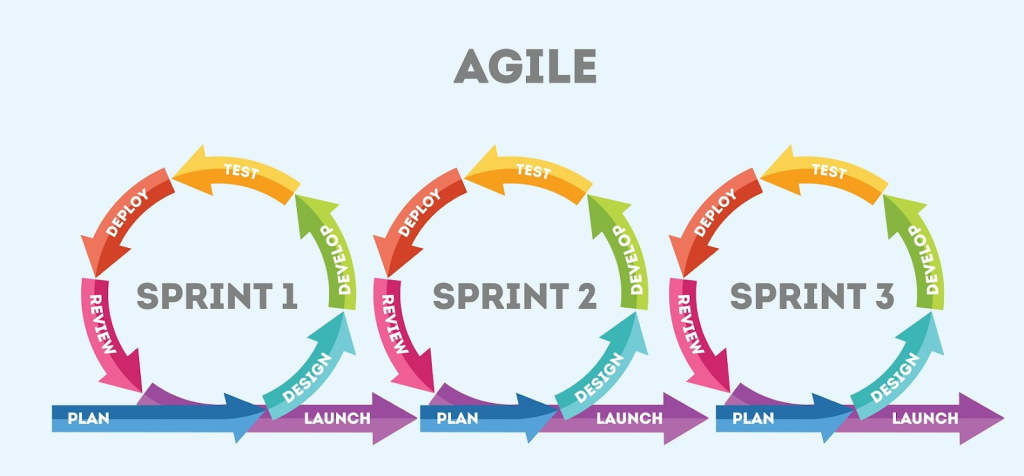
Agile is quite well-suited to our project because it encourages flexibility, communication, and rapid progress. By working in short iterations, we can focus on completing small, playable features rather than trying to build everything at once. This helps us quickly establish core mechanics and ensures the game remains functional, which is important when working with limited time.
Agile also benefits small teams by promoting continuous feedback and easy adaptation. With only two people, communication is direct and frequent, making it easy to review progress, test ideas, and adjust plans without delays. If something is not working, Agile allows us to change direction quickly without disrupting the entire project. Overall, Agile helps our small team stay organised, efficient, and focused on delivering a polished game experience.
Ethics
(By Josh)
A key ethical consideration for Dog Eat Dog is the well-being and mental health of our players. While we want the game to offer a meaningful challenge, it should never become a source of undue frustration or stress. We achieve this by designing fair puzzles, providing clear visual and audio cues, and including optional hints. Failure is presented as a chance to learn, not as a punishment, ensuring that the player’s experience remains positive and rewarding.
Fairness and respect for players are equally important. As a single-player game, Dog Eat Dog does not include manipulative systems; there’s no monetisation, pay-to-win elements, or artificial time gates. Progression is always based on skill and transparency. We value our players’ time and intelligence by providing clear rules, consistent mechanics, and honest difficulty curves, so success is earned through problem-solving rather than trial and error.
Accessibility and inclusivity are prominent in ethical game design. We aim to make Dog Eat Dog as welcoming as possible to as many players as possible, with features like adjustable controls, an easy-to-read UI, and audio cues that aren’t essential to progression. Our puzzles focus on logic rather than speed, ensuring the challenge is fair without excluding those who may struggle with reaction-based gameplay.
Thoughtful content and representation are also essential. We avoid glorifying violence or reinforcing harmful stereotypes, and any darker themes are included only when they serve a meaningful purpose in the story or gameplay, rather than for shock value.
Finally, ethical development means looking after our own team as well. By setting realistic goals, maintaining healthy workloads, and communicating openly, we reduce the risk of burnout and encourage better creativity. Sustainable work practices ultimately lead to a more polished and meaningful final product.
By focusing on player wellbeing, fairness, accessibility, responsible content, and healthy development, we aim to ensure that Dog Eat Dog is not only ethically designed but also genuinely respectful to everyone who plays.
Design Appendix
(By Indiana)
Presentations
Concepts
Character Concepts
Environment Concepts
UI Concepts
Sound Concepts
Hollow Knight OST – Reflection
Sounds
Wind Sound SOUND EFFECT – No Copyright[Download Free]
Ambient – Wind |Cinematic Sounds Effects| 🎧 [Audio library] Free Copyright
Prototypes
Other Links
Josh’s Blog:
https://sites.wsagames.com/jb19g23
Indy’s Blog:
Leave a Reply