Introduction
This page primarily documents some of the sound tests, sound selection, team feedback and future adjustment directions currently underway in the audio development process for Soul Keeper.
The current focus of our work includes the initial screening and atmosphere testing of animal sounds, ambient sounds, interaction sounds and background music. As the game as a whole leans towards a gentle, quiet, dream-like style, this work is not merely about finding ‘realistic’ sounds, but focuses more on whether the various sounds, once incorporated into the game, can maintain a consistent emotional tone and player immersion.
Audio Checklist
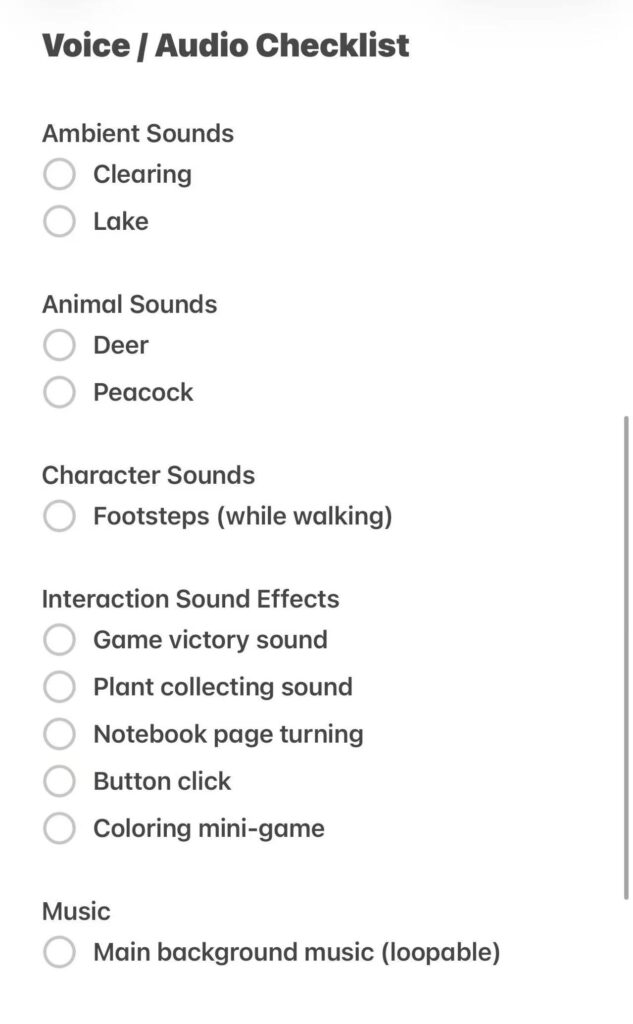
This phase primarily involves organising the basic audio categories currently required for the game.
To ensure that no important sounds are overlooked during the later production stages, I have drawn up a preliminary audio checklist and categorised them according to the requirements of gameplay interaction, the environment and player feedback.
This process has also helped me gain a clearer understanding of which sounds contribute to atmosphere building, which provide gameplay feedback, and which require further testing at a later stage.
Team Feedback & Audio Testing
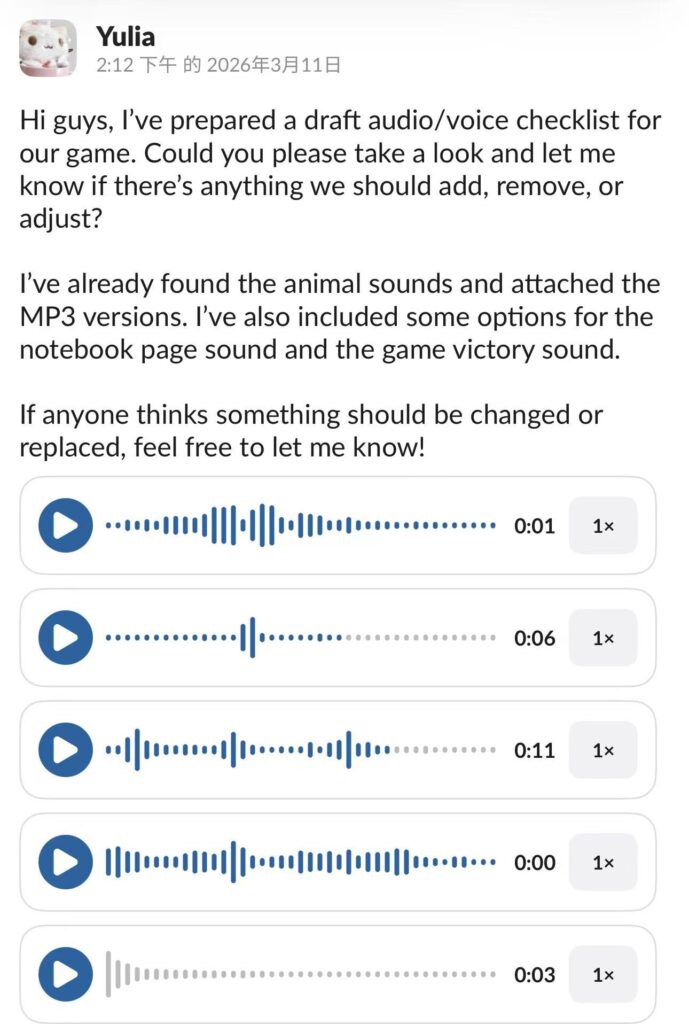
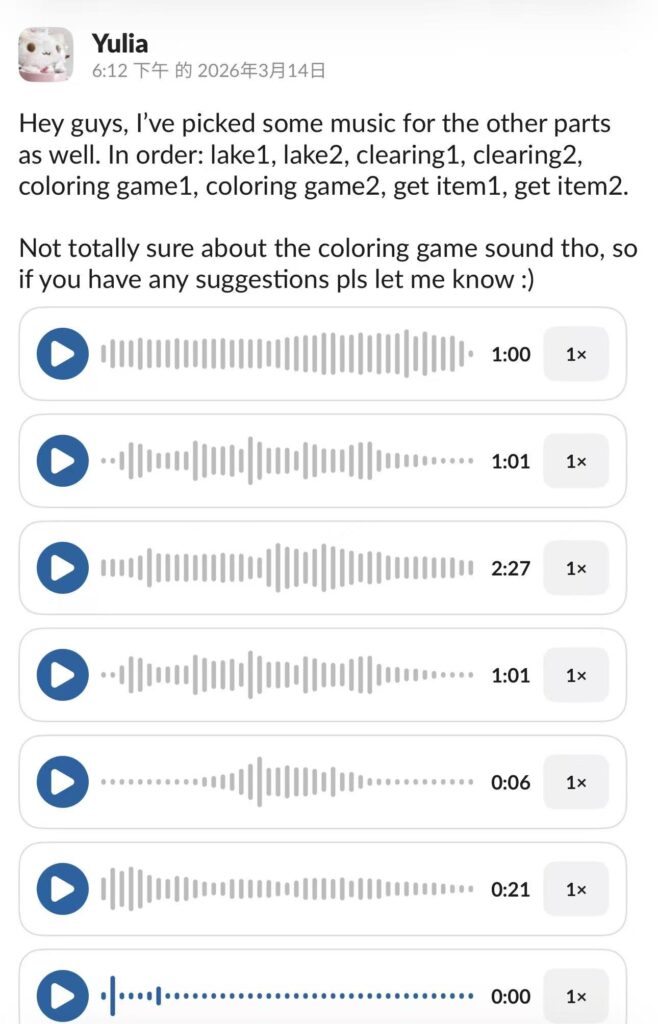
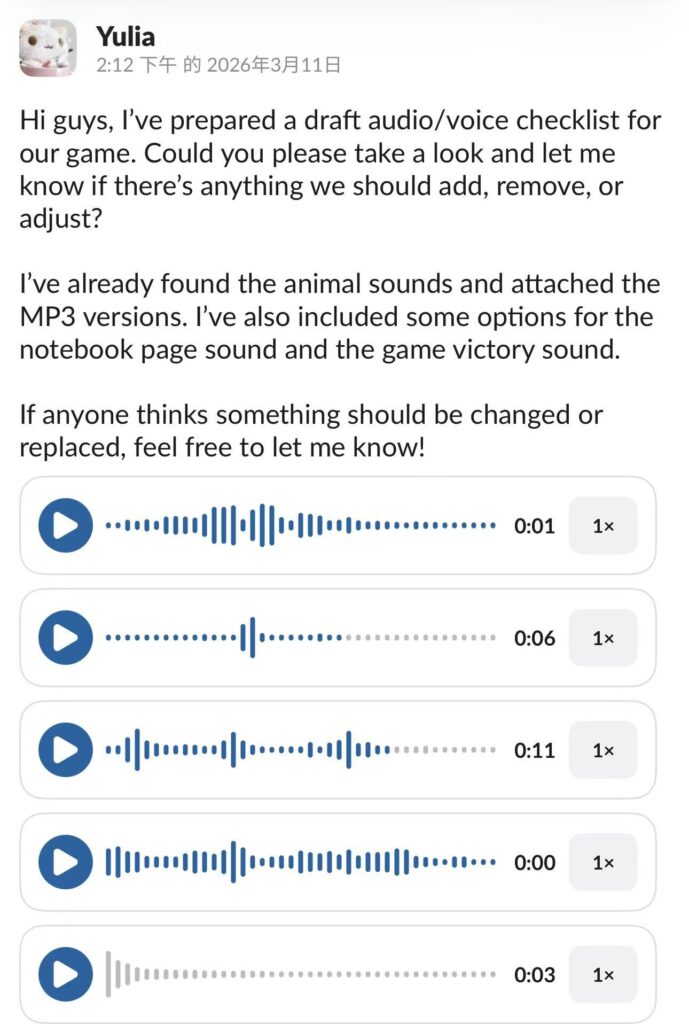
After completing the initial audio selection, I uploaded different versions of the sound effects and background music to the team channel and invited team members to test the atmosphere and interaction feedback together.
During the discussion, team members mainly provided feedback on animal sounds, page-turning sounds, the atmosphere created by the background music, and the clarity of the interaction feedback.
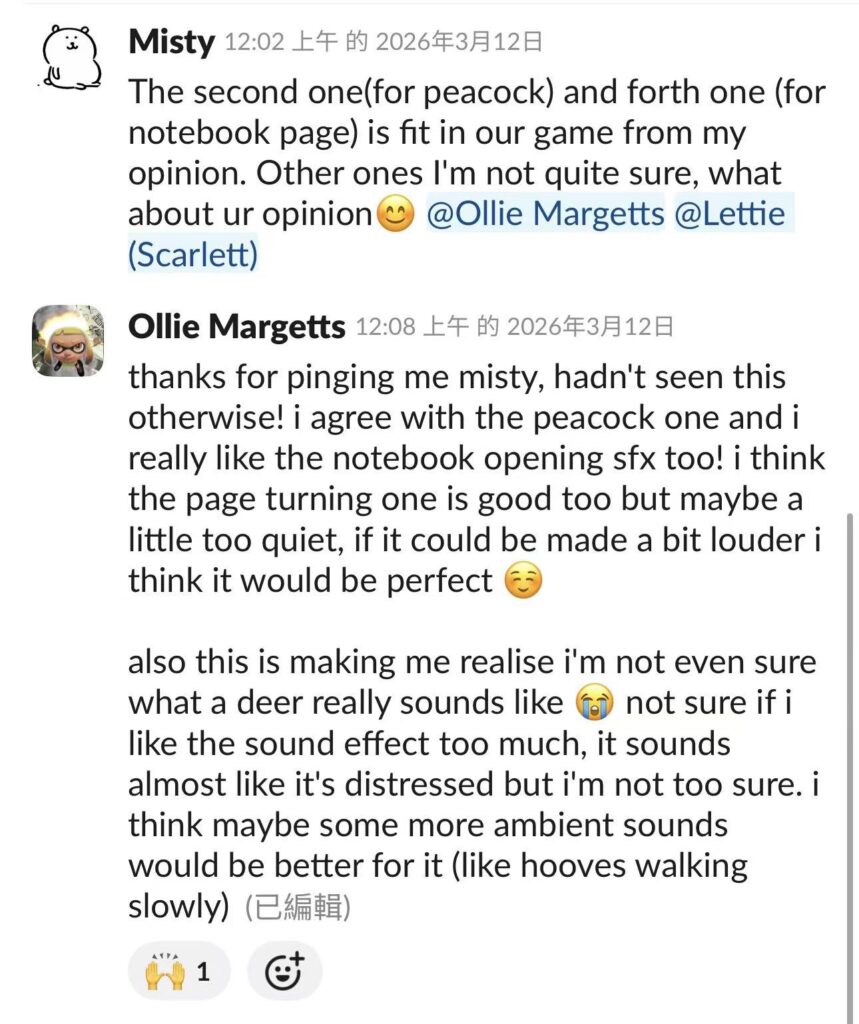
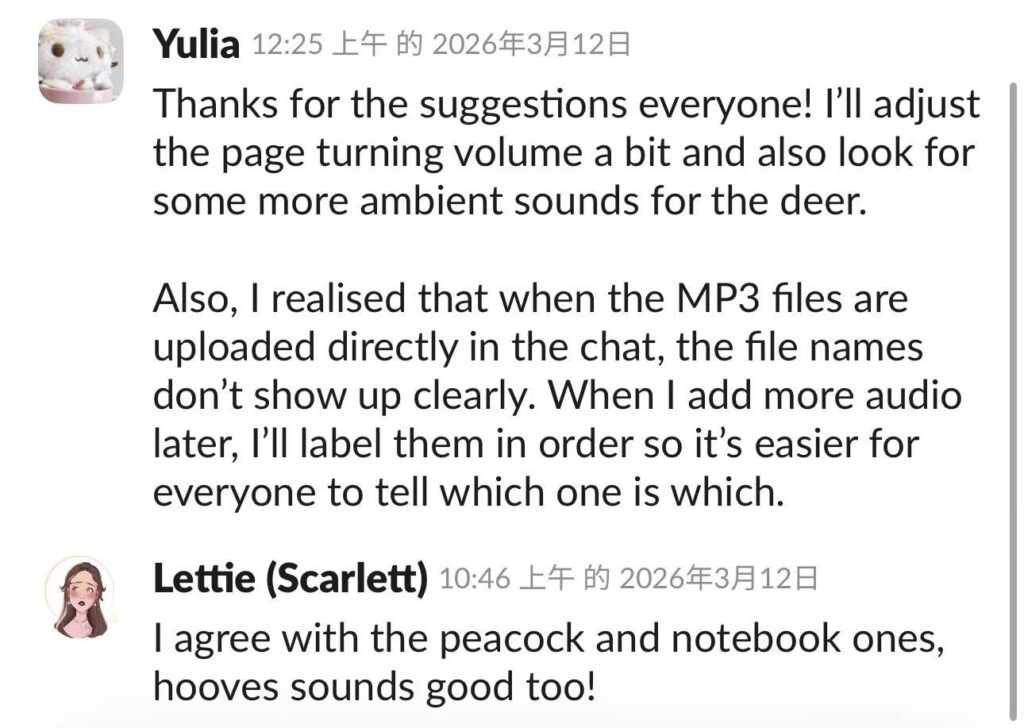
Some of this feedback had a significant impact on subsequent adjustments.
For example, Team members felt that whilst certain deer sounds were realistic, they sounded slightly distressed, which might disrupt the game’s current quiet and gentle atmosphere.
Additionally, some team members suggested the sound of a notebook page turning fits the game’s atmosphere well, but the volume is currently too low and may need further adjustment in the future.
After that, I gradually realised that sound design is not merely about finding the ‘right sounds’, but also requires constant iteration based on player perception and team feedback.
Background Music Selection
Whilst selecting the background music, I tested a total of four instrumental tracks, each with a slightly different atmosphere.
Some of these tracks, whilst featuring pleasant melodies, possessed a rather strong emotional intensity; when placed within the current game environment, they made the atmosphere feel overly dramatic. In contrast, the first track I ultimately chose, ‘A Walk in the Forest’, has a slower overall rhythm and a gentler melody.
Furthermore, whilst maintaining the forest atmosphere, it does not overly distract the player’s attention, but rather leans towards a sense of ambient background sound. This more natural presence is also better suited to the quiet exploration experience that Soul Keeper currently aims to create.
Additionally, this track blends more naturally with the existing ambient sounds (such as water, wind and animal movements), making it less likely to cause any clashes in atmosphere.
Reflection
Through this phase of audio research and testing, I gradually came to realise that Sound design in games is not merely about ‘enhancing the atmosphere’, but directly influences players’ emotional perception of the entire world. Some sounds, whilst very realistic in the real world, may not necessarily suit the intended direction of the game’s experience.
Consequently, when selecting sounds, I began to focus more on the integration of sound with the environment, player immersion, the clarity of interaction feedback, and the consistency of the overall emotional tone.
At the same time, feedback from the team has helped me identify issues more quickly and continuously refine the current audio direction.
Leave a Reply