Introduction
When I started conceptualizing the world structure of Soul Keeper, I slowly started to realise that the world in a game is not just a visual thing. In many games, the story is actually told to the player through space, movement and the environment itself. I have watched some GDC talks on environmental storytelling and world design, in hopes of understand more clearly. How players utilize their surroundings to comprehend their surroundings The interrelation between storyline, investigation, and spatial design.

Research reference from GDC talks related to environmental storytelling and world design.
Research Reflection
During my research, I began to notice that many game worlds do not directly tell players ‘what is happening in the world’.Research Reflection
Instead, much of the information is gradually conveyed to players through environmental details, path direction, spatial transitions, and small traces within the scenes. This design approach led me to rethink the world structure of Soul Keeper.
Initially, I focused more on atmosphere and visual feel. But later, I began to consider why players would visit a particular area, how they would move about,how the environment should naturally guide exploration, and how the narrative could be conveyed through the world’s structure. These ideas subsequently influenced my later work on ecosystem design and narrative planning.
Research Notes
Whilst watching these talks, I began to notice that much environmental storytelling is not achieved through extensive text.
Many games utilise spatial transitions, the placement of landmarks, the direction of paths, and environmental traces to help players understand the world.
For example, players might move naturally in response to changes in terrain, or realise that certain events have taken place by observing traces in the environment. This approach reduces reliance on explicit UI guidance, whilst making exploration feel more natural.
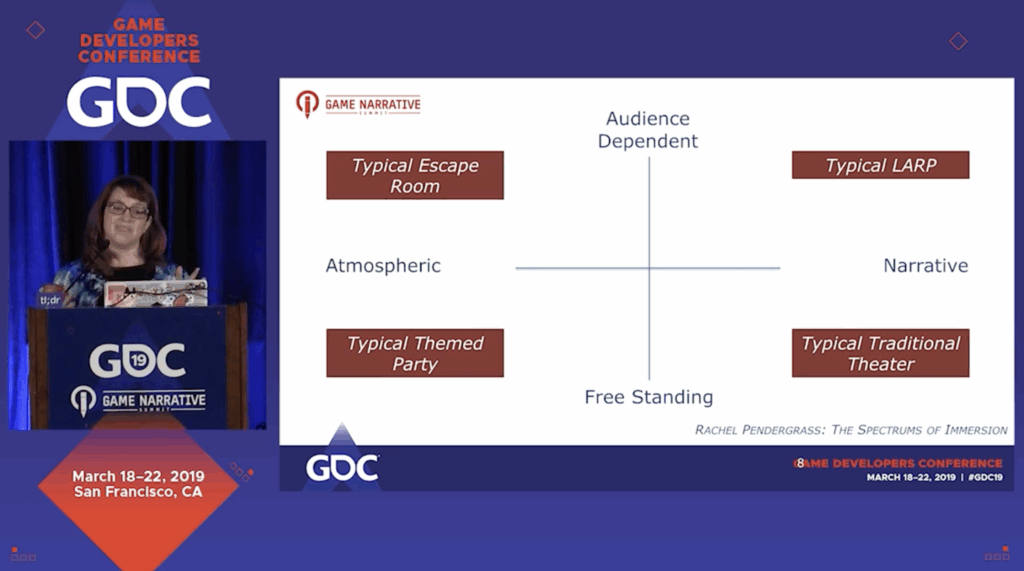
The Influence of Research on Soul Keeper
Influenced by this research, I subsequently began to rethink the ecosystem structure of Soul Keeper. In the early stages of the project, I focused more on the atmosphere and visual feel of the areas themselves. However, following my research, I began to give greater consideration to whether there were logical connections between different areas, whether players could understand their progression through the environment, and whether the narrative could be felt through the spaces themselves.
Consequently, when designing Lake, Clearing and Cliffside, I began to incorporate more considerations regarding water flow, plant distribution, traces of animal movement and environmental transitions.
Challenges During Research
During the research process, I found that one particular challenge was that if the logic behind the worldbuilding was designed to be too complex, the entire project would begin to lean towards a technical structure, thereby losing the originally quiet and gentle atmosphere of Soul Keeper. However, if I focused solely on the visual mood, the environment would easily lack a believable structure.
Consequently, I began to seek a balance between environmental logic and emotional atmosphere. Rather than introducing a multitude of complex settings, I prefer to use simpler environmental connections to maintain the world’s consistency.
Reflection
During this research, I more clear to understand more clearly that the environment in a game is not merely a backdrop.
It also influences how players explore, how they interpret the narrative, and how they experience the atmosphere of the world as a whole. This research subsequently helped me to rethink the world structure and environmental storytelling direction of Soul Keeper.
Leave a Reply