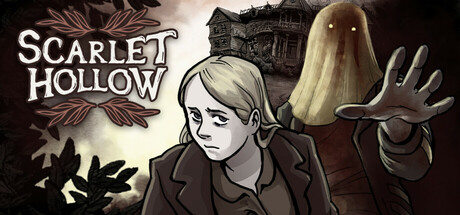
When researching visual novel-related mechanics, I chose to reference Scarlet Hollow instead of a more traditional visual novel with a flatter structure. Although The Verdant Trail contains a lot of NPC dialogue and character relationships, it is not a game that relies purely on text progression. Our project also includes exploration, items, objectives, map areas, and environmental feedback, so I needed to study a visual novel example that could connect dialogue, relationships, and exploration together.
Scarlet Hollow was a useful reference for me because it does not simply ask the player to read text and choose options. Instead, the player’s choices, character traits, and NPC relationships all affect later content. Its relationship system works almost like a hidden reputation / approval system: the player’s actions and dialogue choices affect how NPCs see the player, and this can change later interactions, extra dialogue, or scenes. This was very close to the Reputation Manager I was trying to design for The Verdant Trail.
This made me realise that visual novel mechanics do not have to be flat. The key question is not whether a game uses a lot of text, but whether the player’s text choices are remembered by the system and create feedback later. If a player’s choice only leads to the next line of text, then dialogue is closer to narrative presentation. However, if choices can change character relationships, visible options, quest states, or later story content, then dialogue becomes part of the gameplay system.
This reference also helped me rethink the dialogue / reputation design in The Verdant Trail. Tyler’s relationship with Sierra and Marcus should not only exist as one-off branches inside individual conversations. It should be recorded as a persistent state. After the player delivers items, completes tasks, or chooses different responses, the system should be able to change the NPC’s attitude towards Tyler and reflect that change in later dialogue or quests.
However, Scarlet Hollow also showed me that this kind of system has a large scope. A relationship-driven visual novel needs a lot of writing to support it, because each relationship state needs matching dialogue branches, character reactions, or follow-up content. Without enough narrative content, even if reputation values exist, it is difficult for players to feel their meaning.
This also explains why my own Reputation Manager was not fully implemented into the Vertical Slice in the end. My prototype could record changes in Marcus and Sierra’s values, but at that stage, the project did not have enough stable dialogue content or visible consequences to present those changes. Because of this, the system worked in the background, but it had not yet formed a complete player-facing loop.
Through this case study, I think The Verdant Trail can learn from relationship-based dialogue in visual novels, but it should not stay within the traditional VN structure of text progression. A more suitable direction for our project is to connect dialogue choices, NPC relationships, item interaction, and exploration progression together. In this way, players can gain information through exploration, then see the consequences of their choices through dialogue and relationship systems.
Reference:
Black Tabby Games (2020) ‘Creating a dynamic relationship system in Scarlet Hollow’, Medium. Available at: https://blacktabbygames.medium.com/creating-a-dynamic-relationship-system-in-scarlet-hollow-eb175aa899a8.
Leave a Reply