Visiting the British Library
The History of Public Libraries in Britain
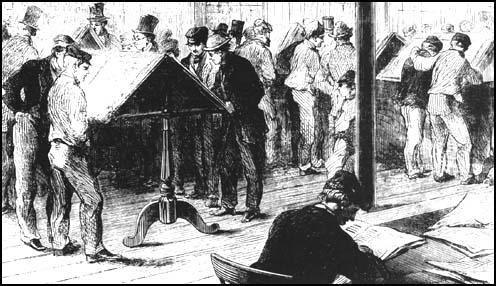
William Ewart’s Museums Act in 1845 was the first act in the UK to introduce the possibility of using taxes to fund public libraries, which was cemented with the 1850 Libraries Act, which was a liberal driven act that allowed municipal boroughs with a population of over 10,000 to establish a building as a public library, but would not provide books. This was campigned for by the Liberal MPs William Ewart and Joseph Brotherton and the Chartist Edward Edwards. There was a move towards ensuring the public’s education and social reform this century, shown by the 1850 Libraries Act and the 1870 Elementary Education Act which sought to ensure a basic education for all children aged 5-12 in England and Wales (Heritage England, p.2, 2016). The first public library to open based on the 1850 act was actually Winchester, ‘On 10th November, 1851, the new Library and Museum was opened in the converted Governor’s House of the old gaol in Jewry Street. Winchester thereby achieved the distinction of being the second authority in the country to adopt the 1850 Act and the first actually to open the doors of its library to the public.’ (Helliwell, p.171, 1951). However, it wasn’t until 1887 that public libraries started to pick up steam and in the 1880s and 1890s, ‘a new pattern of organised private philanthropy emerged in Britain which would provide both the motivation and means for previously sluggish or impoverished local authorities to adopt the Act’ (Heritage England, p.2-3, 2016), through philanthropists like Andrew Carnegie, Henry Tate and John Passmore Edwards.
The History of the British Library
The History of the British Library begins with the British Museum library, which was founded in 1753. The British Museum library was held within the building of the British Museum. Much of the current British Libraries collection comes the collection within the British Museum library, which was formally collated in 1973 after the 1972 British Library Act.
An important figure in the improvement of library provisions in England was Edward Edwards, who valued public education and rejected class privilege especially regarding access to knowledge and University. Edward Edwards published ‘Remarks on the Minutes of Evidence Taken before the Select Committee on the British Museum’ in 1836, in which he asked, ‘[…]why use of the museum library could not be extended to a wider class of person’ (Black, 2004). This eventually led to his role at the British Museum Library as an assistant cataloguer in 1839 until he was dismissed in 1850. He later became a librarian at the public library in Manchester, ‘the first authority to adopt the provisions of the new Public Libraries Act’ (Black, 2004) where he built a ‘comprehensive collection’ (Black, 2004) before being again dismissed in 1858.
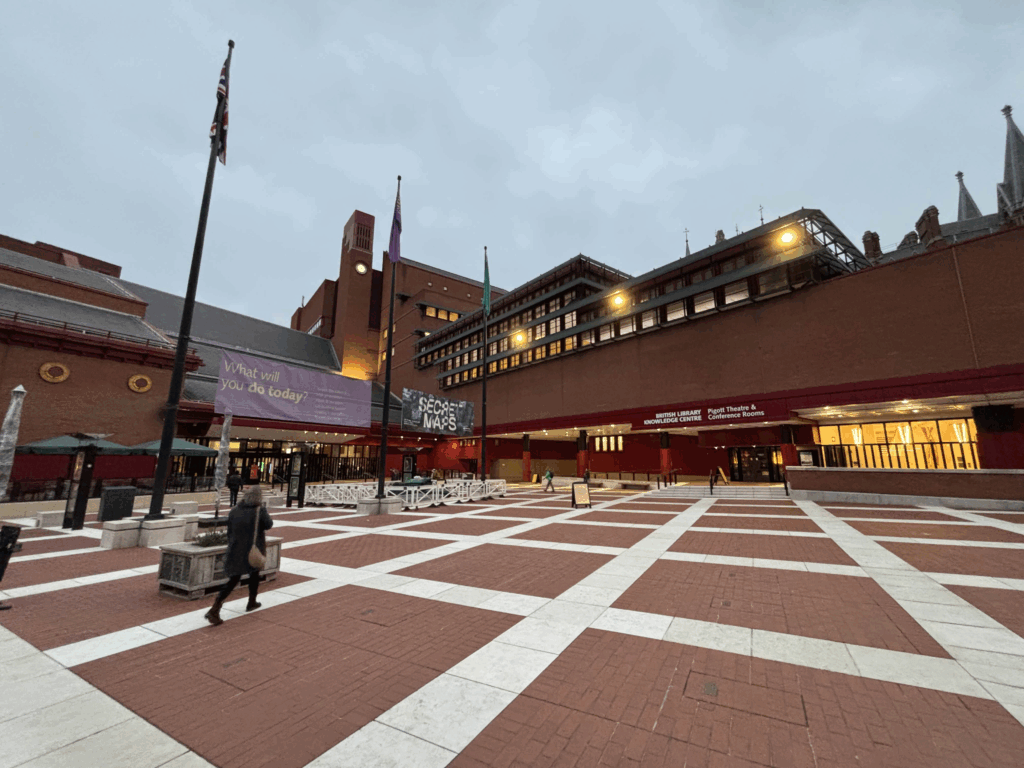
Currently, the British Library holds an incredibly diverse collection of over 170 million items. In order to access their catalogue, you need a reader pass which you can get in person by visiting Reader Registration in St Pancras or Boston Spa. You cannot borrow books, but you can use the reading rooms to read them, and access ebooks online. You can also become an annual member, with free entry to exhibitions, cheaper events and a member’ room, which costs an individual £80-£95 a year. The free reading pass highlights the values of open access and equal opportunity that are important to my project.
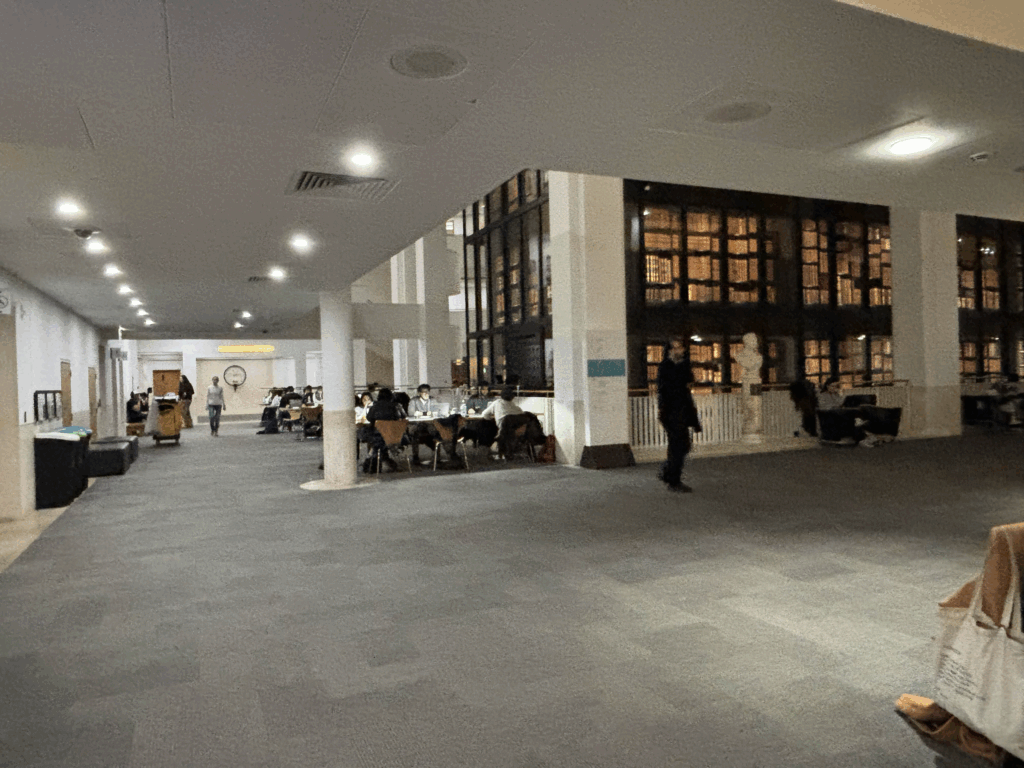

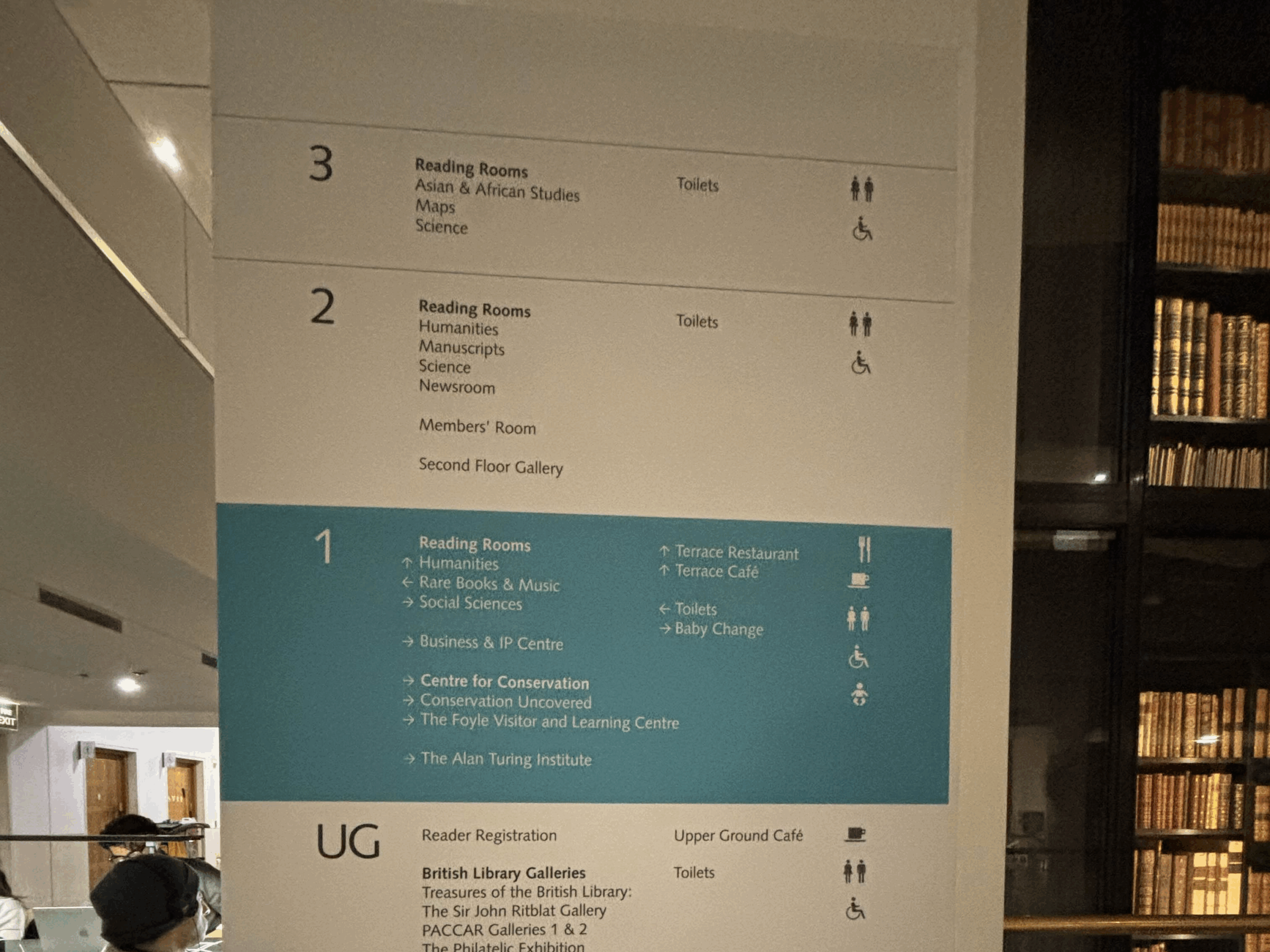
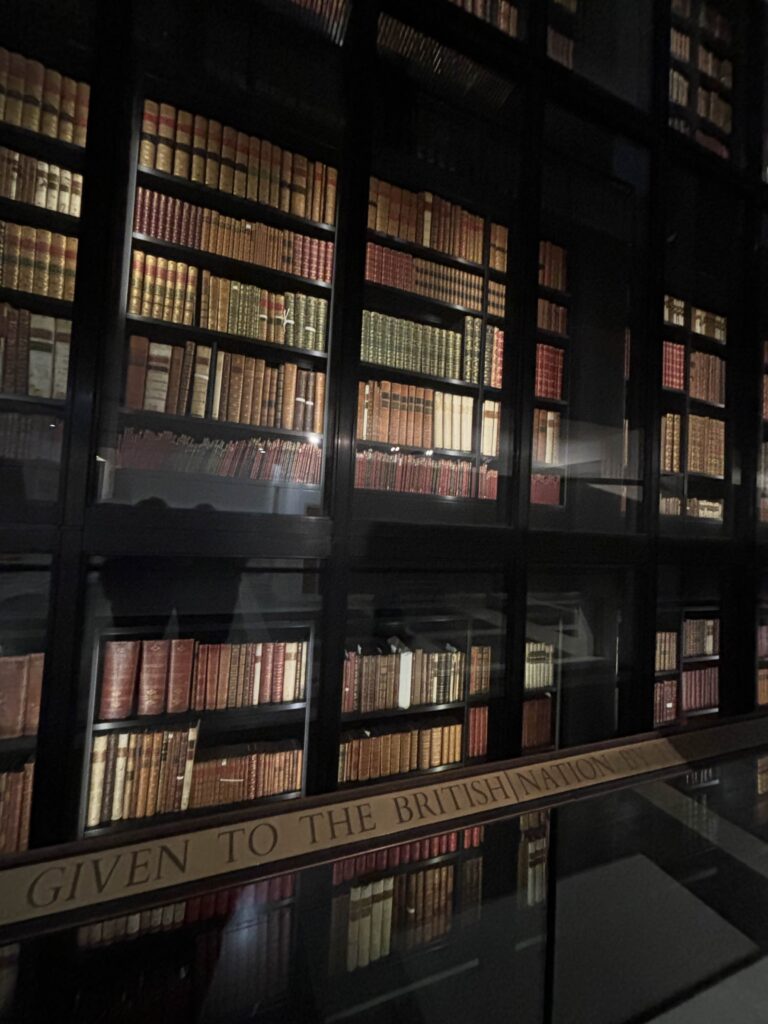
I decided to visit the British Library as a part of the research for my project, since I decided that I wanted to heavily focus on academic open access and public libraries in England. As I want to create a ‘Grand’ National Library, with what was initially a prized collection, I thought a good real-life reference would be the British National Library, with the largest collection in Europe.
Secret Maps Exhibition
Exhibitions collate things from other collections to display them for the public, which is another important aspect for giving the public access to resources that they could not typically have, many exhibitions displaying items from private collections.
I decided to visit the Secret Maps Exhibition that was on at the British Library at the time of my visit. I felt that the topic of keeping information ‘secret’ was relevant to my topic as not only does it make certain knowledge inaccessible to the public, it hides that there is anything to know in the first place. Elements that I found interesting and relevant to my project are pictured below:
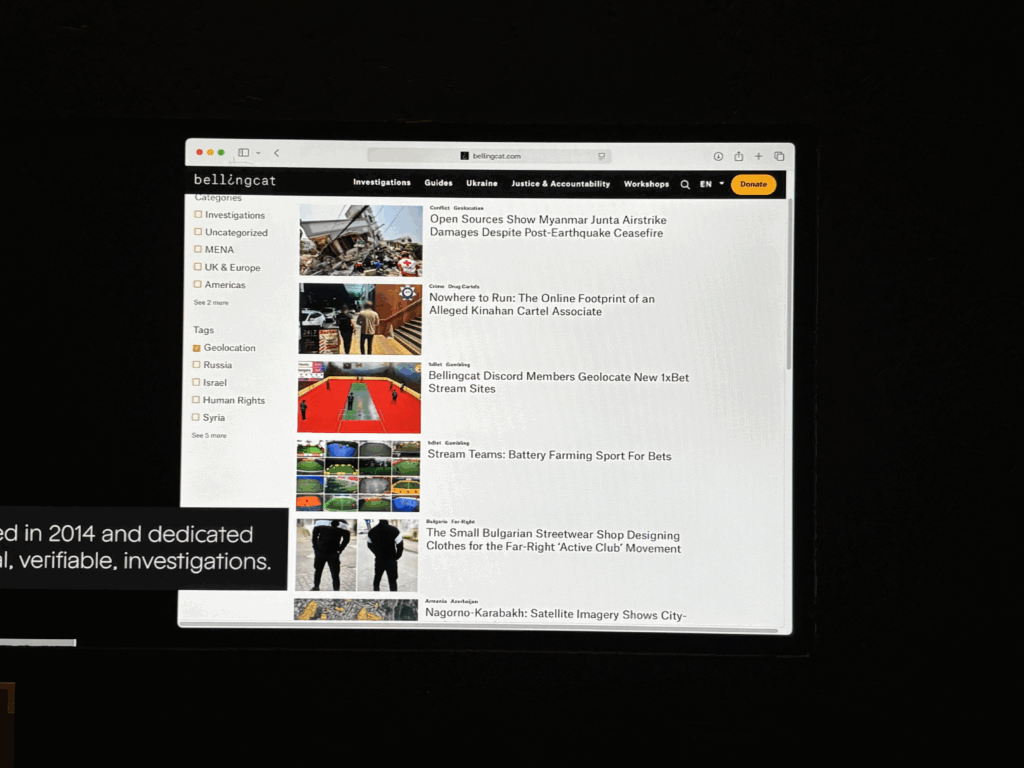
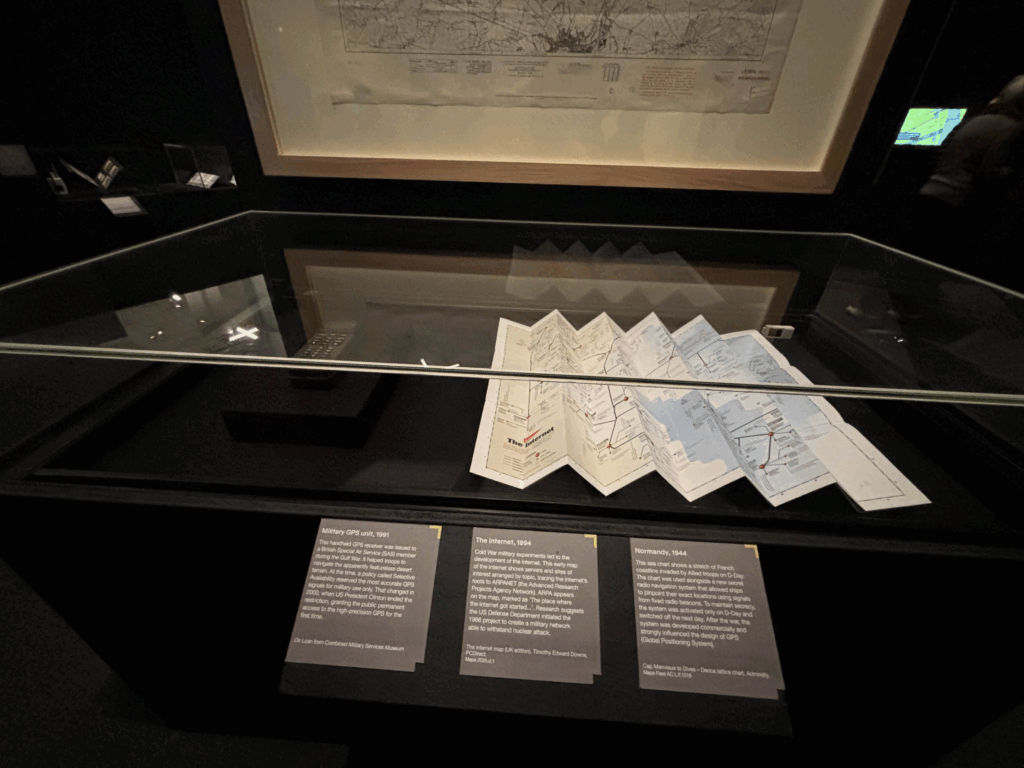
The Military GPS unit 1991 pictured here demontrates a walling of knowledge, the ‘Selective Availability’ Policy meaning that the public could not have access to high-precision GPS until the policy was changed in 2000. When resources like this become open access, this makes open-source intelligence like Bellingcat’s Ship Detection Tool possible.
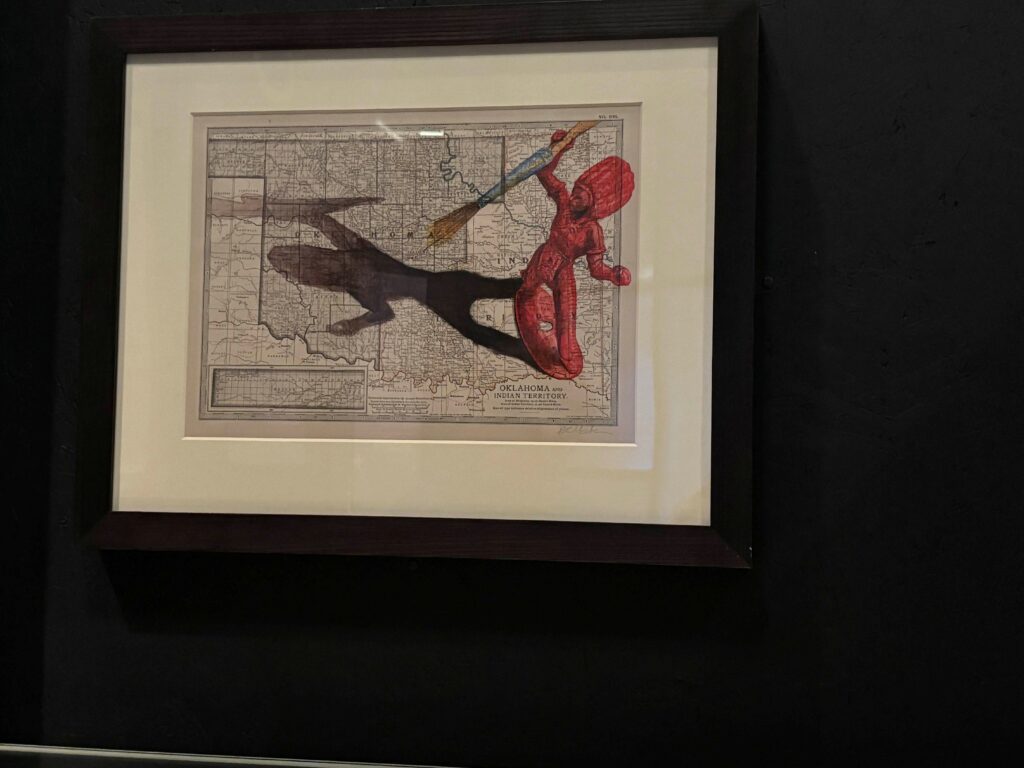
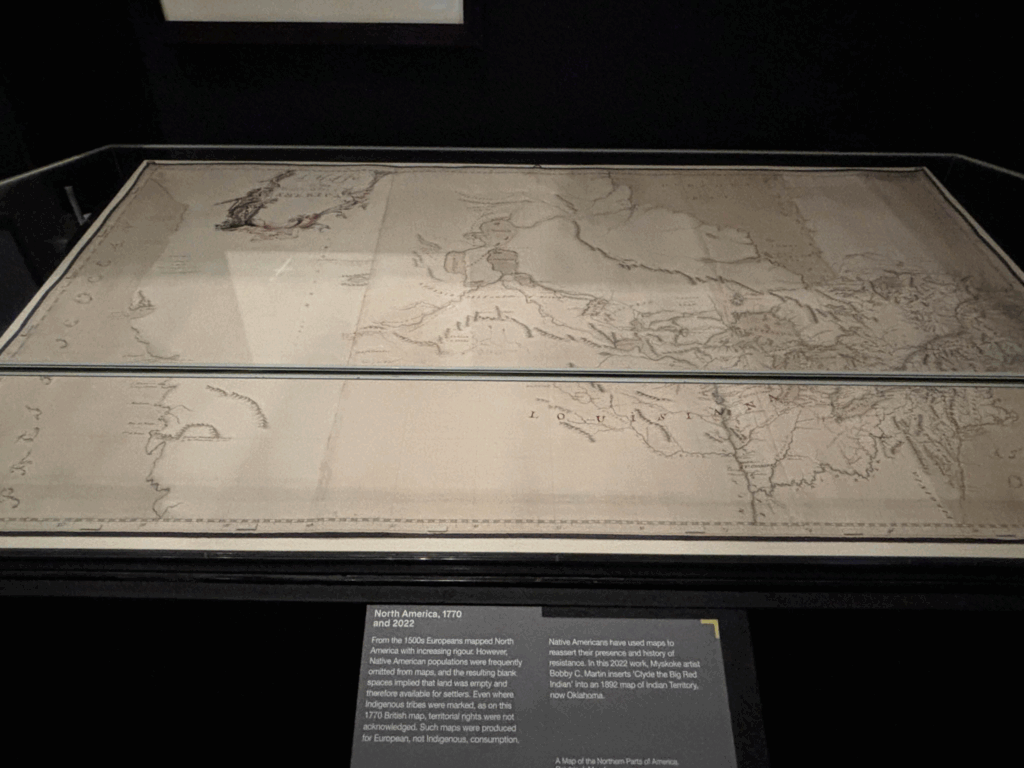
We also saw many maps demonstrating colonialism, the map on the right is a British map depicting North America in 1770. As was common with these sorts of maps, if an area was ‘unclaimed’ by settlers, the area would often be left blank to suggest that it was open for taking, rather than acknowledge the indigenous people already living there. These maps retell the story of colonialism obfuscating their role in forcefully and violently taking land in favour of a land that needed taking. Accurate information is essential to a well-informed democratic society.
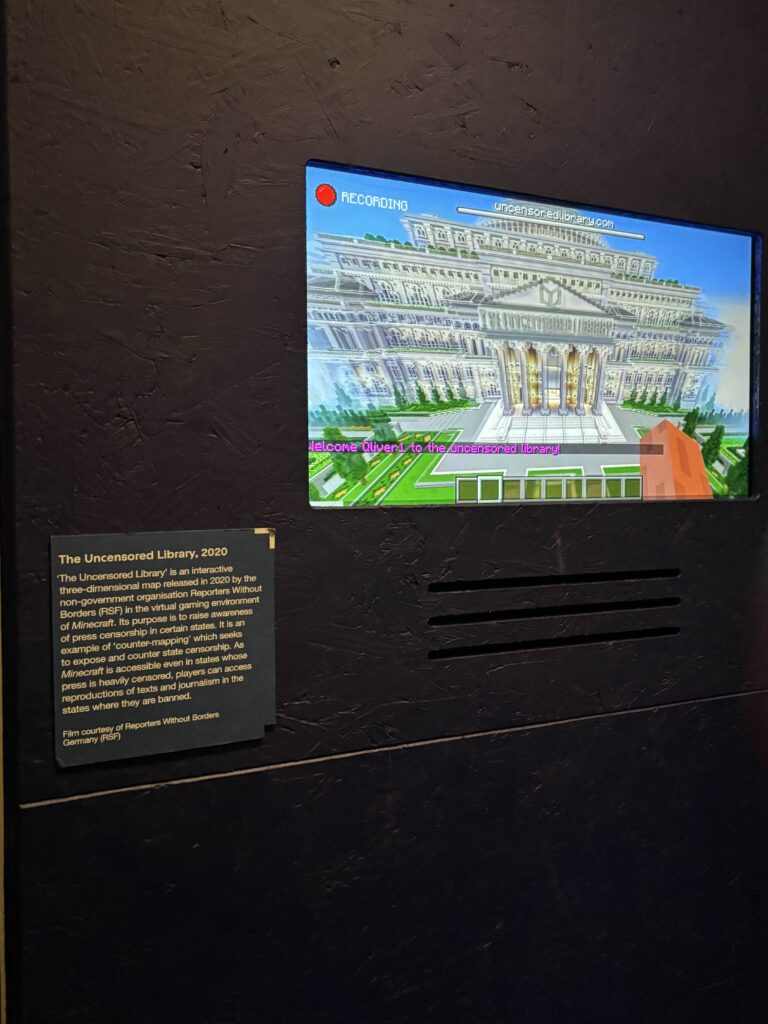
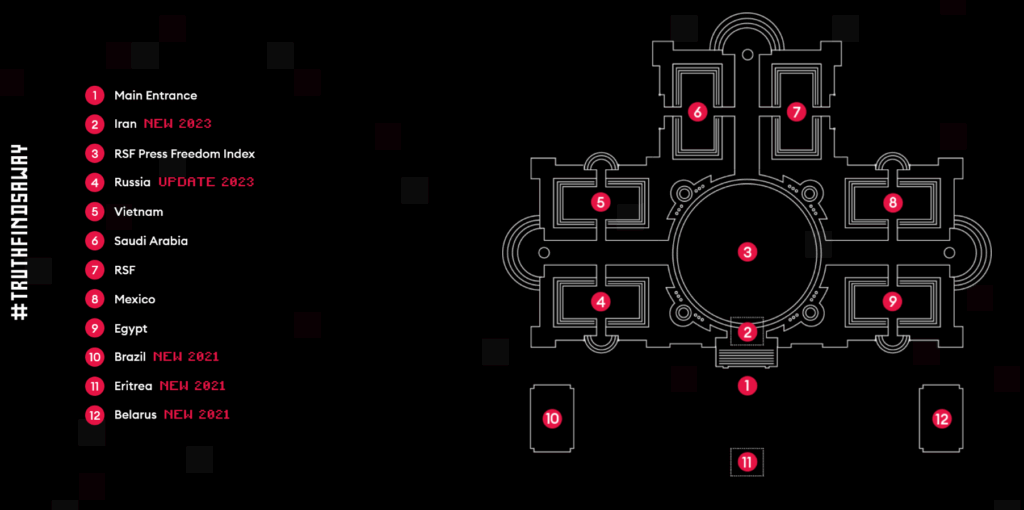
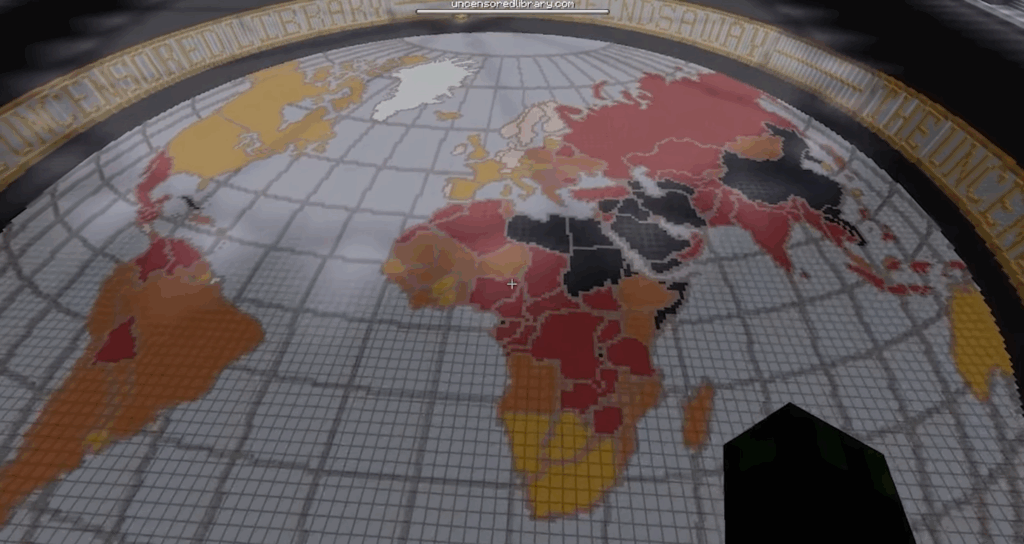
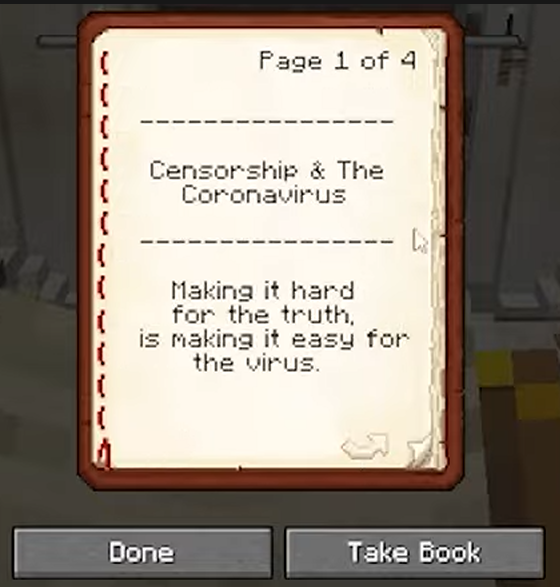
‘The Uncensored Library’ was a map made in Minecraft by Reporters without Borders (RSF). This map has reporting from all over the world, giving access to censored knowledge to everyone. I felt that this was incredibly relevent to my project as it literally uses a game to share information and discuss open access and knowledge.
In the current day, with the increasing book bans and censorship of reporting, especially in the USA, projects like this are integral to democracy, ‘[…] even where almost all media is blocked or controlled, the world’s most successful computer game is still accessible. Reporters Without Borders (RSF) uses this loophole to bypass internet censorship to bring back the truth – within Minecraft’ (Reporters Without Borders, 2020). According to the Guardian, ‘PEN America has tracked more than 10,000 public school book bans in the 2023-2024 school year alone’ (Dunbar, 2025).