Professional Contexts Reflection
Over the course of this semester we have had six talks from Alumni of the Games Design and Art WSA course to talk about their experience after graduation and getting into the games industry. This is not always a linear path, and sometimes the goal changes with experience gained. I personally started this course thinking that I would aim to enter the games industry, but as the course has continued, I have realised that I am very passionate about visual storytelling, and I’ve become particularly interested in pursuing comics as a career. From this course, I believe there are many transferable skills that I can learn and apply. Therefore, in this blog I will reflect on how these talks will inform the way I approach work in Semester 2 and beyond. There were some common topics between the lectures that were highlighted as integral to professional development, which I will discuss below.
NETWORKING
Connecting with peers in real life
Arguably, networking is the most important aspect in professional development, as creating connections with people that are in the industry that you want to work in, specialising in the same area that you want to specialise in, is essential in understanding the expectations of the space and getting a foot in the door. University is an important opportunity, especially in the context of networking, creating a useful chance for us as students to make connections with each other as future professionals in the games industry as well as the guest lecturers that come in to talk to us. I want to focus on the ideas brought up by Jamie Blacknell, as he emphasised the use of tools like LinkedIn and taking advantage of opportunities like Game Jams. Using these tools expands your pool of peers while also showcasing your skills, although, in recent years, online networking has become simultaneously more accessible but also more risky especially with the mass introduction of fake AI profiles and bot accounts, shrinking the value of the connections you make and increasing ones vulnerability to potential scams.
Jamie also introduced the idea that you should research the people that contribute to the media you enjoy and reach out to them yourself, which I think is something that is impossible to do without confidence in yourself and in your own work as it requires being proactive and seeking out people outside of those that are put in your lap in the safety net of University.
In her talk, Olivia Gregory highlighted the importance of in-person events as an opportunity to network. Engaging in these spaces ensure that you are visible in the community, which is important in discovering opportunities. Olivia specifically mentioned Develop:Brighton, an event for game makers, which had over 5,500 attendees in 2025. There is a great overlap in community for people who enjoy games, comics at conventions, and Olivia mentioning events inspired me to research ones I plan to attend. I particularly plan to go to Thought Bubble Festival in Yorkshire and MCM Comic Expo London in future. Both events also have volunteering opportunities, which Olivia underlined as a great excuse to talk to people and network with peers, as well as save money, as you get to experience the convention and get free entry. Another aspect of conventions that I think would be a means of building connections is through going as an exhibitor, selling my own merchandise. This not only offers the opportunity to meet new people, but also learn what consumers enjoy, build my skills independently, make an income, and develop an audience for my future endeavours in the creative industry.
While I do not plan to enter the games industry specifically, the large overlap in both consumers and companies that create comics and games media highlights a need to remain up-to-date on new game IPs that could be adapted into comics, like Capcom has done with franchises like Street Fighter and Mega Man, licencing their IP to publishers like UDON Entertainment and Kodansha Comics. This happens the other way around too, like ‘Marvel Cosmic Invasion’ releasing this year, creating a mutualistic relationship between the Comics Industry and the Games Industry. Overall, networking and building connections across different creative medias will be essential for my professional development.
SOCIAL MEDIA
Connecting with peers and audience online
With the rise of webcomics, an established online presence is significant, whether as a stepping stone to printing a comic with a publisher or self-publishing, or even remaining solely as a webcomic creator independently, or signing a contract with a webcomic site like Webtoon.
When it comes to publishing a webcomic, there are many dedicated webcomic sites like Webtoon, Tapas and GlobalComicx, although many begin by posting their comics on other image-based social medias like Instagram and Tumblr, and on dedicated art and creative social medias like DeviantArt, NewGrounds and Itch.io. The sites that you upload to should depend heavily on the audience that you aim to garner, as, for example, most of the popular independent, ‘canvas’ webcomics on Webtoon are of the Romance genre. Looking at the ‘Canvas’ tab on Webtoon, 9/15 of the ‘recommended series’ are defined as ‘Romance’, and those not primarily described as a ‘Romance’ frequently have a large focus on romance and LGBTQ themes.
This is similar to Tapas, as the top ranked by popularity community comics are similarly dominated by Romance and LGBTQ+ themes, with only 1 comic in the top 15 not being defined in the Romance or BL genre. I believe that this is partially because these platforms, being the biggest webcomic platforms, have a much larger and more casual audience, and comedy and romance as genres are much easier to jump into as a reader without much time or effort, while complicated fantasy worlds are harder to get into for a casual audience. As Rodgers (2023) says, ‘When life gets tough, readers read romance’, highlighting romance’s value as an escapist genre.
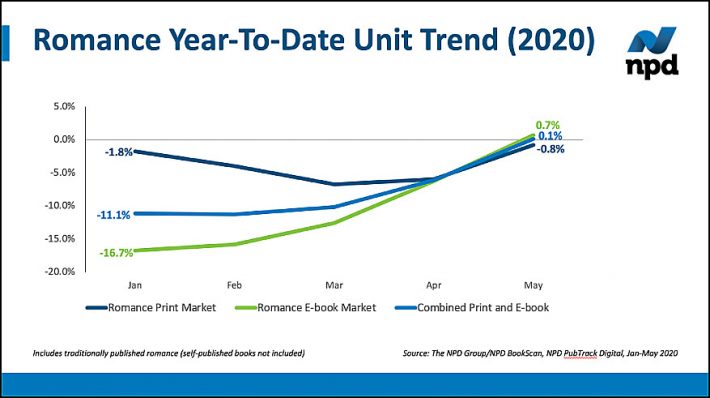
Looking at GlobalComicx, there are a lot more hard paywalls than on Webtoons and Tapas, but they also have a lot of large name publishers like IDW, Archie, Markosia, Dark Horse, DC, Kodansha and Marvel, as well as many indie comics and small publishers. Comparing the most popular indie comics on GlobalComicx to Webtoon and Tapas, it is clear that GlobalComicx readers tend to be more diverse in their preferred genres. The top 15 are: 4/15 horror, 3/15 Action, 3/15 Comedy, 2/15 Romance and 1 Sci-Fi, Adventure and Fantasy comic. I am personally more interested in the fantasy genre, less so in romance, therefore I lean towards potentially using GlobalComicx as a primary platform due to its variety. It also has Forums in which you can meet others in the community and ask for guidance, feedback, or just chat. Community discord servers were suggested by Jamie, for which there is an official Webtoon Discord server, which I joined, as well as smaller unofficial servers for webcomic creators.
There are advantages to using Webtoon, as Webtoon Entertainment have been making deals with big names in American comics like DC and Archie within the past 5 years, and teaming up with Disney to add Marvel and Star Wars comics to their platform this year (Webtoon Investor Relations 2025). The western comics industry clearly sees advantage in investing in webcomics, and Webtoon’s massive growth in the US market makes it a great place to expand your reach. As an individual looking to break into this industry, this tells me that Webtoon as a platform is a valuable place to share my comics, although I am put off by the anecdotal discussions I have heard from comic artists that have signed an ‘originals’ deal with Webtoon, who cite the contract as predatory, as Webtoon own print publishing and merchandising rights, as well as the right to buy your IP. This highlights that it is essential to discuss with peers in your field what is typical and expected to avoid predatory deals targeting naïve independent comic artists. In the face of this, people in this space recommend other indie webcomic sites like NamiComi, ComicFury and the Duck Webcomics.
Overall, I think it is important to cross-post your comics on multiple platforms, prioritising sites that have similar comics to yours, as well as promoting your comics on social media like Instagram, TikTok and YouTube, to ensure the largest possible reach of your comics. Personally, I would aim to eventually print my comics, and in order to do this I either need a great proposal that will entice publishers, and a backlog of work and portfolio to showcase my skills and build trust, or I need to build a dedicated online audience that will pay for a print copy and try to self-publish, potentially using crowdfunding or reinvesting money earnt from advertisements on my webcomic.
Beyond using comic specific platforms and social media to build my brand and to garner attention for my work from consumers, these talks have also highlighted to me the value of professional-focused social media, such as LinkedIn, as a key way to network with other professionals in the field, and discover job opportunities in order to develop my portfolio and gain experience in the workplace.
SKILL DEVELOPMENT
Developing professional skills for employment
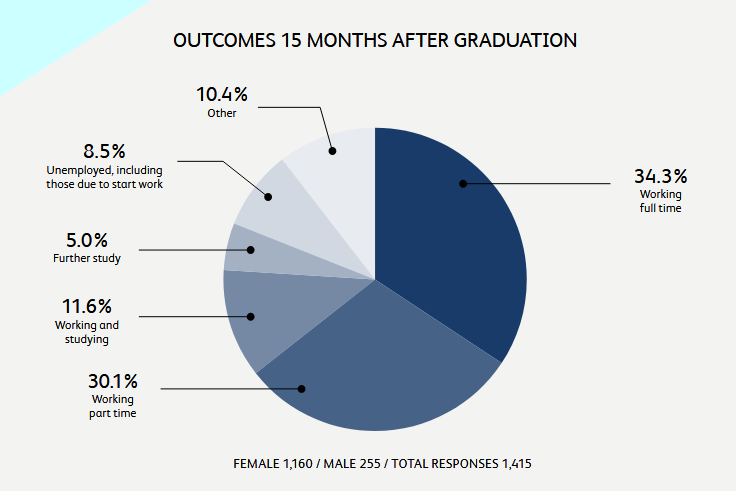
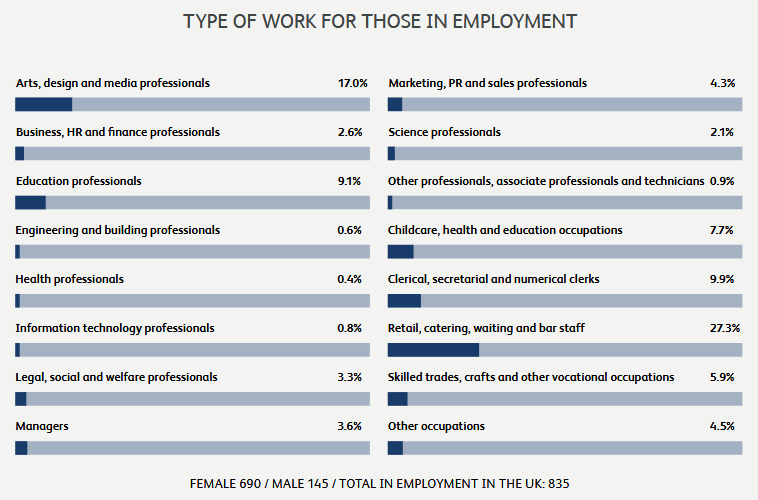
In order to get hired, you need to develop trust in your work by showcasing that you are capable of doing what is asked of you. You can demonstrate your skills through a portfolio, but you need professional level skills in order to create an impressive portfolio. After graduation, it takes a while for many people to gain full-time employment. In the arts, many people start in freelance roles and work part-time in roles like retail and hospitality to supplement their income. This time in which you are searching for fulltime work is the perfect time to focus on skill development, “…the job market is always competitive, so treat your job search like a job while building skills alongside your academic studies” (L. Greaves, M. Smith, D. Mason, C. Ball and G. Rain, 2025, p.16).
MENTEES AND MENTORS
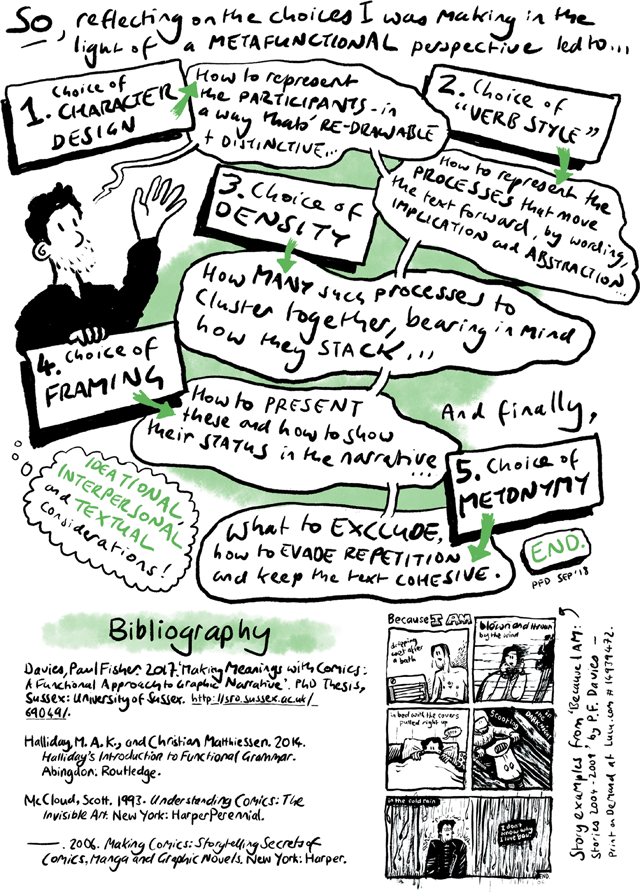
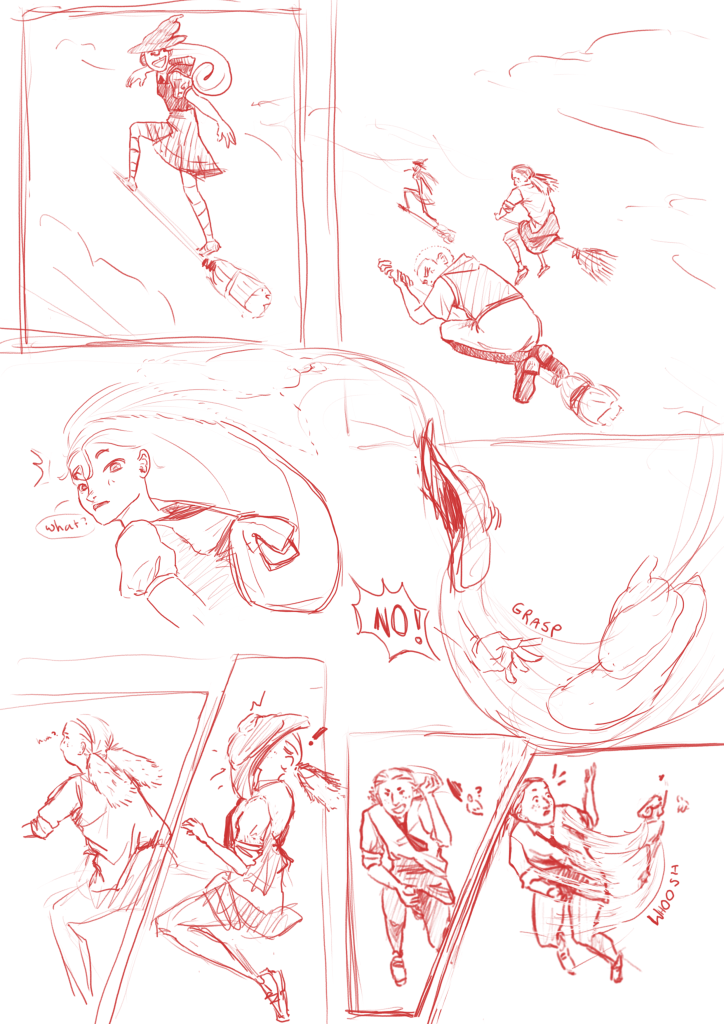
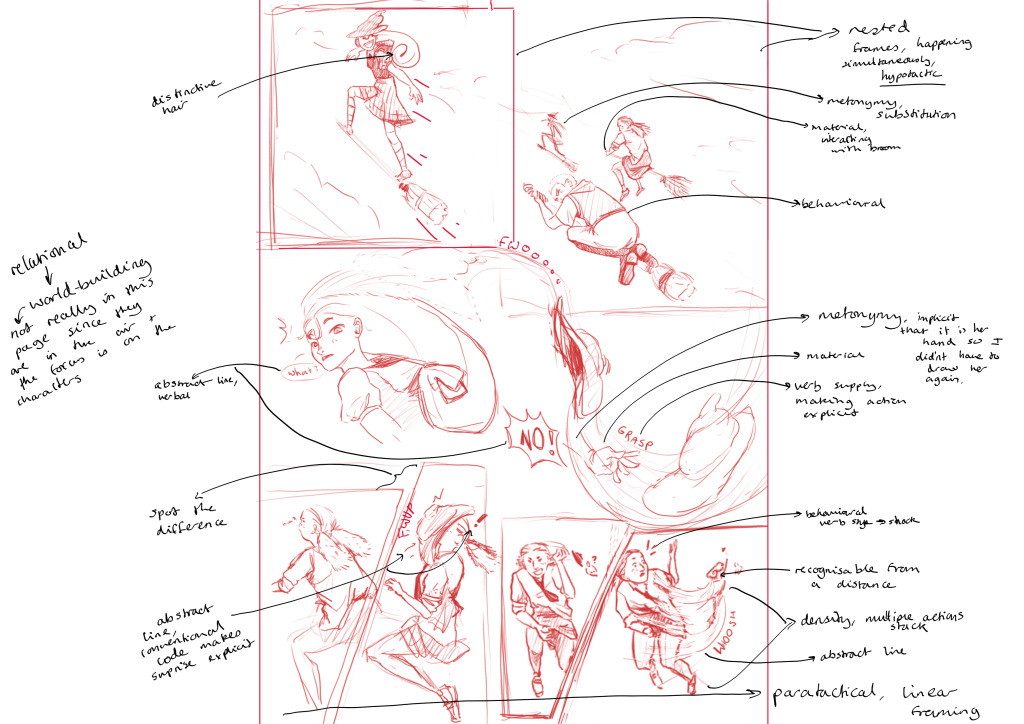
Olivia Gregory explained her own experience gaining skills through mentorships, having done multiple through programs like Limit Break, a free volunteer led program focused on minorities and creating more diversity in the UK games industry. As she recommended, I plan to look into mentorships in May, as continuing from University, a mentorship gives you a structured way to gain experience and skills outside of employment. She also recommended helpful course platforms which I have started to use, like Schoolism, LinkedIn Learning, Udemy, Gumroad and ArtStation for more professional and focused tutorials than what can be found on YouTube for free. I have also expanded my professional understanding and skills by doing my own research, using journals like ‘The Comics Grid’, see excerpt below:
PORTFOLIO AND APPLICATIONS
How to develop a professional Portfolio and job application and prepare for an interview
Olivia Gregory highlighted that it is important to create a portfolio that demonstrates what you would like to do professionally, focussing on things that you are passionate about. While diversity of skills is important, which Jamie highlighted as entry positions tend to be more generalist and value a shallower breadth of skills, tailoring your portfolio to things that you care about will indicate to an interviewer that you are passionate, underscore your strengths cogently and ensure you do not end up in a role that you hate.
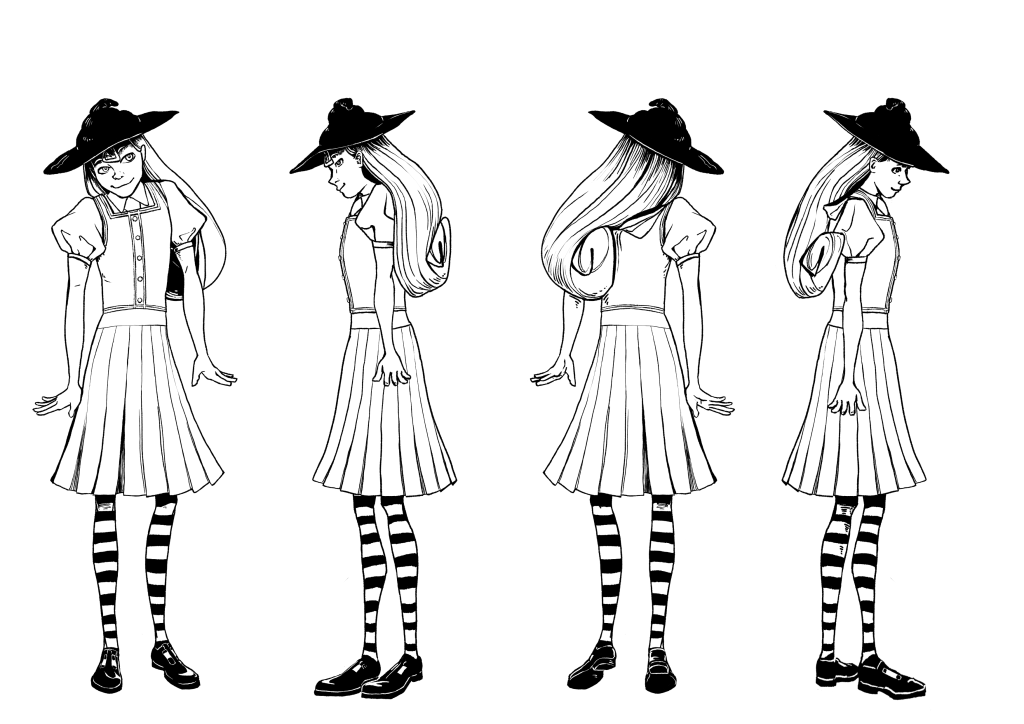
A freelance illustration and comic artist portfolio can have a level of overlap with games art orientated portfolios. For example, Olivia’s focused on concept art for games. Concept art in a portfolio should not be rendered, and your portfolio should not contain just finished pieces. There should be variations in designs beyond recolouring the same design over and over again, and your concepts should clearly convey aspects of the design, which can be done using callouts. You also need to demonstrate your process by showing iterations of designs. Turnarounds are important in character design, highlighting what a character should look like from all sides is something that is essential in games, animation and comics, and are useful in character sheets to create consistency.
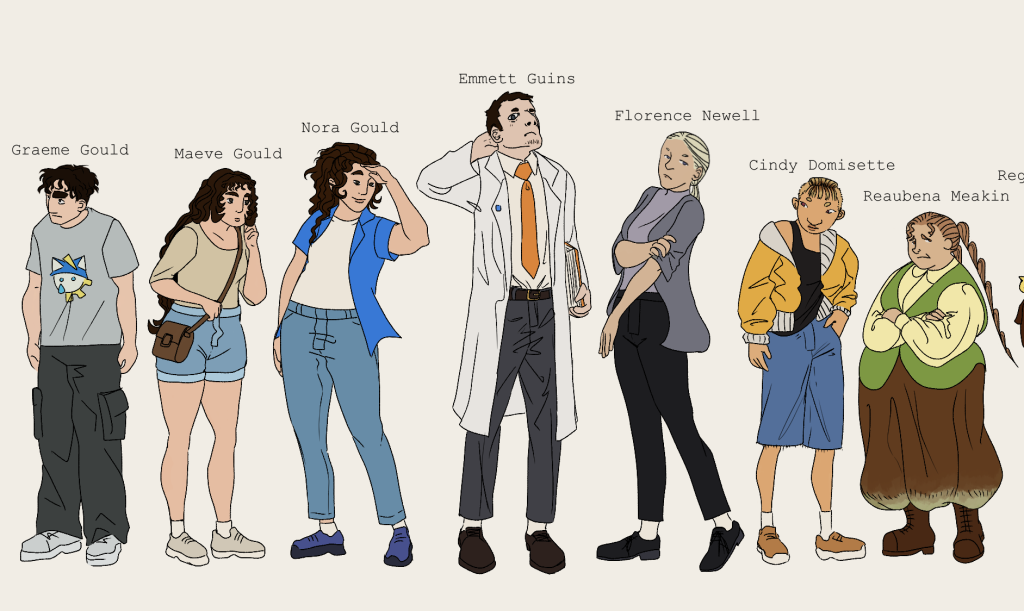

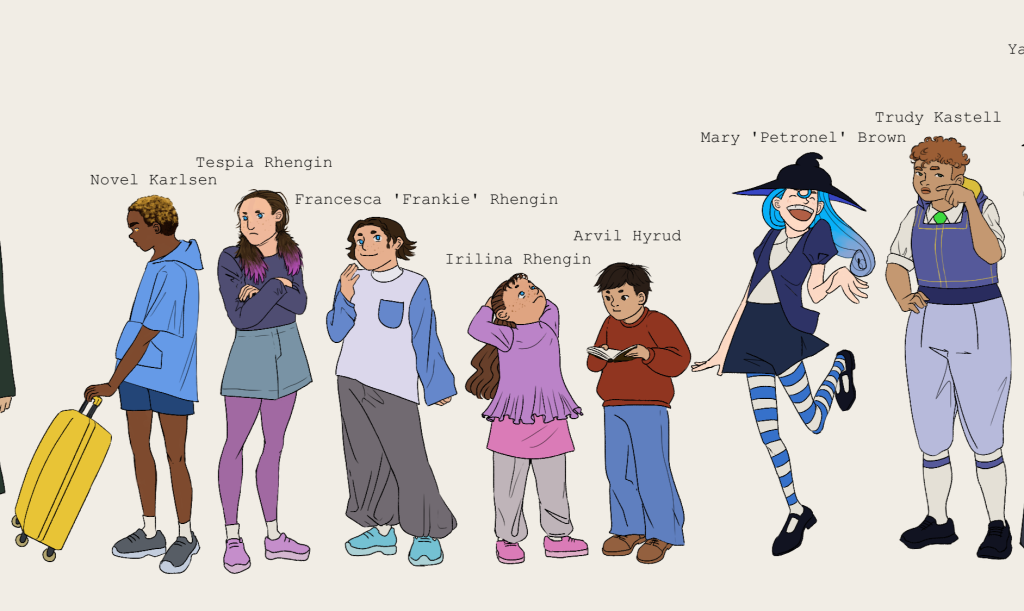
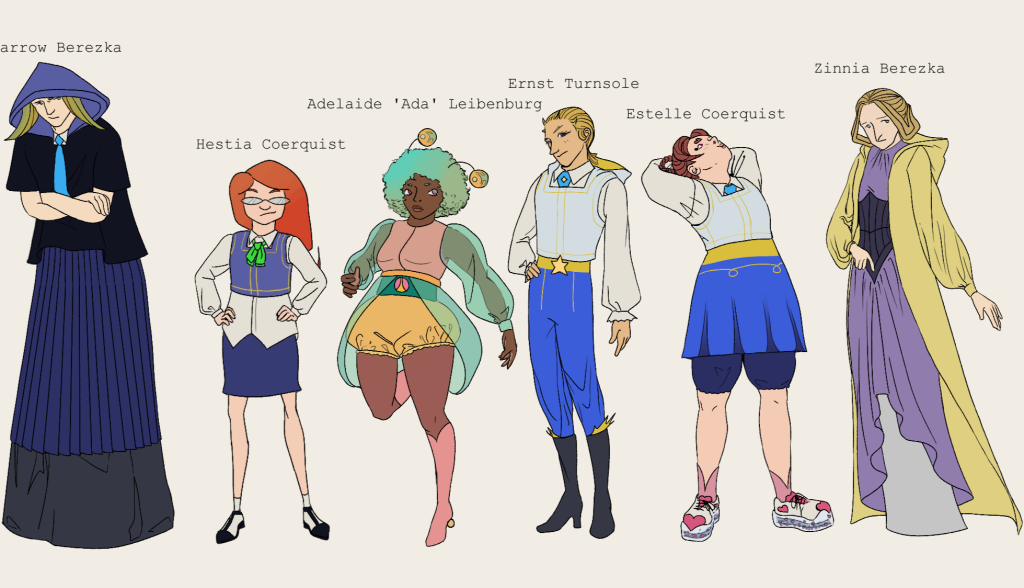
I am much more experienced in character art than environment, but to evidence a range of skills and a willingness to expand, I would also want to show environment concepts within a professional portfolio. Olivia also covered this, underlining aspects like perspectives (orthographic and isometric), including full keys, layouts, and examples of how characters interact with and exist in the environment.
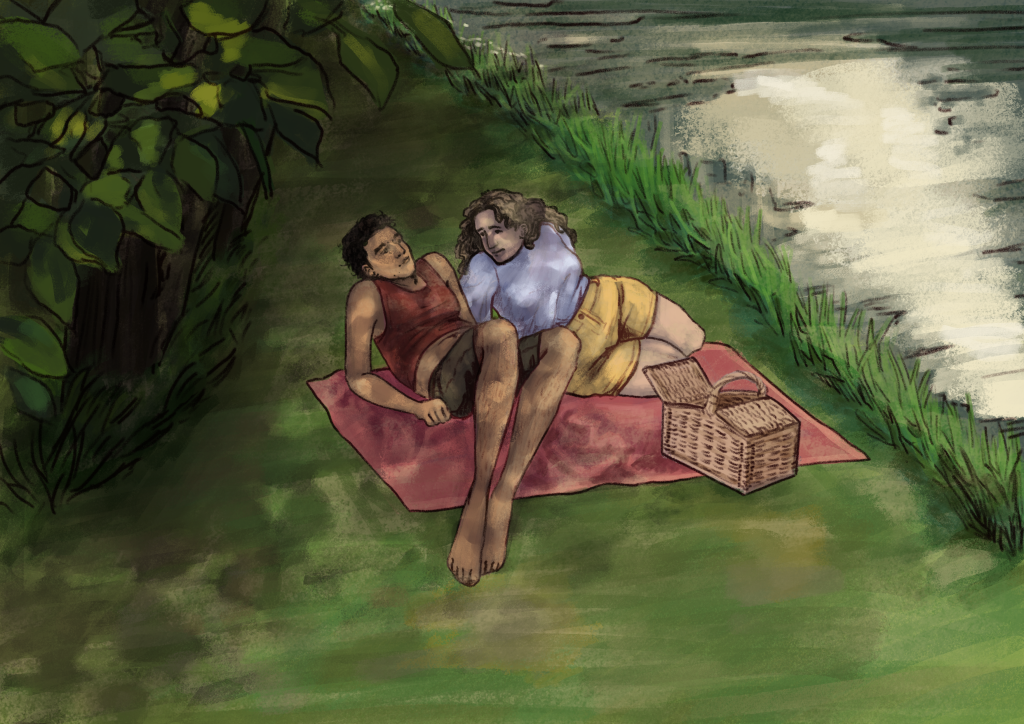
Jamie also highlighted that your portfolio should be interview ready, meaning it needs to be accessible, and you need to be prepared to talk about it. In the case of an art-focused portfolio, this means it should be accessible either through a link to a personal website or through a professional platform like ArtStation. This not only makes your work accessible to an interviewer, but also make you more visible online. Over the rest of this academic year and once I have graduated, I plan to develop my portfolio on ArtStation particularly, and making my own website is also something I am now considering.
INTERVIEWS
In an interview, an interviewer is looking for passion for the company and the role as well as key skills like communication and self-direction that are important for any job.
In demonstrating passion, it’s essential to research the company before the interview, as Greaves et al. (2025) advises to ‘find out about the company, such as from its website, Companies House, LinkedIn, or their presence on social media.’ (p.2). Additionally, as Bea Grove outlined in their talk, it is important to engage in what the company has recently produced, like games or comics, and ensure that you have questions prepared surrounding topics like the workplace culture and opportunities for professional development. I think this is important as it will show an interviewer that I’m invested in the job, and will help me stand out amongst the increasing number of graduate applicants.
Due to AI’s new role in the recruitment process, employers are paying less attention to ‘CVs, job descriptions and job disciplines’, instead, ‘[Small and Medium-sized Enterprises] consistently prioritise graduates who demonstrate ‘self-motivation’ and ‘collaborative communication’ above other skills (L. Greaves, et al, 2025 pp. 2-13). These are both skills that are developed at University and especially on this course, as teamwork is emphasised. During the interview process, it is typical to be taken around the office to meet the team as a method of assessing how you could fit into the workplace culture. While collaboration has not always come naturally to me, this course has challenged me and enabled me to improve. I aim to continue refining these skills over the rest of the year by collaborating with people outside of the course due to its importance in recruitment and professional contexts.
Bea and Jamie also described pre-interview tests, which are typically self-timed assessments of a skill required for the role you are applying for. These tests are intended to evaluate your process and problem-solving rather than just the final outcome. This means that you shouldn’t be afraid to ask for clarifications to ensure you fully understand the task. An insight I found particularly useful was that even if you are not technically successful in the test, it does not necessarily matter, as long as you can reflect on your approach and explain what went wrong and why. For example, Jamie described a technical task where he had to create a game for a TV, which he was not able to make consistently playable. Despite this, he still secured the job because he was able to reflect on the issue and propose solutions.
PATHWAYS
Jobs and life in the Workplace
A career in the games industry frequently starts in Quality Assurance (QA), which was the route that Jade Carter took on her journey to becoming a Games Producer, having spent a year as a QA Tester before being offered a role as an Associate Producer and then Producer. While I would like to pursue comics, a full-time comic artist role can be difficult to come by. Most comic artists are freelance and begin by creating comics in their free time, either formulating a proposal for a publisher or making money with advertisements on webcomics and donations on platforms like Patreon and Ko-fi. Another option is to self-publish by crowdfunding on a platform like Kickstarter, where many comic creators get their comics funded for print. As this is the case, I think I will need to be flexible in a job search and keeps doors open:
“[…] your degree is a foundation, not a fence. The first job is a starting point, not a verdict. Whether you’re feeling uncertain, curious, or simply ready for something new, there is support available, and there is no shame in changing direction” (L. Greaves 2025 p.10).
I have also considered continuing on into postgraduate study after this year. I think it would be ideal if it was part-time so that I could also gain some in-workplace experience during this time. University is useful for teaching core skills needed in a workplace, but it is important to have experience in a professional dynamic, especially as I plan to focus on working independently through freelance work and self-publishing in the future.
COMMUNICATION
The Culture in the Workplace, Communicating with colleagues and Managers and Teamwork
In the workplace, it is important to communicate clearly and effectively to ensure efficient and good quality work. As Jamie stressed, communicating both with your co-workers, within and outside your discipline, a team lead, and manager can be a learning curve, but is vital. Communicating with a team lead is reasonably uncomplicated as they should share the same knowledge, terminology, and be able to give you advice and feedback. However, communicating with someone of a different discipline requires a level of ‘translation’. Jamie recommended focusing on what the outcome should be rather than the actions needed to get there, the time scale and any pre-requisites. It is also valuable to expand your own understanding of other disciplines to help streamline communication. A manager might also not have the technical knowledge to understand what you are doing and why, and will need ‘translation’. It is most important that a manager understands the time scale, and that you justify this. Overall, I have learned that communication in the workplace is not just about conveying information, but about ensuring mutual understanding.
CONCLUSION
In conclusion, the series of talks over the course of this semester has given me information and real-world advice on life in creative workplaces, which will be essential in continuing into a professional career after graduation, whether in the comics industry or the games industry. While the advice was tailored for people seeking to enter the games industry, the creative roles in games and comics can overlap heavily and I have outlined how the advice applies to my career path and goals, especially in the practical advice surrounding networking, talking to people in my desired discipline, and creating a portfolio of work that aligns with my passions. Overall, this module has encouraged me to think seriously about a pivot into the comics industry, therefore adapting to new pathways, while also taking steps to build my professional skills and profile.
REFERENCES
Anderson, P. (2020) Trade-Published Romance Sees a Coronavirus Boost in the States. Available at:https://publishingperspectives.com/2020/08/trade-published-romance-sees-a-coronavirus-boost-in-the-states-covid19/ (Accessed: 24 November 2025).
Davies, P. (2019) ‘New Choices of the Comics Creator’, The Comics Grid: Journal of Comics Scholarship, 9(1), p. 3. Available at: https://www.comicsgrid.com/article/id/3581/ (Accessed: 25 November 2025).
Greaves, L. (2019) Key trends among UK first-degree graduates. Available at: https://luminate.prospects.ac.uk/key-trends-among-uk-first-degree-graduates (Accessed: 29 November 2025).
Greaves, L., Smith, M., Mason, D., Ball, C. and Rain, G. (2025) What do Graduates do? 2025/26. Available at: https://graduatemarkettrends.cdn.prismic.io/graduatemarkettrends/aSRpF2GnmrmGqMHq_what-do-graduates-do-2025-26.pdf (Accessed: 29 November 2025).
Rodgers, C. (2023) The Best Selling Romance Books of All Time. Available at: https://bookriot.com/best-selling-romance-books-of-all-time/ (Accessed: 1 December 2025).
Webtoon Investor Relations (2025) WEBTOON Entertainment and Disney Team Up to Bring fan-favorite comics from Disney, Marvel, 20th Century Studios, and Star Wars™ to WEBTOON. Available at: https://ir.webtoon.com/news-releases/news-release-details/webtoon-entertainment-and-disney-team-bring-fan-favorite-comics. (Accessed: 24 November 2025).