Lithography
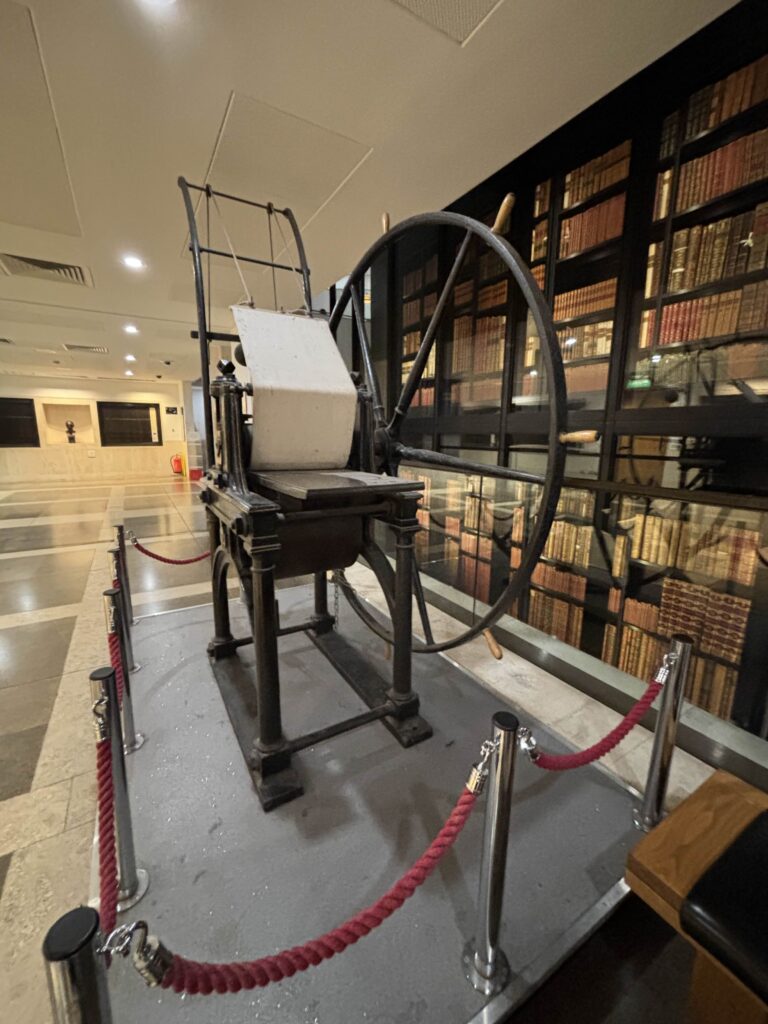
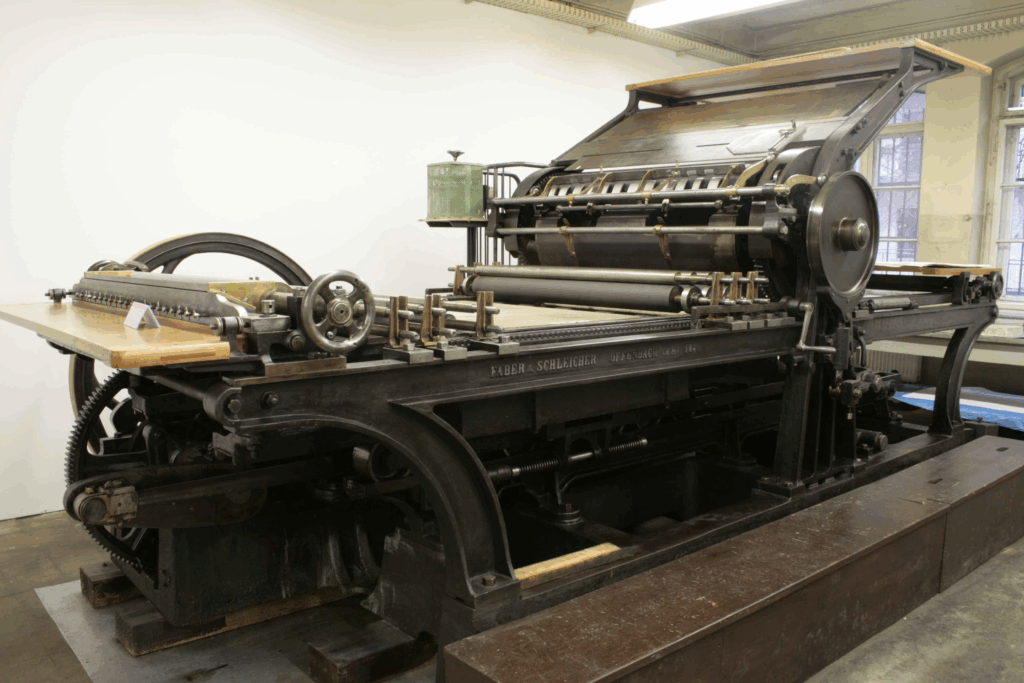
Lithography is a planographic printing method invented in the late 18th century and became the primary method of mass producing prints, being much easier and cheaper then etching, which has been around since the 14th century. This was especially important for the increased popularity of satirical comic strips around the 1830s. Rather then etching onto metal, lithography requires drawing on a limestone plate with an oil based medium (usually an oil-based lithographic crayon). This is then covered in gum arabic which makes the exposed areas on the plate more hydrophilic and fixes the drawn image, and the gum arabic is removed using lithographic turpentine. The plate is dampened slightly and the ink is rolled ontop of the plate. Any lithography ink (which is oil-based) added to the plate will only take to the non-hydrophilic areas as oil and water repel eachother. The image on the plate can then be printed onto paper using a flatbed lithographic press.
Kitchen Lithography
Kitchen Lithography is a simpler process that can be done with resources found in your kitchen.
- Instead of a limestone plate, you use tinfoil wrapped around a firm flat surface,
- an acid like coca cola (phosphoric acid being the important part) rather than gum arabic
- an oil (I used vegetable oil) instead of lithographic turpentine
- an oil-based drawing medium (like a 9B pencil or oil pastels) rather than professional lithography crayons
- vinyl gloves to avoid despositing oil from your hands onto your plate unintentionally
- to press the plate to paper, you can use a rolling pin or spoon
- an ink roller
- sponges
- and instead of professional lithography ink, you should use an oil-based ink like oil paint or etching ink, I used intaglio ink
My Attempt
I decided to give this process a go as it seemed like a more accessible way to further explore the art direction of the comic I want to create. Using three different resources (found here, here and here) I attempted the process. I decided that I would try to print an image of a wanted poster for one of my characters, Liberty Lind, as she is the leader of a rebellion group.
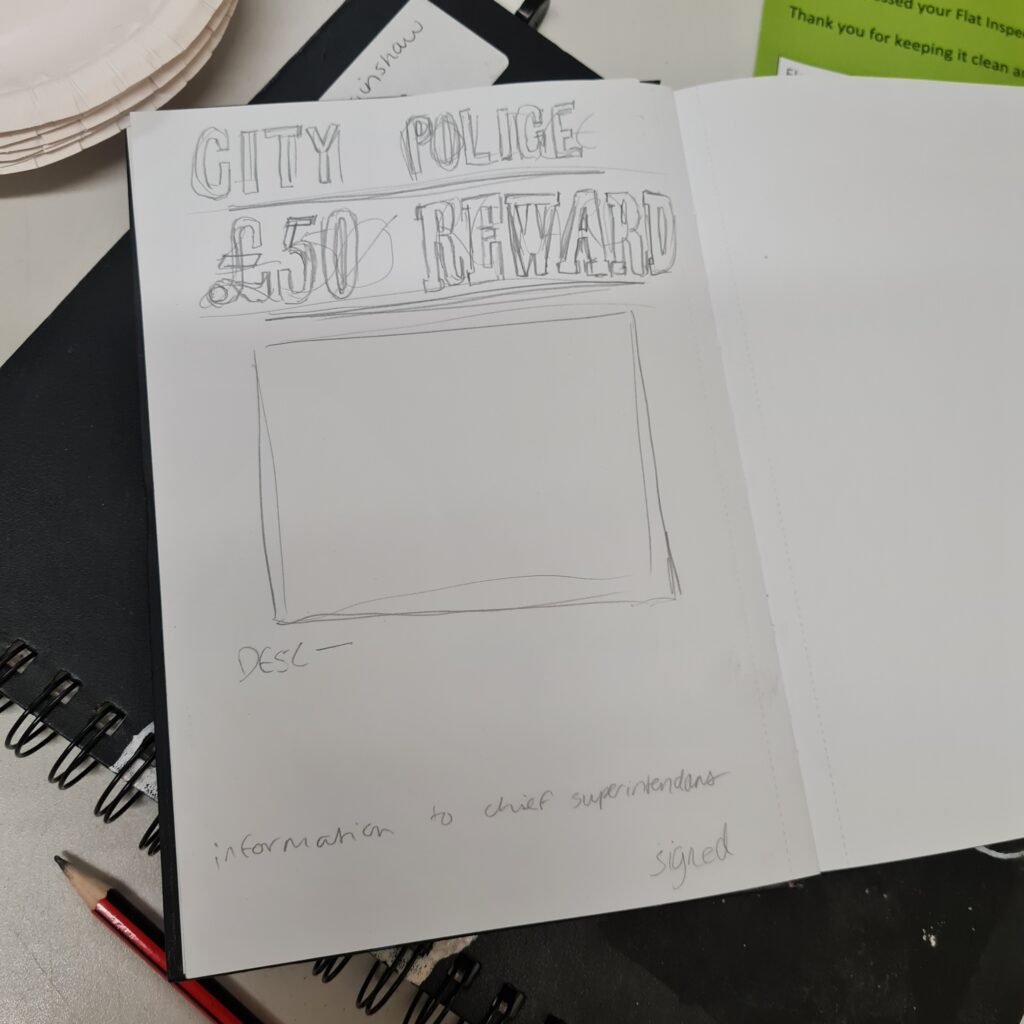
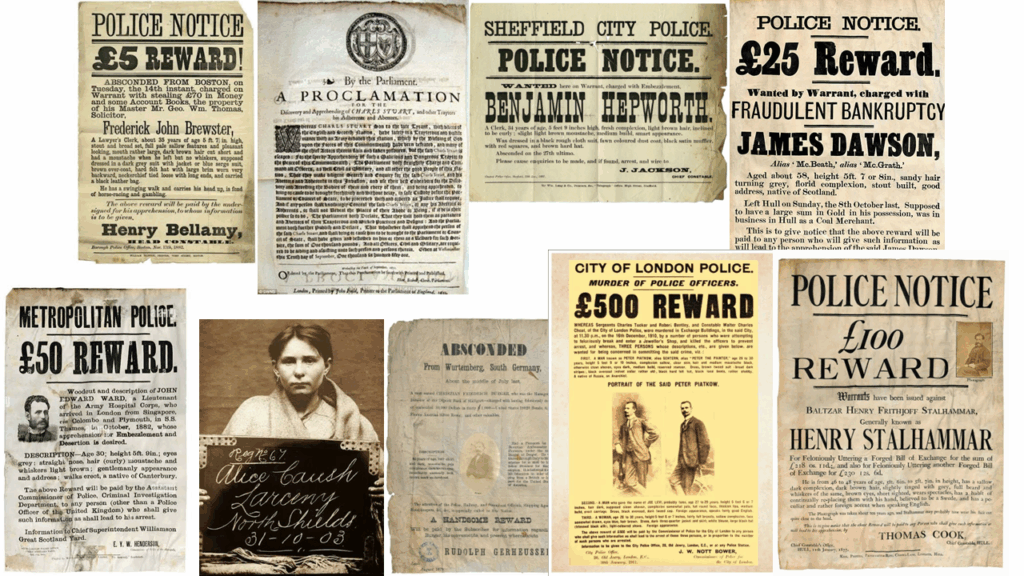
Based on some references I found, I made a quick sketch of the kind of poster that I wanted to create.
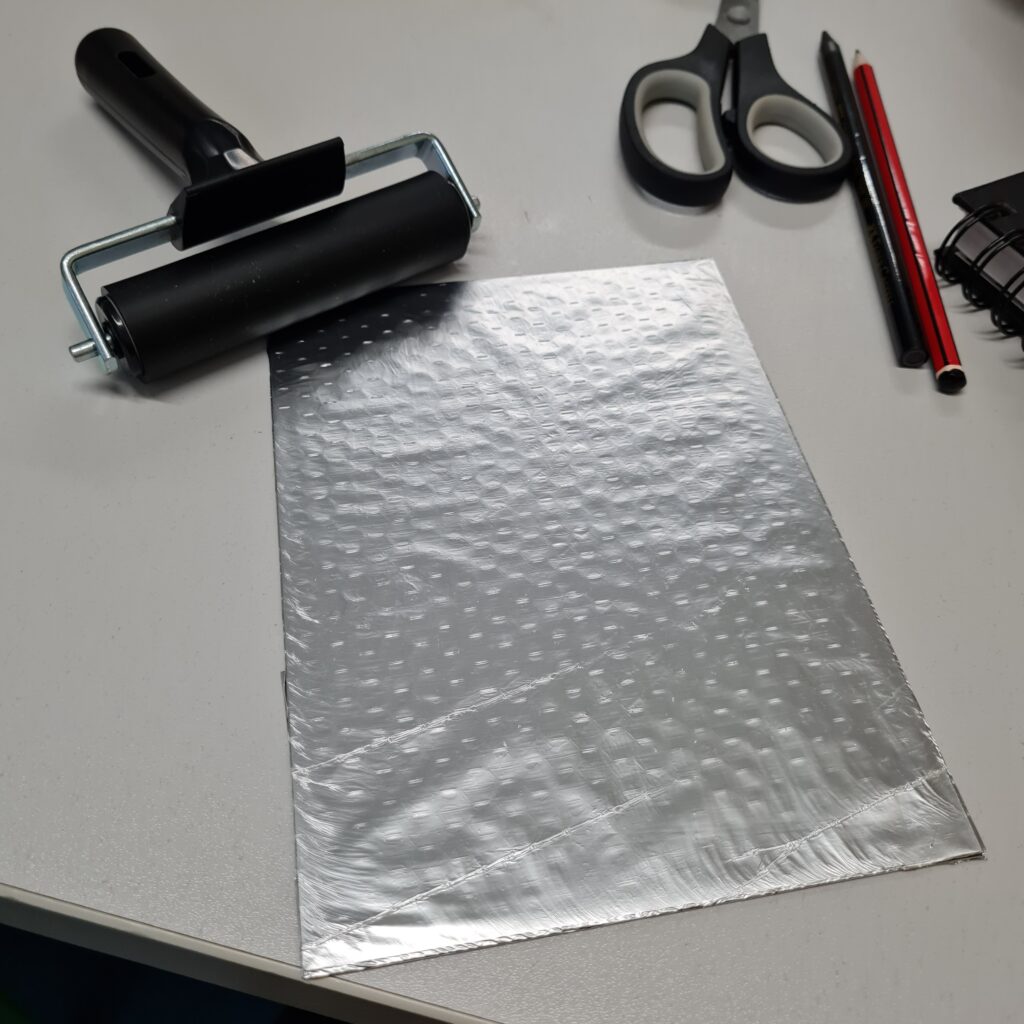
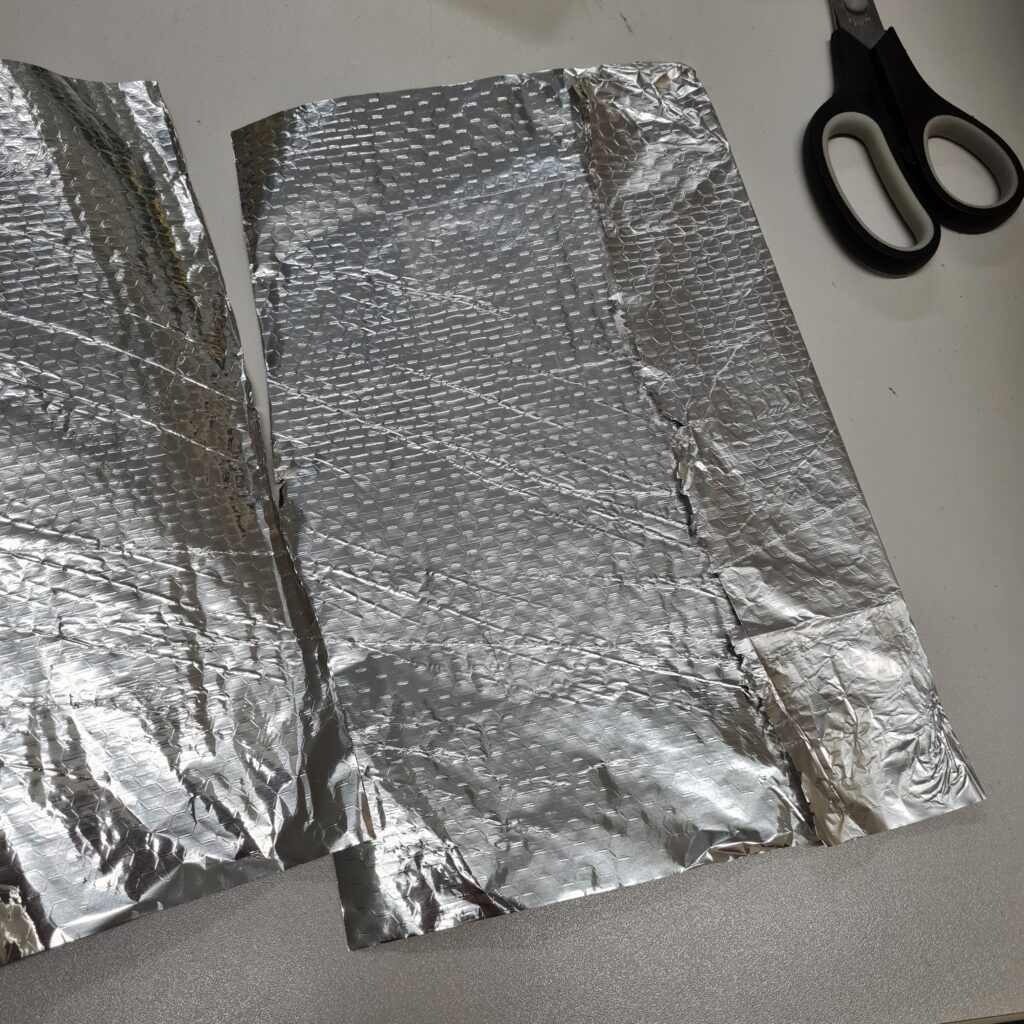
I wrapped my tinfoil around some plastic I had from a frame. I was worried that the pattern that seemed to be on the tinfoil would ruin the outcome, so I tried to smooth it with my roller.
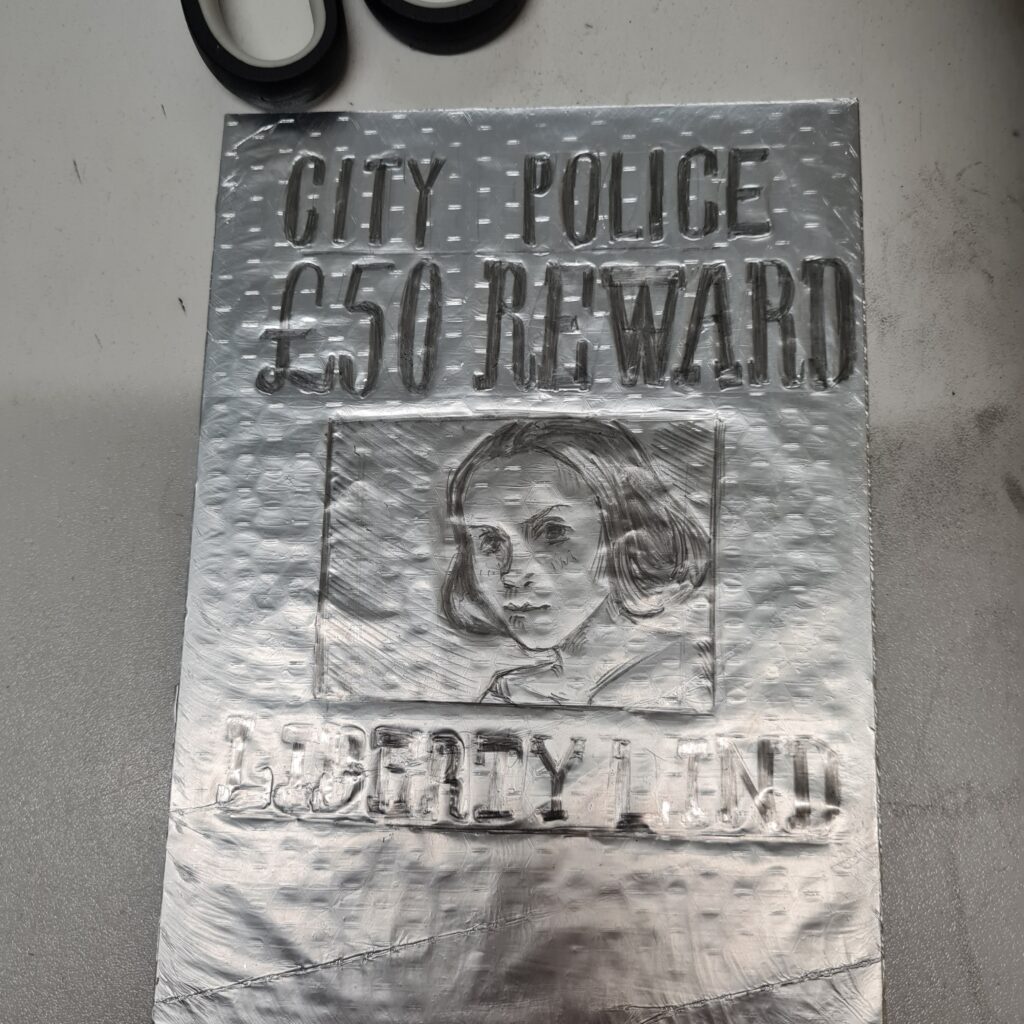
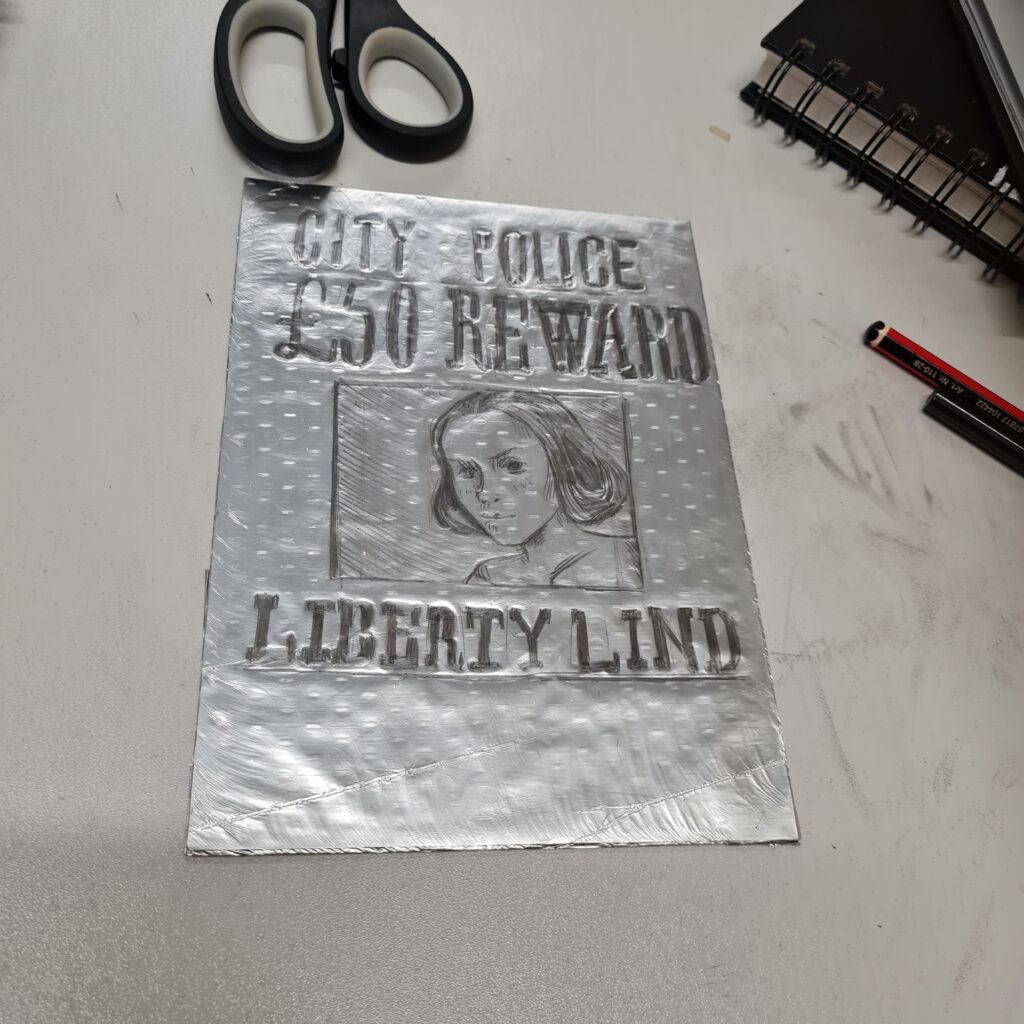
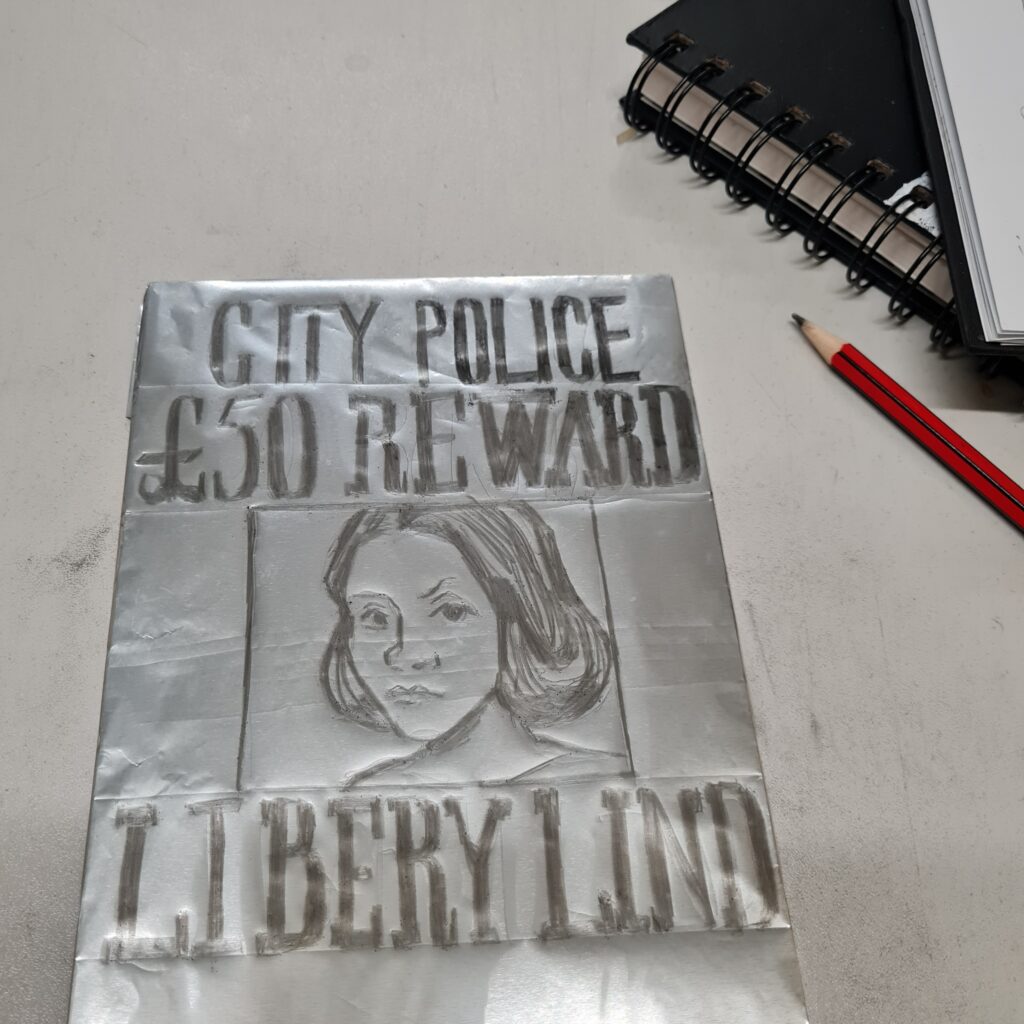
Using a 9B pencil, I drew onto the tinfoil the design that I wanted to print.
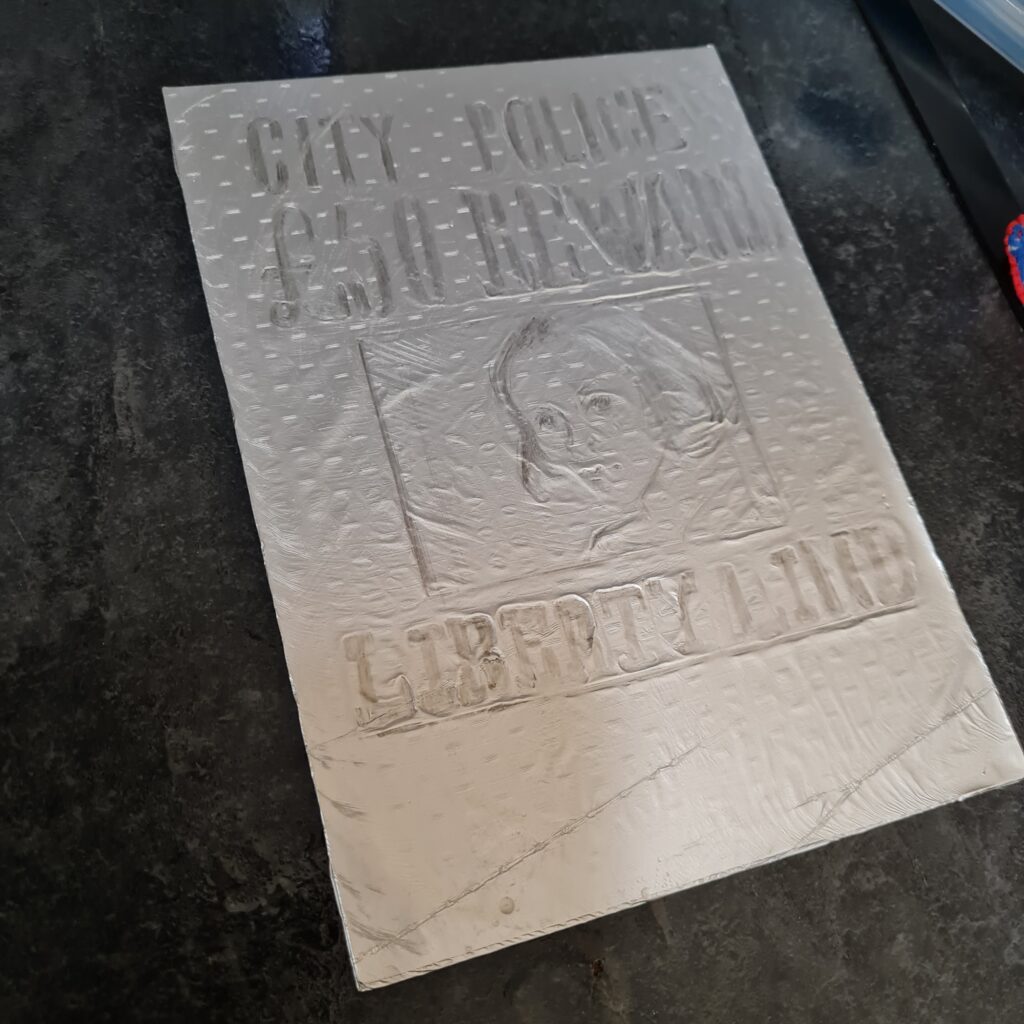
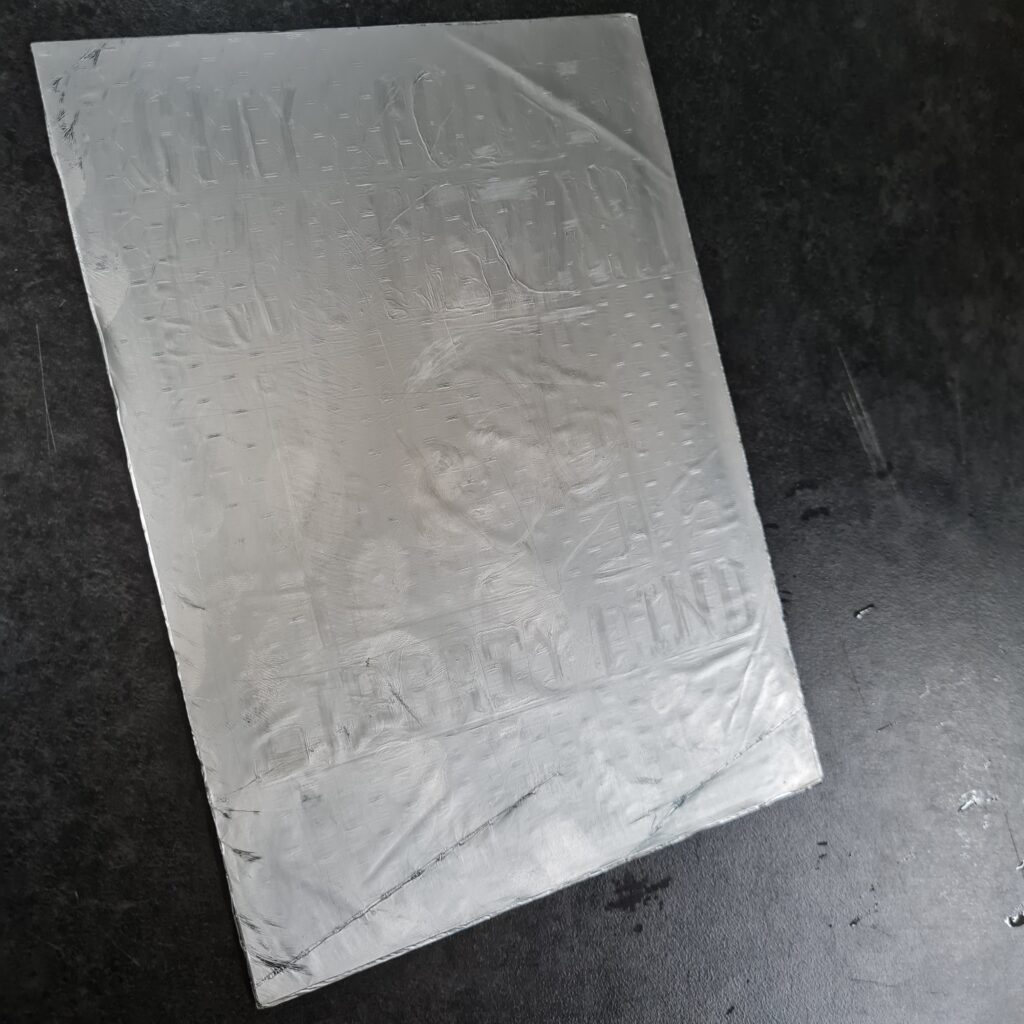
I poured tesco cola over my plate, rinsed it and then dried it by wiping it with oil. This removed the image but left a ghost of my drawing.
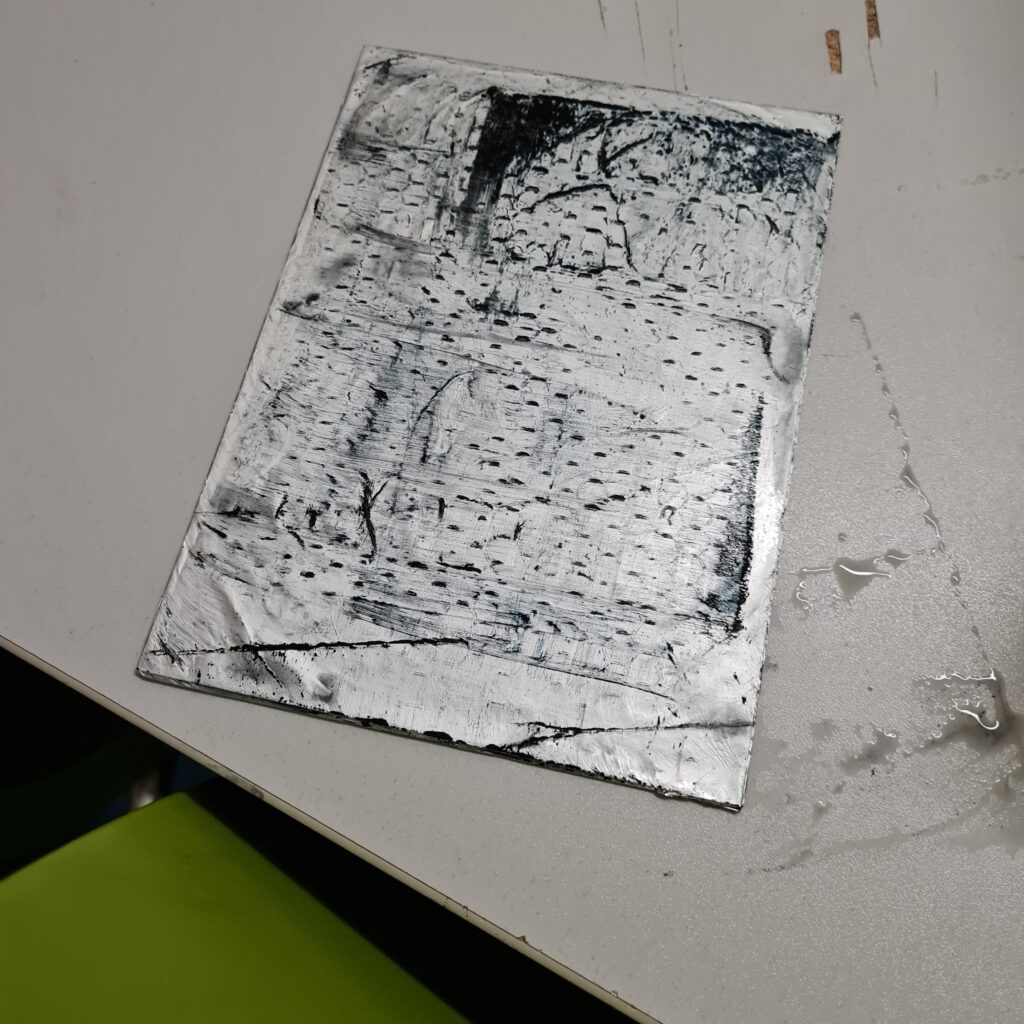
I then dampened the plate and tried rolling on my ink, but the process of dampening the plate and rerolling was not working and the ink refused to adhere to the image. I thought that this was maybe caused by the odd pattern on the tinfoil I was using (you can see the ink being caught by this pattern in the image above) so I decided to redraw my design onto smoother tinfoil.

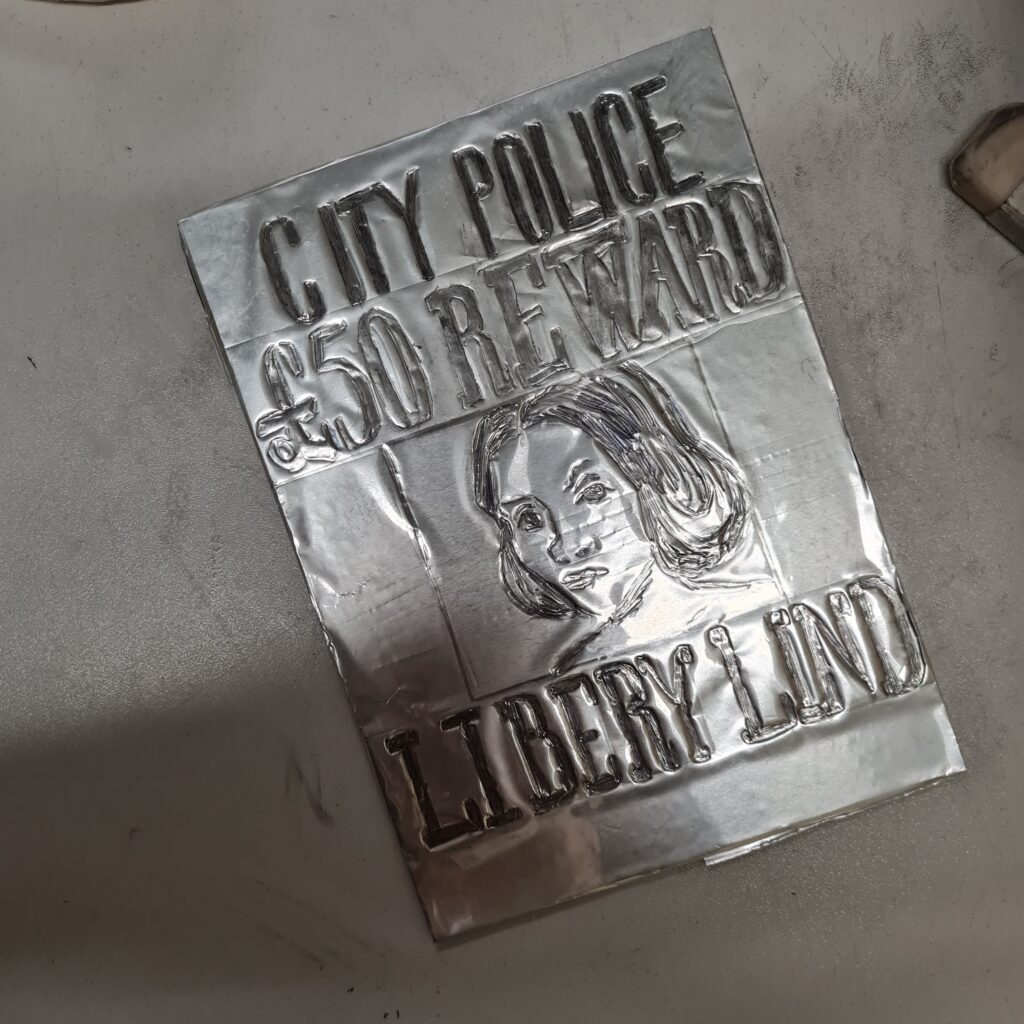
I was also concerned that the problem was that my 9B pencil was not greasy enough, so I tried going over my drawing with a ballpoint pen.
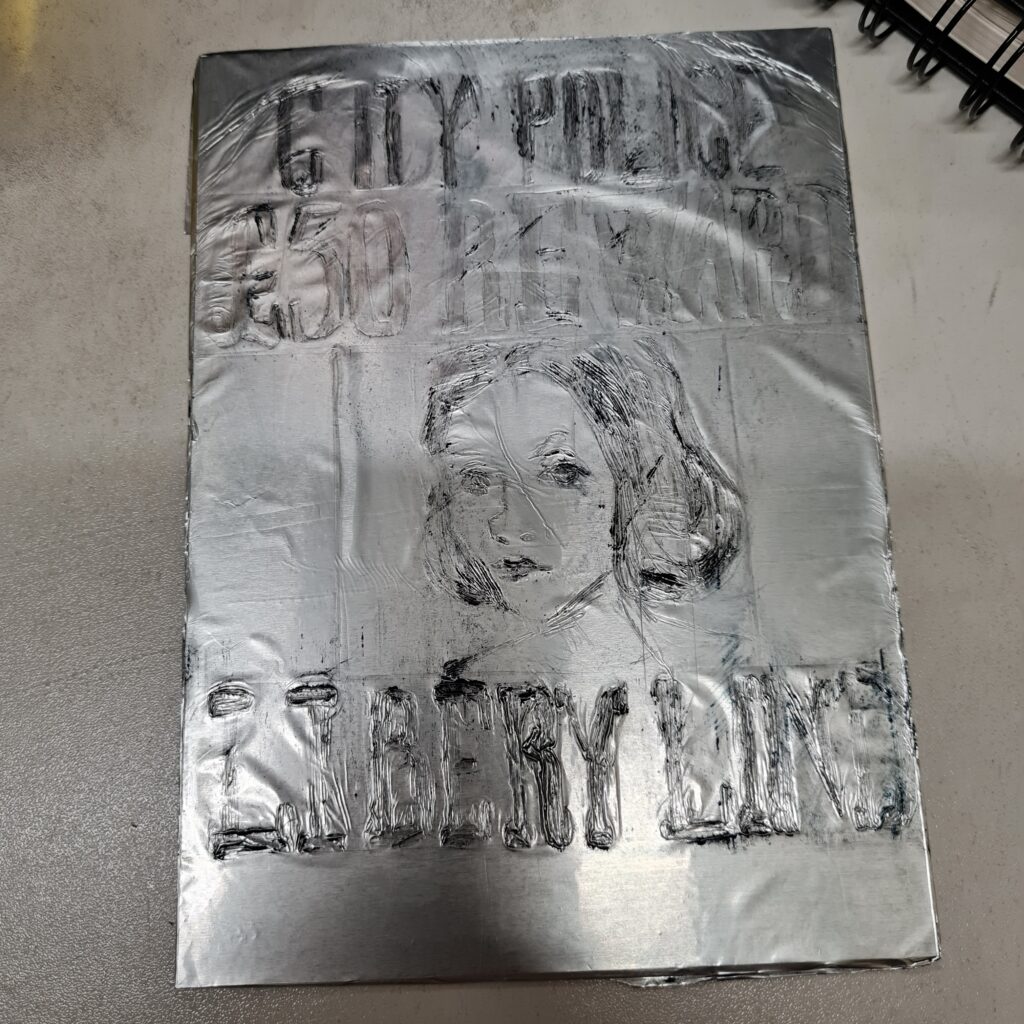
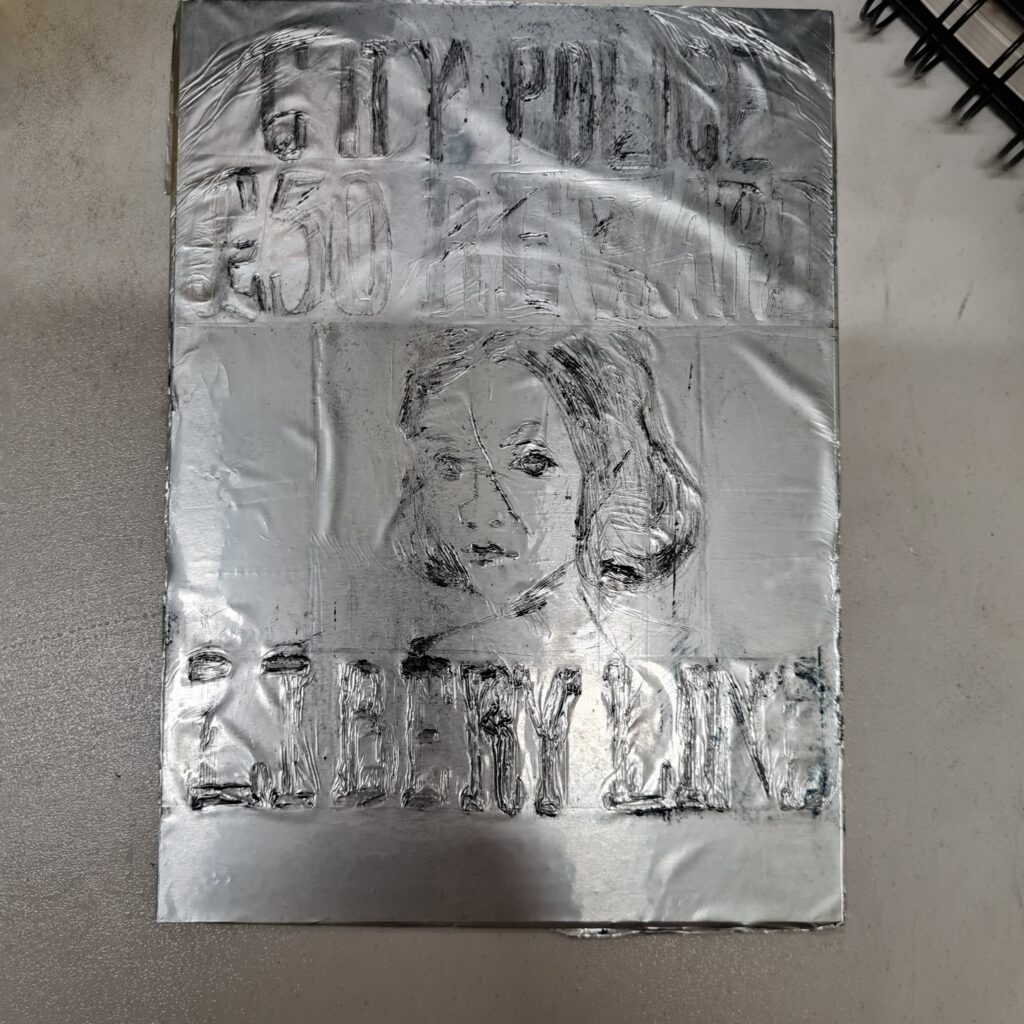
I poured the tesco cola over this and cleaned it with oil, but I couldn’t get rid of the drawing completely which is what you’re supposed to do to avoid scum in the final print. Rolling this plate with ink also did not work.
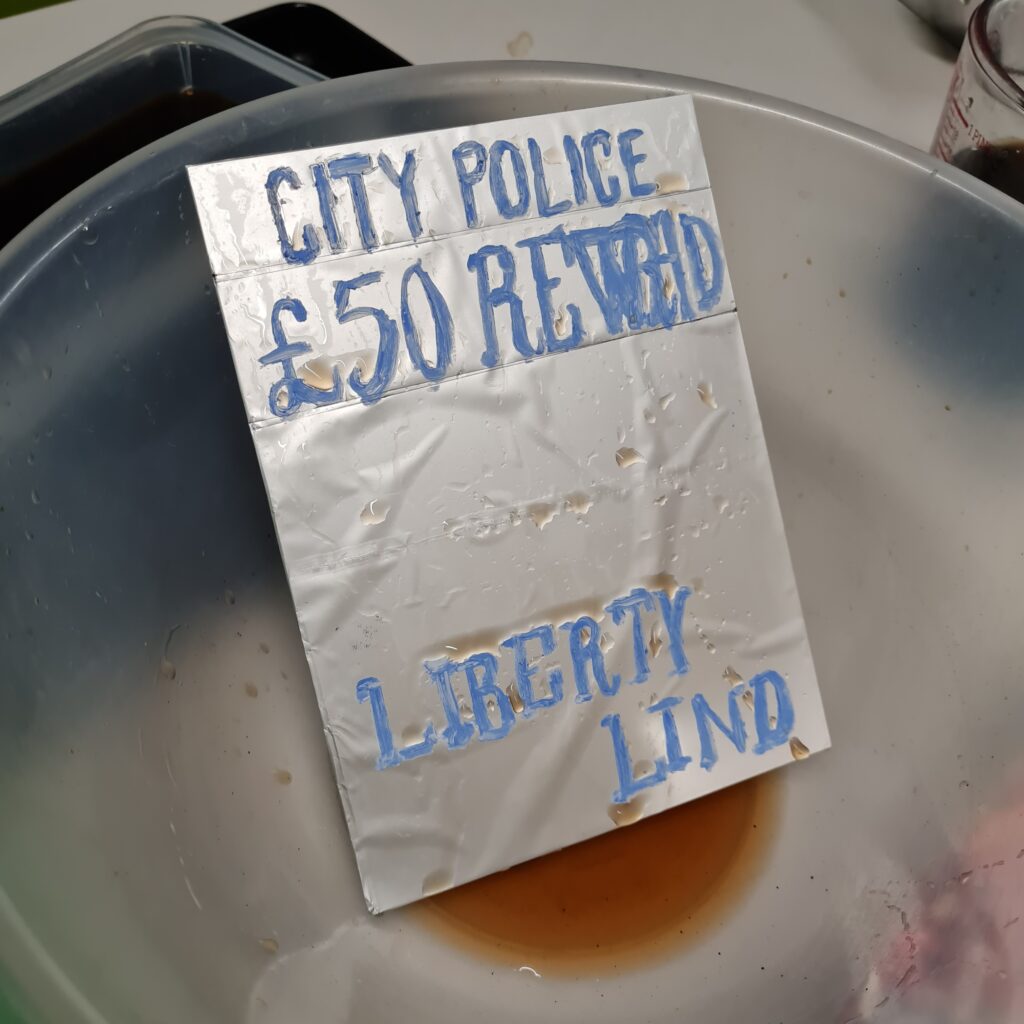
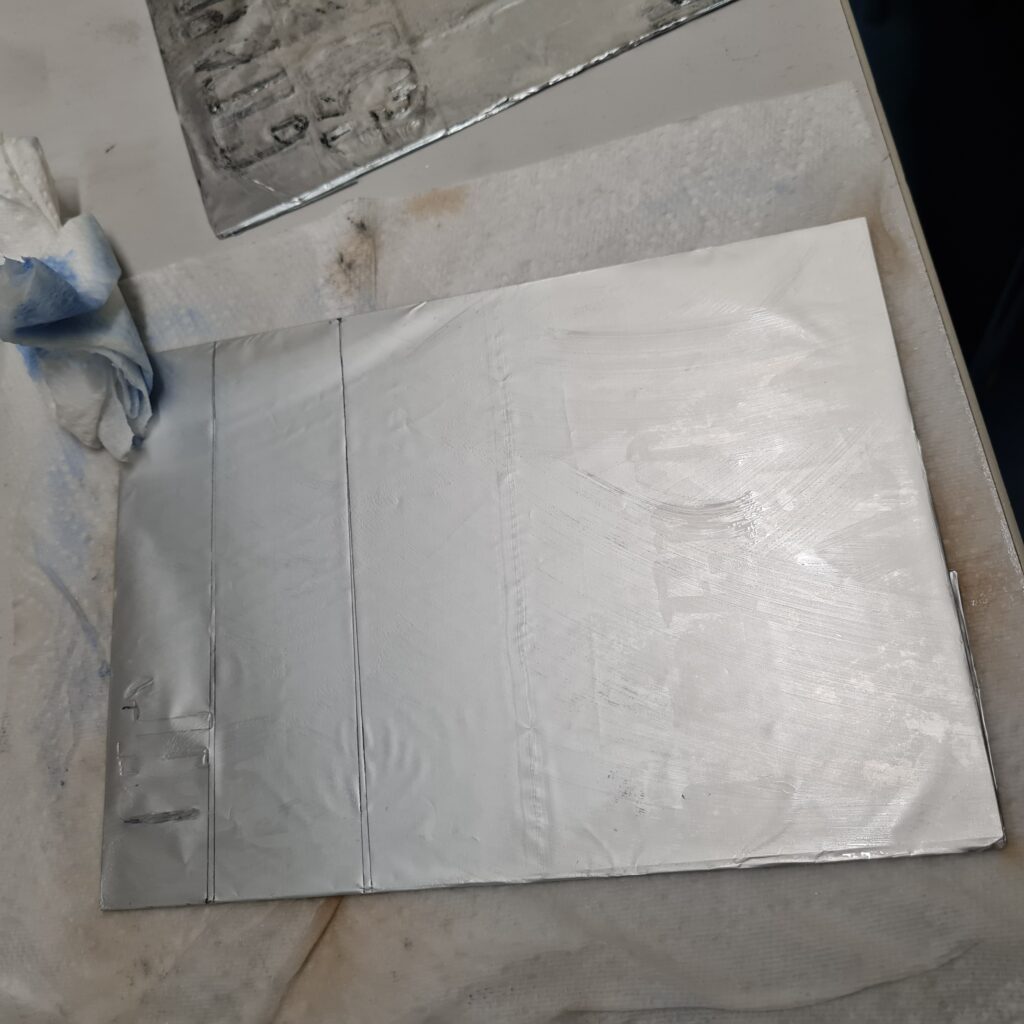
My theory for the reason that it didn’t work was once again that the medium I was drawing with was not greasy enough, so I tried again using oil pastels. Since this medium is much less precise, the writing is much more clumsy and I skipped drawing Liberty this time. After pouring cola over it and cleaning it, you can see the ghosted image. This also did not work when I attempted to ink it.
Reflection
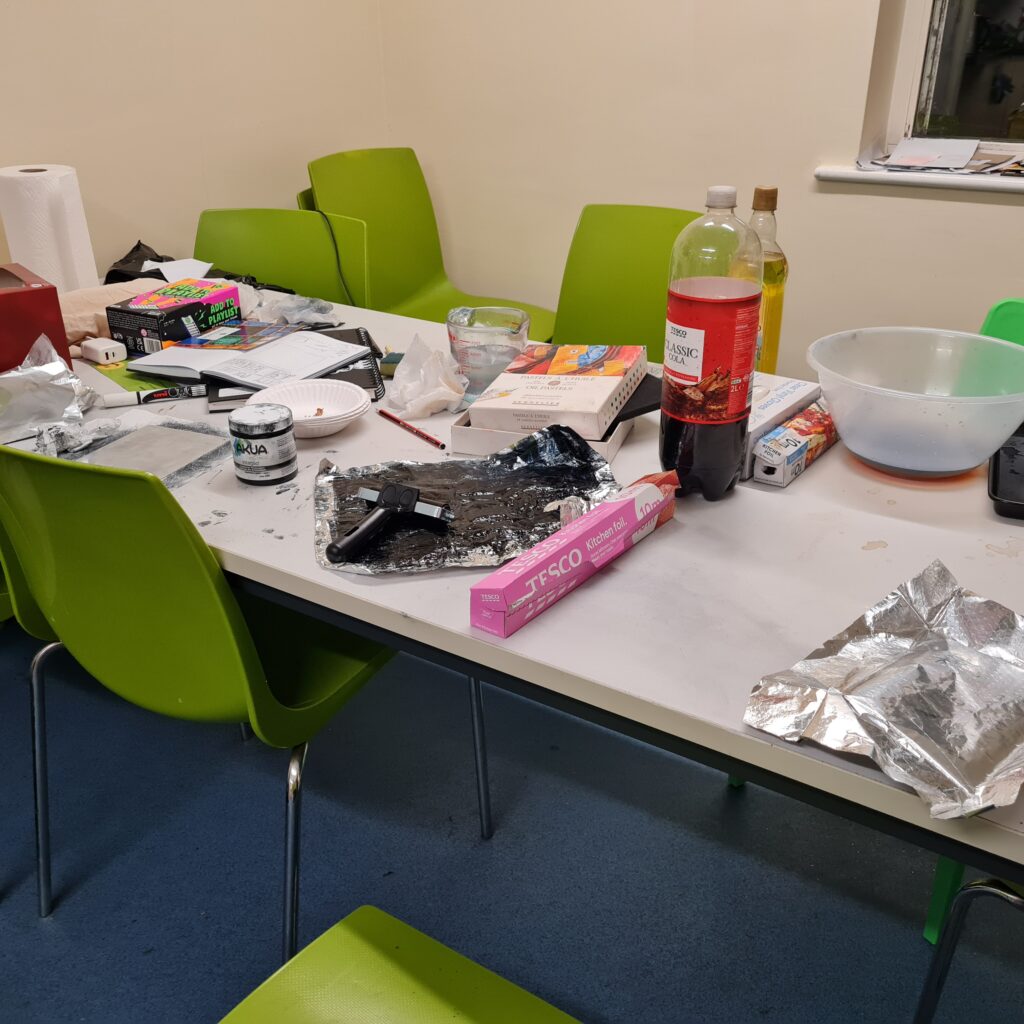
After this third attempt, my flat kitchen being a mess, I decided to give up for the day. My flatmate suggested that the reason it didn’t work might be because the acid I was using was not strong enough (the tutorials I was following were using branded coca cola, while I was using tesco cola) or that I was not leaving it in the acid for long enough. This could be true, but since I could see the ghosted image I thought that there might be another problem. I think that it could be the ink, since some people online suggested buying expensive lithography ink. I could not test this as I had no other oil-based inks to hand. Sadly, I was not able to get any prints from this, but I did learn a lot about the process of lithography, which was insightful, and I do want to consider trying this again next semester to potentially make the cover of my comic or make some cards if I get the hang of it.