Diving Deeper into Parasocial Relations…
Parasocial relationships are increasingly becoming normal due to social media. Us as the audience get a glimpse into a celebrity’s life and what they do outside of being celebrity. This gives us a sense of connection and warmth. However, there are those who take that an extra step far and feel like they have a genuine connection to them.
Brain storm of things I could possibly look into

The differences between PRs in the West and East Asia
Cultural
In the west, having strong feelings towards a celebrity can be seen a negative thing. You will be made fun of, bullied and called delusional for engaging with someone that can’t reciprocate those feelings back. This is most common in large fanbases. The Swifties are notorious for being disliked by people who aren’t in the fandom. There was a famous video of a Swiftie unboxing Taylor Swift merch and people on TikTok immediately dogpiled on her. It wasn’t the fact that she bought merch from Taylor Swift, but the fact that she overreacted and displayed strong emotions. In the video she started shaking and crying from excitement.

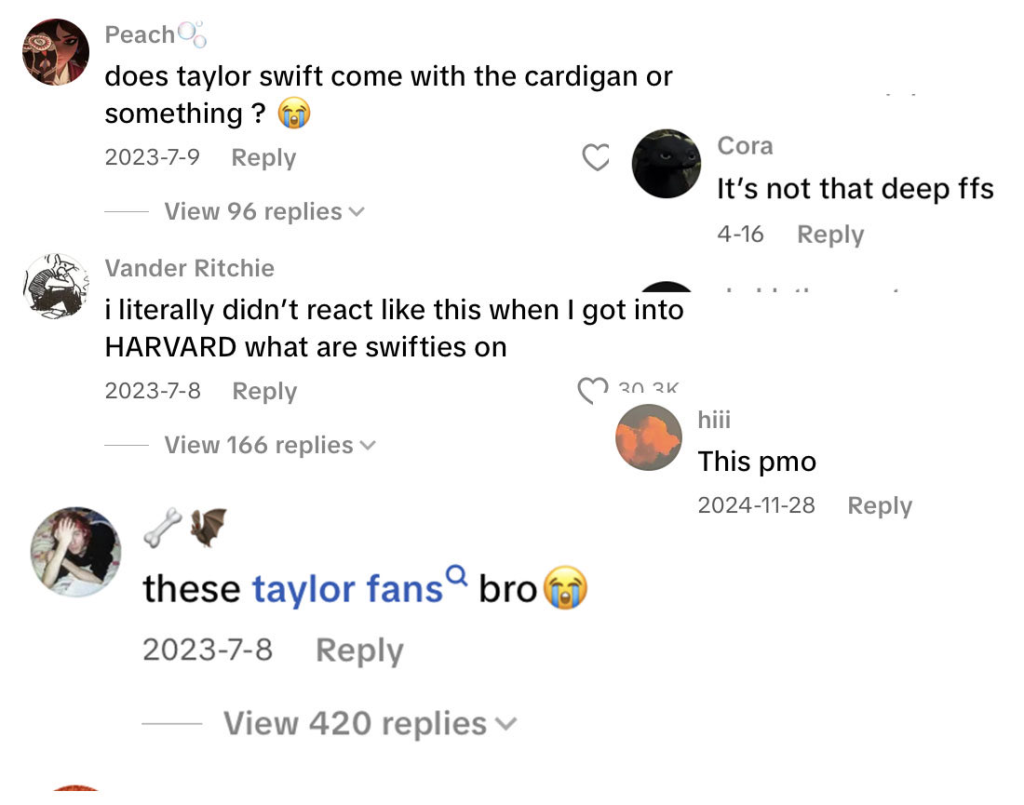
In comparison in East Asia, supporting your favourite idol as much as humanly possible, is seen as a good thing and is even praised. This completely boils down to societal culture.
There have been numerous instances in Asian idol fandoms where fans get upset when their favourite idol gets into a relationship, but in the West, we either don’t care or we fully support this celebrity. But why do fans in Asia hate it when it happens? The answer is simple, the companies of these idols support an obsessive culture like this. Idols are able to sing, dance, and perform- but their companies also market them as ideal boyfriend/girlfriends. These companies reinforce parasocial relationships and make fans even more obsessed by getting them to purchase merchandise of their idol to make them feel like they are directly supporting them. Managers will set up fan signs so fans will spend unreasonable amounts of money just to see their idol in person rather than see them perform. This creates a false sense of connection, because in reality, these companies are just creating more saesangs. In idol culture, dating is strictly prohibited because it fuels the fan’s obsession. Charlotte (2024) Ayari (2021)
Collectivist, individualistic mindsets, and conformity
Cultural
The difference between individualism and collectivism is whether you would consider yourself to be independent and self contained. Or are you someone that is interconnected with other members of society, usually favouring the group rather than yourself? Culturally, people in the West are usually more individualistic whereas people from East Asian countries are typically more collectivist. Robson (2017)
In South Korea, celebrities and k-pop idols are being mass produced. The entertainment industry started at around 1997. If an adult or teenager is deemed attractive enough, they will be scouted and receive rigorous training to become a k-pop idol. The duration of this training periof is varied depending on the individual’s preferences and if they make the requirements to be in the industry. This training refines their singing, dancing, performance, and acting. This laborious training aims to make these people into well-rounded individuals. On the other hand, the Chinese entertainment industry developed a bit earlier after the implementation of reform and open policies. The entertainment industry focused more on traditional media such as film, music, and TV. Then later in the 2000s, the internet began to develop, which meant some talent shows would appear. From these talent shows, it would cultivate a lot of singers and idols. Shi (2023)
As the internet and media is developing, people are wanting to interact more with these celebrities. People are finding out more about these celebrities on media rather than books and newspapers. This means that the transfer and speed of information is not only faster, but this allows people to spend their leisure time finding more about these celebrities. Parasocial relationships between celebrities and fans are entirely dependant on how much money the fan has and on circumstance. Typically, when fans have more money, they can get the attention of their idol. Korean’s entertainment industry is made to foster parasocial relationships, however in China, due to the constraints and large population, it creates distance between fans and idols. Shi (2023)
In a Chinese society, many people find themselves lacking companionship and an emotional support system from their families and teachers. This is because ,most adults prioritise academics over companionship. The most popular way into China’s parasocial relationships is through online media. This is where fans seek insight into their favourite celebrity’s lifestyle. In South Korea, it enthusiastically promotes it’s entertainment industry. Despite the high revenue, this places a lot of pressure onto it’s idols and trainees. This in turn sacrifices their mental health. Shi (2023)
Conclusion from this paper
Recent parasocial encounters
Media
Very recently in a Twitchcon event, one of the most popular streamers on the platform, Emiru, did a meet and greet. In this meet and greet she got assaulted by a fan, and she confirmed that he attempted to kiss her but failed to do so.
Comments from the post:
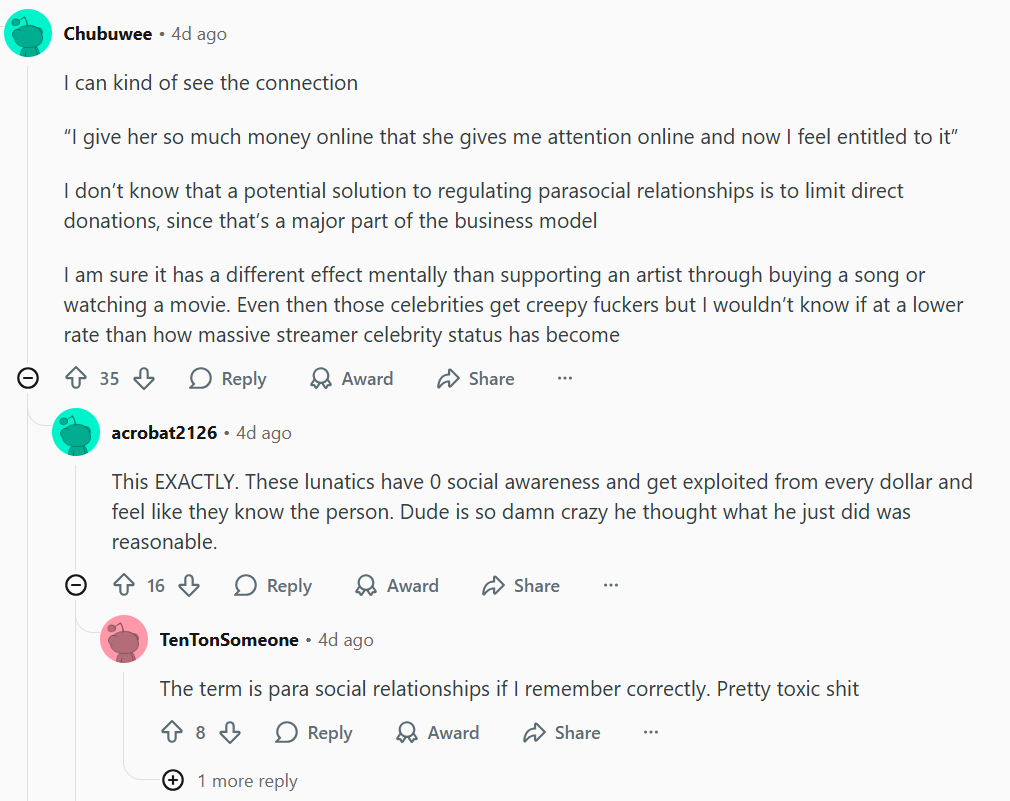
Female streamers have it especially hard when it comes to creepy male fans. These men have a strong sense of entitlement and think they can touch these streamers because they give money to them. A few years ago, there was a more extreme harassment done to another female streamer. Once she revealed that she had a boyfriend, a male fan set her car on fire but was then arrested.
Hikikomori culture
Cultural & psychological
A hikikomori is a word used in Japan to describe someone who withdraw themselves from society. They avoid going outside years at a time and they keep interacting with others at a minimal or none at all. A government survey has found out that 1.57% of the population (although it is speculated that there are more) are hikikomoris. This peculiar condition was only thought to have happened in Japan, however, recent studies show that this culture is spreading across the world. Particularly, in neighbouring countries. In South Korea, it was found out in a 2005 study that there were 33,000 withdrawn adults, which is roughly 0.3% of the population. In honk Kong, a 2014 study showed that 1.9% were withdrawn. Gent (2019)
But how does this tie into parasocial relationships?
Previously in my first research page, I found out that lonely individuals are more likely to form parasocial relationships with content creators.
The study starts off with a multiple choice question survey, asking about the frequency of them leaving the house. People that have chosen these answers: “5. I stay at home most of the time, but I only go out when there is something that interests me”, “6. I stay at home most of the time, but I may go out to the convenience store nearby”, ” 7. I do leave my room but to not go out of the house” and finally, “8. I stay in my room”, proceeded to the next round of questions that asked them about how often they would stay in for. Those who answered 6 months and above were classified to belonging to the hikikomori group. Those who said that the reason for staying home was because of medical issues such as pregnancy, house work or being diagnosed with schizophrenia were excused from the classification. Yong and Nomura (2019)
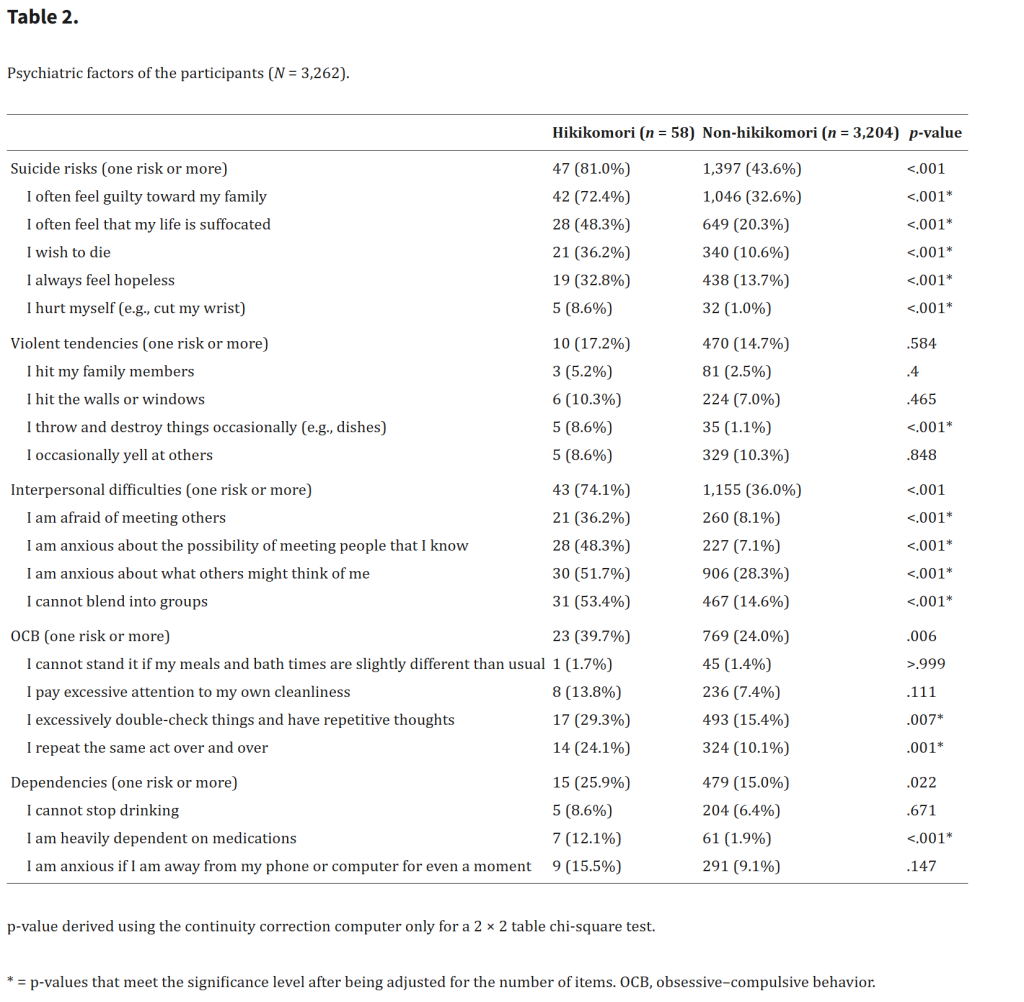
This figure shows the psychiatric factors of the participants. It compares the results of hikikomoris vs non-hikikomoris.
The aim of this study was to identify the factors that were associated with hikikomori with a national survey. This paper talks about interpersonal relationships and mental health. It was found out that hikikomoris typically have difficulty maintaining relationships and they don’t typically socialise. The next association was that hikikomoris have intense suicidal ideation or they have attempted in the past. Yong and Nomura (2019)
Conclusion from this paper
How parasocial relationships turn toxic
Media effects
The feeling of intimacy can feel very real to us. It can start off with something as innocent as watching a video with a family member or friend and starting to develop a very real fascination with this person. As the internet progresses, so do the size of fandoms. These fandoms have been a representation and symbol of youth as well as immaturity- although adults still do take part in these communities. Rosenberg (2024)
However, it’s true that young adults are participating in activities that can be seen as parasocial. This can be seen as an adolescent trying to practice very adult feelings at someone from a distance. A parasocial relationship usually starts with healthy boundaries, but then over the course of time, it can become very sour, very quick. Rosenberg (2024)
The ups and downs of parasocial relationships
Psychological
Ups:
Parasocial relationships aren’t always that bad. These one sided connections you form from perhaps a content creator, can be used as a source of escapism and comfort. These people entertain us, inspire us, and educate us. It makes us feel less lonely knowing that there are other people out there that have the same interests as us, especially if we feel like the outcasts. Bonding emotionally with celebrities or fictional people may shape people’s morals. For example, children may learn what is conceived to be what’s wrong and right on shows such as Peppa Pig, or Bluey. Similarly teens or young adults may feel inspired by athletes or social activists and may try to better themselves. Godman (2024)
A study of more than 300 people from the ages of 18-35 found that parasocial relationships may reduce the stigma of certain mental health conditions. The participants were made to watch a video of someone who shared personal information with the goal of creating a social bond. The other participants watched a video on a creator sharing his bipolar disorder. Those who saw both videos scored lower on measures of prejudice about mental health conditions than those who only saw the first video. Godman (2024)
Downsides:
While parasocial relationships gives us a sense of comfort and escapism, there’s a darker side to this one-sided relationship:
- They won’t love you back
- They might contribute to loneliness and isolation if you rely on them too much
- They might have a negative influence on you. Godman (2024)
Oshi culture and gachikoi
Cultural
Oshikatsu is a term with Japanese origins. Oshi (推し) meaning favourite character or idol and katsu (活) meaning activity or endeavour. In essence, oshikatsu is the action of supporting your favourite idol. This culture encompasses what ever a normal fan does to show their engagement and appreciation to their idol. These activities include, buying their merchandise, showing up to their events and expressing their love in tangible and appropriate ways. Team (2024)
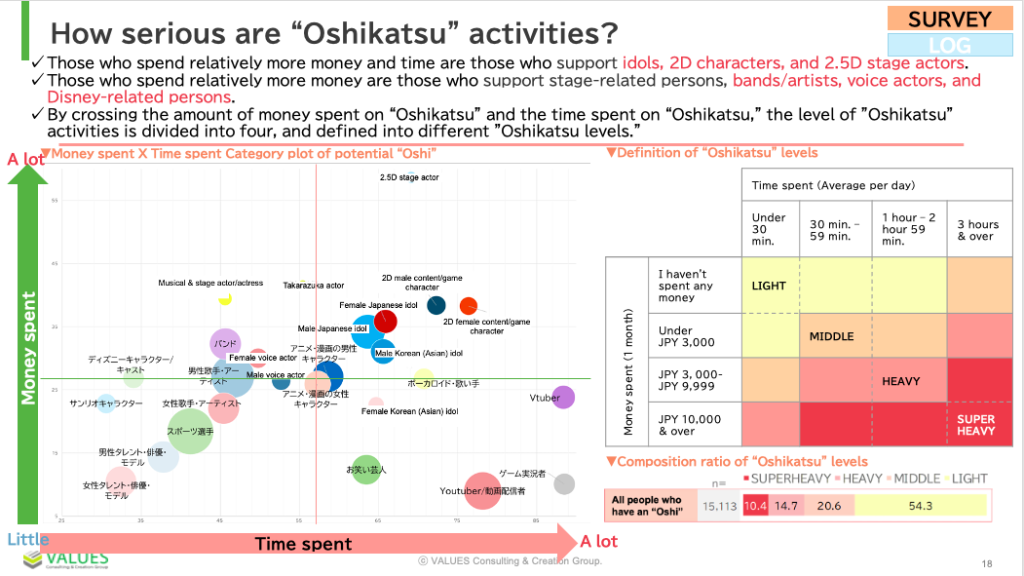
This graph shows that survey was conducted in which fans were divided into 4 groups: super heavy (10%), heavy (15%), middle (21%) and light (54%). This shows that oshi culture isn’t uniform, but it ranges from something someone would do in their free time at their own pace, to someone that has a deep, parasocial connection to the idol. Arakaki (2024)
According to a 2024 survey conducted by a Japanese marketing company, Harumeku, 46% of women 50 and above have an oshi that they support with some of their finances. This is because women of this age have typically already have had children that’ve finished education and they generally have more money to spend. Oshikatsu also signifies a gender role reversal. In a traditional Japanese household, it is usually the man that is expected to be the breadwinners. However in oshikatsu, it is often for women to be financially supporting younger men. Gygi (2025)
Research from 2022 show that people engaging in oshikatsu activities are really just wanting a deeper connection, wanting to validation, and a sense of belonging. Though it sounds simple to have your friend or an intimate partner to fill this void, an increasing amount of young Japanese people are finding that relationships are bothersome. Particularly young men are the ones leading this category, especially men that do not work in white collar jobs or the so called salary man job. People who are in part time jobs or blue collar jobs find it particularly hard to imagine themselves with families. Tertiary sectors is changing to accommodate a number of services that turn impalpable things such as friendships or intimacy with someone else into paid services. These things don’t have to be sexual. They can be something as innocent as cuddling someone or renting a friend for the day. This turns human connection into a paid subscription fee. Gygi (2025)
Gachikoi (がちこい) is a slang used in Japan for someone that develops strong feelings, mainly romantic, for their oshi. Gachi (真実) meaning serious and koi (恋) meaning love, this word quite literally means serious love. It was a term made by fans, for fans. Some gachikois have the mentality of “any attentio, is good attention, as long as it’s for my favourite” Often, they will try to dictate other fans how to act, but this is out of superiority rather than authority. Their logic is that if they’ve spent a lot of money on their oshi, their love is the “most pure”. View (2023)
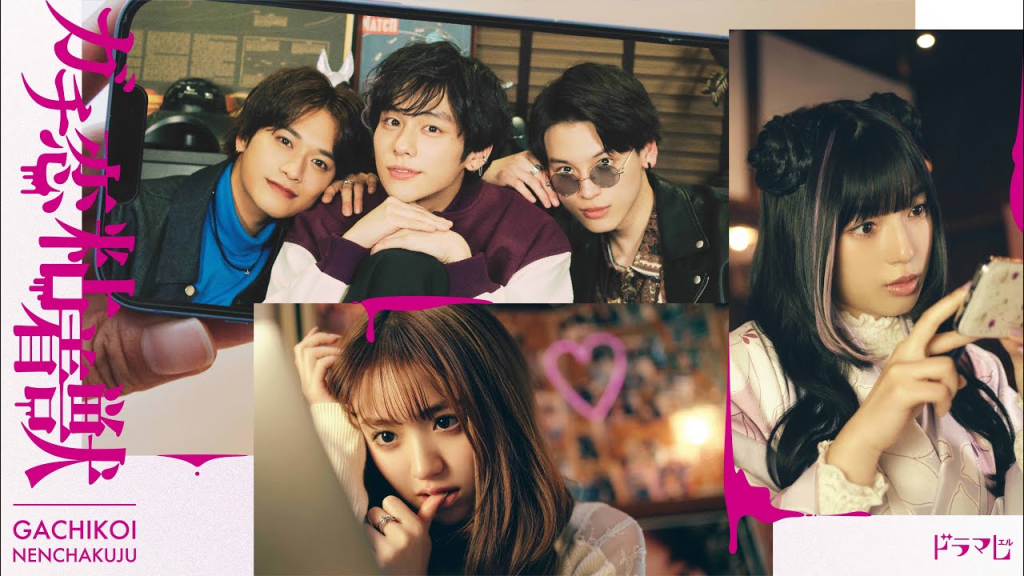
^ Gachikoi Nenchakuju is a Japanese web series that introduced me to this term!
Post to the presentation:
References
Arakaki, E. (2024). Supportive fans are willing to spend money? ‘Oshikatsu’ insights & applying it to marketing strategy | [マナミナ]まなべるみんなのデータマーケティング・マガジン. [online] manamina[マナミナ]まなべるみんなのデータマーケティング・マガジン. Available at: https://manamina.valuesccg.com/articles/3333?utm_source=chatgpt.com [Accessed 26 Oct. 2025].
Ayari (2021). Blocked. [online] Quora.com. Available at: https://www.quora.com/Why-is-western-culture-so-against-parasocial-relationships-When-fanbases-of-certain-celebs-tend-to-be-stereotyped-as-intense-it-is-considered-a-negative-thing-in-western-culture-but-in-Asia-KPOP-idols-are-as-loved.
Charlotte (2024). Blocked. [online] Quora.com. Available at: https://www.quora.com/Why-is-western-culture-so-against-parasocial-relationships-When-fanbases-of-certain-celebs-tend-to-be-stereotyped-as-intense-it-is-considered-a-negative-thing-in-western-culture-but-in-Asia-KPOP-idols-are-as-loved.
Gent, E. (2019). The plight of Japan’s modern hermits. [online] Bbc.co.uk. Available at: https://www.bbc.co.uk/future/article/20190129-the-plight-of-japans-modern-hermits [Accessed 23 Oct. 2025].
Godman, H. (2024). Do parasocial relationships fill a loneliness gap? – Harvard Health. [online] Harvard Health. Available at: https://www.health.harvard.edu/blog/do-parasocial-relationships-fill-a-loneliness-gap-202409303074?utm_source=chatgpt.com [Accessed 25 Oct. 2025].
Gygi, F. (2025). Oshikatsu, the fandom phenomenon Japan hopes can boost its flagging economy. [online] The Conversation. Available at: https://theconversation.com/oshikatsu-the-fandom-phenomenon-japan-hopes-can-boost-its-flagging-economy-253853 [Accessed 26 Oct. 2025].
Robson, D. (2017). How East and West think in profoundly different ways. [online] Bbc.co.uk. Available at: https://www.bbc.co.uk/future/article/20170118-how-east-and-west-think-in-profoundly-different-ways.
Rosenberg, A. (2024). What are parasocial relationships doing to our brains? [online] National Geographic. Available at: https://www.nationalgeographic.com/science/article/parasocial-relationships-social-media [Accessed 25 Oct. 2025].
Shi, L. (2023). Difference of Parasocial Relationships Between China and Korea Under Various Social and Cultural Backgrounds. Communications in Humanities Research, 10(1), pp.224–231. doi:https://doi.org/10.54254/2753-7064/10/20231330.
Team, V. (2024). What is Oshikatsu? Meaning, Culture, and Goods Explained. [online] VIVERSE Blog – Latest News & Announcements. Available at: https://news.viverse.com/post/what-is-oshikatsu-how-vr-and-viverse-enhance-the-fandom-experience [Accessed 26 Oct. 2025].
View (2023). An Uncomfortable Look at Who I Could Have Been – Gachikoi Nenchakujuu. [online] Phoenix Talks Pop Culture Japan. Available at: https://phoenixtalkspopculturejapan.wordpress.com/2023/11/20/an-uncomfortable-look-at-who-i-could-have-been-gachikoi-nenchakujuu [Accessed 26 Oct. 2025].
Yong, R. and Nomura, K. (2019). Hikikomori Is Most Associated With Interpersonal Relationships, Followed by Suicide Risks: A Secondary Analysis of a National Cross-Sectional Study. Frontiers in Psychiatry, [online] 10. doi:https://doi.org/10.3389/fpsyt.2019.00247.
Leave a Reply