
Warm up: elevator test
This is an activity you can return to many times during the creation of a character.
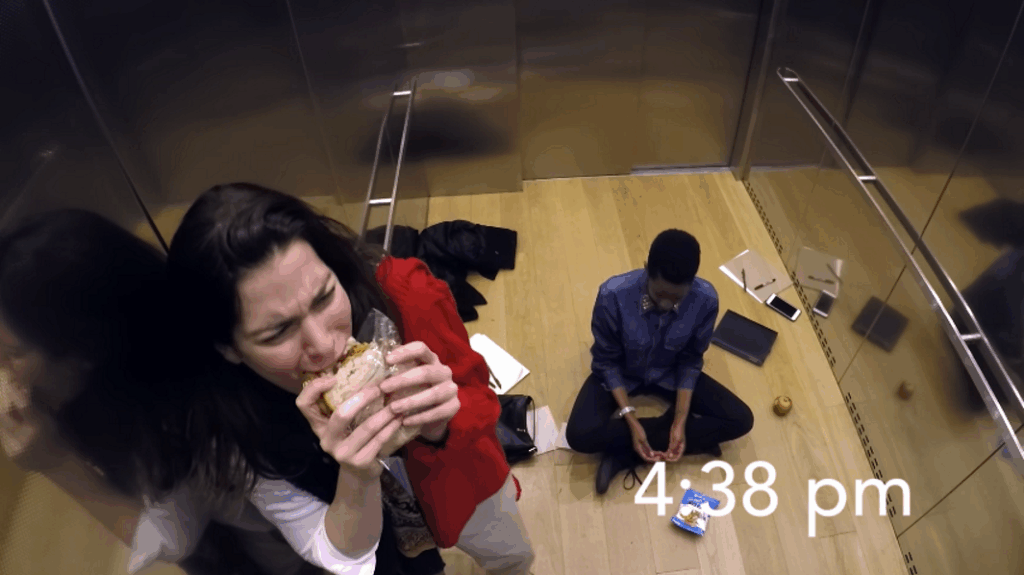
Aphton and Louise demonstrate a quick and easy trick for developing a character for a story: how do they react when you trap them in an elevator all day?
Step 1: Pick a character from one of your favourite films. How would they respond to being trapped in an elevator? Draw or write a single page about what happens.
Step 2: Return to a character you are in the process of creating and do the same thing.
- Witch: Doesn’t really respond, just waits until help arrives. Remaining calm
- Narrator: Get frustrated that it’s not going their way, begin to tap their feet, and the annoyance builds up until they have an outburst like a kid.
- Lamb: cries in fear and calls for help.
- Wolf: anger that it’s trapped and begins bursting and shouting that
- they’ll get out without the need for help. (Too proud to ask)
- Siren: Confused at first, believing that she’s not in danger. Then annoyed about the wait, and leading to frustration and annoyance but with a little fear.
- Fairy: laughs, doesn’t understand the situation, but when she figures it out, she laughs even more, thinking the situation is funny. She doesn’t get annoyed, just patiently waits whilst giggling.
Internal vs. external features
What’s on the inside vs. outside of a character? Pixar artists discuss character development through the lenses of external features like design or appearance and internal features like emotions or beliefs. Artists create authentic, relatable characters by drawing from personal experiences and real-life people. Fully developed characters have clear desires and face obstacles, which drive their journey and create engaging stories.
What’s on the inside vs. outside of a character?
- Part A: Return to your three favourite films and identify a main character in each.
- witch, narrator, wolf, lamb, siren and fairy
Part B: Identify three of their external features.
1. Magical girl: witch hat, high knee socks and pink hair
2. Wolf: black fur, long fur and claws
3. Lamb: white fluff, short fluff and pink nose
4. Siren: long dark blue tail, long straight hair and scales
5. Fairy: wings, shorter hair and a puffy dress
Part C: Identify three of their internal features.
- Witch: quiet, smart and rebellious
- Wolf: angry, annoyed and quick-tempered
- Lamb: timid, nice, cautious
- Siren: quick-tempered, confident and perceptive
- Fairy: giggly, joyful, generous
- Narrator: Forgetful, patronising, egotistical
Part E: Return to one of your character ideas from the last lesson. Brainstorm some possible answers to the following questions
External features:
Is your character a human, animal, or object?
- Witch: human
- Wolf: animal
- Lamb: animal
- Siren: half fish, half human
- Fairy: looks like a human
What kind of clothing do they wear?
- Magical girl: witch had high knee stripped socks, boots – Mary Jane shoes, torn jacket, skirt
- Wolf : animal
- Lamb : animal
- Siren : half fish half human
- Fairy : long dress
How does your character move?
- Magical girl : walks calmy
- Wolf : strides with confidence
- Lamb : walks slowly
- Siren : slow
- Fairy : very quick
What’s the first thing you’d notice when looking at them from a distance?
Internal features:
What do they like to do?
- Magical girl : looks like a magical girl / witch
- Wolf : animal
- Lamb : animal
- Siren : half fish half human
- Fairy : a fly
What do they fear?
- Magical girl : the safety of their cat
- Wolf : nothing
- Lamb : wolf
- Siren : humans
- Fairy : nothing
What emotion do they most often feel?
- Magical girl : calm
- Wolf : anger
- Lamb : fear
- Siren : cautious
- Fairy : laughter
- Narrator: boredom
How would they respond if trapped in an elevator?
- Magical girl : calculate and calm
- Wolf : anger
- Lamb : fear
- Siren : annoyance
- Fairy : laughter
- Narrator: frustrated
Leave a Reply