Technical Designer / Gameplay Interaction Designer
My role in Daydream was Technical Designer / Gameplay Interaction Designer. I focused on turning the team’s design ideas into playable systems inside Unreal Engine 5. My main role was as a Technical Designer / Gameplay Interaction Designer, focusing on turning those ideas into functional systems inside Unreal Engine 5 that could be played, tested, and understood by the player.
For example, when the team proposed that the player should collect an item to unlock a door, or progress through a route that combined platforming and climbing, my task was to break those ideas down into practical gameplay logic: when the prompt appears, what input the player uses, how the item enters the inventory, how the door checks whether the player has collected the required item, how the UI communicates state changes, and how one interaction leads into the next part of the level.
Therefore, my contribution was not to claim ownership over the entire level mechanic design. Instead, my role was to translate the team’s design intentions into playable interaction systems, while also giving suggestions based on playability, logical clarity, and technical feasibility.
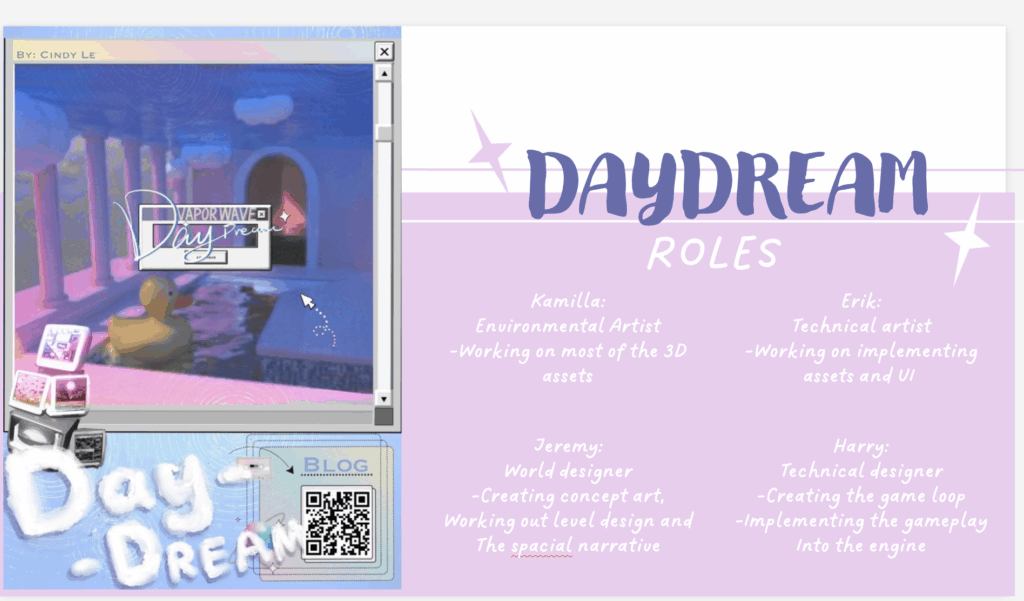
Early production role allocation slide from the team’s initial vertical slice pitch presentation, outlining each member’s primary responsibilities during pre-production. My role as Technical Designer focused on creating the gameplay loop and implementing gameplay systems in Unreal Engine.
Additional Reflection Text
This early planning document was important in establishing the production structure and development responsibilities of the team during pre-production. While the core gameplay mechanics were discussed collaboratively, my primary contribution focused on translating these ideas into playable gameplay systems and implementing the gameplay loop within Unreal Engine.
This also helped clarify the distinction between gameplay design discussions and technical implementation responsibilities throughout the project.
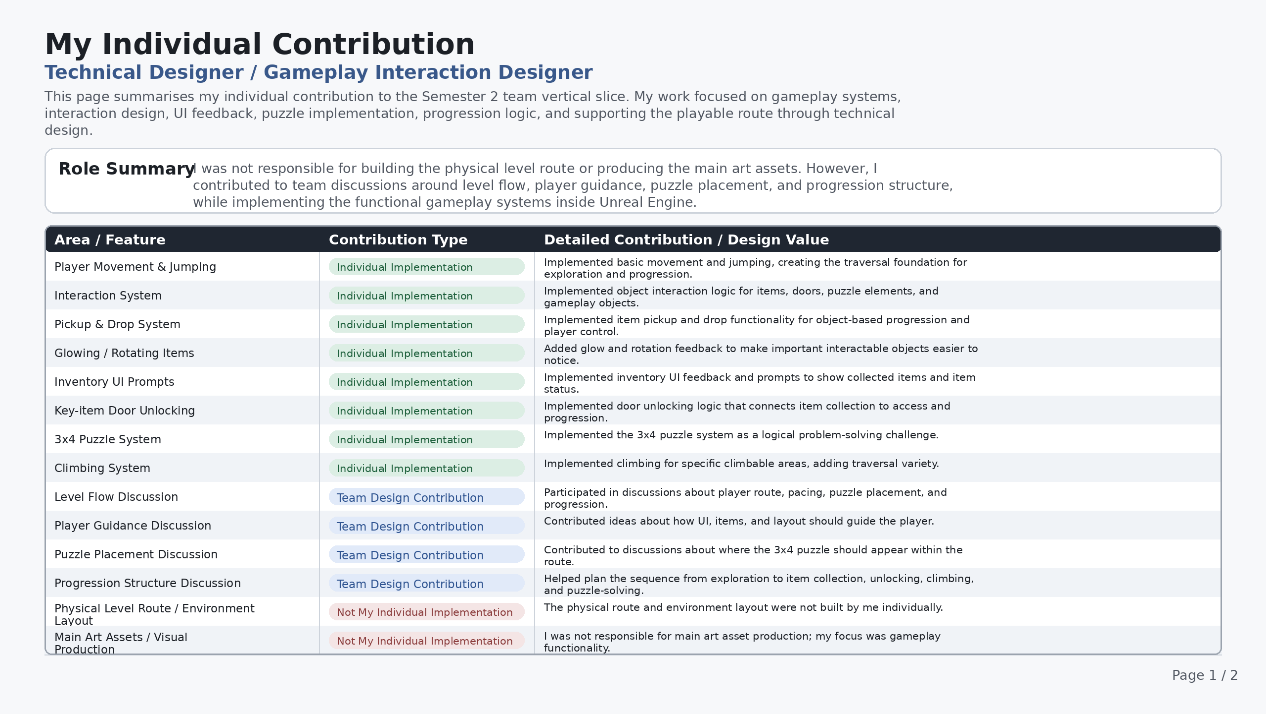
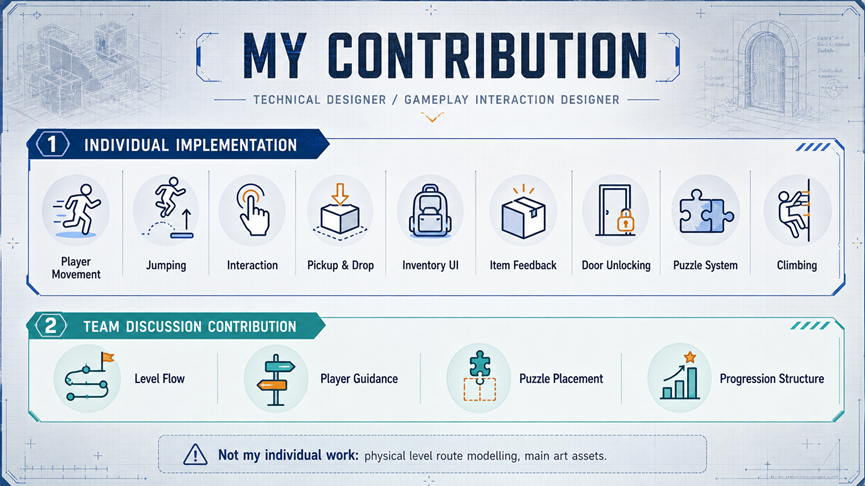
My individual implementation work included
Player Movement
Jumping
Item Pickup and Drop
Glowing and Rotating Item Feedback
Inventory UI Prompts
Key-item Door Unlocking
Puzzle Interaction System
Climbing System
Hidden Clue Viewing Technical
Prop rotation and highlight outline
These systems formed the functional backbone of the prototype. They allowed the player to move through the level, identify important objects, collect and manage items, unlock progression, and engage with the final puzzle challenge.
I was not responsible for building the physical level route or producing the main art assets. However, I contributed to team discussions around level flow, player guidance, puzzle placement, and progression structure. This included discussing how the jumping route should guide the player, where items should be placed, how doors should block or reveal progress, and how the final puzzle should fit into the overall level experience.
Through this role, I developed my ability to connect gameplay systems with level progression. Instead of building isolated mechanics, I focused on making sure the systems worked together as one playable vertical slice.